
Contents:

Learn: The Profession of a Methodologist from Scratch to PRO
Learn MoreIn the second half of the 19th century, the Russian Empire saw a significant increase in the number of beggars and homeless people. This phenomenon was particularly noticeable in large cities such as Moscow and St. Petersburg, where people from villages and the provinces flocked in search of a better life. However, faced with harsh reality, many of them found themselves in extremely difficult circumstances: without money, work, documents, or housing. Support for those in need in Russia at the time was limited to meager allowances and free meals. Faced with hunger and despair, many resorted to crime, which only exacerbated social inequality and poverty in society.
One serious problem was child neglect. Some children's parents died, others were forced to work all day, and still others suffered from addiction. Some children ran away from home, unable to tolerate the harsh living conditions and negative environmental influences. A significant number of minors actually lived on the streets, exposed to exploitation and violence, which often led to criminal behavior and the development of addictions.
Various public initiatives aimed at solving social problems were created in the form of charitable institutions. These organizations not only provided those in need with shelter, food, and clothing, but also offered them work, which allowed people to earn a living through their labor. In such institutions, training in useful skills became an important part of the program promoting integration into society. These houses of industry became an important support for many, helping them reclaim their place in life.
How the Houses of Industry Came to Be
Almsgiving is one of the oldest methods of supporting those in need. Since pre-Petrine times in Russia, there has been a belief that this form of assistance does not allow people to escape difficult situations, but, on the contrary, contributes to the continuation of begging. This view underscores the importance of more sustainable solutions to combat poverty and social injustice. Rather than relying on temporary measures, programs must be developed that foster skills development and provide access to resources to help people overcome difficult circumstances.
The first special institutions for the homeless and needy, providing opportunities to live and work, were established in Russia under Catherine the Great. In the "Institution on the Provinces" of 1775, the empress emphasized the need to create houses where the homeless could receive work, as well as food, clothing, or money depending on the work performed. These institutions were intended for people able to work and willing to improve their situation.
Soon, vagrants and beggars arrested for begging, which was prohibited, began to be placed in workhouses. Gradually, petty criminals were also sent there, while volunteers who found themselves in difficult situations did not have this opportunity. In 1785, the Moscow workhouse was merged with a correctional facility for "violent sluggards," and in 1870, it was converted into a city prison known as "Sailor's Tishina." Another Moscow workhouse, founded in 1837 and named "Yusupov" after the building it occupied, was unable to provide its residents with work and, consequently, wages. As a result, it became a shelter where police brought beggars arrested on the streets of Moscow. The institutions founded under Alexander I soon changed their format and were transformed into vocational schools and shelters for needy children. From 1847, they were named the Elizabethan Schools in honor of the Emperor's wife, Elizabeth Alexeyevna. These educational institutions became an important part of the social welfare and education system, providing children from poor families with the opportunity to acquire a vocational qualification and improve their living conditions. The Elizabethan schools played a significant role in the development of vocational education in Russia, promoting social mobility and the integration of young people into society.
Explore also:
Under Russian The so-called "parallel ministry of education" operated under the empresses, representing an informal system of education and enlightenment. This institution had no official status, but played a significant role in the development of the country's educational policy. Empresses such as Catherine II actively promoted the implementation of new educational initiatives and reforms.
Within the framework of this system, various educational institutions were created that provided access to knowledge for the general population. The parallel ministry of education also supported cultural projects, including theaters and art schools, which contributed to the development of Russian culture and science.
Thus, the "parallel ministry of education" became an important instrument for the implementation of educational ideas and the formation of the educational environment in the Russian Empire. This experience underscores the significant role of women in the history of education and culture in Russia.
In 1833, a women's workshop was founded in St. Petersburg, established by Gentleman of the Bedchamber Anatoly Demidov. This establishment, known as the Demidov House, marked an important step in organizing work assistance for women. Anatoly Demidov, a member of a renowned mining family, donated 500,000 rubles to establish the shelter, which provided permanent housing for 50–60 women and jobs for the 150–275 women who came there daily. This initiative contributed not only to social protection, but also to the improvement of working conditions for women of that time.
This institution provided children with the necessary materials and tools, and also organized meals several times a day. For the little ones, there were nursery groups and a school at the Demidov House. However, the Demidov House also underwent changes: in 1894, it became the first commercial school for girls in Russia, and in 1904, it was transformed into a gymnasium and foreign language courses.
Many philanthropists were inspired by Demidov's example and began to open their own workshops. One of the most significant projects in this area was the Society for the Encouragement of Industriousness "Muraveynik", headed by the famous philanthropist Princess Alexandra Strekalova (1821-1904). She founded a charitable society in Moscow, which became the basis for the famous Rukavishnikov shelter for difficult teenagers. Soon after, "Muraveinik" was founded, providing support to women in need. These initiatives played a significant role in promoting social well-being and helping those in difficult life situations.
At the "Anthill," women performed sewing work. Members of the society, acting as benefactors, pledged to contribute at least one ruble annually and order at least two items of clothing. This ensured regular orders for the beneficiaries and contributed to the development of clothing production. This charitable initiative not only supported women but also contributed to the creation of sustainable jobs, which in turn contributed to an improvement in the quality of life in the community.
After the creation of the workshops, no one, including the Imperial Philanthropic Society—one of the largest charitable organizations of its time—made further progress in helping those in need. As a result, support for people in difficult life situations was clearly insufficient in the country.
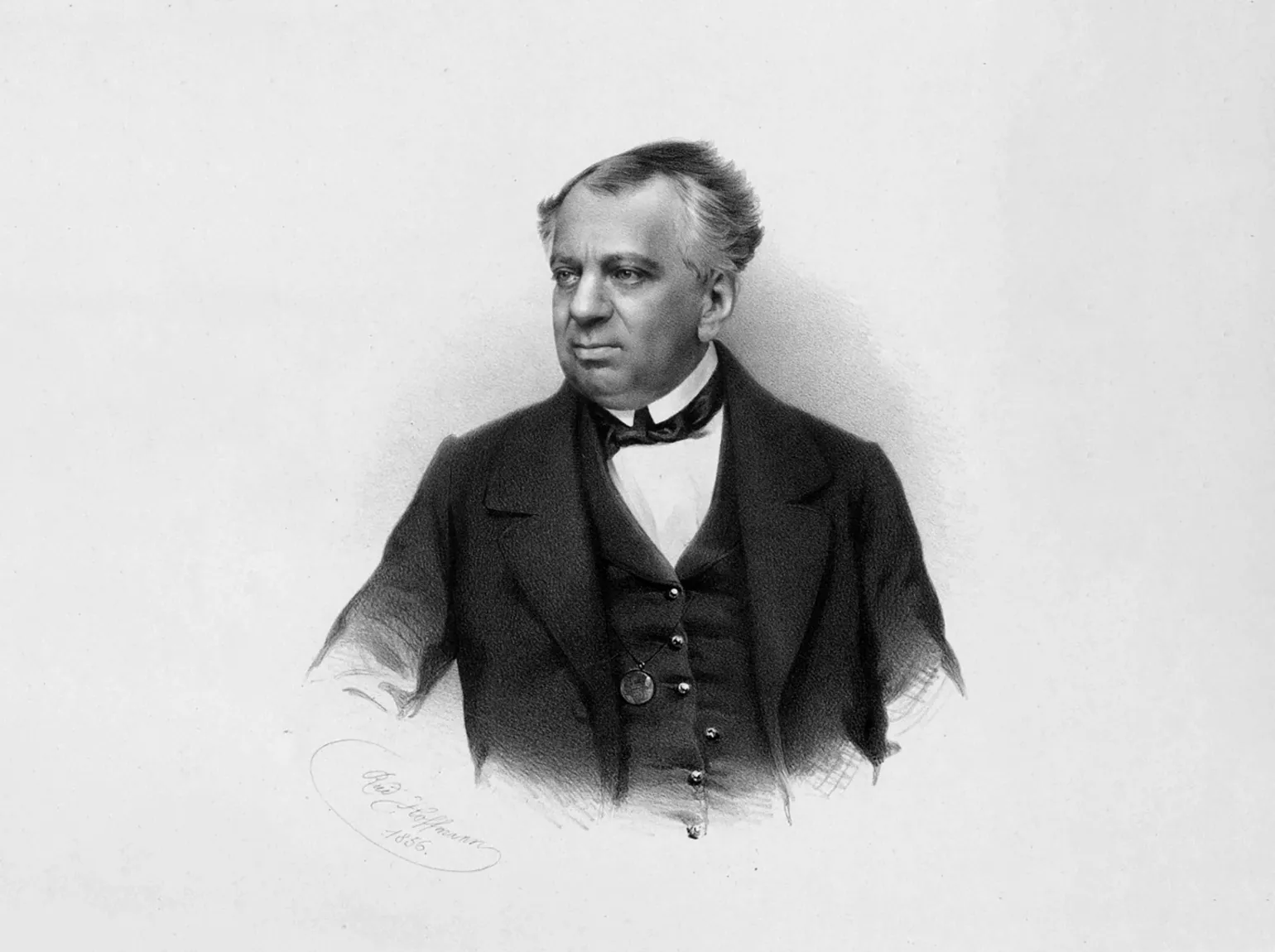
The first "real" House of Industry was founded in 1882 in Kronstadt. This port city attracted many workers, but their need only arose during the navigation season. The rest of the year, people were unemployed for up to six months. Kronstadt also housed many people expelled from St. Petersburg for vagrancy. As a result, the city faced an influx of desperate people, making evening strolls unsafe. The establishment of the House of Industry was an important step toward improving the social situation in Kronstadt, providing workers with employment opportunities and improving public order. Saint John of Kronstadt, rector of St. Andrew's Cathedral in Kronstadt, also known as Ivan Sergiev, took active steps to combat poverty. He witnessed the same people continually asking for alms, which led him to become disillusioned with traditional charity practices. Inspired by the ideas of the "Anthill" society, in 1872 John began promoting the concept of a shelter where those in need could not only receive assistance but also the opportunity to work, thereby facilitating their social integration. He appealed to wealthy residents of Kronstadt to support this initiative, thereby creating conditions for a sustainable way out of poverty.
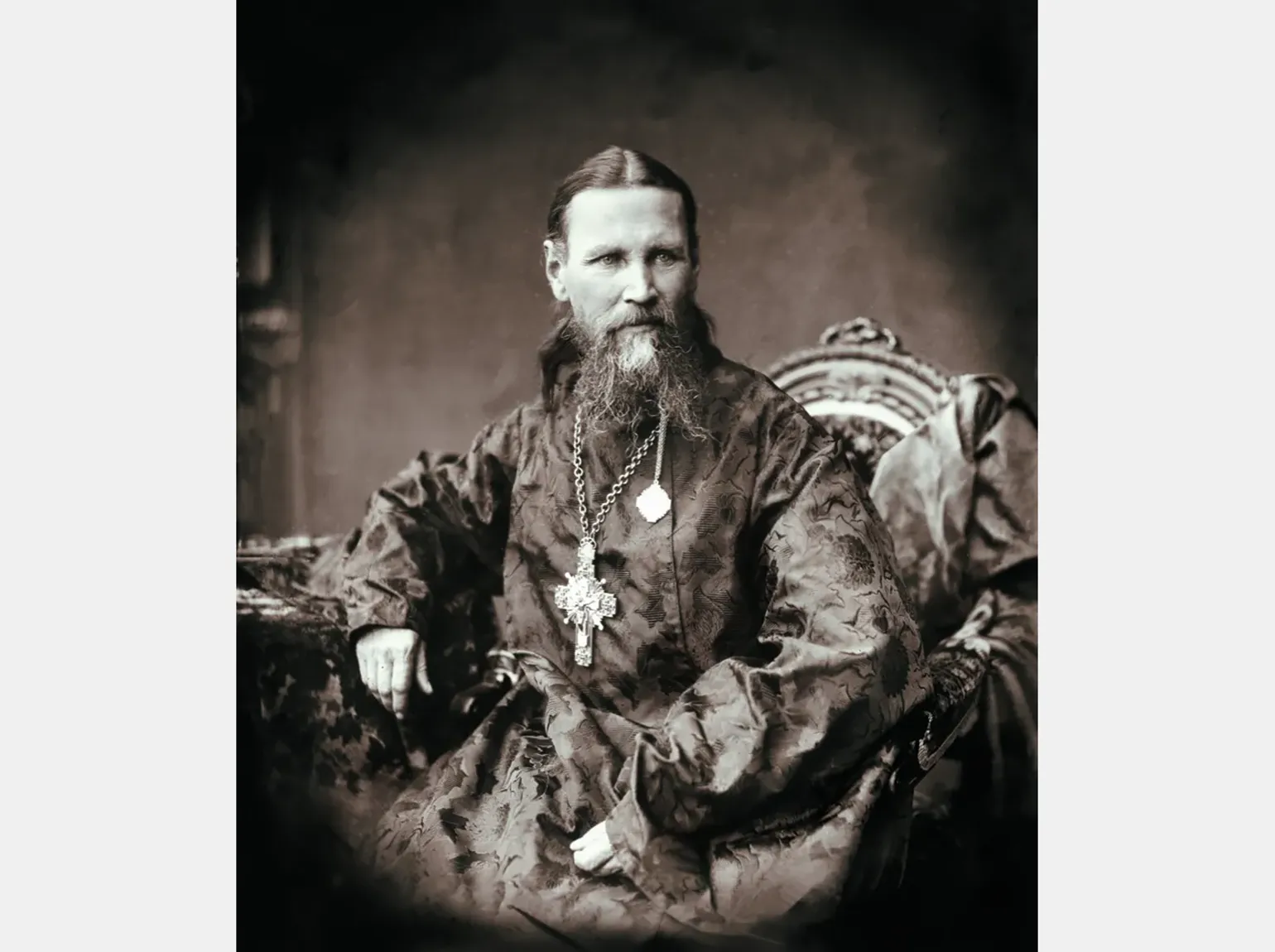
In 1882, John of Kronstadt's idea was successfully realized. The legal scholar Baron Otto Buxgeveden, who drew on advanced European experience, played a key role in the establishment of the House of Industry. This institution was founded in memory of the recently deceased Alexander II thanks to significant donations from the royal family. The opening of the House of Industry was an important event, promoting social support and reform in Russia.
The Kronstadt House of Industry was created to support socially vulnerable groups, including orphans, women, the elderly, and able-bodied men. This institution provided not only work but also housing. Thanks to the popularity of John of Kronstadt, the shelter quickly expanded, becoming part of a network of fifteen charitable organizations. This network included, among other things, an orphanage, a day care facility for children, overnight accommodations for three kopecks—significantly cheaper than elsewhere—and a public canteen that offered low-cost meals and free holiday meals for hundreds of people. There were also free care services for poor women, an outpatient clinic, a primary public school, a children's library, and a public reading room. By 1896, the Kronstadt House of Industry had already provided jobs for nearly 22,000 people. Following the Kronstadt model, Houses of Industry were established in St. Petersburg in 1886 and in Pskov in 1887. In subsequent years, they appeared in cities such as Smolensk, Tambov, Kyiv, Saratov, Orel, Mitava, Yaroslavl, Kazan, and many others. Otto Buxgeveden played a significant role in their creation. By 1896, more than 40 such institutions operated in Russia, and by the early 1900s, their number had exceeded 100. Houses of Industry became an important part of the social infrastructure, promoting the development of professional skills and supporting workers across the country.
Houses of Industry were primarily established by charitable societies, trustees, and patrons, who provided their own funding through collections, charity lotteries, and concerts. Local authorities and zemstvos also provided support by resolving administrative issues, allocating land plots, and providing jobs, such as ordering linens for hospitals. Nevertheless, Houses of Industry remained unprofitable enterprises.
By the end of the 19th century, two provincial Houses of Industry petitioned the empress for patronage, attracting the attention of the state. In 1895, the Emperor issued a decree establishing the Guardianship for Workhouses and Workhouses, later renamed the Guardianship for Labor Aid. This institution was under the patronage of Empress Alexandra Feodorovna, wife of Nicholas II. The Guardianship's primary goal was "to alleviate the plight of the poor by providing them with honest labor as the sole guarantee of a happy life based on Christian principles." The Guardianship's membership included such prominent figures as John of Kronstadt and Otto Buxgeveden. Over its ten years of existence, the Guardianship allocated 966,000 rubles to the needs of labor aid institutions, providing interest-free loans for major expenses. This contributed to the improvement of living and working conditions for the needy.
The Guardianship Committee, appointed and chaired by the Empress, played a key role in regulating the internal affairs and organization of labor aid institutions. He developed a model charter and rules for workhouses, and also provided recommendations for their effective organization. These measures contributed to the improvement of working and living conditions of people in need of support, and became the basis for the creation of more structured and functional organizations in the field of labor assistance.
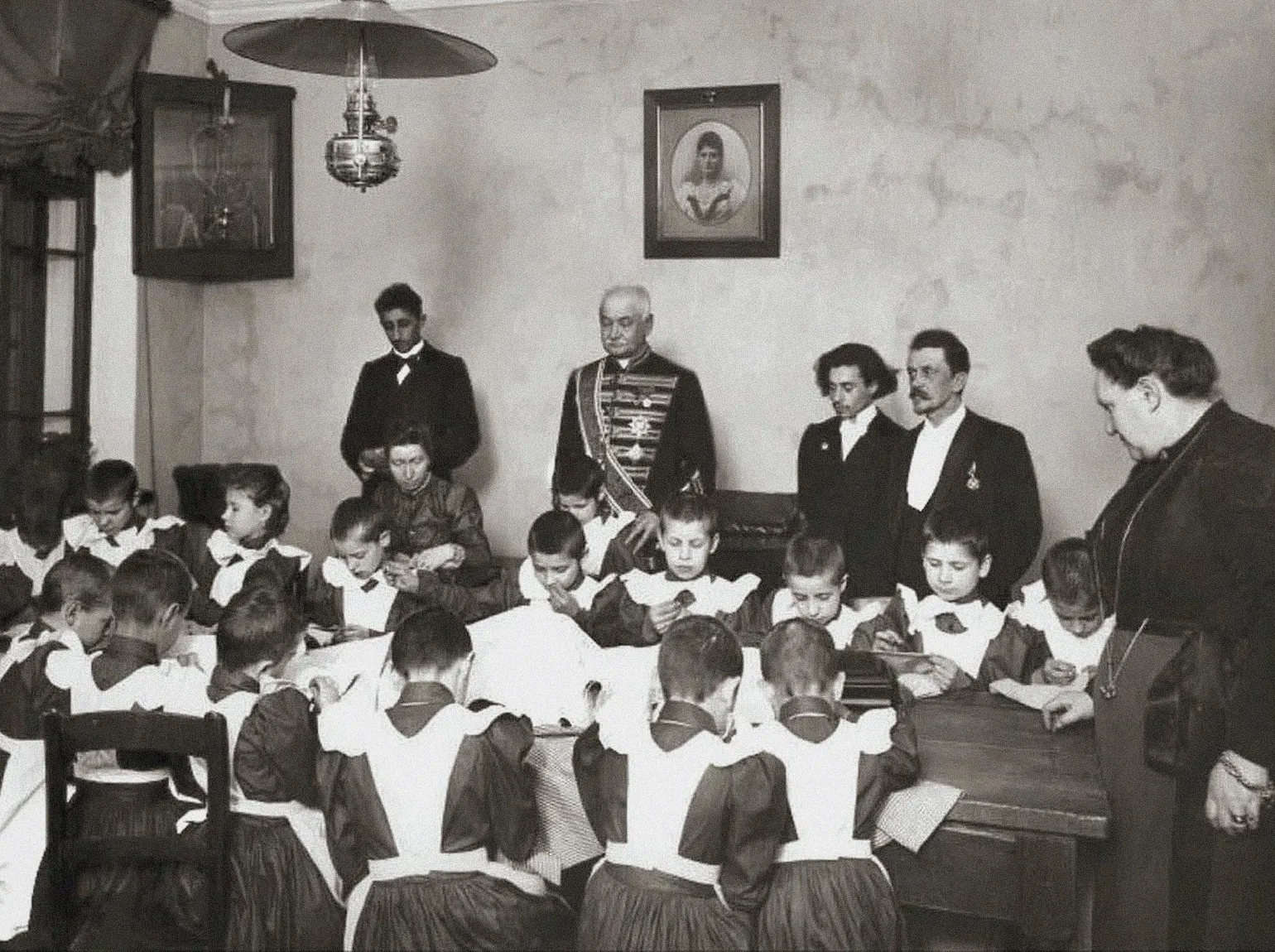
On the initiative of the Guardianship Authority, children's workhouses, known as Olga's orphanages, began to open across the country. The first of these was founded in 1895 in Tsarskoye Selo district in honor of the birth of Grand Duchess Olga Nikolaevna, daughter of Nicholas II and Alexandra Feodorovna. The Emperor allocated land and funds for the establishment of this institution, the purpose of which was "to care for, morally develop, and accustom to work the poor, homeless children of the capital, deprived of upbringing and education, and sometimes even the means of subsistence." By 1905, there were already 35 Olga's shelters operating in Russia, as well as special children's departments created in some adult workhouses, which emphasized the importance of caring for children in difficult life situations.
The guardianship received funding not only from the state budget, but also through personal donations from Empress Alexandra Feodorovna, as well as from private individuals. Additional funds came from the sale of goods manufactured in the institutions under its management.
How the adult workhouses were organized
Initially, the workhouses functioned as labor exchanges, where the unemployed came in search of work and earnings. Over time, their tasks expanded, and these institutions began to rehabilitate not only the unemployed, but also "professional" vagrants, petty criminals, and other representatives of the social bottom. This change in approach allowed us to focus on the rehabilitation and social adaptation of people in difficult life circumstances, and provided them with the opportunity to return to society and find a worthy place in it.
As a result of the development of social policy, two types of institutions for helping those in need emerged. The first type—workhouses—were colonies located on the outskirts or outside of cities, designed to forcibly hold people who had reached a critical point and were unable to improve their situation on their own. These institutions were staffed by people brought in by the police. The second type—urban workhouses—were intended for those who had recently lost their jobs and found themselves in difficult circumstances. Unlike workhouses, people came here voluntarily and were free to leave the institution at any time.
Workhouses were originally created to help people in need overcome difficult life situations and restore or develop work skills. These institutions provided emergency financial assistance: free or low-cost meals, housing, and, most importantly, employment opportunities, even if the wages were low. The main goal of the workhouses was to support people in their quest for independent living and integration into society through work. Workhouses played an important role in integrating people into the workforce, providing opportunities to find outside employment, acting like modern employment services. They sought to match vacancies to each person's ability to work and professional training. In addition, the workhouses also offered work in their own workshops, where 35 different trades were available. These included sewing, carpentry, bookbinding, shoemaking, metalwork, basket making, tailoring, lacemaking, wallpaper and mattress making, box making, printing, hosiery, and others. The residents of these institutions also performed work for city institutions and private clients, including road and earthworks, gardening, and vegetable gardening, as well as loading and unloading, cleaning, posting posters, and tending livestock. This system not only facilitated employment but also developed the skills and professional qualities of individuals, which was especially important in a changing labor market.
All housekeeping duties, including cleaning, laundry, cooking, and clothing repair, were performed by the wards themselves. Educated staff handled the paperwork. Work was compensated either daily or piecework. The wards received between 1/4 and 2/5 of their full earnings, while the remainder went toward covering the wards' expenses. Salaries were paid only upon termination, and during their stay at the wards, money was provided only for specific needs. Women were entitled to approximately 50% less than men, which highlighted existing gender pay inequalities.
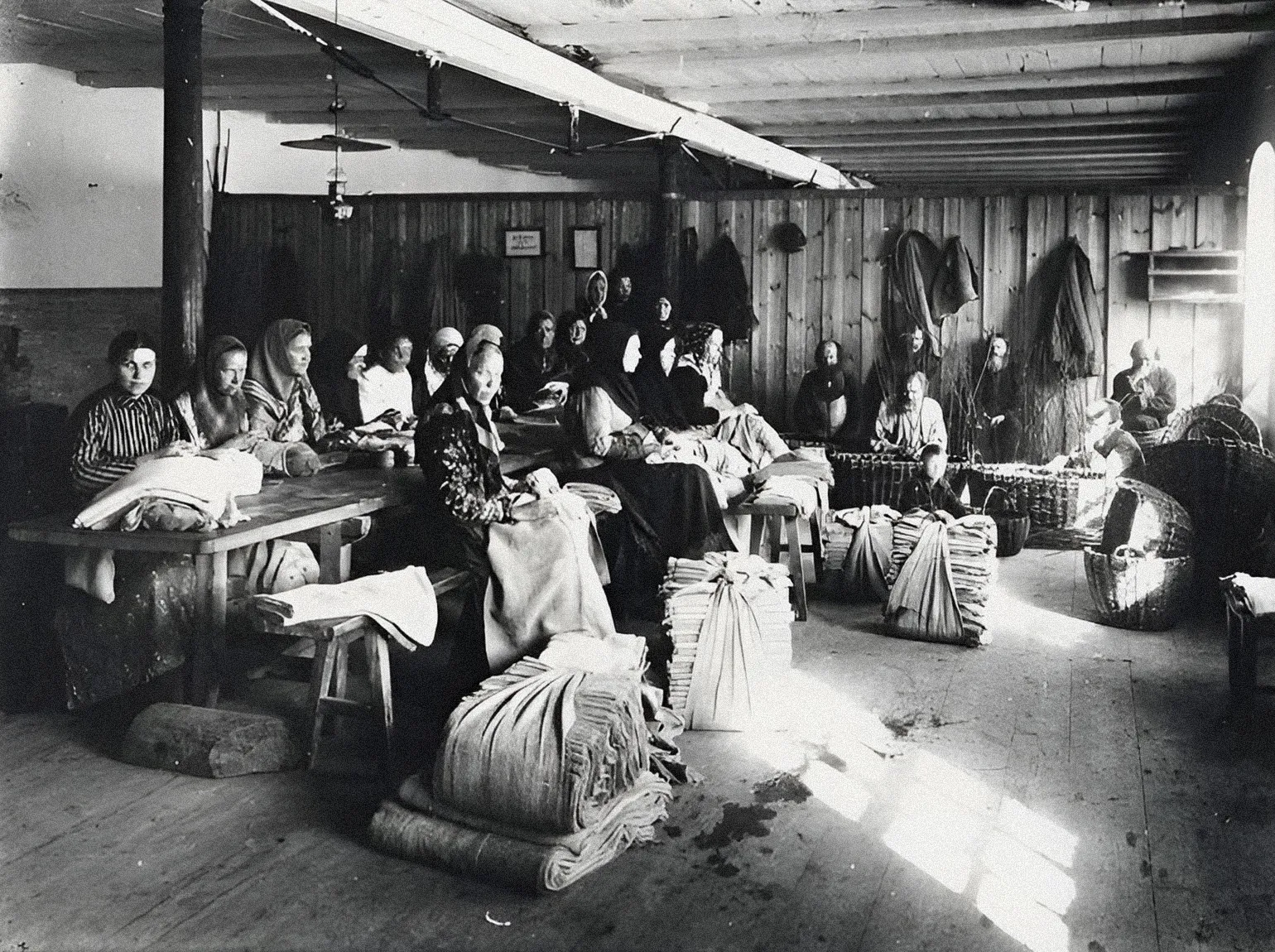
The income from the work did not fully cover the expenses of the industrious houses. Many of the residents were unable to work due to limited ability to work, illness, lack of professional training, or lack of motivation. However, the workshops sometimes created high-quality products that could have won the Grand Prix at the International Exhibition.
Most of the residents in the industrious houses were peasants who did not have working professions. For them, training in vocational skills was organized in the workshops. Institutions with more educated residents, classes were held in typewriting, accounting, and foreign languages. This created opportunities for obtaining an intelligent profession and improving their skills.
The industrious houses organized general education for adults, which contributed to their literacy. In the Russian Empire before the revolution, primary education was not compulsory, and this initiative helped people acquire basic knowledge and skills. Ensuring basic literacy among adults played a vital role in the development of society and the economy of the country.
The Kronstadt House hosted educational public readings devoted to Christian and socially beneficial topics, as well as literature and history. The Houses of Industry also housed libraries and reading rooms where one could find fiction, popular science, and religious-moral literature, as well as newspapers. These activities contributed to the cultural development and educational attainment of the population, providing access to important knowledge and information.
The Houses of Industry faced numerous problems, one of which was extremely low wages. In 1906, during a period of heightened unemployment, a correspondent for Russkie Vedomosti noted that of the 300-500 people who applied to the Moscow City House of Industry, only a few agreed to work. Many refused, claiming they were willing to go without food and water, but needed money to support their families, and a wage of 25 kopecks a day was insufficient to cover even the most basic needs (for comparison, a laborer at the time earned 95 kopecks a day). Furthermore, the industrious houses were not designed for skilled workers, as they lacked the necessary tools and sophisticated workshops, limiting employment opportunities. Material support at the time often left much to be desired: there were insufficient dining halls, housing, clothing, and food, and what was available was of poor quality. This was recalled by the peasant writer Semyon Pod'yachev, who stayed at the Moscow City Industrious House in 1902. His recollections emphasize the harsh living conditions and the lack of resources necessary for a normal existence. The clothing that was issued was old, worn, foul-smelling, and dirty. On their feet they wore soft "chuni" made from woolen cords, similar to those worn by women in the spring when they went to St. Sergius. The clothing provided varied: one was given a short "stage" sheepskin coat, another a jacket or a thick cloth undercoat. Trousers also varied: some were made of durable thick cloth, while others were thin blue rags.
Rework the text, preserving its essence, and adapt it for SEO. Do not add unnecessary elements, such as emoticons or symbols, and avoid structuring it as lists. The text should be kept clean and clear, with an emphasis on keywords to improve visibility in search engines.
Original text: Pod'yachev S. P. Ordeals. St. Petersburg, 1905.
The situation was even more dire in the provincial industriousness houses. For example, the Kursk house consisted of three small rooms, housing up to 60 people. The dining room and shelter were separate from the main building, which negatively impacted the residents' motivation. Donations were extremely limited, and only six to eight women worked daily at the institution, working at a loss, repairing sacks. However, it is worth noting that by 1905 the situation at the Kursk House of Industry had improved significantly, indicating increased support and changing working conditions.
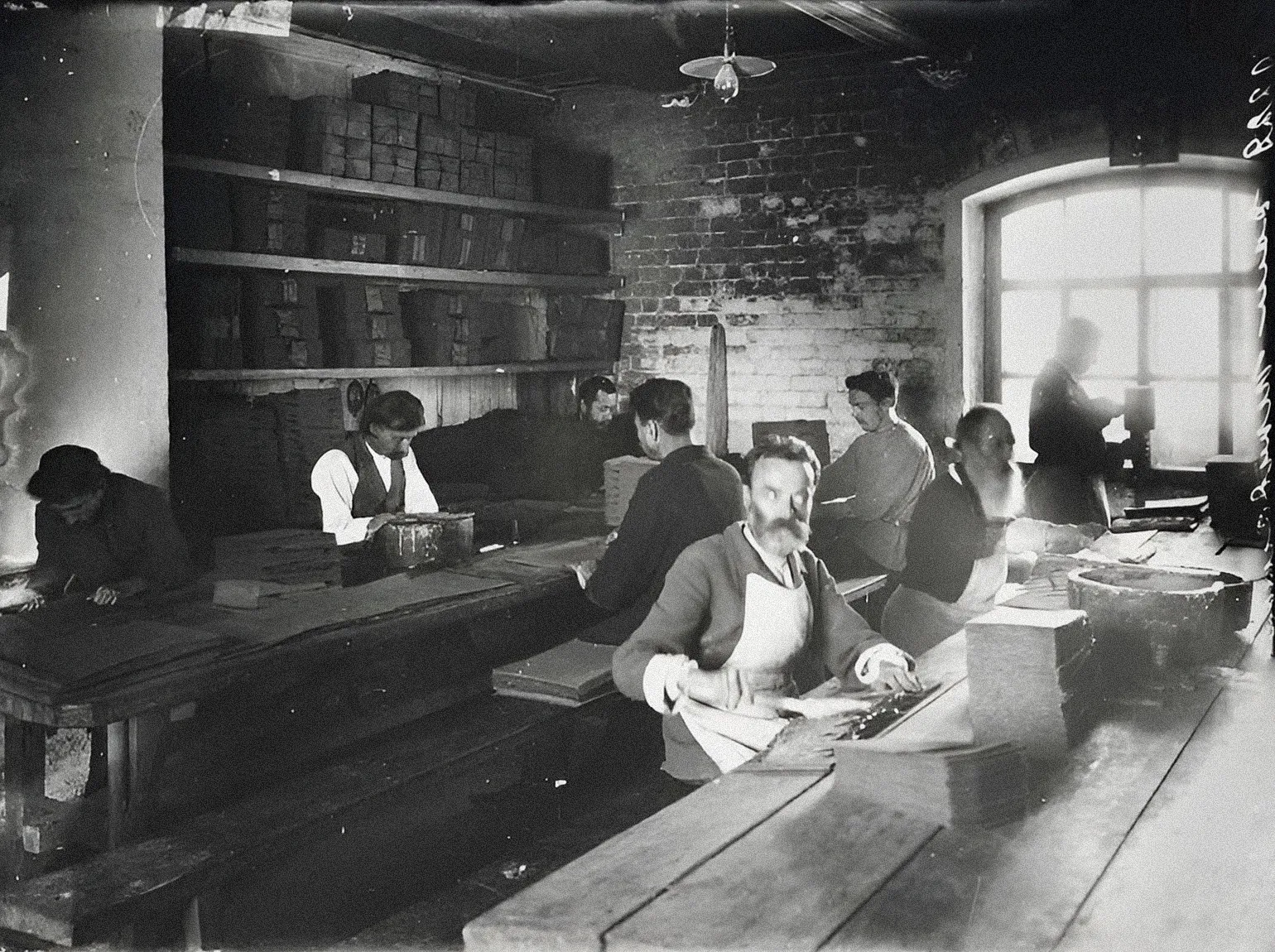
Despite the limited resources of the care homes, some residents found ways to make the most of them, leaving with clothing and other items.
Despite their shortcomings, the care homes made a significant contribution to the fight against poverty. These institutions provided people with the opportunity not only to find temporary housing but also to acquire skills that helped them improve their skills and financial situation. Thanks to the support and training offered at the care homes, many people were able to change their lives for the better, overcoming difficulties and escaping poverty.
What were the industrious orphanages?
In the orphanages, the wards were instilled with a love of hard work and prepared for independent life. The main focus was on obtaining a primary education, which was not compulsory for everyone before the revolution. Educators tried to accustom children to mental and physical labor, sensible entertainment, and comprehensive development. However, working with children was complicated by the fact that they were not admitted to the institutions at the same time, but throughout the year, which created additional difficulties in organizing the educational process.
In the industrious orphanages of St. Petersburg, children studied throughout the year, devoting an hour and a half a day to classes without breaks for holidays. The curriculum included the Law of God, reading, writing, and arithmetic. In addition, children received basic knowledge of literature, geography, and history, as well as choral singing, drawing, and technical drafting. Many teachers worked with children on a voluntary basis, emphasizing the importance of education in society at that time.
Popular science lectures were also held in the homes. The institution's doctor shared knowledge about the structure of the human body, which enabled the children, later as adults, to provide first aid to victims of accidents. These lectures contributed to the development of a conscious approach to health and safety in young people, which is extremely important in modern life.
From adolescence, a critical stage in personality development, students begin to learn crafts. This training is aimed at preparing them for independent life and providing them with the opportunity to earn a living in the future. After mastering a craft in one of the workshops, teenagers are given the opportunity to fulfill orders and apply their acquired skills in practice. Thus, the process of learning crafts not only develops professional skills but also fosters personal responsibility and diligence.
The Houses of Industry and the Olginsky orphanages had much in common with the previously mentioned educational and correctional institutions. These orphanages maintained strict discipline, based on a system of punishments and rewards, which were recorded in special biographical sheets. Attempts were made to prepare the inmates for future work by maintaining contact with them, or they were returned to their families if they searched for their children, or if the orphanage independently found their relatives.
Cleaning and maintaining order in the orphanage were an important part of the inmates' lives. As an eyewitness noted, the inmates independently performed all chores related to their daily life and personal life. They cleaned their rooms, stoked the stoves, chopped wood, and cleared the area of snow. The girls also contributed to the laundry, ironing, and carpet care. These responsibilities fostered a spirit of hard work and responsibility in the children, which was an important aspect of their upbringing. Maintaining cleanliness and order in the orphanage not only improved living conditions but also helped the residents develop the skills necessary for independent living in the future.
The teenagers were provided with a variety of leisure activities, including readings with shadow paintings, excursions, active games, and discussions. Sometimes, teenagers were taken to theaters, concerts, and exhibitions. Conditions were created for gymnastics, singing, and playing the balalaika. Libraries were also often opened at orphanages, which were replenished with books from benefactors. These initiatives contributed to the development of the teenagers' creative and physical skills, as well as the formation of their cultural horizons.
After 1917, all industriousness houses ceased to operate in Russia. Beginning in the 2000s, a number of charities began to restore these institutions, striving to restore the principles established a century and a half ago. Examples of such initiatives can be seen in several projects that are successfully operating today.
Primary sources of information play a key role in the process of searching and analyzing data. These include scientific articles, books, studies, statistical reports, and official documents. These sources ensure the reliability and relevance of the data presented. Using a variety of sources allows for a more complete understanding of the topic of interest. It is important to consider not only the quality of the information, but also its origin in order to avoid unreliable information. The correct approach to selecting sources contributes to a deeper understanding of the subject and improves the quality of analysis.
- Akishin G. G. Historical and socio-social aspects of the charitable activities of St. Righteous John of Kronstadt // Christian reading.
- Alekseeva M. N. Charitable activity in education in the Simbirsk province in the second half of the 19th - early 20th centuries. // News of the Volgograd State Pedagogical University.
- Belchikova S. V. Guardianship for labor assistance as an all-Russian organization under the patronage of Empress Alexandra Feodorovna // History of the imperial house of Romanov. The first Perm scientific and educational readings. - Perm, 2020.
- Gatilova L. S. Organization and activities of houses of industry in the provinces of the Central Black Earth Region in the late 19th - early 20th centuries (based on materials from the Kursk and Tambov provinces) // Bulletin of Tambov University. Series: Humanities.
- Moscow city institutions founded on donations and capital donated to the Moscow city government during 1863-1904. M., 1906.
- Grishina Ya. S. Social entrepreneurship as an innovative and legal basis for meeting property needs // Bulletin of the N. I. Lobachevsky University of Nizhny Novgorod.
- Report on the activities of the Moscow city house of industry and workhouse for 1914. M., 1916.
- “Charity through labor” in the activities of charitable societies of Kazan in the late 19th - early 20th centuries // Gazirlar avazy - Echo of the centuries.
- Sakin M. P. Models of charitable activity in Russia on the example of guardianship of houses of industry and workhouses // Modern education: vectors of development. The Role of Social and Humanitarian Knowledge in Forming the Spiritual and Moral Culture of Pedagogical University Graduates. Moscow, 2017.
- Soboleva Zh. V. Labor Assistance in Pre-Revolutionary Russia: History and Modern Significance // Skif. Student Science Issues.
- Fofanova N. P. Houses of Industry: Their Significance in Labor Assistance to the Population of Russia // Agrarian and Land Law.
- Khraponicheva E. V. Houses of Industry // Moscow Journal.
- Chernykh P. K., Podstrakhova E. O. Organization and Activities of Houses of Industry in Russia: History and Modern Experience // Youth Innovation Bulletin.
- Shitova O. S. Houses of Industry for Minors in St. Petersburg in the Late 19th — Early 20th Centuries. // The extreme in everyday life of the population of Russia: regional aspect (on the 100th anniversary of the Russian revolution of 1917). St. Petersburg, 2017.
- Shitova O. S. Educational activities in houses of industriousness for minors in St. Petersburg in the late 19th - early 20th centuries // Formation and development of information culture in the modern educational space. St. Petersburg, 2017.
The Profession of Methodologist from Scratch to PRO
You will improve your skills in developing curricula for online and offline courses. Master modern teaching practices, structure your experience, and become a more sought-after specialist.
Find out more