

Learn: The Profession of a Methodologist from Scratch to PRO
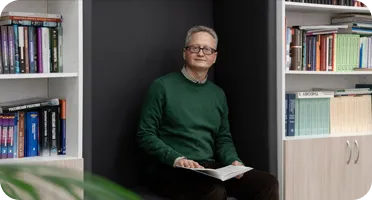
Find out moreMikhail Mitin has over 18 years of experience in the educational field, five of which he held the position of school principal. In his book, Notes of a School Principal, published by AST Publishing House, he collected 55 fascinating stories from school life. Each of these stories taught him an important lesson: respect the child's interests, always strive to understand the root cause of the problem, be attentive and honest, and simplify formalities.
With permission from the publisher, we present a chapter dedicated to homework. Mikhail believes that traditional forms of homework do not bring significant benefits and negatively impact academic motivation. Moreover, such assignments waste time and energy from already overloaded children, their parents, and teachers. It is important to rethink the approach to homework to make it more effective and less stressful for all participants in the educational process.
If homework can be omitted, it shouldn't be assigned.
I am preparing for a presentation at the Moscow International Education Fair on the topic "Why Do Schoolchildren Cheat and What Can Be Done About It?" In preparation, I studied Yandex search statistics for the keyword "GDZ." The results were impressive: this query was searched over 700 million times during the 2020-2021 academic year. I also reviewed the results of a recent survey conducted by our online school among teachers. It turned out that Moscow teachers spend between 180 and 350 hours a year checking homework, and the problem of cheating is among the top five most pressing issues identified by respondents. This situation is puzzling: teachers spend a significant amount of time checking assignments, worry about cheating, yet continue to assign voluminous homework. Is it necessary to reconsider our approach to homeschooling?
In the film "Pay It Forward," elementary school teacher Eugene Simonet assigns his students an unusual homework assignment. He challenges them to develop and implement a project that will contribute to positive change in the world. One of the students presents the idea for the "Pay It Forward" project, which involves performing a kind act for three people in need and then asking them to do three kind acts for others. The simplicity of this idea leads to significant changes in the town where they live and changes the lives of many people. It is important to think about how practical, relevant, and useful modern homework is for a child's development.

Read also:
An unusual practice: a teacher assigns an assignment to create memes. This form of homework helps students develop creativity and critical thinking, as well as better assimilate the educational material. Memes are becoming not only entertaining but also an effective way to convey information. Students can use modern trends and humor to explain complex concepts in an accessible and engaging way. This approach to teaching fosters interaction between teacher and students, making the learning process more engaging and memorable.
In third-grade World Around the World, my daughter was assigned to draw a pet's fur in her worldview class. A special space was reserved for this in her workbook. She attempted to draw a dog's fur, but without explanation, it was difficult to understand what she had created. Similar assignments are found in many modern textbooks, raising questions about how well they contribute to the development of creative skills in children.
Textbook authors lack teaching experience and limited communication with children, leading to the creation of assignments at the end of paragraphs, which often prove ineffective. These assignments, although a mandatory part of the learning process, can not only be time-consuming but also of questionable value. Teachers, unlike authors, know their students better and are able to develop more engaging and useful assignments, as well as adapt those proposed by the authors. Although this requires more time, the results of such assignments are significantly higher, which contributes to a deeper assimilation of the material and the development of students' skills.
The Institute for Education Development Strategy of the Russian Academy of Education conducted a large-scale survey involving 217,000 teachers, students, and their parents. The results of the study showed that over 95% of teachers in Russian schools assign homework daily after each lesson. Moreover, 42% of teachers assign homework on weekends and holidays. Russian high school students reported spending between 2 and 7 hours a day on homework. Furthermore, 70% of parents noted that the homework load has increased significantly. This underscores the relevance of the problem of student overload and the need to reconsider approaches to homework in the educational process.
Most teachers traditionally assign homework, viewing it as their responsibility. Some assign assignments based on material not covered in class, others strive to develop independence and responsibility in students, and still others use homework as a means of reinforcing what has been learned or for assigning additional grades. There are also those who do it simply out of habit, following established traditions. However, it is important to note that Russian law does not require teachers to assign homework. The decision on the necessity and format of homework is made by the educational institution, as well as the teacher themselves, who determines its content and purpose.
In 2016, the Moscow City Methodological Center conducted a study that measured the actual time spent by Moscow schoolchildren on homework. The results showed that fifth-grade students need 4 hours and 45 minutes to complete all assignments, while ninth-grade students spend 5 hours and 25 minutes. These figures significantly exceed the standards established by SanPiN (Sanitary Regulations and Standards) by 2 hours and 45 minutes for fifth-graders and 1 hour and 55 minutes for ninth-graders. If we factor in the time required for homework in the context of the maximum academic workload for high school students, which is 33 hours per week, the total workload reaches almost 60 hours. This is one and a half times longer than the standard workweek for an adult. The question that arises is when students have time to pursue personal affairs, hobbies, and relax.

Read also:
A HSE study found that schoolchildren are experiencing significant academic pressure. Increasing homework and academic demands lead to stress and a decline in the quality of education. Experts note that an important step to improving the situation is optimizing curricula and reducing student workload. Creating a balanced learning environment will help students not only better absorb the material but also develop their creative abilities.
A 2014 study conducted by the Stanford Graduate School of Education found that many students prioritize homework over developing their talents and additional skills, leading to dissatisfaction and frustration. Survey respondents noted that they often view homework as a waste of time and pointless cramming. However, refusing to complete it risks losing points and risking a decline in academic performance. Another study conducted at the University of Oviedo found that middle school students who spent more than 90 minutes a day on homework performed worse on math and chemistry tests. Exceeding this amount of time negatively impacts students' motivation and focus, highlighting the importance of finding the right balance between academic workload and developing personal interests.
Research by experts at the Duke Institute shows that homework in elementary school is ineffective. Younger students often lack the necessary study skills and self-management skills, which hinders them from gaining real benefit from homework. As a result, completing such assignments can be a waste of time and even reduce motivation for learning. The most useful type of homework for elementary school is reading books. However, it should be noted that to date, there is no convincing research that would definitively confirm the positive impact of homework on students' academic performance.
Family social status is an important factor influencing the effectiveness of homework. In their book, "The End of Homework," authors Etta Kralovec and John Buell point out that homework can be perceived as a "punishment for the poor." This assertion raises questions about educational inequality and how students' living conditions affect their learning. It is necessary to pay attention to how the socio-economic status of the family can create barriers to the successful completion of tasks, which ultimately affects the academic performance and motivation of children.
Read also:
The reasons for academic failure are often rooted in the educational Inequality and educational poverty. Educational inequality manifests itself in differences in access to quality educational resources, which impacts students' opportunities. Students from disadvantaged backgrounds often face a lack of support and motivation, which leads to reduced academic achievement. Educational poverty, in turn, refers to a lack of necessary knowledge and skills, which also negatively impacts academic performance. To address these issues, it is necessary to ensure equal access to quality education and support for all students, regardless of their social status. Low-income parents often face limited educational opportunities for their children. They may not have the means to afford tutors or additional courses. In some cases, help may be provided by a grandmother, mother, or older sibling, while others are left alone with homework. In such situations, the child's primary goal is to complete the task by any means necessary to avoid feelings of failure and blend in with their peers. As a result, the same task can be perceived differently depending on the child's circumstances. It's encouraging that digital services and apps for independent learning are emerging today. These tools not only help you get the right answers but also make the learning process engaging with modern content and interactive methods. This way, children can develop their knowledge and skills, opening up new horizons for their education and future.
Homework should cease to be mandatory and become an additional opportunity for students. To achieve this, it is important that it meets several criteria. First, students must understand the purpose of the assignment, as assignments assigned merely as a formality lose their appeal. Interest in the learning process is key. Second, assignments should be designed for children, not their parents. This means that students should be able to complete the assignments independently, without the help of adults or the need to purchase additional materials. Third, assignments should be clear and accessible, with clear grading criteria. If an assignment is too difficult, children can ask their parents for help or simply copy the answers. In this way, homework can become not only a useful but also an engaging part of the educational process.
Assignments should be reasonable in scope and deadlines. If a child is forced to do homework until midnight, this indicates that teachers have not coordinated the workload and deadlines. Assigning homework simply to fill children's time and try to convey as much information as possible is an ineffective approach. This can lead to frustration in children and conflict within the family. Children have many other activities that are also important for their development and well-being. LESSON 48: For homework to truly contribute to student development and academic achievement, it must be interesting, meaningful, practical, and achievable. It is important to establish clear assessment criteria and provide feedback. Otherwise, homework can become an additional burden, taking up a child's time and negatively impacting their motivation to learn. Avoid depriving children of walks, computer games, and socializing with friends if they fail to complete homework. Strict monitoring can cause stress and reduce motivation. Parents should be understanding about homework, without exaggerating its importance, support their children, and inform teachers if serious difficulties arise.
Revised text:
Read more:
- Do teachers believe that their students' success depends on them?
- What is taught in modern Russian schools?
- The more unsuccessful students a teacher has in his class, the more responsibility he attributes to the family.
Methodologist Profession from Beginner to Advanced
You will develop skills in developing curricula for online and offline courses. You will master modern teaching practices, structure your experience, and become a more sought-after specialist.
Find out more