Contents:
Learn: The Profession of a Methodologist from Scratch to PRO
Learn MoreMany users already perceive the advanced EdTech service as a standard: convenient personal accounts, analytical tools, personalized assistants, attractive course design and high-quality video. However, there are regions where modern technologies are not fully implemented. In such cases, traditional methods, such as SMS messaging, come to the rescue and continue to play an important role in the educational process.
Katie Jordan, a researcher from Cambridge, has collected numerous examples of the use of SMS messaging for educational purposes. In 2021, she analyzed existing research on this topic and compiled a review that demonstrates how actively the practice of teaching via SMS is being studied. We will consider how teaching via text messages is organized and why this form of communication is becoming increasingly popular.
School curriculum and other lessons via SMS
In the poorest countries, educational materials are most often distributed via SMS messages, since traditional methods of communication are not yet as widespread there. Services that deliver educational content via SMS function like modern online schools, offering their own distance learning systems and tools for analytics and adaptation. In the media, such platforms are often referred to as SMS-based learning platforms, emphasizing their emphasis on learning through text messages. This helps overcome barriers to accessing education and provide students with the necessary learning resources. The M-Shule platform in Kenya is one of the most prominent examples of the use of mobile technology for education. Launched in 2017, it aims to educate both children and adults. Despite low access to computers and the internet for most Kenyans, mobile coverage in the country is quite strong. This creates a unique opportunity for online learning via mobile devices. Furthermore, Kenya is home to a significant number of refugees from neighboring countries who also need educational resources. M-Shule offers access to quality education, which contributes to the improvement of the level of education and social development in the region.

All M-Shule programs are available in English and Swahili. Materials are sent to users via text messages or messaging apps such as WhatsApp. Learning is adaptive: the system analyzes student data and offers content tailored to their level of difficulty. This includes theory, tests, and a variety of activities, ensuring effective and personalized learning.
New platform users complete preliminary surveys and provide demographic information to receive courses tailored to their age and needs. This information is available to the platform's creators and allows students, their parents, and teachers to track the progress and achievements of each student, especially for children.
Eneza Education is a successful educational service operating in Kenya and Côte d'Ivoire. It provides access to school educational programs through a simple mobile platform. To begin learning, users simply send a code to a short code. In 2020, with the support of the Mastercard charitable foundation, Eneza Education launched SMS courses in Rwanda. This project demonstrates how mobile technologies can improve access to education in developing countries by making learning more accessible and convenient for students.
Eneza Education stands out from other educational platforms thanks to its "Ask a Teacher" feature, which allows students to pose specific questions to professional educators. In Rwanda, the platform reported impressive results: in one year, they answered more than 880,000 questions from 250,000 students. This feature promotes deeper understanding of the curriculum and supports active student engagement, making Eneza Education a valuable tool for education in the region.
The Dr Math project, implemented in South Africa, demonstrates the effective use of the Mxit messenger for educational purposes. This platform offered a more accessible way to interact than traditional SMS services. Dr Math offered a dedicated chat room where students could ask math questions and receive answers from tutors—students from local universities. The service was not limited to text answers; it also included games, quizzes, and the ability to receive hints on math terms. Thus, Dr. Math was a full-fledged educational platform based on a text format. Unfortunately, the project is now discontinued.

Study also:
A student from St. Petersburg has developed a unique platform on which schoolchildren teach their peers. This project provides an opportunity for students to share knowledge and experience and strengthen their teaching skills. The platform is focused on creating a community where everyone can become both teacher and student, which promotes a deeper understanding of the educational material. The idea is that student-led learning becomes more accessible and effective. Thus, the project not only helps students improve their academic performance but also develops communication and leadership skills.
Text messaging is actively used for collaborative learning in various subjects, including English, mathematics, and healthy lifestyles. In her article, Katie Jordan cites examples of studies with limited samples that used similar teaching methods. Despite the positive results of these experiments, the researcher emphasizes that the effectiveness of text messaging in the educational process requires further scientific study.
WhatsApp is also actively used for educational purposes. An example is the story of a self-taught tutor from Zimbabwe, Maxwell Chimedza, who trains his students for school exams through this messenger. The application has become an indispensable tool in various countries, especially in the context of the need to quickly transition to distance learning. For example, WhatsApp significantly helped Lebanese schoolchildren after the explosion in the port of Beirut and children in India during the closure of schools due to air pollution. The use of the messenger in the educational process underscores its importance and versatility in the modern context.
How text messages help teachers in poor countries
Text messages continue to be used for teaching both children and adults. In the 2010s, researchers actively conducted experiments aimed at training teachers. The goal of these studies was to determine whether this tool could assist teachers and positively impact student academic performance. The results showed that the integration of text messages into the educational process helps improve communication between teachers and students, and also increases students' motivation to learn.

A study conducted by Swiss scientists in 2018-2019 in Côte d'Ivoire with the support of the local Ministry of Education revealed There are serious problems in the country's school system. One of the main reasons for the low level of education is the insufficient qualifications of local teachers, which means that by high school, half of students cannot read, and two-thirds do not have basic math skills. Furthermore, teachers are frequently absent from classes; according to research, they are absent approximately 44% of the time. Problems also affect the students themselves, among whom cases of child labor and physical punishment are common. The high rate of student dropouts and repeated grades highlights the ineffectiveness of the education system in Côte d'Ivoire. Educational researchers conducted an experiment to determine whether it is possible to increase teacher motivation through parental involvement while minimizing parental involvement. As part of the study, teachers in 24 schools were sent weekly text messages with tips and recommendations on implementing various teaching strategies. In 26 schools, the mailing list was sent to both teachers and parents, who received recommendations for extracurricular activities, advice on active interaction with teachers, and warnings against physical punishment. In some schools, messages were sent only to parents, while 25 schools constituted a control group in which the mailing list was not sent. The study's results may provide useful insights into the impact of communication on the educational process and teacher motivation.
The study's results showed partial success: the impact on teachers contributed to a decrease in the number of students dropping out of school. Similar results were obtained when messages were sent to parents. However, when messages were sent to both groups simultaneously, there was no effect—the dropout rate remained the same. Interestingly, text messages sent only to teachers had no significant impact on their attendance in classes, while SMS messages to parents contributed to an increase in teacher attendance. In the group where notifications were sent to both teachers and parents, the results were the worst: teacher attendance even decreased. The impact of SMS was particularly noticeable among those teachers who demonstrated the least activity.
Katie Jordan cited the example of the SMS Story initiative, launched by the Australian government in 2013 in Papua New Guinea. This project aimed to support primary school teachers in rural schools. As part of the program, teachers were sent lesson plans for English and history over the course of two semesters. According to the Papua New Guinea Department of Education, the experiment showed impressive results: teachers who received these messages actively used the developed plans, which contributed to the improvement of children's reading skills in English. Thus, the SMS Story project became a successful example of the introduction of technology into education, demonstrating how innovative approaches can improve the quality of education in remote areas.
In 2015, the project was implemented in India as an experiment, which involved 50 teachers from public schools and 2,408 students, divided into control and experimental groups. For seven weeks, teachers were sent text messages. As a result, the students who participated in the experiment demonstrated improved English reading skills, which allowed them to read faster and better than their peers who studied according to traditional programs.
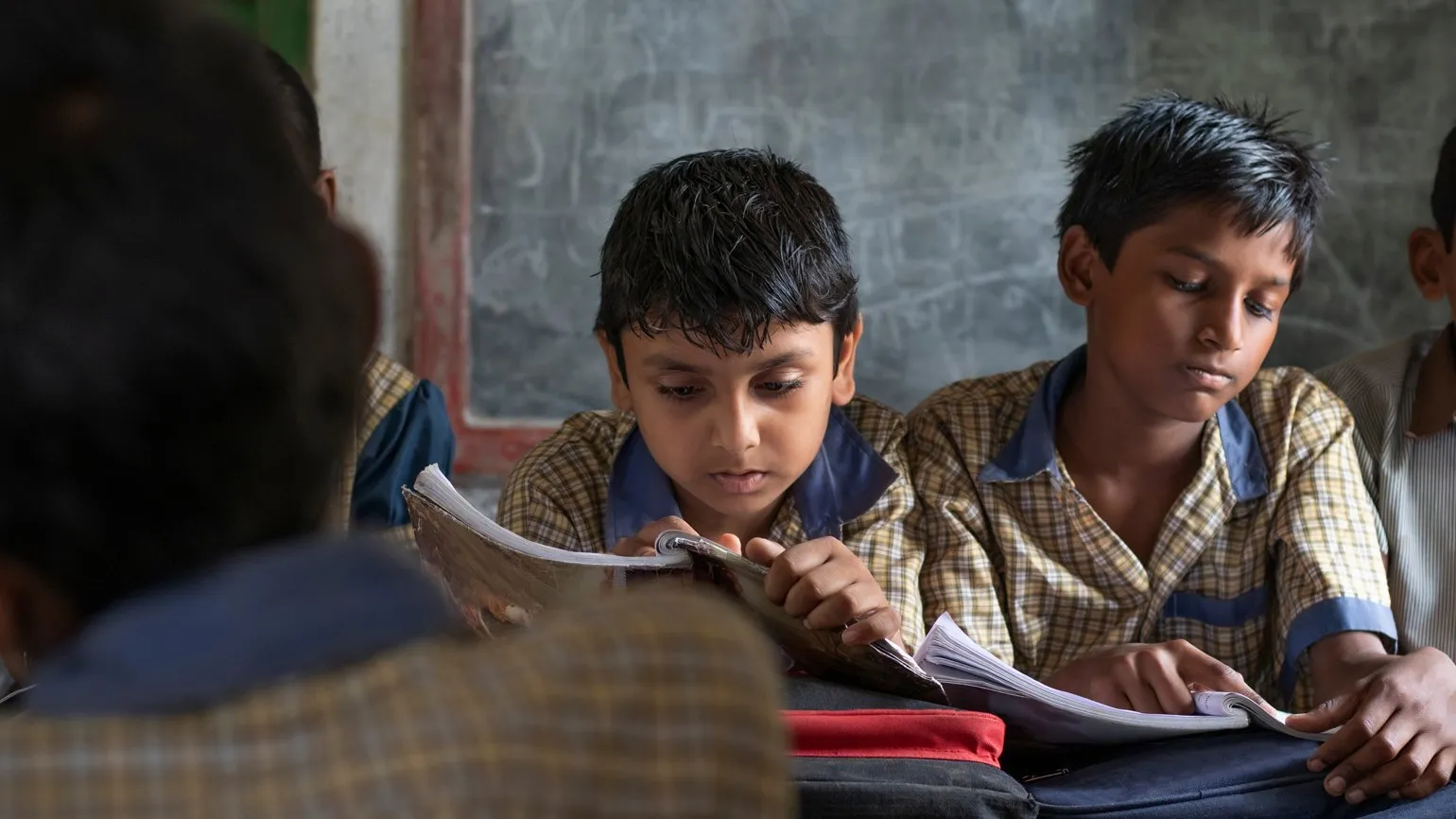
At the same time, an interesting experiment was being conducted in Malawi using SMS messaging to improve literacy among primary school children. This African country has extremely low literacy rates among children, which is due to a shortage of qualified teachers. Officially, there is a teacher-to-student ratio of approximately 76 students, but research suggests the actual ratio may be significantly worse. This leads to insufficient preparation and instruction for children, which negatively impacts their ability to read and understand text. The SMS experiment was aimed at drawing attention to this problem and finding effective solutions for improving literacy in the country.
The problem of teacher training was addressed through specialized training and coaching. Coaches are specialists who visit schools, observe lessons, and provide teachers with recommendations and feedback on their work. However, coaches are not easy to find, and their visits are quite infrequent. Therefore, the researchers offered additional support to teachers: between training sessions and coaching visits, they were sent SMS messages with simple and effective tips on teaching methods and classroom organization. This approach allows teachers to receive valuable recommendations and improve their skills, which ultimately contributes to improved educational quality.
The initial intention was to test whether teachers who received the messages would be more effective than those who did not. However, the experiment was not rigorous, as most teachers shared the messages with colleagues. This fact in itself is a significant indicator: teachers recognized the information as valuable and important enough to pass on to others, and messages have become a convenient tool for disseminating new knowledge.
Where else is SMS learning used?
Text learning is most often associated with the poorest countries and school systems. However, this is not the only area of application. In California, USA, SMS learning has become an important component of the Listos California disaster preparedness program, initiated by the state governor's office. This program is aimed at ensuring the safety of residents and effective response to emergencies using accessible and modern technology. The use of text messages allows for the quick and effective delivery of important information to a wide audience, which is especially relevant in the event of natural disasters.
The authors of the initiative decided to teach California residents, particularly those living in remote areas, how to effectively respond to a wildfire, which poses a serious threat to this area. In collaboration with a private microlearning platform, they launched a unique SMS course. To enroll, simply send a message to a short code. For five days, users will receive educational materials via SMS, which take just five minutes a day to complete. All mini-course materials are presented in 12 languages, ensuring accessibility to a wide audience.
More than 100,000 California residents have taken the free emergency preparedness course. According to Arist, the platform that developed the course, 93% of participants reported a significant increase in confidence in their preparedness for potential disasters.
The results of projects and experiments with SMS messaging highlight the importance of simplicity and accessibility of technology. Despite the dominance of modern solutions such as ChatGPT, traditional communication methods remain relevant and in demand. SMS messaging offers an effective way to interact that does not require complex skills or high-speed internet. This technology continues to play a significant role in various areas, from business to personal communications, confirming that low tech still has the right to exist and can successfully compete with more complex solutions.
Read also:
- 7 examples of EdTech solutions that empower teachers and schools
- What AI assistants have learned to do in education
- An unusual practice: how a school garden helps children... learn
- The Bell-Lancaster system of education: what it was
The Methodologist profession from scratch to PRO
You will improve your skills in developing curricula for online and offline courses. You will master modern pedagogical practices, structure your experience and become a more sought-after specialist.
Find out more