Contents:

Learn: The Profession of a Methodologist from Scratch to PRO
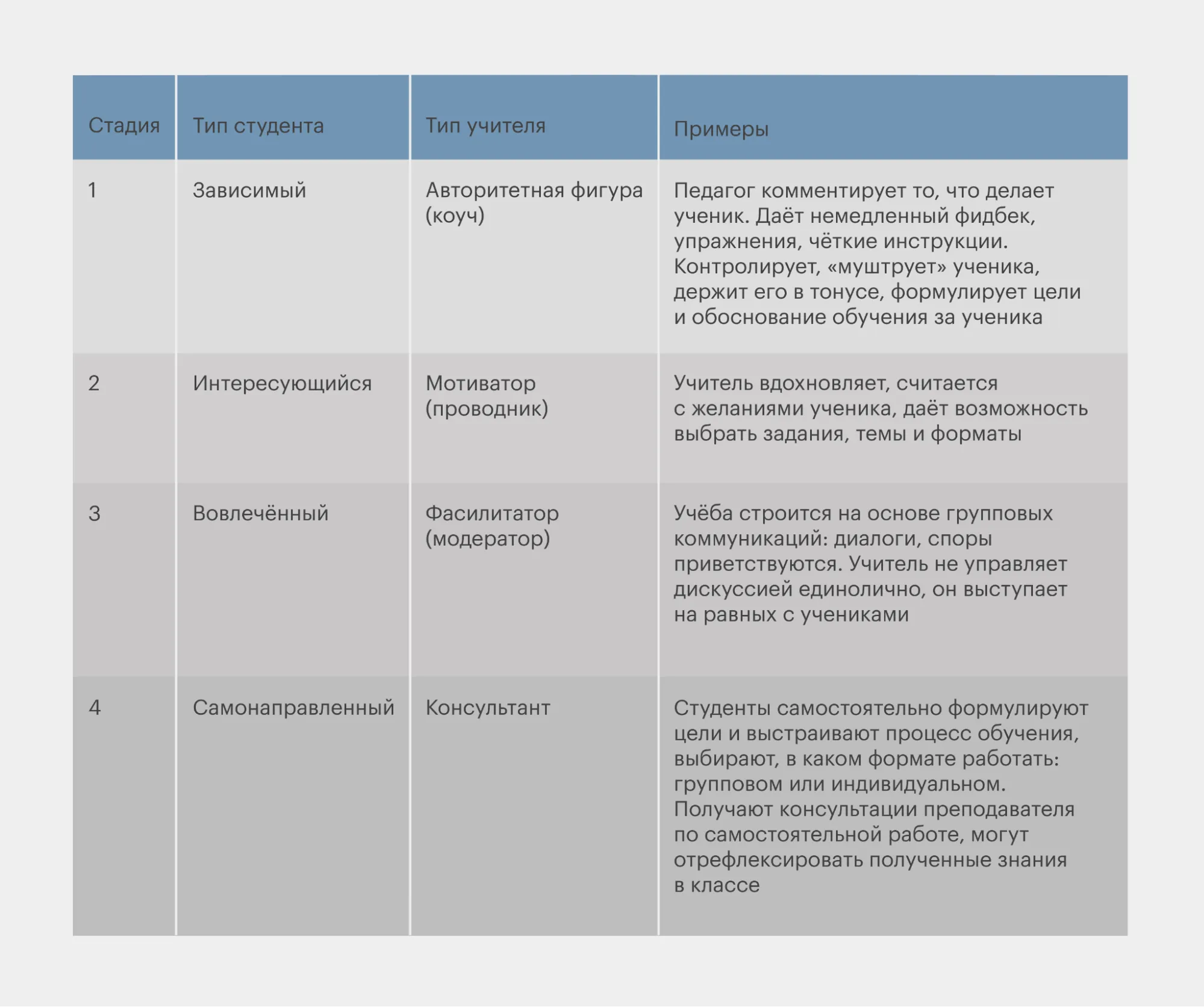
Learn MoreThe concept of self-directed learning, developed by Gerald Grow, a professor of journalism and author of educational materials, is an important approach in educational practice. The Staged Self-Directed Learning Model (SSDL) describes the process by which a learner moves from a teacher-dependent state to a self-directed state.
This process involves several stages. In the first stage, the student is dependent on the teacher, possessing limited knowledge and uncertain expectations of the learning material. As they progress through the stages, they begin to formulate their educational goals and develop independent learning skills. Ultimately, they reach the fourth stage, where they become full-fledged co-authors of the course, actively participating in the learning process and taking responsibility for their own education.This model emphasizes the importance of developing independence and initiative in students, which contributes to deeper and more meaningful learning.
We present a translation of the table, which details all four stages of the transition.
When designing an educational product, it's important to consider a number of key aspects to achieve maximum effectiveness. First, it's essential to identify the target audience and their needs. This will help shape the course structure and content to meet student expectations.
The next step is to develop clear and measurable learning goals and objectives. This will not only help you organize the learning process properly but also evaluate its results.
Also, it's worth paying attention to the choice of teaching methods and formats. Interactive elements such as videos, quizzes, and discussions can significantly increase student engagement and improve their understanding of the material.
The use of technology is equally important. Online learning platforms and content creation tools can significantly simplify the process of developing and implementing an educational product.
Remember to constantly solicit feedback from course participants. This will help you make necessary changes and improvements, as well as adapt the course to the changing needs of the audience.
Ultimately, designing an educational product requires a comprehensive approach that includes research, planning, implementation, and evaluation. Correct application of these principles will help create a high-quality and in-demand educational product.
The SSDL model plays a key role in online education, helping to answer an important question: how to ensure course completion by participants? Designing a course according to the four stages of the Grow model effectively solves this problem. As students become more deeply engaged in the learning process, they become more active participants, taking on the role of "co-creator" of the course. This increases the likelihood that they will successfully complete the course. It's important to note that as the student's role changes, so too should the role of the instructor, who manages the educational process. When designing a course, it's important to consider not only student actions but also changes in the teacher's objectives and approaches, which contributes to a more effective learning environment.
The Methodologist profession from scratch to PRO
You will improve your skills in developing curricula for online and offline courses. Master modern teaching practices, structure your experience, and become a more sought-after specialist.
Find out more