Contents:

Learn: Profession Methodist with From zero to PRO
Learn moreOutstanding figures studied at this school, including the Roerich brothers, artists Valentin Serov and Alexander Benois, as well as the renowned publicist and literary critic Dmitry Filosofov and academician Dmitry Likhachev. Many scientists in the natural and mathematical sciences, humanities, architecture, and social activities, whose names are less well known today, but who in their time made significant contributions to the development of science and culture, also received their education here. Among them was Leonid Tikhvinsky, an engineer and author of numerous patents in electrical engineering and power engineering. Due to the revolution, he was forced to emigrate, and he became a professor of mechanics at the University of California, Berkeley. This school played a vital role in shaping future leaders and innovators who left a lasting mark in various fields of science and art.
What exactly was this unique school like, which produced both successful technical professionals and renowned humanities scholars, as well as renowned artists? This is especially interesting given that in pre-revolutionary Russia, schools were clearly divided into two types: gymnasiums, which emphasized the humanities, and real schools, which specialized in the natural sciences and technical subjects. The uniqueness of this school lies in its ability to combine different educational areas, which allowed students to develop a wide range of skills and knowledge necessary for successful careers in various fields.
Who was Karl May and how he opened his school
Karl Ivanovich May (1820-1895) was born in St. Petersburg to a family consisting of a Swedish mother and a German father, which predetermined his multinational upbringing. He received a high-quality education at home and, according to some sources, also graduated from the French elementary school of Madame Courvoisier. At the age of 13, he entered the famous private German school Petrischule, also known as the Main German School of St. Peter. Unfortunately, in 1834, his father died, and soon after he lost his uncle, which negatively impacted the family's financial situation. Facing financial difficulties, Karl began working as a tutor, teaching younger students and less capable peers. Karl May's artistic career became a shining example of overcoming life's difficulties and striving for knowledge.
In his youth, Karl demonstrated patience and perseverance while giving private lessons, striving to explain material clearly and vividly. His teaching methods were highly praised, and at the age of 16, he took a position as an assistant teacher at a nearby boarding school. He continued his studies successfully and graduated from the Petrischule with honors.
Karl dreamed of attending university, but he had to devote every day to private lessons to save money for his own education and the education of his three sisters. Financial difficulties were so severe that in the evenings, the family often sat in the dark, saving on candles. Despite this, Karl managed to save enough money for his sisters to complete their education at school, and for him to enroll in the history and philology department of St. Petersburg University. During his studies, Karl continued to give private lessons, earning a living and supporting his family. Karl May graduated with honors from the university, which attracted attention to the young teacher. He was invited to teach the youngest son of Dmitry Dashkov, the former Minister of Justice and founder of the Arzamas literary society. The Dashkovs often took their teacher with them on long trips abroad, allowing May to continue his education by attending lectures at European universities. Inspired by the renowned geographer Karl Ritter, May decided to devote his life to teaching geography. When his student Dashkov grew up, Karl May began working in various educational institutions, and in 1852 he became a teacher at the St. Petersburg Forestry and Land Surveying Institute, where he quickly gained recognition among his students. In addition to his primary work, he also taught private lessons, which contributed to his professional growth and popularity. By the time he opened his school, Karl May had established himself as a highly qualified educator. His friends and acquaintances suggested he establish a German school on Vasilievsky Island, where many foreigners lived at the time, but existing educational institutions failed to meet their educational standards. May accepted the offer and, on September 10, 1856, gathered ten boys in the living room of his house on the First Line of Vasilievsky Island to begin classes. He personally taught arithmetic, general history, and geography, while other subjects were taught by his friends, including university professors. Soon the number of students tripled, and they were divided into two classes based on age and level. The establishment of this school was an important step in the development of the educational environment on Vasilievsky Island and contributed to improving the quality of education for foreign citizens.
In 1860, the Karl May School enrolled 83 students, divided into five classes. That same year, May petitioned the school's trustee to grant his institution official status. The petition was granted, and the school received the unique name "Real School of the Gymnasium Class," emphasizing its emphasis on applied learning. Due to lack of space in the old wing, the school soon moved to a new building at 13, 10th Line of Vasilievsky Island. This move marked an important stage in the development of the educational institution, which continued to attract students seeking practical knowledge.
Why May's School Was Special
From first to fourth grade, the curriculum at the school was the same for all students. Starting with the fifth grade, parents or the students themselves could choose the direction of further education. Students who identified themselves as "gymnasium students" studied Latin and Greek, similar to classical gymnasiums. At the same time, "realists" The curriculum focused on natural history, chemistry, drawing and drafting, advanced mathematics, and modern languages such as German, French, and, optionally, English. This corresponded to the curriculum of the Realgymnasiums, which were called Realschule (Realschule) until 1871. The choice of a field of study in the fifth grade allowed children to develop their interests and abilities, which contributed to a deeper understanding of the subjects and prepared them for future professional work.
The choice of one of two fields of study provided graduates with the opportunity to enroll in universities or specialized technical institutes, depending on their preferences. This decision played a key role in shaping their future careers and professional advancement.
The school also had a small commercial department, which taught students the basics of entrepreneurship. Within the framework of this department, classes were held on merchant arithmetic, which contributed to the formation of skills necessary for successful work in business.

Find out more:
Pre-revolutionary Russia was known for its unique education system, which underwent significant changes over the years of its existence. This article presents ten key facts about schools in pre-revolutionary Russia that will help understand the peculiarities of the educational system of that time.
Firstly, education in pre-revolutionary Russia was not accessible to all segments of society. Although there were urban and rural schools, most schools were concentrated in large cities, and only children from wealthy families could afford a quality education.
Secondly, the education system was divided into several levels. There were primary, secondary, and higher educational institutions, each with its own characteristics and educational requirements. Primary schools provided basic knowledge, while gymnasiums and real schools prepared students for further education at universities.
Thirdly, the main subjects in the school curriculum were Russian language, mathematics, history, and geography. However, gymnasiums also taught foreign languages, natural sciences, and philosophy, which contributed to a deeper understanding of the world.
The fourth fact is that in pre-revolutionary Russia there were various types of schools, including classes for girls, which had their own characteristics and educational emphases. This contributed to an increase in the level of education among women, albeit within a limited framework.
The fifth fact is that many teachers in pre-revolutionary Russia were highly qualified specialists who strove to instill in students a love of knowledge. However, there were also cases of a shortage of qualified personnel, which negatively affected the quality of education.
The sixth fact is that school education in Russia was strongly influenced by religious institutions. Many schools were under the control of the church, which was reflected in the curriculum and the upbringing of students.
The seventh fact is that at the end of the 19th century, an educational reform began aimed at improving the accessibility and quality of education. The foundations were laid for the creation of a system of compulsory primary education, which significantly changed the country's educational landscape.
The eighth fact is that the educational process in pre-revolutionary Russia often took place under conditions of strict discipline. The curriculum was challenging, and many students experienced significant pressure.
The ninth fact is that graduates of pre-revolutionary schools often had the opportunity to continue their education abroad, which facilitated the exchange of knowledge and cultural influences.
Finally, the tenth fact is that the educational system in pre-revolutionary Russia left a noticeable mark on the history of the country, preparing many outstanding individuals who later contributed to various fields of science, culture, and public life.
These facts emphasize the importance of understanding the educational system of pre-revolutionary Russia and its influence on the development of society.
In 1882, the school received the status of an eight-grade gymnasium from the Ministry of Public Education, which provided graduates with a number of benefits, including a reduced period of military service. Karl May was officially appointed director of the school, while previously his position was defined as the founder or owner of a private school. This event marked a significant step in the development of the educational system, ensuring higher standards of education and training for young people. By 1884, the gymnasium had 177 students. The school admitted only boys, and tuition was 120 rubles for preparatory classes, 160 rubles for other classes, and 600 rubles with boarding. These rates were established at the gymnasium's opening and remained unchanged for nearly half a century. A year of study at this gymnasium without boarding cost approximately three times more than at state gymnasiums. Only wealthy citizens and high-ranking officials, such as state councilors (Class V of the Table of Ranks), whose annual salary was 652 rubles 50 kopecks, could afford such expenses. For most ordinary people, these amounts were prohibitive: the tuition for a year of study was equivalent to ten months' wages for an average industrial worker in the 1880s. The school enrolled not only children from wealthy families, but also young people from humble backgrounds, such as a doorman who had won the lottery, a mechanic, or a peasant. They were treated with the same respect as more distinguished students. Fundraising efforts, initiated by former students, were often organized to support students in need. Minutes of meetings of the teachers' council and the council of educators contain entries reflecting this practice. For example, on January 29, 1916, it was recorded: "Sixth-grade student Myznikov cannot attend school due to a lack of shoes. In this regard, it was decided to give him 20 rubles from the percentage deductions." This demonstrates the educational institution's commitment to ensuring equal opportunities for all students, regardless of their social status.
Until 1884, most subjects, including Latin and Greek, were taught in German. This posed certain difficulties for the many Russian students who began enrolling at the school immediately after its opening. However, this approach helped broaden their horizons and deepen their knowledge in various fields.
In founding the school, Karl May sought to apply his experience gained from private lessons and address the shortcomings inherent in the classical and real gymnasiums of his time. He chose as his motto the well-known quote by Jan Amos Komensky: "First love, then teach." This principle became the foundation of his approach both to the educational process and to the selection and evaluation of teachers. Karl May understood that successful learning is impossible without creating a trusting and supportive atmosphere, which became the basis of his educational philosophy.

Educational institutions did not apply anti-Semitic quotas that limited the percentage of Jews among students. Germans, Russians, French, Kyrgyz, Tatars, Poles, and Jews studied together, without conflicts based on nationality. Any form of chauvinism was condemned. One example of this was the requirement that a teacher from Berlin publicly apologize to the class for his unflattering remarks about Russian youth.
Against the strict discipline typical of state gymnasiums, May's school stood out for its unique democratic spirit. Respect for elders on the part of younger students was not just the norm, but a true tradition, shared by both students and teachers. This atmosphere of mutual understanding and support fostered a comfortable educational environment where everyone could develop their abilities and talents.
Teachers and caregivers addressed all students formally and by their last name, emphasizing respect and discipline in the educational process. When young Prince Gagarin demanded to be addressed by his official title, he was immediately expelled from class, and from then on, he never displayed such arrogance. Similarly, when a close relative of the Minister of Public Education, Dmitry Tolstoy, committed a serious offense, the school principal, May, without hesitation, decided to expel him. Even displays of wealth, such as arriving at school in carriages or automobiles, which began to appear in the late 19th century among the most influential people, were considered unacceptable. These measures emphasized the strict morals and high standards of student behavior in the educational system of that time.
Every day, students devoted half an hour to gymnastics classes, which contributed to their physical development. During recess, the children were free to run, jump, play, and wrestle. Teachers stationed in the hallways intervened only if the children became too active, helping to maintain order and safety. Regular physical activity not only improves health but also promotes team spirit and social skills in children.
The school day began with a greeting from the principal, who personally greeted the students with a handshake. All students, regardless of religion, gathered for a short prayer in the recreation hall. Lessons ran from 9:00 AM to 4:00 PM, and on Wednesdays and Saturdays from 8:00 AM to 12:00 PM. Each lesson lasted 53 minutes, with short breaks of 7 minutes between lessons. A longer recess was scheduled from 12:00 PM to 1:00 PM, during which 30 minutes of gymnastics were held and a snack consisting of milk and a bun. At the end of classes, Karl Ivanovich shook hands with all students and carefully ensured that they were neat, dressed appropriately for the weather, and buttoned up. This approach fostered discipline and order in the educational process, which was important for fostering a responsible attitude toward learning in students.
The director regularly dined with the students and teachers living in the school's boarding house and readily interacted with his charges during breaks. According to graduates, he showed concern for his students, striving to support them in their studies and life. For example, he taught extra lessons for those who were lagging behind and personally visited the sick, which emphasized his paternal attitude and genuine interest in the well-being of each student.
Students and teachers did not wear mandatory uniforms, as was customary in state gymnasiums. Dmitry Filosofov, a graduate of the class of 1890, recalled that when the district inspector arrived, an antique tailcoat, scented with camphor, would be retrieved from the storerooms, and Karl Ivanovich would temporarily become the "director." At that moment, the entire school sensed that something unusual had happened. An alien and hostile force had intruded into the calm and cozy atmosphere of the school. Fortunately, the management did not visit the gymnasium very often.

Read also:
Historical Traditions: Paustovsky on the Portioning of Gymnasium Caps
In his work Paustovsky touches on the fascinating topic of school caps. This deeply rooted tradition has become a symbol of youthful life and unity among students. Damaging school caps is not just a prank, but a ritual that unites generations, conveying the spirit of the school and the atmosphere of youth. Paustovsky emphasizes that such rituals enrich school memories and create a unique camaraderie atmosphere among students. The theme of school caps, their damage, and their significance in the lives of schoolchildren remains relevant in the modern context, recalling the importance of traditions and collective experiences in the educational environment.
In the children's group, May strove to create an atmosphere of cohesion and unity. He encouraged rituals, such as washing with snow, for acceptance into the ranks. However, May did not tolerate informing. If a situation arose where the culprit of an offense needed to be identified, but they remained unknown, the entire class was subject to punishment. Only those who confessed to the offense at the insistence of their classmates were exempted from consequences. Indications from others regarding the culprit were ignored and did not exempt the class from punishment. These memoirs were left by Dmitry Semyonov, a graduate of the Maya School in 1872, emphasizing the importance of honesty and unity within the group. Punishments at the Maya School were only used for serious offenses. Disciplinary methods were lenient compared to those in state and many private schools, but the school could not be considered entirely progressive. For example, a student who made a mistake was not deprived of lunch entirely, but only limited in dessert. Punishment could include being forced to rewrite an unlearned lesson 25 to 40 times or being left alone in the classroom after school, but for no more than three hours. In rare cases, an offending student might be briefly locked in a "disciplinary cell," a room used to store old textbooks. From a modern perspective, such measures may seem harsh, but the historical context must be considered: in those days, disobedient students could be punished much more severely, being left on bread and water for several days or placed in a real punishment cell for up to three days. This information provides a better understanding of approaches to discipline and punishment in educational institutions of the past.
Karl May preferred to influence people not by force, but by persuasion. According to the memoirs of Alexander Benois, who studied at the school from 1885 to 1890, just a sad look from the director through his glasses had a powerful effect on an offending student. If Karl Ivanovich refused to shake the offender's hand during the morning greeting, this served as an effective punishment and made it clear that he was extremely displeased. However, May preferred to deliver his comments and reprimands in private, emphasizing his individual approach to each student. This style of interaction fostered respect and understanding among students, which in turn fostered a positive atmosphere within the school.
May's School stood out among state gymnasiums due to its lack of a formal atmosphere and a coercive approach to learning. This created a unique atmosphere, imbued with the "May spirit," which left unforgettable memories for both former students and teachers. It was this environment that fostered the free development of creative abilities and the formation of strong bonds between students and teachers.
School holidays played a significant role in the life of the gymnasium, particularly the anniversaries of great poets and writers. Students independently developed holiday programs and raised funds for their implementation. They organized performances and concerts, inviting parents and guests. One of the significant events was the holiday on October 29 (November 10, new style), dedicated to the birthday of the school's founder. The event was celebrated annually with concerts, alumni reunions, the presentation of certificates and medals, and hot chocolate for all participants. This tradition was maintained even in the tumultuous year of 1917, emphasizing the importance of cultural events in the educational process of the gymnasium.


In the late 1850s, one of the school holidays began with a procession in which flags were decorated with images of a May beetle. This symbol made a great impression on the director and those present, and soon became the emblem of the school. The students began calling themselves "May beetles", and this nickname became almost official, which made them proud.
How were classes at school?
Teachers expected significant effort from students throughout the school year. Therefore, quizzes were often held on long-covered topics, which forced the students to regularly review the material covered and connect it with new topics. This approach fostered a deeper understanding and retention of knowledge, rather than simply rote memorization of the current lesson, which could soon be forgotten.
May's school employed highly qualified teachers with university degrees. Here one could meet renowned professors, outstanding educators, and authors of textbooks, as well as popular children's books. Among the teachers, prominent figures included Karl Wenig, professor of historical painting at the Academy of Arts; Orest Khvolson, emeritus professor of physics and corresponding member of the St. Petersburg Academy of Sciences; and Karl Luegebiel, one of the founders of the St. Petersburg Pedagogical Society, and his wife, Sofya Andreyevna, who founded the first kindergarten in Russia. These teachers made a significant contribution to the development of education and culture in Russia.
Teachers from abroad are often invited to teach foreign languages. This allows children to gain knowledge directly from native speakers, which contributes to better acquisition and understanding of the language. Involving foreign teachers enriches the educational process and helps develop students' language skills.

The school also had mediocre teachers, whose lessons, according to Alexander Benois, were dominated by "despondency and drowsiness." These teachers were unable to inspire students, which negatively impacted the learning process and motivation. Lack of interest and engagement in classes led to a decline in academic performance and the development of a negative attitude toward learning. Therefore, it is important to choose teachers who can create an atmosphere conducive to active learning and development.
Karl May was a prominent exponent of progressive pedagogy, emphasizing an individualized approach to each student and the importance of visual aids in the learning process. He emphasized the need to develop independent thinking skills in children and prepare them for productive work in society. Consequently, natural sciences, recognized at the time as the primary tool for practice-oriented learning, occupied significantly more time in the curriculum than in state gymnasiums. This approach contributed not only to a deeper understanding of the subjects, but also to the development of critical thinking in students.

Read also:
Georg Kerschensteiner and his labor school: the influence of a physics teacher on German
Georg Kerschensteiner became a significant figure in the history of German education thanks to his concept of the work school. His approach to education was based on the integration of practical activities with theoretical knowledge, which allowed students not only to assimilate the material but also to apply it in practice. Kerschensteiner believed that education should be aimed at developing not only mental abilities but also practical skills, which makes his ideas relevant in the modern educational context.
The work school proposed by Kerschensteiner emphasized the importance of manual labor and its role in education. He insisted that education should include elements of practical work, which contributes to a deeper understanding of the subject and the development of creative thinking. This approach made it possible to change traditional teaching methods and introduce innovative practices into the educational process.
Kerschensteiner's ideas had a significant influence on the development of the education system in Germany, inspiring educators to implement new teaching methods. His school of labor became the foundation for the development of modern educational standards, which emphasize the need to combine theory and practice. Thanks to his contributions, German education became more adaptive and focused on the needs of students, preparing them for the challenges of the modern world.
Karl May independently developed the first curricula for his school, which were distinguished by their simplicity and clarity. He believed that the use of imagery and objects, as well as elements of play, would help attract children's attention to the learning process. Later, after receiving official status in 1882, the school was required to follow ministerial curricula, and May sought to integrate his progressive ideas into them.
May actively supported students who showed interest in certain subjects or activities, even if this negatively impacted the study of other disciplines. He believed that the resulting gaps in knowledge did not pose a serious problem, since they could be filled later. May emphasized that coercion to study could discourage interest in learning in general. He also actively encouraged discussions with students on issues of state and public life during lessons, believing that such conversations contributed to the comprehensive development of the individual.
Evaluation during the quarters was based on a five-point system, accurate to hundredths, with separate assessments for achievement and diligence in each subject. Dmitry Semyonov, who possessed outstanding mathematical abilities, received a grade of 1 for diligence and a grade of 5 for achievement in geometry in the sixth grade. The highest grade, awarded in red ink, was extremely rare, as the teachers' demands were very high. In the first 25 years of the school's existence, there was not a single student with an average grade of 5 on their certificate. The best students had an average grade of no more than 4.89, emphasizing the high level of academic discipline and rigor in grading.
Promotion to the next grade required an average grade of at least a C in each subject. State gymnasiums did not hold transfer exams between classes. Sometimes, at the end of the school year, Karl Ivanovich would unexpectedly arrive at the classroom and, together with the teacher, quiz several students, asking questions from any part of the curriculum. Students experiencing difficulties in certain subjects were given assignments for the summer holidays. At the beginning of the following school year, a final decision was made on whether to transfer such students to another class or repeat a year of study.
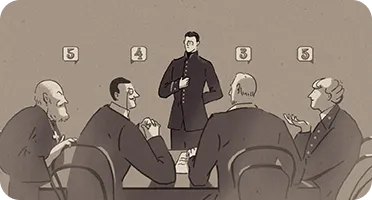
To prepare students for the gymnasium exams, which students from all private gymnasiums took to receive a certificate and enter university, May organized trial tests. Visiting professors and full members of the St. Petersburg Academy of Sciences participated in the initial stages of these tests. This ensured a high level of preparation and compliance with standards, which contributed to the successful passing of exams and further admission to higher educational institutions.
Read also:
Long before the introduction of the Unified State Exam, the system of examinations for admission to Universities in Tsarist Russia had their own characteristics and traditions. At that time, examinations were an important stage in the educational system, determining the future of applicants. Admission to universities was linked to state examinations that tested knowledge in core subjects such as mathematics, physics, literature, and languages.
The examination process often consisted of several stages, including oral and written tests. Applicants had to demonstrate not only theoretical knowledge but also the ability to apply it in practice. Exams were held both at the gymnasium level and at the universities themselves, where candidates faced high demands and strict assessment criteria.
Tutors and specialized courses played an important role in exam preparation, helping students deepen their knowledge and prepare for complex questions. Unlike modern exams, the grading system was more subjective and relied on the examiners' judgment.
The historical context shows that exams of that time were not only a test of knowledge but also a reflection of students' social status, capabilities, and aspirations. The processes associated with admission to universities in Tsarist Russia become an interesting object of study for understanding the evolution of the educational system and cultural traditions of that time.
Prominent figures of the Enlightenment, such as the historian Konstantin Kavelin, the legal scholar Pyotr Redkin, the astronomer and mathematician Alexei Savich, and the geographer Pyotr Semyonov, known as Tian-Shansky, actively supported May. The school's patrons included high-ranking officials, including the Minister of Public Education Ivan Delyanov, testifying to the importance and influence of this educational institution in the field of education.
How the School Developed After May's Retirement
In 1890, at the age of 70, Karl May made the difficult decision to retire due to health problems. In his farewell speech at the school, he quoted the words of the English educator Thomas Arnold: "If I cannot climb the ladder to my classes, then the time has come to end my career." This statement underscores his dedication to his profession and the high standards he set for himself throughout his life.
May could not leave the school completely. He continued to serve as an honorary trustee and was involved in developing a textbook on commercial geography and a course on meteorology. Most importantly, until his death in 1895, he consistently taught geography to various classes. In his lessons, May actively employed creative methods: together with his students, he drew or molded maps of the areas being studied and diagrams of geological formations from colored plasticine. He enriched his lectures with interesting facts from related fields, such as geology and ethnography. Many students fondly recalled Karl Ivanovich's lessons as the most memorable and favorite.

After May's death, his students organized a funeral guard at his coffin in the gymnasium hall. This event became a symbol of respect and memory of the great teacher, who had a significant influence on their lives. The students, having gathered together, expressed their grief and gratitude for the knowledge they had received, which emphasizes the importance of the teacher's role in the education and upbringing of youth.
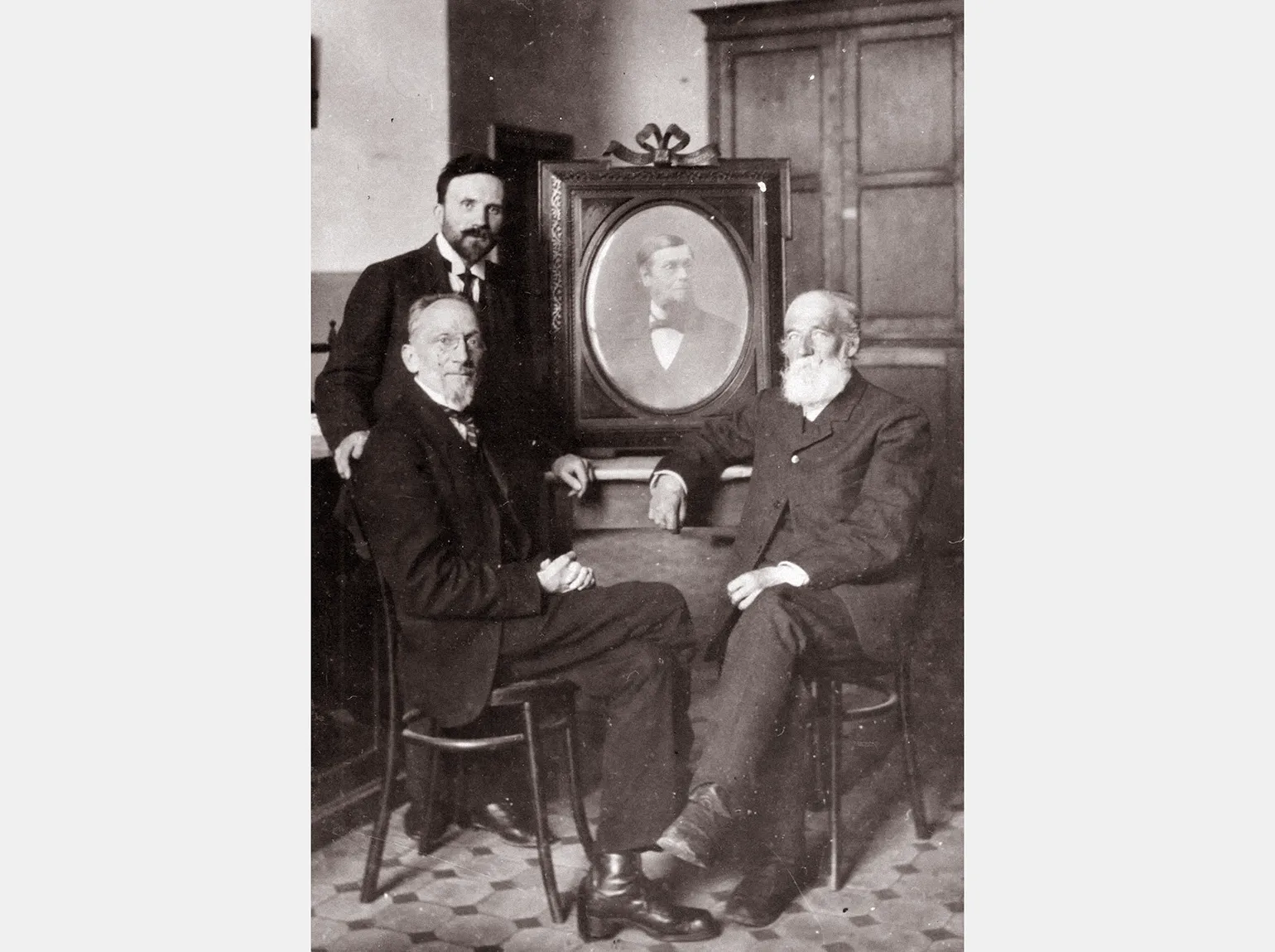
After the founder of the gymnasium, it was headed by an outstanding graduate, Vasily Aleksandrovich Krakau (1857-1936), who received a record 4.89 points in his certificate and was a history teacher. In 1906, he was replaced by a talented teacher, history and geography teacher Alexander Lavrentyevich Lipovsky (1867-1942). Although he was not a Mayite, his teaching career developed similarly to that of May himself. Both directors sought to preserve the traditions of the gymnasium, while introducing innovations to ensure its prosperity and achievement of new heights in the educational sphere.
Since 1890, the school's educational system has undergone a complete transition to Russian as the language of instruction. Additional classes in such subjects as history, literature, art history, and expressive reading were added to the curriculum. Teachers began to give lectures on current topics, including radio engineering, astronomical discoveries, intercontinental telegraphy, underwater work, Balkan issues, and the doctrine of evolution. These changes contributed to a deeper understanding of contemporary scientific and cultural achievements by the students.
The transformation of the real department of the school into a full-fledged real school began, which was a response to the requests of parents. Previously, under May, the real and commercial departments were considered less important, and they were attended mainly by those students who did not cope with the gymnasium curriculum. Under the leadership of Krakau, teaching in the real department was significantly strengthened, and in 1895 it received the status of a state seven-grade real school, which made it possible to increase the number of classes from six to seven. As a result, the school was renamed the "K. May Gymnasium and Real School". The commercial department was also strengthened, but in 1907, due to a lack of new students, it had to be closed.
The educational process underwent significant changes. The general program for "gymnasium students" and "realists" The system was retained only in the first and second grades. However, in the 1900/1901 school year, all homework and grade-based assessments were abolished in the first three grades. Traditional grades were replaced by specially designed assessments. These changes reflected a desire for a more individualized approach to teaching and assessment, contributing to the creation of a comfortable learning environment for students. Teaching became more visual thanks to the modern equipment in the physics, astronomy, and natural science classrooms, designed by Krakau and Lipovsky. These classrooms feature stuffed animals, aquariums, terrariums, and vivariums, as well as a unique exhibit—a mammoth tusk donated to the school by a parent. This approach significantly improves the perception of educational material and promotes a deeper understanding of subjects.

Also study:
Natural history is the study of nature and its phenomena, including living organisms, their habitats, and the relationships within ecosystems. Over time, natural history has evolved to form the basis for many academic subjects, such as biology, ecology, geology, and zoology. These disciplines provide a deeper understanding of the diversity of life on Earth, as well as the mechanisms that govern natural processes. The study of natural history contributes to the development of environmental awareness and an understanding of the importance of preserving natural resources. Natural history occupies a key place in modern education, helping to shape scientific thinking and a responsible approach to the environment.
Books donated by the May family formed the basis of the school library, which by 1915 contained approximately 9,000 volumes in various languages. These valuable materials significantly enriched the library collection and made knowledge accessible to students.
The school places considerable emphasis on extracurricular activities. A carpentry workshop was established at the educational institution, run by an experienced craftsman. Students also enjoy weekly museum trips, as well as short trips and walks around St. Petersburg during school breaks. These activities foster creative and social skills and deepen their understanding of the region's culture and history.
In 1911–1912, the school established its first clubs, including technical, ethnographic, and literary clubs, as well as clubs for physics, chemistry, and mathematics, photography, balalaika, and aviation sports. The aviation club was one of the first in Russia and played a significant role in popularizing this field. The literary club published "Maisky Sbornik," where members contributed articles and literary works, encouraging their peers to engage in charitable activities. Students organized fundraisers and book donations to help those in need, as well as to support the construction of monuments to Gogol and Pushkin. During World War I, the club members established a hospital and actively helped with the harvest, demonstrating their social responsibility and support for society.
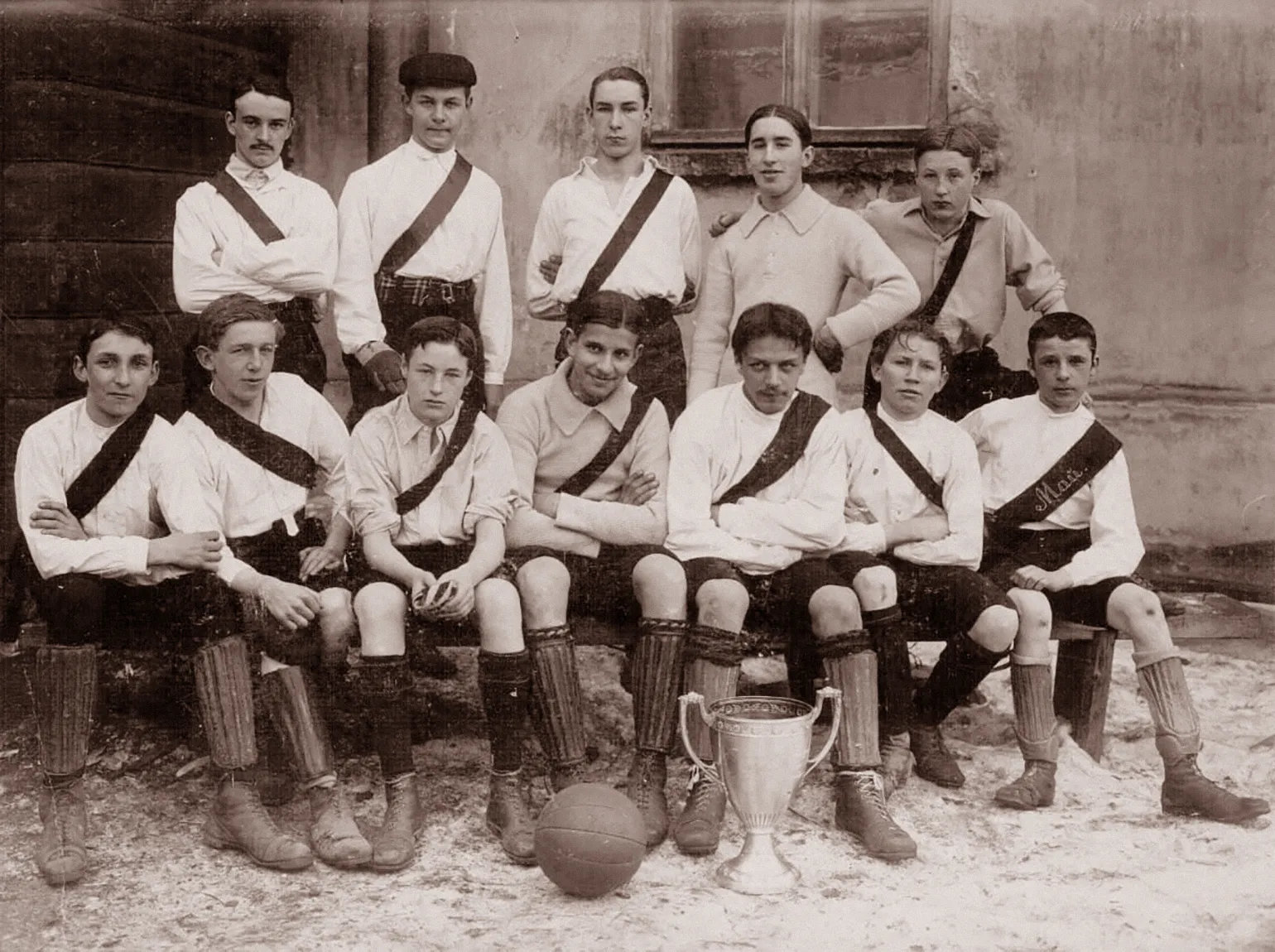
During Karl May's tenure as director, the school actively developed physical education for students. This focus continued with the arrival of new directors, who organized sports teams in handball, basketball, football, and hockey. A country house was also purchased for winter sports, where students could practice skiing. In winter, a snow fort was built in the schoolyard, around which students happily played snowballs, sometimes with their teachers. Sports events contributed not only to physical development, but also to the formation of team spirit among students.
In Krakau, school management was democratized. Since 1898, the director's functions were transferred to a teachers' cooperative, a council of eight teachers. In 1905, management of the educational institution was completely transferred to the "Society for Providing Funds for the K. May Gymnasium and Realschule", which included parents, former students, and teachers. This change contributed to more active community involvement in the educational process and improved the quality of education.
To regulate relations between students and teachers, a school constitution was developed, and self-government was introduced in the upper grades. One day, students expressed dissatisfaction with the teacher of philosophical propaedeutics, appointed by the ministry—a new subject that was introduced into the gymnasium curriculum in 1910. After listening to the lesson of the new teacher, the pedagogical council agreed with the opinion of the students and decided to dismiss the teacher, recognizing his qualifications as insufficient for teaching.

Study also:
Summerhill School — Summerhill is a unique educational institution that has become a symbol of an alternative approach to education. Founded in 1921, it offers children the opportunity to set their own rules and make decisions about their own education. Summerhill emphasizes freedom of choice, allowing students to develop personal qualities such as responsibility and independence. Unlike traditional schools, there is no strict discipline or compulsory subjects. Children can choose what and when to study, which fosters a deeper interest in knowledge. This approach to education has inspired many alternative schools around the world and continues to attract the attention of parents and educators seeking to create a more flexible and welcoming educational environment. The story of Summerhill is a story of how to rethink traditional teaching methods and create a space where every child can reach their potential. In 1903, for the first time since 1856, inflation forced a tuition increase. Tuition now amounted to 150 rubles for preparatory classes, 200 rubles for other classes, and 650 rubles for boarding. This increase significantly increased the relative cost of education compared to the average annual worker's salary at the time, which was 217 rubles 3 kopecks.
The school was not generating a significant profit, and certain expenses created a budget deficit. By 1909, the number of students had grown to 350, making the need for a new building urgent. With the help of graduates and a bank loan, a magnificent new four-story building was constructed at 39 14th Line of Vasilievsky Island. The building's design was developed by Hermann Grimm, a 1883 graduate who had by then become a renowned architect and academician of the Imperial Academy of Arts. This new building not only met the needs of students, but also became an important architectural landmark of the area.

In the new building of the gymnasium, students studied in spacious, bright classrooms with high ceilings and amphitheater-style auditoriums. On the facade of the building, a bas-relief of a May beetle settling on a birch leaf stood out, as well as the inscription "K. May Gymnasium and Real School". This modern building made it possible to increase the number of students to 567 by the beginning of the First World War.
What successes did May's school achieve and why did it cease to exist
The majority of the gymnasium's students were children of representatives of the creative intelligentsia, including the families of Benois, Grimm, Dobuzhinsky, Roerich, Rimsky-Korsakov and Semyonov-Tyan-Shansky. Generations of these families traditionally attended the Maya Gymnasium, and the Benois set a record: 25 "May bugs" emerged from their lineage. Among the students were famous figures such as the princes Gagarin and Golitsyn, the counts Olsufyev and Stenbock-Fermor, as well as the barons Korf, Tiesenhausen, and Stackelberg. The students also included prominent entrepreneurs such as the Vargunins, Durdins, Eliseevs, and Thorntons, who, as Lev Uspensky noted, opposed the current regime. This unique environment fostered the development of creative and critical individuals, which played a significant role in the country's cultural life. The "May" diploma enjoyed high prestige among universities in both Russia and Europe. Many graduates maintained ties to their alma mater, providing support. Over the years of its existence, the school trained approximately 3,800 young men.
In 1918, during the Bolshevik reform of the educational system, May's school was nationalized and merged with the E. P. Shaffe girls' gymnasium, which led to the creation of a single labor school. During this period, all educational institutions in the country received similar status, while gymnasiums, real schools, and other types of schools were abolished. Classes considered "embourgeoisified" were disbanded, and their students were distributed among other educational institutions. Some of them were sufficiently prepared and were able to enter universities, which opened their doors to everyone. In 1920, Lipovsky ceased to be the school's director.
Despite the changes, some traditions associated with "May" continued to be preserved at the labor school, in part thanks to the new director, Veniamin Krasnov, who was also a former "May Bug." However, after the publication of an article in Leningradskaya Pravda in 1929 criticizing school practices, most of the old teachers were dismissed, and the bas-relief of a May beetle and the accompanying inscription were removed from the building's façade. This event became symbolic of changes in the educational system of the time and led to significant changes in approaches to teaching and educating students. From 1937 to 1942, the building housed the 6th Artillery Special School. After its evacuation, the building remained empty for two years, then became home to Secondary School No. 5. In 1976, despite protests from graduates, the building was transferred to the Computing Center of the USSR Academy of Sciences, now known as the St. Petersburg Institute of Informatics and Automation of the Russian Academy of Sciences. Following a major reconstruction, only the façade of the May Gymnasium remained, significantly altering the building's architectural appearance.
During the reconstruction period, the memory of the former educational institution began to be restored. In 1995, a small museum dedicated to the history of the school was opened at the address of the May School. The bas-relief depicting a May beetle was also returned to its rightful place, symbolizing the revival and preservation of the school's historical heritage.
The editors express their gratitude to Murat Valiyev, head of the "Society of Friends of the Karl May School" project, for his significant contribution to the preparation of this material.
Primary sources of information play a key role in building knowledge and understanding of various topics. These include scholarly articles, books, official reports and studies, as well as online resources such as specialized websites and blogs. It is important for every researcher or reader to be able to critically evaluate the reliability and relevance of sources. Using authoritative sources ensures the reliability of the information received and helps avoid the dissemination of false information. It is also important to keep in mind that some sources may have their limitations, so it is always a good idea to consult several different resources to get a more complete picture. By approaching the study of any issue with a variety of sources, you can achieve a deeper understanding and objective analysis.
- Benoit A. N. My Memories in Five Books. Books One, Two, Three. Moscow: Nauka, 1980.
- Blagovo N. V. First to Love - Then to Teach. St. Petersburg: Anatolia, 2015.
- Blagovo N. V. School on Vasilievsky Island. Part 1. St. Petersburg: Anatolia, 2013.
- Likhachev D. S. The Book of Worries. Moscow: Novosti Publishing House, 1991.
- Likhachev D. S., Blagovo N. V., Belodubrovsky E. B. School on Vasilievsky Island. M.: Education, 1990.
- Uspensky L. V. Notes of an old Petersburger. L.: Lenizdat, 1970.
The profession of Methodologist from scratch to PRO
You will improve your skills in developing curricula for online and offline courses. Master modern teaching practices, structure your experience, and become a more sought-after specialist.
Find out more