
Learn: The Profession of Methodologist from Scratch to PRO
Learn More
A quick reference is a concise summary of information on a specific topic that allows the reader to quickly familiarize themselves with the main facts and key aspects. This format is convenient for obtaining a basic idea and quickly finding the necessary information. A quick reference may include information about the entity, its characteristics, meaning, as well as important dates and events related to the topic. This text serves as a foundation for further in-depth study and helps navigate the material.
Psychologist and Academic Director of the Skysmart online school, specializing in educational programs for children and adolescents. Skysmart offers individualized courses that help develop students' skills and self-confidence. Our goal is to create a comfortable and productive educational environment that promotes comprehensive development.
Maintaining student attention is one of the most challenging tasks for an online teacher, especially when it comes to preschoolers and elementary school students. Children at this age are easily distracted; they want to play or watch cartoons, which hinders the learning process. Furthermore, a teacher working virtually has limited influence over a student: they cannot take away a toy or control how the child spends time in their space. So, what can be done to improve children's concentration in lessons? Effective methods include the use of interactive elements, such as games and tasks, which make learning more engaging. It is also important to create a comfortable and motivating atmosphere, maintaining interest in the learning process.
Here are some helpful tips for teachers working with preschool-aged children and younger students online. First and foremost, it is important to create a comfortable and safe learning environment. Use interactive elements, such as games and activities, to keep children engaged. Provide a variety of materials and delivery methods, including videos, presentations, and audio recordings.
Interact with parents regularly to maintain their engagement in the learning process. Set clear goals and objectives for each lesson so children can see their progress. Use technology to create engaging and educational lessons that will help develop children's skills and interest.
Remember the importance of feedback: don't forget to praise children for their successes and support them in the learning process. Introduce elements of collaboration by allowing children to work in groups, even online. This will help develop communication and teamwork skills. These recommendations will help make learning more effective and engaging for children.
Make lessons interactive
For children aged 5-8, it is critical not only to listen to the teacher but also to actively engage with them. Participation in lessons promotes better learning and skill development. Therefore, the use of online tools and applications has become relevant. These technologies allow students to communicate with the teacher and interact with educational content, which makes the learning process more effective and engaging. Interactive lessons not only contribute to increased engagement but also to the development of critical thinking in children, which is an important aspect of their educational process.
Teachers conducting classes on video conferencing platforms are encouraged to integrate additional services and applications into the learning process. This can be done by sending students links to specific exercises or sharing their screen. It's recommended to ask parents to open all necessary links for the lesson in advance and also familiarize children with the functionality of the selected services, platforms, or applications. This approach will help make lessons more interactive and effective.
There are many useful resources for studying core subjects. These materials will help you deepen your knowledge and improve your academic performance. It's recommended to use online courses, educational platforms, video lessons, and interactive assignments in subjects such as mathematics, physics, chemistry, biology, and language. These resources provide access to high-quality educational materials and allow you to study at a convenient time. Choosing the right information sources promotes effective learning and increases interest in learning.
- Online Test Pad is a free, multifunctional service for creating interactive tests, crosswords, and logic games on various topics.
- Boom Cards is a flashcard creator that lets you create interactive self-testing tasks.
- Izi.Travel lets you create your own virtual museum, audio tour, or themed quest. A webinar will help you figure out how.
- LearningApps is a designer of interactive exercises with templates for educational games like "find the pair" and others, puzzles and crosswords, fill-in-the-blank tasks, and various tests. It also contains a rich library of ready-made exercises, including in Russian.
- "Vznaniya" is a Russian-language educational platform for creating any interactive materials for online or offline lessons. The free version is extremely limited in functionality, but the paid version allows you to create fully-fledged interactive lessons with game elements.
- Quizlet is a word-learning service that makes it easy to create flashcards for practicing English vocabulary.
- Matific is a website with hundreds of math games for students in grades 1–6 and preschoolers.
- Drawar.io is an online game called "Crocodile," where one player quickly draws a guessed word or phrase, and the others try to guess what they are drawing. The game can be used to review vocabulary in foreign language lessons (in addition to Russian, the service supports English, French, German, and Spanish)—or any new concepts, really.
- "IQsha" contains thousands of ready-made exercises in math, reading, worldview, and English, as well as exercises to develop memory and logical thinking.
Almost any material can be transformed into a game, including tests, quizzes, quizzes with virtual prizes, word games, quests, and puzzles. Children love to play, and gamified tasks support their intrinsic motivation. Preschoolers and elementary school students are eager to complete tasks not out of obligation, but because they enjoy it. This approach helps young students develop a mindset of learning as a fun process. Gamification in educational tasks not only makes learning more engaging but also significantly increases its effectiveness, allowing children to better absorb the material. Maintaining a balance between learning and entertainment is important. Gamification should not only maintain interest in the learning process but also align with educational goals. They should not distract from learning, but rather enhance student motivation and engagement. True success is achieved when game mechanics fit harmoniously into the learning process, contributing to its effectiveness.

Read also:
Edutainment is a concept that combines education and entertainment, creating unique learning opportunities. This approach makes the learning process more engaging and attractive to students. Edutainment involves the use of games, videos, interactive technologies, and other forms of entertainment content to convey educational information.
Edutainment can significantly increase student motivation, improve learning, and make learning more accessible. It's important to note that this approach is used not only in formal education, but also in corporate training, online courses, and other educational projects. Integrating entertainment into the learning process promotes better retention of information and the formation of lasting knowledge.
Using Edutainment in educational programs opens new horizons for teachers and students, allowing them to create a more dynamic and engaging learning environment.
Visualize Material
Using images, videos, comics, and diagrams in the educational process helps diversify lessons, maintain student interest, and improve learning. Visual elements not only make information more accessible but also promote better retention.
Regardless of the subject you teach, animated videos and cartoons relevant to your topic are readily available online. Using such videos can greatly facilitate the learning process, for example, when learning the alphabet or numbers. You can also get creative and create your own images, collages, or slideshows to visually present information. This will help make lessons more engaging and memorable for students.

Mind maps are an effective A tool for visualizing and structuring information. They allow you to clearly demonstrate connections between ideas and objects and highlight key points. A central concept, such as "environmental conservation," is placed at the center of the map. From this, multicolored branches represent related topics, such as "recycling" and "saving resources." Each of these branches can be supplemented with secondary concepts that deepen the main idea, such as "don't throw trash on the ground" or "turn off the lights on time." Mind maps help not only organize personal thoughts but also facilitate the educational process. Creating such maps with students turns them into active participants in the learning process and can become the basis for an entire educational project. For this purpose, you can use interactive online whiteboards, which allow you to visualize ideas in real time and facilitate collaborative work. Mind maps open up new horizons for analysis and discussion, making the learning process more engaging and productive.
Take breaks
Children have difficulty maintaining their attention span for long periods of time. A child's brain is actively developing, making it difficult to process large amounts of information. After just five minutes of learning, young students can become tired and distracted. Therefore, it is important to take regular short breaks to improve their attention and comprehension. Such pauses will help children better absorb information and maintain their interest in learning.
To help children relieve stress without distracting them from the learning process, invite them to play active games, dance, or sing a song. These activities can be easily integrated into the learning process. For example, in English lessons, it is recommended to use the game "Simon Says" - this is an active game that develops attentiveness. The rules are simple: the teacher says the phrase "Simon says" and then gives a command, for example, "stand up", "jump", "clap your hands", "rub your shoulders". Students should perform only the actions that precede the phrase "Simon says". This way, they not only move actively, but also repeat verbs in English. Even a short break of one or two minutes can significantly help "reset" the student and return their attention to their studies.
Reward Effort
Children need to feel that their efforts are noticed and appreciated. When a child perceives that adults are not interested in their work, they quickly lose motivation. Therefore, it is important to reward even the smallest achievements and celebrate successes. The key is not the size of the reward, but the recognition itself. For example, you can give your child "smiley faces" for correctly completed tasks or show short cartoons for each topic mastered. In this way, you create a positive experience that promotes interest in learning and increases self-confidence.
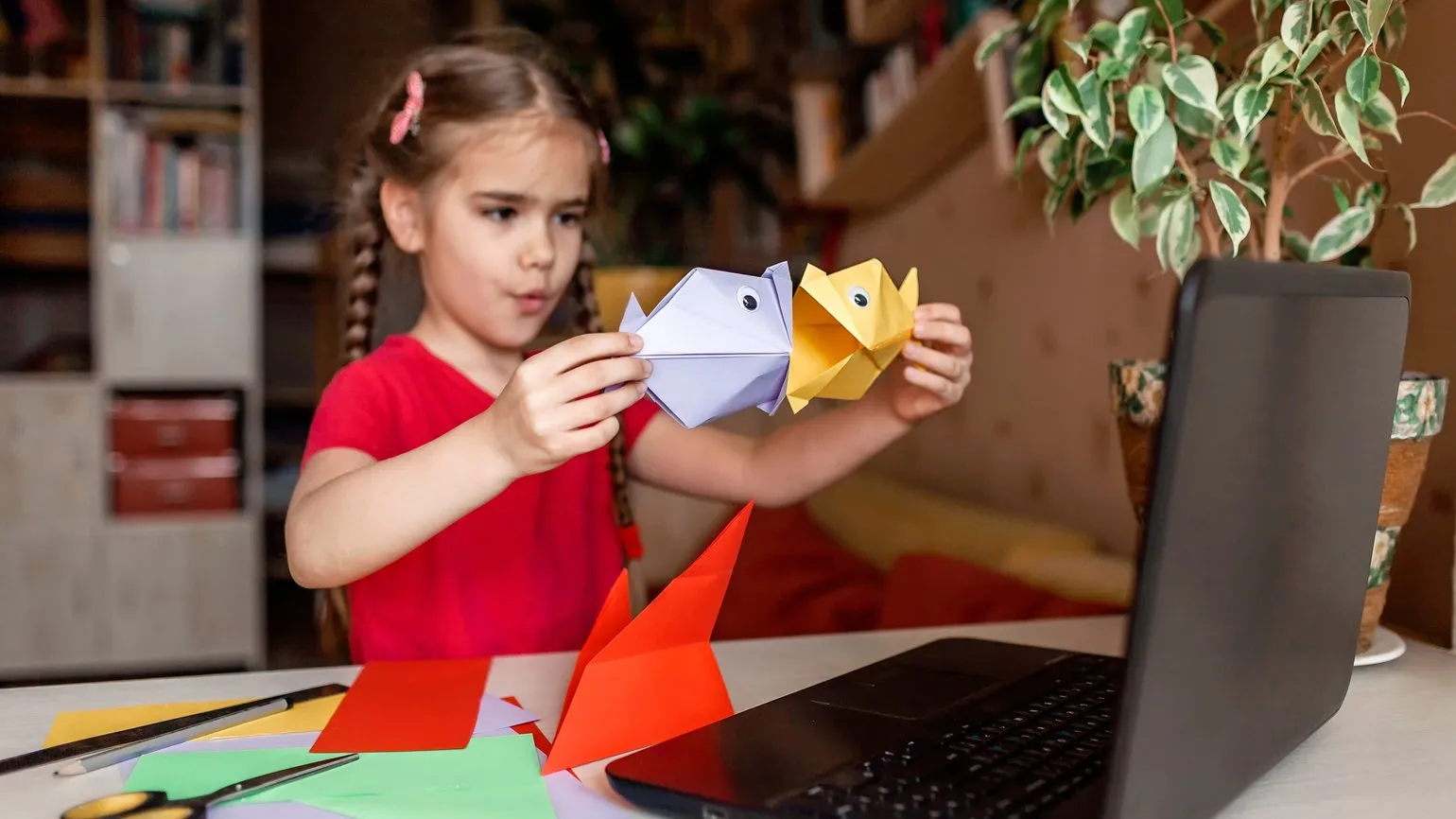
For today's children, learning with pleasure is extremely important. Nowadays, educational content actively competes with entertainment, such as games, social media, and cartoons, which accompany children from the first days of life and are accessible at any time. Children are accustomed to constant stimulation, and simple illustrations in textbooks no longer have the power to engage them. Learning should be no less engaging and tailored to children's interests than video games. Therefore, if you work with a student individually as a tutor, it is useful to learn about their interests and integrate them into the learning process. For example, if a child is interested in dinosaurs, you can use them in examples and tasks. This approach will not only increase the student's motivation but also make learning more effective and memorable. Creating an engaging learning environment helps develop critical thinking and creativity, which are essential skills in the modern world.
Generation Alpha will learn throughout their lives, not just until they receive their first diploma. In today's world, information is updated and becomes outdated at an incredible rate, making it impossible to stop developing. It is necessary to master something new every day. Therefore, it is crucial that children from an early age perceive learning not as a boring chore, but as a fascinating and interesting activity, no less exciting than play. Fostering a positive attitude toward learning will help children adapt to rapidly changing conditions and successfully cope with the challenges of the future. Not all students respond to proposed learning methods in the same way. Children have different preferences: some prefer physical activity, while others are captivated by intellectual challenges. Every child is unique, and the task of a modern teacher is not only to read the curriculum but also to find an individual approach to each student. It is important to awaken children's curiosity and interest in learning, regardless of the format of classes—in the classroom or online. Ensuring variety in teaching methods helps create a more effective educational environment that fosters the development of every child. Learn more about education by subscribing to our Telegram channel. Here you will find the latest news, useful tips, and interesting articles. Don't miss the opportunity to stay up to date with the latest developments in education!
Read also:
- Bookshelf: "Teaching in Any Environment" by Douglas Fisher, Nancy Frey, and John Hattie
- Academic Motivation: How Scientific Theories Explain It
- Curiosity vs. Leadership: What Motivates Children to Learn and How to Maintain Interest in Learning
- How to Help Your Child Become Successful in School
Methodologist Profession from Beginner to Advanced
You will develop skills in developing curricula for online and offline courses. You will master modern teaching practices, structure your experience, and become a more sought-after specialist.
Find out more