Contents:

Learn: Producer of online courses from scratch to PRO
Find out more
A quick reference is a concise piece of information that provides basic information on a specific topic. It may include key facts, figures, and definitions to help you quickly understand the issue. Briefs are often used in research papers, educational materials, and business reports to provide readers with the necessary information without unnecessary detail. They are a useful tool for quickly familiarizing themselves with a topic and can serve as a starting point for deeper exploration.
Media manager and head of the Videoset-insta video production studio with over 19 years of experience working with video content for television and business. She specializes in creating high-quality video materials that help brands effectively communicate their ideas to target audiences. She has a deep understanding of modern trends in video production and media planning, which allows her to offer innovative solutions for clients.
Photo: Anna Khlebnikova's personal archive
Anna Khlebnikova shares her unique photographs from her personal archive. These images reflect her life's journey, interests, and the moments she considers important. Each photo tells a story filled with emotion and meaning. Anna's personal archive is more than just a collection of photos; it's a visual narrative of her experiences and inspirations. Through these images, she strives to convey the atmosphere and mood that resonate with her.
There are many video formats, from webinars to Telegram videos. All of them can be useful for promoting online courses. In this article, I'll discuss various ways to use video at different stages of the sales funnel to help you effectively attract and retain an audience. Using video content can significantly increase interest in your course and boost conversions.
Webinars and Marathons
Using video during peak sales window and sales window is key to achieving maximum effectiveness of your marketing strategies. It's important to correctly identify the moments when your product or service will receive the most attention. Peak sales window is the period when potential customers begin to show interest and actively research the market. During this time, it is advisable to launch advertising campaigns, provide valuable materials, and actively engage with the audience. The sales window is the time period when you can convert interested users into buyers. It is important to use all available tools at this time: promotions, special offers, and compelling calls to action. Effective use of these stages will help you increase sales and strengthen your position in the market.
The level of complexity and cost of organizing a webinar varies depending on its format. For a standard webinar, the level of complexity and costs are considered average. However, if you plan to hold a webinar show, the level of complexity and costs will increase significantly.
There are two options:
- Host a useful webinar and mention the online course during it;
- Organize a marathon and provide information about your training product on the second or third day.
Audience warm-up materials, such as lead magnets and presentations, can be created once and used multiple times. This allows you to effectively recruit audiences for various streams, saving time and resources. Proper preparation of such materials helps attract more participants and increases interest in your offerings.
Videos can be used at various stages of attracting participants to a free webinar and subsequent course. At the initial stage, it is recommended to create short teasers that introduce the main topics of the webinar and highlight its value. These videos can be posted on social media platforms and on the website to attract the attention of the target audience.
During the registration stage, it is useful to create a video message in which the speaker introduces themselves, shares their experience, and explains what participants will gain from the webinar. This will help establish trust and increase the likelihood of registration.
During the webinar itself, it is worth integrating videos with examples of successful cases or testimonials from participants of previous courses. This will make the content more compelling and interesting.
After the webinar, you can use videos with recordings and additional materials to maintain interest in the course and encourage participants to register. These videos will help reinforce knowledge and remind users of the value of the services offered.
From experience, a video message on a landing page is significantly more effective than text content and photos. A short video up to two minutes long allows potential students to get to know the expert better—hear their voice, assess their charisma, and evaluate their delivery style. This helps them make important decisions: "Do I like this person?", "Am I interested in listening to them?", "Do I want to learn from them?" High-quality, dynamic videos will increase trust and the appeal of your offer, so it's worth considering professional filming to create content that will stand out from the competition.
Measuring the effectiveness of a video welcome is difficult, but I often hear comments like: "Is that Anna on the landing page going to work with us?" or "You mentioned this and that in the video; that's exactly what we need." These reviews serve as confirmation that the video content is successfully fulfilling its purpose and generating a positive response from the audience. Video greetings not only strengthen connections with potential clients but also help build brand trust, which ultimately influences collaboration decisions.
To register for a webinar, users can use a Telegram bot or subscribe to a newsletter. At this stage, the expert or producer's job is to help subscribers navigate the prepared materials, establish contact, and build trust with potential students. This is essential for generating interest and motivation to participate in the webinar. Consistency in communication and the provision of relevant information contribute to a positive image and increase the chances of successful engagement.
A first-person address effectively facilitates a connection with the audience. Recording a short video, up to three minutes long, welcoming participants and briefly outlining the topic of the webinar or marathon can significantly improve the perception of the information. This approach reduces the distance between the speaker and the subscriber, creating a sense of personal communication and engagement. Videos are inexpensive and can be easily recorded using a smartphone.
Emails and chatbot messages are effective for reminding subscribers about an upcoming webinar or marathon. Incorporating video into these communications also increases their effectiveness, as visual content is more engaging and promotes retention.
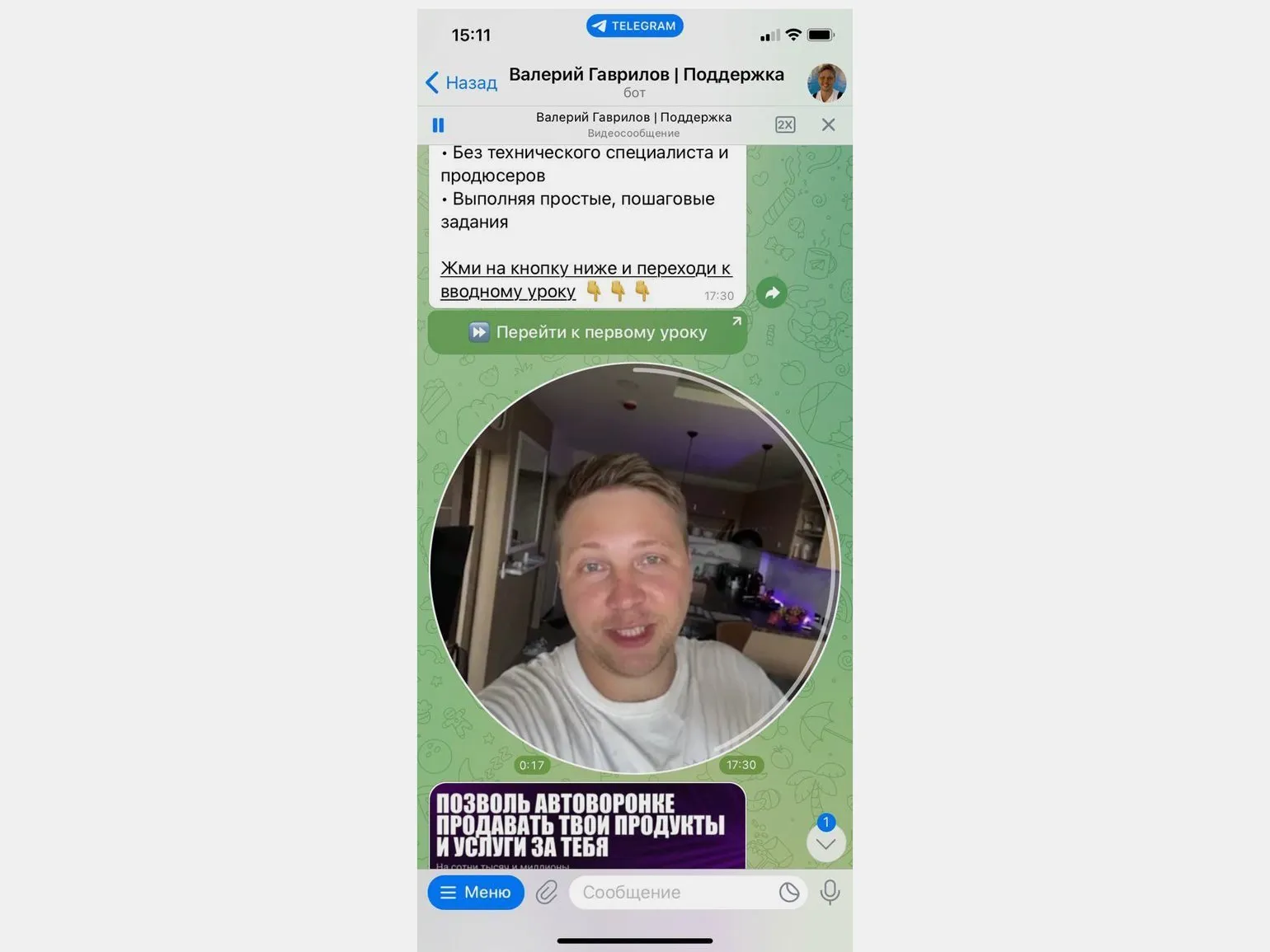
Video circles are effectively used in Telegram newsletters, creating a sense of direct communication and intimacy with the expert. This format is perceived not as pre-prepared marketing material, but as relevant content created specifically for the audience at this moment. This allows you to establish a more trusting relationship with subscribers and increase engagement.
At such events, a sales window is traditionally launched, offering participants the most favorable conditions for purchasing a course.
In the online education industry, there is a belief that a successful event should resemble a grand show, like those of Tony Robbins, the famous speaker and life coach. However, turning a webinar into a spectacular performance requires significant investment and does not always correspond to the working style of experts and online schools. The effectiveness of webinars depends not only on the external design, but also on the quality of the content, interaction with the audience, and the ability to convey valuable information. Therefore, it is important to find a balance between an engaging format and educational value, which will allow you to attract and retain the attention of listeners.
The product and its advertising should be on the same level. Selling a premium course as part of a poorly conducted webinar can raise doubts in the audience: "If the quality of the webinar leaves much to be desired, is the course worth the money?" At the same time, a high-quality webinar with film-like production values may discourage those expecting a simpler format. In both cases, this will lead to decreased online course sales, highlighting the importance of consistency between the product and its presentation. Finding the right balance between quality and format will help attract the target audience and increase conversions. To ensure high-quality audio and video for a webinar while staying within budget, it's important to pay attention to several key aspects. It's important to choose a clean look and use a neutral background to avoid distracting attendees. Proper camera positioning also plays a significant role in creating a professional impression. Equally important is adequate lighting, which should be sufficient to clearly convey the image. Using a high-quality microphone will ensure clear sound, which will significantly improve the level of perception of information.
Read also:
Creating a high-quality educational video on your phone: tips for filming yourself
Shooting educational videos on a mobile phone is becoming increasingly popular. Thanks to accessible technology, anyone can create informative and engaging content. To ensure your video looks professional, follow a few simple guidelines.
First, consider lighting. Natural light is ideal, but if it's not available, use soft artificial light to avoid harsh shadows.
Second, choose a suitable filming location. It should be quiet and free of background noise. Make sure the background doesn't distract from the main content.
The third important aspect is sound. Use an external microphone if possible. Clean and clear sound plays a key role in the perception of information.
Also, plan your content in advance. Prepare a script or at least the main points you want to discuss. This will help you stay on track and make the video more structured.
Don't forget about editing. Even simple video editors can significantly improve the quality of your video: add text prompts, visual effects, or transitions to increase viewer engagement.
By following these recommendations, you can create a high-quality educational video for your phone that will be interesting and useful to your audience.
I recommend using effective tools to increase engagement. These tools will help improve interaction with your audience, increase time spent on the site, and promote conversions. Using the right engagement methods will allow you to better understand user needs and tailor content to their interests. Don't miss the opportunity to use modern technologies to create a more engaging and interactive user experience.
- Dialogue mode. Because a good webinar is not a monologue, but constant interaction with the viewer.
- Countdown and additional videos before the webinar. People enter the webinar room early, and you need something happening there. Ideally, something that evokes emotion, introduces the speaker, and increases engagement with the webinar topic. For example, in such cases, we used a quick interview with an expert, behind-the-scenes footage of the course's creation, and videos from previous graduations. Pop-ups. They are used for reminders and notifications and work well in the sales portion of a webinar. When the course sales portion of a webinar begins, some viewers often drop out. A pop-up, however, signals, "Don't leave, useful material or a gift awaits you." This keeps people engaged. Incidentally, you can also use a countdown here, but instead of displaying the time, display the number of remaining spots in the course. This is a scarcity trigger: the number is decreasing, and a person gets the feeling “I don’t want to miss out on something important.”
There is an effective format that allows you to demonstrate your expertise and attract Clients can be attracted to a course during an online meeting – a free diagnostic or consultation. Unlike a webinar, this format involves individual meetings where you don't cover a pre-planned topic but rather provide advice to a potential course buyer. It's important to remember that, as with a webinar, the image and sound quality should match the high level of your course. This will build trust with clients and increase their likelihood of interest in further training.
Automatic webinars and auto marathons
This tool is recommended for use during the period of maximum audience warm-up, as well as during periods of active sales. This will help improve the effectiveness of interactions with clients and increase conversion. The optimal time to use this strategy is when the audience is most interested in your offer.
The difficulty level and cost of an automated webinar depend on the overall quality of the course. One automated webinar can be broadcast multiple times, which helps reduce costs and optimize time. Proper preparation and creation of high-quality content are key factors for the success of automated webinars. These events are conducted automatically, using pre-recorded videos. The mechanics of the funnel remain the same, but there are key differences worth considering. Automated webinars and marathons allow you to attract more participants because they are available for viewing at any time. This provides flexibility for users and increases the chances of audience engagement. Furthermore, automation helps streamline processes, reduce costs, and improve event effectiveness.
All webinar materials should be prepared in advance, allowing you to use editing tools effectively. For example, if I speak slowly, I can speed up my speech in an auto-webinar, which will make the video more dynamic and easier to understand. It is important to ensure that increasing the speed does not distort the voice, as not all programs support this feature. I recommend using CapCut, which is available on smartphones and computers, as well as online through a browser, and Movavi, which offers versions for both computers and mobile devices with Movavi Clips for iOS and Android. These programs will help improve the quality of your auto-webinars and make them more engaging for viewers.
It is important not to overdo the improvements. An auto-webinar should create the atmosphere of a live broadcast, so don't strive for perfect video. It is enough to correct a few points while preserving the natural irregularities. The main goal is to hold the viewer's attention and prevent them from getting distracted.
The main drawback of an auto-webinar is the lack of audience interaction. This means it's impossible to establish a dialogue and answer viewers' questions in real time. However, this format does have its advantages. Firstly, an auto-webinar can be held multiple times, allowing you to reach a wider audience. Secondly, it's ideal for those who are not yet ready to conduct live webinars, for example, due to anxiety or lack of experience. Auto-webinars can be an excellent foundation for further developing presentation skills and interacting with an audience.
Teasers, trailers, and promo videos
Optimal use: on a website, landing page, and in email newsletters during the sales process.
The level of complexity and cost of creating such videos can vary from medium to high. It's recommended to consult with professionals for the best results.
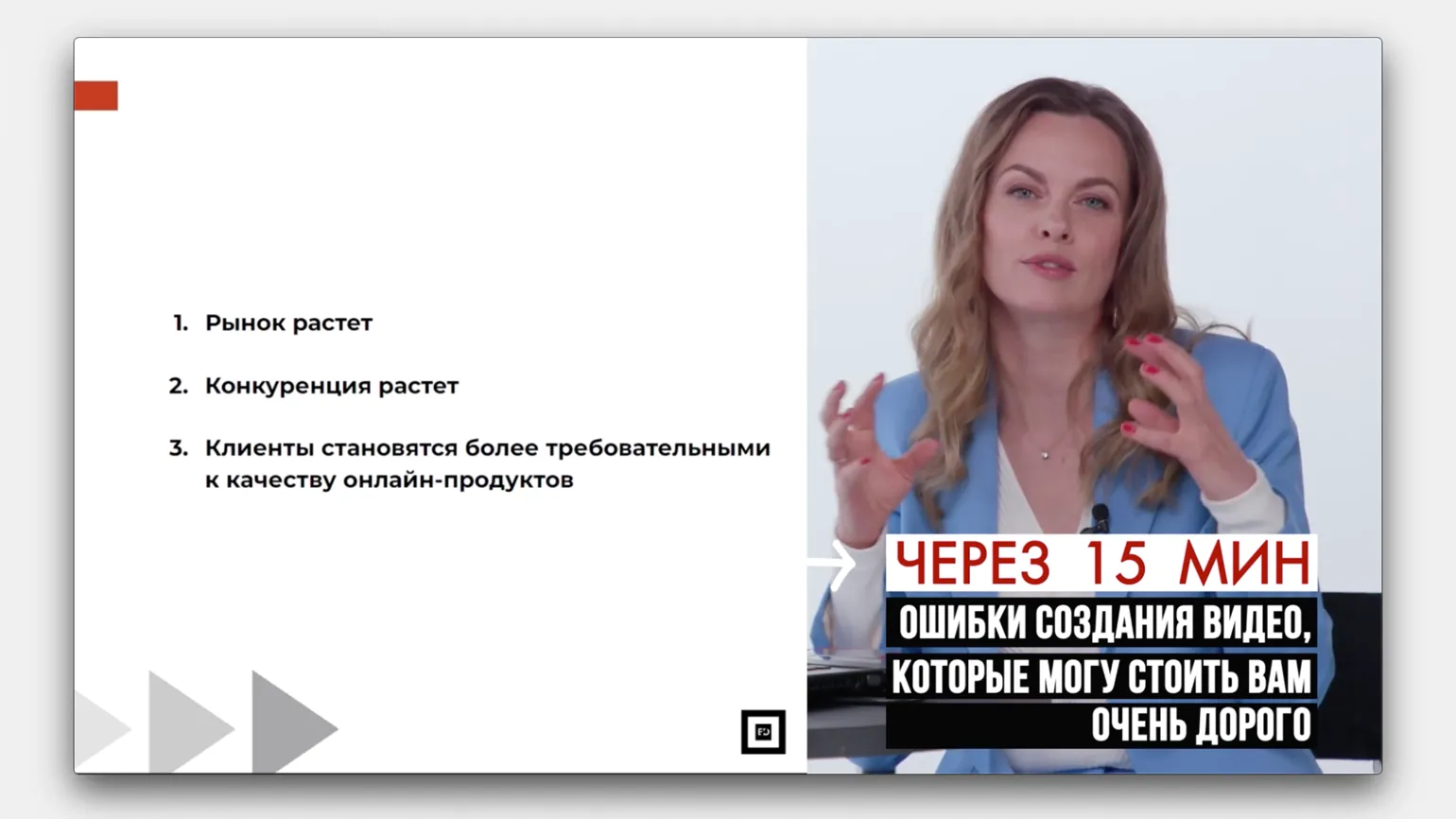
In addition to key sales elements, your course landing page should include a teaser, promo video, or trailer for your educational product. This will allow potential clients to understand what awaits them within the course. Although these formats are visually similar, they differ in their essence and the tasks they perform. A teaser is usually short and serves to create intrigue and interest, while a promo video is more informative and emphasizes the benefits of the course. A trailer, on the other hand, provides a comprehensive overview, demonstrating the structure and content of the training. Choosing the right format will help you effectively attract attention and increase conversions on your landing page.
A teaser is designed to create intrigue and attract audience interest. It is a short video, usually less than one minute long, and in some cases only 15-30 seconds. The main goal of a teaser is to capture the viewer's attention and encourage them to explore additional content. An effective teaser not only attracts but also stimulates further interest in a product or service, which makes it an important tool in marketing strategies.
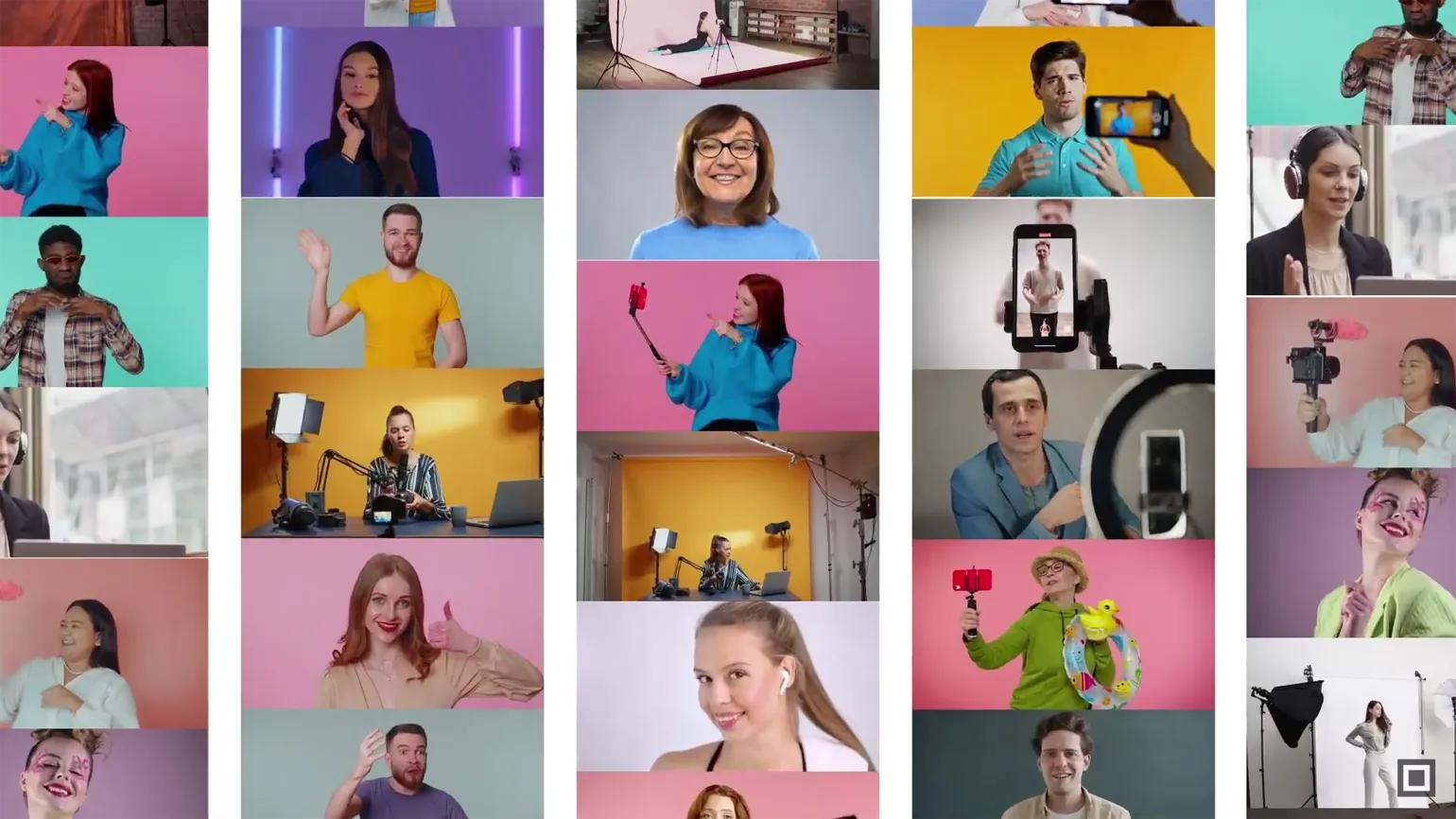
A trailer is a montage of real-life clips from an online course that clearly demonstrates key points and various lessons. The main purpose of a trailer is to grab the attention of a potential student and give them an idea of what they can expect from the course. An effective trailer should be structured according to the classic principles of dramaturgy, including an introduction, development, climax, and resolution, culminating in a call to purchase. This approach helps generate interest and increase the likelihood of enrollment.
A trailer serves as a tool that helps viewers understand what exactly they will learn and the scope of information they will cover. This simplifies the purchasing decision process. Clearly communicating expectations before the course begins is an important practice. It reduces the risk of disappointment, reduces the number of students who "expected something completely different," and helps reduce negative reviews and returns. A well-designed trailer not only informs but also builds trust in the course.
A promotional video is an advertising video that focuses on the needs, desires, and fears of the target audience. Unlike teasers and trailers, which use pre-shot course footage, a promotional video includes additional elements, such as an expert's message and a detailed explanation of the course. This allows viewers to more deeply immerse themselves in the content and value of the course, as well as create a more personal connection with potential participants. An effective promotional video can significantly increase interest in the product and stimulate a purchase decision.
Test Drive the Course
Using Warm-Up, Emails, and Chatbots: When and Where to Use Them Most Effectively. Warming up the target audience should be used at the initial stage of interaction to build trust and interest. In newsletters, it's important to maintain interest in your product or service by providing useful information and updates. Chatbots are an excellent tool for instant interaction, allowing you to quickly answer questions and provide personalized recommendations. Optimal use of these methods will help increase engagement and boost conversions.
The complexity and cost level for this project can range from medium to high. It is important that the quality of execution matches the standards of the remaining lessons in the course. Ensuring high-quality material and appropriate costs will help achieve the desired results and satisfy participants.
The essence of this method is to offer the audience the opportunity to familiarize themselves with part of the product for free. Most often, this is done through trial access to the first module or several introductory lessons. This approach allows potential clients to assess their interest in the training topic, whether they are satisfied with the quality of the information provided, and the speaker's delivery style. Free access to content helps build trust and increases the likelihood of purchasing the full course.
Trial lessons should fully correspond to the main modules of the course in terms of complexity and content quality. Often, bright and engaging demo lessons are created to attract an audience, while skimping on other lessons. This leads to disappointment among students who expect a similar level of teaching and presentation. When the quality of the main course differs significantly from the demo lessons, students feel cheated. For an online school, this can lead to returns and negative reviews, which negatively impacts its reputation and the attraction of new students.
Open Lessons
The use of warm-ups is important when preparing the audience for sales. Warm-ups help generate interest and engagement, which increases the likelihood of a successful sale. Sales begin to activate during the lesson stage, when participants are already familiar with the material and ready for further steps. Effective use of warm-ups allows not only to increase conversion but also to establish trust with clients.
The level of project complexity and costs varies from medium to high, which requires an appropriate quality of execution, consistent with the overall level of the course. It's important that the results meet the expectations and standards set within the program.
Inviting an audience to a free lesson on a specialized topic allows for an effective sales process to begin during the session. Participants gain valuable knowledge, which builds trust and increases interest in further training. This approach helps build a loyal customer base and increases the likelihood of subsequent purchases.
An open lesson differs from a webinar in that it is less interactive. A webinar involves active interaction with the audience via chat and the opportunity to ask questions in real time. In contrast, an open lesson is an online lecture format, where questions from participants are collected in advance and answered later. This approach allows for a more structured presentation of information, but reduces the level of direct interaction with the audience.
An open lesson, like a test drive, should match other lessons in production quality, richness, and dynamism. It is important to avoid disappointment and ensure that expectations are met. However, it is important to keep in mind that open lessons, unlike test drives, are conducted live, which adds an additional complexity. The broadcast should be not only informative but also inspiring for participants. The right approach to organizing an open lesson will help create a positive impression and attract new students.
I will give an example from personal experience that illustrates the importance of high-quality content. For a long time, I studied books and articles by a marketing expert, hoping to gain knowledge from him. When the opportunity arose to attend his open class, I expected inspiration and useful information. However, the reality was disappointing: the lecture was drawn-out, boring, and inexpressive. Neither my colleagues nor I decided to invest in his training, as we value our time and don't want to waste it on ineffective classes. This experience highlights the importance of information delivery and content quality in training. Following the open class, a series of sales emails is launched to participants who haven't purchased the course. High-quality, dynamic trailers and course teasers are effective at this stage. Their goal is to generate interest among those who haven't yet decided to purchase the product. Proper use of such materials increases conversion and helps potential customers better understand the value of training.
Short videos on social media
Using warm-up is an important stage in marketing strategies. It helps build trust and interest with your audience. Warming up should be carried out in preparation for the launch of a product or service. This can be done through various channels, such as social media, email newsletters, and webinars. The main goal of warm-up is to attract the attention of potential customers and prepare them for the subsequent offer. Correct use of warm-up increases the chances of successful sales and builds customer loyalty.
Level of complexity and cost: low to medium, which allows you to implement the process yourself without financial investment.
If you actively use social media, you have probably encountered the concept of a blogger funnel. This is a method in which a blogger, an expert in a specific field, shares their knowledge and experience, gradually engaging the audience in the process of enrolling in an online course. This approach does not always involve a direct call to action, but rather relies on personal stories, insights, and native advertising. In some cases, this strategy overlaps with pre-list sales, where the audience is pre-warmed, gathered in a separate channel, and then sales are opened exclusively to this group. This allows for a more targeted and engaged audience, which increases the chances of successful sales.
Getting audience attention on social media for educational products requires the use of specific tools for each platform. An effective method is to create short videos or reels dedicated to the topic of your training. These formats allow you to quickly convey information and engage potential clients. Additionally, it's worth actively engaging with subscribers by responding to comments and conducting surveys to better understand their needs. Regularly updating content and using relevant hashtags will also help increase your product's visibility and attract new audiences.
Yanina Shulga, a marketer and producer specializing in natural rejuvenation, shared a successful case study of her client during a webinar. Before implementing reels in the audience warm-up process, the client had only about 1,500 subscribers. However, after four months of actively using reels, the number of subscribers increased to 162,000. This result is a clear example of the effectiveness of reels in promoting and growing an audience.
For accounts with a limited number of subscribers, such videos are an excellent opportunity to expand your audience and attract new users who were previously unaware of your existence. For accounts with a medium audience, this method serves as a reminder of you and your products. Larger accounts use such videos not so much to attract new subscribers, but rather to reactivate dormant subscribers who have not shown interest in your content in a while. This helps maintain engagement and strengthens the connection with the audience, which in turn has a positive impact on the overall brand image.
Stories shouldn't be ignored, as this format allows experts to interact with followers on a more personal level. This helps build trust in the specialist and strengthens the connection with the audience. Effective use of Stories helps create closer relationships with clients, which in turn can positively impact reputation and engagement.
An active expert presence on social media is a key element of a successful blogging funnel. Without the use of video, this approach will be ineffective, leading to a waste of time, resources, and effort. Video not only attracts more attention but also promotes increased audience engagement, which is critical for developing a personal brand in the digital environment. Effective use of video content on social media helps establish trust with followers and strengthen expert status.
Learn more about modern approaches in education by subscribing to our Telegram channel. We share current news, helpful tips, and interesting materials to help you stay up-to-date on developments in the world of education. Don't miss the opportunity to expand your knowledge!
To successfully promote your content online, it's essential to optimize your text for SEO. This includes using keywords that match the topic of your material. It's also important to make your text informative and engaging for readers. Using headings, subheadings, and bullet points will help break up the text into more digestible sections. Don't forget about internal and external link optimization to increase your website's authority. Keep your information current and update your content regularly to maintain audience interest. Read also: tips for creating high-quality content and strategies for promoting it in search engines.
- Shooting video lessons: how much it costs and how to reduce costs
- How to keep the attention of webinar participants
- 11 typical mistakes when creating presentations
Online course producer from scratch to PRO
You'll learn how to launch profitable courses and webinars with minimal investment. You'll understand how to turn existing EdTech projects into profits and make money from online learning.
Find out more