Contents:

Learn: HR analytics from scratch
Learn moreAfter graduation, the interaction between the university and students continues. Over the next few years, universities are required to monitor the employment of their graduates. However, as recent research has shown, in practice this task is not carried out as effectively as expected. It is important for universities to actively work to establish contact with graduates, which will not only allow them to track their career progression but also improve the quality of education based on the data obtained.
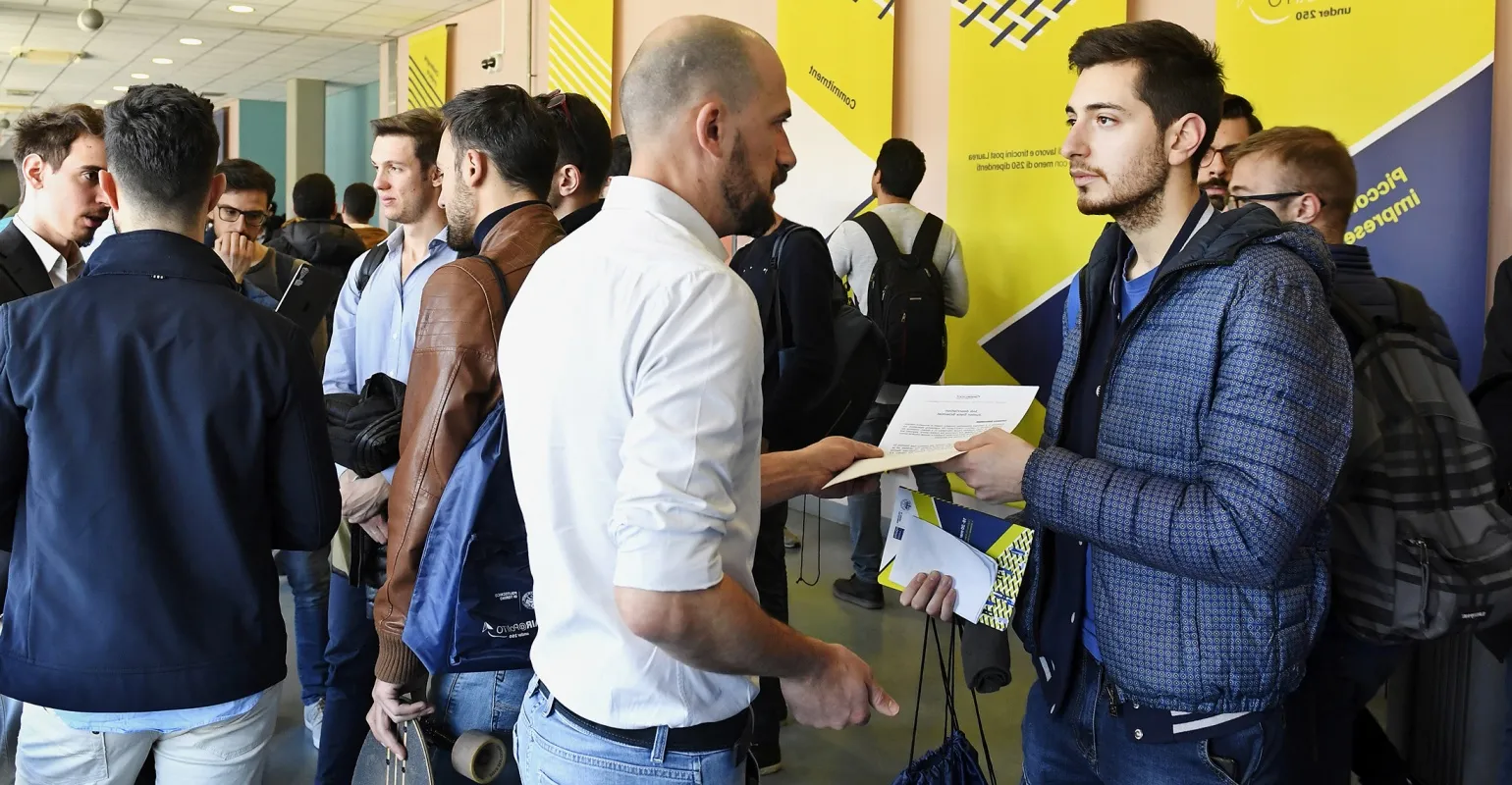
Preparation for finding high-quality internships and permanent employment for students begins long before graduation. Universities have career centers for this purpose, which are supposed to help students with this important task. However, in practice, their effectiveness often leaves much to be desired. Students need more active support to successfully adapt to labor market demands and find suitable opportunities for career development.
How can the work of career centers be optimized to effectively connect graduates with the labor market? This pressing issue was the topic of expert discussion on August 26 at the panel discussion "Career Centers. Reboot." From Creativity to Strategy" as part of Russian Creativity Week. Participants examined strategic approaches and best practices that can help career centers become full-fledged links between young professionals and employers. The importance of such initiatives is growing against the backdrop of a rapidly changing labor market and companies' needs for qualified personnel.
Representatives of the Ministry of Education and Science, higher education institutions, and businesses held a discussion on optimizing interactions between these spheres. The goal of the meeting was to create an effective mechanism that will allow universities to provide students with relevant and in-demand education, and companies to receive truly qualified specialists ready for work without the need for additional training. Government agencies are also showing interest in this process, striving to improve the quality of education and train personnel that meet market demands.
From Job Fairs to Digital Platforms
During the discussion, Grigory Gurov, Deputy Minister of Science and Higher Education of the Russian Federation, noted the importance of the global digital transformation of career centers at universities. This implies the transition of educational institutions and employers to an online platform, which will significantly simplify and improve the conditions for their interaction. Digitalization of processes in education and employment will create an effective ecosystem that facilitates the career development of students and graduates. The transition from periodic job fairs to systematic, daily work encompasses all stages, from university selection to graduation. This includes organizing internships, active interaction with employers, student participation in the activities of businesses, commercial and non-profit organizations, and employer involvement in the lives of students during their studies. Gurov noted the importance of this approach for fostering mutually beneficial relationships between students and employers, which contributes to more effective training and improved graduate employability. The Ministry is beginning to collaborate with the existing "Fakultetus" service rather than creating a new digital platform. Fakultetus is a digital student employment platform created in 2017 by Sergey Vishchipanov, a Skolkovo Foundation resident. Employers can post job openings on this platform, and students can share their resumes. The platform gained popularity in 2020, when the pandemic forced higher education institutions to move their job fairs online. This cooperation between the Ministry and Fakultetus will allow the state and the existing project to combine their efforts to achieve common goals in the field of student employment.
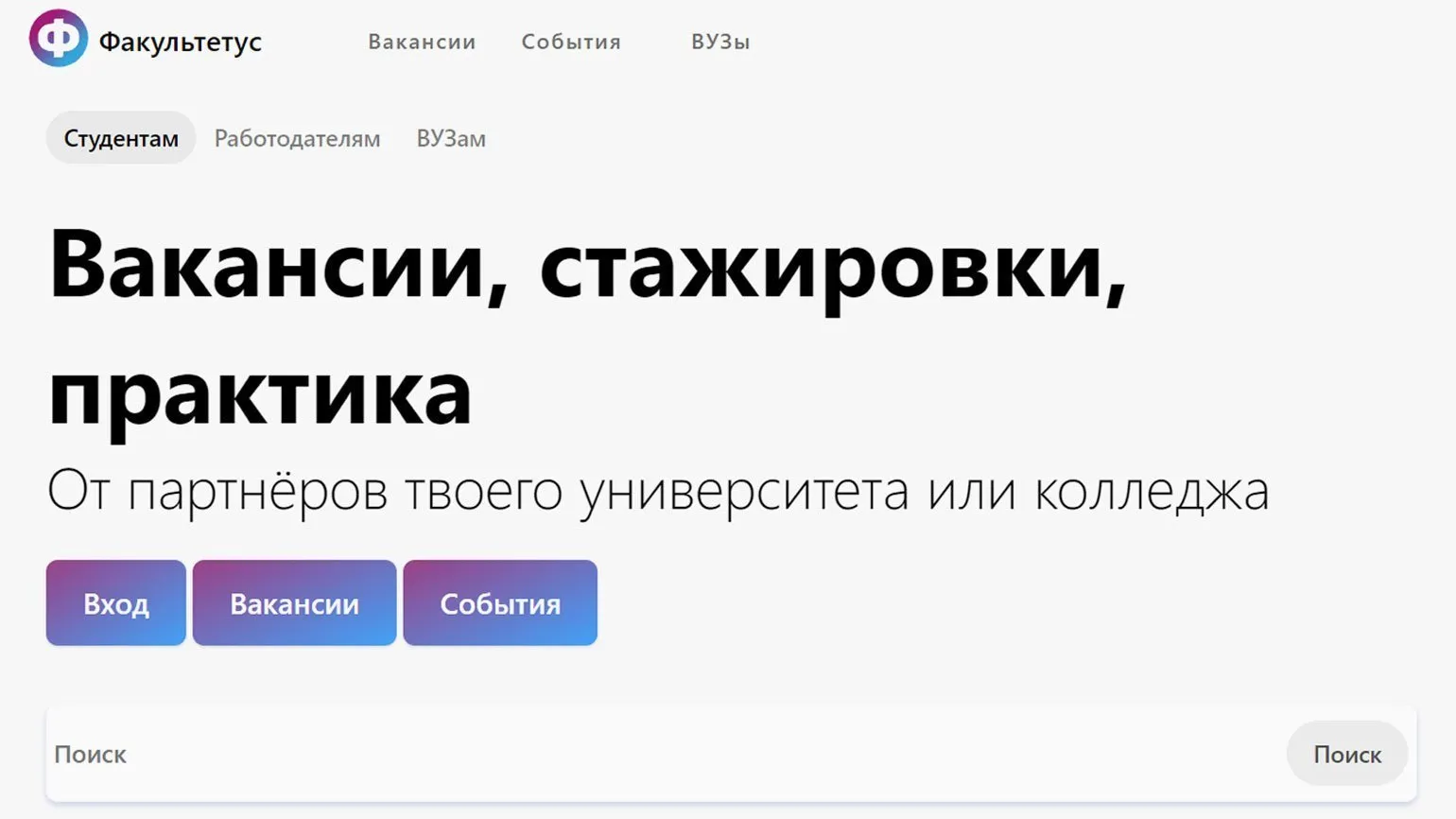
The artificial intelligence-based platform provides Universities can significantly improve the efficiency of their career centers. Using modern technology, these solutions can optimize student-employer interactions, improving the internship and job search process. Innovative algorithms analyze data and predict labor market needs, allowing universities to tailor their programs and services to current demands. This allows students to access more relevant job openings and resources, while universities strengthen their relationships with employers, creating a more effective career development ecosystem.
Digitalization in education and employment promises to significantly improve interactions between employers, universities, and students. Currently, 362 universities are partnering with this platform, demonstrating its popularity and demand. Since its launch last September, 19,000 students have found jobs through this resource, and this number continues to grow. The platform not only facilitates the job search process but also enables universities to establish connections with potential employers, facilitating more effective integration of graduates into the labor market.
This year, we plan to develop a comprehensive educational course for career centers, which will allow them to adapt to modern conditions. Grigory Gurov noted that career centers must go digital to provide high-quality services to young people and students. This includes assistance in self-discovery, interaction, and building an individual career trajectory. This approach will ensure the relevance and effectiveness of career centers in a rapidly changing labor market.
The full digital transformation is planned to be completed within the year. The Ministry of Education and Science holds weekly meetings with universities. The Deputy Minister notes that these meetings collect key data on graduates: their number, the number of those who may face employment problems, and the reasons for these difficulties. The information received is verified through the Fakultetus platform.
Sergey Chebotarev, Rector of the K. G. Razumovsky Moscow State University of Technology and Management, shared the initial results of his collaboration with the Fakultetus platform. He noted that last academic year, the student employment rate was 77%, which raised some concerns. This academic year, the university was able to attract more students and employers to the Fakultetus platform, which contributed to an increase in the employment rate to 86%. This indicates increased interest in the program and improved opportunities for students.
From a job and resume database to a more complex function
Sergey Vishchipanov, CEO of the Digital Career Environment "Fakultetus," shared the challenges the service faced while helping universities transition their career fairs to an online format. Despite the large number of resumes and job openings entering the database, there was a lack of communication between students and employers. In response to these challenges, "Fakultetus" initiated a study of university career centers and conducted a customer-centricity analysis to identify the main barriers. Some of the key issues included low student motivation and the lack of a user-friendly interface for interacting with employers in university career centers. Addressing these issues is a priority for improving communication between students and potential employers.
Optimizing internal university processes is a key aspect to consider. In particular, improving internal communications and interactions with employers are important areas. This will increase the efficiency of educational institutions and better prepare students for the demands of the labor market, as emphasized by Vishchipanov. Improving these processes contributes to a more favorable educational environment and strengthens ties between universities and the professional community. "Fakultetus" is an effective process management system for career centers and also serves as a useful job search tool. The platform's primary goal is to optimize the work of career centers, making it indispensable for students and young professionals seeking employment. We observe that employment, in general, does not pose significant problems—most people find work. However, more important issues include the quality of employment, the frequency of job changes in the near future, the level of loan debt caused by dissatisfaction with working conditions, and the lack of motivation of many students while studying for certain professions. The service's founder emphasizes that these aspects require deeper analysis and attention.
An example of insufficient communication between career centers and the professional language of students and employers is the situation where career center representatives are unaware of key platforms like Behance. This resource is one of the most popular for designers, allowing them to showcase their portfolios. If career centers ignore such important tools, they may fail to effectively connect students with potential employers, which, in turn, hinders graduates' job searches and reduces their chances of career success.
Andrey Ocheretny, Executive Director of the Academic Partnerships Center at Sberbank, emphasized the importance of career centers in helping students navigate the labor market. These centers must provide the necessary resources and support to enable young professionals to successfully adapt to modern employer demands. Effective collaboration between educational institutions and career centers will help students develop key skills and better understand the dynamics of the labor market. The ideal candidate for Sber combines three key qualities: creativity, execution, and systems thinking. Unfortunately, today's students often abandon this logical approach after completing higher education, remaining within the narrow confines of their profession. Therefore, career centers should take on a coaching role, helping students navigate the vast opportunities offered by the modern world. This is especially important for a successful career start.

Ideally, career centers should clearly understand what skills students have and what professional prospects they see for themselves. At the same time, it is important to understand what competencies graduates require from businesses. Career centers should actively integrate employers into the university environment. This requires not simply collecting inquiries for internships and job openings, but acting as career consultants and intermediaries between employers and higher education institutions. This approach will create more effective interactions, which in turn will increase students' chances of successful employment.
On the Role of Business in Education Development
In Russia, progressive companies actively collaborate with universities, overseeing departments and developing joint educational projects. Some of them create their own curricula, which makes it possible to develop personnel with the competencies needed by business. Andrey Ocheretny shared information about Sberbank's current educational initiatives and how the company seeks and attracts new talent. Such collaboration between businesses and educational institutions facilitates the training of specialists who meet labor market demands.
Sberbank currently collaborates with 330 partner universities, underscoring its role as not just a bank, but an entire ecosystem. According to Ocheretny, these partnerships are formed based on the company's needs, necessitating the transition to digital solutions. Interaction with universities is being improved and simplified through new platforms. One such initiative is the SberGraduate portal, which serves to communicate with students, support educational programs, and post vacancies through the Pulse HR platform. This approach allows us to effectively cope with the diverse requests and requirements arising from the active development of Sberbank as a multifaceted organization.

Explore ways to develop cross-disciplinarity in students and employees. A cross-disciplinary approach fosters a deeper understanding of various fields of knowledge and enables the discovery of innovative solutions. It is important to create conditions that facilitate the exchange of experiences and ideas across disciplines. This can be achieved through joint projects, interdisciplinary courses, and seminars. Developing cross-disciplinarity not only enriches the educational process but also increases the competitiveness of specialists in the labor market.
Ocheretny emphasized that in launching the new project, the company is paying special attention to developing components related to employment and career centers. A key aspect is the formation of a new structural unit consisting of specialists who will focus on employment support. This will allow for more effective solutions to career development and job search issues for employees.
Maxim Mikheenko, Senior Vice President of 1518 Studios, discussed the IT industry's current needs for qualified specialists. He emphasized the importance of student motivation and the role of potential employers in this process. Mikheenko cited the city of Ulyanovsk as an example, which demonstrates interest in developing human resources in the field of information technology.
Ulyanovsk is a small city, but it boasts a high concentration of IT specialists. Students here are highly motivated to learn and work. Many leading companies actively hire students from their first year, creating excellent opportunities for career advancement. Young professionals have successful case studies and a clear vision of their career prospects. They understand the salary expectations, their potential for development, and the fact that their skills are in demand not only locally but also internationally. Thus, Ulyanovsk is becoming an important hub for those seeking a career in IT.
Universities and companies actively collaborate to train specialists in game design and development. For example, MIPT operates a Center for Training in Game Design and Development, and the Faculty of Philosophy at Moscow State University offers a game design program in partnership with Epic Games. This collaboration allows students to gain relevant knowledge and skills needed in their professional fields. It's important that students not only study theory but also understand the practical application of their knowledge through interactions with instructors and mentors working in the industry. According to Maxim Mikheenko, such interaction gives students the opportunity not only to complete practical assignments but also to determine the direction of their future career development.
To summarize: who is responsible for what?
The discussion revealed that the Ministry of Education and Science, universities, and businesses have clear expectations of each other. The Ministry hopes that employers will take the initiative and approach universities with specific requests. This will allow universities, relying on developed career centers, to formulate appropriate offers for students. In turn, government agencies are ready to facilitate effective interaction between educational institutions and employers.
The economy and employers play a key role in shaping the labor market. It is important for employers to recognize the value of qualified specialists and actively engage with educational institutions. Specialists don't just appear out of nowhere; their development requires universities to collaborate with reliable partners and knowledgeable clients. Grigory Gurov emphasizes that such collaboration contributes to the development of high-quality personnel who meet market demands.
University career centers often focus on their own internal needs, without considering the needs of specific employers. This leads to ineffective interactions with the labor market. To improve communication with employers, it is necessary to focus on their needs and expectations. This will allow for the creation of more tailored programs and services that will meet the demands of the modern market and ensure the successful employment of graduates.
Andrey Ocheretny called on universities to more accurately collect employer requests regarding specialist shortages in the labor market and the necessary competencies. Digital platforms can play a key role in aggregating this information, allowing educational institutions to better tailor their programs to the current needs of employers. This will improve the quality of training for professionals who meet the demands of the modern market.
Modern realities show that a drowning man's salvation is his own responsibility. If a business experiences a shortage of qualified personnel and is not receiving them from higher education institutions, it must independently develop educational programs and seek solutions. Higher education institutions, in turn, must prepare specialists who can immediately occupy relevant positions in the labor market.
Read also: Why Business Turns to Education: The Role of Education in Recruiting.
Career centers play a key role in establishing connections between businesses and higher education institutions, according to the founder of Fakultetus. These centers interact with employers and can convey their needs to students, which, for example, can help motivate them to study mathematics rather than be distracted from their chosen trajectory. It's important that the work of such centers isn't limited to mechanically conducting events like job fairs, but is based on a strategic approach. This includes not only motivating students to acquire the necessary competencies but also actively engaging companies in the educational process, which allows for better preparation of young people for the demands of the modern labor market.
The government, represented by the Ministry of Education and Science, must create favorable conditions for interaction between universities and employers. Each participant in this process has its own objectives. Gurov noted that issues can only be resolved through open dialogue. It's important for universities to recognize that all employers, regardless of company size, are both customers and partners in the educational process. This approach will help improve the quality of education and prepare students for the demands of the labor market.
Our goal is to find an effective communication environment that will allow for the prompt receipt of orders, their translation into the state language, and their integration into the system. A solution can only be found through active discussion.
Andrey Ocheretny noted that it is impossible to predict what skills and knowledge will be in demand in five years. Therefore, the main thing that business can teach students is the importance of continuous learning and adapting to change.
Everything changes. In higher education, we can only provide a desire to learn and an awareness of the need for further education. Modern universities, in my opinion, are coping with this task, especially when students develop a sense of the goals of their education. If career centers provide support in this, a bright future awaits us.
Reading is an important aspect of development and knowledge acquisition. It not only broadens your horizons but also helps improve critical thinking skills. By immersing yourself in books, articles, and research, you gain access to new ideas and perspectives, which aids in personal and professional growth. Regular reading also improves memory and concentration, which is especially important in today's world, where information flows in huge quantities. Interesting and useful materials can be found in a variety of genres and formats, allowing everyone to find the right one for themselves. Don't forget that reading isn't just entertainment, it's also an opportunity to deepen your knowledge in areas of interest to you.
- Universities criticized for lack of employment monitoring
- Russia plans to develop a college-factory model
- Why are we falling into a qualification pit?
- Where is corporate training heading?
HR Analytics from Scratch
You will learn to analyze employee data using Excel, AI, BI, and Python. You will be able to draw accurate conclusions based on numbers and metrics: hire and retain valuable specialists, increase their loyalty and protect your business from staff turnover.
Find out more