Contents:

Learn: The Profession of a Methodologist from Scratch to PRO
Find out moreElizabeth II became the longest-reigning monarch in British history and, probably, the last member of the royal family who did not receive a formal education. Like her predecessors, she was educated individually, which allowed her to develop a broad outlook, although not to delve into specific subjects. One of her biographers noted that this education was of a "breadth rather than depth" nature.
Why the Queen Never Went to School
Elizabeth II's education was significantly influenced not only by her parents, but also by her grandparents. King George V, her grandfather, played a key role in shaping her educational path. Because of his specific approach to educating children, the Queen never attended school. George V was known for his difficult character and unconventional parenting methods. When choosing teachers for his sons, David (the future King Edward VIII) and Albert (the future King George VI, Elizabeth II's father), he did not always give preference to the most qualified specialists. This influence affected the education and upbringing of Elizabeth II, which in the future reflected on her role as a monarch.
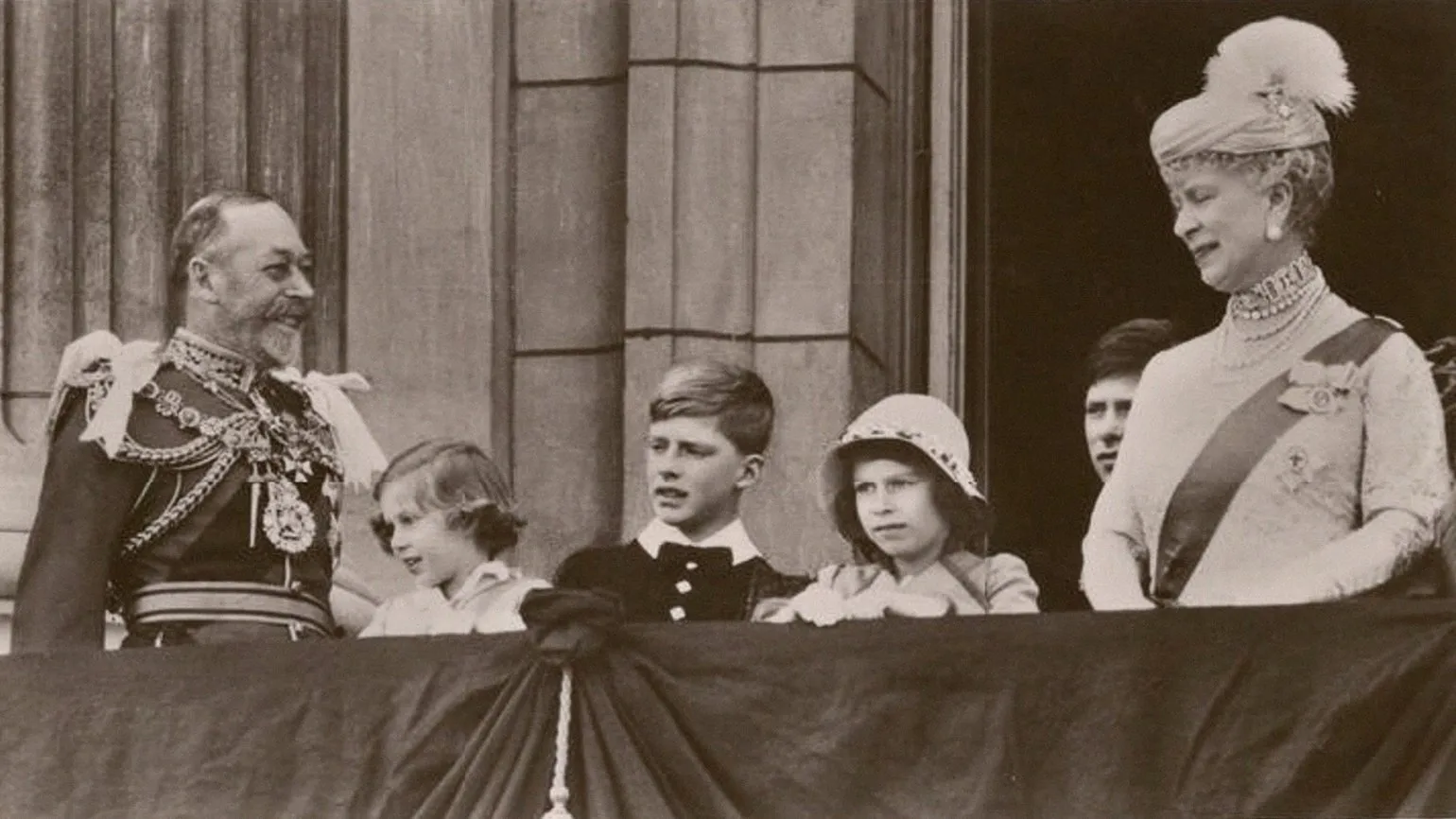
The princes' nanny often resorted to physical punishment, which caused the boys to hate both her and their tutor. This attitude formed negative emotions and instilled in the children a dislike for authority figures in their lives.
The princes studied with various teachers and achieved some success in foreign languages, but their skills in mathematics left much to be desired. At one point, the king noticed that his sons were unable to independently calculate the weight of the game they brought back from hunting. This led to the urgent hiring of a tutor for them. This situation clearly illustrates their father's attitude to education and the importance of mathematical knowledge.
Elizabeth still had a chance to go to school. Her mother, having studied for two semesters at a private British school, was eager to send her daughter to a similar educational institution. However, her grandfather, King George V, was adamant—it was considered inappropriate for the heir to the throne to attend a public school. According to tradition, she was to be educated exclusively at home.
Governess Marion Crawford was hired in 1933 to teach six-year-old Elizabeth and her younger sister, Margaret. At their first meeting, the King made one important requirement clear.
Teach Margaret and Lilibet to write neatly and beautifully, that's the only thing I ask. Neither of my children can write properly. Their handwriting is exactly the same. I want to see individuality in their writing.
How the future queen's lessons were conducted and what she was taught
Elizabeth's parents sought to provide their daughter with many years of a happy and carefree childhood, so they focused not on studies, but on pleasant pastimes. According to the princess's governess, parental involvement in shaping the curriculum was minimal. At that time, no one predicted that Elizabeth would become queen. She was raised not as a future monarch, but as a member of the royal family, expected to successfully integrate into high society and become a public figure.
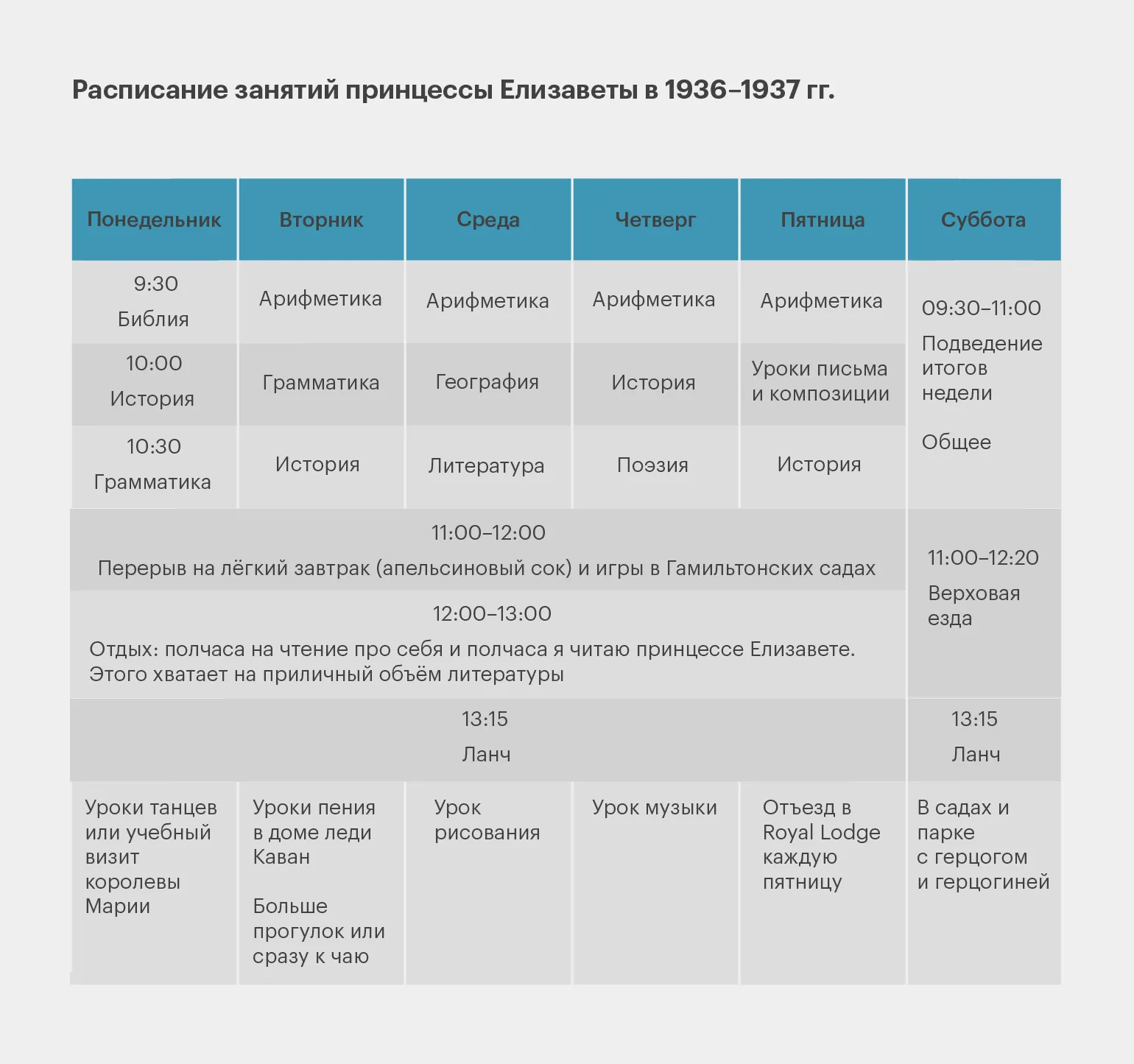
The princesses' lessons began at 9:30 a.m. and lasted until 1:00 p.m. After lunch and tea, the girls read, then moved on to music, dancing, and drawing. This time was devoted to creative pursuits that did not require significant physical effort but contributed to the development of their artistic skills and cultural horizons.
During a French lesson, a funny incident occurred. Feeling bored, Elizabeth decided to experiment with a silver inkwell and turned it upside down over her head. Her blond hair slowly began to turn blue, and ink ran down her face. However, this act only horrified the teacher, as Marion Crawford recalled.
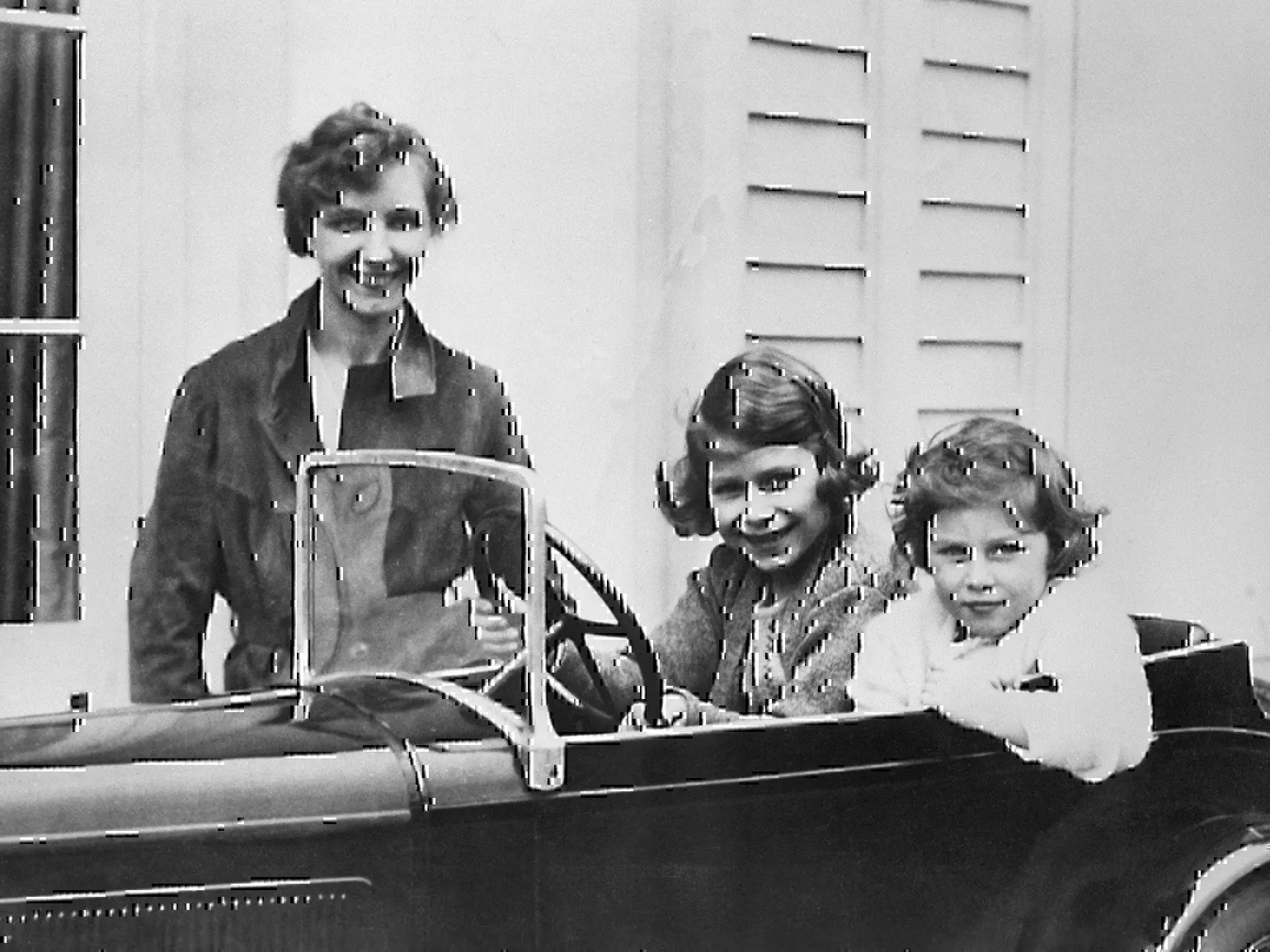
The princess was considered an obedient and responsible student. While her parents did not interfere with the educational process, Elizabeth's grandmother, Queen Mary, took an active interest in her education and took part in it.
In 1936, she asked Crawford to provide a timetable of classes for Elizabeth and Margaret, after which she expressed dissatisfaction with its content.
History lessons last two and a half hours, which may seem insufficient for an in-depth study of this important subject. However, despite the limited time, it is important to make the most of the lessons to master the key events and processes that shaped our past. Effective teaching methods and active learning forms can help students better understand historical facts and their significance.
Is there really such a high importance of arithmetic compared to history? Certainly, girls' ability to quickly calculate and solve mathematical problems deserves respect, as it develops accuracy and logic. However, in real life, many of them may never encounter the need to do their own calculations. In contrast, knowledge of history can be extremely useful. For example, understanding historical events and dates will be important for Princess Elizabeth's future career. This knowledge will help her communicate with foreigners who expect her to be aware of the crises and historical trends of their countries. Thus, history undoubtedly plays a significant role in education and personality development.
The question of redistributing class time between arithmetic and history is controversial. Arithmetic lessons play a key role in developing the mathematical skills necessary for solving everyday problems. On the other hand, studying history promotes the development of critical thinking and an understanding of the cultural context. So, is it worth sacrificing one subject for the sake of the other? Most likely, the answer is no. Each subject should be given sufficient attention to ensure a comprehensive education and the harmonious development of students.
The Queen was displeased with the insufficient time allocated for the study of the Bible, literature, and geography. This restriction impacted the educational process and the development of knowledge, raising concerns about the quality of education. It is important to ensure sufficient time for studying these subjects, as they play a key role in shaping the general outlook and cultural background.
Here is the final schedule of the princess's lessons.
Elizabeth's education extended beyond home studies. Her governess, like Queen Mary, made efforts to introduce her to art. She regularly took Elizabeth to art galleries, museums, and exhibitions, which contributed to the formation of her aesthetic perception and cultural outlook.
The governess provided the princesses with the opportunity to see the world beyond the luxurious mansions. They rode the metro and buses, and sometimes visited large stores. However, such excursions were always accompanied by two detectives and one lady-in-waiting, which emphasized their status and ensured their safety. This allowed the girls not only to get acquainted with city life, but also to develop a sense of independence and autonomy.
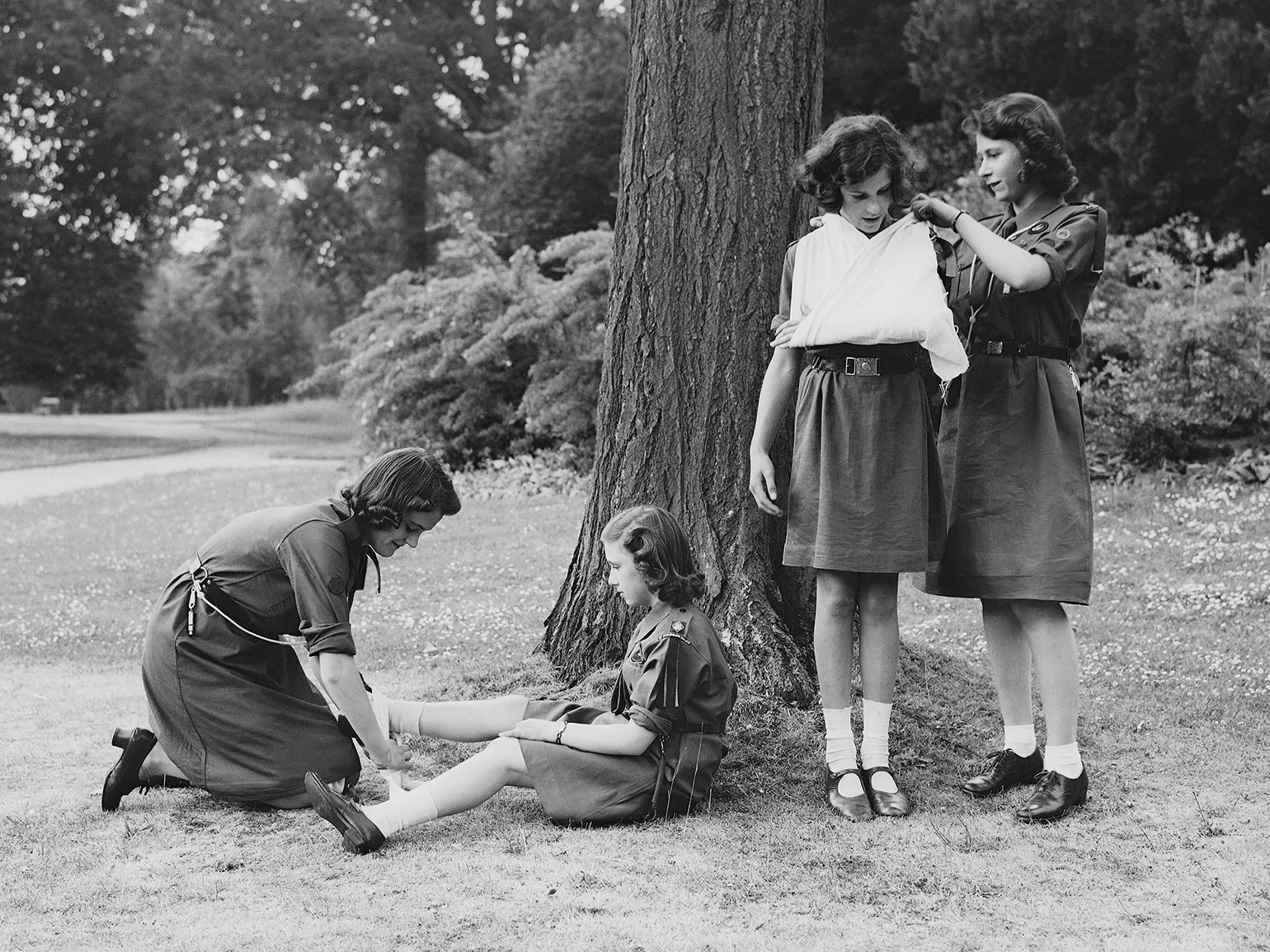
Crawford, seeking to connect Elizabeth with the outside world, organized a Scout troop. The Scout movement began developing in Great Britain in the early 20th century and quickly gained popularity around the world. The governess created such a troop at Buckingham Palace, and the princesses joined it along with other children living at the palace with their families. This activity not only facilitated Elizabeth's socialization but also fostered leadership skills and a sense of responsibility in the young participants. The Scout movement, based on the principles of friendship, mutual assistance, and love of nature, became an important part of the future queen's childhood.
How Elizabeth's education changed when she became heir to the throne
When Elizabeth turned ten years old, she had to radically revise her schedule and activities.
In 1936, Elizabeth II's grandfather, King George V, died. His throne was taken by Elizabeth's uncle, Edward VIII. However, already in December of the same year, Edward VIII decided to abdicate the throne in favor of his younger brother, who became King George VI. This event made Elizabeth II heir to the British throne.
To successfully govern a vast empire, it was necessary to prepare the princess. However, she did not have enough time for training, as she had to perform public duties both with her parents and on her own.
Elizabeth's schedule was supplemented by subjects such as economics, constitutional history, which she studied twice a week under the guidance of Henry Marten, Vice-Principal of Eton College, as well as world history and the characteristics of the British colonies. Furthermore, the princess was forced to urgently begin studying Latin in addition to German and French.
After the outbreak of World War II, the British royal family moved from Buckingham Palace to Windsor Castle. During this period, Elizabeth II's education became distance learning: teachers sent her study materials and assignments by mail. This transition to distance learning was an important stage in her life, allowing her to continue her education during the war.
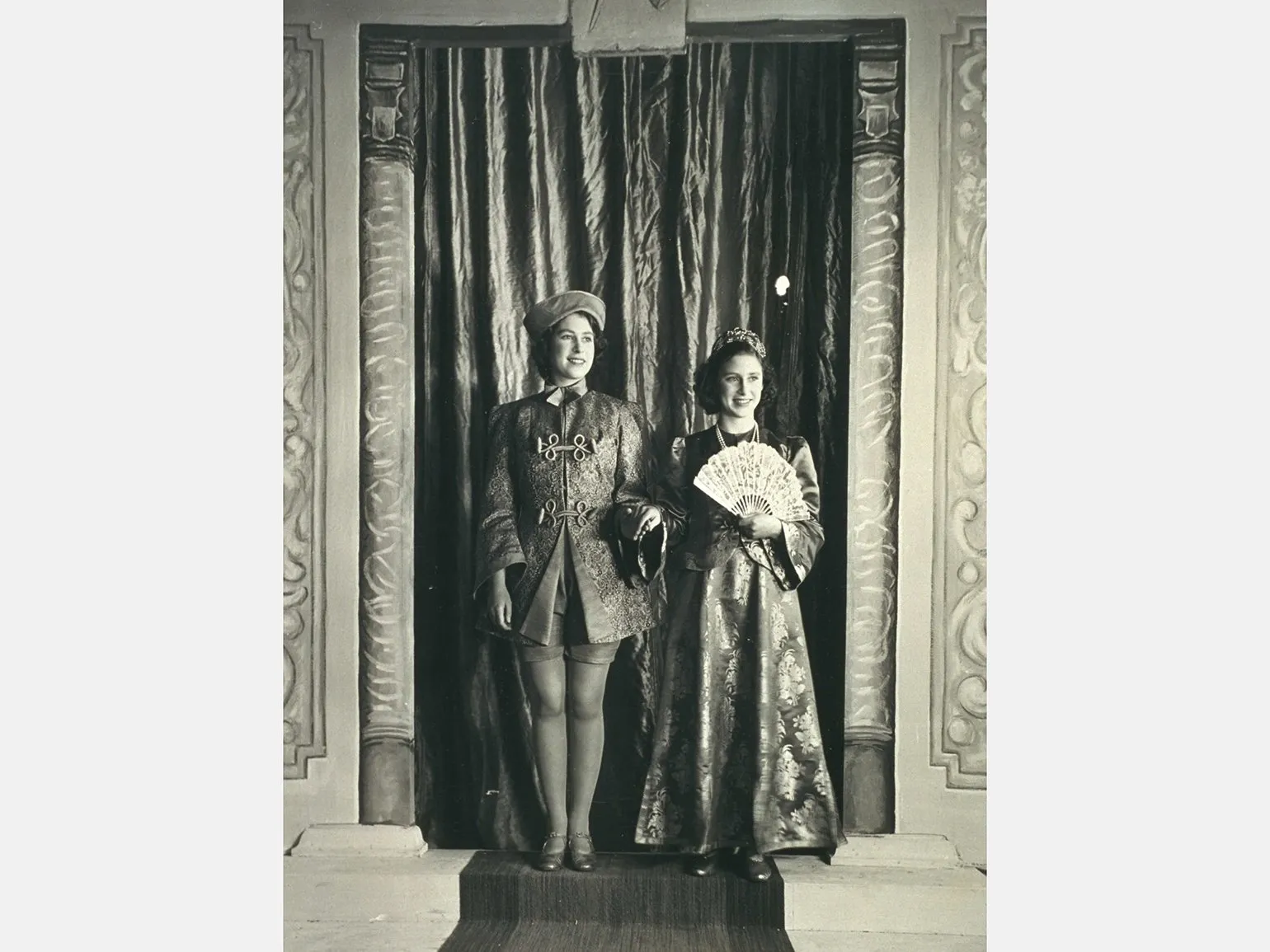
Elizabeth was actively involved in swimming, horse riding, and dancing. She took part in a children's amateur theater, which mainly consisted of children evacuated to Windsor. In addition, Elizabeth devoted considerable time to reading, which contributed to her development and broadening her horizons.
In 1943, The Atlantic magazine published an article about the heir to the throne's outstanding academic achievements, also mentioning the books she preferred to read in her free time. Her literary list included works by such great authors as William Shakespeare, John Chaucer's The Canterbury Tales, as well as works by Samuel Taylor Coleridge, John Keats, Robert Browning, and Alfred Tennyson. Also on the list were Walter Scott, Charles Dickens, Jane Austen, and Robert Louis Stevenson. For lighter reading, she chose the works of Arthur Conan Doyle and John Buchan. These books reflect the wide range of interests and literary tastes of the heiress, emphasizing her deep affection for classic literature.
Elizabeth did not receive higher education, but successfully completed courses to train drivers and mechanics for ambulances and trucks. Her professional qualifications allow her to confidently work in the field of transportation and maintenance of specialized vehicles.
Modern historians question the quality of the systematic education received by the queen. However, it is obvious that this did not negatively affect her ability to govern the country.
Unfortunately, you have not provided the text for editing. Please add the text you want to rework, and I will help you with its adjustments for SEO.
- Marion Crawford. The little princesses. Harcourt, 1950.
- Peter Gordon. Royal education: past, present, and future. Frank Cass, 1999.
The Profession of Methodologist from Scratch to PRO
You will improve your skills in developing curricula for online and offline courses. Master modern teaching practices, structure your experience, and become a more sought-after specialist.
Learn more