Contents:

Learn: Methodologist of educational programs
Learn moreThe quality of education and its indicators continue to be an important topic for discussion. This topic was also addressed at the IX Moscow International Education Fair (MIEF-2022). At the session "Creating a High-Quality Educational Product: Approaches and Metrics," experts from the fields of school and university education, as well as continuing professional education and EdTech, discussed modern methods and metrics aimed at improving educational processes and outcomes. The discussion extended beyond the stated topic and covered not only the quality of the educational product but also the overall quality of education. The speakers also discussed which aspects of education should be measured at various levels and the purpose for doing so. We've compiled key quotes from the experts' presentations. A video recording of the discussion is available on the official MMSO VKontakte community.
Why the Question of Education Quality Is Becoming a Conundrum
At the beginning of the discussion, moderator Eduard Khisyakov, product manager at SkillFactory, raised an important issue regarding the possibility of unifying criteria for assessing the quality of educational programs. He asked whether it would be possible to standardize quality indicators for educational institutions such as schools and universities, as well as for continuing professional education organizations, regardless of the format of instruction—online or offline. This issue is relevant for all participants in the educational process, since standardizing quality indicators can significantly improve the level of education and ensure a more transparent comparison of different programs.
Kirill Savitsky, expert at the Laboratory for Digital Transformation of Education at the Institute of Education at the National Research University Higher School of Economics, raised an important issue, which was agreed upon by other experts. The issue of education quality often becomes a source of misunderstanding. As the speaker emphasized, there is currently no generally accepted definition of this term and related concepts, which complicates the discussion and evaluation of educational processes. It is important to develop clear criteria and standards that will help all participants in the educational system better navigate issues of the quality and effectiveness of training.

An expert at the Laboratory of Digital Transformation of Education at the Institute of Education of the National Research University Higher School of Economics is engaged in research and development of innovative approaches in the field of digital learning. His work includes analyzing current trends in educational technology, integrating digital tools into the educational process, and evaluating their effectiveness. He focuses on creating conditions for optimizing the educational process using digital solutions, thereby improving the quality of education and adapting curricula to the demands of the modern market. When discussing educational quality, an important step is creating a clear glossary to ensure understanding of the concepts being discussed. During the discussion, we may encounter confusion between various terms. For example, a session titled "Creating a Quality Educational Product" could easily transition to a discussion of the quality of educational programs, and then to the quality of education in general, including topics related to Rosobrnadzor. Each of these aspects presents a unique story, as they target different audiences and have different customers. Comparing the quality provided by different educational platforms, such as OTUS and Skyeng, is meaningless, as they target different audiences and offer different products. However, approaches to developing educational products can be similar, making their comparison more appropriate.
Sonya Smyslova, head of the Center for Academic Quality and Creative Pedagogy at Universal University and co-founder of the School of Education, continued Kirill Savitsky's thought, emphasizing the differences between classical higher education and vocational training. She noted that classical higher education focuses on theoretical knowledge and academic preparation, while vocational training focuses on practical skills and labor market readiness. This underscores the importance of adapting educational programs to the demands of modern society and the needs of students.
The speaker emphasizes that it's possible to define clear quality criteria in vocational training, while this is much more difficult in fundamental higher education. Smyslova notes that the term "education" is most often associated with the process of personality development, and this outcome is only partially amenable to quantitative and qualitative measurement. The question of how to assess critical thinking and a person's ability to deeply and comprehensively analyze various objects and their relationships remains open.
Head of the Center for Academic Quality and Creative Pedagogy at Universal University and co-founder of the School of Education. His work focuses on raising educational standards and introducing innovative approaches to teaching.
Comparing classical higher education and vocational training evokes diverse opinions. When graduating students after four years of undergraduate study, we understand that our task is not only to prepare specialists who are relevant today. We must prepare individuals for the future, because they will shape the new world and make changes not only in their professional field. Assessing the quality of education is not possible immediately or even a year after graduation. This process requires time and in-depth analysis to understand how successfully we prepare students for the challenges of tomorrow.
Vocational training is aimed at addressing the pressing issues of our time. The educational program requires mastering a specific set of skills. Upon completion of training, individuals have the opportunity to demonstrate their achievements through a relevant portfolio and resume, which will help them find employment. This is a clear and understandable criterion for success.
The speaker notes that there is much room for debate between professional and applied education and fundamental education. These two poles, on the one hand, are aimed at developing the skills necessary for professional activity, and on the other, at shaping the individual and their comprehensive development. Many educational forms combine both measurable and immeasurable aspects, which creates unique conditions for learning and growth. This opens new horizons for discussions about how best to combine different educational approaches to achieve optimal results.
Read also:
Developing thinking and building community are key goals of higher education. In today's world, where information changes rapidly, it is important not only to impart knowledge but also to develop critical thinking in students. Higher education should foster an environment in which students can exchange ideas, develop their skills, and learn to work in a team.
Forming a community in educational institutions helps strengthen the bonds between students and faculty, creating an atmosphere of collaboration and mutual support. This promotes the development of emotional intelligence and communication skills, which are necessary for successful professional activity.
Thus, higher education should be aimed at the comprehensive development of the individual, which will allow graduates to become not only qualified specialists but also active members of society. It is important that educational institutions focus on creating conditions for the exchange of experiences and the formation of professional communities, which will ultimately lead to an improvement in the quality of education and prepare students for the challenges of the modern world.
Can defining the purpose of learning become a quality criterion?
Sonya Smyslova emphasized that in applied education it is important not only to consider quality criteria related to professional activity but also to pay attention to the goals and needs of students. This allows for the creation of a more effective educational environment conducive to the development of individual skills and competencies. By considering the interests and needs of students, it is possible to significantly improve the quality of education and make it more relevant and in demand in the labor market.
According to experts, there is a serious problem in the education sector: only a small percentage of students are able to clearly articulate their learning goals. Mikhail Sverdlov, former Director of Business Development at Skypro, curator of the "Education" community on the Yandex.Q platform, and author of the Telegram channel "Education That We Deserve," cited statistics from the Skyeng group of companies, according to which only 20% of students can define their desired educational outcomes. This indicates the need for a more in-depth analysis of student motivation and the development of methods that will help them better understand their learning goals.
Tigran Baseyan, CEO of the educational company GeekZ, noted that these are adults with sufficient life and professional experience. In contrast, schoolchildren who have not yet had the opportunity to try their hand at various fields face even more serious problems. These challenges can make it difficult to choose a profession and career path in the future. Therefore, it is important to create conditions that help young people explore their interests and develop the skills necessary for professional success.
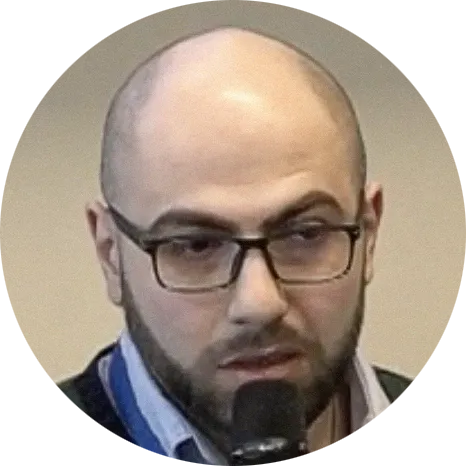
The CEO of the educational company GeekZ is a key figure responsible for the strategic development and management of the organization. He determines the direction of training, implements innovative methods and monitors the quality of educational programs. Under his leadership, GeekZ strives to provide a high level of education and training for specialists in relevant fields. The CEO is also actively involved in forming partnerships with other educational institutions and companies, which helps expand opportunities for students. Importantly, his leadership fosters a unique atmosphere conducive to learning and development. Many schoolchildren begin classes without a clear understanding of the goals of their upcoming exams. This often occurs under pressure from parents, friends, and the environment. One of the key criteria for quality education is clearly articulating goals. Achieving this goal requires significant effort from both the educational system and the students themselves. During adolescence, when teenagers begin to develop their identity and interests, it is especially difficult for them to determine their future career goals. Unfortunately, available career guidance tools are insufficient, which is one of the main problems in the education system. Moreover, students and their parents often do not pay sufficient attention to this issue. According to Rosstat, only 2.5% of people in Russia are involved in career guidance, underscoring the importance of this topic for the future of young people.
Defining the purpose of education, according to Baseyan, involves two interrelated tasks. The first is to identify the student's professional interests and help them understand their aspirations. The second is to support the student, who has realized the error of their choice, in the process of correcting it. This approach to education promotes more effective student development and allows them to find their calling.
The speaker asserts that at the school level, quality education can be assessed by the active involvement of high school students in project activities related to their specialization, as well as by their achievements in this field. As an example, he cites the Scientific and Technological Initiative (NTI) Circle Movement, which organizes Olympiads and other events for schoolchildren interested in the IT field. Participation in such projects contributes to the development of practical skills and deepening of knowledge, which is an important aspect of modern education.

Read also:
Measuring the quality of educational experience in EdTech: the importance and Methods
The quality of the educational experience in EdTech plays a key role in creating effective learning processes. For educational platforms and technologies, it is important not only to provide access to knowledge but also to ensure its acquisition and user satisfaction. Measuring this quality allows us to identify the strengths and weaknesses of learning, optimize content, and improve user interaction.
Various methods exist for assessing the quality of the educational experience. These include user surveys and questionnaires, student performance analysis, and collecting and analyzing data on platform interaction. These tools help us understand how well the material meets learners' needs and how effectively they learn it.
It is important to remember that regularly measuring the quality of the educational experience not only helps improve the platform but also increases user trust. Ultimately, this leads to increased student engagement and improved learning outcomes. Thus, creating a quality assessment system in EdTech is not just an additional task, but a necessary step for achieving success in the educational field.
What is student agency and what does it have to do with education quality?
Sonya Smyslova notes that successful career guidance is a consequence, not a cause, of career choice. In her opinion, the decision to choose an inspiring profession comes not through the use of certain tools or manipulations, but as a result of a deep understanding of one's own interests and capabilities. Smyslova calls this awareness and self-determination agency. She emphasizes that the education system at all levels views students more as objects than as active subjects with individual goals and needs. It is important that educational institutions begin to consider the uniqueness of each student, guiding them to an awareness of their own interests and abilities for more successful career guidance.
The education system has a distinctly object-oriented structure, which is evident both at the higher education level and in the professional sphere. Students are perceived as objects within this system and must be properly guided to achieve their goals. It is important that each student finds themselves in the appropriate educational environment where they can develop and become part of the overall educational structure. I emphasize that the more we trust individuals in their self-determination and in choosing what they believe is right and wrong, the less we will adhere to a technocratic approach that strives for unification and standardization. Respect for students' personal choices and needs can lead to a more flexible and effective educational system, focused on developing the unique abilities of each individual.
The speaker noted that she does not consider all measurements in education unnecessary. She emphasized the importance of the goals for which these measurements are conducted. It's important to understand that the correct interpretation of data can contribute to improving the educational process and enhancing the quality of learning.
Mikhail Sverdlov discussed a scenario in which collecting data and metrics does not promote a technocratic approach, but rather enhances the individuality and agency of each student. This approach allows for a deeper understanding of the needs and interests of students, which in turn contributes to a more effective learning process and personal development.

The former Director of Business Development at Skypro, curator of the "Education" community on the Yandex.Q platform, and author of the "Education That We Deserve" Telegram channel, has extensive experience in education and business. His professional activities focus on improving educational processes and integrating modern technologies into the learning process. An expert in business and education development, he actively shares his knowledge and experience with a wide audience, facilitating discussion of current issues and trends in this field.
Until the 20th century, human research was primarily conducted qualitatively using small samples. With the advent of mass data collection, we have the opportunity to study each individual in greater depth. A university professor can't focus on each student, like Petya, Katya, or Masha—they work with the audience as a whole. The question is: can an algorithm help a professor pay attention to each student, identify their problems, take into account individual characteristics, learning speed, and social factors? Yes, algorithms can do this. They can provide recommendations to the teacher, which will undoubtedly improve the educational process. In my opinion, the use of such technologies will significantly improve the quality of education and allow each student to receive a more personalized approach.
According to Mikhail, the Skyeng algorithm, developed based on the collected data, increased student progress by 26.5% in 2020 compared to 2019. The expert also noted the Plario system used at Tomsk University, which promotes students' mastery of higher mathematics. At Arizona State University, a data model was created that helped reduce the attrition of students who encountered difficulties in certain subjects. This allowed many of them to successfully pass exams and continue their studies. Such innovative approaches in education demonstrate how technology can significantly improve the learning process and increase student achievement.
Mikhail asserts that this use of data will allow for better care for each student, rather than simply ensuring that a certain percentage of students complete the educational program. This approach promotes the individualization of education and improves the quality of the educational process, which ultimately leads to more successful outcomes for all students.
Read also:
- Important things in the quotes of the month: about the quality of education and the professionalism of those who teach
- “It is impossible to judge the quality of a program without taking into account its implementation by a teacher”
- How to evaluate and improve the quality of general education: expert opinions
- The State Duma is developing a system for assessing the quality of education in universities
Educational Programs Methodologist
You will go through the full cycle of creating an educational product from scratch. Learn to design curricula for online and offline courses. Become a universal specialist - you can launch your own project or get a job as a methodologist in a large company.
Find out more