Contents:
Learn: The Profession of a Methodologist from Scratch to PRO
Learn More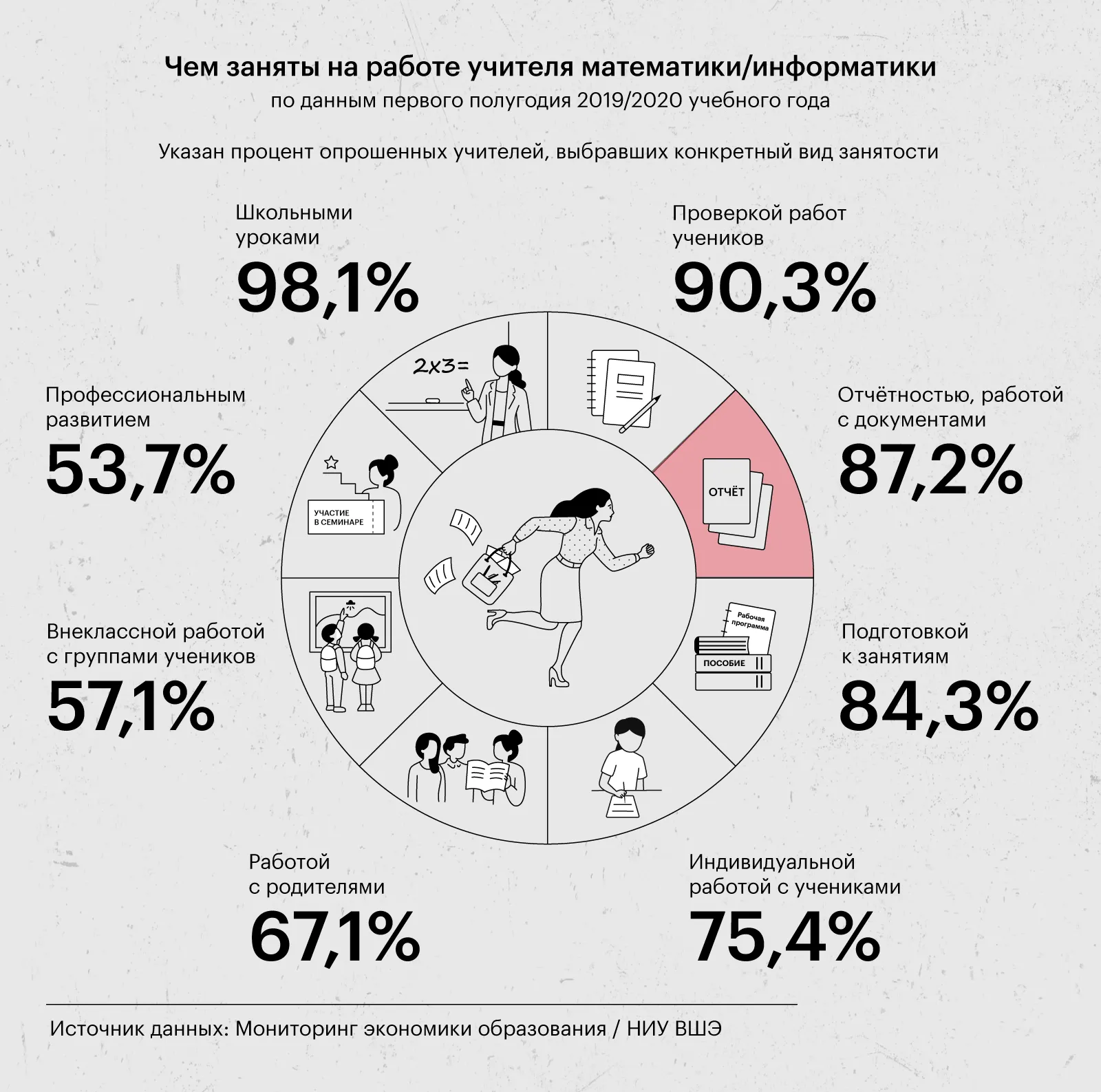
The Higher School of Economics has released a new newsletter as part of the Monitoring of the Economics of Education, which is dedicated to the adaptability and readiness of school teachers for innovation in the face of change. The bulletin also presents an analysis of teachers' workloads. The illustration shows the workload of a mathematics (computer science) teacher, but a similar situation is observed for teachers of other subjects, including primary school. It is noteworthy that reporting, which should not be the central focus of a teacher's work, ranks third among various types of work tasks. Furthermore, between 67% and 74% of teachers, depending on their length of service, admitted that they do not have enough time to prepare for lessons. This highlights the need to reconsider approaches to teacher workloads to improve their effectiveness and the quality of education.
This month, a law aimed at reducing paperwork for teachers was passed. However, the final version of the law turned out to be less encouraging than the initial draft. One of the problems is that, in addition to the basic list of documents, education authorities have the right to introduce additional requirements, which could lead to the continuation of excessive bureaucracy in educational institutions. This raises concerns among teachers who had hoped for a real simplification of their work.
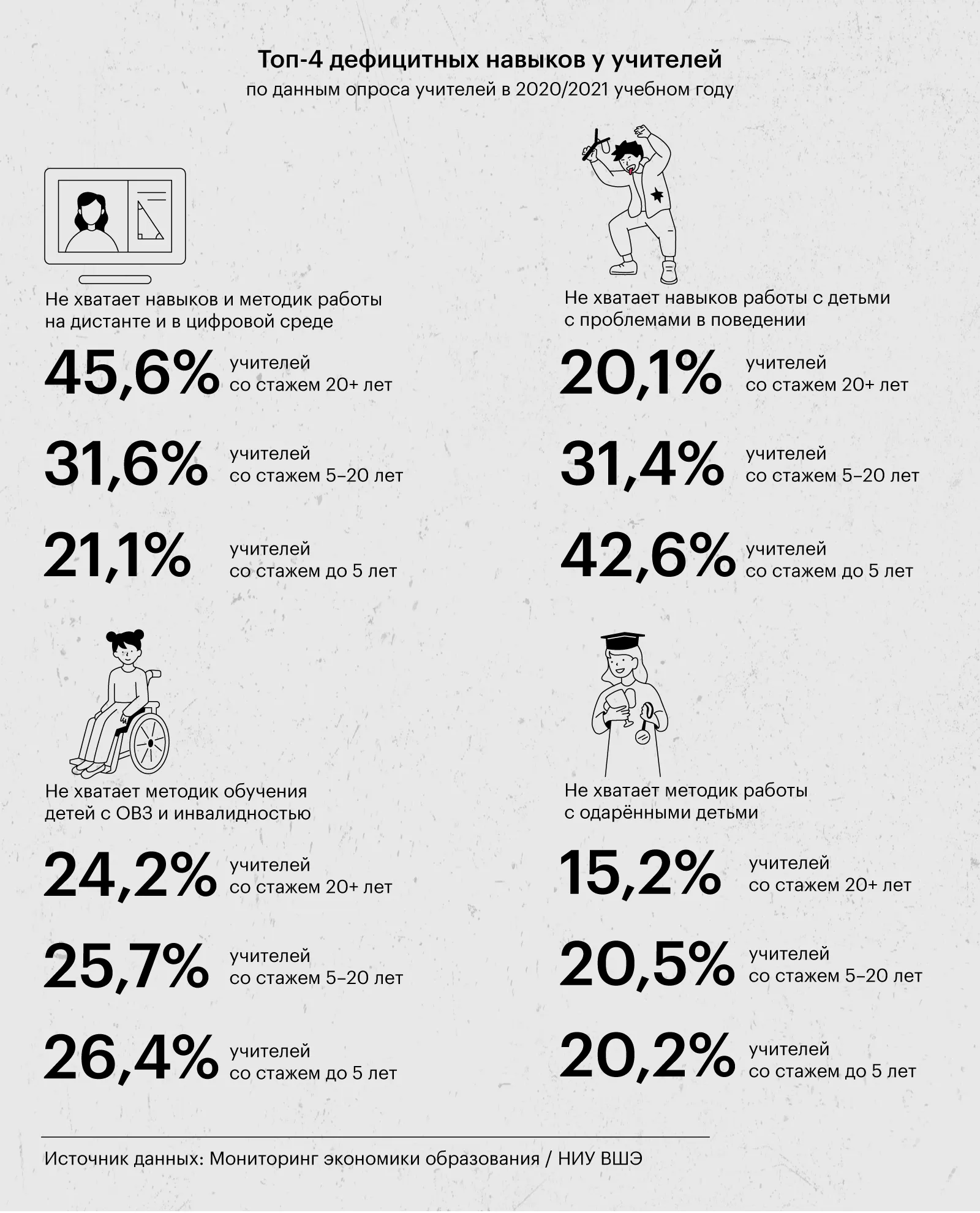
In the new HSE newsletter, released as part of Monitoring the Education Economy identified key shortages in teaching competencies and teaching methods. The study found that some of these shortages depend on teachers' experience. For example, the infographic demonstrates that young teachers find it more difficult to work with children with behavioral difficulties, while experienced teachers face challenges using digital technologies. All teachers also noted a lack of methods for working with gifted children and children with disabilities. These findings highlight the need for advanced training and updated educational practices to improve the quality of education.
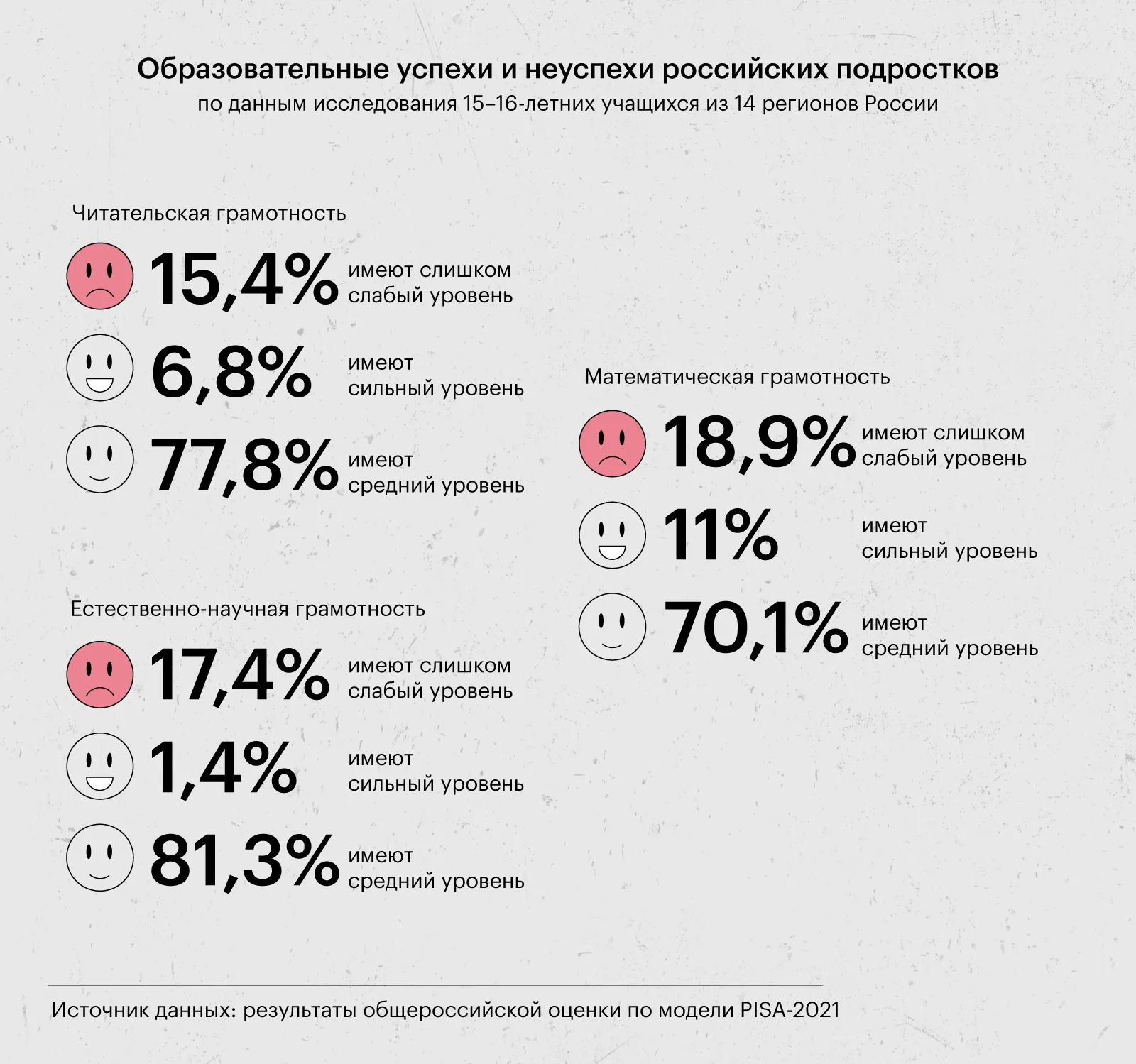
The Federal Institute for Educational Quality Assessment (FIOKO) presented a comprehensive report on the results of the all-Russian assessment based on the PISA model, conducted in 2021. Approximately 1,600 schools and 6,439 children participated in the study, providing up-to-date data on the quality of education in Russia. The results of this assessment will help in the further analysis of educational processes and the development of effective strategies for improving the level of education in the country.
The PISA study, like the original version, identifies six levels of proficiency for each literacy category. Level 2 is considered a threshold: failure to achieve it indicates insufficiently developed basic skills. Thus, level 2 corresponds to knowledge and competencies that can be assessed at the level of a weak C. In the infographic, the proportion of students who have not reached this basic threshold is designated as too low a level. This emphasizes the importance of early diagnosis and intervention to improve educational outcomes.
Achieving levels five and six indicates high competencies. In the chart, we have designated them as a strong level. These levels demonstrate significant experience and professional skills, which are important indicators for assessing qualifications.
The report presents data on the proportion of children who demonstrated knowledge at levels two through four, but only in aggregate form, which is designated as the "average level" in the infographic. However, it is important to note that the skills and competencies corresponding to level four should differ significantly from those characteristic of level two.
The majority of Russian schoolchildren appear to be at levels two and three, indicating relatively weak knowledge. However, if a significant proportion of students demonstrate results at level four, this can be considered a positive signal. You can find more detailed information on this topic in our material.
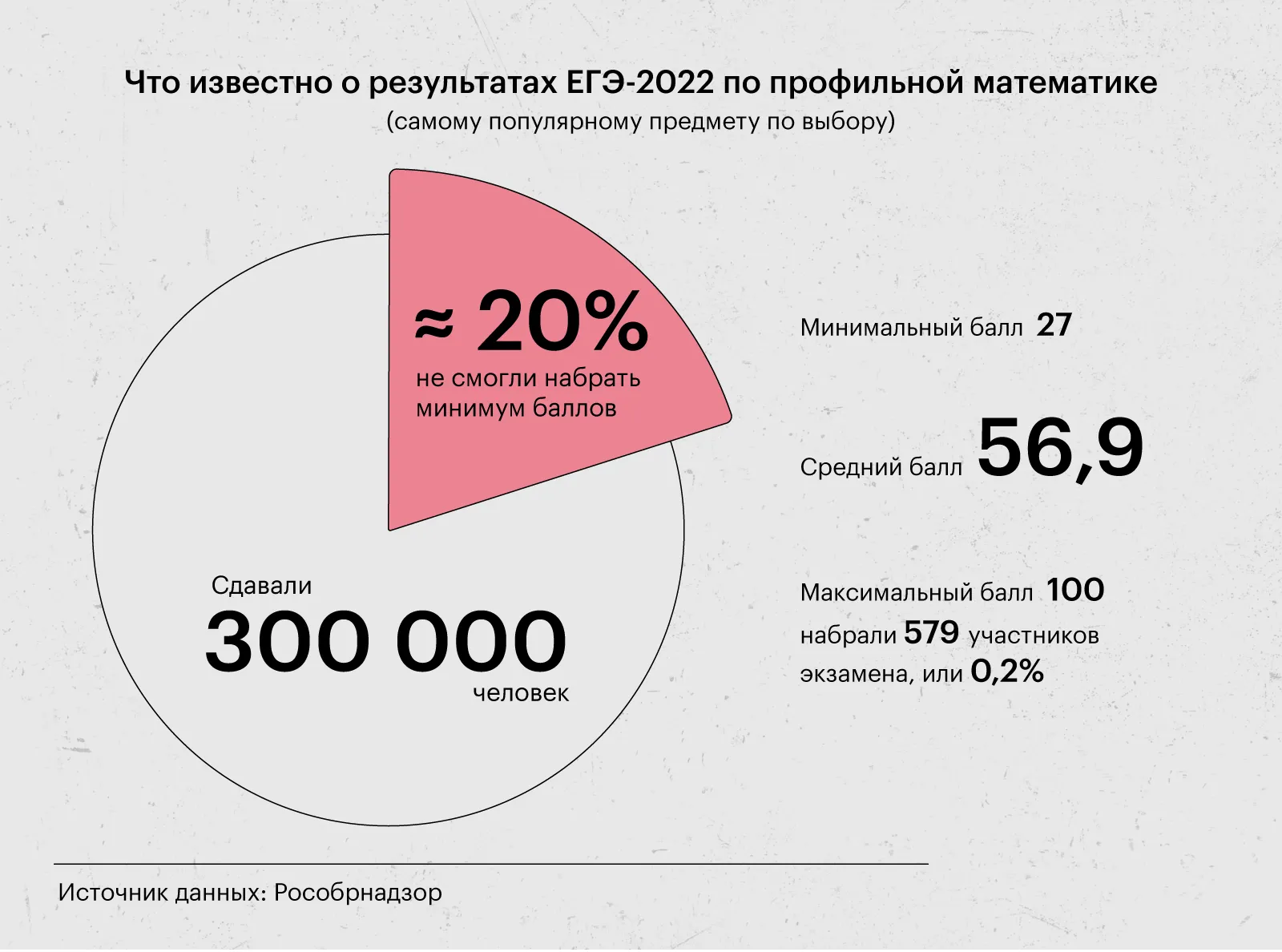
Head Rosobrnadzor's Anzor Muzaev announced the preliminary results of the 2022 Unified State Exam. Average exam scores were comparable to previous years, and the expected decline did not occur. However, the number of students achieving perfect scores decreased. Among the most difficult subjects, in addition to mathematics, were computer science, where approximately 20% of participants failed the minimum score, and biology and chemistry, where 18% of examinees failed.
The high percentage of Unified State Exam participants who failed mathematics raises concerns that students with low scores may take up state-funded places at engineering universities this year, and there is a risk of a shortage of applicants. This could negatively impact the quality of education and the training of future engineering specialists.
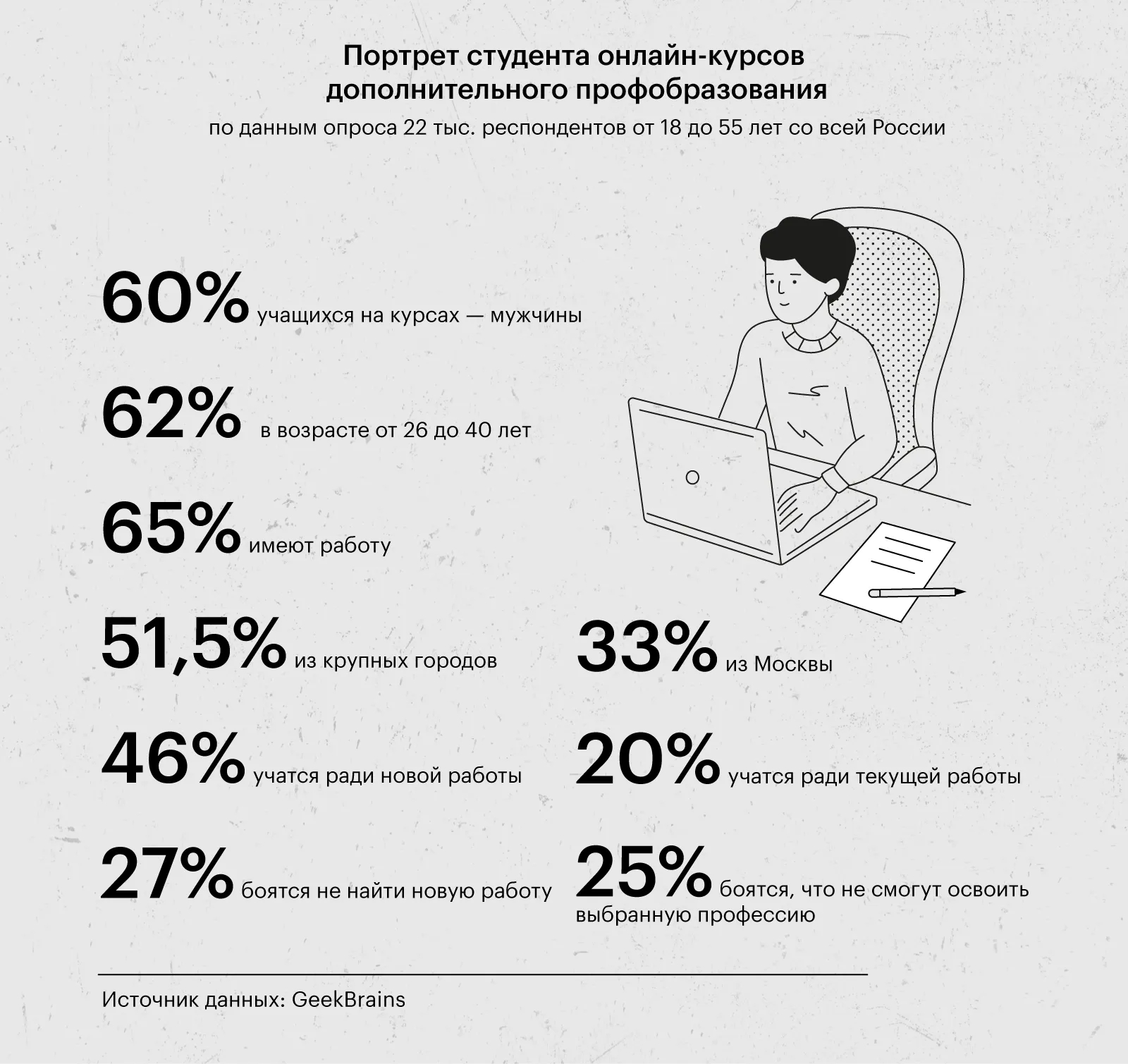
The educational platform GeekBrains conducted a survey among more than 22 thousand respondents We surveyed 18- to 55-year-olds across Russia to explore their experiences with online continuing education courses. The results of the study, as well as their comparison with other research on online adult education, are presented in our report. The infographic displays the key characteristics of typical representatives of this audience, obtained as a result of the GeekBrains survey.
Learn also:
- What Unified State Exam scores are needed for admission to a university and how to check your chances
- Study: Young teachers are more likely to face burnout
- The reasons why graduates choose colleges instead of universities have been studied
- It has become known how many Russians have retrained as IT specialists recently
Methodologist Profession from Beginner to Advanced
You will develop skills in developing curricula for online and offline courses. You will master modern teaching practices, structure your experience, and become a more sought-after specialist.
Find out more