Contents:
Learn: The Profession of a Methodologist from Scratch to PRO
Find out moreAnalysts from the media holding Rambler & Co conducted a study, surveying 100 thousand users of the Rambler portal, among which 67% are men. The survey covered eight regions of Russia and collected information on education and whether the individual's profession or specialty is appropriate. The results showed that 66% of respondents had a higher education, 17% had a secondary vocational education, and 10% of those also had a higher education. Furthermore, 4% of respondents had only completed high school. These data highlight the educational level of portal users and may be useful for further analysis of professional preferences and career opportunities.
Here's what else we learned.
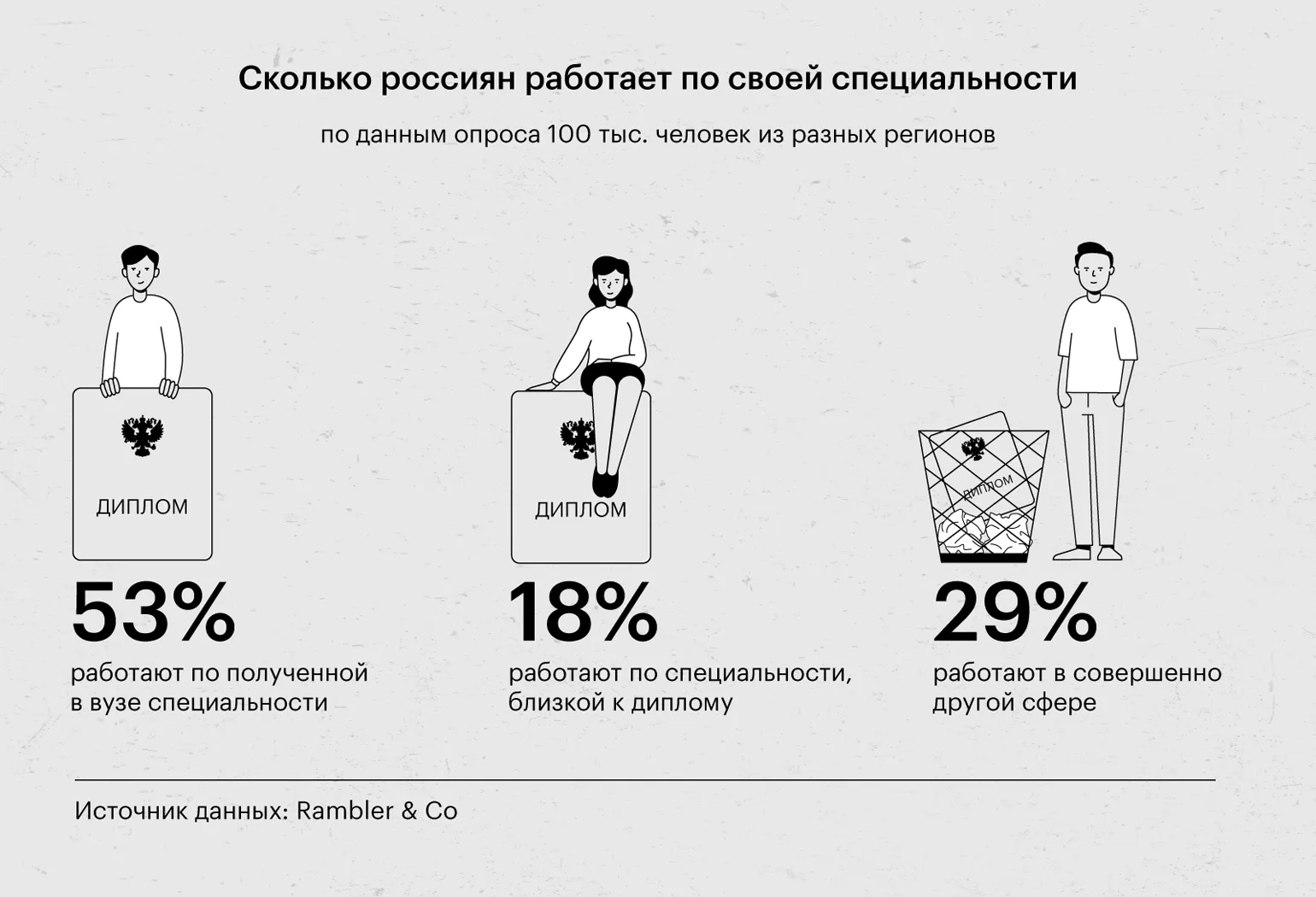
Most people work in their specialty or in a related field, but 29% work in a completely different In a previous SuperJob survey, results showed that 38% of respondents are employed in a field unrelated to their original field of study. This doesn't mean the rest have never changed careers; they may have retrained and are now working in a new field rather than their original one. Furthermore, another SuperJob survey found that 59% of respondents had undergone retraining. This high figure confirms the trend toward adapting to the labor market, which is an important aspect for professional growth and career development.
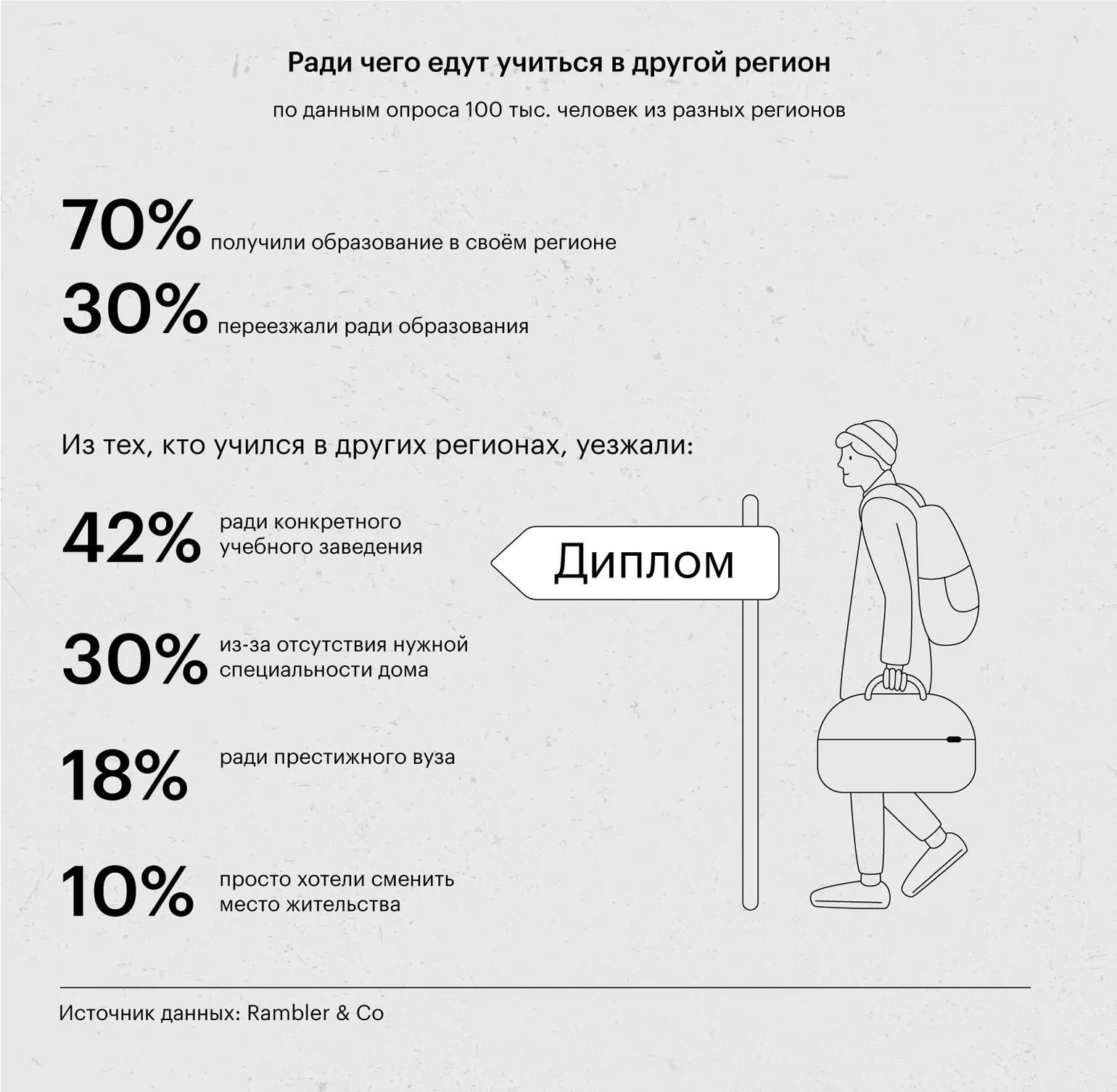
Rambler survey & Co. showed that students moving to study most often choose larger cities in their home regions—38% of respondents choose to study in regional centers. Twenty-five percent of applicants head to Moscow, 21% to other cities with over a million students, and 16% choose St. Petersburg. However, only 14% of students return to their hometowns after studying elsewhere. Minister of Science and Education Valery Falkov noted that today's applicants are increasingly choosing regional universities over those in Moscow. This is due to new admissions rules that limit the ability to submit applications in multiple waves. Consequently, many students prefer to avoid risks, since the competition to get into leading Moscow universities is significantly higher than in regional educational institutions.
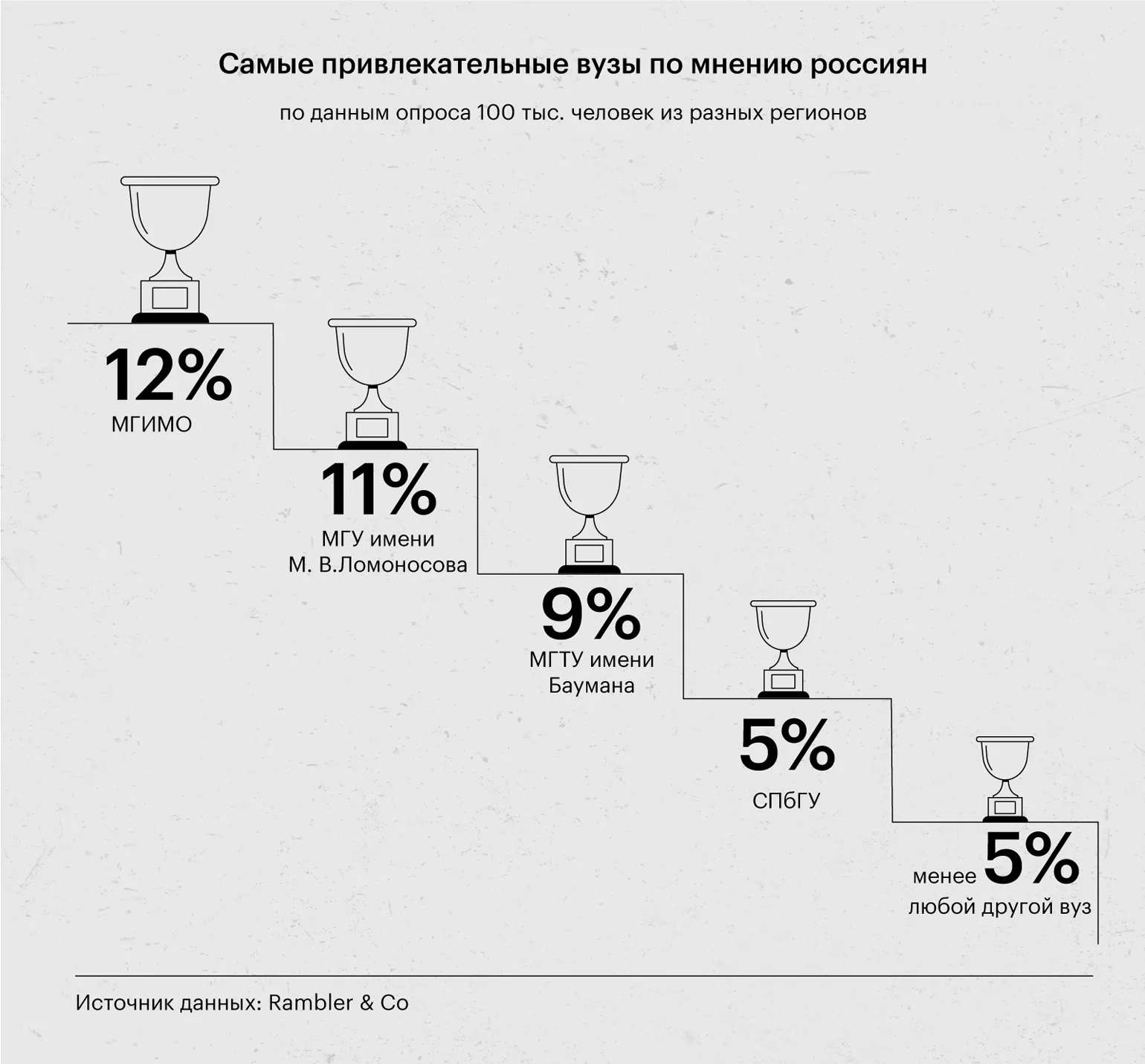
Survey participants were asked to review the RAEX ranking of the best Russian universities. About 32% of respondents indicated that they would not consider studying at universities in the top 20 of this ranking. However, if they had the opportunity, they would choose one of the five universities shown in the image.
Read also:
- Students prefer to get higher education for a career, not for general development
- Is a higher education diploma necessary for a successful career now?
- Not all diplomas are equally useful. Where do university graduates work and what are their salaries?
The Methodologist profession from scratch to PRO
You will improve your skills in developing curricula for online and offline courses. Master modern teaching practices, structure your experience, and become a more sought-after specialist.
Find out more