Contents:
Learn: Producer Online Courses from Scratch to PRO
Learn MoreThe advent of ChatGPT and the rise of AI-powered technologies have triggered significant changes in the educational landscape. Teachers, university professors, methodologists, and corporate training specialists are actively discussing how to adapt to these changes. Questions about banning such technologies and the need to reconsider approaches to teaching and student assessment are becoming increasingly pressing. It is important to find a balance between the use of innovative tools and the preservation of traditional teaching methods to achieve effective results in the educational process.
Salman Khan, a pioneer of online learning and creator of Khan Academy, shared his opinion on modern trends in education. His platform, a free resource for schoolchildren, has more than 145 million users. In his speech, he emphasizes the importance of accessible education and the role of technology in learning. Khan emphasizes that online learning opens new horizons for students, allowing them to study at their own pace and gain high-quality knowledge. The most important idea is the need to adapt educational methods to the needs of each student, which makes learning more effective and personalized.
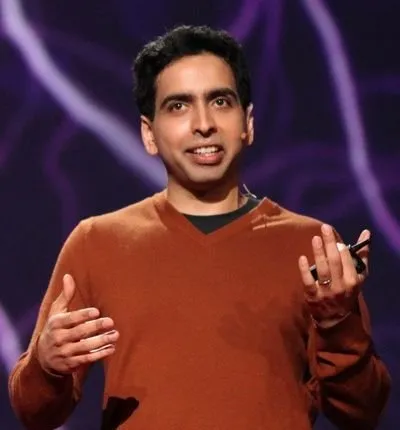
Entrepreneur and founder of Khan Academy, an online education platform, offers access to quality educational resources for students and learners around the world. Khan Academy strives to make learning accessible to everyone by providing a variety of courses and materials in math, science, programming, and other subjects. With an intuitive interface and interactive elements, users can easily master new knowledge at their own pace. The platform actively supports initiatives to improve the educational process and expand learning opportunities for diverse learners.
AI will teach students to write well
Artificial intelligence significantly speeds up the process of working with educational exercises, providing students with instant feedback on completed tasks. This makes learning more qualitative and comfortable, as Khan notes in an interview with EdWeek. Instead of traditional multiple-choice tests based on the material they read, students can create essays in collaboration with AI. This technology acts as a coach, and similar educational solutions are already in development. The integration of AI into the educational process opens up new opportunities for improving the effectiveness of learning and developing student skills.
Artificial intelligence will interact with the student during the writing process, asking them questions such as: "Do you agree with the author's opinion?" or "What is the main idea of your essay?" The AI will then prompt them to formulate arguments in a three-sentence format and support each thesis. Finally, it will help you structure the text into a traditional five-paragraph essay. This approach promotes the development of critical thinking and argumentation skills in students.
Artificial intelligence (AI) has the potential to significantly improve the educational process. In the past, students faced situations like: "Write a five-paragraph essay by Friday." After the work was submitted, the teacher spent time grading, and often feedback did not arrive until several days later, which could ruin the weekend. As a result, students received a grade and moved on to the next assignment without having the opportunity to refine their work. In contrast, modern technologies like ChatGPT offer instant feedback, allowing students to quickly improve their skills and deepen their understanding of the material. Integrating AI into the educational process opens new horizons for students and teachers, making learning more interactive and effective.
In the Tech & Learning Khan noted that many students struggle to write high-quality essays, unable to even formulate a compelling thesis in a single paragraph. Teaching writing requires significant effort and time, as instructors must provide individualized feedback to each student, pointing out the shortcomings of their writing and explaining how to improve them. In contrast, artificial intelligence can provide such feedback in just a few seconds, significantly accelerating the learning process.

Teachers will benefit from AI no less than students
Despite the fact that some While educators are still resisting change, they will soon be able to appreciate the benefits of artificial intelligence in the educational process, according to Khan. Artificial intelligence is already capable of effectively checking and grading student work, significantly reducing the burden on teachers. According to the entrepreneur, such an AI assistant could replace an entire army of teaching assistants, opening up new opportunities to optimize the learning process and improve the quality of education.
Salman Khan predicts that in the future, every teacher will have a team of teaching assistants at their disposal. If you're a university professor teaching a basic English course for 300 students with the support of eight teaching assistants, you don't grade the students' work—the teaching assistants do. This change in the educational process will improve the quality of instruction and reduce the workload on teachers, providing a more personalized approach to each student.
Neural networks are actively used to create lesson plans, replacing teachers and instructors in this field. These technologies are becoming an effective tool for interacting with students, improving the learning process and adapting materials to different levels of knowledge. The use of neural networks in the educational environment opens up new opportunities for personalizing learning and improving its quality.
Banning neural networks means depriving opportunities
Banning tools that will soon become an integral part of work practices is inappropriate, noted Salman Khan during a webinar at the Harvard Graduate School of Education. He cited the New York City Department of Education's response to the launch of ChatGPT as an example: there, the neural network was banned for both students and teachers to prevent cases of academic dishonesty. However, Khan emphasizes that working with artificial intelligence will become one of the most relevant and in-demand professions in the future. Already, specialists who create queries for models like ChatGPT earn hundreds of thousands of dollars per year. Adaptation of educational institutions and the implementation of AI technologies in the educational process can open new horizons for learning and skill development in students.
The new technology will radically change the approach to work. People shouldn't fear these changes. Instead, they should actively engage with new opportunities, embrace them, and recognize how they can transform our future. Khan emphasizes the importance of embracing these changes positively.
If you need to learn and work with ChatGPT technology, it makes sense to begin training now, at an early stage of its implementation. This will allow you to better understand its capabilities and use it effectively in the future. Early adoption of ChatGPT will help you prepare for changes in the field of artificial intelligence and increase your competitiveness. Furthermore, learning this technology at the initial stages will provide an opportunity to stay abreast of the latest trends and improve your AI skills.
Modern technologies, such as ChatGPT, have significantly changed the approach to completing homework assignments. Students can now use artificial intelligence to generate texts. In this situation, it is important to adapt teaching methods. For example, teacher Salman recommends holding classes where students write short essays in class. This not only helps develop writing skills but also allows you to monitor the process and student knowledge. This approach promotes a deeper understanding of the material and the development of critical thinking.
Reading is an important part of our lives, and it has many benefits. It develops imagination, improves concentration, and expands vocabulary. Books, articles, and blogs allow us to immerse ourselves in different worlds and gain new knowledge. Reading also helps improve writing and critical thinking skills, which are especially important in today's information society. Don't forget to devote time to reading to develop your mental abilities and enrich your inner world.
- What could be an alternative to traditional written student papers?
- How AI will change education in the foreseeable future: the opinion of an expert from Moscow State University
- The Russian education system was urged to adapt to the use of neural networks
- AI turned out to be the author of dozens of articles in foreign scientific journals
Online Course Producer from Scratch to PRO
You will learn how to launch profitable courses and webinars with minimal investment. You will understand how to turn existing EdTech projects into profit and make money on online learning.
Find out more