Content:

Learn: The Profession of a Methodologist from Scratch to PRO
Find out moreOn the table in the classroom there were bottles sealed with sealing wax and filled with yellowish water. Each bottle had a label with the words "Nile Water," "Limpopo River Water," and "Mediterranean Sea Water" written on it in a sloppy, elderly hand. These bottles attracted attention with their unusual contents and intriguing labels, sparking interest in the geography and characteristics of various bodies of water.
Our collection included numerous bottles, each containing water from well-known sources: the Volga, the Rhine, the Thames, Lake Michigan, the Dead Sea, and the Amazon. Despite the diversity of locations, the water in each bottle appeared uniformly yellow and unremarkable. This observation highlights how water's outward characteristics can fail to reflect its true nature and uniqueness.
We persistently asked our geography teacher, Cherpunov, to allow us to sample Dead Sea water. We were curious to find out whether it really had such a high salinity. However, Cherpunov categorically refused to give us such an opportunity.
A short man with a long gray beard that reached almost to his knees and narrow eyes, he resembled a sorcerer. It was no coincidence that he was nicknamed Chernomor.
Cherpunov regularly brought various rarities to class. He especially liked to bring bottles of water. He shared stories about how he collected Nile water himself near Cairo.
He shook the bottle and showed how much silt it contained. Nile silt is much more valuable than diamonds, because it was on it that Egyptian culture was born and developed. Markovsky, explain to the class what culture is and how it influences the development of civilizations.
Markovsky argued that culture is the process of growing cereals, raisins, and rice. This statement emphasizes the importance of agriculture as the foundation of cultural development. Culture is inextricably linked to agricultural traditions, which shape society and its values. It's important to recognize that culture and agriculture are interconnected and influence each other, ensuring sustainable development and well-being.
"It sounds silly, but it seems to be true!" Cherpunov remarked, beginning to show us various bottles.
He proudly kept water from the Limpopo River, which a former student of Cherpunov's had sent him as a gift. This water became a symbol not only of their relationship but also of deep memories of the time they spent together.
In his story "Distant Years," Konstantin Paustovsky masterfully describes the events and experiences that shape human destiny. This work immerses the reader in the atmosphere of bygone times, where every moment is filled with profound meaning. The author skillfully conveys his memories of childhood and youth, creating vivid images and lively scenes. "Distant Years" explores the themes of love, friendship, and finding one's path, making the text relevant for today's readers. Paustovsky offers a unique perspective on life, in which simple joys and sorrows become the foundation for understanding human nature. Reading this work, one can feel a nostalgic connection with the past, as it makes one think about time, how it affects us, and what lessons we can learn from our memories.Context
This is an excerpt from the autobiography of the famous Soviet writer Konstantin Paustovsky (1892–1968). As a child, before the revolutionary events, he studied at one of the most prestigious educational institutions—the First Classical Kyiv Gymnasium. There, he met a rather eccentric geography teacher, who played a significant role in his education and the formation of his personality. This teacher's influence on his perception of the world and his love of geography became an important part of his creative path.
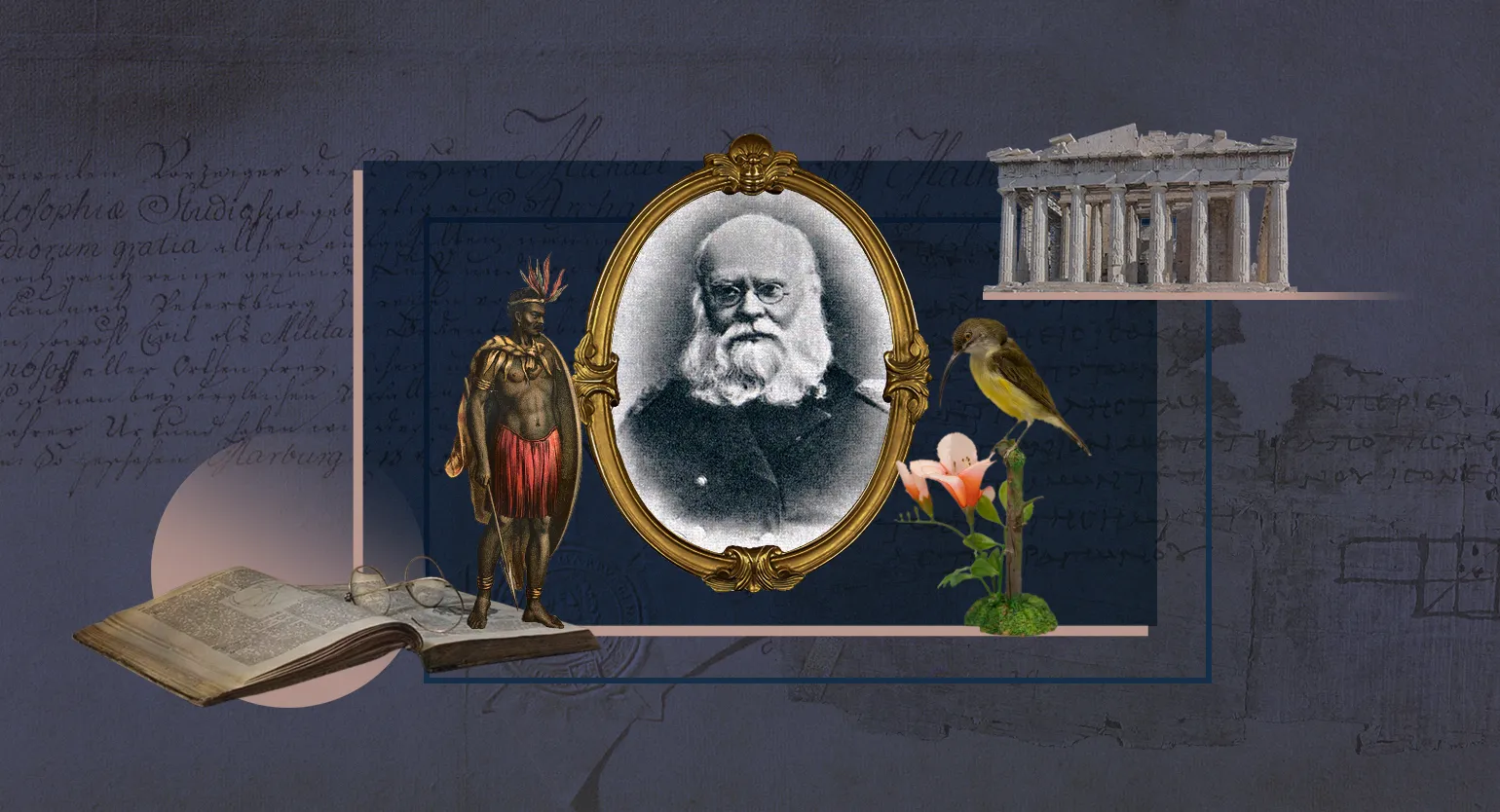
In his book, Paustovsky changed the hero's first and last name, replacing Nikolai Trofimovich Cherkunov (1844–1905), a candidate of natural sciences, with Pyotr Petrovich Cherpunov. Since 1870, Cherkunov had taught geography at the First Gymnasium. Historian Nikolai Antsiferov, who also studied at this gymnasium, mentions him in his memoirs. Antsiferov notes that Nikolai Trofimovich developed a game called "geographical lotto." During lessons, he spoke in a quiet voice, addressing a select group of students, while the rest could do whatever they wanted.
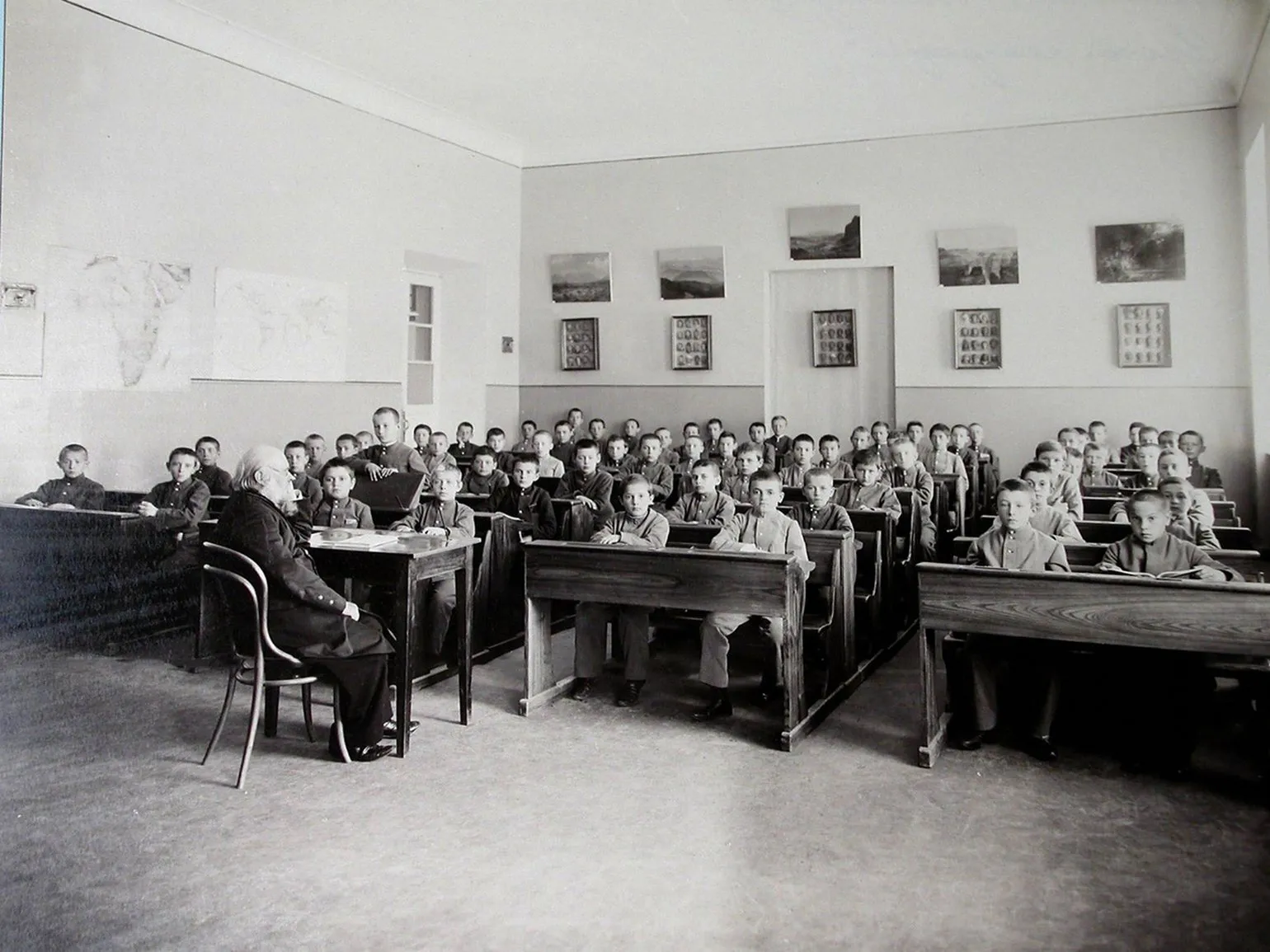
Paustovsky and Antsiferov recalled that the teacher created a veritable geography museum in his home. Paustovsky had the opportunity to see this unique place, where his attention was drawn to a stuffed hummingbird, antique maps, a mirror in an elegant Venetian glass frame, and an ashtray in the shape of a shell from New Guinea. Among other amazing exhibits was the teacher's young wife, who compared herself to a dried butterfly from Borneo, part of her husband's collection. This place became a symbol of a passion for geography and culture, where every object told its own story.
Cherkunov's wife left him, moving to St. Petersburg from Kyiv, where the events described unfolded. Cherkunov, grieving, fell ill and stopped attending school. According to Paustovsky's memoirs, he died a year later. Soon, one of the high school teachers informed the students that the bottled water in the geography classroom was a hoax. Although it claimed to be from the world's great rivers, it was actually ordinary tap water. This incident became a lesson for the students about the importance of critical thinking and verifying sources.
Cherkunov's magic tricks weren't just entertainment for high school students; they expressed a shared enthusiasm for travel, discovery, and geography. Since the mid-19th century, thanks to the rapid development of geographical science and the influence of educators such as Konstantin Ushinsky, the emphasis in geography teaching shifted toward visual aids. This led to a significant improvement in the quality of education. In contrast to the outdated descriptive method, which boiled down to reciting boring facts, geography began to be taught through regional studies and a comprehensive study of the nature and society of various regions of the world. The educational process became more engaging and informative, relying on maps and atlases, making the subject more accessible and interesting for students.
In his article "Kunstkamera," published in the book "Russian School," Ushinsky notes the importance of visual aids for learning. He argues that if students are provided with samples of minerals, earths, shells, or even just pictures that reflect the topics being discussed, and encouraged to organize these materials, even the most dry and boring texts will become interesting and engaging. This approach not only improves information comprehension but also promotes a deeper understanding of the subject. Visualization of educational material plays a key role in the educational process, making it more interactive and engaging for students.
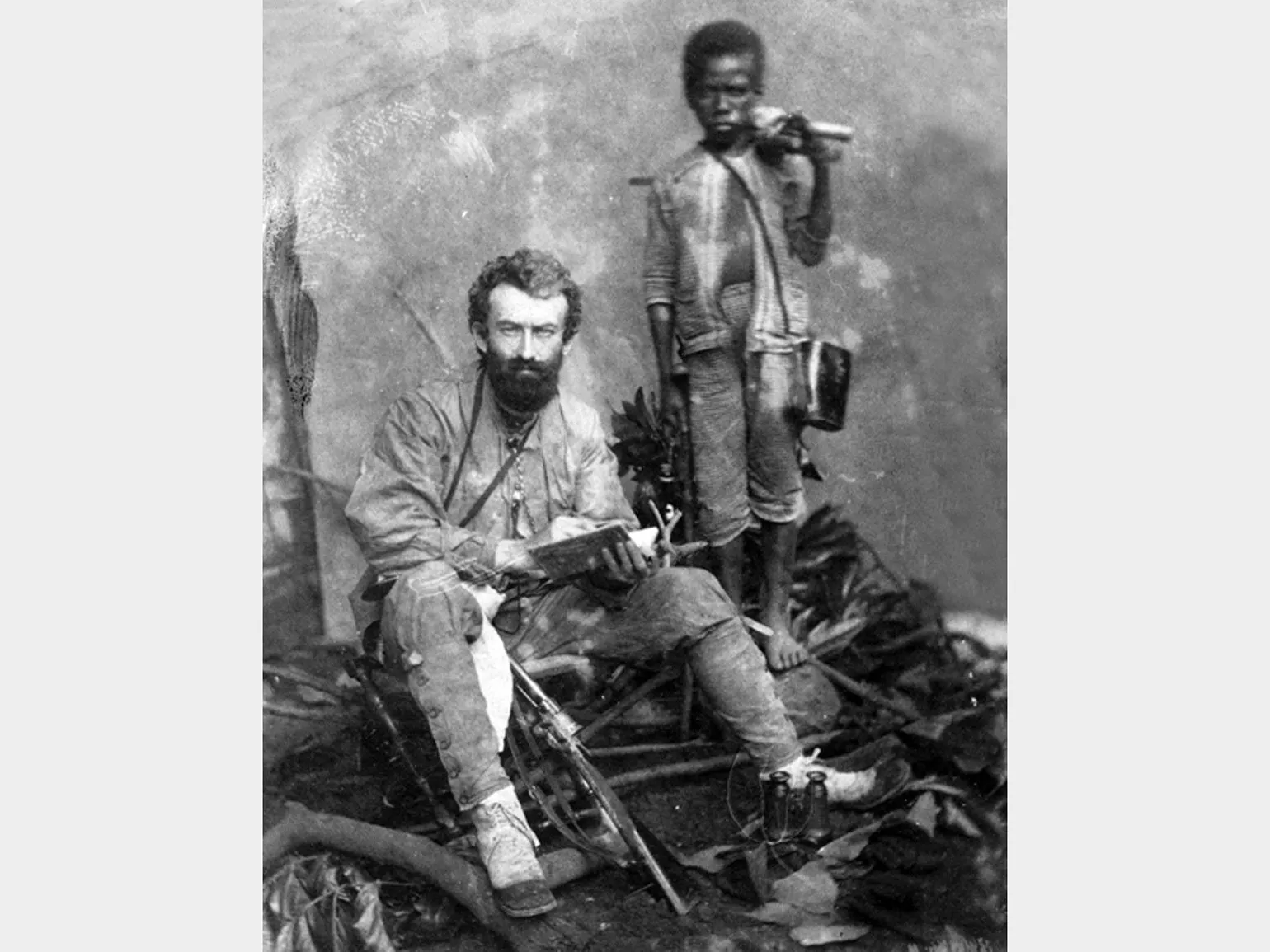
At the beginning of the 20th century, when Konstantin Paustovsky was a student, the educational process was transformed by the advent of new textbooks that included vivid and artistic descriptions of nature. These educational materials, along with school atlases and innovative game formats such as travel maps and geographic forfeits, significantly enriched learning. While memorizing numerous names and numbers remained important, these approaches made studying geography more engaging and accessible. At the time, the planet remained mysterious, filled with many wild and unexplored corners, and traveling to another continent was perceived as something magical. Geography became a favorite subject for many romantic boys, including Paustovsky. They dreamed of leaving their textbooks behind and embarking on a pirate ship or becoming part of exciting expeditions like those led by Miklouho-Maclay. These dreams inspired them to explore the world and strive for adventure, allowing them to see geography not just as a science, but as a whole universe of possibilities.
Some individuals strove to make their dreams come true. A striking example is the writer Mikhail Prishvin. According to one version, inspired by the works of Mayne Reid, he decided to run away from school with the goal of reaching America. This experience was captured in his autobiographical novel, "Kashcheev's Chain," where he described his escape to Asia as an attempt to escape "damned Latin" on "an expedition to Asia through Jerusalem to forgotten lands in search of blue beavers." In reality, in 1886, Mikhail Prishvin, a second-grader at the Yelets Gymnasium, sailed along the Sosna River with three friends in a boat. This river flows through the Lipetsk Region and flows into the Don, which in turn leads to the Taganrog Bay of the Sea of Azov. The fugitives planned to reach the Black Sea, but were soon returned home. This story highlights the young writer's desire for adventure and the search for new horizons.During his high school years at the beginning of the 20th century, Paustovsky did not dare to undertake significant adventures. He limited himself to creating his own geography museum, where he collected various historical objects, such as a dried beetle and the buttons of a Romanian soldier. However, Paustovsky's later life as a writer was inextricably linked with travel and descriptions of various countries. After the revolution, he worked as a reporter for the Odessa newspaper "Moryak." In the 1930s, Paustovsky planned to publish a book about the destruction of deserts, which resulted in the novella "Kara-Bugaz," dedicated to the Kara-Kum Desert. He traveled throughout the Caucasus and visited northern Russia, Siberia, Persia, and the Baltic states. In the 1950s, when Paustovsky gained international fame, he also traveled to many European countries. These travels enriched his literary legacy and became a source of inspiration for his works.
The writer became famous for his works extolling the pristine nature of central Russia. One of his favorite places is Meshchera near Moscow. He discovered this amazing place completely by accident when, while looking at a map, he came across it after getting a pack of tea at a nearby grocery store. Meshchera inspired him to create vivid images and deep reflections on the beauty of the world around him.
Acquaintance with teacher Cherkunov undoubtedly left a significant mark on the life of high school student Kostya. Although the information about water from the Limpopo turned out to be false, geography lessons influenced his future destiny. This knowledge shaped his view of the world and awakened an interest in studying different cultures and countries, which became an important part of his life.
Read also:
- "A large flying balloon created general excitement." How Tsiolkovsky taught lessons
- The past: Elizaveta Vodovozova on how natural science began to be taught at Smolny
- How Chekhov took his final exams at the gymnasium
- How the approach to learning foreign languages changed in different eras
Profession Methodologist from scratch to PRO
You will improve your skills in developing curricula for online and offline courses. Master modern teaching practices, structure your experience, and become a more sought-after specialist.
Find out more