Content:

Learn: Online Tutor
Learn MoreDespite my deafness, I found joy in teaching. We devoted most of our lessons to problem solving, which helped to stimulate thinking and creativity in both me and my students. This format of classes not only developed intellectual abilities but also made the lessons more engaging for the children.
In the summer, my senior students and I spent time on my large boat, where we rowed, swam, and practiced geometry. This time allowed us not only to enjoy nature but also to deepen our knowledge of geometry by applying theory in practice.
I made two tin astrolabes and several other devices myself. With their help, we went on field trips, where I demonstrated how to take plans and determine the sizes and shapes of inaccessible objects and areas. I also demonstrated how to reconstruct the terrain from the resulting plan in any empty field. However, it's worth noting that we spent more time having fun and playing around than doing serious work.
In the summer, I found an interesting activity for the students: I created a large paper ball. Due to the lack of alcohol, I used a mesh of thin wire on which I placed several burning splinters. This hot air balloon, sometimes unusual in shape, rose to a height limited by a string attached to it. However, one day the string accidentally burned out, and the balloon was carried away into the city, leaving sparks and burning splinters in its wake. It landed on the roof of a shoemaker's shop, and the shoemaker decided to seize the balloon, intending to hold me responsible. Later, the superintendent of my school told me that my balloon fell on a house and exploded with great force. This is how sometimes a minor incident creates an inordinate amount of fuss.
I heated my hot air balloon, but soon the fire died down, and it began to descend. The guys caught up with it and brought it back to lift it into the air again. It was a fascinating process that required attention and skill. Each hot air balloon launch became a real adventure, full of emotion and anticipation.
The physics lab was in a dilapidated state, and I had to restore its equipment. However, I also built many devices myself. I created both simple and complex units of various types, as well as dry galvanic cells, batteries, and electric motors. I also conducted chemistry experiments, including producing gases and burning iron in oxygen. These experiments became an important part of my education and practical experience in physics and chemistry.
Ignited hydrogen produced various sounds, creating an atmosphere of surprise and fun. In fifth grade, I always demonstrated a hot air balloon that floated around the classroom on a string. I allowed those who wanted to hold the string, which added interactivity and engagement. A large flying balloon, especially with a lightweight doll, brought delight and joy to everyone. My homemade paper ball, despite wounds and patches, lasted over a year and a half, a testament to its durability and my passion.
I experimented with an air pump, combining various methods and approaches. While exploring its capabilities, I studied how changes in settings and operating conditions affected the pump's performance. This allowed me to better understand its operating principles and optimize its use for various tasks.
Air pressure became the topic of an experiment for the whole class. I invited everyone, both willing and unsure, to try to remove the bell, as the Magdeburg hemispheres were damaged. The class watched as several people failed to complete the task and were unable to remove the glass bell from the pump plate, despite their best efforts. A steam engine equipped with a whistle attracted attention. The girls enjoyed operating the whistle, which added interest to the experiment.
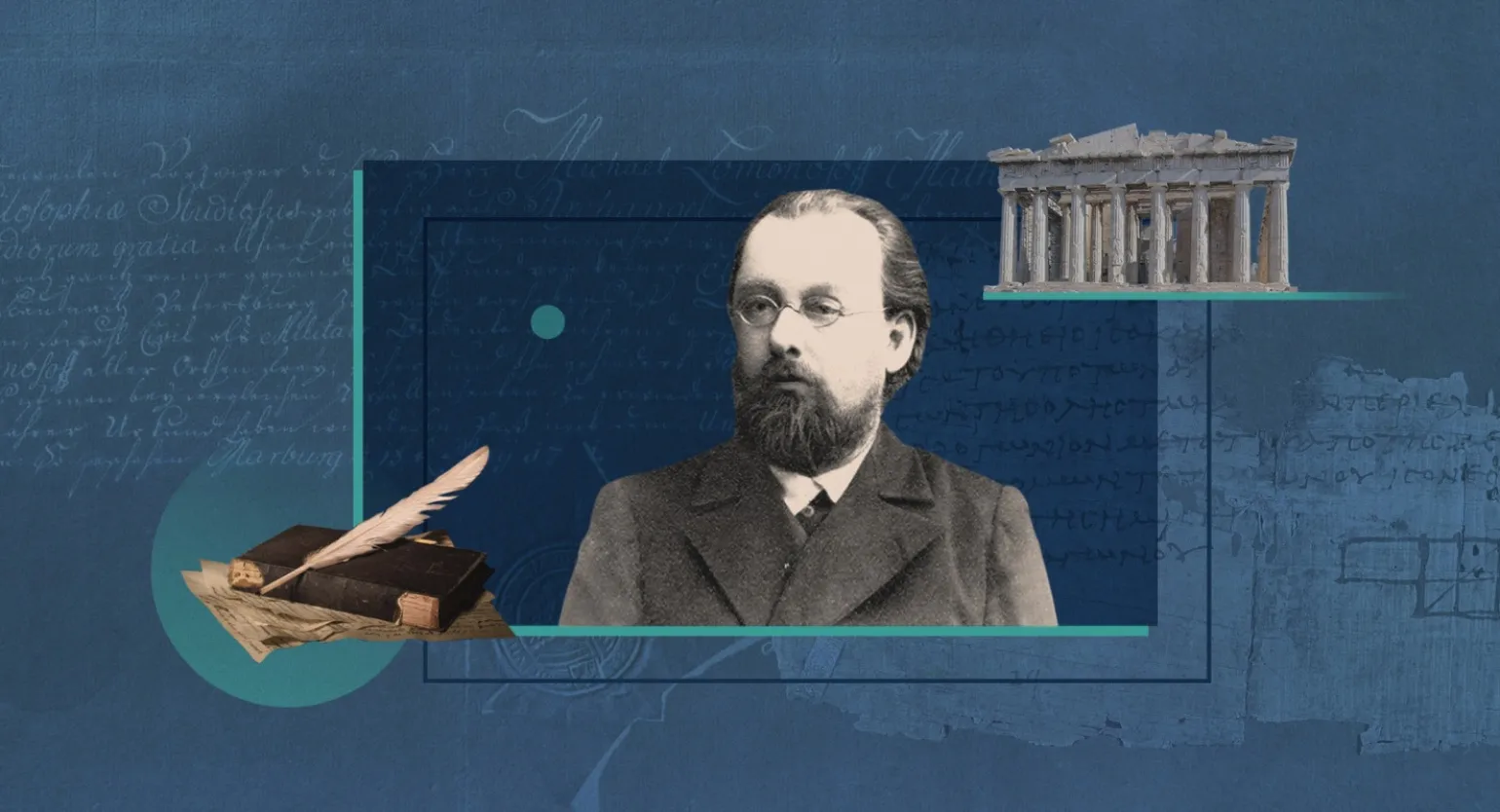
K. E. Tsiolkovsky, in his autobiography, "Features of My Life," shares unique moments from his life and scientific career. He describes his early years, education, and passion for science, which became the foundation of his later research. Tsiolkovsky emphasizes the importance of self-education and the pursuit of knowledge, which became his guiding light throughout his life.
The book also examines his ideas on astronautics, which were ahead of their time. Tsiolkovsky founded the theory of rocket propulsion and proposed concepts that formed the basis of modern space exploration. His philosophical reflections on man's place in the universe and the future of humanity also occupy a significant place in the work.
This autobiography is not only a personal testimony but also an important contribution to the development of science. It inspires new researchers and shows how perseverance and creativity can lead to great discoveries. Reading "Features of My Life" allows you to gain a deeper understanding of Tsiolkovsky's personality and his influence on the development of cosmonautics and science in general.
Context
Konstantin Eduardovich Tsiolkovsky (1857–1935) was an outstanding Russian scientist who was passionate about aeronautics and the development of jet aircraft. Despite his ambitious scientific ideas, he led a rather down-to-earth life, working as a school teacher of mathematics and physics. Tsiolkovsky made a significant contribution to the development of cosmonautics; his theories and inventions formed the basis for future research in rocketry and space exploration.
He initially taught boys in district schools, which were a form of comprehensive school. He was then assigned to the diocesan girls' school—an educational institution for girls from clergy families. Although these students typically showed no interest in mathematics and physics, he managed to captivate them with these subjects.
Tsiolkovsky taught lessons that never bored the children, as their own recollections confirm. One of the students at the diocesan school, A. V. Maslova, shared her impressions of him. She noted that his approach to teaching was engaging and fostered students' interest in the subjects being studied. Tsiolkovsky had a knack for making complex topics accessible and understandable, which inspired the children to pursue further research and knowledge of science. His teaching methods left a lasting impression on his students and fostered their creative development. Memories of astronomy lessons evoke vivid images. The teacher visually demonstrated the Earth's motion around its axis and the Sun's, and also explained the changing seasons and the alternation of day and night. He used simple but effective aids: a stearin candle, symbolizing the Sun, and a black wooden ball in a net, representing the Earth. When teaching two students, one held a lit candle, and the other held the ball. The Earth-student, circling the Sun, simultaneously spun the ball, demonstrating its rotation around its axis and orbital motion. Tsiolkovsky compared this movement to a couple dancing a waltz: they move simultaneously in a circle and around the room. To explain the changing seasons, he marked a chalk dot on the black ball, representing Kaluga. When the dot was opposite the Sun candle, it was summer in Kaluga. As the ball moved away, the dot moved, and we watched Kaluga transition through autumn, winter, spring, and then summer returned. This fascinating lesson was a lasting memory, and we followed every movement with interest.
Tsiolkovsky sought to make the conditions of problems understandable and visual for children. He invited students to come to the board and depict steamships moving toward each other at different speeds. This approach not only facilitated understanding of the problem but also enlivened the classroom atmosphere, giving students additional strength and motivation to learn.
The chairman of the diocesan school council informed the director of the provincial public schools about Tsiolkovsky, emphasizing that he was a unique example of a teacher. Tsiolkovsky combined profound knowledge with a rare ability to convey even complex mathematical concepts to students in a simple, visual, and accessible form. This quality made his lessons understandable and accessible to everyone, including weaker students.
Tsiolkovsky had a unique perspective on school grades. In the next publication, we will take a closer look at his approach and philosophy to assessing academic achievement.
Revised text:
Please note the following materials:
- "Teaching was fun for me." How Tsiolkovsky became a teacher
- The past: Tsiolkovsky on his fellow teachers - "I get bored in the teachers' lounge"
- "Bad grades are harmful in every way." Tsiolkovsky and school grades
- How much did teachers earn and how did they live in imperial Russia
Online tutor
It doesn't matter what you teach - English, CrossFit, yoga, vocals, or culinary arts. Everything you previously taught in schools, studios, and offices can now be taught online. Promote your knowledge and skills and earn money from anywhere in the world.
Find out more