Content:

Learn: The Profession of a Methodologist from Scratch to PRO
Find out moreGogol entered the classroom, greeted us and, waiting for the rector, began a conversation with the inspector at the window. His demeanor betrayed his anxiety: he twirled his hat in his hands, crumpled his glove, and looked at those present with distrust. Approaching the lectern, he turned to us and began explaining his plans for the lecture. He gradually ascended the steps of the lectern—first to the first, then to the second, and finally to the third. This clearly indicated his inner doubts and a desire to test his delivery. However, despite his anxiety, which was evident in the sickly pallor of his face, his thoughts developed logically and expressively. By the end of his speech, Gogol was already on the very top step of the lectern and had noticeably brightened. At this point, he should have begun his lecture, but the rector suddenly entered, and Gogol was forced to retreat from the place he had so deftly occupied. The rector delivered welcoming remarks, bid farewell to the students, and took his assigned seat. Silence reigned in the auditorium. Gogol felt a renewed sense of unease: his face had once again turned pale and taken on a pained expression. However, the lecture could not be delayed. He came up to the podium, and the lecture began.

Gogol quickly captured the attention of his audience, and even after a short time, his words became an integral part of their perception. It was impossible not to succumb to his captivating thought, which rapidly developed and refracted like lightning, illuminating a holistic picture of medieval history. It should be noted that this lecture is presented in full in "Arabesques" under the title "On the Character of the History of the Middle Ages". Obviously, Gogol, not trusting himself, memorized the written text in advance. Although he displayed liveliness and spoke freely during the reading, his attachment to memorized phrases did not allow him to add a single word.
Gogol in Life is a work by V. V. Veresaev, published in 2017 by AST Publishing House. In this work, the author explores the personal life and work of the great Russian writer Nikolai Gogol. Veresaev analyzes the influence of biographical factors on Gogol's work, his relationships with his contemporaries, and the cultural context in which he lived and worked. The book will be of interest to both literature lovers and students and researchers studying Gogol's work and his place in Russian literature. V. V. Veresaev seeks not only to reveal the personality of the writer, but also to show his influence on the development of Russian literature.
Context
This story was described by Nikolai Ivanovich Ivanitsky, a teacher and writer who studied under Gogol at St. Petersburg University in his youth. This was the first lecture that Nikolai Vasilyevich gave within the walls of this educational institution. The lecture left a deep imprint on the students' minds and became a significant moment in their educational journey. Gogol's influence on literature and his mastery of teaching inspired many students, including Ivanitsky, to further develop their careers in literature and pedagogy.
Lecturing and teaching may seem an unlikely portrait of Nikolai Gogol, who is often perceived as a reclusive eccentric with characteristic traits—a birdlike nose and a fascination with strange stories, such as flying coats and burning his own works. However, he did have a brief but significant period of teaching. Gogol gave private lessons, and in 1831, he began teaching history at the Patriotic Institute, an educational institution for girls. In 1834, when his literary career was just beginning to gain popularity with the publication of Evenings on a Farm Near Dikanka, Gogol received a position as an adjunct professor in the history department of St. Petersburg Imperial University. This teaching experience, though brief, had an impact on his work and worldview. At the age of 25, the young man was in a state of internal conflict, agonizing over his future. He was full of energy, but his health left much to be desired. His dream was to become a historian and teach at Kiev University, as he deeply loved his native Ukraine and longed to leave St. Petersburg with its unfavorable climate. The writer made every effort, hoping for the support of such authorities as Pushkin and Zhukovsky, but was unable to secure the desired position. He was eventually offered a position as an adjunct professor in St. Petersburg, which he saw as a temporary solution on the way to his dream.

Reworked text:
Explore and learn more about our content. We offer relevant and engaging content to help you gain a deeper understanding of important topics. Our articles provide helpful tips and advice based on the latest research and trends. Discover new ideas and find answers to your questions as you delve deeper into knowledge. Don't miss the opportunity to expand your horizons.
Read also:
The Salaries of Professors at Imperial Universities: Analysis and Influencing Factors
Professors at imperial universities throughout history received varying salaries, which depended on a variety of factors, such as their level of education, work experience, and the prestige of their institution. At the beginning of the 20th century, for example, the salaries of professors and associate professors varied, reflecting not only the financial resources of the universities but also the economic situation in the country.
An important aspect is that a teacher's salary often depended on their scientific achievements and publication activity. Teachers actively involved in scientific research and publishing articles in reputable journals could count on higher salaries and additional grants.
Furthermore, it should be taken into account that the requirements for teachers changed over time, which also affected their financial situation. Today, the issue of teacher salaries remains relevant, and its solution requires a comprehensive approach that takes into account both economic and social aspects.
Thus, the salaries of teachers at imperial universities is a multifaceted topic that requires detailed study and analysis to understand how working conditions and funding of educational institutions changed over time.
Gogol gave a lecture on the history of the Middle Ages to second-year students of the Faculty of Philology. It was an unusual but fascinating lecture, about which Ivanitsky wrote. It became an example of a successful speech, of which, judging by the audience's recollections, there were few. Despite his youth, the lecturer was unsure and soon lost his initial enthusiasm.
In December 1934, in a letter to the historian Mikhail Pogodin, Gogol expressed dissatisfaction with the fact that not a single "student being" understood him. He noted that these people were as colorless as St. Petersburg. These words underscore his disillusionment with the intelligentsia and the cultural environment of the time, and also testify to his desire for a deeper understanding and appreciation of art. Gogol, being an outstanding writer, always sought a connection with the reader, which, in his opinion, was lost.
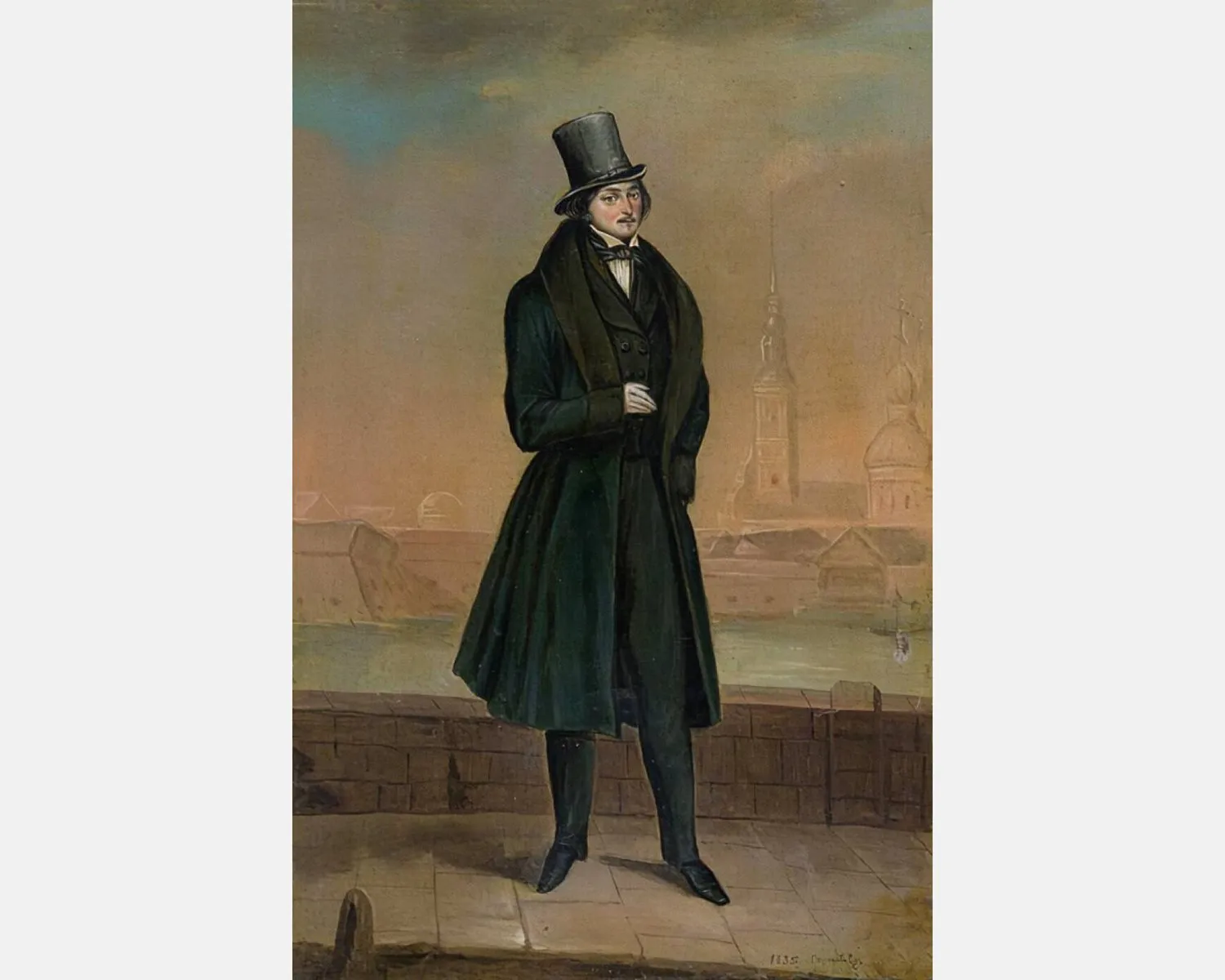
In Gogol's department, the professor exhibited very strange and antisocial behavior. He showed no interest in students and lectured almost in a whisper, was constantly late and sometimes arrived unprepared. He could often be seen with a bandaged jaw, indicating a toothache. During exams, he wrapped his face with a handkerchief, and some students jokingly suggested that the professor was simply afraid to open his mouth lest he reveal his gaps in knowledge.
A. V. Nikitenko, a literary historian and professor at St. Petersburg University, noted that Gogol lectured poorly, which made him an object of ridicule among students. According to him, the university administration was afraid that students might pull some kind of prank, which could lead to undesirable consequences. In response, the university trustee decided to take action and summoned Gogol for a conversation, during which they delicately discussed rumors about his lectures. For a moment, Gogol's pride gave way to the realization of his inexperience and helplessness. This incident highlights not only the difficulties Gogol faced in his teaching career but also the importance of professional growth and self-awareness in an educational environment.
At the end of 1835, more than a year after beginning his service, Gogol left the department and, although he left Kiev University, embarked on a journey south. At this time, his professorship unexpectedly proved useful. The writer was already working on his play, "The Government Inspector," and was studying the behavior of local officials. To this end, he asked his companion to ride ahead and spread rumors about a certain incognito who was supposedly traveling on an inspection mission. There is evidence that his title of associate professor made a strong impression on the overseers. They did not understand its true significance, but associated it with high-ranking officials, which prompted them to strive to make a good impression on Gogol. This observation became an important element later reflected in "The Government Inspector," highlighting social misunderstandings and bureaucratic hypocrisy.
Immersion in the world of information is becoming increasingly important, and reading plays a key role in this process. Books, articles, blogs, and specialized research not only broaden our horizons but also help develop critical thinking. Reading helps improve vocabulary and literacy skills, which is especially important in a rapidly changing information environment.
To achieve the best reading results, it is important to choose a variety of information sources that match your interests and professional requirements. Modern technology provides a variety of reading platforms, including e-books and audiobooks, making the process more accessible and convenient.
Don't forget the importance of regular reading, as it contributes not only to personal growth but also to professional development. By integrating reading into your daily life, you can significantly improve your skills and expand your horizons of knowledge.
Maintain your interest in reading by exploring new genres and topics, and you will discover many new opportunities and ideas. Read and develop!
- "Mendeleev was an amazing lecturer. He spoke extremely poorly."
- How the student Herzen expelled an objectionable professor from the university
- How Herzen took his final exams at the university
- "Teaching was fun for me." How Tsiolkovsky became a teacher
The profession of Methodologist from scratch to PRO
You will improve your skills in developing curricula for online and offline courses. Master modern teaching practices, structure your experience, and become a more sought-after specialist.
Find out more