Content:

Learn: The Profession of a Methodologist from Scratch to PRO
Find out moreIn the first grade of gymnasium, I was nicknamed the "Roman orator" for my constant talking. This nickname stuck with me for a long time. In class, I was often kept after class for half an hour for excessive chatter.
This was a period that could be called pre-literate in the history of my creativity. It was soon followed by the "written" stage, which opened new horizons for my writing.
In the third grade, I became fascinated with the novels of Jules Verne and wrote a long poem about our teachers' journey to the moon in a hot air balloon created from the enormous pants of our Latin teacher, "Behemoth." My poem aroused great interest and was even read by the eighth-graders. Ultimately, it found its way to the inspector. I remember how, in an empty hall with an iconostasis towering outside the windows and the 6th Gymnasium with its image of the Savior in the corner, a stern Batalii handed me. A tall, thin man with red sideburns shook a thin, sharp-nailed finger above my head and spoke with a terrible, hissing accent, like the coldest Englishman.
It should be noted that such behavior as disrespectful treatment of older people, including mentors and teachers, is unacceptable. This especially applies to our esteemed Mikhail Sergeyevich, the son of a distinguished historian. He deserves respect and admiration for his experience and knowledge. The pedagogical council makes decisions based on the values of respect and mutual understanding that must be preserved in the educational environment.
For the creation of this "poem" I received a significant fee—for six hours of work on Sunday, which was my first experience in this field.
My first steps in literature were long, but it was my writing that became a true source of inspiration for me. Since fifth grade, I have achieved such heights that in one of my works about the Cathedral of Christ the Savior, I touched on the work of the poet Nadson. I sought to convey the feelings of spiritual uplift experienced beneath the majestic vaults, where Sabaoth soars "as if in heaven." At such moments, the inspiring lines of our outstanding poet, who knew how to convey deep sadness and hope, come to mind. Dear friend, my brother, tired and suffering, I understand that you are going through difficult times. Life sometimes presents us with difficult trials, and it is important to remember that we are not alone in our suffering. The support of loved ones can be a source of strength during difficult times. Let's find ways together to overcome difficulties and regain our strength. Remember that every day is a new chance for improvement and change. We can overcome any difficulties if we act together. Whoever you are, do not lose confidence in yourself. It's important to remember that each of us faces difficulties and challenges. Don't let negative thoughts overwhelm you. Maintain inner balance and seek inspiration from those around you. Faith in yourself and your abilities will help you overcome any obstacles and achieve your goals. Remember that difficulties are only temporary obstacles on the path to success. Let untruth and evil continue to reign. In today's world, we face many challenges, where lies and dishonesty are commonplace. This causes discontent and contributes to the spread of negative tendencies in society. It is important to recognize that the fight against untruth and evil requires proactive action and a commitment to truth. It is important to uphold honesty and justice to create a harmonious society free from negative influences. Only through joint efforts can we resist abuse and restore trust between people.
Over the earth cleansed by tears.
Bataliy called me to the podium and, waving a notebook, began to express his discontent with a loud whistle.
— What is this? You shouldn't read books that aren't in the university library! We have Pushkin, Lermontov, Derzhavin, but your Nadson is not there. Who is he? You were given the topic of the Cathedral of Christ the Savior, and you cite completely inappropriate verses about a "suffering brother." This is nonsense! I would give you a B, but I'll give you a C-. Why is there some "philosopher" here? You can't even spell the word "philosopher" correctly; you put an "v" at the end. And, by the way, it was Smays, not Smals, which means "pork fat." Neither he nor your Nadson have anything to do with the Cathedral of Christ the Savior. C-! Think about your approach.
I opened the notebook and tried to defend my point of view.
Nikolai Ivanovich, I have a small lyrical digression, similar to what Gogol did.
Nikolai Ivanovich sniffed sharply, and his red mustache rose, revealing his teeth. His cold, greenish eyes stared at me with an expression of smirk and disdain, which made everything inside me go cold. We all knew that this was his smile, reminiscent of a fox gnawing out the throat of a rooster.
— Ah, so that's how it is... Gogol! Or perhaps eggnog? I see... — and sniffed insistently again. — Pass me the notebook...
He crossed out the C minus and delivered a crushing blow—a stake. I received a stake and an insult. From then on, I hated both Nadson and philosophy. This vote negatively impacted my transfer and GPA, leading to me not being allowed to take the exams and having to repeat a year. However, I realized that it all turned out for the best.
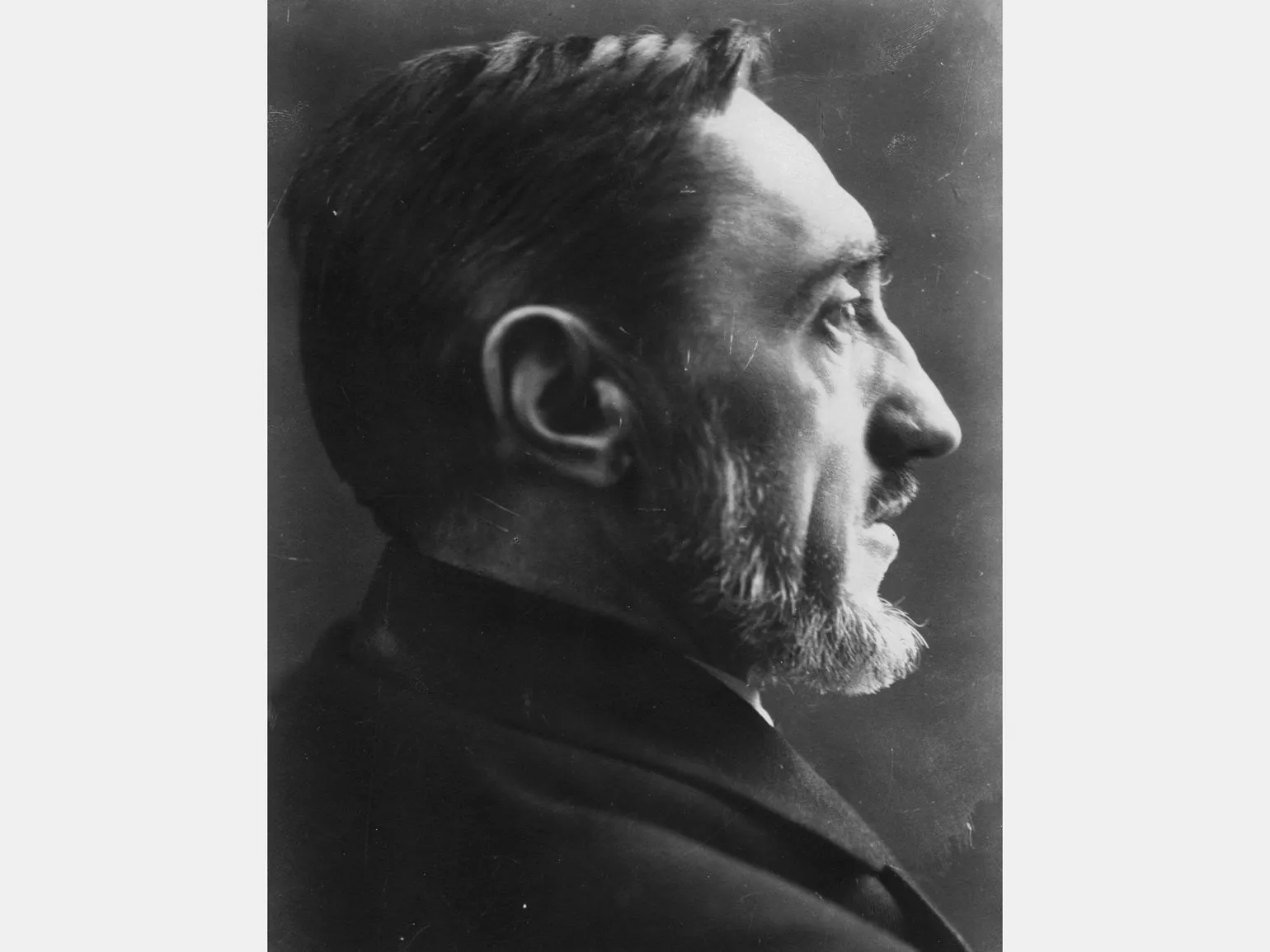
I found myself under the guidance of a remarkable philologist, Fyodor Vladimirovich Tsvetaev, who gave me creative freedom: write the way you want. This opportunity revealed new facets in me, allowing me to experiment with language and form. I began to realize that literature can be not only a means of expression but also a platform for self-expression, where every line reflects the author's individuality. Inspired by his approach, I immersed myself in the world of words, discovering endless creative possibilities.
I enthusiastically recorded my thoughts on nature. Writing impressive essays on poetic themes, such as "Morning in the Forest," "Russian Winter," "Autumn According to Pushkin," "Fishing," and "Storm in the Forest," was a true pleasure. This was nothing like what Batalii had proposed: not "Work and Love for One's Neighbor as the Foundations of Moral Improvement," not "What's Remarkable About Lomonosov's Letter to Shuvalov 'On the Uses of Glass,'" and not "How Conjunctions Differ from Adverbs." Fyodor Vladimirovich, slow and thoughtful, with a slight smile, loved words. He could recite Pushkin's lines with genuine interest, delighting even those like Danilka, nicknamed Satan, who was also beginning to sense the depth of poetry. Nature inspires and awakens the senses, and in this context, poetry becomes the key to understanding the beauty of the surrounding world. He gave my "stories" A's, sometimes adding three crosses, which was especially expressive. Pointing his finger at my head, as if hammering it into my consciousness, he said triumphantly: Man, please note, some people write "mushchina," like the mature man Shkrobov. You have something special, a certain "big shot." Remember the parable of the talents. As we parted, I exchanged cards with the only one of my mentors. His funeral was a difficult ordeal for me, and I couldn't hold back my tears. He still remains in my heart.
In his memoir, "How I Became a Writer," I. S. Shmelev shares personal experiences and reflections on his literary journey. He describes how his creative vision gradually developed and the events and connections that influenced him. Shmelev recounts his first works, the difficulties he faced early in his career, and how his literary style evolved over time. His memoirs reveal the importance of support for a writer and the significance of self-expression. These memoirs are not only an autobiography but also an inspirational source for those seeking their own path in literature. Shmelev emphasizes that every writer follows their own unique path, and it is important to remain true to their convictions and feelings.
Context
Ivan Sergeevich Shmelev (1873–1950) was an outstanding Russian writer, whom Alexander Kuprin awarded the title of the last master capable of conveying the richness, power, and freedom of the Russian language. During the Soviet period, Shmelev's work fell into the shadows, but beginning in the 1990s, his works began to attract readers' attention again. The novels "Summer of the Lord," "The Sun of the Dead," and "Old Valaam" have once again become popular and in demand, indicating a revival of interest in his literary legacy. Shmelev continues to inspire contemporary authors and readers, and his works are an important contribution to Russian literature.
Shmelev discovered literature, which became his life's love and calling, while studying at the gymnasium. He came from a poor and not particularly educated merchant family, and in his childhood he had only three books: the Gospel, an alphabet book, and a natural history atlas. Upon entering the gymnasium, literature became accessible to him. He began with the works of Jules Verne and Mayne Reid, but soon discovered Pushkin and Tolstoy, which made a profound impression on him. Shmelev recalled how, after finishing War and Peace in the sixth grade, he first realized the greatness and depth of literary creativity. He noted that a writer is the greatest thing that exists on earth and in people, and he felt awe at the word "writer."
It was in the gymnasium that he took his first steps as a writer. Early on, in elementary school, his talent manifested itself in oral storytelling—young Vanya skillfully captivated his friends with his tales, which they eagerly asked him to repeat. This earned him a reputation as a chatterbox among teachers, for which he was repeatedly punished. Later, when Vanya began writing, his popularity at school grew thanks to a humorous poem about the teachers' journey to the moon in a hot air balloon made from the Latin teacher's unusually large pants. This work brought him not only recognition, but also inspired other students to creative experiments.
Despite the comical nature of the situation, young Shmelev became seriously interested in writing. His passion became so strong that he even considered leaving school. In his autobiography, he shares his memories of this period of his life.
I decided to devote myself entirely to literature, leaving textbooks aside and beginning the path of self-education. At night, I wrote, and during the day, pretending to be ill, I spent time in bed, immersed in reading. This was a state far beyond the bounds of ordinary life. During this period, I worked on a novel reflecting Siberian reality, wrote poetry for the thirtieth anniversary of the emancipation of the serfs, and created a drama in which the main characters suffered from consumption. This went on for about two weeks, and as a result, I was threatened with expulsion from school for absenteeism. I began to hate the school, and I announced my decision to study independently.
I had to submit to circumstances, and I stopped writing. It wasn't until eighth grade that my passion for creativity resurfaced. I wrote a story based on folklore, entitled "At the Mill," which was published in the thick magazine "Russian Review." This experience became an important milestone in my literary journey and inspired me to further develop my writing.
Ivan Shmelev briefly attended the 1st Moscow Gymnasium, located next to the Cathedral of Christ the Savior. This gymnasium enjoyed a high reputation, with approximately 400 students competing for a single spot. Vanya enrolled there at the age of 11 but couldn't adapt. His time at this school became a true ordeal and left a deep, lifelong scar. He recalled, "It was like I was crushed here. The cold and dryness crushed me. Those were the hardest years of my life—the first years at the gymnasium. It's hard to talk about. Cold, heartless people. Tears. Lots of tears, both night and day, a lot of fear." He struggled with his studies, likely due to the stifling atmosphere. He frequently received low grades, which further aggravated his condition.
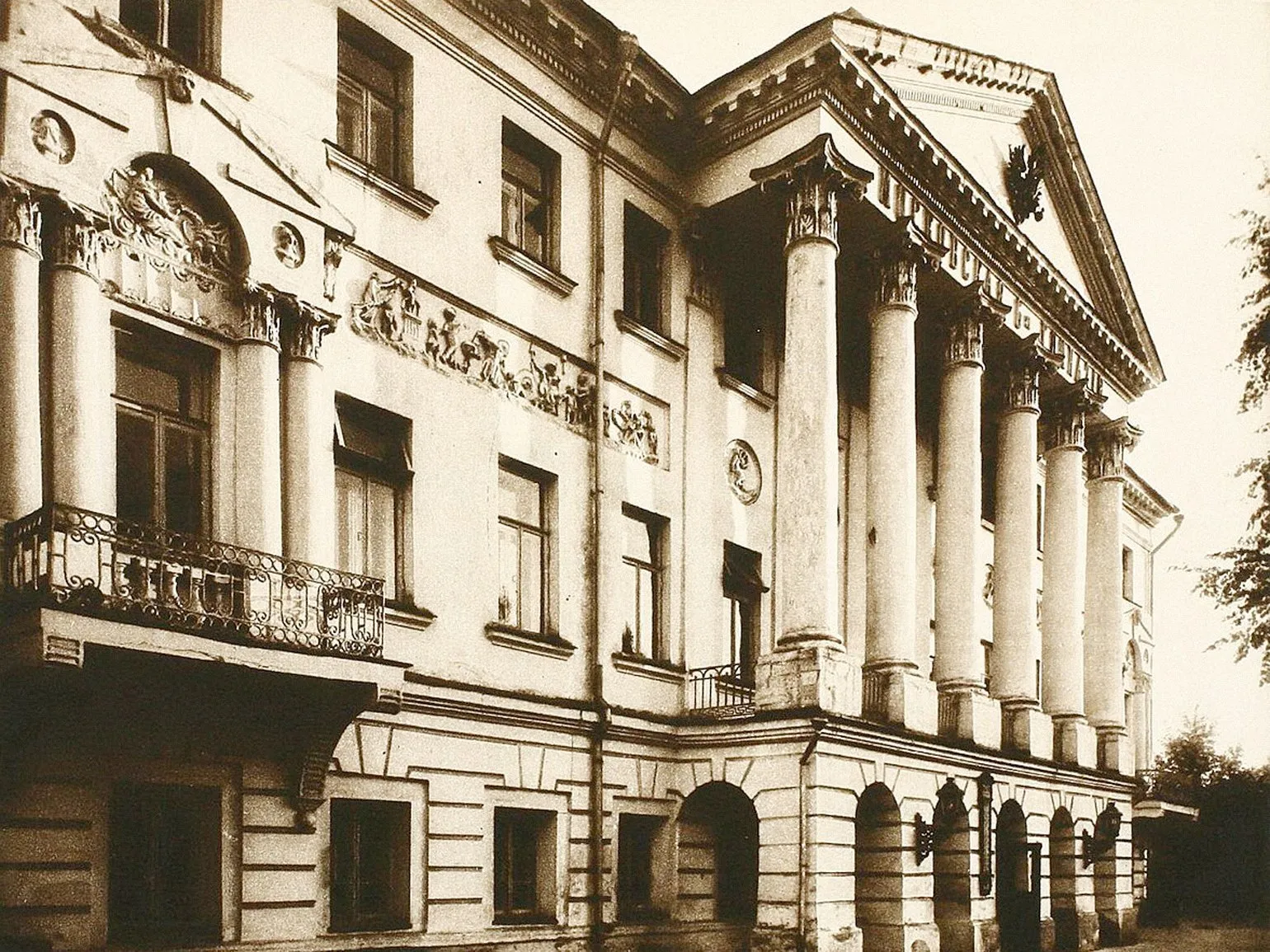
After three months of schooling, his mother transferred Vanya to the 6th Moscow Gymnasium, located in the building that now houses the K. D. Ushinsky Scientific Pedagogical Library. At the new gymnasium, the boy's performance improved significantly; he became more active and interested in his studies. Ultimately, Shmelev almost graduated with a medal, missing only half a point. However, in fifth grade, he had to repeat a year. This was due to an unsuccessful performance in literature class, where the teacher did not appreciate the young writer's "authorial technique" in an essay about the Cathedral of Christ the Savior. This experience became an important stage in his development as an author and influenced his subsequent creative career.
This episode concerns Nikolai Ivanovich Bataliya, a teacher and inspector (effectively a head teacher), about whom, aside from Shmelev's memoirs, no significant traces have survived in history. However, the next literature teacher Ivan received after repeating a year in the fifth grade due to Bataliya's strict demands became a significantly more famous figure than his predecessor. The future writer had much better luck with this teacher, and this had a significant influence on his subsequent development.
Fyodor Vladimirovich Tsvetaev's teacher was the uncle of the outstanding poet Marina Tsvetaeva. He is also the brother of Ivan Vladimirovich Tsvetaev, who is known as a philologist, art historian, and founder of the Museum of Fine Arts, now known as the Pushkin State Museum of Fine Arts. This connection between outstanding personalities underscores the importance of family traditions in culture and education.
Fyodor Vladimirovich dedicated his life to teaching and became a beloved teacher for many of his students, including girls at the girls' gymnasium. His sudden and early death in 1901 inspired colleagues and students to publish a book of memoirs about him, which confirms his influence and significance in education. The book's introduction notes: "His personality was surrounded by unfailing love throughout his entire teaching career." Ivan Shmelev, who retained fond memories of his teacher until the end of his life, is a shining example of how a teacher's profound influence can leave a mark on the hearts of students.
Explore additional resources:
- Bygone: A Bottle of Water from the Limpopo River and Other Techniques of an Original Teacher
- "The Flying Balloon Created a General Revival." How Tsiolkovsky taught lessons
- How Korney Chukovsky was expelled from school for someone else's diary
- The past: how Chekhov took final exams at the gymnasium
The profession of Methodologist from scratch to PRO
You Improve your skills in developing curricula for online and offline courses. Master modern teaching practices, structure your experience, and become a more sought-after specialist.
Learn more