Content:

Learn: The Profession of a Methodologist from Scratch to PRO
Find out moreIn 1927, I began my studies at School No. 182, which was located on the corner of Leo Tolstoy Square and Bolshoi Prospekt on Petrogradskaya Storona. At that time, the educational system was undergoing changes. New teaching methods were introduced: sometimes one teacher taught all subjects using the so-called "integrated system", and sometimes the "team method" was used, in which one student was assessed, and marks were given to the entire group. Pedologists came to our class, who briefly showed colorful charts, bright posters and drawings with geometric shapes. We had to memorize the number of objects, their color, shape and location. To the question from the questionnaire "What do you want to be?" the children answered with ease and humor: "a robber", "a snake", "a magician". I chose "a typist". In the fourth grade, we were already studying the blast furnace process. Before learning punctuation, we learned what a "shihta" was. The knowledge I gained at that school was modest, but vivid memories of my youth camp counselors have stayed with me my entire life.
Life is often compared to an unpaired boot, as Tamara Petkevich describes in her book "Life Is an Unpaired Boot," published in 2023. This work explores the complex and multifaceted aspects of human existence, revealing themes that concern each of us. The author offers readers deep reflections on the meaning of life, how to cope with difficulties, and find harmony in everyday situations. The book is filled with vivid metaphors and images that make it not only educational but also inspiring. By reading it, you will be able to better understand yourself and the world around you, as well as find answers to important questions about life and its complexity.
Context
Tamara Vladislavovna Petkevich (1920–2017) was a Russian actress and theater scholar known for her detailed memoirs. In these entries, she shares personal trials and tribulations experienced in Stalin's labor camps. Her works not only tell of the difficult living conditions of that period but also reflect the resilience of the human spirit. Petkevich's memoirs serve as an important historical record of that time and attract the attention of researchers interested in the history of repression in the Soviet Union. Through her experiences, she raises relevant themes of freedom, suffering, and hope.
She was born and raised in Leningrad, and this excerpt is about a Leningrad school. The unusual educational system and the influence of pedologists described here are not an exception, but a characteristic feature of the 1920s. This period was a time of radical pedagogical experiments in Soviet schools. The motto "We will build a new world" fully reflected the changes in the educational system. In a short period, large-scale transformations took place, affecting both the atmosphere and content of the curriculum and teaching methods. A detailed discussion of these changes can be found in our article.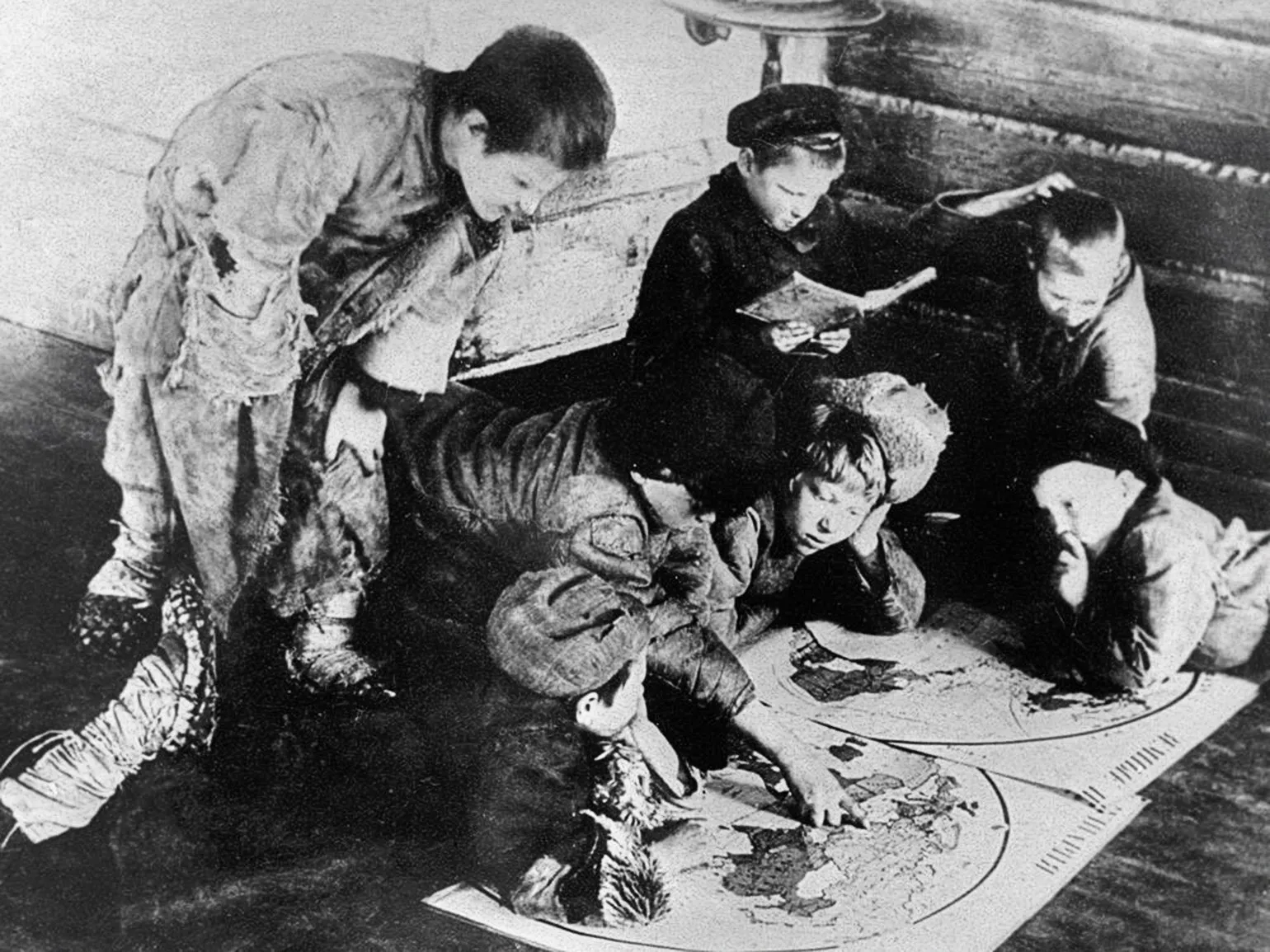
In 1921 The Scientific and Pedagogical Section of the State Academic Council (SAC) of the People's Commissariat of Education, under the leadership of Nadezhda Krupskaya, decided to transition to an integrated approach to developing school curricula. These curricula, known as SAC schemes, were based on the unification of various subjects around a single theme, allowing for the consideration of issues from different fields of knowledge within a unified context. Integrated themes were divided into three main categories: "Nature and Man," "Labor," and "Society." Particular attention was paid to the theme of labor, as confirmed by the memoirs of Tamara Petkevich: as early as the fourth grade, schoolchildren were studying blast furnace processes. This approach not only enriched the educational process but also contributed to a deeper understanding of the interconnections between various aspects of life.
Veniamin Kaverin's novel "Two Captains" presents a realistic episode that illustrates a complex system using the theme "Duck." This episode demonstrates how various elements interact with each other to create a unified whole. Kaverin masterfully conveys detail, allowing the reader to deeply understand the nature of human relationships and their impact on the course of events. The example of the duck serves as a metaphor, emphasizing the importance of connections and interactions in the characters' lives. This moment in the work emphasizes how even seemingly insignificant events can have a significant impact on the course of the plot and the characters' destinies. I recall lessons dedicated to the duck, which covered three subjects at once: geography, natural science, and Russian language. In natural science, we studied the duck as a living creature: its wings, feet, and swimming characteristics. In geography, the duck was considered a representative of fauna, and we identified its habitat on a map. In Russian, Serafima Petrovna taught us how to write the word "u-t-k-a" and shared interesting facts about ducks, taken from the works of Brehm. She also mentioned how this word sounds in German and French. This approach, known as the "integrated method," allowed us to learn in different contexts, although Serafima Petrovna may have been a bit confused about the details.Serafima Petrovna acted strictly according to the established rules, unlike many of her colleagues, who reacted negatively to the new educational initiative and continued teaching using traditional methods. In official documentation, they merely noted compliance with the GUS requirements without changing their approaches. The teachers who decided to implement the comprehensive program soon encountered a serious problem: children's knowledge was not being reinforced, and they were failing to absorb the material. In 1925, at the First All-Union Congress of Teachers, Lunacharsky noted: "The teacher is racking his brain over the GUS program, while the children are growing up illiterate." By the early 1930s, the experiment with the new education system was abandoned, and educational institutions returned to the traditional subject system.
Rework the text, keeping the main theme. Do not add unnecessary elements and focus on SEO optimization. Ensure content remains relevant and informative by avoiding redundant symbols and list-based structuring.
Read also:
A Case Study of Failed Educational Innovations: Why Popular Literacy Teaching Methods Are Ineffective
In recent decades, numerous innovative approaches have been introduced in the field of literacy instruction. However, many of them have failed to live up to expectations and have raised serious doubts about their effectiveness. For example, methods based solely on phonetic or visual perception often ignored important aspects of children's cognitive development. This resulted in students being unable to successfully apply the knowledge they acquired in practice.
Furthermore, an emphasis on acceleration and standardized testing has also had a negative impact on learning. Children experiencing stress due to constant pressure may lose interest in learning and fail to achieve expected results.
Therefore, it is important to approach innovations in literacy instruction with caution. It is necessary to consider the individual characteristics of children and create more flexible and adaptive methods that will promote the development of strong reading and writing skills. Education should be aimed not only at the acquisition of knowledge, but also at the development of creative thinking and critical analysis, so that children can confidently navigate the modern world.
From the late 1920s to the mid-1930s, Soviet schools experienced a brief but significant rise and then a sharp decline in pedology. Pedology represented the first attempt at a comprehensive scientific study of the child, including their physiology, psychology, environmental characteristics, and intellectual development. The goal of this approach was to take all these aspects into account when formulating educational trajectories. Although this attempt was unsuccessful, at a certain point, pedologists became indispensable specialists in every school.
Children were regularly tested, and the results were used to formulate characteristics and recommendations for class composition, optimization of the educational process, and the referral of underperforming students to special classes and institutions. As a result, a structure of pedagogical organizations was created, headed by an interdepartmental commission and a pedagogical group under the Ministry of Education. This approach allowed for a more effective adaptation of the educational process to children's needs and improved the quality of education.
Lev Vygotsky is one of the most significant representatives of pedology, while Anton Makarenko is one of its main critics. Vygotsky made significant contributions to the development of pedagogical theory, emphasizing the importance of social context in learning and personality development. Makarenko, in turn, emphasized the practical aspects of education and training, challenging some of the ideas of pedology. These two scholars represent polar points of view in the field of pedagogical research and practice, which makes their contributions particularly valuable for understanding the development of educational approaches.
In 1936, the Central Committee of the All-Union Communist Party (Bolsheviks) adopted the resolution "On Pedological Distortions in the System of Public Education," which became a turning point in the history of Soviet education. In this document, pedology was blamed for many of the problems associated with the reforms of the early Soviet school system. As a result of these accusations, pedology was banned, which had a significant impact on the educational system and the development of pedagogical methods in the USSR. This decision reflected changes in ideology and approaches to education, which subsequently influenced the formation of the country's educational policy.
Reading is an important aspect of our development and understanding of the world. It enriches our vocabulary, improves writing skills, and develops critical thinking. The books and articles we read can significantly influence our perception of reality and shape our beliefs. It is important to choose quality content that aligns with our interests and promotes personal growth. Regular reading not only helps us relax but also broadens our horizons and immerses us in new ideas and concepts. Therefore, devote time to reading to enrich your inner world and develop analytical skills.
- Russian education in exile: how it was
- The past: how revolutionary pride served as a special motivation for study
- “The Tsar abdicated, there will be no lessons”: memories of 1917
- 10 facts about pre-revolutionary schools
The Profession of Methodologist from Scratch to PRO
You will improve your skills in developing curricula for online and offline courses. You will master modern pedagogical practices, structure your experience and become a more sought-after specialist.
Find out more