Content:

Learn: The Profession of a Methodologist from Scratch to PRO
Find out moreOf my 22 schoolmates who graduated from the gymnasium with me, only one entered the Imperial Lyceum for career reasons. One comrade, who showed outstanding mathematical abilities from childhood, chose the Faculty of Mathematics. The remaining twenty students were divided as follows: twelve entered the law department, and eight entered the science department.
The law department was generally attended by less successful students who lacked serious intellectual interests. The science department, meanwhile, attracted the best students, who constituted the more intelligent part of our class and were among my closest friends. This division between the law and science students was explained by the fact that the law department was considered the easiest. One could skip a whole year of studying and, in the spring, with average ability, prepare and successfully pass the exams. Furthermore, this department provided the necessary knowledge for careers in administration and law, which attracted young people without specific academic interests. The only exception were those who chose legal sciences out of true vocation.
Many of my comrades who entered the Faculty of Natural Sciences hardly made a conscious choice of specialty. This became obvious later, when it turned out that only two of us applied our knowledge of the natural sciences in our professional lives. The other six found themselves employed in fields completely unrelated to their specialty.
In his memoirs, "My Life and My Contemporaries," V. A. Obolensky describes the key moments of his life and meetings with outstanding personalities of the 20th century. The book covers the period from 1869 to 1920 and is a valuable source of information on the socio-cultural changes of that time. The memoirs are enriched with vivid details that help to reconstruct the atmosphere of the era. The publication is published in two volumes and is available from the publishing houses "Kuchkovo Pole" and "Retrospective." This is an important work for those interested in the history of Russia and the lives of its outstanding representatives.
Context
The memoirs of Prince Vladimir Andreevich Obolensky (1869–1950) are a valuable historical source. He was not only a public and political figure but also a deputy of the first State Duma of the Russian Empire and a member of the Cadet Party. These notes reflect his views on the important events of his time and provide a unique perspective on the political life of Russia in the early 20th century. Prince Obolensky left a profound mark on the country's history, and his memoirs remain relevant for studying the socio-political context of that period.
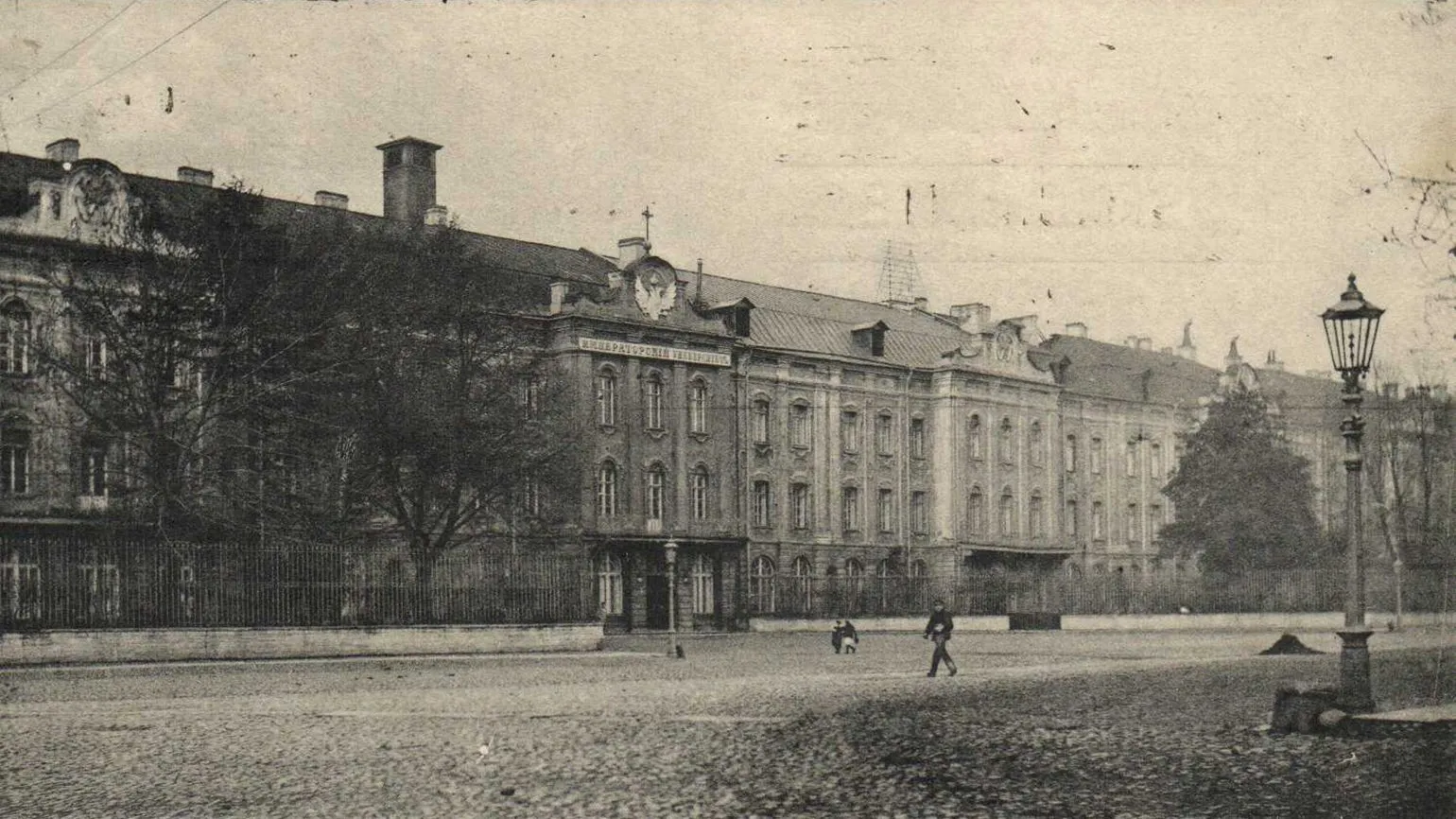
From 1887 to 1891, he studied at the Faculty of Natural Sciences of the St. Petersburg Imperial University.
At pre-revolutionary universities, the choice of faculties was limited. This impacted students' educational opportunities, as they were unable to acquire a wide range of knowledge and specializations. Faculties typically focused on classical disciplines such as law, medicine, and philosophy. Such conditions created a certain framework for academic growth and the professional training of future specialists. The limited number of faculties also affected the development of science and education in the country, creating a shortage of qualified personnel in various fields.
- historical and philological;
- legal;
- physics and mathematics (natural science, by the way, was formally considered a part of it);
- medical;
- oriental languages (it was far from everywhere).
The Faculty of Economics did not exist as an independent unit until the beginning of the 20th century. The study of economics was conducted within the framework of other disciplines, in particular, at the Faculty of Law. The first full-fledged Faculty of Economics was founded in 1902 at the St. Petersburg Polytechnic Institute. At that time, engineering sciences were also not separately taught at universities. The establishment of the Faculty of Economics was an important step in the development of higher education in Russia, facilitating a more in-depth study of economic processes and the training of specialists in this field. The higher education system is divided into two main types: classical universities and specialized institutes. Specialized educational institutions offer applied professional knowledge and skills. For example, future teachers, engineers, and agronomists are trained at institutes. A university education, meanwhile, is seen as the foundation for scientific research and a necessary step for entering the civil service, especially for law school graduates. Furthermore, a higher education has become a standard for young people from families with high social status.
Members of the nobility generally preferred military schools and academies to universities, as a military career was traditionally considered more prestigious among them. For example, the Imperial Tsarskoye Selo Lyceum, where one of Obolensky's classmates was enrolled, admitted exclusively to the nobility. This educational institution was considered a de facto school of state studies, training future high-ranking officials. Thus, the choice of an educational institution directly depended on the social status and career ambitions of the nobility.
At universities, the history and philology departments were the least in demand. This is due to the fact that the career prospects they offered were limited, mainly focusing on teaching positions at universities or gymnasiums.
The most popular and numerous faculties of that era were medicine and law. The medical faculty attracted students because of the guarantee of a stable profession, and the law faculty because of the circumstances described by Prince Obolensky. These areas of education provided in-demand skills and opened up broad opportunities for career advancement.
Legal education in Russia became one of the most popular fields, but it often did not correspond to the interests and inclinations of applicants. This is confirmed by the fact that many famous individuals who achieved success in completely different fields either graduated from law schools or studied there but soon dropped out. Among such individuals are the renowned writers Alexander Ostrovsky and Leo Tolstoy, who, incidentally, was greatly disappointed with his university education. Other such figures include the playwright Yevgeny Schwartz, the writer Mikhail Zoshchenko, the artists Nikolai Roerich, Sergei Diaghilev, Mikhail Vrubel, Vasily Kandinsky, Alexandre Benois, and Igor Grabar, as well as the opera singer Leonid Sobinov. These examples highlight that a legal education is not always a guarantee of a successful career, and many people find their calling in other fields. As for mathematics and the natural sciences, they were primarily targeted by those with the appropriate abilities. Natural sciences such as chemistry, botany, zoology, anatomy, and mineralogy attracted the attention of romantics, intellectuals, and hipsters in the second half of the 19th century. During this period, the natural sciences gained popularity, similar to the rise of psychology and design in the early 21st century. Intelligent young people were actively interested in natural science lectures, which were held even in the home, including demonstrations involving the dissection of animals and human organs. This demonstrates a deep passion for science and a desire to understand the world around them.
Vladimir Obolensky, having completed his studies at the Faculty of Natural Sciences, also enrolled in the Faculty of Law, despite his own critical reviews of it. His student years coincided with a period of active social movements, which attracted the young prince, like many of his peers, to politics and ideas of state reform. Obolensky aspired to work in the zemstvos—local government bodies—to improve the lives of ordinary people. To achieve this goal, he needed knowledge of government and economics, which the Faculty of Law provided. Political economy became particularly relevant, quickly gaining popularity among young people, rivaling traditionally studied sciences such as chemistry, biology, and mineralogy.
This new wave of interest in political economy had a significant impact on the distribution of students among faculties, Obolensky noted. This passion for the study of political economy led to an increase in the number of students in the Faculty of Law, which now included more representatives of leftist ideology, who had previously preferred to enroll in the natural sciences. This change in educational preferences highlights the growing interest of young people in social and economic issues, as well as the legal aspects associated with them.
Study also:
- The Past: How Students Were Taught and Examined 130 Years Ago
- When and How Did the First Universities Appear in Europe and Russia
- What Rules Were Students of the Russian Empire Required to Follow
- How People Entered Universities in Tsarist Russia
Methodologist Profession from Beginner to Advanced
You will develop skills in developing curricula for online and offline courses. You will master modern teaching practices, structure your experience, and become a more sought-after specialist.
Find out more