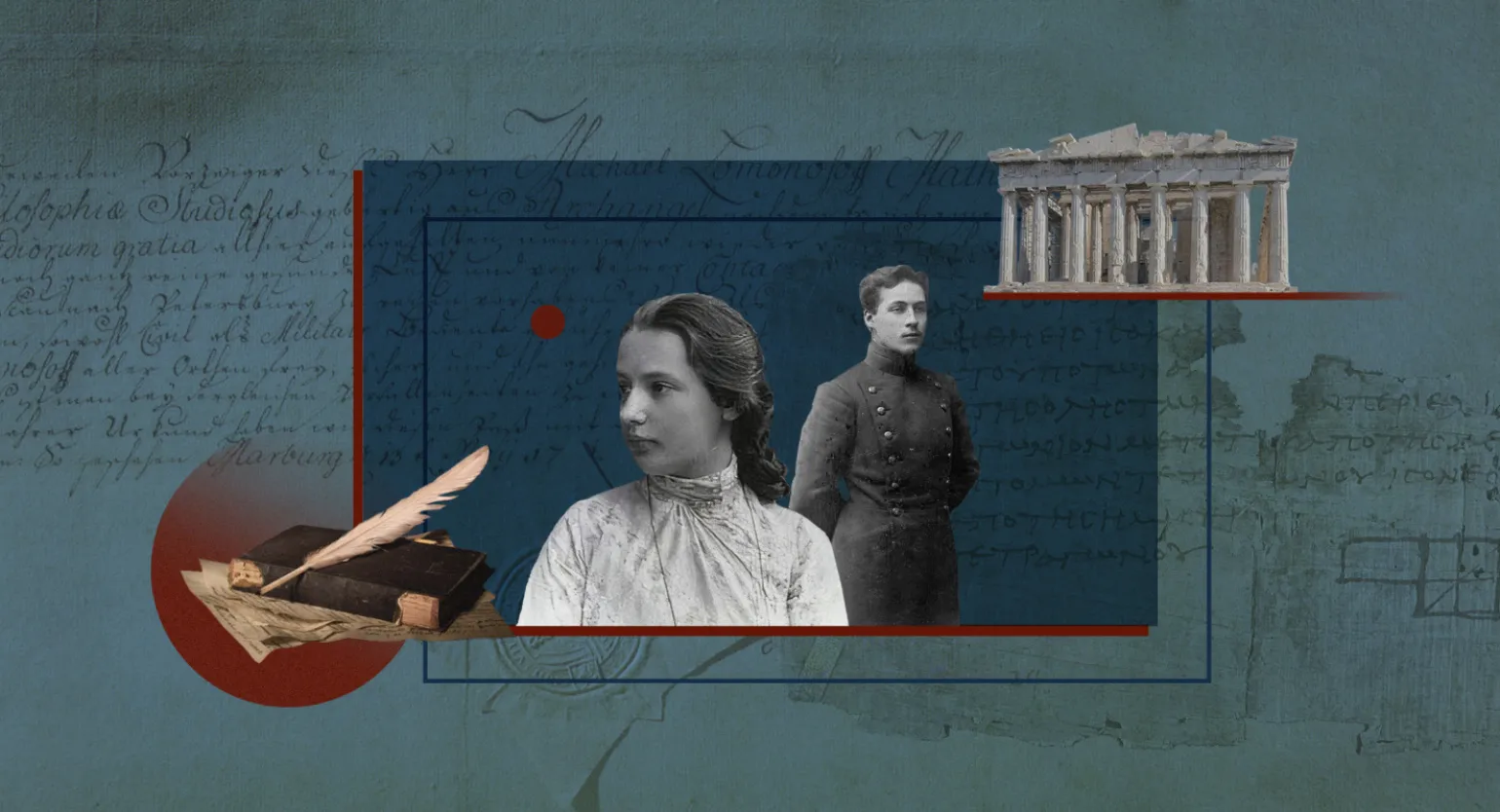
Content:

Learn: Educational Programs Methodologist
Learn moreIn 1916, I have vivid memories of our stay on Lake Shira in the Minusinsk district. My stepmother, Yuri, and I spent time at this picturesque resort, which at the time had few amenities. My stepmother was undergoing treatment for a nervous disorder, and we were simply relaxing. The Shira resort housed a small mud baths and the "Kursaal" building, where evening dances and amateur performances were held. This wooden house boasted a wonderful library and a magnificent piano, which Lenya Ginzburg played every day. Nearby was the teachers' house with a dormitory and a dining hall. Thanks to my stepmother's work as a teacher, we were able to eat in the dining hall at a very low price. This period became a time of relaxation and socializing surrounded by nature. Every day, we were greeted with pies, each one uniquely delicious. I remember the young red-haired teacher in a cotton dress and her colleague, who was both vacationing and managing the library. Love blossomed between them, but they could not marry, as they each earned only 15 rubles a month. If they had teamed up and gotten a cow and a pig, their two salaries would have been enough to live on. However, rural elementary schools only had one teacher. Transferring to a secondary school was impossible due to a shortage of vacancies and, possibly, a lack of education. He looked very sad, and she cried constantly. Everyone around sympathized with them, but, alas, they could not help.
Of course, I am ready to help with editing the text. Please provide the text itself that you want to revise.
Context
Vera Alexandrovna Florenskaya (1900–1996), the author of these memoirs, was the granddaughter of a priest and the daughter of an agronomist. She graduated from high school in Krasnoyarsk and entered Tomsk State University in 1918. Her life and work reflect the rich historical context of 20th-century Russia, as well as important events related to the country's education and cultural life. Florenskaya's memoirs are a valuable source of information about the times and the people who left their mark on her life.
In this Chekhovian love story, it is important to understand the places where the characters might have worked. We will consider possible professions and life circumstances that could have influenced the development of their relationships and emotional state. The characters' places of work can reveal information about their character, dreams, and aspirations, as well as the social background against which their story unfolds. Understanding these details will help us better understand their feelings and actions and add additional meaning to the narrative.
The Russian Empire had a complex and fragmented system of primary and secondary education. Schools of various types were under the control of various ministries and departments, including the Holy Synod. Funding for educational institutions was also varied: funds were allocated from the treasury, zemstvos, private and public sources. Despite discussions of a bill to make primary education universal and compulsory in the 1910s, such a system was never implemented.
The zemstvo school was the most common type of pre-revolutionary rural education. This single-teacher institution provided instruction for three to four years. Funding came primarily from the zemstvo, analogous to modern municipalities, and from the treasury. Peasants were also expected to contribute, either in cash or by providing firewood for heating. However, most peasants showed no interest in supporting the schools, not considering them essential for their children. As a result, only about 10% of children in rural areas completed the curriculum. This meant that teachers often worked in filthy and unheated classrooms, and ink froze in the cold.
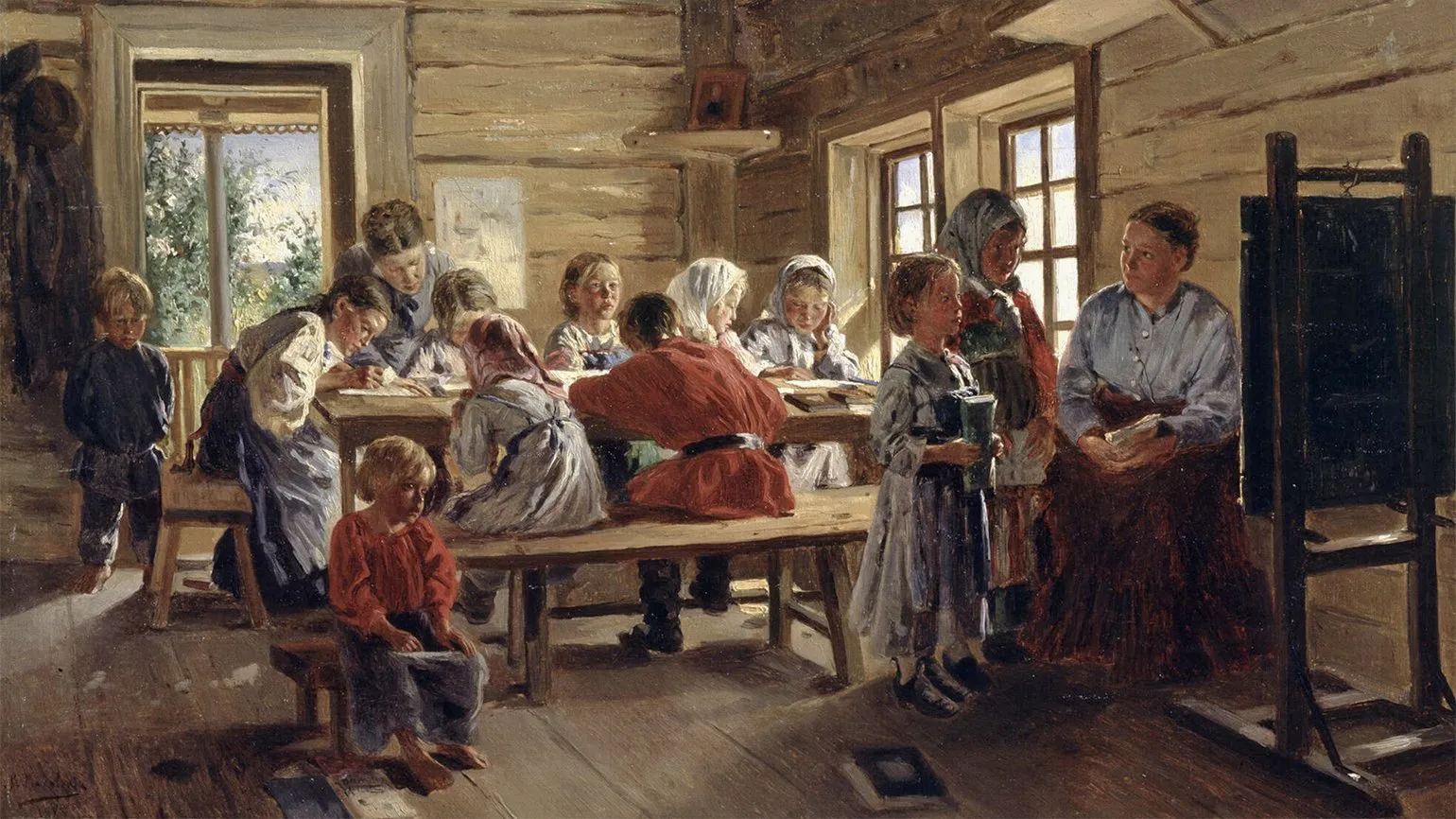
Parochial schools are The second most common type of rural educational institution. They were financed by the Synod, which received funds from the state treasury and the provincial zemstvo tax. Donations were also used as an additional source of income, but they did not significantly improve the schools' financial situation. Working conditions for teachers in these institutions remained no better than in other rural schools. The third type of rural educational institution was literacy schools. By 1917, their number had significantly decreased, as in many places they were replaced by more modern zemstvo or church schools. Initially, literacy schools served as almost the only source of education for peasants. They were created on the initiative of the peasant communities themselves or by enthusiastic populist intellectuals, but always with the permission of the local priest. Funding for such schools was provided by the peasants themselves, philanthropists, and, to some extent, the church. Teachers in these educational institutions worked for the sake of the idea rather than for money, which emphasized their dedication to education and the desire to improve literacy among the peasant population.
Primary and secondary schools were previously perceived as completely independent educational institutions. They differed not only in the composition of the student body, but also in the qualifications of the teachers. Primary school teachers had lower educational requirements. A significant portion of these teachers did not have specialized training: according to the 1911 census, 20.8% of male and 16.5% of female primary school teachers had only a primary or home education. This meant that many of them taught children based on their own experience and knowledge, which could negatively impact the quality of education.
Working as a primary school teacher, especially in rural areas, was long considered unprestigious for men. However, it provided certain benefits, such as exemption from military service or a reduction in its duration, which depended on time and conditions. To receive these benefits, one had to work at a school for five years. Thus, men chose this profession either due to a lack of other opportunities or in hopes of exemption from military service. Meanwhile, for women, teaching was practically the only accessible and respected career option, and finding a position in rural schools was significantly easier. A.P. Chekhov bitterly noted the difficult living and working conditions of teachers, emphasizing the importance of their role in society. Teaching, despite stereotypes, remains a significant profession, shaping the future of generations. Most people associate a laborer with a poorly educated person who reluctantly goes to the village to teach children. This image is characterized by a lack of motivation and inner desire, more reminiscent of a forced assignment than a noble mission. They feel oppressed, suffer from a lack of resources, and fear losing even a small part of their existence. This approach to education reflects broader social issues related to a shortage of qualified personnel and a lack of support for those seeking to pass on knowledge to the next generation. It is important to recognize that education in villages requires not only professionals but also people willing to inspire and support students despite their own difficulties. A job as a subject teacher at a gymnasium offered a decent salary and high status, but it required a university education. At the time, this seemed an unattainable goal for most, especially women. Less prestigious secondary schools, such as district schools, paid lower salaries than gymnasiums but still higher than zemstvo elementary schools. Working in these institutions also required a teaching degree or successful completion of specialized exams, which required prior preparation.

Reading is an important aspect of personal and professional development. It not only broadens your horizons, but also allows you to deepen your knowledge in various fields. In the modern world, access to information has become easier thanks to the Internet, which allows everyone to find high-quality materials for study. Regularly reading books, articles, and research helps improve analytical skills and critical thinking. It's important to choose literature that matches your interests and goals to make the learning process more engaging and productive. Invest time in reading to develop your skills and stay current with current trends.
Long before the introduction of the Unified State Exam (USE) in Russia, university entrance exams had their own unique characteristics and traditions. In Tsarist Russia, the system of admission to higher education was strictly regulated and included several stages. Students wishing to continue their education prepared for exams based on the knowledge acquired in gymnasiums and other educational institutions.
The exams included both oral and written assignments in various subjects, such as Russian language, literature, mathematics, and history. Particular emphasis was placed on a deep understanding of the material, not just rote memorization. This contributed to the development of students' analytical thinking and the ability to critically evaluate information.
Preparation for such exams began long before the exam date. Students often attended additional classes and tutors, and actively participated in clubs and discussions, which helped develop public speaking and argumentation skills. The admissions process to universities in Tsarist Russia was not only a test of knowledge but also a unique assessment of the applicants' personal qualities.
Thus, exams in Tsarist Russia were distinguished by a high level of requirements and contributed to the preparation of qualified specialists. A comparison with modern tests, such as the Unified State Exam, emphasizes the importance of the knowledge and skills necessary for successful study at universities.
Primary schools received significantly less funding compared to secondary educational institutions, which, above all, negatively impacted the level of teachers' salaries. This difference in funding limited the ability of primary schools to attract qualified specialists and ensure a high-quality educational process. As a result, primary school teachers faced financial difficulties, which could reduce their motivation and the quality of their teaching. Improving primary school funding could not only increase teachers' salaries but also improve educational conditions for students. The Ministry of Public Education, recognizing the existing problem, pushed for the passage of a law setting the minimum teacher salary at 360 rubles per year, equivalent to 30 rubles per month. This amount was quite modest: it was enough for one person to make ends meet, but it was extremely insufficient for a full family life. Although teachers were provided with free housing, this could not compensate for the low salary. In 1912–1913, a survey of zemstvo teachers in 279 districts of the Russian Empire revealed that the mandatory minimum salary of 360 rubles was far from being met everywhere. Only 178 counties met the established minimum wage, while 15 counties exceeded it. In the remaining counties, teachers' salaries remained below the mandatory threshold, with two counties offering salaries half that amount, not even reaching 180 rubles. These facts demonstrate significant differences in teacher salaries across the empire and highlight the problem of underfunding in the teaching sector.
In the city's classical male gymnasium, a subject teacher could expect an annual salary ranging from 900 to 3,550 rubles. This information illustrates the level of teacher salaries in educational institutions, which may be useful for analyzing the education labor market.
A drowning man's salvation is, as the saying goes, his own doing. Consequently, teachers' mutual aid societies emerged, aiming to support and assist each other. However, this approach did not address the problem systemically and did not provide long-term solutions. More effective and organized measures were needed to support teachers and improve the quality of education.
Zemstvo teachers were often lonely and poor people, deprived of family and close friends. Low incomes prevented them from starting a family, and the lack of a suitable social circle in the village hindered the formation of friendships. For peasants, teachers were often perceived as alien figures. Only true ascetics or those with no other prospects in life could endure such isolation.
One teacher in his letter expressed doubts about the school teaching profession, noting that remaining in this role could lead to premature deterioration of health and complete helplessness in old age. This idea raises important questions about the teaching profession and how it affects personal well-being and quality of life. It is important to recognize that working in education requires not only professionalism but also concern for one's own health.
In her book "Everyday Life of a Russian School: from Monastic Teaching to the Unified State Exam," Natalia Petrova explores the evolution of the educational system in Russia. She considers how teaching methods and approaches to learning have changed over the centuries, from monastic education to modern examination systems such as the Unified State Exam. Petrova analyzes the influence of historical and cultural factors on the formation of school education and shows how tradition and innovation are intertwined in the learning process. The book is a valuable source for understanding the historical context and the current state of the Russian educational system.
Many teachers did not hold their positions long, striving to find jobs with higher and more stable pay. This led to schools frequently ceasing operations for long periods or experiencing difficult times due to the constant turnover of teachers, as I.V. Zubkov notes in his extensive essay on zemstvo schools. The personnel situation in the education sector requires attention, as the stability of the teaching staff directly affects the quality of education.
Reading is an important aspect of our lives, enriching knowledge and developing thinking. It helps us stay informed, learn new things, and broaden our horizons. It is important to choose a variety of information sources to gain a comprehensive understanding of the world. A variety of books, articles, and research can significantly increase awareness. Reading not only entertains but also helps improve writing and analytical skills. Regular reading also strengthens memory and concentration. Pay attention to current topics that interest you and explore them in more depth.
- How much did teachers earn and how did they live in the Russian Empire?
- How much did teachers at the imperial universities earn?
- The past: the story of a little high school student's first bad grade.
- "Our school was renowned as a leading educational institution."
Educational Programs Methodologist
You will go through the full cycle of creating an educational product from scratch. Learn to design curricula for online and offline courses. You will become a universal specialist - you can launch your own project or get a job as a methodologist in a large company.
Find out more