
Content:

Learn: The Profession of Methodologist from Scratch to PRO
Learn More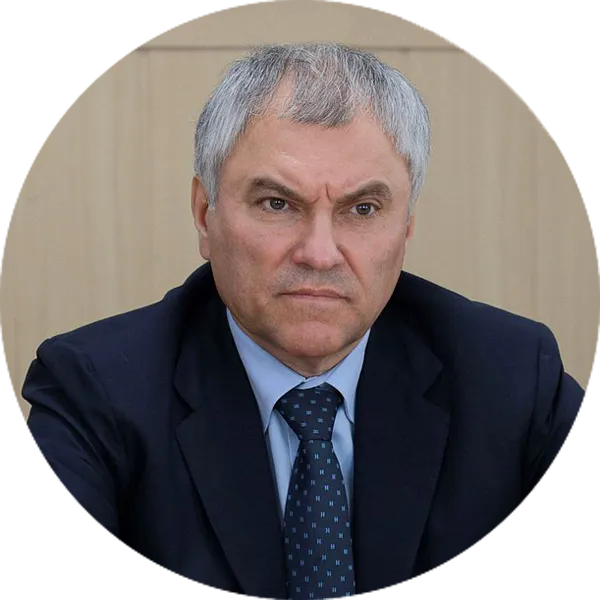
The Chairman of the State Duma of the Russian Federation is a key figure in the country's legislative process. This position entails leading and coordinating the work of the lower house of parliament, which includes organizing meetings, managing legislative initiatives, and interacting with other government bodies. The Chairman also represents the State Duma on the international stage and in relations with other branches of government. Important duties of the Chairman include ensuring effective discussion of bills and maintaining order during meetings. The role of the Chairman of the State Duma has a significant impact on the political situation in the country and the formation of legislative policy.
The State Duma of the Russian Federation is the most important parliamentary institution in the country. It exercises legislative functions, representing the interests of citizens and ensuring their rights. An important task of the State Duma is the development and adoption of laws that regulate various aspects of public life. In addition, State Duma deputies participate in the discussion of key issues related to the economy, social policy, and international relations. Their work contributes to the formation of effective public policy and responds to current challenges. The State Duma also plays a significant role in overseeing the executive branch, which ensures balance and stability in the Russian political system.
Higher education institutions should not offer specializations that are inappropriate for their profile. The quality of education is paramount. Scientific schools are formed over many years, and a university without the necessary foundation will not be able to effectively train qualified specialists. It is also important to abandon the practice of admitting students who have completed a bachelor's degree in completely different fields to master's programs. This is especially true for humanities specialists seeking to enroll in master's programs in engineering specialties, which may negatively impact the quality of training in these fields.
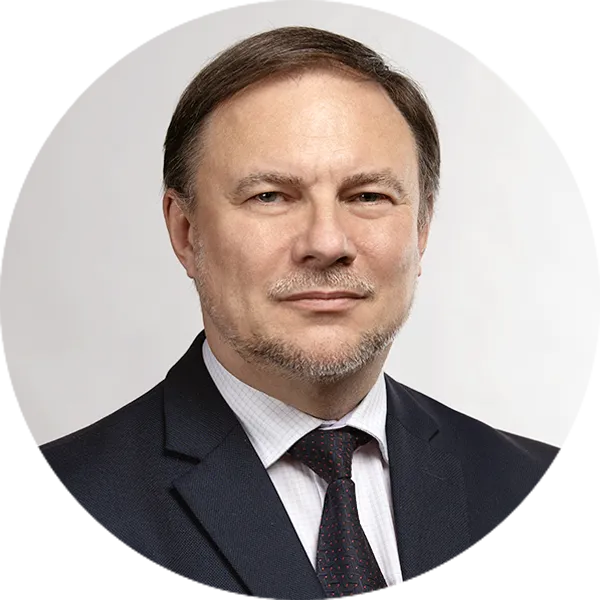
The Deputy Minister of Science and Higher Education of the Russian Federation is responsible for the development and implementation of state policy in the field of science and education. His responsibilities include coordinating scientific research, supporting educational initiatives, and ensuring the integration of science and education. The Deputy Minister also interacts with higher education institutions and research institutes, promoting the development of innovative projects and international cooperation. An important part of his work is attracting investment in scientific research and the implementation of modern educational technologies. TASS is one of Russia's leading news agencies, providing up-to-date news and analytical materials. The agency covers a wide range of topics, including politics, economics, culture, and sports. Thanks to its extensive network of journalists and correspondents, TASS provides prompt and reliable coverage of events both within the country and abroad. An important part of the agency's work is the creation of unique content that helps readers stay informed about the latest events and trends. TASS actively uses modern technologies to disseminate information, making it a trusted news source.
In some fields, such as medicine, there is a strict sequence of educational stages. However, in others, for example, management, first-cycle graduates can choose different paths. Management is a versatile specialty, which opens up a variety of career opportunities. While this approach is generally correct, it is important to consider exceptions that may exist in other disciplines.
Context
The speech of the Chairman of the State Duma at a meeting with university rectors in the Bryansk region generated widespread public interest. Dmitry Afanasyev commented on this event for the TASS news agency, raising important questions about the future of universities and students. What changes are likely to occur in the education system, and how will they affect students and faculty? The answers to these questions will determine the further development of higher education in the country.
In recent years, the need to reduce non-core specialties in universities has been actively discussed in Russia. This was part of a large-scale reform aimed at improving the quality of higher education that began in the 2010s. As a result of this reform, the number of state universities decreased by 25%, private ones by 50%, and branches by 60-80%. The largest reductions affected educational institutions where students received tuition on a fee-paying basis or through distance learning, which often did not meet high standards. University branches typically offered educational programs in non-core fields, which also contributed to the decline in educational quality.
As part of the optimization of the education system, many non-core departments were closed at specialized universities. This process began in 2011, when Dmitry Medvedev, then president, at a meeting on the development of engineering education and the training of engineering and technical personnel, expressed the opinion that specialized universities should completely eliminate training in non-core specialties, even if it is provided on a fee-paying basis. This decision underscores the importance of focusing on high-quality training of specialists in engineering and technology, which is relevant for the modern labor market and contributes to the increased competitiveness of graduates.
Although these programs were not formally banned, they gradually lost state accreditation. This led to a decline in their status and demand in the educational services market. The situation requires careful analysis and an assessment of alternative options for students seeking a high-quality education and professional training.
It is no secret that the measures mentioned above primarily affected law and economics programs. Since the early 1990s, these areas of training have enjoyed particular interest among applicants, prompting technical universities to open fee-based courses to survive—this allowed them to generate income. However, this raised serious questions about the quality of education, which is understandable: regional technical universities often failed to attract a sufficient number of qualified teachers in completely new fields. Thus, the need for highly qualified specialists in legal and economic disciplines called into question the level of training students received at technical universities, which could negatively impact their future careers.
The decline in the number of law schools in Russia occurred gradually. In her analytical review of legal education, Ekaterina Alekseeva notes that from 2012 to 2015, the number of law schools decreased by a third. Nevertheless, in 2015, approximately 45% of future lawyers continued to enroll in law schools at non-specialized universities. This indicates that interest in legal education remains despite the reduction in the number of specialized educational institutions.
The closure of educational institutions often causes significant problems. In 2015, the Faculty of Engineering and Economics at Voronezh State Technical University lost its accreditation, sparking public concern. In response, a petition was created asking for the preservation of the department, which had approximately 2,000 students in programs such as economics, management, human resources, business informatics, and advertising. This situation underscores the importance of preserving educational institutions and programs that play a key role in preparing specialists for the labor market.
The problems that arise in such situations affect not only students but also higher education institutions, which suffer significant financial losses. This is usually associated with paid tuition, and such losses can significantly impact the university's budget.

Read also:
University Admission: Interesting Facts About the Humanities and Fee-Based Tuition
Admission to higher education institutions always generates great interest. This is especially true for the humanities, where there is a trend toward fee-based tuition. There are several reasons why students who choose the humanities often become fee-based students.
Firstly, humanities disciplines traditionally receive less state funding than technical and natural science programs. This forces universities to increase fee-based places to ensure high-quality education and maintain infrastructure.
Secondly, growing interest in the humanities, including psychology, sociology, and international relations, also contributes to an increase in the number of students willing to pay for tuition. In a competitive labor market, humanities graduates seek additional knowledge and skills, which sometimes requires investment in their education.
Furthermore, it is worth noting that fee-based education often offers higher-quality educational services, including access to modern resources, experienced faculty, and internships. This is becoming an important factor for students who want to improve their competitiveness in the labor market.
Thus, fee-based education at humanities universities is becoming a reality, driven by both economic and social factors. This trend requires attention from both students and educational institutions to ensure the accessibility and quality of education in the humanities.
It is not entirely clear why the issue of non-core programs at universities that provided poor-quality education is being revived. Perhaps such faculties and departments still exist in significant numbers or have increased in number in recent years. However, it's worth noting that demand for education drives supply.
There are traditionally popular fields of study, such as economics, law, and management. However, in recent years, new specialties have also gained popularity, such as advertising and public relations, design, and business informatics. State-funded places in these fields are limited, but this doesn't stop applicants seeking an education in their field of interest. Many are willing to enroll in universities outside their core competencies, as long as the tuition fees match their capabilities. This indicates that the state's personnel needs for certain specialists don't always align with the educational preferences of young people. It's important to consider this gap when planning educational policy and developing new curricula to better meet labor market demands.
The problem of non-core Master's programs has become relevant in light of the changes associated with Russia's abandonment of the Bologna process. This is not just an issue, but one of the shortcomings of the education system that must be addressed, according to the reform planners. Non-core Master's programs require careful analysis and development to meet current labor market requirements and educational standards. It is important to consider that an effective Master's program must train highly qualified specialists capable of adapting to changes in their field and solving real-world professional problems. Non-core Master's programs have become a shorter and more accessible route to obtaining a new profession than a second higher education. However, as Deputy Minister of Education and Science Dmitry Afanasyev noted at a meeting of the Federation Council Committee on Science, Education, and Culture, it is impossible to train a specialist without a core education in two years. This leads to a decline in the quality of training and a debasement of Master's education. It is important to understand that quality education requires time and deep knowledge, which cannot be obtained in such a short period of time.

Some of the deputy minister's statements are becoming more cautious. He allows for the possibility of exceptions to the general ban on non-core master's programs, similar to the situation with management. This could open new horizons for students seeking education in related fields.
Many university representatives, unlike politicians and officials, see more advantages than disadvantages in non-core master's programs. This opinion is supported by our detailed review on this topic. Modern realities require an interdisciplinary approach, and knowledge and skills from various fields are often necessary for a successful career. Some master's programs are designed with students from diverse academic backgrounds in mind, which we also covered in our review. Therefore, enrolling in a non-core master's program is not always associated with a desire to change professions, for example, from a doctor to a lawyer, but may be motivated by a desire to expand one's competencies and adapt to new labor market demands.
Roman Yankovsky, Deputy Dean for Development of the Faculty of Law at the National Research University Higher School of Economics, noted in his Facebook blog that in their master's program "Digital Law," approximately 3-5 of the 60 students do not have a law degree. He also emphasized that a similar trend is observed in other humanities and social science majors: for example, the finance program has many students with degrees in economics, management, and law. Yankovsky does not consider the presence of students from non-major fields in the master's program a negative factor and notes that the potential risks associated with this are extremely minimal. It is important to note that a multidisciplinary approach can enrich the educational process and lead to new ideas in the field of digital law.
Cases in which a humanities major enrolls in a technical master's program are rare. According to Vyacheslav Volodin, such examples require limitations. Admission to technical programs requires significant preparation for exams and portfolio creation, which is a challenging task for someone with a humanities education. This is due to differences in the basic knowledge and skills necessary for successful mastery of technical disciplines.
Non-major master's programs have become one of the main problems in higher education in Russia, and the reasons for this phenomenon require careful analysis. In recent years, there has been an increase in the number of students choosing master's programs that are not aligned with their original major. This leads to a decline in the quality of the educational process and a lack of professional skills among graduates. It is important to understand the factors driving this trend and how it impacts the labor market and the level of specialist training in the country.
It was previously announced that master's programs under the new education system will not be offered at all universities.
Reading is an important aspect of personal development and broadening one's horizons. It helps improve vocabulary, deepen understanding of various topics, and fosters critical thinking. Immersing yourself in books, articles, and other materials not only allows you to acquire new information but also develops your imagination and creativity. It is important to choose a variety of sources to enrich your knowledge and worldview. Regular reading also helps reduce stress and improve concentration. Therefore, devote time to reading and discover new horizons for yourself.
- Quote of the week: "We will never return to the Soviet education system"
- "A situation may arise where the demand for higher education exceeds supply"
- How to attract students to a master's degree program and what it means to "package" a master's program
- Higher education in Russia, although widespread, is still not very accessible
The court ruled to ban the activities of Meta Platforms Inc. in Russia, concerning the sale of social networks Facebook and Instagram. This decision is motivated by accusations of extremist activity.
The profession of Methodologist from scratch to PRO
You will improve your skills in developing curricula for online and offline courses. Master modern teaching practices, structure your experience, and become a more sought-after specialist.
Find out more