Contents:

Learn: The Profession of Methodologist from Scratch to PRO
Learn more
Methodologist and founder of the creative Hi.Steve, a methodological agency, and the author of the popular Telegram channel "Mom's Friend's Methodologist." Her work focuses on developing innovative approaches and strategies that foster business growth and improve creative processes. Her expert opinions and practical advice help many professionals and companies find effective solutions to achieve their goals. Gamified courses are becoming increasingly popular. They offer participants the opportunity to interact with characters, follow a captivating scenario, and feel like the main characters in a story. This form of learning significantly increases motivation and learning efficiency. These courses often use bots to help solve various learning problems. In this text, I will share four key tasks that, in my experience, are successfully solved with the help of bots, and I will give examples of their application.
Task 1. Remembering difficult information
The human brain has a unique ability: we remember events and facts saturated with emotions more easily than neutral information. This phenomenon is described in detail in John Medina's book "Brain Rules." Recent research by scientists from the United States confirmed that when memorizing emotionally charged information, the connection between the amygdala and the hippocampus is activated, while neutral information does not cause such activation. This may explain why emotionally charged moments are remembered better. But how can one effectively memorize neutral educational information? One way is to artificially create emotions in learners. This can include various techniques, such as engaging students in discussions, using interactive tasks, or utilizing visual and audiovisual materials that can evoke an emotional response. This can significantly improve retention of even the most neutral information.
In my experience, bot characters facilitate emotional engagement. They can joke, flirt, evoke anger, and even envy, allowing them to evoke the same emotions as real people. These interactions with bots create a unique experience that strengthens the connection between the user and the technology. The use of bots in various fields, from entertainment to customer service, demonstrates their ability to interact effectively and evoke a wide range of emotions.
Characters in training courses can not only add variety to the material but also significantly deepen engagement with the audience, creating full-fledged stories with character arcs. This scenario-based approach not only holds learners' attention but also creates an emotional connection with the material. The emotions evoked by characters can be varied. While positive emotions are typically emphasized in educational practices, UNESCO research suggests that negative emotions, such as anger or shame, can also play an important role in learning. However, their use should be very cautious and well-founded, as the potential benefits must outweigh the possible risks. It is important to understand your target audience well in order to effectively use such emotional triggers in teaching.

Reading literature is an important aspect of self-development and knowledge enrichment. It allows you to not only broaden your horizons but also improve your analytical and critical thinking skills. It's important to choose quality sources to get the most out of what you read. Books, articles, and research can offer valuable information on a wide variety of topics. Regular reading improves memory and concentration, and helps develop creative thinking. Remember that reading should be not only useful but also enjoyable. Choose genres and authors you enjoy to make the learning process enjoyable.
Emotions play a key role in learning and can significantly increase students' motivation to complete a course. To achieve this, it's important to create an emotional connection with the material and the instructor. Start by creating a positive atmosphere where students feel comfortable and confident. Use stories and examples to make the material more lively and engaging.
Stimulate interest by incorporating interactive elements into the course, such as discussions, group projects, or games. This will help create a sense of community and engagement. It's also important to recognize student achievements, whether small steps or major successes. Praise and rewards can significantly strengthen the desire to continue learning.
Don't forget the importance of feedback. Regular check-ins and support from the instructor will help students feel valued and making progress. Ensure the course offers practical application of knowledge, allowing students to see the real value of the material being studied.
By creating an emotionally rich educational experience, you can motivate students to complete the course and apply what they've learned in their lives.
To determine the most appropriate emotional atmosphere for participants in your curriculum, it's important to explore their values and emotional needs. Archetype theory, actively used in branding, can be an effective tool for this. This will allow you to better understand participant motivations and create an appropriate atmosphere conducive to successful learning.
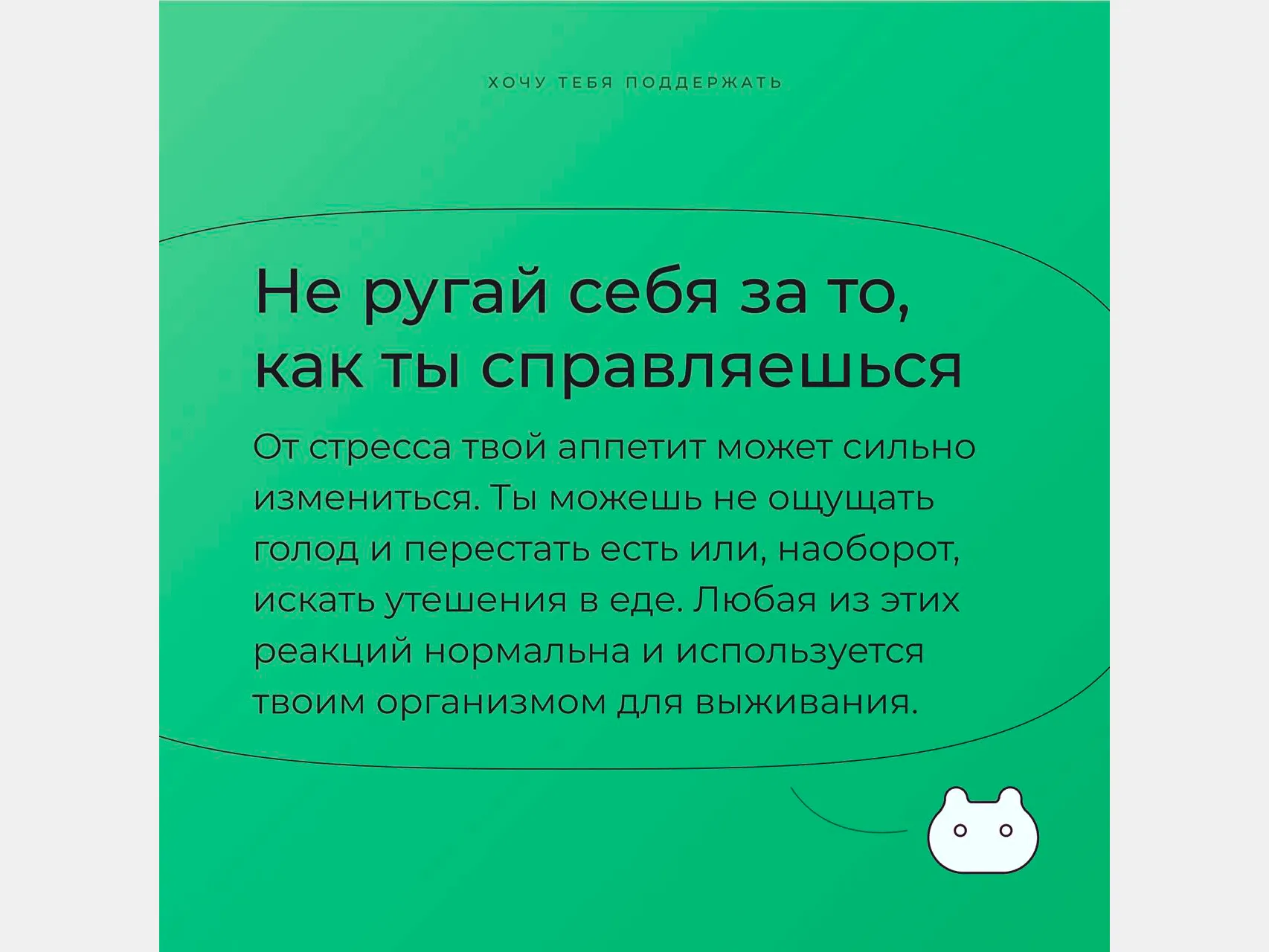
When developing my own reading bot course, I used archetype theory. Together with a colleague, we realized that human connection is important to our users. They seek close interaction with the author and other readers, and they need their thoughts and feelings to be understood and valued. This realization inspired the creation of a character that reflects the lover archetype. This charming young man occasionally flirts with students, but first and foremost, he remains a friend, supporting them, admiring their ideas, and always on the user's side in any situation. This approach helps create a deeper connection between readers and books, fostering their passion for literature. Emotions can be evoked through simple mechanisms. An example of this is the nutrition bot Thea on Telegram. It communicates with users with care and attention, creating a friendly atmosphere. This approach allows users to experience positive emotions, relax, and perceive new knowledge not as lessons from a teacher, but as an exchange of information between friends. This promotes a deeper understanding and assimilation of information, making the learning process comfortable and enjoyable.
There are also more complex developments, such as the video course simulator "School on the Edge" for marketers. The user is immersed in a work environment, assuming the role of an employee of a start-up online school planning to launch a new course in just ten days. During the course of the course, they interact with a team of characters, each with a unique personality, their own vision of the product, and, at times, emotional breakdowns. The dynamic interactions between characters within the storyline enhance the likelihood of an emotional response from the user, making the learning experience more effective and memorable.

Reading is an important aspect of personal development and education. Regularly reading books, articles, and other materials not only broadens your horizons but also improves critical thinking skills. In today's world, where information is available in huge volumes, it is important to be able to highlight key points and analyze what you read. Using effective reading techniques can significantly improve productivity and retention. Reading also improves memory and concentration, which is beneficial both academically and professionally. Make time for daily reading to enrich your experience and knowledge.
Unique Practice: How Teachers Make Learning More Engaging and Effective.
Modern educational methods require a creative approach to making learning interesting and engaging. Teachers use a variety of techniques and strategies to increase student engagement. This includes interactive lessons, hands-on exercises, and the use of technology.
The use of games and simulations allows students to immerse themselves in the learning process, while group projects promote teamwork. It is also important to consider individual student preferences and adapt materials to their needs.
Creating a positive classroom atmosphere promotes the free exchange of ideas and increases motivation. Thus, teachers not only impart knowledge but also develop a lasting interest in learning in students.
Task 2. Practice communication skills
Some skills cannot be developed alone. Course participants often require a partner who can perform different roles, understanding the learner's needs. It is important that this partner is safe and supportive, creating a comfortable atmosphere for learning and practice. Collaborating with such a partner promotes deeper assimilation of the material and the effective development of necessary skills.
A bot character in dialogue simulators effectively performs predetermined roles. In sales training, it can act as a buyer, and in interview preparation courses, it can assume the role of an HR specialist or manager. Such capabilities allow the creation of realistic scenarios, which significantly improves the quality of training and helps users develop essential skills in various professional fields. Using bot characters in training facilitates a deeper understanding of situations participants might encounter in real life. Bots can be an integral part of simple technical courses on Telegram, as well as complex AI-powered developments using real-life actors. A prime example is the SkillGym platform, designed for developing soft skills. It functions as a game simulator, allowing users to participate in realistic video dialogues and apply the skills they are learning. In this simulator, the roles of interlocutors—managers, colleagues, subordinates, and clients—are played by professional actors, helping to realistically recreate work situations. The user can perceive information not only through speech but also through the nonverbal cues of their "interlocutor." Artificial intelligence provides variability in the simulation, selecting the continuation of each dialogue based on the user's responses. Thus, platforms like SkillGym are an effective tool for training and developing communication skills in a professional environment.

Question about The need for a complex scenario for a dialogue bot arises quite naturally. While it is not always necessary, the presence of even simple branching options allows the student to influence the course of the interaction. This approach significantly increases the level of interactivity, making the learning process more personalized and engaging. Effective dialogue bots are able to adapt to user needs, which promotes deeper assimilation of the material and increases motivation for learning.
We developed a chatbot for a language school that helps beginners learn English. Its main goal is to provide students with the opportunity to practice simple conversational skills and communicate confidently with native speakers. The bot creates a comfortable atmosphere for meeting new people and communicating, which promotes the development of language skills and increases self-confidence.
We developed a Telegram bot that functions in the format of Tinder, a popular social network for dating. This bot has two characters. The first character is the user's "match," with whom students can chat and exchange voice messages in English. The second character acts as a friend and assistant, their task is to explain the theory in Russian and help the user win their match. Thus, the bot combines two roles, switching between them to improve user interaction and increase the effectiveness of language learning.
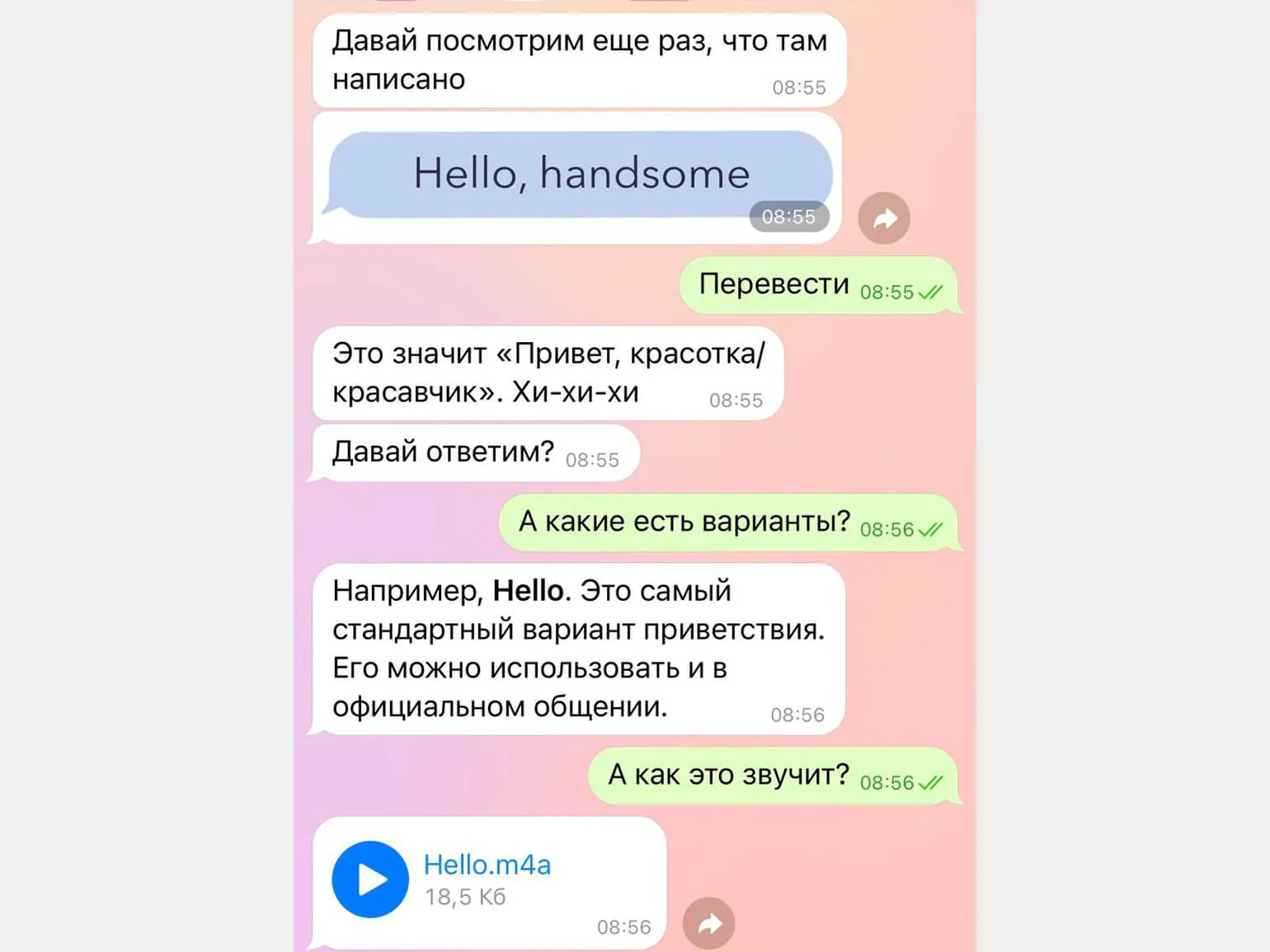

The dialogues are intended for beginners in learning English. In these dialogues, it's important to talk about yourself, your profession, or your hobbies. This process not only helps improve reading skills but also memorize new words and phrases. Furthermore, such dialogues promote the development of listening and speaking skills in English. Students had the opportunity to influence the course of the conversation, albeit to a limited extent. At the beginning of the dialogue, they had to select the gender of their potential interlocutor, which set the tone for whether they would be speaking as a boy or a girl. Additionally, in some cases, a choice of response options was provided, creating the illusion of control over the dialogue. Such elements of interaction contributed to more active participation of students in the discussion and increased interest in the topic.

Reading is an important part of our lives, and it brings many benefits. Books, articles, and blogs enrich our vocabulary, develop critical thinking, and open new horizons. Regular reading improves concentration and memory, and helps us better understand the world around us. To get the most out of reading, choose a variety of genres and topics to expand your horizons and gain new insights. Join a community of readers, share your experiences and recommendations, and make the reading process even more engaging. Remember the importance of the quality of the materials you read, as it directly impacts your experience and knowledge.
A branching quest is a learning method based on the active involvement of participants. This approach allows students to make decisions and influence the development of the scenario, making learning more interactive and engaging. Using branching quests in the educational process not only improves material absorption but also develops critical thinking, teamwork, and creativity.
In a branching quest, participants are faced with various tasks and choices that can lead to different outcomes. This creates an opportunity for in-depth analysis and discussion, which enhances understanding of the educational material. This approach allows for tailoring learning to students' individual interests and preferences, which in turn increases motivation and engagement.
To successfully implement a branching quest, it is necessary to consider its structure, scenario, and tasks to ensure they align with the learning objectives. It is important to consider the participants' level of preparation and their interests. The use of modern technologies, such as mobile apps and online platforms, can significantly simplify the organization and implementation of quests, making them accessible to a wider audience.
Branching quests are an effective tool that can enliven the learning process and make it more dynamic and engaging for students.
Task 3. Motivate and engage users in learning
Motivation is a dynamic process. Today, a person is determined to master the basics of UX design, but tomorrow, interest may wane. To maintain motivation, it is important to regularly find new sources of inspiration and set goals. Scientific research shows that continuous development and learning contribute to strengthening interest in the profession. Maintain your motivation by immersing yourself in new knowledge and practical skills, and do not let it fade.
Research shows that game-based learning is more enjoyable and effective. Gamification and edutainment have become the standard in EdTech, and there are numerous examples of this. When a learner feels part of the game and is actively involved in the process, this significantly increases their motivation and interest. This immersion promotes successful course completion, which in turn increases the level of understanding and retention of the material.
Bots allow you to create a fully-fledged game universe with unique rules, heroes, villains, and sidekicks. Playing games like Tamagotchi or The Sims can be more engaging and engaging than simply visiting a website to watch lectures and complete homework. This game format provides a broader set of tools than traditional learning based on lectures and homework, which promotes deeper understanding and mastery of the material.
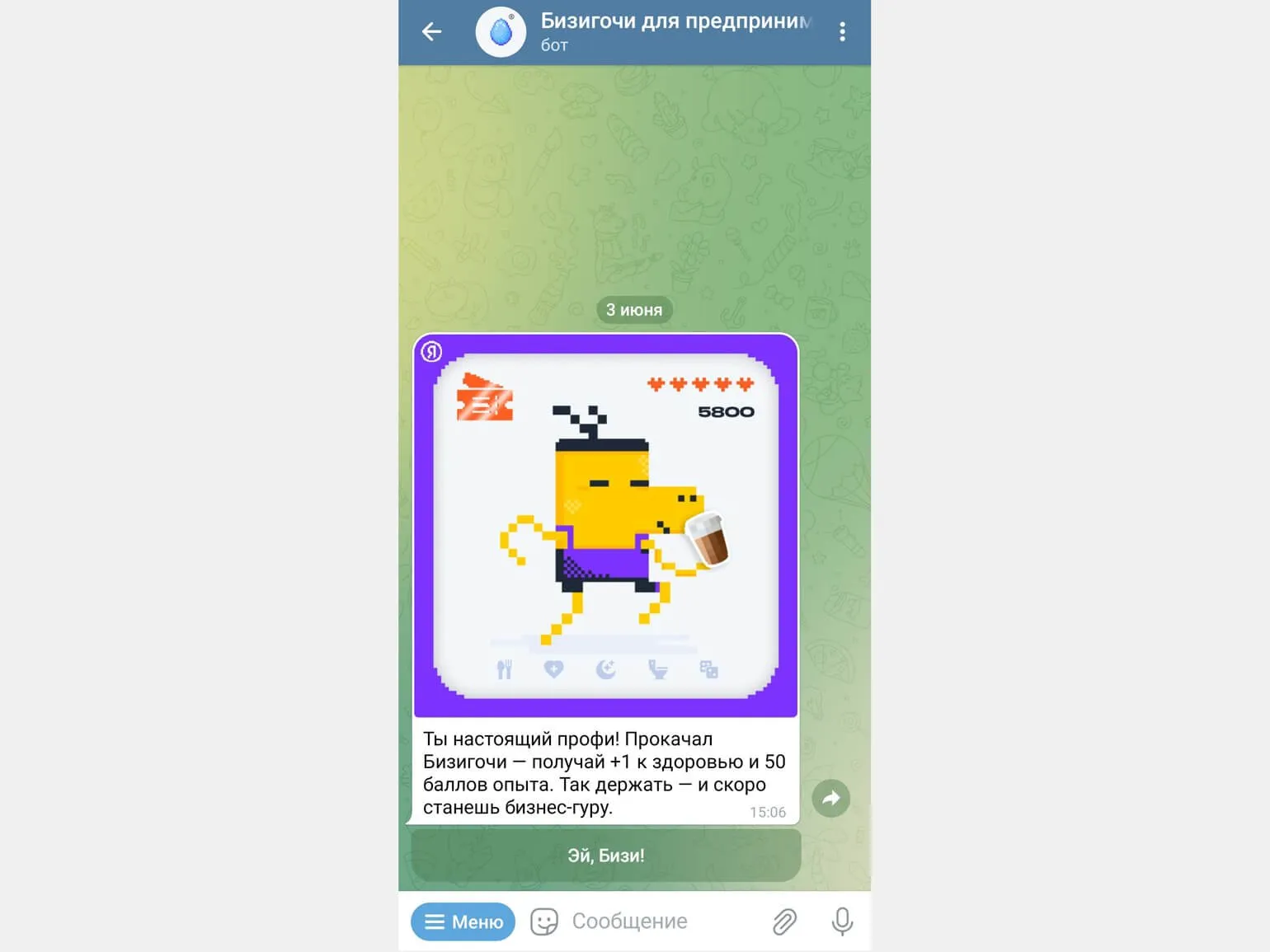
Creating a unique universe can be a fun process, but developers can also use existing frameworks, such as games, TV series, or films. This significantly simplifies the task, as it provides predetermined reference points for building the plot and characters. However, it's important to remember that using familiar elements doesn't mean completely copying them. Introducing original ideas and unique details is essential to creating a truly memorable and engaging world.
In your bot, you can create a unique magic school with different faculties, a strict witch teacher, a kind headmaster, and a villain seeking an important artifact. The name of the school and the villain can be original, allowing you to avoid direct associations with well-known works. At the same time, key plot elements, such as conflicts and key events, will be clear from the start, making the story more engaging. This approach will allow you to create interesting and engaging content for users, drawing their attention to your unique universe.
If you intend to copy someone else's work, it is important to consider intellectual property rights. It is recommended to consult a lawyer to understand all the legal aspects related to copyright. After receiving the necessary clarifications, you should obtain permission from the copyright holders to avoid legal consequences.
Creating a universe with characters may seem like a complex and expensive process, but in reality, this is not the case. The main focus should be not so much on the game world itself, but on the mechanics, services, and tools you use to develop it. The right approach to content creation and the choice of appropriate technologies will help you implement interesting ideas without significant costs.
One effective way to immerse a student in the atmosphere of a game is to participate in a reality show. In this process, bot characters play an important role, creating the necessary ambiance and maintaining interactive interaction with the student. This not only increases engagement but also develops the skills necessary for successful learning.
We used a unique frame for the Reels filming mini-course, which immersed students in the atmosphere of the famous show "Star Factory." Participants became part of a "star house" and prepared for "final concerts," which allowed them to develop creative skills. As part of the course, students regularly filmed videos of themselves, which, of course, raised certain concerns. For many, appearing on camera and subsequently publishing their thoughts or dance routines entails a fear of negative comments. This created a risk that theoretical knowledge would not be put into practice. Therefore, we focused on supporting and motivating participants so that they confidently apply their acquired skills.
To increase participant motivation and teach them how to overcome difficulties, we introduced a toxic character. This character expressed negative comments, thereby creating stressful situations, but simultaneously emphasized the importance of perseverance and continuing on the path despite difficulties. This approach helps participants develop resilience and self-confidence, and teaches them how to effectively deal with criticism and negativity.
The character was given his own arc, in which, at the end, he apologized to the students and recognized their achievements. In this context, the supportive motivation we incorporated into the course played a significant role. We also introduced a positive character—a "friend" from the star house—who actively supported the participants throughout the course. This created an atmosphere of mutual support and inspiration, which significantly increased the level of student engagement.

Read also:
Creating a successful edutainment program requires following several key rules. First, define your target audience. Understanding your audience's needs and interests will help you create content that will engage them. Second, integrate educational elements into entertainment. An effective edutainment program should combine education and entertainment to keep participants engaged.
Third, use a variety of content formats. Including videos, interactive activities, and games promotes deeper engagement. The fourth rule is to create dynamic and engaging content. Try to make it visually appealing and easy to digest. Finally, regularly analyze and adapt your program. Collect participant feedback and make changes based on their recommendations to keep the program relevant and engaging. Following these rules will help you create an effective and memorable edutainment program.
Task 4. Help overcome barriers
One of the main reasons for abandoning education is fear. Many are afraid of making a mistake, recalling negative experiences from school. Others experience anxiety when faced with large amounts of new information or with complex and inappropriate presentation. While it's impossible to solve all student problems, some barriers can be overcome. In this context, a learning bot can be a useful tool, helping to reduce stress and make learning more accessible and engaging.
A bot character can inspire, support, and create a sense that students are not alone in their journey. Mistakes cease to be a source of fear. If course facilitators cannot maintain a consistent mood, bots can fulfill multiple roles. This allows them to adapt to different situations and help students overcome learning barriers. Bots become reliable assistants, providing stability and predictability, which is especially important in the educational process.
My project "Across and Sideways" presents immersive literary courses that help people rediscover the world of reading. For many, literature is associated with pressure and fears associated with the curriculum. Our goal is to change the perception of classic works and offer a new perspective on them to inspire people to read and immerse themselves in the literary world.

To achieve this, participants needed to be immersed in a new, transformative experience. They were asked to read poetry out loud on the street, sing loudly, and search for unusual details in seemingly boring texts. This evoked fear and resistance, which the bot's characters helped them overcome. Users could exchange voice and text messages with the bot, which offered tasks, encouraged, and supported them throughout the process. This approach fostered confidence and creativity, allowing each participant to reach their full potential.
Course participants openly shared their feelings and sometimes humorously commented on the opinions of experts, who sometimes went too far in their analysis of what they had read. This created an atmosphere of trust and allowed each participant to feel comfortable and safe during the learning process.
Bonus for course creators: wow effect, reposts and reviews
Every training organizer strives to get participants to leave positive reviews, share their impressions of the course on social networks and recommend it to their friends. This not only helps attract additional traffic, but also strengthens the status of an expert and leads to new sales. Ideally, each course should create a wow effect, but in practice, people tend to share their impressions only when the training exceeds their expectations and does not simply meet the standards of "okay" or "good". Therefore, it is important to create courses that not only inform, but also inspire, leaving a lasting impression on participants.

The effectiveness of the bot in solving educational problems The purpose of this tutorial is clear: the more emotionally engaged a person is in the learning process, the stronger their desire to share their impressions with others. This, in turn, contributes to the formation of positive reviews about the program. Emotional engagement plays a key role in creating a positive experience, which ultimately enhances the reputation of the educational product and attracts new users.
What risks should you consider when creating a bot character?
To successfully add a bot character to your program or create a course based on it, there are several key recommendations to consider. First, it is important to define the purpose and functionality of the bot. It should perform specific tasks, be useful to users, and improve their experience of interacting with the program. Second, it is worth developing a unique personality for the bot. This may include defining its communication style, demeanor, and visual design. The character should be memorable and evoke positive emotions in users.
It is also necessary to ensure that interaction with the bot is simple and intuitive. Develop communication scenarios and possible response options to ensure a smooth and logical dialogue. Don't forget to regularly update the bot's content and functionality to ensure it always remains relevant and interesting for users.
It's important to test the bot on different user groups to identify potential weaknesses and improve its performance. Incorporating user feedback will help you adjust your approach and adapt it to the real needs of your audience. Creating a high-quality bot takes time and effort, but the right approach will ensure its success and usefulness within your program or course.
Before you begin, it's important to thoroughly research your target audience. Understanding the needs, interests, and preferences of potential customers will help you create more effective content. Study demographics, user behavior, and their expectations. The more deeply you understand your audience, the better you can tailor your offers and communications, which will positively impact engagement and conversion. Remember that successful content starts with audience analysis.
A gaming universe doesn't always align with the interests of the target audience. For example, before the premiere of the film "Barbie," the studio launched a promotional game called "Barbie Selfie Generator," where users could upload a photo and receive a poster of themselves starring in it. This game caught the attention of millennials, who associated Barbie with a carefree childhood, and went viral. However, the game proved uninteresting to Zoomers on TikTok, who failed to understand the nostalgic feelings associated with the character. Similarly, iconic characters are perceived and evoke different reactions across generations. Understanding these differences is essential for successfully adapting content and engaging with the target audience. Be consistent. Consistency in actions and approaches is key to success. It helps build trust and confidence with both customers and partners. Consistency in content, design, and audience engagement helps build a strong brand and improve the user experience. Maintaining a consistent style and tone across all communication channels makes information easier to digest and creates a sense of cohesion. A sustainable approach also allows for more effective achievement of goals and building long-term relationships with clients.
To effectively immerse students in a game context, it's important to create an atmosphere that will be maintained throughout the learning process. It's often tempting to interrupt gameplay with the phrase, "Game time, now open your notebooks and write down your homework." However, it's important to be mindful of the chosen interaction style and avoid abrupt transitions that could take students out of context. Even if adapting the learning material to a game format presents challenges, it's important to maintain the integrity of the game experience. Giving in to the temptation to distract students from the game risks damaging not only the sense of play but also the connection between them and the characters.
Work with people who are just beginning to experience a new format with particular sensitivity. Try to create a comfortable atmosphere so they can adapt to the changes without undue stress. Explain the principles and benefits of the new approach to encourage them to embrace it. It's important to be patient and available to answer any questions newcomers may have. Support them throughout the learning process by providing necessary information and resources. This approach will not only ease the transition but also establish trust, which will facilitate more productive interactions later.
Interacting with an unprepared audience using a plethora of atmospheric voice messages, images, and buttons can lead to misunderstanding and abandonment of the bot-based course. It's recommended to begin with small story elements, introducing the characters, and explaining what participants can expect next. Immersing yourself in the story and essence of game-based learning is a key element of student onboarding. This will create a comfortable atmosphere and prepare participants for further learning.
Don't get too involved in the gameplay. Immersion in the game has its limits, and it's important to maintain a balance between the virtual world and reality. Being too involved can lead to neglecting other aspects of life, such as work, studies, and communication with loved ones. Moderation in gaming allows you to not only enjoy the process but also maintain harmony in your daily life. Therefore, it's important to set boundaries and ensure that gaming doesn't dominate your time.
Participants must understand that the bot is a game character. Attempts to pass the bot off as a real person can lead to misunderstandings and conflicts. Honest interactions with users are essential for creating a positive gaming experience.
When creating an educational bot, it's important to keep the users—the students—in mind. The goal is to provide them with an engaging experience and help them overcome learning difficulties. If you achieve this goal, you will notice increased engagement, positive reviews, and active interaction with your audience. High-quality content and a thoughtful approach to student needs contribute to a strong connection and increased popularity of your bot.
Learn more interesting things about education in our Telegram channel. Subscribe and stay up to date with the latest news and useful materials!
Read also:
- The AI-powered chatbot race continues in education
- Case: mass training of personnel in Telegram
- Can a chatbot help students meet deadlines?
- Is it possible to create an online course with a deepfake of a celebrity?
- What AI assistants have learned to do in education
The Methodologist profession from scratch to PRO
You will improve your skills in developing curricula for online and offline courses. You will master modern pedagogical practices, structure your experience and become a more sought-after specialist.
Find out more