Contents:
Course with employment: "Profession Methodologist from scratch to PRO"
Find out moreThe International Standard Classification of Education (ISCED) and national classifications of education in different countries play a key role in the systematization of educational programs. In Russia, the classification of education is based on the Law "On Education in the Russian Federation". This law defines the structure and levels of education, which contributes to the unification and standardization of educational processes in the country.
How education is classified in Russia and around the world
The International Classification, approved by the UN, is an integral part of the global system of social and economic classifications. It is intended for statistical collection and analysis of comparable data at the international level. This classification serves as a guide for structuring educational programs and qualifications in different countries, systematizing them by levels and fields of education. This classification improves the understanding and comparability of educational systems, which facilitates international cooperation in education.
The International Standard Classification of Education (ISCED) systematizes educational programs, taking into account both the levels of education and the methods of their organization. This classification distinguishes three main types: formal, non-formal, and informal education. Formal education includes structured programs with established standards and accreditation. Non-formal education encompasses learning processes that occur outside the formal system but are still organized. Informal education, in turn, represents spontaneous learning that can occur in everyday life without formal recognition or structure. This classification allows for a better understanding of different approaches to learning and assists in the development of effective educational strategies.
ISCED distinguishes nine types of education based on the levels of complexity and specialization of the educational program content. These levels provide a variety of approaches to learning and make it possible to adapt educational pathways to the individual needs of students. English: Each direction is focused on the development of specific skills and knowledge, which contributes to a deeper understanding of the material and the training of specialists in various fields.
- 0 - early childhood education;
- 1 - primary education;
- 2 - the first stage of secondary education;
- 3 - the second stage of secondary education;
- 4 - post-secondary non-tertiary education (it is aimed at acquiring educational experience based on secondary education, preparing for entering the labor market, as well as obtaining tertiary education);
- 5 - short cycle tertiary education (tertiary education is academic education, as well as in-depth professional education);
- 6 - bachelor's degree or its equivalent;
- 7 - master's degree or its equivalent;
- 8 - doctoral degree or its equivalent.
In Russia, there are four main types of education: general, vocational, additional and higher. General education includes primary, basic and secondary education, which provides basic knowledge and skills. Vocational education is aimed at training specialists in various fields and can be obtained at colleges and technical schools. Continuing education provides the opportunity to study various subjects or skills in depth, allowing people to develop their careers or hobbies. Higher education typically includes study at universities and institutes, which opens up broad prospects for graduates in the labor market. General education, vocational education, further education, and vocational training. This structure allows for lifelong learning, which promotes continuous development and professional development. Learning at any age opens new horizons and allows for adaptation to changes in the profession and society. This is an important aspect of the modern world, where knowledge plays a key role in success.
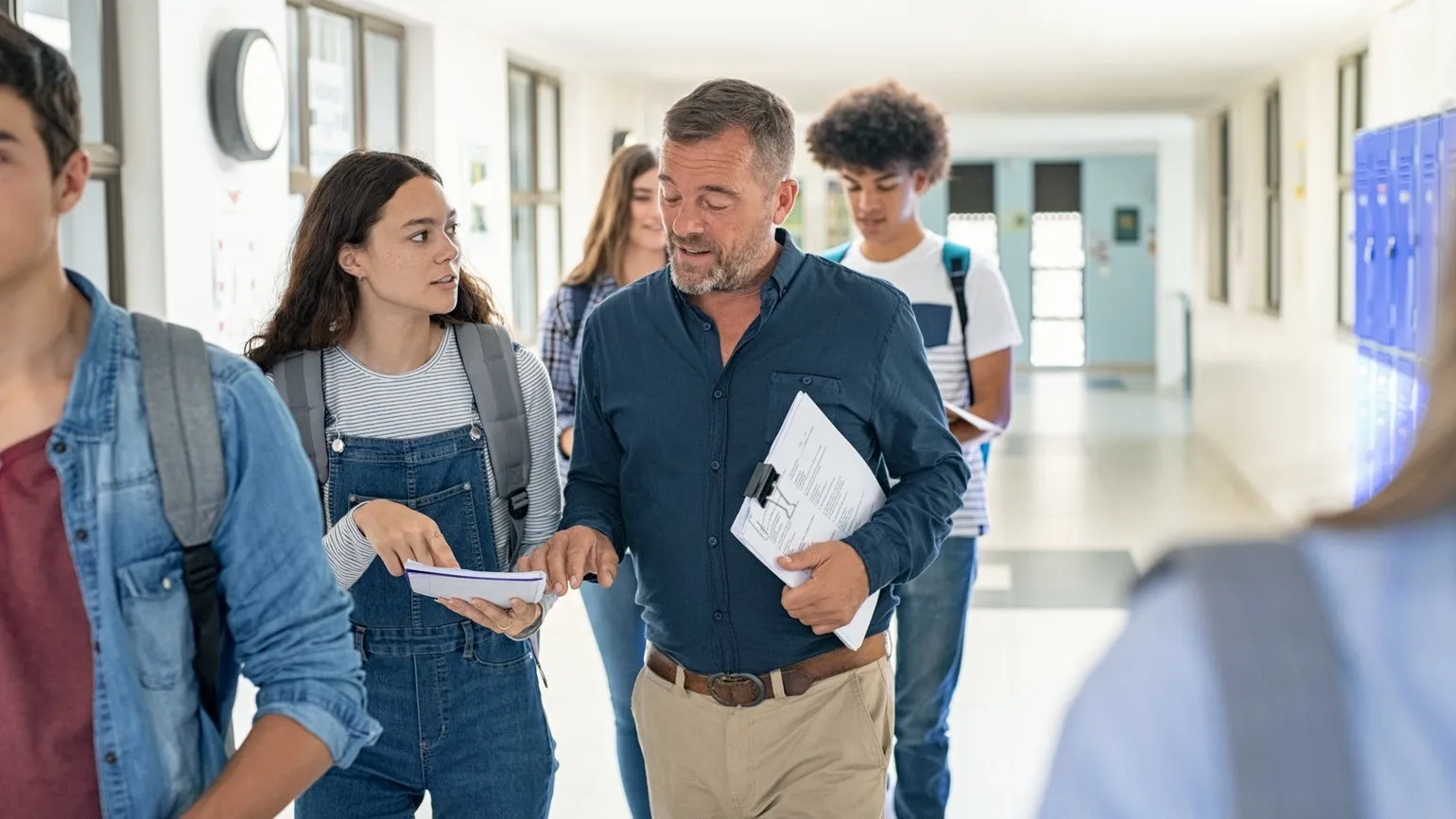
Each type of education covers several levels, which will be discussed below.
General Education
General education develops the fundamental knowledge necessary for a successful life. It covers a wide range of subjects and skills, including mathematics, language and literature, natural sciences, social studies, as well as the basics of physical education and art. This knowledge helps develop critical thinking, analytical abilities, and communication skills, which are important aspects of personal and professional growth. General education also promotes social adaptation and cultural development, allowing each individual to better understand the world around them and interact effectively with it.
- Preschool Education. This stage begins in the first years of a child's life and lasts until they are seven years old. Preschool education, according to the law, includes the development of physical, intellectual, moral, and personal qualities, as well as preparation for the next levels of education.
- Primary General Education (Grades 1–4). This stage lasts four years, during which children must master reading, writing, arithmetic, behavioral culture, and basic self-control skills in order to continue their studies.
- Basic general education (grades 5–9). This is obtained in high school over the course of five years. At this level, students must master the fundamentals of science, develop their inclinations and interests, and the ability to self-determination.
- Secondary general education (grades 10–11). Secondary general education is obtained in high school over two years. At this stage, they develop creative potential, interest in knowledge, and develop skills for independent study, continuing education, and starting a career.
Rework the text, keeping the main theme. Conduct SEO optimization and add the necessary information. Avoid using emoticons and unnecessary characters. Do not create sections with numbers or symbols.
Read also:
Big recess on Zarechnaya Street: adult education in Soviet schools
Big recess took place in Soviet schools on Zarechnaya Street, which became a symbol of the educational process for adults. Not only children studied here, but also people of all ages, striving to gain knowledge and master new professions. Adult education in the USSR was an important part of the system, allowing people to develop and improve their skills.
Soviet schools offered a variety of adult education programs, including evening classes and advanced training courses. This allowed people working in manufacturing or other fields to combine work with study, which contributed to their personal and professional growth. It is important to note that such initiatives were aimed at creating a literate and educated society.
Big recess on Zarechnaya Street symbolized not only rest and communication, but also an opportunity for adults to learn, exchange experiences, and develop their skills. Educational institutions actively supported this initiative, creating comfortable conditions for all who wanted to study at any age. Thus, Soviet schools on Zarechnaya Street became places where education and self-improvement were accessible to everyone.
Vocational Education
Vocational education in Russia is divided into two main levels: secondary vocational and higher vocational education. Secondary vocational education includes programs that provide the specialty and qualifications necessary for work in various fields. Higher vocational education offers deeper knowledge and skills in a specific field, providing opportunities for further career advancement and scientific research. Both levels of education play a key role in developing qualified specialists capable of meeting the needs of the labor market. A variety of educational institutions and programs allows everyone to choose the most suitable path to achieve their professional goals.
- Secondary vocational education (SVO);
- Higher education (HE).
Secondary vocational education (SVO) can be obtained in colleges, technical schools, and vocational schools. Students can enroll there after both the ninth and eleventh grades. SVO is divided into two main areas: the training of skilled workers and employees, and the training of mid-level specialists. The main goal of SVO is to prepare professionals who do not require in-depth academic preparation to perform their job duties. The duration of study is from two to five years, depending on the time of admission, the chosen specialty, and the form of study. Obtaining SVO opens up many opportunities for employment and career advancement.
Higher education in Russia is provided by institutes and universities that train highly qualified specialists for various sectors of the economy. The country has a two-tier higher education system based on the Bologna process. This structure includes bachelor's and master's degrees, which allows students to acquire in-depth knowledge and skills that meet the modern requirements of the labor market. Thus, graduates have the necessary competencies for a successful career in their professional fields.
- Bachelor's degree (study lasts four years);
- Master's degree (study lasts two years).
Domestic universities offer specialist degree programs, which last five years and are a legacy of the Soviet education system. A specialist degree is equivalent to a master's degree, but specialist graduates do not have the right to free admission to a master's degree program, unlike bachelor's degree graduates. There are certain exceptions, which are discussed in detail by lawyers in responses to relevant questions.
Russia is currently undergoing a reform of its national higher education system, moving away from the Bologna process. The updated structure of higher education will retain bachelor's, specialist, and master's degrees, but the number of specialist programs will increase, particularly in the area of training specialists necessary for the technological development and modernization of the Russian economy. This applies primarily to engineering and other technological specialties. A corresponding draft law has currently been prepared, which will contribute to improving the quality of education and meeting the modern requirements of the labor market.
According to the new draft law, the specialist degree will be distinguished as a separate level of education, distinct from the master's degree. This change emphasizes the uniqueness of the specialist degree and its importance in the higher education system, providing students with the opportunity to study their profession in depth.
There is a third level of higher education - postgraduate, which is also known as postgraduate or postgraduate. This level of training for highly qualified personnel will be the fourth after the reform, when the specialist degree becomes an independent level. Postgraduate education includes programs such as doctoral studies and residency, which contribute to the deepening of knowledge and the development of professional skills. These programs are aimed at training specialists capable of conducting scientific research and providing highly qualified medical care.
- Postgraduate study (in military or departmental educational institutions it is called adjunctura) is training to obtain a candidate of science degree.
- Residency (for doctors) is training to obtain the right to practice medicine.

Read also:
The question of whether a college degree is necessary for a successful career remains relevant in modern society. On the one hand, having a degree can open doors to prestigious vacancies and increase your chances of finding employment. Many employers still view a degree as confirmation of a candidate's qualifications and professional skills.
On the other hand, with the rapid development of technology and the emergence of new professions, practical experience and skills are becoming no less important than formal education. Many companies are beginning to pay attention to applicants' portfolios and real-world achievements, not just their diplomas. There are also many online courses and certificates that can demonstrate competencies and a willingness to learn.
Thus, a college degree can be an important, but not the only factor for achieving career success. It is important to combine theoretical knowledge with practical skills and constantly develop in your field.
Continuing Education
Continuing education is divided into two levels. The first level includes advanced training courses, seminars and trainings that help professionals improve their skills and knowledge in a specific field. The second level is programs that provide the opportunity to obtain new professions or specialties, as well as in-depth study of certain topics. Both levels of continuing education are important tools for career growth and development, allowing people to adapt to the rapidly changing demands of the labor market and increase their competitiveness.
- Continuing education for children and adults. It includes two types of educational programs. The first is general development programs for children and adults, these include training in circles, sections, and interest clubs. The second is pre-professional programs, they are only for children. They are implemented in music, art and sports schools.
- Continuing professional education (DPO). This includes advanced training (that is, moving to a new professional level and acquiring new skills in an existing specialty) and professional retraining (obtaining a new specialty). Graduates and students of colleges and universities can receive such education.
Vocational Training
Continuing vocational education plays an important role in a person's professional development, satisfying both career and educational needs. In contrast, vocational training focuses exclusively on the acquisition of new professional competencies for workers and employees. This training is aimed at developing specific skills necessary to improve work efficiency and meet modern market demands.
- Retraining is for people with a blue-collar or white-collar job to acquire a new profession or a new position.
- Advanced training is for people with a blue-collar or white-collar job to gain new knowledge and skills in their existing specialty.
The range of specialties available for vocational training is limited to a specific list. This list includes such professions as welder, machinist, conductor, laboratory technician, and operators of various types of equipment. Vocational training in these specialties allows you to acquire the necessary skills and knowledge, which significantly increases your chances of successful employment. Therefore, choosing one of these professions can become a reliable foundation for career growth in in-demand industries.

Read also:
Dreaming of changing professions and looking for free ways to retrain? There are many resources and opportunities. First, pay attention to online courses and platforms offering free educational materials. Websites like Coursera, edX, and Khan Academy offer courses in a wide variety of fields. It's also worth exploring local educational institutions, which may offer subsidized or free retraining programs. Don't forget about webinars and workshops, which are often led by professionals in their field. Social media and professional communities can be a great source of information about such events. Also, consider volunteering or internships that allow you to gain practical experience in a new field. This will not only help you learn the necessary skills but also expand your network. Also, explore opportunities for grants or training subsidies from public and private organizations. Professional associations and foundations often offer financial assistance for those looking to change careers. Thus, there are many ways to retrain for a new profession for free. The key is to take the initiative and actively seek out suitable options.
Where does online courses fit into this system?
Online education is a learning format that provides flexibility and accessibility. There are many types of online courses, which can be classified according to various criteria. In most cases, they relate to supplementary education, including professional courses aimed at training specialists in specific fields, and general development courses that cover the school curriculum or adult interests. These courses do not provide professional qualifications, but allow you to expand your knowledge and skills. Online learning is becoming increasingly popular due to its convenience and the ability to study anywhere and anytime.
Currently, there are many secondary and higher vocational education programs that are fully implemented online. These programs can also be classified as online courses. Online education offers flexibility and accessibility, allowing students to study at their own pace and in a comfortable environment.
It's important to note that not all forms of learning can be considered educational. There is also the concept of outreach, which can be implemented through online courses. However, unlike educational programs, outreach does not include a curriculum, class schedule, or methods for assessing knowledge or skills. The distinction between educational and outreach activities is sometimes unclear. If, upon completion of the course, knowledge is tested and a diploma is issued, then this is a clear sign that we are talking about education, and not simple enlightenment.
Reworked text for SEO:
Read also:
- Why are more and more people getting professions through online courses and not at universities?
- How do college graduates find employment and how much do they earn?
- Why are high school graduates increasingly choosing colleges?