Contents:

Learn: Online Tutor
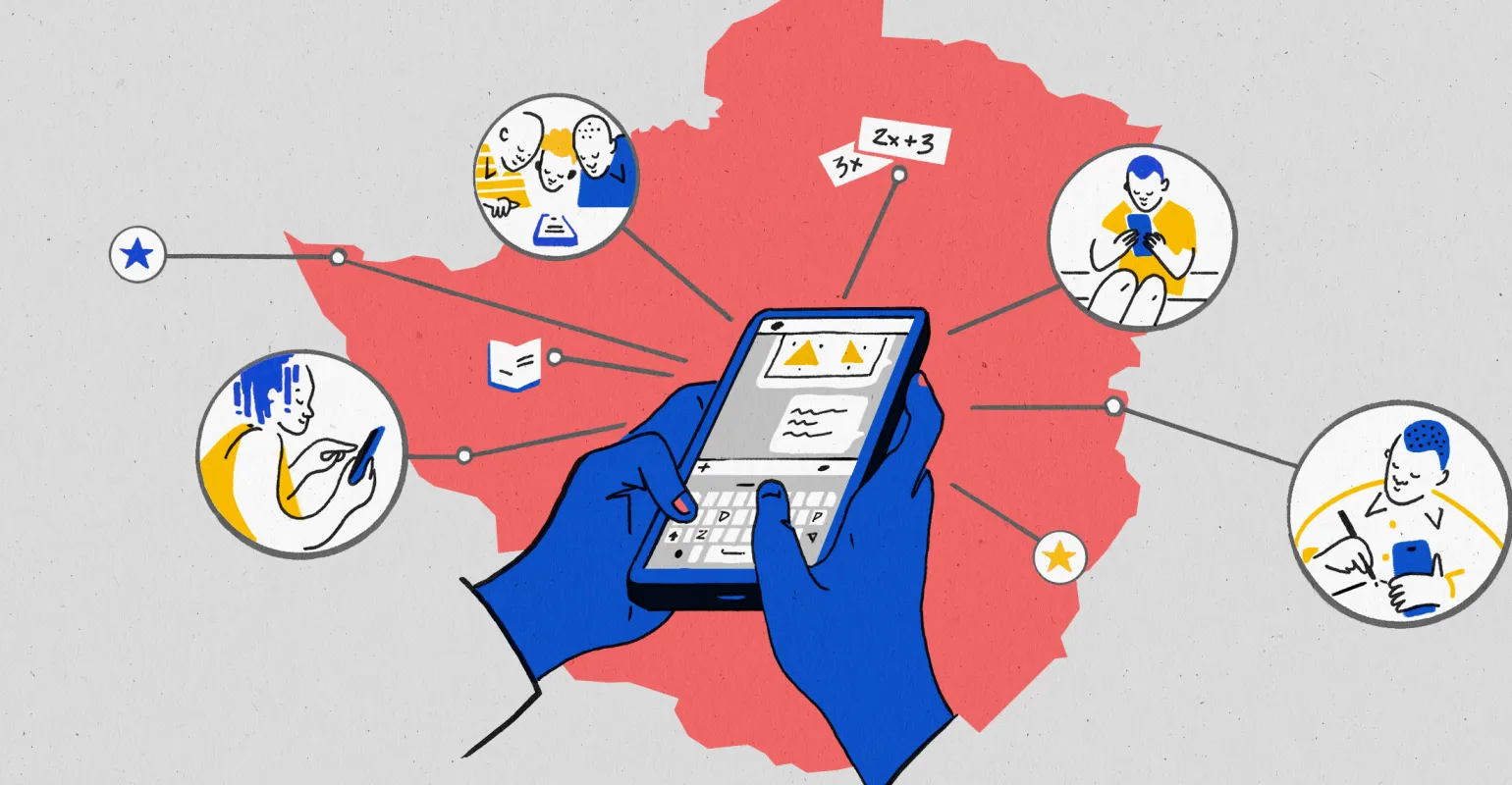
Learn MoreMaxwell Chimedza, a young tutor from Zimbabwe, doesn't own a computer and doesn't know how to use one. However, he does have a phone with 32 gigabytes of memory and the WhatsApp app installed. These tools are quite sufficient for preparing his students for difficult school exams. Maxwell's story, published in the South African publication Sowetan Live, demonstrates how modern technology can support the educational process even in resource-limited settings.
Background
There are 136,000 professional teachers in Zimbabwe, but Chimedza is not one of them. His parents' poverty was a serious obstacle to obtaining a specialized education, as they did not have the means to attend university. Despite excellent results in school and passing 14 exams, Chimedza faced high unemployment, which remains a major problem in the country. The inability to obtain an education or find decent work prompted Chimedza to start his own business, which became the only way for him to provide for himself and realize his ambitions.
As someone who was unable to go to university due to financial difficulties, I realized that I have the knowledge and skills that can help other students achieve high results in exams. In 2019, I launched classes on WhatsApp, and in 2020, with the onset of the pandemic, they began to actively develop.
The app was not chosen by chance—it is the most popular in Zimbabwe, accounting for half of the country's internet traffic. For Zimbabweans, WhatsApp serves not only for communication but also for sharing news and advertising. Recently, the app launched an interactive series that has already attracted the attention of many users.
Practice
Chimedza created separate chats for educational classes in WhatsApp. He added educational materials, organized the class schedule, and prepared practice tests to assess the students' knowledge. This allows for effective interaction with students, improving the learning process and providing access to the necessary resources.
In 2021, children from various regions of the country entered Chimedza's class, and their exam results showed excellent achievements. 64 students successfully passed the final exams, which amounted to a 100% pass rate. Of these, 41 students received excellent grades. According to the teacher, just three months are enough to properly prepare students. This approach to teaching has proven highly effective and produces outstanding results.
Chimedza's success has drawn attention to his work as a "non-professional" teacher. His results are comparable to those of students in prestigious private schools, while the costs are significantly lower. Tuition for one subject costs only ten dollars a month. Despite this, Chimedza spends $40 on mobile data, which underscores his serious approach to teaching and the use of modern technology.
In Zimbabwe, even small amounts of money can be considered a luxury for many residents, as not everyone has access to smartphones or the internet. This also explains the low number of students in educational institutions compared to traditional levels. When the pandemic began and schools in Zimbabwe closed, the country's authorities, with the support of UNICEF, began broadcasting lessons on the radio. This approach proved more accessible to the population than online learning and helped partially compensate for significant gaps in the educational process.

Scaling
Maxwell Chimedza stresses that the Zimbabwean government should seriously consider scaling up his experience related to WhatsApp schools. These schools don't require building maintenance, uniforms, or textbook printing, significantly reducing the financial burden. This could make education more accessible for local children. UNESCO also noted an important aspect of virtual lessons: they provide an opportunity for girls, who in Zimbabwe are often victims of early marriage and violence, to continue their education. Thanks to WhatsApp and similar platforms, approximately six thousand schoolgirls were able to receive education even during the pandemic. Supporting such initiatives could significantly change the country's educational landscape, providing greater access to knowledge for vulnerable groups. WhatsApp is finding use in educational institutions around the world. In Lebanon, for example, the messaging app was actively used to organize learning after the explosion in the Beirut port. Similarly, in India, WhatsApp became an essential tool during school closures caused by air pollution. The platform enables fast and effective interaction between teachers and students, which is especially relevant during a crisis. In Mexico, school tutors use specialized apps to effectively communicate with students and their parents. A separate chat is created for each student, which allows for an individualized approach and prompt resolution of any issues that arise. Similar studies conducted in 2017 in Turkey confirmed the effectiveness of using WhatsApp in the educational process, particularly in literature classes. This messenger serves as an additional tool that promotes active student engagement and improves the quality of learning.
In this study, 30 schoolchildren aged 15-16 received short informational texts during lessons via WhatsApp. The texts ranged from 19 to 81 words in length and were accompanied by topic-relevant images. All materials were developed by teachers in accordance with the core curriculum. The results of pre- and post-testing of the experimental participants, as well as the control group, which did not use WhatsApp in their studies, showed that the experimental group's academic performance significantly increased compared to the control group. These data confirm the effectiveness of using instant messaging in the educational process.
Research based on participant surveys shows that sending messages can significantly improve the learning process, even if students simply follow posts without active participation. Interestingly, messages with images prove more effective than simple text messages. Participants also noted that distracting messages unrelated to the topic of study are perceived as an irritant. Therefore, if you decide to implement this practice in your educational process, it is important to establish clear rules in advance to avoid unnecessary chat flooding and focus on educational content.
Read also:
- What good things we have learned from the terrible distance learning
- How teachers were helped in different countries during the pandemic
- How school education was saved in different countries
- "We are the anti-school." History of unusual courses to prepare for the Unified State Exam
Online Tutor
It doesn't matter what you teach - English, CrossFit, yoga, vocals, or culinary arts. Everything you used to teach in schools, studios, and offices can now be taught online. Promote your knowledge and skills and earn money from anywhere in the world.
Find out more