Contents:

Learn: Educational Methodist
Learn MoreIn this article, we will cover the key aspects of the topic so that you can gain a deeper understanding of its essence. We will discuss the basic principles, important factors, and current trends that will help you in further research and decision-making. Attention will be paid to both the theoretical foundations and practical recommendations, which will provide a comprehensive approach to the topic under study. Read on to get a complete understanding and useful tips.
- What is a teaching method and how it differs from methodology, methodology, and teaching techniques;
- What are the classifications of teaching methods;
- What modern teaching methods are useful to know;
- How to choose a specific teaching method.
What is a teaching method?
There are many definitions of teaching method in pedagogy. Yuri Babansky, a renowned Soviet educator, described it as a method of organized, interconnected activity between teacher and students, aimed at solving the problems of education, upbringing, and development during the learning process. Isaac Lerner, also a Soviet and Russian educator, offered his own definition of this concept in his book, "Didactic Foundations of Teaching Methods." Teaching methods play a key role in the educational process, facilitating the effective acquisition of knowledge and the development of necessary skills in students. It is important to consider the diversity of methods and their adaptation to various learning situations, which allows for the optimization of the learning process and the achievement of high results.
A teaching method is a system of consistent teacher actions aimed at organizing the student's cognitive and practical activity. This system ensures the effective acquisition of educational material and contributes to the achievement of learning goals. It is important that teaching methods be adapted to the needs and characteristics of students, which helps improve the quality of the educational process and ensure a deeper understanding of the subject.
Definitions of a teaching method may vary in detail, but they share common key aspects. A teaching method involves organized interaction between teacher and student, aimed at achieving educational goals. This structure ensures the effective acquisition of knowledge and skills, facilitating the development of the learning process. Teaching methods are constantly evolving, reflecting changes in the social, cultural, and technological context. In the early stages of human history, imitation dominated: children in primitive societies observed elders and thus mastered skills necessary for survival, such as making tools and foraging for food. The development of language made oral learning possible, significantly simplifying the transmission of knowledge from generation to generation. The introduction of writing and mass printing long established book reading as one of the primary methods of education. Modern advances such as computers and the internet have also significantly changed approaches to learning, opening up access to information and new educational resources. These transformations demonstrate the importance of adapting to new conditions to effectively teach and learn in a rapidly changing world.
Philosophers have sought and applied effective teaching methods for centuries. Socrates pioneered the heuristic method, which suggests that a teacher not simply imparts knowledge but, through structured conversations, facilitates independent student acquisition. In the 16th century, the French humanist Michel de Montaigne emphasized the individualization of learning, encouraging curiosity and independent exploration of natural phenomena. These approaches remain relevant in modern education, emphasizing the importance of active participation of students in the learning process.

Read also:
Why is the sea polluted? Phenomenon-based learning as a way to address real-world environmental issues
Marine pollution is an increasingly pressing issue requiring serious attention. Phenomenon-based learning helps students understand the causes and consequences of this phenomenon and develops skills to address real-world environmental issues. This approach enables students to explore environmental issues, analyze data, and propose effective solutions.
Using examples of marine pollution, students can explore the impact of human activity on ecosystems and develop critical thinking and creative problem-solving skills. This learning not only increases environmental awareness but also fosters an active commitment to environmental protection.
Thus, phenomenon-based learning provides a powerful tool for shaping a new generation of environmentally conscious citizens prepared to address the challenges posed by marine pollution.
Methods, methods, methodology, techniques—what's the difference?
Teaching methods and techniques are two different concepts that are often confused. Method is a broader concept and includes various elements, such as methodological or didactic techniques. For example, a lecture is a teaching method, while a teacher writing key points on the board and a student taking notes are specific techniques used within this method. A proper understanding of the differences between methods and techniques is important for an effective learning process and improving the level of material acquisition.

The same techniques can be used in Various teaching methods. At the same time, different teachers may use different techniques and combinations of them within the same methods. For example, working with a book may include techniques such as reading aloud, memorizing the text, searching for answers to questions, describing illustrations, and others. This diversity of approaches allows for the adaptation of the learning process to the needs of students and improves their understanding of the material.
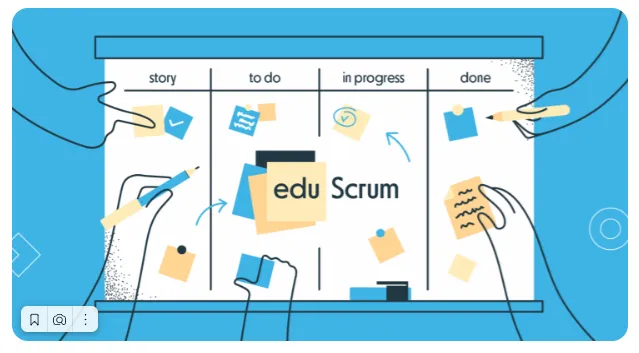
Method is closely related to concepts such as methodology and methodology. Unlike a method, which may include various techniques, a teaching methodology is a set of clearly defined algorithms and rules. The same method can be applied to different educational concepts, while a methodology is based on a specific theoretical framework. Methodologies often have their own authorial origins, such as Robert Gagné's nine teaching events or Willy Wijnands' eduScrum. These unique approaches demonstrate how theoretical foundations can be implemented through practical teaching methods, which contributes to more effective knowledge acquisition.
Methodology, according to the Philosophical Encyclopedic Dictionary, is a system of principles and methods for organizing theoretical and practical activities, as well as the doctrine of this system. In the context of education, methodology covers not only methods and techniques, but also other aspects of pedagogical and educational activities. For example, flipped learning is a striking example of a methodology that transforms traditional approaches to teaching, focusing on the active involvement of students in the learning process and independent work. Methodological approaches in education play a key role in the formation of effective teaching strategies, contributing to the improvement of the quality of the educational process.
Classification of Teaching Methods
Currently, pedagogy lacks a universal approach to the classification and systematization of teaching methods. This is due to the fact that the learning process is a complex system of interconnected elements. Furthermore, both the teacher's perspective and the students' perceptions must be considered. This multifaceted approach to teaching emphasizes the importance of individualizing methods and adapting them to different educational contexts.
In organizing the wide range of methods, researchers employ various approaches to classification. The choice of systematization bases may depend on the specifics of the research area, the research objectives, and other factors. This allows for a clearer and more understandable structure, facilitating the analysis and comparison of methods.
- By didactic objectives: there are methods of acquiring knowledge, developing skills and abilities, applying knowledge, creative activity, consolidating and testing knowledge, skills and abilities. This concept was proposed by Mikhail Danilov and Boris Esipov.
- By the source of information transfer: methods are verbal (lecture, discussion, working with a textbook), visual (working with illustrations and diagrams, watching videos) and practical (solving problems, laboratory work, didactic games). Evgeny Golant, Mikhail Verzilin and other teachers worked on this classification.
- By the nature of students' cognitive activity: informational-receptive method (when the teacher transmits information to students), reproductive (the student performs actions following the teacher's example), problem-based presentation method (the teacher formulates the problem and shows logical steps to solve it), heuristic (the teacher breaks the problem down into separate tasks, and the students solve them) and research (students seek solutions to problems that are new to them). The authors of this approach, which reflects the development of student independence, are Isaac Lerner and Mikhail Skatkin.
- According to the logic of presentation and perception of information: inductive methods (when the teacher first presents specific facts and then voices general propositions, or students solve problems to arrive at a general formula) and deductive methods (students move from abstract concepts or general laws to specific consequences, from theory to problem solving). This classification was developed by Anatoly Aleksyuk.
Yuri Babansky adhered to a holistic approach to education and developed his own system for classifying teaching methods. Its concept combines various existing classifications and divides the methods into three main groups.
- Methods of organizing and implementing educational and cognitive activity (verbal, visual and practical, inductive and deductive, reproductive and problem-searching, methods of independent work).
- Methods of stimulating and motivating educational and cognitive activity (methods of engaging and forming cognitive interest, as well as methods of encouragement and censure - to develop responsibility for the learning outcome).
- Methods of monitoring and self-monitoring the effectiveness of educational and cognitive activity (methods of oral and written control, laboratory tests, computer tests).
The teaching methods mentioned earlier are universal for all academic disciplines. However, in practice, they are adapted depending on the specific subject. For example, according to Lerner and Skatkin's classification, the reproductive method may include both repeating phrases in a foreign language under the guidance of a teacher and performing a chemical experiment on a sample. This flexibility allows the methods to be effectively applied in different contexts and promotes a deeper understanding of the material.

Read also:
Scaffolding: Understanding Scaffolding Theory and Its Application in Teaching
Scaffolding, or scaffolding theory, Scaffolding is a pedagogical approach that helps students acquire new knowledge and skills. This method is based on the idea of providing temporary support that is gradually withdrawn as students become more independent and confident in their abilities.
The main goal of scaffolding is to create optimal learning conditions, allowing students to develop their skills and confidence. Applying this theory to the educational process can significantly improve the effectiveness of learning, especially in complex subjects.
To successfully use scaffolding, it is important to consider the individual needs of each student. Teachers can provide various forms of support: from clarifying complex concepts to creating structured tasks that help students achieve their goals step by step. Gradually reducing support allows students to become more independent and confident in their knowledge.
The introduction of scaffolding into the educational process promotes a deeper understanding of the material, the development of critical thinking, and improved learning outcomes. By using this approach, teachers can create a more interactive and effective learning environment where every student can succeed.
What modern teaching methods are useful to know?
Pedagogy is constantly evolving, introducing new methods and approaches to teaching. Modern methods differ from traditional ones in that the student takes a more active and central role in the educational process. These are active learning methods that involve the student not just listening to the teacher or reading a textbook, but actively participating in cognitive activity. Such approaches promote the development of soft skills and the integration of knowledge and skills from various disciplines, which makes learning more effective and practical. Active participation of students in the learning process allows them not only to assimilate the material but also to apply it in real-life situations, which significantly improves the quality of education.
Modern methods of teaching children and adults are becoming increasingly diverse and effective. It is important to pay attention to approaches that promote high-quality acquisition of knowledge and the development of skills. One such method is active learning, in which students actively participate in the process rather than being passive listeners. This may include group discussions, projects, and hands-on activities.
Furthermore, the use of technology in education is also gaining popularity. Online courses, learning apps, and interactive platforms allow students to master material at their own pace and format. Gamification of the learning process, using game elements, helps increase motivation and engagement.
Another relevant method is individualization of learning, where programs are tailored to the needs and knowledge level of each student. This allows for more effective achievement of goals and improved results.
Finally, it is important to note the importance of emotional intelligence in learning. Developing communication, collaboration, and self-regulation skills helps create a comfortable learning environment and improve the quality of learning. These modern methods are worth considering for both children and adults striving for personal and professional development.

Read also:
Creating student-centered curricula is a key aspect of effective learning. Here are eight ways to achieve this goal.
First, it is important to consider the interests and needs of students. Conducting surveys and questionnaires will help identify what interests students and what topics they find relevant.
Second, it is necessary to adapt the course content to different learning styles. Students can absorb information in different ways, so it is worth including visual, auditory, and kinesthetic elements in the program.
Third, actively use technology. Interactive platforms and online resources make learning more accessible and interesting for students.
The fourth way is to involve students in the curriculum planning process. This can be done through group discussions, where students can share their ideas and preferences.
The fifth way is regular feedback. Teachers should actively listen to students and take into account their opinions on what works and what does not.
The sixth way is to create a safe and supportive learning environment where students feel comfortable expressing their thoughts and ideas.
The seventh method is the integration of interdisciplinary approaches. Linking different subjects helps students see the practical application of knowledge.
Finally, the eighth method is the constant updating of educational materials. This will allow the program to remain relevant and meet modern requirements and challenges.
Creating a student-centered curriculum requires a deep understanding of their needs and active involvement in the educational process.
Project-based learning differs significantly from traditional forms of learning, as students independently formulate goals and determine the paths to achieving them. They search, select, summarize, and analyze the necessary information, while the teacher acts as a consultant. Successful project implementation requires a practical task or problem, the study of which leads to the design of a solution and the creation of a final product, most often presented in the form of a presentation. Completion of the project includes its defense. There are many types of projects that help develop students' critical thinking, creativity, and teamwork skills. Research-based projects (resulting in the confirmation or refutation of a theory); Practice-based projects (resulting in a proposed solution to a problem); Creative projects. Project-based learning promotes effective knowledge acquisition and the development of practical skills. This approach encourages student participation in the learning process, allowing them to work on real-world projects. Students not only study theory but also apply it in practice, solving real-world problems. Project-based learning fosters critical thinking, creativity, and teamwork skills, which are essential for training specialists in today's environment. The introduction of this method into the educational process promotes a deeper understanding of the subject and increases student motivation.
- to teach schoolchildren or adult students to independently achieve their intended goal and plan their progress toward it;
- to develop their ability to work with information;
- to apply acquired theoretical knowledge to practical tasks;
- to develop skills in conducting research, transferring and presenting acquired knowledge and experience.
Work on the project can be carried out both individually and in a team format. Team collaboration promotes the development of communication and cooperation skills in students. The teacher plays a key role in coordinating the work of the group, helping to distribute roles, develop an action plan, and ensure effective interaction between participants. This approach not only improves the quality of project completion but also develops important competencies in students that will be needed in the future.
Learning new topics and current issues is an important aspect of personal and professional growth. Regular reading helps broaden your horizons, develop critical thinking, and deepen your knowledge in various fields. We encourage you to explore additional materials that will help you better understand the topics covered and improve your skills. Reading specialized literature and articles helps strengthen your competencies and improve your qualifications. Don't miss the opportunity to enrich your knowledge and improve your competitiveness in the job market.
eduScrum is a methodology based on Scrum principles, adapted for the educational environment. The primary goal of eduScrum is to increase student engagement in the learning process and improve their teamwork skills. This methodology enables students to actively participate in their learning by setting clear goals and delegating tasks.
The application of eduScrum in education involves organizing the learning process in sprints, where each group of students works on projects divided into small stages. At the end of each sprint, reflection is held, allowing for progress analysis and adjustments to future work.
The methodology also emphasizes interaction between students and teachers, which promotes a more open and productive classroom atmosphere. EduScrum helps develop skills such as critical thinking, communication, and self-management, making students better prepared for the demands of the modern labor market. Implementing eduScrum in educational institutions requires faculty preparation, but the results generally justify the effort. Institutions using this method report significant improvements in student performance and motivation. Depending on the subject taught, a case can be legal, entrepreneurial, medical, social, historical, or related to practical work tasks. There are many variations. Cases are typically based on real-life events, representing complex and challenging situations. Students are tasked with researching and analyzing these situations to develop relevant solutions, as if they were happening in the present. Through case studies, students, both children and adults, learn to apply theoretical knowledge in practice, correctly evaluate facts and compare them with their own knowledge, and argue their positions. This approach promotes the development of critical thinking, analytical skills and teamwork. The case method is an effective tool for gaining a deeper understanding of the educational material and preparing for real challenges in various fields.

Cases are often considered in Situations where there is no clear solution. For example, the same facts may be interpreted differently depending on the legal perspective, allowing different court cases to reach different decisions based on the strength of the parties' arguments. Similarly, identical symptoms may lead to different medical diagnoses and treatment protocols. Such diverse approaches emphasize the importance of individual analysis and assessment of the specific circumstances of each situation.
Analyzing a student's reasoning when solving a case allows the teacher to evaluate their logical thinking, ability to utilize the learning material, and correct understanding of the topic. This is an important aspect of the educational process, as it demonstrates the level of knowledge and skill acquisition.
Cases can be either individual or group. Individual cases focus on the user's personal needs and preferences, allowing for a deeper understanding of their experiences and expectations. Group cases, on the other hand, analyze the interactions of several participants, helping to identify common trends and preferences within the group. Both types of cases have their value and can be used to improve the effectiveness of products and services, as well as to enhance user experience.
Text optimization for SEO includes the use of keywords, improving readability and structuring. It is important to create meaningful and useful content that will be interesting to users and meet their needs.
It is recommended to use keywords related to the main topic to increase the visibility of the page in search engines. You should also pay attention to headings and subheadings to make the information easier to perceive.
Don't forget about the importance of unique content. Write original texts that will attract attention and retain the interest of readers. Include internal links to other pages of your site to improve navigation and increase user time on the site.
Reading is an important part of obtaining information, so try to write in an accessible language. Make sure your content answers the questions and meets the needs of your target audience.
It is also helpful to add links to relevant sources or articles that may be of interest to your readers to create additional opportunities to interact with your content.
It is important to remember that SEO is not only about keywords, but also about creating valuable information that will be useful to your users. Read also:
Constructivism in teaching, despite its popularity among educators and researchers, has not become a widespread approach. The main reasons for this are rooted in a number of factors, including the traditions of the educational system, a lack of teacher training, and limited resources.
Firstly, educational institutions often adhere to traditional teaching methods based on lectures and memorization of information. These approaches are deeply rooted in the system and are quite difficult to change. Constructivism, on the other hand, requires active student participation, which is not always possible in conditions of large classes and lack of time.
Secondly, many teachers do not have sufficient training to implement constructivist methods. The need for professional development and training for teachers remains relevant. Without the appropriate knowledge and skills, it is difficult to effectively implement the principles of constructivism in practice.
Furthermore, the implementation of constructivism requires significant resources. This includes the development of new teaching materials, technological equipment, and support from the administration. Educational institutions often face budget constraints, which makes it difficult to implement such changes. Thus, although constructivism offers innovative approaches to learning, its widespread adoption is hampered by deep traditions, a lack of teacher training, and limited resources. The group discussion method is an effective way to solve problems, challenges, or discuss topics that allows participants to freely express their ideas. The teacher or moderator begins the discussion by setting the main topic and explaining the goal, such as collecting the maximum number of ideas in a limited time, such as 15 minutes. It is important to establish rules: ideas are not to be rejected or criticized during the discussion, while allowing others to develop and complement their ideas. All ideas expressed are recorded and then analyzed to select the best solution. This approach fosters creativity and engagement, and enables the development of innovative solutions.
This method promotes creativity, improved concentration skills, effective group interaction, and the analysis of one's own and others' ideas. It is an active learning method, allowing participants to become more deeply immersed in the process and improve the quality of information absorption. This method is beneficial not only in learning but also in professional activities, fostering team spirit and improving communication.
This method addresses key pedagogical objectives. It enables the effective organization of the educational process and promotes the development of essential skills in students. The method helps deepen understanding of the material, develops critical thinking, and encourages active student participation. It also fosters independence and responsibility in students, an important element of modern education. Using this approach makes learning more interactive and adaptive to the needs of each student, which in turn improves the acquisition of knowledge and its practical application.
- student cognitive activity and interest are stimulated;
- students actively learn the educational material;
- theory is linked with practice;
- experience in creative activity in solving non-standard tasks and problems is formed;
- intellectual abilities and quick thinking processes are developed;
- students develop communication skills for interaction in a group and experience in collective activities.

Read also:
The student motivation model developed by John Keller is an effective tool for increasing student interest and engagement in the learning process. This model is based on four key components: attention, significance, confidence, and satisfaction. Each of these elements plays a vital role in shaping student motivation.
Attention involves using various methods and techniques to engage students in the learning material. Significance emphasizes the importance of the knowledge and skills students acquire for their future lives and careers. Confidence refers to students' belief in their abilities and capabilities to successfully master the material. Finally, satisfaction refers to the sense of success and accomplishment students experience as they progress through the learning process.
This model helps educators create a more motivating learning environment, which, in turn, promotes deeper learning and improved academic performance. Using Keller's model, teachers can design lessons and curricula that most effectively meet the needs and interests of students, making learning more productive and engaging.
A mind map is a method of visualizing concepts, themes, or problems by allowing the connections between their elements to be clearly seen. A central theme or problem is located at the center of the map, with branches containing related ideas extending from it. This approach is useful for explaining complex topics to students and for collaborative or independent student work. By creating mind maps, students develop skills in collecting, analyzing, and organizing information, which facilitates deeper understanding and improves retention. Mind maps can be applied in a variety of fields, including education, business, and personal development, making them a versatile tool for organizing thoughts and ideas.
Role-playing is an effective teaching method that allows students to learn from personal experience through simulated situations. Students assume various roles, and the teacher creates a game-like environment, developing the plot and controlling the game. This approach provides an opportunity to safely practice various behavioral and interaction scenarios and develop practical skills and abilities. Role-playing games are widely used in educational institutions, from preschools to business training, which testifies to their versatility and effectiveness in training.

A business game is a unique format that combines case analysis and role-playing. This method immerses participants in a simulated professional situation, assuming specific roles. The main goal of the business game is to find a solution to a specific problem, allowing participants to effectively apply theoretical knowledge in practice. This approach promotes the development of analytical thinking, teamwork and decision-making skills, which makes the business game an indispensable tool in training and professional development.

Reworked text:
Also study:
"There are no errors in this game": an interview with a specialist in the field Game-based pedagogy. In this discussion, we will discuss key aspects of game-based pedagogy, its importance in children's learning and development, and the role of play as a tool for increasing motivation and engagement. An expert will share her insights on how games can foster critical thinking and social adaptation. We will also consider how game-based pedagogy can be applied in various educational contexts, creating a safe and stimulating learning environment. There are many original approaches to teaching that can significantly enhance the effectiveness of the educational process. For example, the use of interactive methods helps engage students and make the process more engaging. Project-based learning, in which students work on real-world problems, helps develop critical thinking and teamwork skills. Gamification of education, by introducing game elements into the learning process, promotes motivation and engagement. It is also important to consider individual learning styles, adapting materials to the needs of each student. The use of technology, such as online courses and educational platforms, opens new horizons for knowledge acquisition. These approaches not only make learning more interesting but also promote deeper learning.
- phenomenon-based (Finnish approach);
- interleaving (alternating topics);
- TRIZ pedagogy (helps develop out-of-the-box thinking).
How to Choose Teaching Methods
There are many teaching methods, and experts agree that there are no clearly "good" or "bad" ones. Each method can exhibit varying effectiveness depending on the educational context. This is not to say that innovative approaches are always superior to traditional ones, or that practical learning is always better than theoretical learning. In some educational situations, working with a textbook or a lecture may be more useful than project work or role-playing. It's important to choose the appropriate method based on the learning goals and student needs. Yuri Babansky formulated the principle of optimality in the selection of teaching methods, emphasizing that each method is designed to solve specific pedagogical and educational problems. Therefore, it's crucial for teachers, trainers, and methodologists to understand both the advantages and disadvantages of various methods. This knowledge allows them to be used most effectively, ensuring maximum educational outcomes and achieving learning goals. The correct choice of teaching methods contributes not only to better assimilation of the material, but also to the development of critical thinking and independence in students.

Read also:
Creating a course that will help a novice student achieve professional mastery requires careful planning and a structured approach. It's important to define clear learning objectives and outcomes so students understand what they're expected to master. Start by developing a curriculum that covers all the key topics and skills needed to achieve proficiency. Learning materials should be varied and include text lectures, video tutorials, hands-on assignments, and quizzes. This will help keep students engaged and ensure a deep understanding of the material. It's also important to include interactive elements, such as discussions and group projects, to encourage the exchange of experiences and ideas. Regular feedback is critical to the learning process. Students should receive feedback on their performance and areas for improvement. This will help them stay motivated and focused on achieving their goals. Finally, the course should be tailored to students of varying skill levels. Provide additional resources for those who need more advanced knowledge, and create more challenging assignments for more advanced students. This will ensure an individual approach to each course participant and enhance the overall effectiveness of the training.
When choosing teaching methods, it is important to consider not only the goals and objectives, but also the age and individual characteristics of the students. Teaching children and adults requires different approaches. Psychological factors, the specifics of the curriculum, and the topics also play a significant role. For example, in the humanities, there is more opportunity to discuss problems, while technical subjects may require more structured methods. Group project work is an effective way to develop team skills. It is also important to consider the time investment: the implementation and sustainable use of effective teaching methods requires significantly more time and effort compared to traditional and simple approaches.
When using new and innovative teaching methods, it is important to base your decisions on an evidence-based approach, not on fashion trends. Only those methods whose effectiveness has been proven should be implemented, or innovations should be carefully tested. Historically, there have been cases where popular approaches have failed to prove effective. A prime example is the concept of learning based on learning styles such as auditory, visual, and kinesthetic learners.
Learn more about the world of education in our Telegram channel. Subscribe to stay up-to-date with the latest news, helpful tips, and interesting content!
Reading is an important part of our lives, fostering the development of thinking and broadening our horizons. It not only helps us acquire new information but also improves our communication and critical thinking skills. Books, articles, and research provide the opportunity to delve deeper into various topics and gain new insights. Finding quality content online also plays a significant role in our learning and self-improvement.
In today's world, where information is available in any format, it's important to choose trusted sources. Reading not only entertains but also shapes our worldview, helps us better understand others, and helps us make informed decisions. So, take the time to read and discover new horizons.
- 30 Rules of Learning Psychology That Every Teacher Would Do Well to Know
- Learning to Change: What is Transformative Adult Learning
- Albert Bandura's Social Learning Theory
- Storytelling in Education: Just a Trendy Trick or a Useful Thing?
Educational Programs Methodologist
You will go through the full cycle of creating an educational product from scratch. Learn to design curricula for online and offline courses. You will become a universal specialist - you can launch your own project or get a job as a methodologist in a large company.
Find out more