Contents:
Learn: The Profession of a Methodologist from Scratch to PRO
Learn More
An independent screenwriter and developer of e-courses, working in the field of education since 2012. During this time, over 200 courses have been created from scratch. I am the author of the Nova Academy Telegram channel, where I share my knowledge and experience in the field of online learning and development of educational materials. My goal is to provide quality educational resources that help people develop and achieve success in a variety of fields.
When we open a new book, we have the opportunity to get to know it before we even start reading. We can look at the table of contents, check the page count, and, by comparing it with the font size, estimate the amount of text we will have to cover. Sometimes I simply skim through individual chapters, which helps me get an idea of the content and structure of the book. This preliminary overview allows me to better manage the reading process and plan the time needed to fully immerse myself in the material.
The reader of the book is always aware of how far they have progressed in the text and how much material remains to be covered. This clarity promotes a deeper immersion in the topic being studied, allowing you to avoid distracting thoughts about how much more to read or how interesting the next section will be. A clear book structure maintains motivation and facilitates the learning process, creating confidence in achieving goals.
Imagine starting to read a book about which you know nothing except the title and the blurb. You don't know how many pages it contains; it could be several volumes. The lack of a table of contents is also alarming. This is one thing if you're picking up a gripping detective story, but quite another when it's a book intended not for pleasure but for knowledge, such as a manual or a theoretical textbook. A sense of uncertainty in this case can hinder understanding of the material and reduce motivation to read.
When opening an e-course that lacks well-thought-out navigation elements, learners face the same difficulties as when working with unstructured content. In this context, slide-based e-courses deserve special attention. Effective navigation in such courses is critical to ensuring easy information comprehension and increasing learner engagement. Properly designed navigation elements allow users to easily navigate the course, find the sections they need, and return to previous materials. This, in turn, contributes to better knowledge acquisition and increases the overall effectiveness of learning.
What is course navigation and what are its elements?
To effectively assess the scope of a course and plan training, the user must be able to easily navigate the material and track their progress. Important elements that contribute to this include intuitive navigation, the ability to track progress, clearly structured content, and access to additional resources. These aspects will help the user better understand the course and organize their time for studying.
- Slide numbering or a progress bar (that is, an indicator that displays what percentage of the course has been completed).
- Introductory information about the course and a description of how much time it may take to complete it. This parameter is quite subjective, but it nevertheless sets benchmarks.
- Course map.
The initial two benchmarks are clear, but the course map needs to be explained in more detail. A course map is a structured plan that helps students navigate the material and understand the topics they will be learning. It includes key sections, learning objectives, and the sequence of topics covered. A well-designed course map promotes more effective knowledge acquisition and allows students to prepare in advance for upcoming classes. It also helps instructors organize and monitor the learning process, ensuring maximum learning effectiveness.
What is a Course Map?
A course map is a visual representation of the learning path in an online course and is an essential element of a high-quality educational product. It serves several key functions for students. A course map helps students understand the structure and sequence of topics covered, as well as navigate the course content. Thanks to the visual presentation of information, students can plan their time, track progress, and better understand their achievements. Having a course map helps increase motivation and engagement, as students see what awaits them. Ultimately, a course map makes the learning process more organized and effective.
- Helps you navigate the virtual course space.
Imagine that you need to get from point A to point B. Having a map allows you to plan your journey: choose the optimal route, calculate travel time, and plan stops. Without a map, you will move at random, which will lead to increased stress. A similar situation occurs with learners when an e-course lacks a clear structure. Having structured content in a course reduces stress and eases cognitive load, allowing learners to focus on the learning process and mastering the material. Thus, a properly organized e-course becomes an important tool for enhancing learning effectiveness. Users may wonder: why should they navigate the course structure if the system automatically moves them from one module to the next? Why bother understanding the organization of modules if the risk of getting lost is minimal? Using a travel analogy, one could say that a professional guide plots the route and leads the traveler along. However, not everyone prefers this approach. The ability to navigate the course independently gives users greater freedom and allows them to better control the learning process, adapting it to their needs and preferences. This helps create a more personalized experience and increases engagement with the material. Adult learners are crucially empowered to manage their own learning, which is a key principle of andragogy. If your course structure allows for this, create an interactive course map with open sections. This gives users the ability to independently choose the order in which they study topics, which will increase their motivation and engagement in the learning process. This approach promotes deeper absorption of the material and meets personal learning needs.
Some course graduates return to it periodically to refresh their knowledge on specific topics. A convenient course map helps quickly find the information they need.
- It helps estimate the course volume and plan study time.
The map is an indispensable tool for travelers, allowing them not only to choose an individual route but also to effectively plan their travel time. This is especially important during the course, where the ability to navigate and analyze information contributes to a deeper absorption of the material. Proper use of maps will help optimize travel, making it more enjoyable and organized.
The mini-course, which can be completed in one day or spread out over several days, offers flexibility in choosing the intensity of study. The course map allows each user to adapt the learning process to their individual needs and pace. This creates a comfortable environment for learning the material, allowing you to take your time and delve deeper into the topic being studied. This approach ensures maximum efficiency and comfort during training.
A user who begins a course spontaneously may face a time limit. It is important for them to see their progress: the number of sections completed and those remaining to be completed. This makes it easier to navigate the learning process. If there are many sections ahead, the user has the option to pause the course and return to it later. If only one or two sections remain, they can realize that they will have time to complete the training on the current day. This approach promotes more effective time management and increases overall course satisfaction.
- Engages in the course.
Visual display of completed and remaining sections helps increase student engagement. This effect is achieved through two key factors:
The first factor is visibility. When a student sees how much information they've already learned and how much remains to be learned, it creates a sense of progress and motivation to continue learning.
The second factor is goal setting. Knowing how much remains to be covered allows the student to better manage their time and effort, making the learning process more structured and less tedious.
Thus, visual progress indicators not only inform but also actively contribute to improving the comprehension of the material.
- goal gradient - the closer a person is to achieving a goal, the higher their motivation, and a visual demonstration of progress facilitates this (there is relevant marketing research);
- goal visualization - a simple external display of approaching a goal facilitates its achievement because it increases effort (there is also such research).
An interactive map with gamification elements can serve as a powerful tool for increasing user engagement in an educational course. Thanks to its dynamism and interactivity, such a map not only simplifies the process of assimilating the material but also makes it more engaging. Users have the opportunity to independently explore the content, which contributes to better understanding and retention of information. Integrating such elements into the learning process helps create a more engaging and effective learning environment.
Types of Course Maps
Course maps can be organized and designed in various ways. In this text, I will present four approaches based on my experience in course development.
This is the optimal way to present information. Divider slides display the course structure and progress, and highlight the title of the current section. The titles on the slide are not clickable, allowing the user to simply scroll through slides. On the divider slide, the student sees an indicator showing their current position, how much material they have already covered, and how much remains to be completed. Examples of this design are presented below.
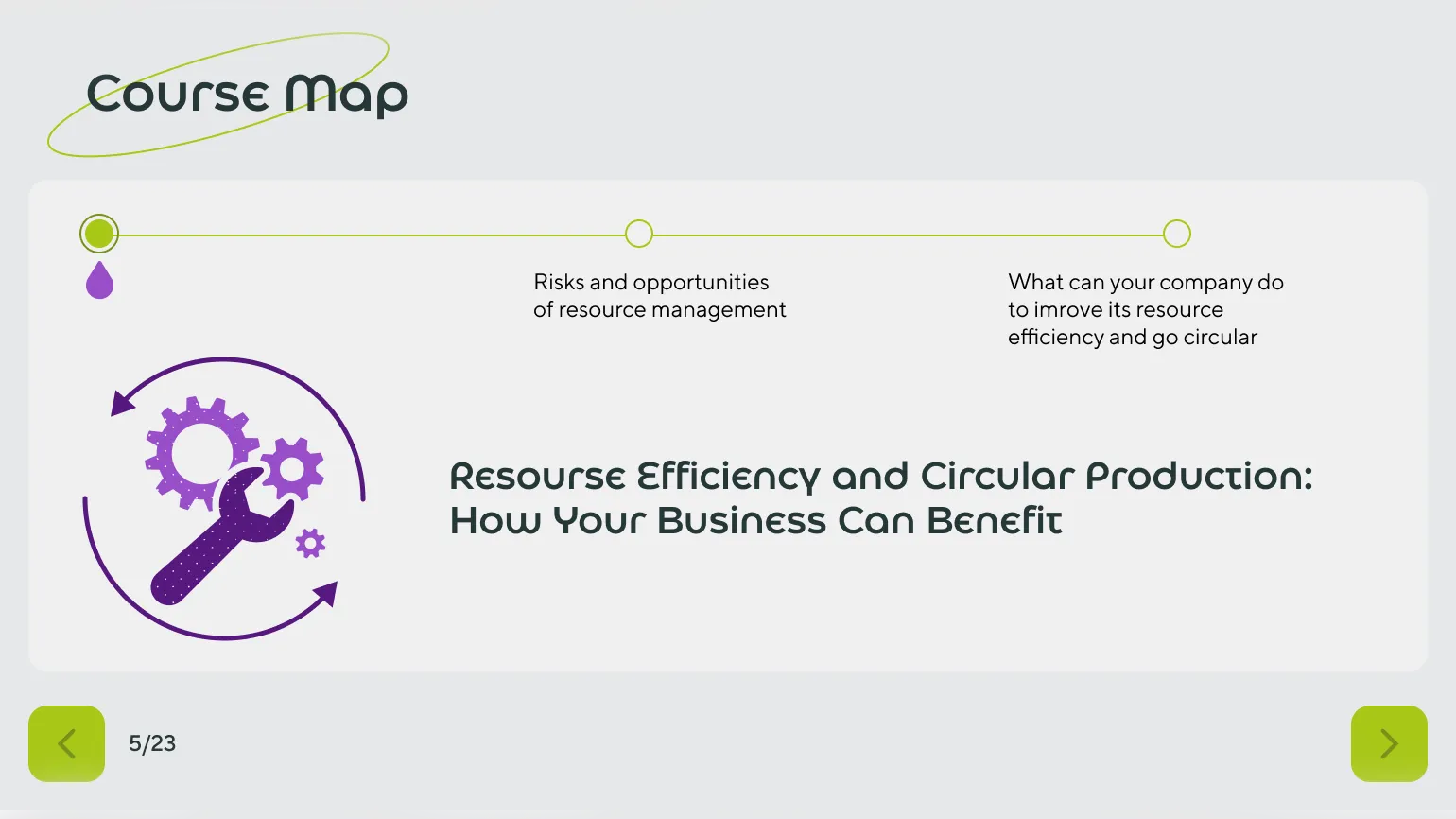
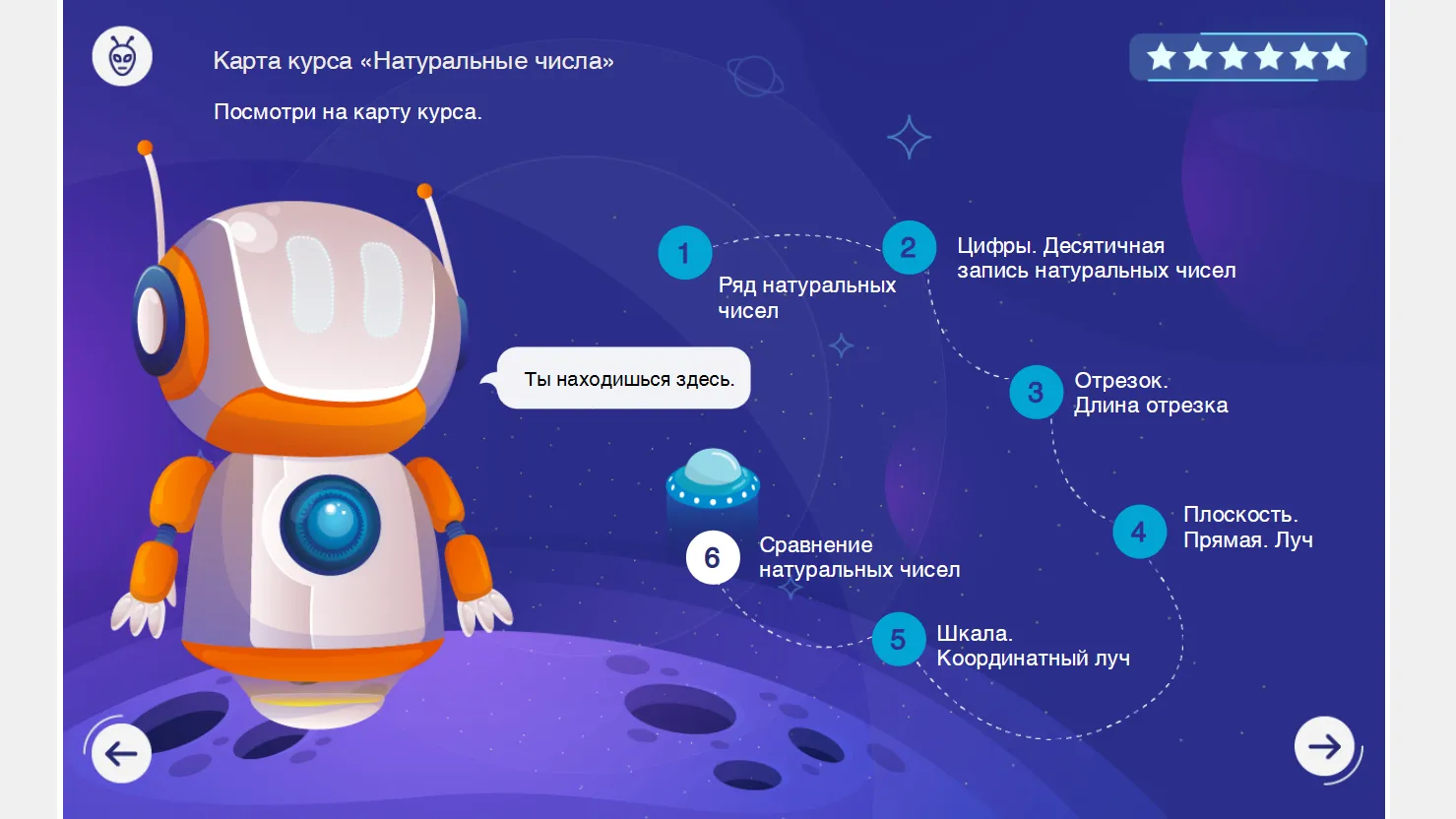
The advantages of this type of map are its simplicity and speed of implementation. This solution allows for the efficient use of resources and minimizes the time spent on map creation. Furthermore, this approach ensures ease of management and updating of information, making it an ideal choice for those seeking optimal data visualization methods.
Features: This type of map is suitable exclusively for courses that require linear progression. It provides a clear structure and simplifies following a given path, making it ideal for curricula and training programs with a fixed sequence.
The course map is an interactive slide displaying all course sections. It allows the user to easily navigate to any section, either in a given sequence or in a free-form manner. The main difference from the previous version is clickability, which significantly simplifies navigation and improves user experience.
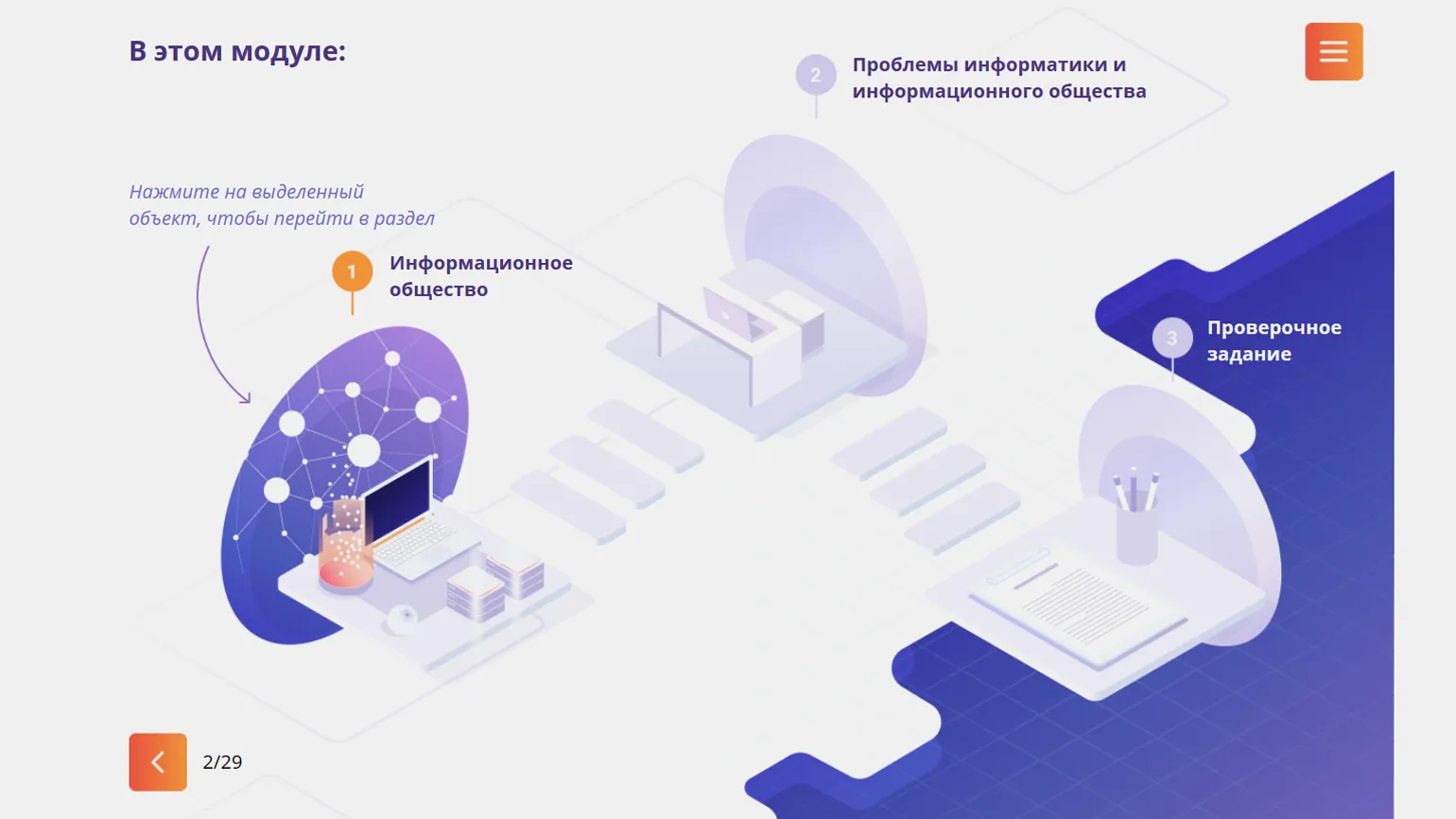
The advantages of using this map include its compatibility with courses based on open navigation, as well as its relative ease of implementation. This makes it an ideal choice for educational programs that require flexibility and accessibility in learning.
Developing a course with open navigation and a display of completed sections in Articulate Storyline requires significant time and skill. To successfully create such a course map, it is important to master the basics of working with triggers and variables. Knowledge of these tools will allow you to effectively manage navigation and provide users with an intuitive interface. Proper use of triggers and variables not only improves interaction with content but also contributes to increased learner engagement.
The new course map format includes interactive animated elements such as movement, flickering, or lighting. These maps can serve as storytelling tools. For example, a corporate welcome course for new employees could be presented as an interactive office with various rooms. Users move from one room to another, becoming familiar with the company and its culture. This approach not only makes the learning process more engaging but also promotes better information absorption.
We present a sample interactive course map. This map will help you better navigate the course content and structure, facilitating the learning process. Use interactive elements to quickly access the necessary information and improve comprehension of the material.
The advantages of this map format are maximum immersion of the user in the learning process and creating an additional element of engagement. This promotes a deeper understanding of the material and increases interest in learning, which in turn can lead to better results. Using interactive elements on a map allows users to actively engage in the learning process, making the process more dynamic and effective.
Developing interactive maps requires significant time and professional skills. Designer assistance is often essential for successful project implementation. For example, when creating maps in Articulate Storyline, it's important to properly configure animations, integrate audio files, and develop complex triggers using variables. These elements make the content more interactive and engaging for the user, significantly improving the quality of training materials.
This is an interactive course map tailored to the needs and characteristics of each participant. It allows for the study of precisely the sections required. For example, in the corporate course "Adaptation after an Extended Absence" for NLMK employees returning from extended vacations, a short safety quiz is offered at the beginning of each section. Depending on the results of this test, the course map displays mandatory and additional materials for study, which allows you to organize the learning process as efficiently as possible.
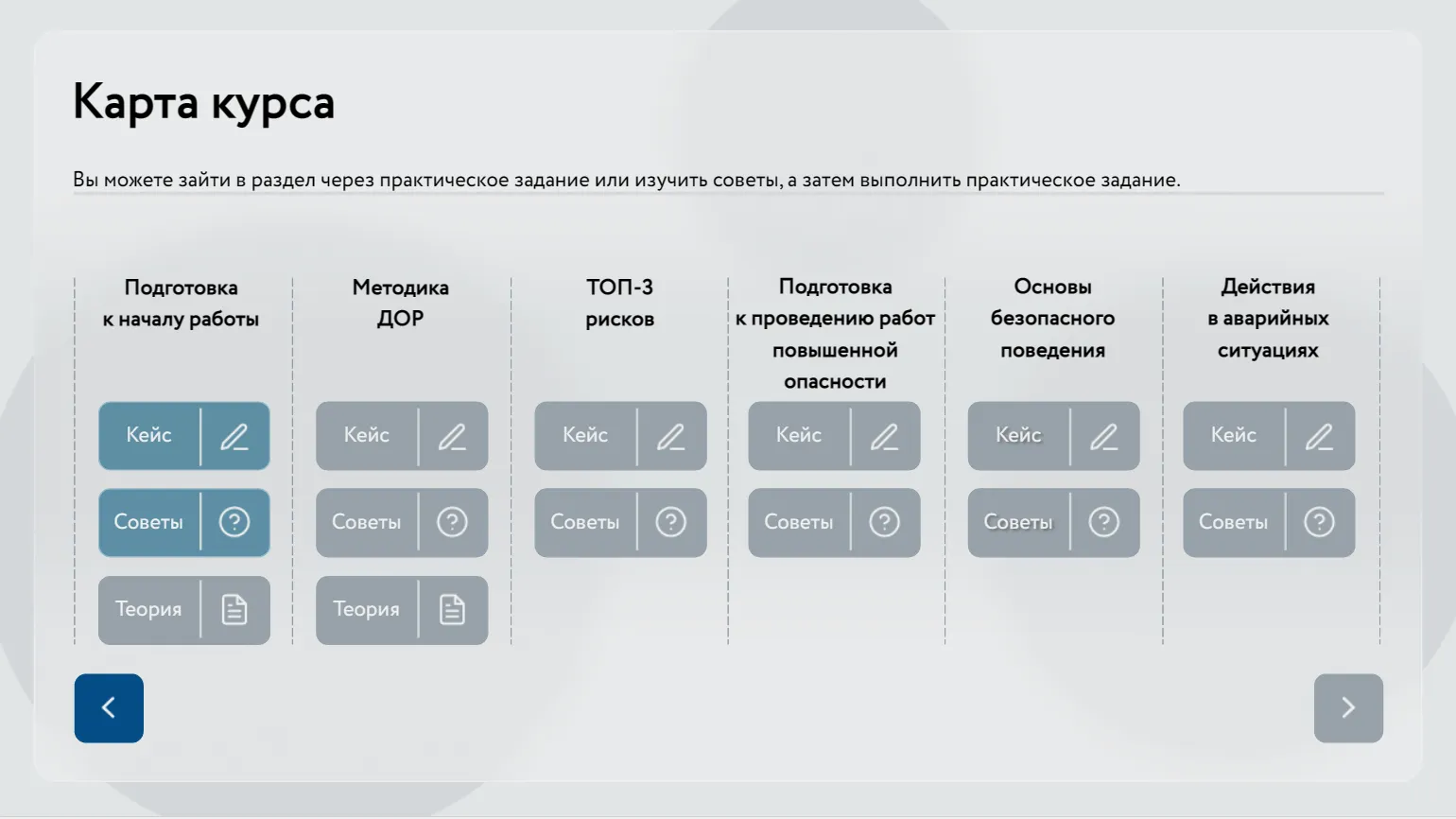
The advantages of this type of map include the ability to create a variety of learning paths tailored to the students' knowledge level. This allows for more efficient organization of the learning process and improved learning outcomes.
Not all course development platforms offer support for multiple learning paths. In addition, at the script creation stage, it is necessary to carefully consider several educational path options, which requires a significant investment of time on the part of the developer.
Reworked text:
Also study:
- Storytelling techniques: how to explain complex concepts without cardboard characters
- 4 scripting tips that will be useful for online course methodologists
- How to add interactivity to a course using characters
- How to create courses in longread format
The Methodologist profession from scratch to PRO
You will improve your skills in developing curricula for online and offline courses. You will master modern pedagogical practices, structure your experience and become a more sought-after specialist.
Find out more