Contents:

Learn: Profession Methodist from scratch to PRO
Find out more
Senior Lecturer and Research Fellow at the International Laboratory for the Evaluation of Practices and Innovations in Education at the Institute of Education, National Research University Higher School of Economics. Specializes in research in the field of educational practices and the implementation of innovative approaches in the educational process. Actively participates in the development and evaluation of educational programs aimed at improving the quality of education and developing modern teaching methods.

A research intern at the International Laboratory for the Evaluation of Practices and Innovations in Education at the Institute of Education of the National Research University Higher School of Economics analyzes and evaluates educational methods and innovations. This laboratory focuses on research aimed at improving the quality of education and implementing effective practices. Interns have the opportunity to participate in research projects, gain experience working in a multidisciplinary team, and contribute to the development of the educational field. This is a unique opportunity for young researchers to immerse themselves in current topics and gain valuable skills in educational research.
This article is based on a lecture by Anastasia Kapuza and Alexandra Getman, given at a meetup organized by the School of Methodologists for Skillbox methodologists. This article presents key ideas and recommendations that will help methodologists improve their skills and increase the effectiveness of the educational process. The lecture covers important aspects of methodological work, including innovative approaches to teaching, the use of modern technologies, and curriculum development. The main focus is on practical tools that promote the development of critical thinking and creativity in students. This material will be useful for both experienced methodologists and novice education specialists.
Engagement is an important aspect of the educational process. Social science research confirms that high student engagement contributes to improved academic outcomes. Students who are actively engaged in their learning are better able to absorb new knowledge, skills, and abilities, and are less likely to drop out of courses without completing them. This is especially relevant in the EdTech field, where the percentage of students who successfully complete courses is considered a key metric for the quality of online courses. Increasing engagement not only promotes successful learning but also increases student satisfaction, which in turn impacts the reputation of educational platforms and courses.
In this article, we will examine in detail the concept of engagement, its key components, and its relationship with motivation. We will also discuss methods for measuring engagement and propose strategies for instructors, designers, and learning organizers aimed at increasing it. Engagement plays a vital role in the educational process, promoting deeper learning and improving learning effectiveness. Understanding the mechanisms of engagement will help create a more productive and motivating educational environment.
What is engagement and what does it consist of?
The concept of engagement in education has existed for quite some time, but still does not have a single, generally accepted definition. One of the most well-known approaches is the formulation proposed in 1992 in the collection "Engagement and Student Achievement in American Secondary Schools." In this context, engagement is defined as the level at which students invest their resources, including time, effort, and energy, in the learning process. Engagement plays a key role in academic achievement and skill development, making it an important topic for research in education and pedagogy.
The definition of academic engagement is clear and concise, but modern researchers consider it insufficient because it focuses only on student behavior. This definition does not answer the question of why two students who spend the same amount of time studying, actively attend classes, and complete homework may demonstrate different academic results. Similar situations are observed in practice, even when individual student characteristics are taken into account. For a deeper understanding of academic engagement, it is important to consider not only behavioral aspects, but also students' motivation, emotional state, and personal goals.
Engagement is a multifaceted concept that includes not only behavior but also emotional and cognitive aspects. In this regard, researchers have begun to develop various theoretical models of engagement to more deeply interpret this phenomenon. One of the most popular is the three-component model proposed in 2004 by Jennifer Fredricks. This model identifies three main types of engagement that help better understand how individuals interact with the environment and how this interaction affects their performance and satisfaction. Behavioral engagement refers to everything a student does during the learning process: attending class on time, following school rules, completing homework, asking questions, participating in class discussions, and so on. Affective engagement describes how a student feels during learning. These can include both positive and negative emotional reactions to learning in general and the educational content (e.g., boredom or interest), the teacher, and classmates. Cognitive engagement includes several aspects at once. These include attitudes about the importance of learning, the use of cognitive (how a person learns) and metacognitive (how they control their learning) strategies, and a willingness to put in effort—not just to, say, attend class, but to understand new material or master a new skill.
Over time, research has been published that expands on Fredricks's model and introduces new elements of learning engagement. These studies contribute to a deeper understanding of the factors influencing student engagement in the educational process, which, in turn, can help develop effective teaching methods and increase student motivation.
In 2013, researcher John Marshall Reeve introduced the concept of agentic engagement, which describes the degree of student involvement in the design of their learning. This includes active interaction with the instructor, which allows the student to adapt and structure their learning process. Students, being aware of their goals and ways to learn effectively, become more engaged in the educational process, which contributes to better achievement. Agentic engagement plays a key role in creating a personalized approach to education, which is essential for enhancing student motivation and success.
In 2016, American researchers proposed considering student social engagement as an important aspect of the educational process. Social engagement includes the quality of a student's interactions with the teacher and classmates, as well as the willingness to form and maintain social connections during learning. This focus on the social aspects of the learning process emphasizes the importance of collaboration and interaction for successful knowledge acquisition.

Study also:
Peer learning, also known as peer-to-peer learning, is a methodology that relies on the exchange of knowledge and experience between participants. This approach is widely used in educational institutions, corporate training programs, and various communities. Peer learning promotes deeper learning, as participants can share their views and ask questions, creating a more interactive and engaged atmosphere.
Peer learning is used across a wide range of fields, including school and higher education, where students tutor each other in groups or pairs. In a corporate environment, this approach helps employees share experiences and skills, which improves overall team effectiveness.
Furthermore, peer learning is actively used in online courses and educational platforms, where participants can evaluate and comment on each other's work, thereby improving the educational process. Thus, peer learning is a valuable tool that helps develop skills, deepen knowledge, and create communities based on collaboration and support.
How the Different Components of Engagement Are Related
Research confirms that student engagement and its components change throughout the learning process. Teachers working with children and adults often encounter a situation where, at the beginning of a course, students actively attend classes and diligently complete assignments. However, over time, a decrease in their engagement is observed, which is reflected in a decrease in activity and interest in the learning process. This dynamic process requires teachers to develop effective strategies to maintain a high level of engagement throughout the course.
The dynamism of engagement indicates the need for continuous monitoring of this indicator by the teacher or methodologist. It is important not only to track the level of engagement but also to take measures to maintain it. Even if engagement has declined, there are effective strategies that can help restore it to its previous level. Regularly analyzing and adapting teaching methods helps create a more engaging learning environment, which in turn improves student engagement.
To understand how to increase engagement, it is important to consider the interrelationships between its components. Research shows that the components of engagement influence each other, and this relationship is positive: an increase in one component leads to an increase in the others. However, scientists have not yet reached a consensus regarding which of these components are primary and which are secondary.
There is an empirically based theory known as Jeremy Finn's Participation and Identification Model. According to this model, student engagement goes through a specific cycle. Initially, the student actively participates in the learning process: they begin attending classes, studying the course material, and completing assignments. This stage is called participation. As a result of such active engagement, the student achieves significant success and feels a sense of achievement. At this stage, emotional engagement, which Finn calls identification, develops. Students begin to feel a sense of belonging to the school or other educational organization, making learning meaningful and valuable. This engagement plays a key role in the educational process, promoting a deeper understanding of the material and increasing motivation to learn. Positive emotions associated with learning and school encourage students to put forth greater effort. This, in turn, leads to improved performance, further enhancing emotional engagement. If a student lacks interest and avoids activities, they will not be able to achieve successful results, and emotional engagement will not develop. Maintaining a positive attitude towards the learning process is a key factor in achieving high academic success and developing sustainable motivation for learning.
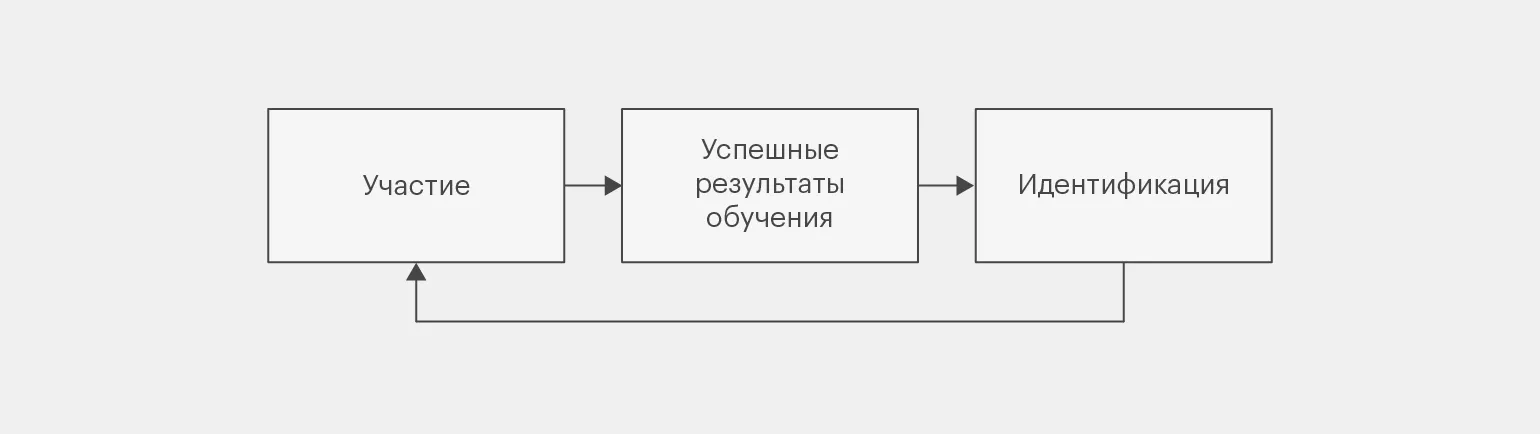
Engagement and academic outcomes are influenced by the quality of instruction and student ability. However, Finn's theory does not take into account a number of other factors that are also worth focusing on. It is important to start with student engagement at the behavioral level, as this creates the foundation for developing other aspects of engagement. A 2013 study confirms that behavioral engagement is a prerequisite for the development of emotional and cognitive components. This underscores the importance of creating an active and motivating learning environment that promotes successful learning.
How are engagement and motivation related?
Discussions about academic engagement raise an important question about its connection with academic motivation. Academic engagement, which is students' active participation in the learning process, is directly related to their motivation. High motivation promotes deeper immersion in the material being studied, which, in turn, increases student interest and diligence. Understanding this relationship helps develop effective strategies for increasing both academic engagement and student motivation, ultimately leading to improved educational outcomes. Motivation is divided into two main categories: extrinsic and intrinsic. Extrinsic motivation includes factors that motivate a person to take action. For example, a student may strive for high grades to avoid reprimand from parents for poor performance. An adult may take professional development courses for career advancement. In contrast, intrinsic motivation is not dependent on external circumstances. It manifests itself in a personal interest in the topic being studied, enjoyment of the learning process, and an awareness of its value. Intrinsic motivation is considered the most effective, as it promotes high-quality learning outcomes and a sense of psychological well-being. Understanding these two types of motivation will help you better navigate the learning and development process, which can lead to more successful outcomes both academically and professionally. Extrinsic motivation can be compared to the booster stage of a space rocket, providing initial acceleration, but at some point it loses its relevance and fades away. Intrinsic motivation, on the other hand, is the fuel that remains within and keeps the rocket moving throughout its journey. It's important to understand that intrinsic motivation is essential for achieving long-term goals, as it ensures sustainable progress and supports the desire for self-improvement. Extrinsic motivation is essential for children's learning, as they are not yet able to recognize the intrinsic value of knowledge. Unlike children, influencing adults' extrinsic motivation is often ineffective, useless, or even harmful. We cannot control how important a course completion certificate is to someone, whether they are seeking a promotion, a job change, or are completely satisfied with their current situation. Adults already face numerous external stressors, and additional motivational efforts can be perceived as pressure, often leading to ignoring or actively denying such influences. Effective adult learning should focus on intrinsic motivation and personal goals, which foster deeper and more meaningful learning. Intrinsic motivation is closely linked to engagement and is cyclical. As noted earlier, behavioral engagement is the foundation for other forms of engagement. Emotional and cognitive engagement, in turn, foster interest in learning, which is the source of intrinsic motivation. This motivation, in turn, motivates individuals to take action, which increases behavioral engagement, and thus the cycle is complete. It's important to understand that developing intrinsic motivation and engagement plays a key role in the learning and personal growth process, making them important aspects for educators and students. Interventions targeting intrinsic motivation typically have a more significant impact. Various theories explain the mechanisms of intrinsic motivation and the factors that influence it. One of the most well-known is self-determination theory, developed by Edward Deci and Richard Ryan. According to this theory, learning becomes more motivated when three key needs are met: the need for autonomy, the desire to belong to a community, and a sense of one's own competence. Satisfying these needs not only increases motivation but also improves the quality of learning and personal growth.

In formal education, especially in the school system, students' need for autonomy is often unmet. This process is typically externally controlled, limiting freedom of choice. When developing educational programs, it is important to take this into account and empower students to make decisions. For example, students can choose to complete assignments individually or in groups, and to present their results in various formats. This not only increases motivation but also promotes the development of independence and responsibility.

Rework the text, avoiding adding unnecessary information and sticking to the main topic. Optimize it for SEO, possibly by adding keywords. Don't use emoticons or unnecessary symbols, and don't include sections with numbers or symbols. Your text should be clear and understandable.
Read also:
Academic Motivation: Scientific Theories and Their Explanations
Academic motivation plays a key role in the learning process and achievement. Scientific research identifies several theories that help understand the mechanisms of formation and maintenance of motivation in learners.
One of the main theories is Abraham Maslow's theory of needs, which states that a person strives to satisfy their needs, starting from the basic ones and ending with the highest ones. In the context of academic motivation, this means that learners must feel safe and confident before they can focus on the learning process.
Another important theory is self-determination theory, developed by Edward Deci and Richard Ryan. This theory emphasizes that motivation is divided into intrinsic and extrinsic. Intrinsic motivation, which stems from interest and enjoyment in the learning process, is considered more sustainable and effective. To develop intrinsic motivation, it is important to create conditions that promote self-expression and self-realization.
Cognitive theory also plays an important role in understanding academic motivation. It suggests that motivation depends on students' perceptions of their abilities and confidence in success. Students who believe in their abilities are more likely to actively participate in the learning process and overcome difficulties.
It is important to note that academic motivation is not a static state; it is subject to change and can be enhanced by various factors. Learning conditions, support from teachers and classmates, as well as personal goals and interests play a significant role in increasing academic motivation.
Understanding the scientific theories related to academic motivation allows us to develop effective strategies for increasing student interest and engagement in the learning process. This, in turn, promotes deeper learning and the development of skills necessary for successful professional activity.
What factors influence engagement
In the previous section, we discussed the indirect influence on engagement through intrinsic motivation. But is it possible to directly influence engagement during the learning process? The answer to this question is contained in the results of a meta-analysis conducted by researchers from Beijing Normal University in 2023. The study assessed the influence of various external and internal factors on the level of student engagement. The data obtained will help better understand how to directly influence engagement and improve the effectiveness of the educational process.
Research shows that there is a strong positive relationship between student engagement and their positive emotions. This may seem obvious, but a meta-analysis has confirmed that student satisfaction with the program and learning process plays a key role. Feeling comfortable in the learning environment directly impacts learning success and skill development. It is important for educational institutions to create conditions that promote students' emotional well-being, as this positively impacts their engagement and learning outcomes. Relationships with the instructor have a moderate impact on the learning process. Important factors include the instructor's personal qualities, such as charisma, demanding attitude, and ability to support students. The instructor's willingness to connect with their students is also significant. Also at this level is positive instructor behavior, which includes methods of motivating and supporting students, as well as the form of feedback. These aspects play a key role in creating a comfortable learning environment and contribute to increased learning activity.
Individual characteristics such as family background, age, and gender, as well as the student's personal characteristics, learning abilities, and level of thinking skills, also influence engagement in the learning process, although to a lesser extent. These factors can determine the approach to learning and the student's level of interest, which is important to consider to improve the effectiveness of the educational process.
There is a relevant approach to studying engagement in online learning based on the Community of Inquiry theory. This approach, based on problem-based learning, argues that students receive a meaningful educational experience when the educational program includes three interrelated components. These components promote active student participation, their interaction with each other and with instructors, and the development of deep knowledge and skills. The importance of interaction and collaborative learning underscores the need to create a supportive environment in which each participant feels engaged and motivated. Thus, Community of Inquiry theory becomes a key element of effective online learning.
- Social presence—full interaction with other participants, an understanding that, for example, there are real people behind the avatars on the screen, inclusion in the community, and the creation and maintenance of interpersonal relationships. However, to some extent, a dialogue with a realistic chatbot can also contribute to the social presence effect.
- Cognitive presence is active interaction with the learning content, including paired and group interactions, knowledge construction and accumulation, achievement of personally significant results, and reflection.
- Pedagogical presence is the teacher in this model who ensures the presence of the other two components and facilitates learning, that is, promotes research and knowledge construction by students.
The design of the cognitive component based on this model is closely related to Vygotsky's concept of the zone of proximal development. The content of the learning process should be complex enough to stimulate students' mental activity, but not so difficult that they cannot cope with the task. When forming learning communities, it is important to design tasks in such a way that they cannot be completed by one student alone, but are feasible for a pair or group of students. This approach promotes collaboration and knowledge sharing, which is a key aspect of effective learning.

Read also:
Six effective tips for organizing group training
Organizing group training requires a careful approach and planning. To make the learning process as productive as possible, follow the recommendations provided.
The first step is to define the learning objectives. Clearly formulated objectives will help participants understand what they can expect and what the results are. This will increase motivation and interest.
The second tip is to create a comfortable and open atmosphere. Participants should feel free to exchange ideas and opinions. This contributes to a deeper understanding of the material.
The third aspect is to diversify the teaching methods. Use a variety of approaches: lectures, practical tasks, group discussions. This will help keep the attention of participants and improve the assimilation of information.
The fourth tip is to involve all participants. Everyone should be given the opportunity to speak up and contribute to the discussion. This will not only increase the level of engagement but also enrich the learning process.
The fifth point is to receive regular feedback. This will help identify weaknesses in the program and adjust approaches to improve the quality of learning.
Finally, pay attention to assessing results. This will not only help determine the level of material assimilation but also identify areas for further development.
By following these tips, you will be able to effectively organize group training that will produce real results.
Interaction theory, developed by researcher Michael Moore, focuses on the factors influencing learning engagement in online learning. According to this theory, learner engagement is formed and developed through various interactions. These interactions can occur between people, as well as between a person and the learning material or educational environment. Moore identifies three main types of interactions that play a key role in the learning process. Understanding these types of interactions can help educational developers and instructors improve the effectiveness of online learning by enhancing student engagement and learning outcomes.
- with the instructor;
- with other students;
- with the learning content.
Moore emphasizes the importance of maintaining all three types of interaction at a high level to achieve maximum effectiveness in online learning. However, researcher Terry Anderson, building on Moore's ideas, notes that such an approach requires significant resources. In response to this problem, he proposed the equivalence theorem, according to which, for successful online learning, it is sufficient to ensure a high level of one type of interaction. Other types of interaction can be minimal, and this will not negatively impact learning outcomes. Thus, resource optimization in online education becomes possible with the correct choice of the priority type of interaction.
There is an important question: which forms of interaction should be focused on during the learning process? There's no definitive answer, but researchers, including Anderson, emphasize that student engagement with the learning content is paramount. Proponents of this viewpoint argue that interactions between students and teachers that aren't related to the learning material are more likely to be idle conversations that don't contribute to learning outcomes. Therefore, it is important to pay attention to the quality of interaction with content, which can significantly improve the effectiveness of the learning process and promote better knowledge acquisition.

Read also:
Interactive learning is a method of the educational process based on active interaction between students and educational material. The key feature of this approach is that students don't just passively absorb information, but actively participate in the learning process.
Interactive methods include various forms of activity, such as group discussions, hands-on assignments, the use of multimedia technologies, and simulations. This creates a more dynamic and engaging learning environment where students can develop critical thinking, collaboration, and communication skills.
Furthermore, interactive learning promotes better retention of information, as students engage with the material at a deeper level. As a result, they not only master knowledge but also learn to apply it in practice. This approach is becoming especially relevant in the context of modern education, where it is important not only to impart knowledge, but also to develop students' abilities for independent learning and adaptation to changing conditions.
How to Measure Engagement
In conclusion, let's consider the key methods for measuring engagement. One of the main methods is surveys. A frequently used scale is the Online Student Engagement Scale (OSE), which was specifically designed to assess student engagement in online learning. For example, surveys ask students to agree or disagree with various statements, providing valuable information about their level of engagement and participation in the learning process. Using such tools helps educational institutions improve the quality of online learning and increase student satisfaction.
- "I do my homework regularly" (behavioral engagement).
- "If I don't understand something, I try to figure it out completely" (cognitive engagement).
- "Overall, I experience positive emotions while studying in the course" (emotional engagement).
- "I communicate with other students in the course chat" (social engagement).
Analyzing a student's digital footprint on an educational platform is one of the common analysis methods. Choosing metrics for assessing engagement can be challenging, as many metrics can be linked to different aspects of student activity. However, it is advisable to divide these metrics into four main groups, which will allow for more effective assessment of the level of student interaction with the educational content and the platform as a whole. This approach will help better understand student behavior and optimize educational processes.
- social interactions (e.g., the number of messages in the course chat);
- artifacts (everything a student produces during the learning process, such as completed assignments);
- content interactions (watching videos and other materials, taking tests, etc.);
- time metrics (e.g., time spent on the platform or time spent solving a problem).
Learn more about education by subscribing to our Telegram channel. We share current news, useful tips, and interesting facts to help you stay up-to-date with developments in education. Don't miss the opportunity to be one step ahead!
The revised text, taking into account SEO, might sound like this:
Study additional materials:
- What is self-regulated learning and why is it important for both EdTech and universities?
- Alfie Kohn: rewards for learning can have the opposite effect - demotivation.
- Increasing motivation for learning: which teaching style helps.
- What is a growth mindset and why is it important for education.
The Profession of Methodologist from Scratch to PRO
You will improve your skills in developing curricula for online and offline courses. Master modern teaching practices, structure your experience, and become a more sought-after specialist.
Find out more