Contents:

Learn: Online Tutor
Find out moreThe Graduate School of Management of St. Petersburg State University, Moscow City Pedagogical University and VTB Bank jointly conducted a study on the features of hybrid learning in Russian and foreign Universities. This study aims to analyze effective learning models that combine traditional and digital teaching methods. The results will help universities improve their educational practices and adapt to modern student demands.
The study included in-depth interviews with vice-rectors and faculty at major universities, an analysis of 23 hybrid learning cases, and a review of related research articles and regulatory documents.
While the full report is not yet available, the study's authors presented their findings at the "Modern Digital Didactics" conference. This event has become an important stage in the discussion of new approaches and methods in the field of digital learning.

We have collected the information that the researchers managed to obtain. If you are interested only in practical conclusions, you can go to the corresponding section. The theoretical part is intended to understand the correct terminology of the formats used in different universities.
Why the hybrid format does not have a clear definition
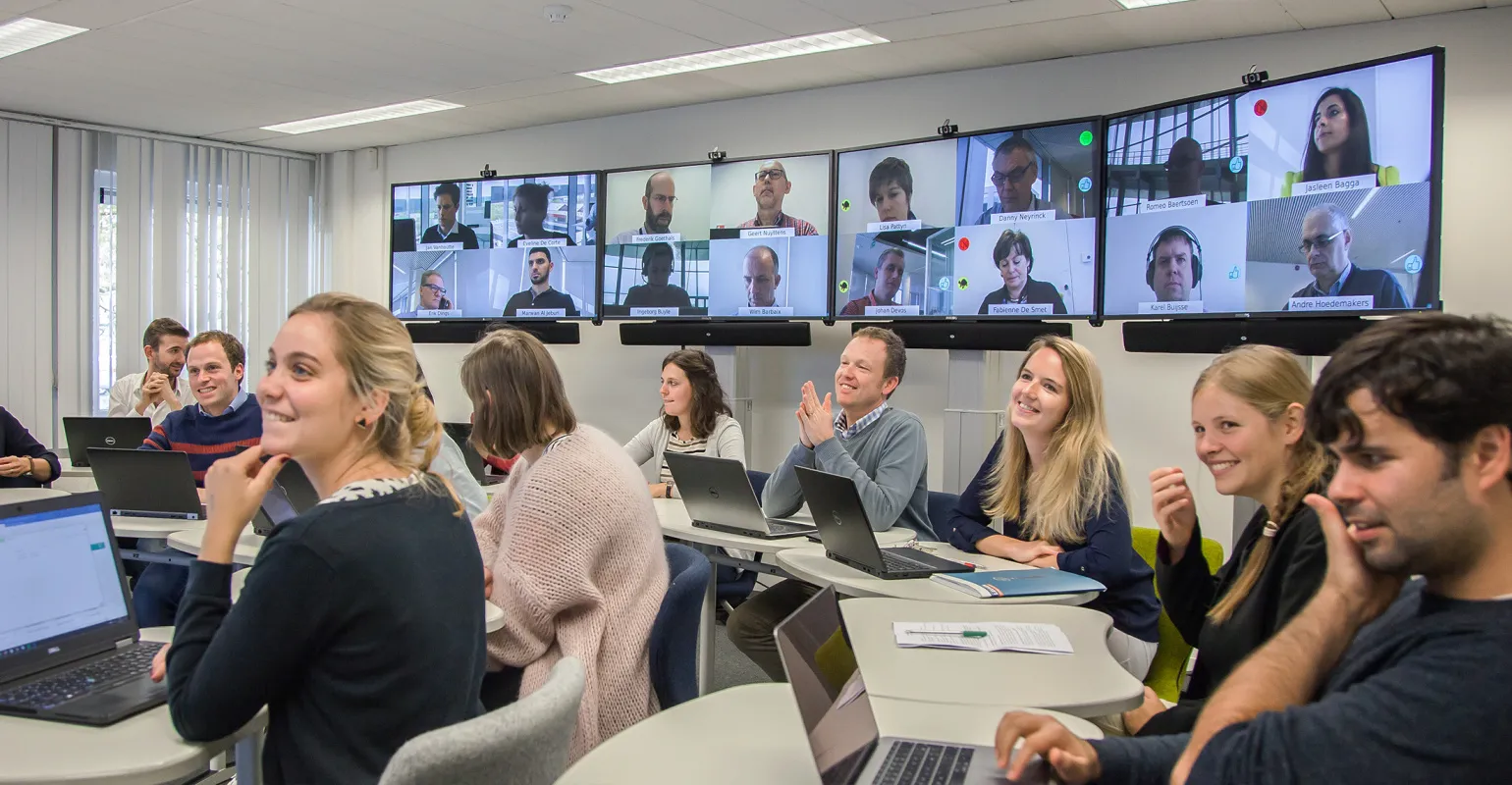
The term "hybrid learning" has become popular recently and continues to cause controversy. Vice-Rector of Moscow State Pedagogical Univ. Kirill Barannikov noted that some representatives of the educational sphere are sure of the absence of a true hybrid format, considering it only a modification of blended learning. At the same time, less categorical experts, although they recognize the hybrid format as a separate type, cannot always give it a clear definition. Researchers have begun to analyze whether hybrid learning exists as a distinct category and, if so, what characteristics define it. Hybrid learning combines elements of traditional and online learning, allowing the educational process to be tailored to student needs and modern technologies.
In an effort to define the concept of hybrid, the researchers focused on its implementation at various universities. As examples, they examined three foreign universities that had publicly announced the introduction of a hybrid learning format. The analysis revealed that each university has its own unique classification of hybrid learning methods. This diversity highlights that hybrid models can vary depending on the specific educational environment and student requirements.
- Leuven University (Belgium).
This university offers three hybrid learning formats. The first is class recording, which allows for both in-person attendance and viewing of recorded classes. The second is livestream, which enables interaction between students studying both offline and online. The third is synchronous classes, which emphasize interactivity and active student participation in the learning process. These formats allow each student to choose the most appropriate learning method, ensuring flexibility and accessibility.
The choice of learning formats is determined by the needs of the developers. The main factors influencing this choice are the number of students, the need for interactivity, and the possibility of synchronous interaction. Choosing the right format helps create an effective learning environment that promotes better learning and student engagement.
- Monash University (Australia).
This university has implemented three approaches to organizing hybrid learning. The first is a combined approach, in which classes are held both online and offline, allowing students to independently choose the most convenient option. The second approach is a parallel approach, in which the same class is held twice: first for an online audience, then for an offline audience (or vice versa). The third approach is an adaptive approach, in which classes with the same content are held simultaneously for different types of audiences. In addition, the university offers a variety of lesson scenarios, including group and project work, as well as interactive and traditional lectures. Hybrid learning at this university provides high flexibility and accessibility of the educational process, which is especially relevant in the modern world.
- Columbia University (USA).
Our university is implementing hybrid learning in the HyFlex format. This means that students can choose the most convenient learning method: online, in the classroom, or asynchronously. This approach allows each student to adapt the educational process to their individual needs and schedule, which significantly improves the quality and accessibility of education. HyFlex learning meets the modern requirements of students and promotes more effective assimilation of material.
An analysis of the scientific literature revealed the lack of a unified approach to the differences between hybrid and blended formats. Currently, three main criteria can be identified on the basis of which these differences are formed.
Kirill Barannikov emphasizes that the proposed approaches were unable to solve the key problem. When attempting to verify both Russian and international cases, it became clear that they do not provide an effective methodological basis. Researchers cannot clearly define how hybrid learning differs from blended learning, which calls into question the practical applicability of these concepts.
How does hybrid learning differ from other formats?
To answer this question, the study's authors turned to the history of distance education. They analyzed its evolution over the past hundred years and identified four key stages. The first stage is associated with the emergence of distance learning, the second with the choice between digital and analog formats, the third with the introduction of interactive technologies, and the fourth with an emphasis on student agency, which implies the possibility of learning in the format most suitable for them. This structured diagram allows for a deeper understanding of how distance education has developed and what factors have influenced its transformation.

These stages have become a foundation for researchers, allowing them to describe and compare various learning formats, including classroom, online, blended, and hybrid learning. Analyzing these formats helps identify their advantages and disadvantages, as well as determine which is most effective for different categories of learners.

The Vice-Rector of Moscow State Pedagogical Univ. notes that this allows us to clearly distinguish between blended and hybrid learning. Blended learning involves integrating additional formats, such as asynchronous online learning, into existing educational programs. In contrast, hybrid learning emphasizes learner agency as its primary criterion.
Based on the study, the authors identified three key criteria that define a hybrid format. These criteria help better understand the features and benefits of hybrid models, as well as their application in various fields. A hybrid format combines elements of several approaches, allowing for more effective problem-solving and adaptation to changing conditions.
The question of whether hybrid learning and the HyFlex format, a "flexible" version of hybrid, are the same thing is of interest. Hybrid learning combines traditional teaching methods with online formats, allowing students to acquire knowledge both in the classroom and remotely. The HyFlex format, on the other hand, provides even greater flexibility, allowing students to choose how they want to participate in classes—in person or online. Thus, while both approaches have similar elements, they differ in the level of freedom of choice for students.
At the conference "Modern Digital Didactics," the issue of hybrid learning was not directly addressed. However, in April 2022, the authors of this study confirmed at another event that the hybrid model is indeed consistent with the HyFlex concept.

Read also:
In recent years, Russian universities have been actively introducing new teacher competencies, especially in the field of pedagogical design. Instructional design is a systematic approach to developing educational programs and courses that takes into account student needs and modern learning technologies. Implementing these competencies enables faculty to create more effective and engaging learning materials, which, in turn, contributes to improving the quality of education. Russian universities are striving to adapt to changes in the educational environment by implementing innovative methods and approaches. This includes training faculty in modern instructional design methods, which helps them develop courses that meet current market demands and student interests. Instructional design also incorporates digital technologies, making the learning process more accessible and interactive. Developing instructional design competencies not only improves the quality of teaching but also contributes to the creation of more competitive educational programs. This is an important step toward modernizing the higher education system in Russia.
What does this mean for teachers in practice?
Researchers emphasize that hybrid learning cannot be viewed simply as a supplement to traditional classroom-based education. It is a unique model that requires special attention from both educational institutions and educational program developers. A comprehensive approach to implementing hybrid methods is needed, taking into account the specific features of this model and its potential to improve the quality of education.
The study's authors hope their findings will be useful for educators creating hybrid educational programs. Kirill Barannikov noted that educators need to consider three learning formats: online synchronous, online asynchronous, and offline. This approach emphasizes content portioning and interactivity, which ensure the learning process is both innovative and effective.
Learn more:
The University of Sydney has developed a hybrid learning model and presented its features. This model combines online and offline learning formats, allowing students to acquire knowledge more effectively. Hybrid learning provides the opportunity to integrate modern technologies into the educational process, improving access to information and interaction between educators and students. The implementation of this model opens new horizons for the educational environment, promoting the development of critical thinking and independence in students.
The researchers offer useful recommendations for adapting to the new working format. First and foremost, it's important to create a clear daily routine to help structure work tasks and increase productivity. It's also worth paying attention to the organization of your workspace: a comfortable and functional space promotes concentration and reduces stress. Equally important is the use of technology to facilitate communication and team collaboration. Regular video calls and online meetings help maintain connection and share ideas. Time management is also important: planning tasks and setting priorities will help avoid overload and increase efficiency. Taking care of your emotional well-being is also important. Regular breaks, physical activity, and connecting with colleagues help maintain balance and prevent burnout. Following these recommendations will help you successfully adapt to the new working format and achieve high results.
- design educational content and lesson plans in three spaces at once;
- deliver content in portions so that students work with it step by step (this will simplify learning for asynchronous participants);
- increase interactivity;
- provide students with regular and frequent feedback.
Researchers were unable to propose a single universal scenario for teachers. Kirill Barannikov noted that creating such a scenario is unlikely.
For teachers, this does represent an additional burden. However, research shows that hybrid learning may become the new norm in the educational process. This approach combines traditional methods with modern technologies, offering more flexible and effective ways of teaching. The introduction of hybrid learning models can increase student engagement and improve the overall quality of the educational process.
Read also:
- Offline lectures at universities: an atavism or an indispensable format?
- 5 opportunities that big data opens up for higher education
- How universities have stopped being afraid of distance learning and how this relates to the quality of education
- Individual educational trajectories at universities: how it works and what are the prospects
Online Tutor
It doesn't matter what you teach—English, CrossFit, yoga, vocals, or culinary arts. Everything you previously taught in schools, studios, and offices can now be taught online. Promote your knowledge and skills and earn money from anywhere in the world.
Find out more