Contents:

Learn: The Profession of a Methodologist from Scratch to PRO
Learn moreWhy "history"? How did the term appear?
Natural history has its roots in ancient times. Even in prehistoric times, people observed animal behavior and plant characteristics, passing this knowledge down from generation to generation. Later, in Ancient Greece, philosophers began to systematize knowledge of nature, exploring the cause-and-effect relationships of natural phenomena. The term "history" in the context of the natural sciences was first used by Aristotle, marking an important step in the development of natural history as a science. In 77 AD, the ancient Roman writer Pliny the Elder titled his encyclopedia "Naturalis historia" (Natural History). This monumental work compiled knowledge across many fields, including astronomy, geography, and human anatomy. Pliny described animals, classifying them by habitat, and plants based on various characteristics. His work also provides information on medicines, metals, paints, paintings, stones, sculptures, precious stones, and gemstone products. The encyclopedia contains 37 books, making it one of the most extensive sources of knowledge of its time.
Pliny's only surviving work is one of the first scientific encyclopedias in Europe and serves as a model for subsequent research and writing. This ancient Roman author left a significant legacy, which remained an authoritative source for naturalists until the 18th century. His work not only systematized knowledge of nature but also influenced the development of science and education in Europe, shaping ideas about the world for centuries.
A direct translation of the Latin term Naturalis historia as "natural history" may cause confusion. In this context, "history" does not refer to the study of the past, but rather serves as a synonym for "description" or "research." "Nature" refers to both the manifest and hidden essence of objects. Thus, Naturalis historia provides a detailed description of the nature and essence of natural objects, allowing for a deeper understanding of their characteristics and interrelations in the surrounding world.
Pliny's work was used selectively by medieval scholars. At this time, scholasticism became the primary scientific method, according to which knowledge was formed not through observation, but through reading, commenting on, and compiling texts. Within this approach, "correct" conclusions were drawn logically. An important condition was the preservation of knowledge within the divine picture of the world, which often occurred through theological interpretations of Aristotle's teachings. Thus, the approach to knowledge in the Middle Ages was limited by the framework of tradition and authority, which affected the development of science and philosophy of the time.
Natural history experienced a new round of development and, in fact, a renaissance during the Renaissance. Thinkers of this period again turned to the ancient heritage, doing so more critically. Europe experienced an economic boom, active trade, and the discovery of new lands, which significantly expanded understanding of natural diversity. These changes contributed to a transformation in human attitudes toward the world around us.
During this period, the first division of the sciences occurred, with physics and chemistry becoming part of natural philosophy. Biology and geology assumed a supporting role relative to these disciplines. However, the two sciences were interconnected: physicians needed a thorough understanding of physiology, botany, and zoology to effectively formulate medicines. Furthermore, many researchers of flora and fauna made significant contributions to the development of geology and geography. These diverse disciplines eventually formed a new concept of natural history, which became the main subject of teaching at universities.
Health
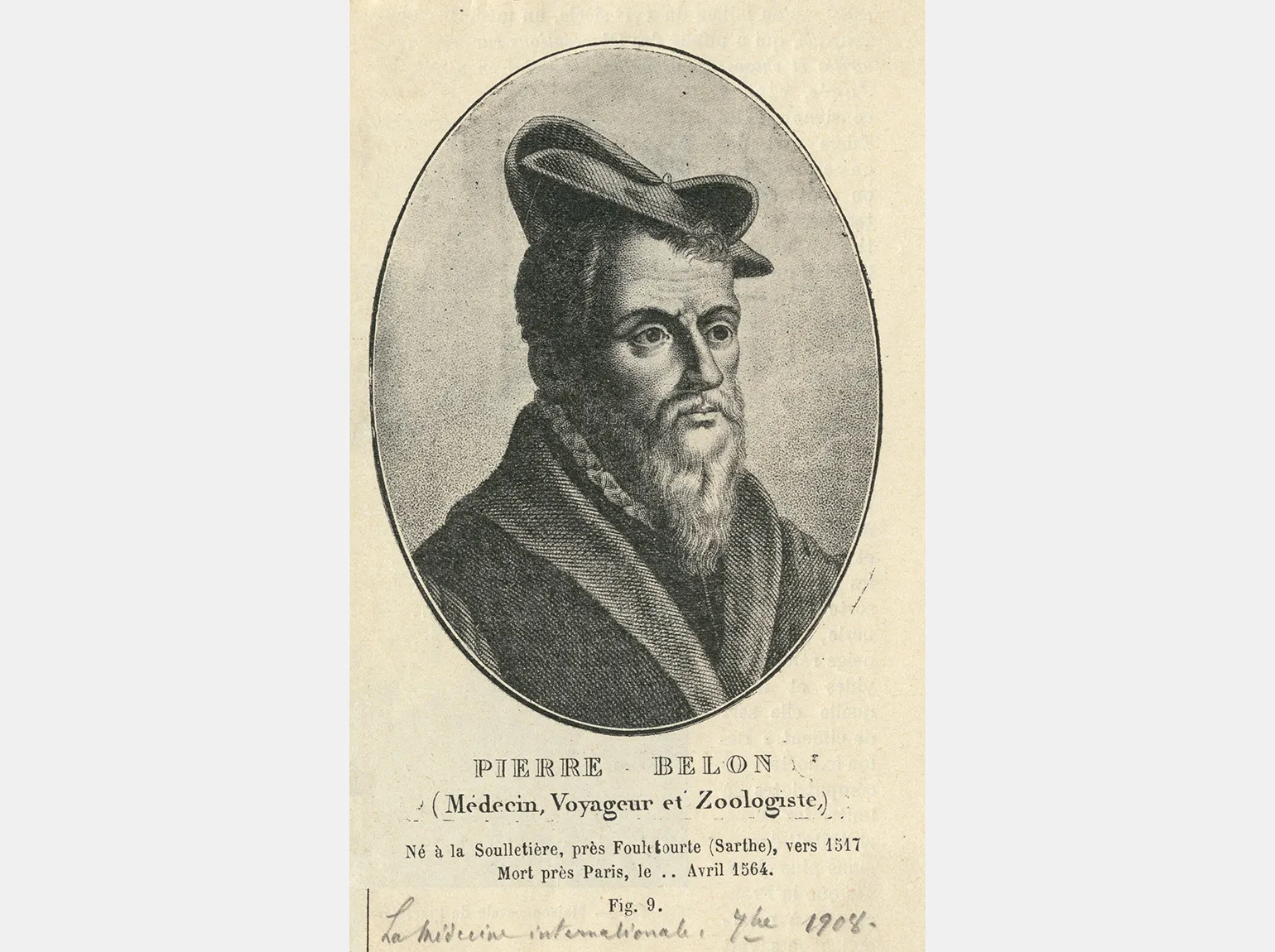
The name of this movement arose thanks to numerous works of Renaissance thinkers. These books united disparate knowledge in such fields as zoology, botany, meteorology, geology, history, and archeology, and were called "histories." For example, among them are Pierre Belon's Natural History of Birds, Claude Duret's Miraculous History of Plants, and Ulisse Aldrovandi's History of Serpents and Dragons. These works became the basis for further study of the natural sciences and played a significant role in shaping the scientific approach of that time.
It is important to note that the works in question are not scientific works in the strict sense. The authors of these texts combined precise observations with mythological elements from history. This category also included "histories of souls and passions." Naturally, such books contained a lot of non-scientific material, including analogies typical of the medieval tradition. For example, they claimed that walnuts, which resemble the brain, could be used to treat head injuries. Understanding such texts requires a critical approach and an awareness of the boundaries between myth and science.
How Natural History Became Science
In the 16th and 17th centuries, the Renaissance gave way to the Age of Enlightenment, which marked the beginning of the scientific revolution in Europe. Scientists began to move away from simply studying ancient texts and focused on an independent search for true knowledge. Experiments, rather than logical constructions, became the key method of their research, which significantly changed the approach to science and contributed to the development of new scientific disciplines. This period became the foundation for modern scientific methods and shaped new ideals of science and education.
Scientific knowledge during this period became increasingly oriented towards practical needs. Pharmacy and medicine developed rapidly, and scientists continually refined and updated their understanding of the world. During this time, the names of such natural philosophers and scientists as Copernicus, Paracelsus, Brahe, Bacon, who identified natural history as a separate discipline, as well as Descartes, Newton, Leibniz, and others, became famous. These outstanding scientists significantly contributed to the development of science, laying the foundations on which our modern understanding of nature and its laws is built.
During this period, a natural history community emerged, fostering the development of collecting unique objects. This phenomenon can be considered an early form of museums. Botanical gardens and herbaria began to flourish during this time, followed by cabinets of curiosities and zoological museums. Learned societies, which were communities of like-minded individuals, gradually evolved into academies. These changes occurred against the backdrop of outdated universities, which were unable to shed their scholastic approach, where natural history was mingled with medicine, theology, and philosophy. Thus, the natural history community has become an important step in the development of science and education, contributing to a deeper understanding of nature and its laws.

Study also:
The first universities: 9 interesting facts
The first Universities around the world have become important centers of education and research. They laid the foundations of modern higher education and played a key role in the development of intellectual culture. This text presents nine fascinating facts about the first universities that will help you better understand their significance and impact on society.
The first university, founded in 1088, is located in Bologna, Italy. This university is considered the "mother of all universities" due to its role in shaping educational standards and principles.
The University of Paris, founded in the 12th century, developed a unique approach to education that included a combination of theory and practice. This contributed to the emergence of academic freedom, which became the basis for many modern universities.
The University of Cambridge, founded in 1209, is known for its distinguished alumni, including Newton, Darwin, and Hawking. This university has become a symbol of scientific progress and intellectual inquiry.
Dating back to 1096, Oxford University is also one of the oldest in the world. It is renowned for its colleges, which provide unique opportunities for teaching and research.
Universities in the Middle Ages were not limited to teaching theology alone. They also became centers of study for law, medicine, philosophy, and other sciences, which contributed to the development of knowledge in various fields.
International cooperation between universities began as early as the Middle Ages. Scholars from different countries exchanged knowledge and ideas, which contributed to progress in science and education.
The early universities also played an important role in the development of languages. Latin was the primary language of instruction, but over time, other languages began to develop, making education more accessible to a wider audience.
Over time, universities adapted to changes in society and technology. They began to offer more diverse programs and courses, responding to the needs of the modern world.
Today, universities remain important institutions that promote scientific research and educational advancement. Their legacy and impact on society remain relevant today.
Over time, scientists increasingly studied nature, which led to the need to systematize their acquired knowledge. As a result, in the mid-18th century, Carl Linnaeus developed the first scientific classification of plants and animals, which became the basis for the further development of the biological sciences. This work significantly simplified the identification of species and facilitated the exchange of scientific information, which in turn accelerated progress in the natural sciences.
Scientific knowledge began to acquire an increasingly secular character, which led to a shift to rationalism. Between the 18th and 19th centuries, key laws of nature were discovered, coinciding with the beginning of the Industrial Revolution. The 19th century proved particularly fruitful for scientific discoveries: the atomic-molecular theory and the periodic table of chemical elements were formulated, and geological and geographical maps were created. In addition, cell theory, microbiology, genetics, comparative anatomy, embryology, and evolutionism developed, and important discoveries were made in the field of electromagnetic theory and radioactivity. These achievements formed the basis for further developments in science and technology, which significantly changed society.
At this time, natural history ended its period as an independent discipline. In the second half of the 18th century, it lost its position, giving way to natural science, which became the foundation of the academic sciences. Many aspects of natural history began to be perceived as unscientific, artistic, or didactic knowledge about nature. Based on the remaining topics, separate scientific disciplines were formed, such as botany, geology, mycology, paleontology, physiology, and zoology. This transition was an important stage in the development of natural science, which led to a more in-depth and systematic study of its various aspects.
In English-speaking countries, the term "Naturalis historia" continues to be used today. The experience of systematizing knowledge from various fields of natural history continues to influence modern scientific research, particularly in areas such as ecology and evolutionary biology. Moreover, new interdisciplinary fields are emerging from individual disciplines that once separated from natural history. For example, biophysics, space biology, and biogeochemistry are examples of such new fields of knowledge that combine principles of various sciences to gain a deeper understanding of natural processes.
How Natural Science Came to Russia and Became Fashionable
In pre-imperial Russia, natural scientific knowledge was limited to individual translations of European works and original descriptions, as well as "drawings" of developed Siberia, which were called maps in the pre-Petrine era. This situation hampered the development of science and restrained the dissemination of new ideas, which influenced the perception of natural phenomena and the geographical features of the region. An important step in overcoming these limitations was the active exploration and documentation of Siberia's natural resources, which contributed to the advancement of knowledge in the natural sciences.
The history of natural science in Russia began its development during the reign of Peter the Great. Public libraries, the Medical Park on Aptekarsky Island, and the Kunstkamera, one of the first natural history museums in Europe, began to open in the new capital, St. Petersburg. Gottfried Leibniz, who became one of Peter the Great's key advisers, played a key role in the creation of the St. Petersburg Academy of Arts and Sciences. This became the starting point for natural history and anatomical and physiological research in the country. Initially, the research was conducted by foreign scientists invited by Russian monarchs, and over time, domestic researchers also joined this field. Thus, the foundation for the further development of the natural sciences was formed in Russia, which contributed to scientific progress and the expansion of knowledge about nature.
Scientific terminology in Russia at that time was just beginning to develop. This field of knowledge was often referred to as "natural science," "natural history," and "natural history." Botany at that time was known as prozyaboslovie, which came from the word "prozyabaniye," meaning "vegetation." This evolution of terminology reflects the development of science and its adaptation to new knowledge and approaches.
Scientific disciplines were not introduced into schools immediately or universally. The first charter of gymnasiums and district schools of 1828 did not include such subjects. However, in the post-reform charter of gymnasiums and progymnasiums, approved by the Ministry of Public Education in 1864, "natural history" appeared in the curriculum of classical gymnasiums. This subject was presented as a brief, visual explanation of the three kingdoms of nature. In real gymnasiums, this subject was expanded to "natural history with the addition of chemistry," which provided for more in-depth study. In the new regulations adopted in 1871, instead of natural history, a discipline called “brief natural science” was introduced. This indicates a gradual development of the educational system and increasing attention to natural sciences in the school curriculum.
Read also:
Elizaveta Vodovozova shares her experience of introducing natural science teaching in Smolny. This new approach to teaching aims to develop students' interest in the natural sciences and their practical applications. The importance of natural science in the Smolny curriculum lies in developing students' critical thinking and understanding of the world around them. Natural science instruction at Smolny includes both theoretical and practical classes, allowing students to delve deeper into the subject and apply their knowledge in real-life situations. Vodovozova emphasizes that this approach helps create a modern educational environment where students can actively participate in scientific research and projects. This is essential for preparing future specialists capable of solving current problems and contributing to the development of science and society.
In the 1860s, amid the abolition of serfdom and other social reforms, a cult of natural science arose in Russia. This movement was actively supported by young people known as the "sixties." Highly educated and aware of European intellectual trends, many young Russians became atheists and materialists in their youth. They viewed enlightenment and knowledge as the highest goal of human life. During this time, informal education and self-education became popular. The Sixties generation organized popular science gatherings based on common interests, often held in the participants' apartments. This phenomenon contributed to the dissemination of knowledge and the development of critical thinking among young people, which in turn had a positive impact on public sentiment and the country's cultural development. Natural sciences were particularly respected at the time, considered the primary source of knowledge for educated people. They were seen as a tool capable of eliminating superstitions and prejudices among the population. Consequently, the study of natural sciences began to be perceived as the duty of every educated person. Young people were also driven by ignorance and curiosity. As Prince Vladimir Obolensky, politician, and member of the First State Duma, points out in his memoirs, natural sciences were taught superficially in gymnasiums. This created a need for a deeper understanding of the subjects among students, which fostered their pursuit of knowledge and development.
Popular science books were in great demand and sold out instantly. Ignorance of the latest developments could lead to criticism and ridicule. Professors lectured on zoology, mineralogy, botany, physiology, chemistry, and anatomy to packed halls. Similar events were also organized in private homes, where classes were taught by science students. According to the memoirs of Elizaveta Vodovozova, several lectures could be held simultaneously in a single apartment: in one room, they studied anatomy of the human skeleton and bones, while in another, chemistry experiments were conducted. Such interest in science testified to society's desire for knowledge and education.
Every family with a spare room readily offered it in the evenings for scientific studies. Here, experiments were conducted, bull hearts were demonstrated, and frogs and hares were dissected. Students studied and compared the dental anatomy of various animals and examined the body structure of birds and fish. They examined plants, insects, pieces of cheese, and drops of water under a microscope. These activities deepened their knowledge of nature and developed an interest in biology.
The source of this text is the memoirs of E. N. Vodovozova, entitled "At the Dawn of Life," published in two volumes in Moscow in 2018 by Knigovek Publishing House. These memoirs are a valuable historical document that immerses the reader in the atmosphere of a bygone era and allows for a better understanding of the realities and values of that time. Vodovozova shares personal experiences and observations, which makes her story particularly relatable and understandable. Readers will not only learn about the events but also understand the author's emotional state, making these memoirs an important contribution to the literature on a time of significant social change.
The lectures were in high demand, but not all attendees had the necessary preparation, resulting in the knowledge they gained remaining fragmented and unsystematic. Some students became so fascinated by the subject that they began writing their own popular books. There were also those who showed no interest in the natural sciences but continued to attend classes to stay in touch with their social circle, as a passion for the natural sciences became a kind of obligatory attribute for the intellectual and liberal youth of the time. This phenomenon was the result not only of fashion but also of social pressure exerted by their environment.
Every true sixties man was expected to devote his abilities entirely to the study of natural science. This trend attracted many intellectuals, among whom talented musicians, artists, singers, and actors often abandoned their creative pursuits for an in-depth study of the natural sciences. They actively participated in botanical, zoological, and mineralogical excursions, working with microscopes and carefully collecting mineral samples. At that time, everyone was fascinated by the importance of natural science, which significantly influenced the cultural and scientific life of society.
At that time, I often met a tall and attractive blonde named Ann in the study groups. She studied chemistry and once told me about her difficulties with the natural sciences, which, in her opinion, were the result of insufficient education. Despite this, she was determined to continue her studies, recognizing the importance of chemistry for a modern educated person. Sadly, a few months after our meeting, news of her suicide became known. Friends claimed that the cause of the tragedy was her failure in chemistry. However, whether this was indeed the sole reason for her action, or whether other factors played a role, I cannot say for sure, as I did not know her well enough.
In her memoirs, "At the Dawn of Life," E. N. Vodovozova shares unique recollections covering key moments in her life and era. The two-volume edition, published in 2018, offers readers not only the author's personal stories but also an in-depth analysis of the historical context in which he lived. The memoirs are filled with vivid images and details that allow one to immerse oneself in the atmosphere of the time. The book is a valuable source of information for those interested in the history and culture of the early 20th century, as well as the personal destinies of people who found themselves at the center of significant events. "At the Dawn of Life" - This is not just a story about life, but also an important contribution to understanding the historical processes that have shaped the modern world.

Natural science enthusiasts sought to instill an interest in science in children from an early age. Natural science was seen as the foundation of practice-oriented learning and the foundation for self-education, which contributed to a successful social life in the future. Konstantin Ushinsky devoted significant attention to this issue in his pedagogical concept. He emphasized the importance of developing a scientific worldview in children, which allows them to develop critical thinking and problem-solving skills. The introduction of natural science into the educational process contributes not only to the development of intelligence but also to the formation of an active life position in the younger generation.
Elizaveta Vodovozova describes how children were shown human and animal skeletons at home, and sometimes even operations were performed on frogs and rabbits, creating an atmosphere of scientific research. Children actively collected plants, stones, and shells, which contributed to their development and understanding of the world around them. These activities were combined with the study of the work and lives of ordinary people. However, Vodovozova noted that not all children could cope with such "useful" activities, which underscores the importance of the learning approach and individual characteristics of children. Not everyone in the country shared the passion for the natural sciences. Conservative groups expressed dissatisfaction, believing that the development of natural sciences contributed to the spread of materialistic views, atheism, and revolutionary nihilism. These concerns highlight the conflict between traditional values and scientific progress, which was increasingly gaining support in society. At that time, the well-known conservative publicist Mikhail Katkov criticized the study of natural sciences, believing that mastering mathematics and ancient languages was more beneficial for the mind. These ideas formed the basis for the work of the Minister of Public Education, Dmitry Tolstoy, who drafted the gymnasium regulations of 1871. He managed to convince Emperor Alexander II of the correctness of his views.
Despite changes in public interests, a passion for the natural sciences continued to attract the attention of intellectuals. Even two decades after completing his studies, interest in the natural sciences remained high, especially among liberal-minded scientists, which contributed to the popularity of natural science departments in the physics and mathematics faculties of universities. Prince Vladimir Obolensky, who studied at the St. Petersburg Imperial University from 1887 to 1891, noted that the fashion for the natural sciences was short-lived. Soon, the attention of young people shifted to politics, and law faculties, which taught political economy, became more in demand. Thus, the shift in interests among students reflected broader social and cultural changes in society.
Primary sources of information play a key role in the process of acquiring knowledge and forming opinions. They can include books, articles, scientific research, online resources, and other materials. It is important to choose reliable sources to ensure the accuracy of the information received. When using different sources, it is worth paying attention to the authority of the authors, the relevance of the data, and the level of peer review. This will help avoid the dissemination of false information and improve the quality of your research and conclusions. In addition, a reasonable combination of different types of sources can enrich your content and make it more diverse and interesting for your audience.
- Vodovozova E. N. At the Dawn of Life. Vol. 2. - Moscow, 1987.
- Zvereva V. V. "Invention" of Natural History in the Intellectual Communities of Naturalists of the 16th Century // Dialogue with Time.
- Karpenkov S. Kh. Natural Science // The Great Russian Encyclopedia.
- Kirillov V. L. Elements of the Worldview of the Sixties - Members of the Russian Revolutionary Community of the 1860s // Bulletin of the Orthodox St. Tikhon's Humanitarian University. Series 2: History. History of the Russian Orthodox Church.
- Kolchinsky E. I., Sytin A. K., Smagina G. I. Natural history in Russia (Essays on the development of natural science in Russia in the 18th century). - St. Petersburg, 2004.
- Obolensky V. A. My life and my contemporaries. Memories. 1869-1920. Vol. 1. - Moscow, 2017.
- Starostin B. A. Afterword to Book II of Pliny the Elder's Natural History // Archive of the History of Science and Technology. Issue 3. - Moscow, 2007.
- Herman S. G. Wildlife Biology and Natural History: Time for a Reunion // The Journal of Wildlife Management.
- Nanglu K., de Carle D. et al. The nature of science: The fundamental role of natural history in ecology, evolution, conservation, and education // Ecology and Evolution.
- Natural History // Britannica.
The profession of Methodologist from scratch to PRO
You will improve your skills in developing curricula for online and Offline courses. Master modern teaching practices, structure your experience, and become a more sought-after specialist.
Find out more