
Contents:
- What do school graduates expect and achieve?
- Can a university develop independence in students?
- How the education system in Russia developed?
- How to choose between a ready-made course and your own development in corporate training?
- What internal management practices do different universities use?
- Humanities versus techies: who owns the future?

Learn: Profession Methodist from scratch to PRO
Find out moreWhat school graduates expect and achieve
Ekaterina Pavlenko, Junior Research Fellow at the Center for Cultural Sociology at the Institute of Education at the Higher School of Economics. Her research focuses on the sociocultural aspects of education and their impact on societal development. Ekaterina actively participates in research projects and conferences, sharing her knowledge and experience in the field of cultural sociology.
Visit the HSE Institute of Education YouTube channel to access high-quality educational content. On our channel, you will find lectures, seminars, and other materials that will help you deepen your knowledge in the field of education. Subscribe and stay up to date with the latest news and research presented by experts at our institution.
High school students' expectations regarding education and careers play an important role in their future development. After finishing school, many young people face a reality that sometimes differs from their expectations. Analyzing the expectations of high school students, several key aspects emerge that often diverge from reality.
First, many students believe that choosing a career is a simple process based on interests and hobbies. However, as they approach graduation, they realize that a successful career requires considering not only personal preferences but also market trends, profession demand, and the level of competition.
Second, high school students often expect that higher education guarantees a successful career and a high salary. In practice, however, a diploma does not always guarantee employment. More and more employers are paying attention to practical experience and skills, which makes internships, courses, and additional qualifications important, as well as education.
Furthermore, many young people underestimate the importance of networking and professional contacts. Establishing connections in a chosen field can play a key role in finding a job and advancing in a career.
Therefore, high school students' expectations for education and career require a realistic approach. It is important to recognize that success depends not only on acquiring knowledge, but also on practical experience, skills, and professional contacts. This will allow young people to more effectively plan their future and achieve their goals.
The "Educational and Professional Trajectories" project, implemented at the Higher School of Economics since 2011, explores the professional and educational development paths of participants. At the project's initial stage, its participants were ninth-graders, and since then, they have been surveyed annually. During this time, they have completed their studies at colleges and universities and also begun their careers in the labor market. Ekaterina Pavlenko's study is one of many that apply the results of this important project, contributing to an understanding of the dynamics of educational and professional trajectories.
The educational and career aspirations of high school students were discussed at a seminar held by the Institute of Education. The main conclusion is that uncertainty about career choices and life plans often lingers. In ninth grade, it's normal to have no clear idea of your future place of study or work. However, one random choice can lead to others, ultimately leading to professional disappointment and career failure. The seminar participants discussed the reasons for the current situation and possible ways to change it, emphasizing the importance of a conscious approach to choosing an educational trajectory and professional path.
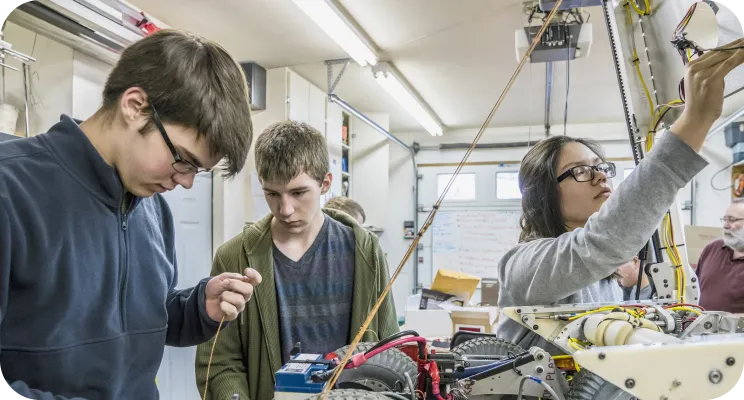
Dive into the world of knowledge and information that can enrich your experience. Exploring new topics and ideas helps develop your thinking and broaden your horizons. Don't miss the opportunity to learn more about the most interesting aspects of your life. Pay attention to various sources of information to stay informed about the latest trends and events. Reading articles, books, and research will help you deepen your knowledge and improve your skills in various fields. Begin your journey to new discoveries today. Experts discuss the challenges of career guidance for schoolchildren and emphasize that a complete solution is impossible. With the diversity of professions and a rapidly changing labor market, the importance of choosing a career early becomes clear. Despite efforts to help students identify their interests and abilities, not everyone can be successfully guided onto a path that matches their potential. Career guidance requires a comprehensive approach that includes not only information about professions but also the development of personal qualities. The lack of a universal solution in this area underscores the need for an individual approach to each student, making the career guidance process complex and multifaceted.
Can a University Develop Independence in Students?
Participants in the Higher School of Economics' strategic project "Human Success and Independence in a Changing World" are actively exploring the key aspects influencing personal development and adaptation in the context of modern change. The project aims to analyze the factors that contribute to success and the development of independence in individuals, taking into account economic, social, and cultural changes. The project participants strive to identify best practices and recommendations that will help people successfully cope with the challenges arising in a rapidly changing world.
Venue: International Congress "Language, Culture, and Technological Transitions: New Facets of the Human" at Tyumen State University. The congress will provide a unique platform for discussing the interaction of language, culture, and technology, as well as their impact on modern society. Participants will be able to exchange experiences and ideas, thereby promoting the development of scientific research in this field.
Proactivity is a person's ability to anticipate events and actively act to prevent or improve them. This quality is developed through a combination of personal responsibility, initiative, and decision-making skills. Proactive individuals do not wait for problems to arise, but try to prevent them by demonstrating creativity and resourcefulness.
In Russian education, proactivity is becoming an increasingly important element of educational programs. Schools and universities are implementing various approaches to developing this quality in students. One method is project-based learning, where students work on real-world problems, which helps them develop initiative and critical thinking. Also important is creating an environment that encourages discussion and the exchange of ideas, which contributes to the development of a proactive attitude.
Another approach to developing proactivity is the inclusion of social projects and volunteer initiatives in the educational process. This helps students not only apply their acquired knowledge in practice but also understand their role in society, which fosters responsibility for their actions.
Thus, proactivity is becoming an important component of modern education in Russia, helping prepare students for the challenges of the future and develop a proactive approach to life.
As part of a large-scale, multi-year study, the Higher School of Economics (HSE) is implementing the strategic project "Human Success and Independence in a Changing World." At a discussion devoted to proactivity as a theoretical and practical issue in Russian education, project coordinator Yulia Koreshnikova presented information on the competencies inherent in proactive people, as well as ways to develop them in the educational system. The project emphasizes the importance of developing proactive skills in students, which is becoming especially relevant in the context of rapid changes in society and the labor market.
According to a survey conducted by the "Russia – Land of Opportunity" platform, a decline in agency among students at Russian universities has been observed from their first to fourth years. Agency implies an individual capacity for creative action. The question is whether it is possible for students to become more conscious, active, and independent with each passing year. Some participants in the discussion argue that the university's influence on the student's personality is significantly limited, while others propose revising teaching methods to increase student engagement and activity.
At the congress at Tyumen State University, not only issues of proactivity were discussed, but also the application of neuroscience in the educational process, with a particular emphasis on inclusive education. These topics represent important areas in the field of education, contributing to the improvement of the quality of teaching and the adaptation of educational methods. Neuroscience opens new horizons for understanding the individual characteristics of students, which is especially relevant in the context of inclusive education.
Read more:
21st Century Skills: Reflection in the Federal State Educational Standard and the Reality of Their
21st-century skills play a key role in the educational system and are mentioned in the Federal State Educational Standards (FSES). However, the question arises: are they actually being implemented in the educational process?
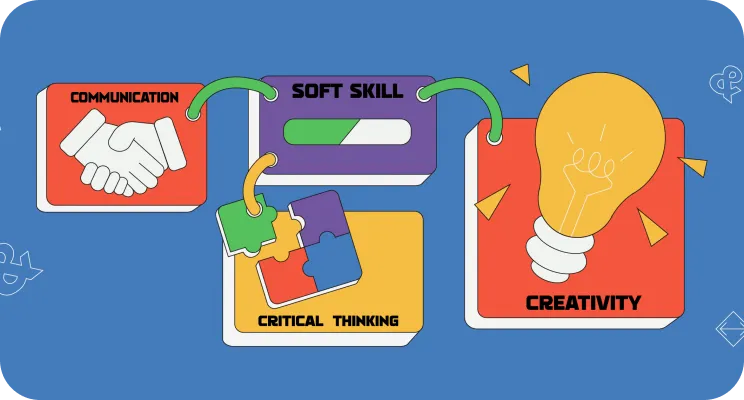
The FSES emphasizes the importance of developing students' competencies necessary for successful life and work in the modern world. These skills include critical thinking, creativity, teamwork, and digital literacy. Despite this, in real-life practice, educational institutions often face difficulties in effectively implementing these skills in the educational process.
At the school level, it is important not only to mention 21st-century skills but also to have methods that help students develop them. Teachers must be prepared to use interactive teaching methods that promote the development of the necessary competencies. Thus, the relevance of the issue of truly teaching 21st-century skills is becoming increasingly clear.
In conclusion, although 21st-century skills are stipulated in the Federal State Educational Standard, it is important for educational institutions not only to talk about them but also to actively implement them in the educational process. This will help prepare the new generation for the challenges of the modern world.
How the education system in Russia developed
Literary scholar and writer Alexander Arkhangelsky, together with invited researchers, discusses current topics in literature and culture. During the meetings, questions are raised about the significance of literary works, their influence on society and contemporary culture. The program's guests share their views and analyze the work of famous authors, which allows for a deeper understanding of literary trends and their development. Alexander Arkhangelsky's interaction with experts creates a unique atmosphere for discussion and opens new horizons in understanding literature.
Venue: Arzamas platform.
Education in the Russian Empire, the USSR, and the Russian Federation has undergone significant changes and reforms that shaped its development from the time of Peter the Great to Boris Yeltsin. In the early 18th century, Peter the Great initiated the creation of the first educational institutions, which became the basis for the formation of the education system in Russia. In the 19th century, reforms carried out by Alexander II led to the creation of zemstvo schools, making education more accessible to the peasant population.
With the transition to the Soviet Union in 1917, education became a priority for the state. The introduction of universal education and the eradication of illiteracy became key areas of educational policy. In the 1930s, a mandatory eight-year period of study was introduced, and the higher education system underwent significant changes, facilitating the training of specialists for various sectors of the economy.
With the collapse of the Soviet Union in 1991, a new era began for Russian education. The 1992 reform, aimed at decentralization and the transition to a market economy, led to a restructuring of the educational system. At this time, the emphasis began to shift to the quality of education and its compliance with the demands of the new era.
Thus, the development of education in Russia from Peter the Great to Boris Yeltsin underwent a number of significant changes, each of which impacted the accessibility and quality of educational services. These reforms and projects became fundamental in the formation of the country's modern educational system.
In a podcast created with the support of the Rybakov Foundation, Alexander Arkhangelsky discusses important events in the history of Russian schools and universities with historians. These conversations challenge many established notions, including the myth that Russian secular education arose solely thanks to Peter the Great. Some "myths," upon closer examination, prove to be true. Please note that the project is still ongoing, and new podcast episodes are released every week.

Study also:
The first universities in Europe and Russia appeared in the Middle Ages and played a key role in the development of education and science. The University of Bologna, founded in 1088, is considered the first university in Europe. It set the standard for higher education institutions, focusing on the liberal arts, law, and medicine.
In the 12th and 13th centuries, universities began to emerge in other European countries, including Paris, Oxford, and Cambridge. These institutions became centers of intellectual life, attracting students and faculty from across the continent. University education was based on Latin and classical literature, which contributed to the spread of humanistic ideas.
In Russia, the first universities appeared somewhat later. Moscow University, founded in 1755, was the first institution of higher education in the country. It was created to train specialists in various fields of knowledge and became an important center of education and science in Russia.
Thus, universities in Europe and Russia have played a significant role in shaping educational traditions and developing science and culture. These institutions continue to be important centers of knowledge and innovation, contributing to the development of society and the economy.
How to choose between a ready-made course and your own development in corporate training
Sofia Ratnikova, Head of B2B at Netologia.
The Teachbase podcast "Experto Patronum" provides a unique opportunity to immerse yourself in the world of expertise and patronage in education. This podcast discusses current topics related to learning, skill development, and the implementation of new approaches in the educational process. The podcast hosts share their knowledge and experience to help listeners better understand modern trends in education and training. Join us to learn about the latest innovations and gain valuable insights from education experts.
When choosing between a turnkey solution and creating a custom course for employee training, it's important to consider several factors. Turnkey solutions can be effective in situations where quick and scalable training on standard processes or skills is required. These courses are often developed by professional instructors and can be cost-effective. They are ideal for mass training when you need to reach a large number of employees with minimal investment.
However, if your organization has unique requirements or specific processes, creating a custom course may be a more suitable solution. Custom courses allow you to tailor content to your company's needs, taking into account the specifics of your business and the skill level of your employees. Furthermore, such courses can include elements that make training more interactive and engaging, which promotes better retention.
Thus, the choice between a turnkey solution and a custom course depends on your training goals, business specifics, and budget. The right approach will help ensure effective employee training and improve their skills.
As customers become more knowledgeable, offering ready-made corporate training courses is becoming more difficult. Sofia Ratnikova emphasizes that ready-made content can effectively address a variety of challenges within a company. Often, minor adaptations are sufficient to ensure the same course can be successfully implemented across different organizations. However, a standard course is insufficient to align the knowledge of employees within a single department with varying experience levels. The podcast discusses how to evaluate whether a customized course is worth the cost, how a customer's brief is similar to a doctor's appointment, and the differences in employee motivation when training on ready-made and customized courses.

Redesigned Text:
For up-to-date information and helpful tips, be sure to check out our materials. We offer helpful articles to help you understand a variety of topics. Don't miss the opportunity to expand your knowledge and improve your skills. Read our publications to stay up-to-date with the latest trends and news.
The corporate training market can be compared to the AvtoVAZ market: it offers a limited amount of external content. The main reason is that many companies prefer to develop their own training programs, tailored to their specific needs and corporate culture. Internal courses allow organizations to more effectively transfer knowledge and skills that align with their tasks and goals.
Furthermore, internal content provides a greater degree of control over the quality of training and allows for quick adjustments to courses in response to business changes. This makes corporate training more relevant and effective in a rapidly changing market. External courses may not take into account the unique aspects of a business, which reduces their value to employees.
Therefore, corporate training requires flexibility and a customized approach, which explains the lack of external content in this market. Developing in-house courses is becoming a priority for many companies seeking to improve the skills of their employees and ensure their competitiveness.
What internal management practices do different universities use?
Researchers at the University Development Laboratory at the Higher School of Economics study and analyze processes related to the development of the university system. They study best practices, implement innovative approaches, and develop recommendations for improving the quality of education and university management. The laboratory's work is aimed at improving the educational environment and adapting universities to modern challenges.
You can find this content on the YouTube channel of the Institute of Education.
Differences in university management practices have a significant impact on their effectiveness and results. These differences are due to a variety of factors, including the cultural, economic, and political conditions in the countries where the institutions are located.
First, cultural characteristics influence approaches to management. For example, some countries emphasize tradition and hierarchy, while others favor innovation and flexibility. This is reflected in the management structure, interactions between faculty and administration, and approaches to student learning.
Second, economic conditions also play a significant role. Universities in resource-constrained countries may face pressure to optimize their processes and seek alternative sources of funding, which can lead to more creative management practices. In contrast, institutions in economically developed countries often have greater opportunities to implement modern technologies and management methods.
Political factors, such as government support for education and legislative initiatives, also significantly influence the management of universities. In countries with strict government control, management may be more centralized, limiting the autonomy of educational institutions. At the same time, in countries with a more liberal political system, universities can make more independent decisions, which contributes to the development of innovative practices.
Thus, differences in university management practices are influenced by many factors and are critical to their success and competitiveness in the international arena. Effective management practices can significantly improve the quality of education and ensure a better future for students.
Researchers Alexey Egorov and Daria Platonova conducted an analysis to find out how university management practices affect their performance. In particular, they examined the relationship between graduate employment rates and the number of published scientific articles. This research can help understand the role of effective management in increasing the competitiveness of educational institutions and the quality of education.
During preparation for the study, it became clear that for an accurate assessment, it was necessary to divide the sample of Russian universities into at least two groups: universities focused on educational activities and research universities. This division will allow for a more accurate analysis and comparison of their work, taking into account the characteristics of each group.
Research universities typically demonstrate an average revenue 3.5 times higher than that of educational institutions. These universities have almost twice the number of faculty and research staff, and they also have higher average Unified State Exam (USE) scores among applicants. Various practices are used to effectively manage these universities. At research universities, success is often linked to faculty autonomy, while at educational institutions, a more effective model is one in which the rector's office actively supports all external contacts.
Read also:
Scientists' research has revealed the level of freedom at Russian universities. The analysis covers various aspects of academic independence and self-determination of educational institutions. As a result, the main factors influencing the autonomy of universities, as well as their ability to make independent decisions in research and educational activities, were identified. These data can help understand current trends in the Russian higher education system and identify areas for improving the operating conditions of universities.
Humanities vs. Techies: Whose Future?
Sergey Titov, Deputy Director of the North-West Institute of Management at RANEPA, and Anton Zarubin, Vice-Rector for Digital Transformation at the Bonch-Bruevich St. Petersburg State University of Telecommunications, are key figures in the field of management and digital technologies in education. Their experience and knowledge in the field of management and implementation of digital innovations contribute to the development of educational processes and improving the quality of education. They actively participate in the formation of strategies aimed at integrating digital solutions into educational institutions, which allows them to adapt curricula to modern requirements.
Visit our YouTube channel "Roman s Akademiei" (Romancing the Academy) to gain access to unique content and educational materials. Here you will find video tutorials, lectures, and interviews with experts that will help expand your knowledge and skills. Don't miss the opportunity to grow with us. Subscribe to the channel and stay updated with new videos.
The need for humanities majors to immerse themselves in technology, and for techies to develop humanities skills, is becoming increasingly relevant in the modern world. Humanities, such as philosophy, sociology, and psychology, help develop critical thinking, creativity, and communication skills. These qualities are becoming increasingly important in a rapidly changing technological environment, where the ability to adapt and interact with different people is essential.
On the other hand, for technology professionals, knowledge of humanities aspects can significantly increase their competitiveness. Understanding human needs and cultural context helps create more effective and user-friendly technologies. This is especially important in fields such as software development, where user behavior and preferences must be taken into account.
Thus, the cross-fertilization of humanities and technical knowledge can lead to a more holistic approach to solving modern problems. In the context of digitalization and globalization, the integration of these fields of knowledge is becoming essential for successful professional activity. Therefore, it is important to strive to develop both technical and humanities skills to be prepared for the challenges of the future. We live in an era of technological innovation, and nowadays even humanities specialists must master the basics of programming. Some believe that Python should be the first "foreign language" to learn. However, it is also often emphasized that technical specialists need humanities knowledge. How can we develop well-rounded specialists, and what foundation should be laid from an early age? These questions formed the basis of our discussion. Anton Zarubin argues that implementing deep blended learning, which allows a person to be equally competent in technical and humanities fields, requires significant resources. Deep immersion in both fields is not always necessary, as not all areas of knowledge from different disciplines are harmoniously combined. An example of such interaction is mathematical linguistics, where mathematics and linguistics have found common ground. In most cases, basic knowledge is sufficient to effectively collaborate on related projects and communicate in a common language. Sergey Titov, who has a technical background, recalled that when he transitioned to management, he needed legal and psychological knowledge. This realization prompted him to fill these gaps in his education. This example illustrates that specialists with a technical background may at some point need a background in the humanities. Furthermore, Titov believes that studying philosophy also brings significant benefits in developing critical thinking and decision-making skills. Learning a programming language as a first foreign language may be less effective than introducing algorithmic theory as part of mathematics education in grades 9 and 10. According to expert Zarubin, an emphasis on algorithmic theory promotes the development of logical thinking and analytical skills in students. This will help not only in mastering programming but also in solving complex problems in other fields. Introducing algorithmic thinking into the educational process can significantly improve the quality of education and prepare students for the modern labor market requirements.

Study additional materials:
IT Education Trends in EdTech: Humanities Skills for Techies
In the Modern World IT education is undergoing significant changes. One of the key trends is the need for humanities skills among technology professionals. In a rapidly changing labor market, professionals with both technical and humanities competencies are becoming increasingly in demand.
EdTech education actively incorporates elements of creative thinking, communication, and emotional intelligence. These skills help IT specialists better interact with teams and clients, as well as find original solutions to complex problems.
Furthermore, areas such as working with big data and artificial intelligence are becoming increasingly relevant, requiring specialists not only to have deep technical knowledge but also to analyze and interpret information from a humanities perspective.
Thus, integrating humanities skills into IT education opens new horizons for career growth and professional development. EdTech continues to adapt to these demands by offering innovative training programs and courses that help professionals develop essential interdisciplinary skills.
The Methodologist profession from scratch to PRO
You will improve your skills in developing curricula for online and offline courses. Master modern teaching practices, structure your experience, and become a more sought-after specialist.
Find out more