
Contents:
- How digital education will change people
- Will the classroom-lesson system die out due to digitalization?
- Forecast: Who will technology in education not be able to replace?
- What's wrong with the bachelor's degree and myths about the Unified State Exam
- How educational board games are made
- How to control the quality of the curriculum
- Prospects for private investment in education

Learn: The Profession of a Methodologist from Scratch to PRO
Find out moreHow Digital Education Will Change People
Victor Bolotov, Scientific Director of the Center for Psychometrics and Measurement in Education at the National Research University Higher School of Economics, as well as Tatyana Ivanova, Head of the Education Department at the Scientific and Technical Center of Moscow State University "Vorobyovy Gory", Alexander Gulin, Director of the private school "Snegiri" and expert of the Federal Target Program "Modern Digital Educational Environment", Petr Mazaev, IB DP Coordinator at the European Gymnasium, Kirill Prudnikov, Head of the Methodological Practices Programs at Skillbox, and Marina Kharakhordina, Head of the Methodological Department at Skillbox — all of them are leading specialists in the field of education and teaching methodology. Their experience and knowledge contribute to the development of educational practices and the integration of modern technologies into the educational process, which is especially relevant in the context of the digitalization of education.
Webinars are held on the Skillbox platform. This convenient online learning solution allows you to gain knowledge at a convenient time and in a comfortable environment. Skillbox offers a variety of topics and courses to help you develop professional skills. Join webinars on Skillbox and improve your competencies in your chosen field.
The society of the future is being shaped by the digital transformation of education. New technologies and teaching methods are changing the approach to knowledge acquisition, which, in turn, affects the structure and dynamics of society. Digitalization of education facilitates access to information, expands horizons for self-development, and promotes the development of critical thinking. Students have the opportunity to study anywhere and anytime, creating a flexible educational environment. As a result, we can expect a more educated and technologically advanced society, where adaptability and innovative thinking are key to success. Digital transformation also facilitates the integration of interdisciplinary knowledge, enabling people to better address the complex challenges of our time. Thus, the future of society will be determined not only by technological advances but also by how effectively we can use education to shape progressive and sustainable social structures.
The digitalization of education became the central topic of discussion, but experts also touched on the impact of the Unified State Exam (USE) on the educational process and the characteristics of the "USE generation." The introduction of this exam format, like other mass testing, marked a significant step in the transformation of the education system. This is not the only significant event in the history of education; one of the key moments was the invention of printing, which opened up access to knowledge and made education widespread. Considering these factors helps better understand contemporary trends in education and their impact on students.
Digitalization is becoming a crucial milestone in the education system, exerting a significant transformational impact. Petr Mazaev notes that we are currently in the process of disintegrating the classroom-lesson system and all the teaching methods associated with it. This creates the need to develop new teaching methods that align with modern conditions. Viktor Bolotov, in turn, expresses doubts about the unity of teaching methods in the digital space. He suggests that the situation is so diverse that different approaches to teaching may emerge, adapted to specific needs and contexts. Thus, the digitalization of education requires flexibility and openness to new teaching methods and practices. Digital education is already having a significant impact on humanity, and forecasts for its future development are of great interest. Unlike traditional teaching methods, digital technologies open up new horizons for pupils and students, providing access to knowledge and resources from anywhere in the world. The transition to this learning format changes not only the methods of obtaining information but also the interactions between teachers and students.
Participants in recent discussions emphasize that digital education can facilitate a more personalized approach to learning, allowing each individual to adapt the pace and content of learning to their needs. It also provides the opportunity to continually update knowledge and skills, which is especially relevant in a rapidly changing world.
Thus, the impact of digital education on the future of humanity will be multifaceted, including changes in social structure, the economy, and culture. With the development of technology, we can expect the emergence of new teaching methods that will significantly change the usual educational practices and prepare new generations for the challenges of the modern world.

Reworked text:
Study also:
Discussion on the impact The impact of digital tools on education is controversial. On the one hand, these tools make the educational process more transparent and accessible. They allow students and teachers to easily track progress, share knowledge, and access various resources. However, on the other hand, the use of technology in education can lead to a dehumanization of the process. Personal interaction between students and teachers is reduced, which can negatively impact the development of social skills and empathy. It is important to find a balance between the use of digital technologies and preserving the human aspect of education to ensure the full development of students.
Will the classroom-lesson system disappear due to digitalization?
Ivan Karlov, Head of the Laboratory for Digital Transformation of Education at the National Research University Higher School of Economics, is engaged in the implementation of modern technologies in the educational process. His work is aimed at optimizing educational processes and developing digital skills in students. Ivan Karlov actively researches new approaches to teaching using digital tools, which contributes to improving the quality of education. With the rapid development of technology, his expertise is becoming especially relevant for educational institutions striving for innovation and improving educational outcomes.
The "Schedule for the Day After Tomorrow" podcast offers listeners unique content covering current topics and interesting events. In each episode, we discuss important issues, share useful tips, and analyze trends that may impact our future. Join us to stay up-to-date with the latest news and gain new ideas for everyday life. The podcast is available on popular platforms, making it convenient to listen to at any time. Discover a world of new knowledge and engaging discussions with "Schedule for the Day After Tomorrow."
The digitalization of education is fundamentally changing Russian schools, introducing new approaches to learning and focusing on results. Modern technologies allow us not only to improve the quality of teaching but also to adapt the educational process to the individual needs of each student. The use of interactive platforms and online resources helps increase student engagement and improve their academic outcomes.
With digital tools, teachers can conduct knowledge assessments, track student progress, and promptly adjust their teaching methods. This allows them to create more effective educational pathways and develop key competencies necessary for success in a digital society.
Thus, the digitalization of education in Russian schools not only facilitates access to knowledge but also fosters a new, results-oriented learning culture. It is important that all participants in the educational process—from students to teachers—actively utilize the opportunities offered by the digital age to achieve the most effective results.
Digitalization is significantly changing education, particularly the classroom-lesson system. As Ivan Karlov notes in his podcast, this system is relatively new compared to the concept of personalized learning. The classroom-lesson system emerged in the era of mass education, which is not so long ago. It achieves maximum effectiveness when one teacher interacts with a large group of students. However, in this format, a teacher cannot give due attention to each child. Modern digital tools enable a personalized approach to learning, harking back to the origins of the educational process, when learning was based on personalized methods. Thus, digitalization opens new horizons for improving the educational process, allowing us to take into account the unique needs of each student.
Personalization in education is realized through individual educational trajectories (IET), allowing schoolchildren and students to independently select a set of subjects. There is also a model of adaptive learning, in which instruction is not carried out according to a single scenario for the entire class, but takes into account the individual characteristics of each student, whether this relates to the speed of assimilation of material or preferences for a learning format. Modern universities operating under the IET model have undergone significant changes: fixed study groups are no longer required to create individual schedules. This transformation is possible thanks to digital technologies, which make the educational process more flexible and personalized.
The podcast discusses the importance of changing the approach to the educational process in light of the introduction of digital tools. Digital technologies alone cannot lead to significant changes without an internal readiness to use them and transform teaching methods. The inadvisability of a negative attitude toward digitalization, for example, banning the use of tools like ChatGPT in universities or smartphones in schools, is also discussed. The question arises of how to interact with "digital old believers" who are unwilling to accept new technologies in the educational environment. It is important to look for ways to integrate digital solutions into education to make it more effective and modern.

Read also:
Individual educational trajectories in universities: principles of work and prospects
Individual educational trajectories in Individualized learning paths (ILPs) represent an innovative approach to learning in higher education institutions that allows students to tailor their learning to their personal interests and career goals. This method involves the creation of individualized curricula that take into account a student's prior experience, skills, and preferences. Individualized learning paths (ILPs) are built on the principles of flexibility and personalization. Students have the opportunity to choose courses that align with their career aspirations and determine their learning pace. This promotes deeper learning and increases motivation. The potential for implementing ILPs in universities is vast. They help create more competitive professionals prepared for the challenges of the modern labor market. Furthermore, this approach allows universities to better adapt to changes in the educational environment and employer demands. As a result, students acquire not only theoretical knowledge but also practical skills that are in demand in their professional activities.
Thus, individual educational trajectories at universities open new horizons for students and create opportunities for a higher-quality education that meets modern requirements.
Forecast: Who will technology in education not be able to replace?
Anna Babina, a methodologist at Center-game and the author of a Telegram channel dedicated to technology in modern education, shares her experience and knowledge. Her work is aimed at introducing innovative teaching methods that help students develop critical thinking and creativity. Anna actively researches modern educational technologies and shares this knowledge with the audience, making her an expert in this field.
The LLLab podcast "They won't tell you in courses" offers a unique opportunity to learn about the most important aspects that are not covered in educational courses. In each episode, experts share their knowledge and experience, helping listeners understand complex topics and gain practical advice. The podcast is designed for anyone who strives for development and wants to keep up with current trends. Join us to expand your horizons and gain useful insights.
In modern education, professionals are actively using technological solutions to improve the learning process. This applies not only to teachers but also to methodologists, administrators, and other specialists. Technologies such as artificial intelligence, online platforms, and data analytics are opening up new horizons in learning. Methodologists can implement innovative approaches by creating adaptive programs and individualized courses.
However, the question of competition with artificial intelligence arises. Methodologists should not fear AI, as technology is designed to complement, not replace, human labor. AI can automate routine tasks, giving methodologists more time for creativity and the development of new educational strategies. Rather than viewing AI as a threat, education professionals should view it as a tool that enhances the quality of learning and the effectiveness of educational processes.
Therefore, the integration of technology into education opens new opportunities for methodologists and other specialists, allowing them to focus on creating valuable content and improving the learning experience.
Anna Babina has significant experience in educational technology solutions and offers consultations to professionals at various levels. She has a deep understanding of the latest advances, including the potential of ChatGPT and other neural networks in the educational process. Anna believes that the pace of technology adoption in formal education will slow, which is not a negative aspect. In her opinion, university education should maintain its stability and resist rapid changes driven by fashion. In the podcast, you will learn who needs to revise their curriculum faster and what sources of inspiration can help in this process.
Read also:
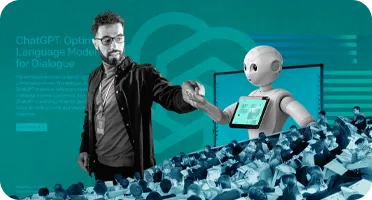
New practice of using ChatGPT in educational institutions: how schools and universities use this technology to their advantage.
ChatGPT is becoming an essential tool in modern educational processes. Schools and universities use it to support learning, improve understanding of course material, and increase student engagement. The technology allows for the creation of interactive assignments, the generation of project ideas, and the provision of instant answers to questions, significantly facilitating the learning process.
Teachers also use ChatGPT to develop curriculum, create tests, and create assessments. This makes the educational process more effective and tailored to student needs.
With ChatGPT, students can receive additional support outside of class hours, promoting deep learning and developing critical thinking. This technology opens new horizons for education, enabling the integration of innovative teaching methods into traditional curricula.
As a result, the use of ChatGPT in schools and universities not only improves the quality of education but also develops the skills students need for a successful career in the future.
What's wrong with a bachelor's degree and myths about the Unified State Exam
Boris Ilyukhin is the director of the research center for education quality assessment and management systems at the RANEPA Institute of Educational Development. In this role, he is responsible for the development and implementation of effective methods for assessing the quality of educational programs, as well as for improving education management systems. His work is aimed at raising educational standards and introducing innovative approaches to learning assessment.
The "Flight Analysis" program on Sputnik Radio offers in-depth analysis of current events and topics. The hosts discuss important issues, providing listeners with unique perspectives and expert opinions. Each episode of the program is aimed at helping the audience better understand complex situations and make informed decisions. By listening to "Flight Debriefing," you'll receive high-quality information and be able to follow the latest news in various fields. Join us on Sputnik Radio and stay up to date with the most significant events.
The modern education system requires change, especially in matters related to the Unified State Exam (USE) and entrance exams. The main reason for the need for reform is the ineffectiveness of current methods of assessing student knowledge. The USE, as a unified examination format, does not always adequately assess the level of preparation of graduates and their critical thinking abilities.
Entrance exams to higher education institutions are also often ineffective, as they may not reflect the actual knowledge and skills of applicants. It is important to create a more flexible and adaptive system that will take into account the individual characteristics of each student and promote the development of their creative potential.
The educational system should focus on the practical application of knowledge and skills, rather than the rote memorization of information. The introduction of new assessment methods, such as project work and portfolios, can contribute to a more complete understanding of the material being studied and help students prepare for the real challenges of the future.
Therefore, changing the education system, including reforming the Unified State Exam (USE) and entrance examinations, is a necessary step to improve the quality of education and ensure a successful future for young people.
Boris Ilyukhin shared information about the structure of the Unified State Exam (USE) and described the university admissions system that existed before its introduction. He explained how the USE provided additional opportunities for students from remote regions. The expert also dispelled five common myths about the USE, providing factual data and explanations that will help dispel misunderstandings and misconceptions associated with this system.
- "You can guess something in the Unified State Exam." In reality, it's very difficult, practically impossible.
- "The Unified State Exam is multiple-choice questions." In reality, such questions haven't been there since 2015.
- "The Unified State Exam is 'cramming.'" The expert is confident that the Unified State Exam has long been a tool for testing knowledge, and it's extremely difficult to teach this using a template, by solving similar problems, without a true understanding of the subject. This kind of training can earn you a few points, but to achieve high results, you really need to know the subject.
- "The Unified State Exam doesn't test your ability to think." In fact, a large number of questions in the Unified State Exam test the ability to formulate, argue, and prove. In the Unified State Exams for Russian language, social studies, and history, essays carry a lot of weight, requiring precisely these skills. Not to mention mathematics and physics.
- "You can only prepare for the top scores on the Unified State Exam with tutors." "I can tell you many stories about rural children who achieved those 100 points, even though I can guarantee they've never had a tutor in their village," Boris Ilyukhin assured.
This episode discusses the reform of the higher education system in Russia. We examine the key changes aimed at improving the quality of education, introducing innovative teaching methods, and adapting curricula to the modern labor market. We also emphasize the importance of improving teacher qualifications and modernizing the infrastructure of educational institutions. The goal of the education reform in Russia is to create a competitive and effective system capable of training specialists who can meet the challenges of the time.

Read more:
Quote of the week: "We will never return to the Soviet education system." This phrase highlights the changes that have occurred in education since the abolition of the Soviet model. Modern educational systems strive to implement innovative methods and technologies, adapting approaches to the needs of a new generation of students. It is important to pay attention to how these changes affect the quality of education and the training of specialists. Education today must be flexible and relevant to meet the demands of a rapidly changing world.
How Educational Board Games Are Made
Andrey Komissarov, known as the director of the "Data-Driven Human Development" program at University 2035, is a professional game practitioner. His son, Ivan Komissarov, is also involved in the project. Both specialists are actively involved in educational methods, using game-based practices to develop students' skills and knowledge. Their work is focused on introducing innovative approaches to the educational process, effectively adapting training to modern requirements.
The "Game Design Practice" channel stream offers a unique opportunity to immerse yourself in the world of game development. On our channel, you'll find useful tips, tutorials, and discussions on current game design topics. Join us to improve your skills and learn about the latest industry trends. Don't miss the chance to become part of a community where professionals share experiences and ideas. Streams are held regularly; stay tuned for updates and don't miss new episodes.
Game-based practices in education are an effective teaching approach that actively utilizes game mechanics to increase student engagement and motivation. They help develop critical thinking, collaboration, and communication skills, and foster a deeper understanding of the subject matter. Unlike traditional methods, game-based learning creates an interactive environment where students can apply knowledge and learn through experience.
Board game design differs from other game design approaches in its focus on interaction between players in a physical space. Board games require special attention to rules, mechanics, and component design, making them unique in the world of game design. Unlike digital games, board games provide direct contact between participants, which facilitates deeper social interaction and shared experiences.
Thus, game-based learning in education and board game design each have their own characteristics that allow them to use game elements to achieve educational goals. These approaches not only make the learning process more engaging but also effectively develop important skills needed for successful life in the modern world.
Educational games have a unique feature: they not only entertain but also teach by solving specific learning problems, rather than simply developing general skills. That's why such games are used in a wide range of settings, from kindergartens to corporate training. Andrey and Ivan Komissarov, professional game practitioners, work with a variety of clients and train teachers in educational game development. During the stream, they shared details of their methods and processes, allowing for a deeper understanding of how to create effective educational tools.
The discussion will explore the different types of board games and how their creation process begins. A strong background in this field and its development are crucial. The participants also discussed the challenges associated with the commercial success of board games and the reasons why board games continue to exist and not give way to computer games. Board games remain popular due to their unique interaction and social aspect, making them appealing to players of all ages.

Read also:
Games in education: structure and purpose
Games in education are a powerful tool that Games are actively used to enhance the educational process. They help students acquire new knowledge and skills, making learning more engaging and interactive. The main goal of educational games is to create motivation for learning, which promotes deeper understanding of the material. Games can range from simple board games to complex digital formats such as simulations and quests. Each of these formats has its own characteristics and can be applied in different educational contexts. For example, board games develop team spirit and critical thinking, while digital games can offer unique scenarios for the practical application of theoretical knowledge. Using games in the educational process not only increases student interest but also develops important skills such as problem solving, collaboration, and creative thinking. It is important to note that games should be integrated into the curriculum, taking into account the educational goals and needs of students. This will allow for the most effective use of their potential and the achievement of high learning outcomes.
Thus, games in education are an important element that helps make the learning process more dynamic and effective.
How to Monitor the Quality of a Curriculum
Maksim Skryabin, a consultant in the field of learning analytics and data-driven learning design, a PhD in Physics and Mathematics, and a lecturer at ITMO University, together with Ekaterina Bezyzvestnykh, an educational experience designer, methodologist, and a PhD in Pedagogical Sciences, present a unique approach to creating effective educational programs. These specialists have deep knowledge and experience in developing educational materials that are focused on data analysis and modern pedagogical practices. Their joint work is aimed at improving educational processes and achieving high learning outcomes, which makes them experts in the field of education.
On the ITMO Online YouTube channel, you will find a variety of educational materials dedicated to current topics in the fields of information technology and science. The channel offers lectures, workshops, and courses from experts, allowing you to deepen your knowledge and expand your skills in various fields, such as programming, artificial intelligence, data science, and other modern technologies. Subscribe to ITMO Online to never miss new videos and stay up-to-date with the latest trends in IT.
Understanding the ineffectiveness of a curriculum is an important aspect of the educational process. The first sign may be low student performance. If students fail to achieve their goals, this may signal the need to revise the course content. It's also worth paying attention to student engagement: boring and monotonous classes can lead to apathy and a lack of interest in learning.
Another indicator is high student turnover. If students frequently drop out of a program or do not complete a course, this may indicate problems with the learning structure. It is also useful to collect feedback and conduct surveys among students to understand their opinions of the program. Positive feedback may indicate its effectiveness, while negative comments point to potential problems.
It is important to analyze results and make changes to the curriculum in a timely manner. Regularly updating materials, introducing new teaching methods, and using modern technologies can significantly improve the quality of education. Therefore, early identification of curriculum issues and their adjustments will improve learning and increase student satisfaction.
This webinar recording will be useful for anyone involved in designing curricula in higher education, continuing professional education, and corporate training. The webinar focuses on the topic of course quality assessment. Rather than theoretical discussions of potential assessment approaches and the shortcomings of traditional methods, it presents specific, practical examples of course quality assessment. This material will help improve assessment approaches and introduce changes to the curriculum design process.
Maxim Skryabin shares information on how course quality assessment is carried out within the ADDIE model. He explains the Phillips model and the quality metrics for continuing professional education (CPE) chosen by EdTech companies. The principle of constructive consistency is also discussed. Ekaterina Bezyzvestnykh discusses the concept of a syllabus, its difference from a subject-specific syllabus, and its role in course quality assessment. In conclusion, two case studies will be analyzed and answers to pressing questions will be given.

Reworked text:
Please pay attention to the following materials:
Assessing the quality and effectiveness of an online course is a key aspect of the educational process. There are various metrics that help analyze the success of a course and its impact on students. In this article, we'll look at 11 important educational metrics that will help you get a complete picture of the quality of your online course.
The first metric is course completion rate, which shows how many students completed the course compared to those who started it. The second metric is student engagement, which measures participant activity and their interaction with the course materials. The third metric is student satisfaction, which can be assessed through surveys and feedback.
The fourth metric is student GPA, which provides insight into how effectively students are learning the material. The fifth metric is the number of questions and help requests, which can indicate the difficulty of the course. The sixth metric is learning velocity, which measures how long it takes students to complete the course.
The seventh metric is student repeat participation, which shows how interested they are in additional courses or materials. The eighth metric is the level of knowledge gained as a result of the training, which can be assessed through tests and exams. The ninth metric is the balance between theory and practice, which is important for effective learning.
The tenth metric is the analysis of student feedback, which can help improve the course. The eleventh metric is the percentage of students who apply their acquired knowledge in practice, which is an important indicator of learning success.
Using these 11 educational metrics, you will be able to conduct an in-depth analysis and evaluate the quality and effectiveness of your online course, which in turn will help you improve the learning process and increase student satisfaction.
Prospects for Private Investment in Education
The event will feature key figures such as Dmitry Anufriev, Deputy Head of the Office of the Commissioner for the Protection of Entrepreneurs' Rights in Moscow, Lyubov Dukhanina, Deputy Chair of the Supervisory Board of the Russian Society "Knowledge", and Igor Rybakov, entrepreneur and co-founder of the Rybakov Foundation. Participants will also include Vladimir Sedov, founder of Askona and the village of Dobrograd, and other experts in entrepreneurship and education.
The Rybakov Foundation community on the VKontakte social network is a platform for communication and experience exchange among fishermen. Here, participants can share their catches and fishing tips, participate in discussions, and receive the latest news from the world of fishing. Join us to stay up-to-date on all events, find like-minded people, and improve your fishing skills.
Philanthropists play a vital role in education, providing funding and support for initiatives aimed at improving the quality of education. Their contributions help create new educational institutions, develop additional education programs, and provide access to modern educational technologies. Thanks to the efforts of philanthropists, many students have the opportunity to study in the best conditions, which contributes to their personal and professional growth. Financial support can also be used for scholarships, making education more accessible to talented but low-income students. Philanthropic initiatives in education not only contribute to improving educational infrastructure but also inspire the next generation to actively participate in social development. Thus, philanthropists not only change the lives of individual students but also influence the future of society as a whole.
In his quote, Igor Rybakov expressed a desire for a world where entrepreneurs are valued not by material goods such as cars and yachts, but by the number of schools they build and the number of people they help. This idea became the central theme of a roundtable organized by the Rybakov Foundation. The event discussed approaches to corporate social responsibility, as well as the importance of education and youth support. Participants exchanged views on how entrepreneurs can contribute to societal development and improving the quality of life, emphasizing the importance of social initiatives and projects.
Currently, investors in private educational projects in Russia are driven by several key factors. The primary motivation is the possibility of achieving stable profits and improving the quality of education. The return on investment of such projects is becoming an increasingly pressing issue, and many investors are seeking effective models for achieving financial results.
There are numerous opportunities for investment in education, but barriers should not be ignored. These include high start-up costs, bureaucratic complexities, and the need to meet standards. Increasing private investment in the education sector is possible through government initiatives, simplifying the regulatory framework, and creating an attractive environment for investors.
Promising areas for social investors include schools, colleges, and universities. However, the most attractive projects remain in primary and secondary education, where competition is not yet as intense and there is scope for innovative approaches. Roundtable participants, including expert Lyubov Dukhanina, noted that no country can cope with the burden placed on its education system, highlighting the importance of private investment in improving the educational environment in Russia.
During the discussion, it became clear that legislative changes are needed, particularly in education, where public-private partnerships (PPPs) are not as effective as in infrastructure projects and healthcare. Vladimir Sedov and Dmitry Anufriev proposed the concept of "educational compulsory health insurance" (CHI). Dmitry Anufriev also cited the example of Kazakhstan, where schools in need of renovation are transferred to management companies. In this case, an investment project is concluded that guarantees the maintenance of free education, while introducing additional paid services. These services help offset investment costs and ensure the sustainable development of educational institutions.

Also explore:
Private schools can be important drivers of change in pedagogical practice. They often introduce innovative teaching methods that promote a deeper understanding of the educational material. Unlike public institutions, private schools have greater flexibility in developing their curriculum and can adapt it to the needs of their students. This allows for a personalized approach to each child, significantly enhancing the effectiveness of the educational process.
Private schools also often collaborate with parents and local communities, creating a closer connection between the educational process and real life. Such interactions contribute to the creation of a higher-quality educational environment capable of responding to changes and contemporary challenges.
Furthermore, private schools can attract highly qualified teachers who are committed to implementing best practices and sharing their experiences. This creates an environment for the exchange of knowledge and best practices, which ultimately enriches teaching practice overall. Thus, private schools play a key role in the development of educational approaches and can significantly influence the future of pedagogy.
The Profession of Methodologist from Scratch to PRO
You will improve your skills in developing curricula for online and offline courses. Master modern teaching practices, structure your experience, and become a more sought-after specialist.
Find out more