Contents:
Learn: Financial literacy: learning to manage a budget, Save and invest
Learn moreWhat is a recession
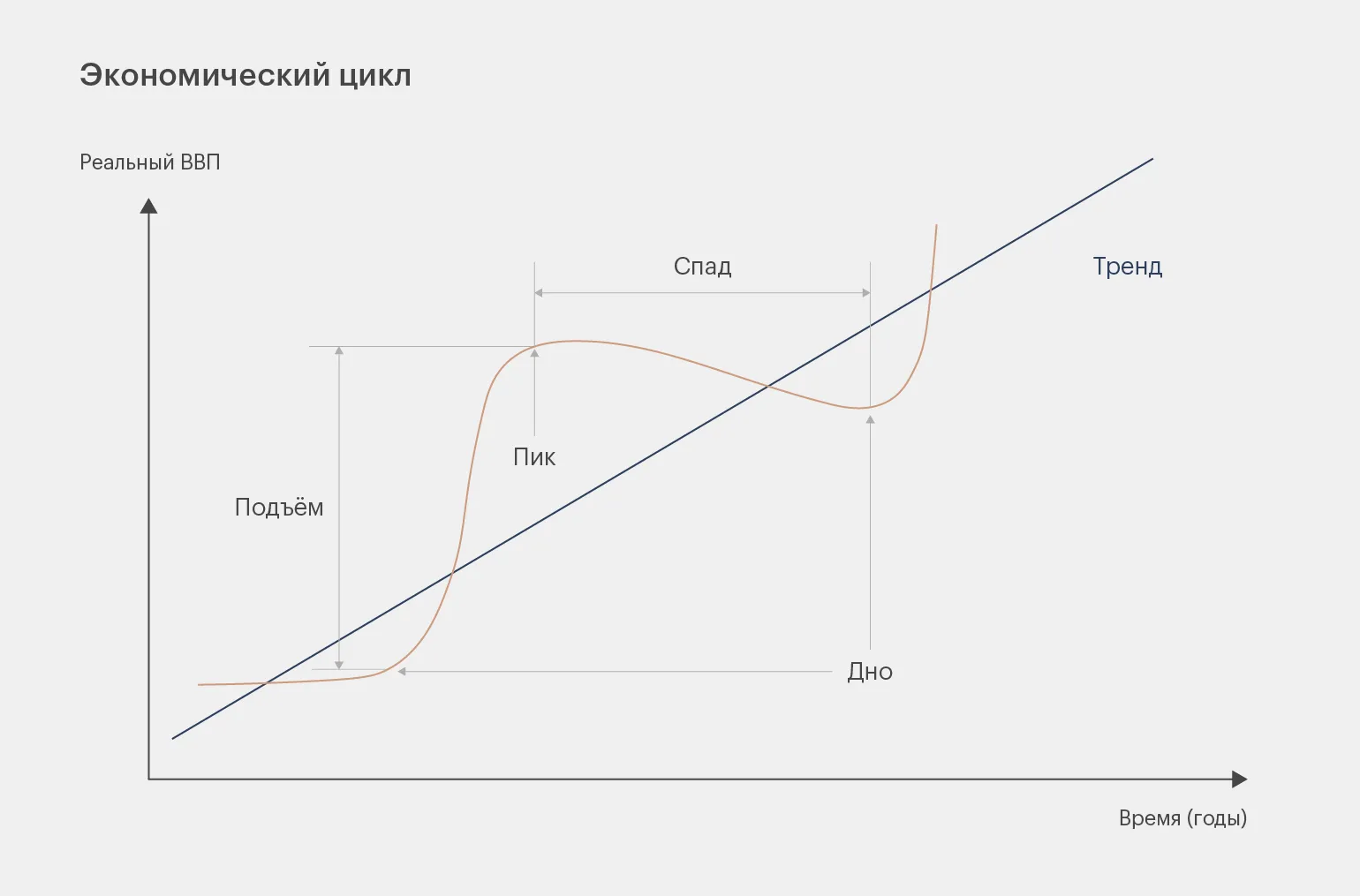
A recession (trough) is a period of declining economic growth lasting six months or more. During this time, the rate of production, consumption, and investment falls, and unemployment rises. A recession can last several months or years until the economy recovers.
Recessions are normal for the economy. Recessions can happen many times during the existence of a country. This is explained by the cyclical nature of the economy - every rise is followed by a decline and a bottom (recession), and vice versa, after every decline, the economy grows again.
Examples of recessions in the world and Belarus
All countries in the world have faced recessions. We will tell you about two recessions - the global and the Belarusian.
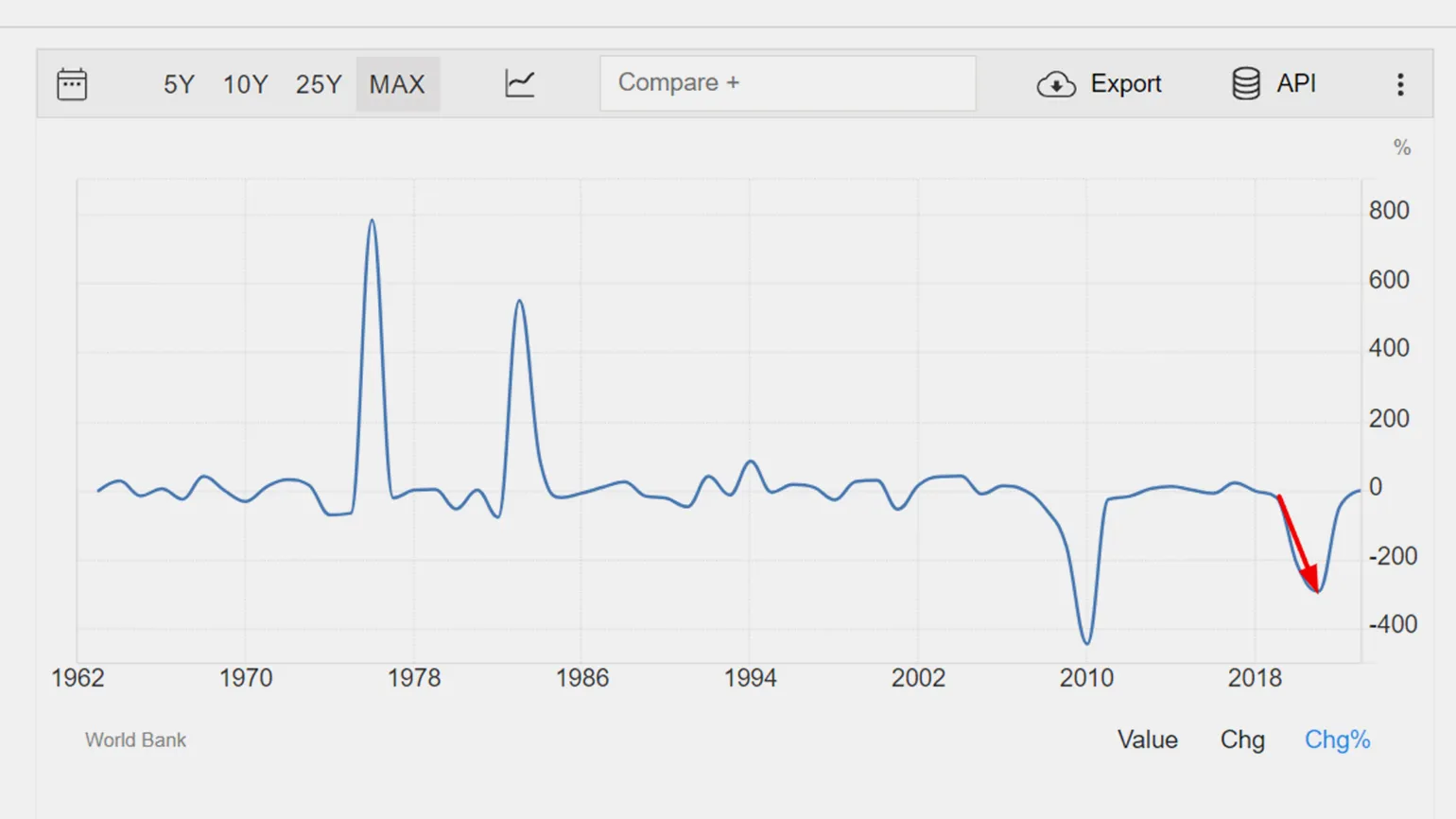
Recession in the world. This recession is also called the Great Recession. It took place from 2007 to 2009. Then the decline in economic growth affected all countries of the world, including the European Union, America, Russia, and China. Global GDP declined from the third quarter of 2008 to the first quarter of 2009.
The Belarusian economy entered a period of pronounced recession starting in 2022, as confirmed by official statistics from Belstat. By the end of 2022, the country's real GDP contracted by 4.7%, continuing to decline in 2023 (-1.5%). The deepest decline was recorded in the fourth quarter of 2023 (-2.9% compared to the same period in 2022).
What types of recessions are there?
Recessions are divided into V-, U-, W- and L-shaped. They differ in the speed of the decline and recovery of the economy.
A V-shaped recession is a rapid decline and rapid recovery of GDP. A V-shaped recession occurs during significant events that do not have long-term consequences. For example, this happened during the recession of 2008-2009. Against the backdrop of the global crisis, GDP in the world sharply declined, and then just as quickly recovered its previous values.
A U-shaped recession is a sharp drop in GDP, a long stay at a low point and then a sharp recovery. A U-shaped recession can last a year or two. For example, this is what happened in the United States: the recession began in 1990 and lasted until 1992, and the country's economy could not recover until 1993.
A W-shaped recession is a rapid decline and recovery, followed by another sharp decline and recovery of GDP. The last time a W-shaped recession occurred in the United States was in 1980 - it lasted until the end of 1892.
A L-shaped recession is a sharp decline and a long recovery of GDP. This is the most negative scenario for the state, companies, and the population. A striking example of such a recession is the Great Depression, which began in the United States in 1929 and lasted until 1933.
How to understand that a recession has come: what are the signs by which it is determined
Economists use two ways to define a recession.
The simplest way is to evaluate the change in GDP. If GDP declines for two or more consecutive quarters, this indicates an economic downturn. Most recessions meet this definition. For example, this was the case with the global recession and the recession in Belarus in 2022-2024, which we discussed above.
But this method is imperfect. Historically, there have been cases where recessions occurred with shorter periods of GDP decline. For example, in 2020 and 2021, the GDP decline lasted only three months each. However, the US National Bureau of Economic Research considered that there was a recession during these periods.
Therefore, when determining a recession, in addition to GDP, other indicators are often assessed:
- lending and consumption volumes;
- inflation;
- unemployment and income.
If lending and consumption volumes decline, Inflation is falling, unemployment is rising, and people's incomes are declining, which indicates a recession.
Why Recessions Happen
There is no consensus among economists on the causes of recessions. We will list three reasons that are most often mentioned in economics textbooks.
External factors - pandemics, wars, sanctions, global crises, and so on. For example, the pandemic triggered a global recession throughout the world. Due to disruption of supply chains, reduced production and rising unemployment, global GDP fell by 4.3% in 2020.
An overheated economy means increased demand and low unemployment. When demand for goods and services is high, businesses hire more people to produce more. To attract more workers, companies raise wages, spurring even more consumption. After all, when people have a lot of money, they spend more on purchases. Because of this, goods become more expensive, which provokes an increase in inflation.
As a result, the government intervenes: after this, demand and inflation fall, then production slows, and the economy goes into recession. We will explain why this happens below.
Asset bubbles are an increase in the price of an asset due to unreasonable demand. Asset bubbles can also be called price bubbles or financial bubbles. An asset bubble forms when an asset sharply increases in price solely due to increased demand, while the underlying price of the asset is significantly lower than its actual value.
Sooner or later, demand for such an asset falls, and with it the price of the asset falls. Usually, this happens sharply. For example, an asset bubble caused the recession in the US in 2008, when housing prices unreasonably increased, and banks issued mortgages without confirming the solvency of clients.
Because of this, a bubble had formed by 2008: housing was unreasonably expensive, and the volume of mortgage debt was very large. Banks began to massively sell off foreclosed apartments and houses, which led to a fall in real estate prices. As a result, the value of the collateral did not cover the mortgage obligations, which led to a large number of bankruptcies among investors and banks, and to the subsequent crisis and recession.
How the state fights recession
States of all countries are trying to make the stage of economic recovery longer and the downturn shorter. To end the recession as quickly as possible, the government uses fiscal policy, and the Central Bank uses monetary policy.
Fiscal policy is an instrument of state regulation of the economy. The government makes changes to the tax and public spending systems to achieve macroeconomic goals. In the event of a recession, the state can, for example, introduce tax breaks for companies from the sectors of the economy that have suffered the most in order to restore production.
Monetary policy is a set of government measures to manage cash flows. The main instrument of monetary policy is the key rate. With its help, for example, the Central Bank can regulate inflation. In the event of a recession, the Central Bank lowers the key rate to stimulate people to take out loans and buy more goods.
The main thing about a recession in 5 points
- A recession is a decline in the economy for two consecutive quarters. Usually, a recession is defined by GDP - if the GDP growth rate slows down over several months, we can talk about a recession.
- Recessions are normal for the economy. After every rise there is a recession, and after every recession there is an rise. Therefore, there is no need to be afraid of recessions.
- Recessions can be short or protracted. A recession can last several months, or it can last several years.
- The main signs of a recession are low demand, high unemployment, and low inflation. People do not have money for purchases, so they try to save capital.
- The government is trying to speed up the end of the recession. For example, it provides tax breaks to companies and lowers the key rate to make loans more accessible.
Financial literacy: learning to manage a budget, save, and invest
You will learn how to control expenses and income, use loans and government support profitably, and invest wisely. Set personal financial goals and develop a strategy to achieve them.
Learn more