Contents:

Who are you in the world of game development? Find out on a free course ➞ You will try out 3 professions in practice: game designer, 2D artist, and Unity developer. Create your first Mario-style game. Click for details.
Learn moreDevGAMM is one of the leading conferences for game developers in Russia and the CIS. The event takes place several times a year in various cities, including international locations, and attracts over 5,000 participants annually. For many aspiring developers, DevGAMM is an important starting point for their careers in the gaming industry. The conference offers a unique opportunity to share experiences, establish contacts, and gain up-to-date knowledge about the latest trends and technologies in game development.
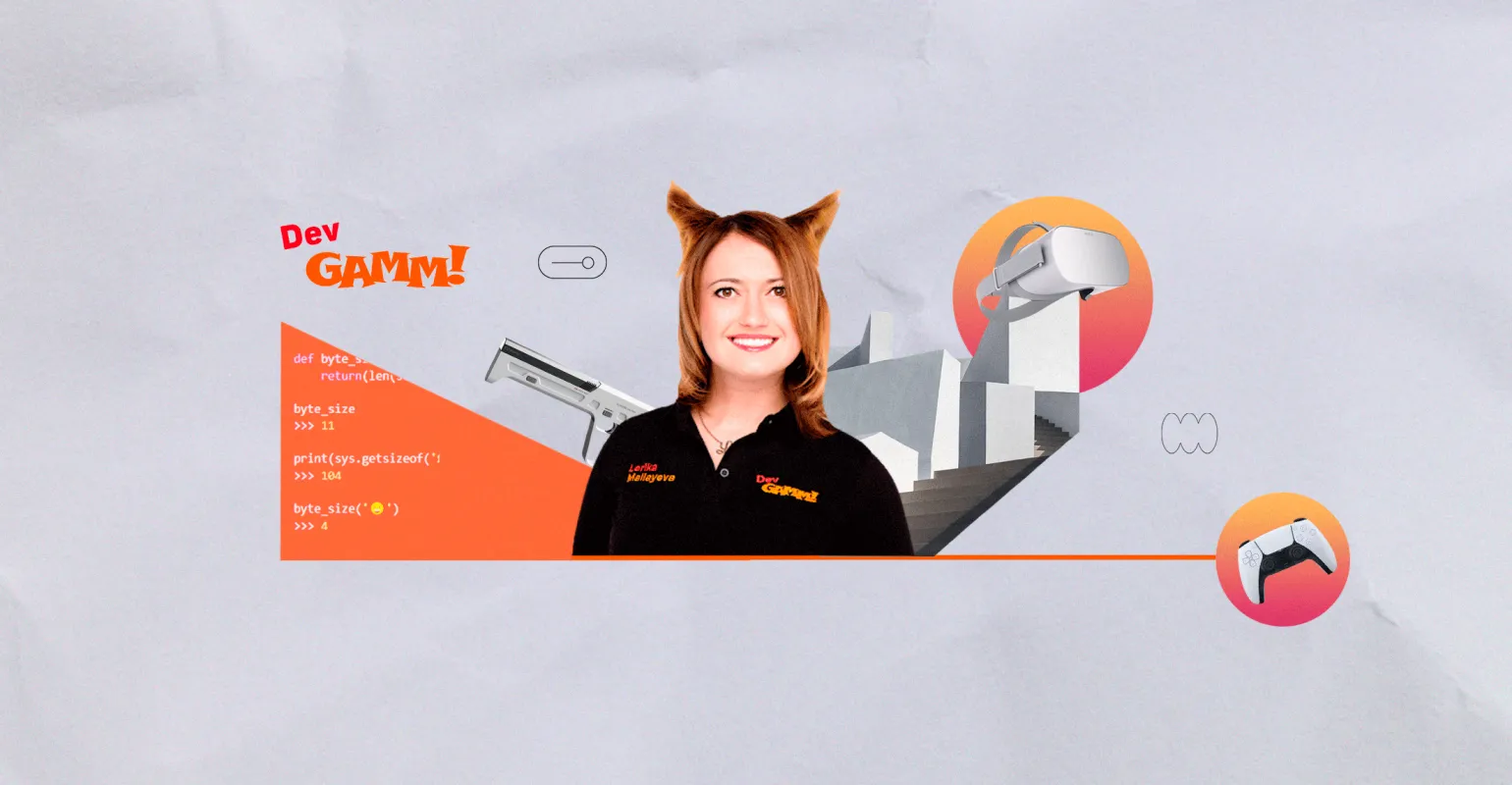
The conference features speakers from international companies, providing young developers with a unique opportunity to present their projects to a wider audience, receive valuable feedback, and participate in a variety of activities. Due to the pandemic, the event was moved online. CEO and founder of the conference, Lerika Mallaeva, shared information about the development of DevGAMM, its origins, and the organization of online events.
How did the story begin?
In 2008, I was working as an indie developer, doing art and animation in Flash. At that time, I had a desire to deepen my knowledge of the industry, establish contacts and meet professionals. I felt a lack of opportunities to enter the industry, as the conferences I attended did not meet my needs. As a result, I decided to organize my own event.
The first conference was organized with limited resources and without significant connections. We managed to gather just over 100 participants, found the first partner companies and rented a space provided by Global Logic. Thanks to the support of the speakers, some of whom came from other countries, the event was held at a high level. The excitement and positive feedback inspired us to organize another conference.
My partner, Sasha Titov, with whom we organized the first conference, suggested organizing a second one. He said, "Lera, let's do it in Moscow the day before KRI!" I was perplexed: "Sasha, are you serious? How is this possible? I don't know anyone; I'm a small, poor indie developer. I've never even been to Moscow!" But Sasha confidently replied, "Don't worry, we'll find organizers and sponsors—we can do it!"
We set about implementing our plan, despite our fears and doubts. At one point, the idea arose of selling a kidney to raise funds for the conference. We even considered taking out a bank loan. However, in the end, we managed to find sponsors who partially covered our expenses. As a result, in 2009, we successfully held a one-day conference in Moscow.
The Moscow event spent all the allocated funding, attracted several sponsors, and took three months to prepare. Thus, the second FlashGAMM, originally titled FlashGAMM, was held in Moscow. The conference lasted two days and attracted 180 participants. Realizing that the event was not profitable and that three months would have been enough to create several Flash games that would have generated significantly more revenue, the team decided to cease organizing and focus on game development.
The story might have ended there if not for the appearance of one of our speakers, Vitaly Khit from Absolutist, known for creating the game Bubble Shooter. In the 2000s, this company became one of the largest outsourcing firms in Ukraine. Vitaly suggested, "Lerika, let's buy your conference, leave you a percentage, and you'll organize the events." I considered the offer and decided, "Why not?" That's how my collaboration with Absolutist began, providing the necessary infrastructure, helping with contracts, and creating a website for the event. This opened up new horizons for event organization and gave me the opportunity to develop the project to a higher level.
During the first four conferences, over the first two years, I handled all aspects of the organization myself: working with speakers, sponsors, and other partners. As I began developing the conference, I continued developing games, creating art, and freelancing. The conference inspired me, as I was creating it for myself—as a developer for other developers. The event began to gain popularity: two days in Kyiv and one day in Moscow, held in the fall and spring. Soon, I assembled a team, and there were three of us. The audience also grew: from two hundred to eight hundred attendees at each conference.
In 2013, Renatus Media acquired the conference from Absolutist and renamed it from FlashGAMM to DevGAMM. This decision proved successful, and the conference began to grow rapidly. Renatus provided additional resources, including increased marketing and PR support, which contributed to the event's growth. As a result, DevGAMM's audience increased to 1,500 attendees. Along with the audience growth, the team also expanded. At the end of 2016, I decided to take DevGAMM back into my own hands.
DevGAMM has become a completely independent project, and now I am developing it together with the team. Our team consists of ten people from five countries: the USA, Latvia, Russia, Ukraine, and Belarus. Many of our employees have been with us for six or seven years, which creates a friendly, almost family-like atmosphere. We continue to organize events that are interesting to us and our participants.
In 2014, I retired from game development. Since then, we have organized over 30 different events. It is difficult to say the exact number, as we have almost lost count. We have held events in Russia, Ukraine, and Belarus, as well as an event in Hamburg and two events in the USA. We also organized an online conference.
We began organizing smaller events called DevGAMM Talks, focused on specific topics. We held several conferences in this format in cities such as Zaporizhzhia, Moscow, Kaliningrad, and Lviv. We initially had ambitious plans to increase the number of events, but the pandemic forced adjustments to our plans.
DevGAMM has presented many games throughout its history, but the exact number is difficult to determine, as new developments are showcased at the event every year. This event has become an important platform for indie developers and large studios, who use it to present their projects, exchange experiences, and establish contacts. Every year, the number of presented games continues to grow, reflecting the dynamic development of the gaming industry.
It is difficult to determine the exact number. We began registering games through the Games Hub platform in 2018. In three years, more than 1,000 games have been registered on this platform.
Before each conference, participants submit applications for our activities, and we receive more than 100 projects for each event. How many games were presented before 2018, how many projects missed their deadlines, how many games were demonstrated informally or behind the scenes—these figures will remain unknown. Each conference becomes a unique opportunity for developers to showcase their ideas and creative solutions, making the event especially significant for the gaming industry.
DevGAMM creates a platform that effectively connects experienced developers with aspiring professionals in the gaming industry. Through various events, such as conferences and workshops, participants have the opportunity to exchange knowledge and experience. Through communication and networking, aspiring developers can ask questions and receive advice and recommendations from more experienced colleagues. This fosters a community where everyone can develop and find new career opportunities in the gaming industry. Furthermore, DevGAMM offers resources and materials that help beginners master the skills necessary for success in this field.
DevGAMM plays a key role in uniting the gaming industry, remaining the primary link for developers. Our goal is to make the world of game development as accessible as possible, so that DevGAMM becomes the first stop for anyone aspiring to create games. As soon as you realize your passion for development and create a compelling project, you can present it at DevGAMM. Previously, this niche was filled by the KRI conference, but after it merged with Igromir in 2014, the developer exhibition format changed: it ceased to be held in the spring and became part of the fall Igromir. The freed-up spring time provided an excellent opportunity for us to expand the event from one to three days, giving developers more opportunities to showcase their projects and network with colleagues. People who had previously attended KRI came to us and discovered a completely different industry. Especially veterans, who weren't interested in such events, realized that talented young developers and studios with a sparkle in their eyes gathered here. They experienced a unique atmosphere and fell in love with it. Since 2014, the conference has taken a new direction: even small teams that previously hadn't had the opportunity to showcase their talent have begun actively participating in events, meeting with large companies, and finding publishers. Over the past few years, these small studios have grown significantly and become successful. It's truly inspiring to watch this growth.
I have countless stories about developers who created their first websites and then attended FlashGAMM in 2009 or 2010 with the goal of starting to create games. They took the plunge into the gaming industry and soon founded their own studios. These developers have launched successful projects that have earned them millions. Each of these stories confirms that we are moving in the right direction, creating something meaningful and useful. We contribute to the development of the industry, unite its various parts, and genuinely help developers realize their ideas.
Even if this is your first time playing a computer game, you can try to figure it out on your own. However, this process can take a long time. Instead, you can play with a friend who is already familiar with the game. He'll be able to explain the basic mechanics and show you what to do. This will help you master the game much faster and more effectively.
The professional industry requires an active exchange of experience between specialists and experts, which contributes to rapid improvement. It's important to understand that our sport is a team sport, and that's why such mutual assistance is crucial. DevGAMM isn't exclusively a platform for newcomers; our talks are aimed at people already familiar with the industry. We set a certain entry threshold to ensure a high level of discussion. Our program includes a balanced number of mid- and high-level talks, which we carefully monitor at each event. We carefully consider the quality of the content, the choice of speakers, and the topics of the presentations. Constantly considering the opinions of our audience, we attract new speakers and give teams the opportunity to make a name for themselves. Thus, DevGAMM is becoming an important platform for professional growth and knowledge sharing in the gaming industry.
We often encountered situations where we identified talented developers and invited them to give a talk. In response, we heard doubts: "But no one knows about me, will this be interesting?" Nevertheless, we persuaded them, and they agreed. After the presentations, audience members approached them and shared their impressions: "You're wonderful, your presentations are so engaging and informative!"
Creating high-quality conferences requires significant effort and creativity. We draw inspiration from various sources, including successful practices from other events, feedback from attendees, and current industry trends. It's also important to study current topics and audience demands to offer interesting and useful discussions. We constantly analyze what works and what doesn't and adapt our approach to make each conference unique and memorable.
I'm inspired by the people I meet at conferences. Each event brings together a multitude of unique individuals, full of energy and ideas. Interacting with them recharges you for a long time, inspiring new achievements. In post-COVID times, when in-person meetings have become a rarity, the need for such interaction is especially acute. We miss communication, and we are looking for ways to replace it—be it online games or video calls. While not the same, these methods still bring positive emotions and maintain connection.
I am passionate about film and travel, and this inspiration is shared by our team members. Each of us draws motivation from our own passions, which contributes to a unique atmosphere and creative ideas. Film allows us to explore different cultures and emotions, and travel opens up new horizons and opportunities. As a result, our team combines diverse sources of inspiration, which positively impacts our work and interactions.
The pandemic has significantly impacted our interactions, and the last three conferences were held online. We carefully selected an appropriate format, considering the needs of participants and the current situation. However, this transition was not without challenges. There were issues with technical support and participant engagement. Nevertheless, we realized the importance of flexibility and adaptability in the current situation. This experience taught us new methods of communication and event organization, which will help us better address similar challenges in the future.
At the beginning of 2020, the world was faced with a pandemic, and I gathered the team to discuss moving our conference online. At first, my colleagues were hesitant about the change, hoping that the situation would quickly return to normal. However, a few weeks after GDC was canceled, we realized that we urgently needed to adapt to the new conditions. This became a real challenge, as we had to completely restructure our business and change existing processes. We began researching numerous online event platforms and concluded that a test event was necessary before the main conference. This helped us understand potential issues and prepare for the main event.
We chose the Pine platform as our primary platform for our events. In mid-April 2020, we held our first online event, DevGAMM Talks From Home, dedicated to the transition to remote work. During this event, companies shared their experiences and best practices. Our team, which has been working remotely since 2016, has significant experience in this area, and there have been only minor changes to our work processes.
We started preparing for our large conference and realized that our usual schedule wasn't suitable. Participating in online events doesn't require full engagement: you can stay at home, continue working, and avoid wasting time on commuting. As a result, the conference becomes just another tab in the browser, which reduces its significance and engagement. To avoid this, we decided to change our approach to organizing the event to make it more interactive and memorable for participants.
The number of participants was naturally significantly smaller. However, among the positive aspects, it is worth noting that we were able to attract an audience that could not come to us in person. This allowed us to increase the number of international projects among the participants. We also invited speakers who likely would never have been able to attend due to visa restrictions.
In preparation for the fall event, we decided to extend the overall duration of the event but compress its schedule within a single day. We chose a format of four-hour sessions over two weeks, instead of the previous two-day format. This decision simplified the team's work, as the morning hours were free to complete tasks before the event. However, by the end of the day, participants still felt tired, as the volume of information was significant. Many noted that the program should be made even more compact. After analyzing the mistakes, we decided to switch to a three-day online format. In addition, we rethought and updated a number of conference components and activities.
Last year, we successfully held two career expos: Career Days and Career Week, and also supported the Mentoring Dialogue event. In total, we implemented seven events in 2020 aimed at developing career opportunities and professional mentoring.
The path to success is always full of challenges and interesting twists, especially when critical situations force unconventional solutions. The DevGAMM conference saw many unexpected events that left a lasting impression on attendees. These stories highlight the importance of being flexible and creative in the face of uncertainty. Unexpected encounters, spontaneous ideas, and unique solutions all add variety to the experiences of developers and game creators. DevGAMM becomes not only a platform for knowledge sharing but also a place where new ideas and perspectives are born.
Many interesting stories happen to our speakers, especially those from abroad, when they visit our country for the first time. One memorable incident involved a speaker arriving on the plane who developed appendicitis and was rushed to the hospital. In another situation, at the very beginning of event planning, I ordered simultaneous interpretation equipment, confident that simultaneous interpreters were included. Another memory is connected with a conference we held in Minsk. That same day, the President of Turkey was scheduled to arrive at our hotel, which led to a complete lockdown of the premises and a thorough screening of participants using metal detectors. Moments like these highlight the importance of meticulous preparation and organization.
DevGAMM is known for its unique stories and unusual moments. This event attracts not only game developers but also anyone interested in the gaming industry. Speakers can even mix Riga Balsam with sprats right on stage, creating an unforgettable atmosphere. Such memorable moments make DevGAMM a memorable event for participants and spectators, highlighting its uniqueness and creativity in the world of game development.
Advice for young developers creating their first game is to embrace mistakes and experiment. It's important to learn by doing, so try different approaches and utilize available resources for self-education. Participate in hackathons and gaming competitions; this will not only help you improve your skills but also help you make useful connections. It's also recommended to study successful projects, analyzing their mechanics and design solutions. Create a portfolio to showcase your work to potential employers or partners. Find like-minded people and collaborate; this can significantly accelerate your development process and help you further enter the industry. Don't forget the importance of feedback—share your projects with others and accept criticism to grow as a developer. Get out of your basement and actively communicate with people. Build connections and interact with other developers. Participate in the professional community, attend game jams and other events. It's important to leave your comfort zone, as all the connections, experiences, and knowledge exchange with colleagues will become a valuable resource in your career. These contacts can open new opportunities and help you develop as a specialist. Learning English is key to a successful career in the modern world. A lack of knowledge in this language is a common problem across various industries. If you strive for professional growth and development, proficiency in English will be an essential tool for achieving your goals. English opens doors to new opportunities, allows you to share experiences, and gain access to international resources. Don't miss the chance to improve your skills and become more competitive in the job market. Don't be afraid to let go of your project. One of the main mistakes beginning developers make is becoming overly attached to their ideas. Even if a project isn't successful or its development has become difficult, many continue to refine it. Instead, focus on prototyping, which will allow you to find successful solutions faster. If your project is stuck, it's important to be able to decide to end it and move on. This will save you time and resources, and open up new opportunities for more promising ideas. Continuous development and learning new skills are the key to success in any field. Learn new things, experiment, and explore the industry. Games can be a great source of inspiration and knowledge. Join DevGAMM to expand your horizons and exchange experiences with professionals in the gaming industry.
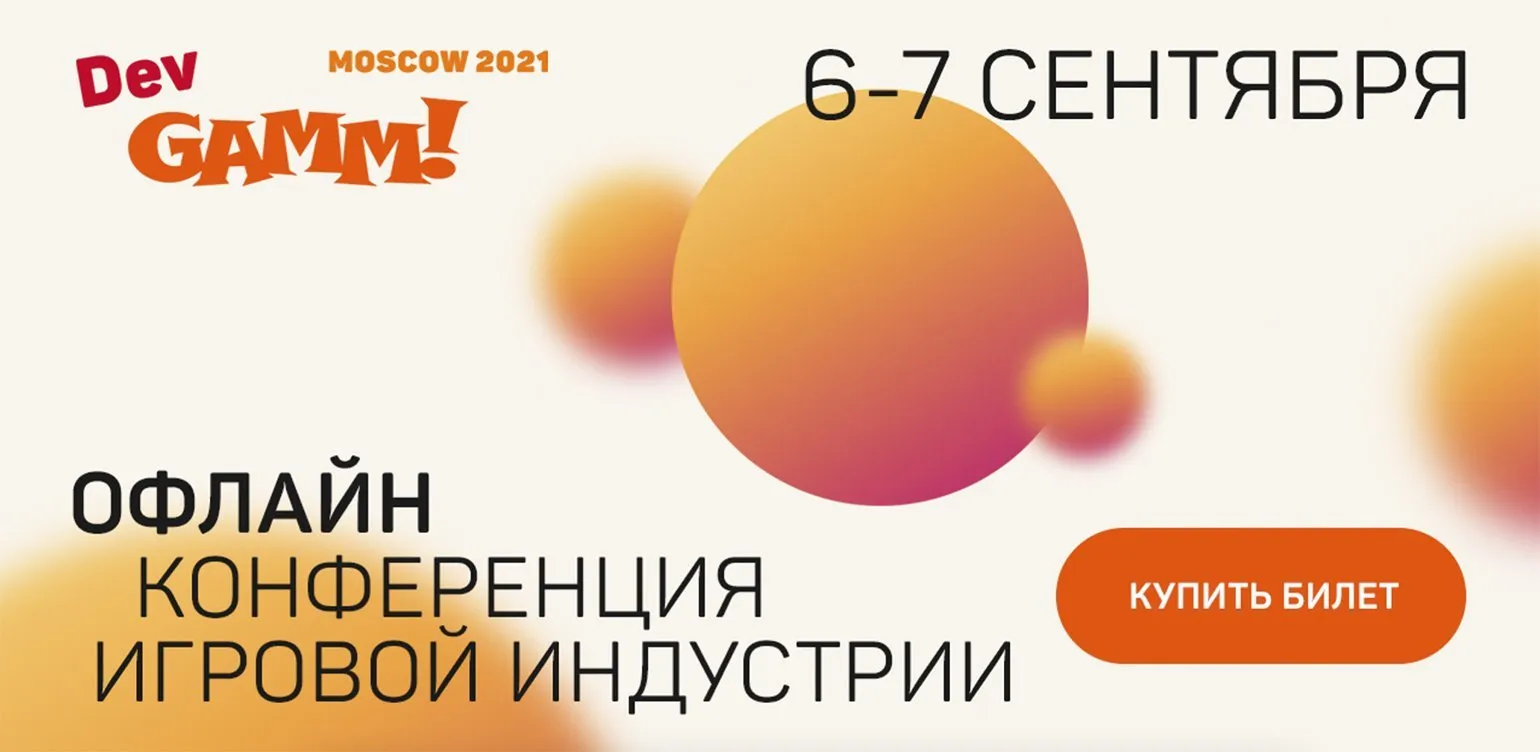
DevGAMM will be held offline again this year. DevGAMM Moscow 2021 is scheduled for September 6–7 at the Radisson Slavyanskaya Hotel in Moscow. Participants can expect interesting sessions from companies such as SberGames, Wargaming, VKontakte, Playrix, Mail.ru Group, tinyBuild, Pixonic, Creative Mobile, Sperasoft, Belka Games and many others. This is a great opportunity to learn about the latest trends in the gaming industry and communicate with experts.
Who are you in the world of game development? A mini-course for those who want to make games.
In this free mini-course, you'll try your hand at being a game designer, 2D artist, or Unity game developer, and choose the profession that's right for you.
Find out more