

Learn: The Profession of Game Designer from Scratch to PRO
Learn moreAt developer conferences and in specialized gaming publications, clickers and idle games are often overlooked. The genre is perceived as marginal and even harmful to the gaming industry. Pressing the same button to increase numbers on the screen is considered the simplest form of play. At first glance, this lacks an engaging gaming experience and opportunities for developer self-expression. However, despite criticism, clickers and idle games attract a significant number of players due to their simplicity and accessibility. These games can be a great way to relax and have fun without requiring deep strategies or complex skills. Their popularity suggests that even simplicity can have its value.
Despite the negative perception from experts, clickers continue to enjoy incredible popularity. For over a decade, games in this genre have regularly topped app stores, and from time to time, true phenomena emerge that spark active online discussion. For example, Hamster Kombat has attracted over 300 million users. Although many play it less for the addictive gameplay than for the creators' promise of earning money, this still demonstrates the genre's significant success. Clickers, originally developed as satires on simple games, have demonstrated their ability to capture audiences and remain relevant in the world of mobile entertainment. We explore the history of clickers, analyze their appealing design, and seek original ways to apply the genre's mechanics. Popular due to their simplicity and immersion, clickers continue to attract players. We examine how the evolution of these games has influenced their design and mechanics, and discuss creative approaches to their use in a variety of contexts, from entertainment apps to educational platforms.
Satire Genre
For more than a decade, clicker games have remained the same. Players click a button to obtain a key resource, which can be used to purchase generators. These generators automatically produce resources without the need for active player input. Over time, passive bonuses become more effective, requiring players to perform actions less and less. Ultimately, the main goal of a clicker is to minimize active interaction with the game.
At first glance, this description may seem dubious. And initially, it was. The first projects that we now call idle games arose in response to the controversial game mechanics of their time. A prime example is Progress Quest, released in 2002 and considered the first idle game. These games not only entertained but also opened up new horizons in gaming, offering players a unique experience without the need for constant engagement. Over time, the genre gained popularity, attracting the attention of developers and users, which led to the emergence of many new games based on similar principles.
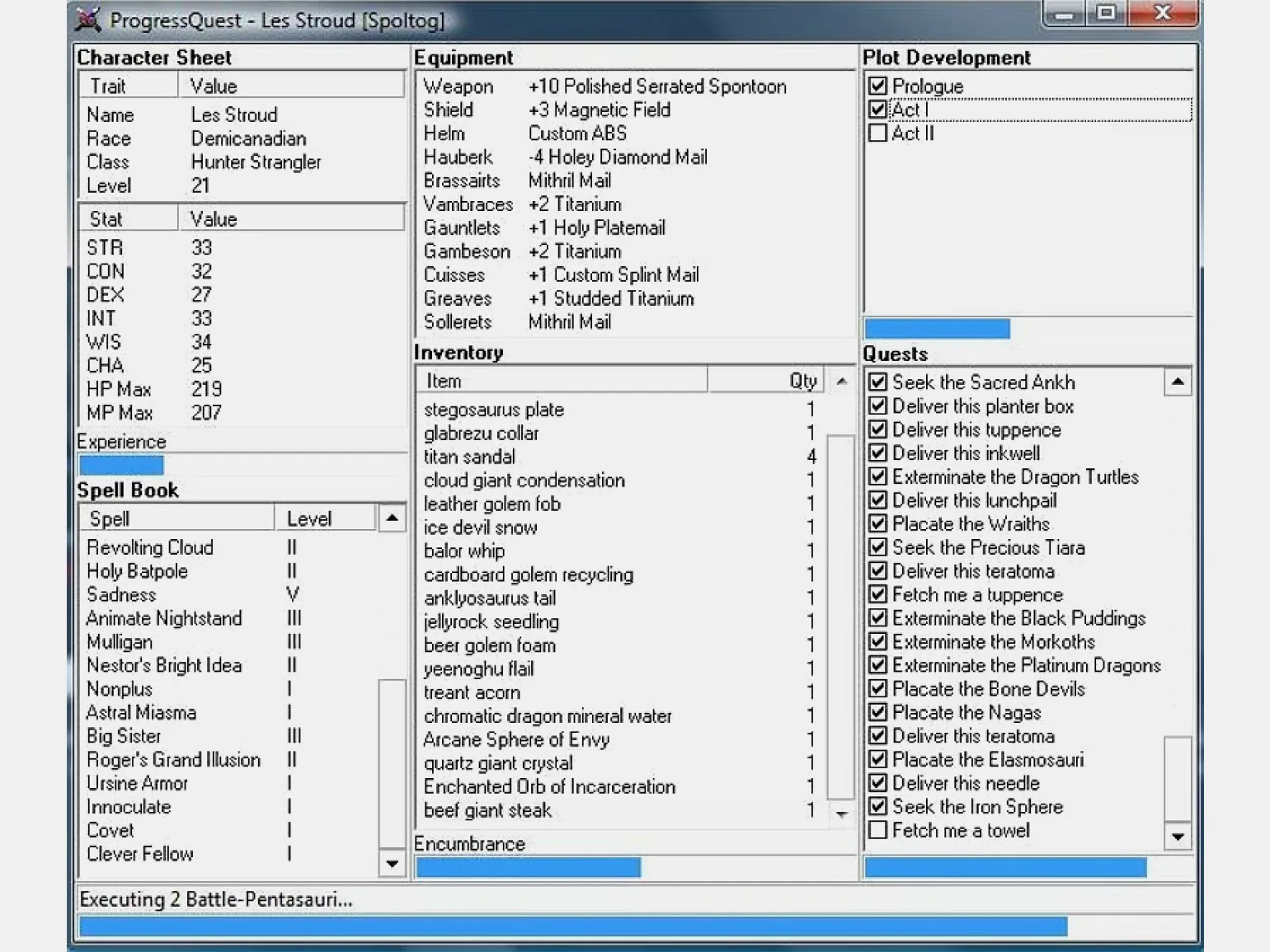
Progress Quest may seem like a complex role-playing game with hero controls, but it is actually much simpler. The player only needs to choose a name and class for their character, after which the game progresses automatically. The user has no opportunity to interact with game elements, as progress indicators fill automatically, the hero levels up, and the character's stats improve without the player's input. This unique mechanic makes Progress Quest an interesting example of automated gameplay, where the main emphasis is on monitoring character development.
The authors are clearly critical of MMORPGs, which often boil down to memorizing repetitive opponents and developing characters according to pre-optimized schemes. This tendency highlights the problems of the genre, where game mechanics largely become predictable and monotonous.
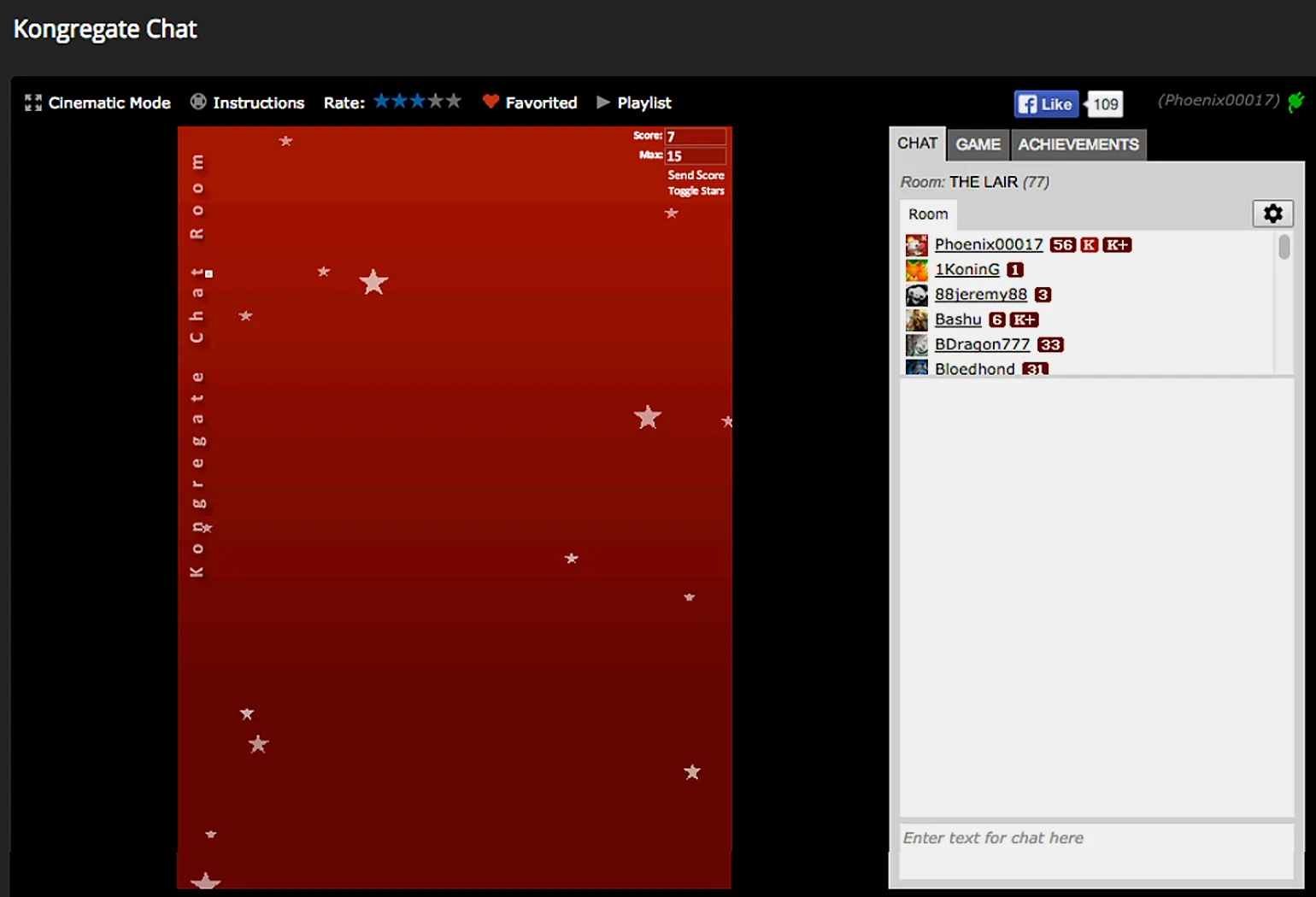
The portal Kongregate.com, once a leading resource for browser games, significantly influenced the development of the genre. This site featured a chat room where users not only discussed games but also shared personal experiences. For many, chatting became even more engaging than the games themselves. However, chat access was only available when the game was launched, which created a nuisance. To circumvent this limitation, users began developing dummy games with minimal gameplay. These ranged from simple placeholders with no content to basic clickers. These solutions allowed players to actively interact with each other, even when the game itself wasn't the goal. Kongregate.com has become not only a platform for games, but also an important social platform for communication and exchange of opinions among gamers.
Satire on MMORPGs inspired the creation of clickers. In 2009, Edmund McMillen presented the experimental game AVGM. In this game, the player must repeatedly press a light switch in a room. Each time the switch is turned on, a new item may appear in the room. Eager to discover what else can be discovered, players press the switch repeatedly. This creates a unique gameplay experience based on simplicity and repetition of actions, which attracts the attention of users.
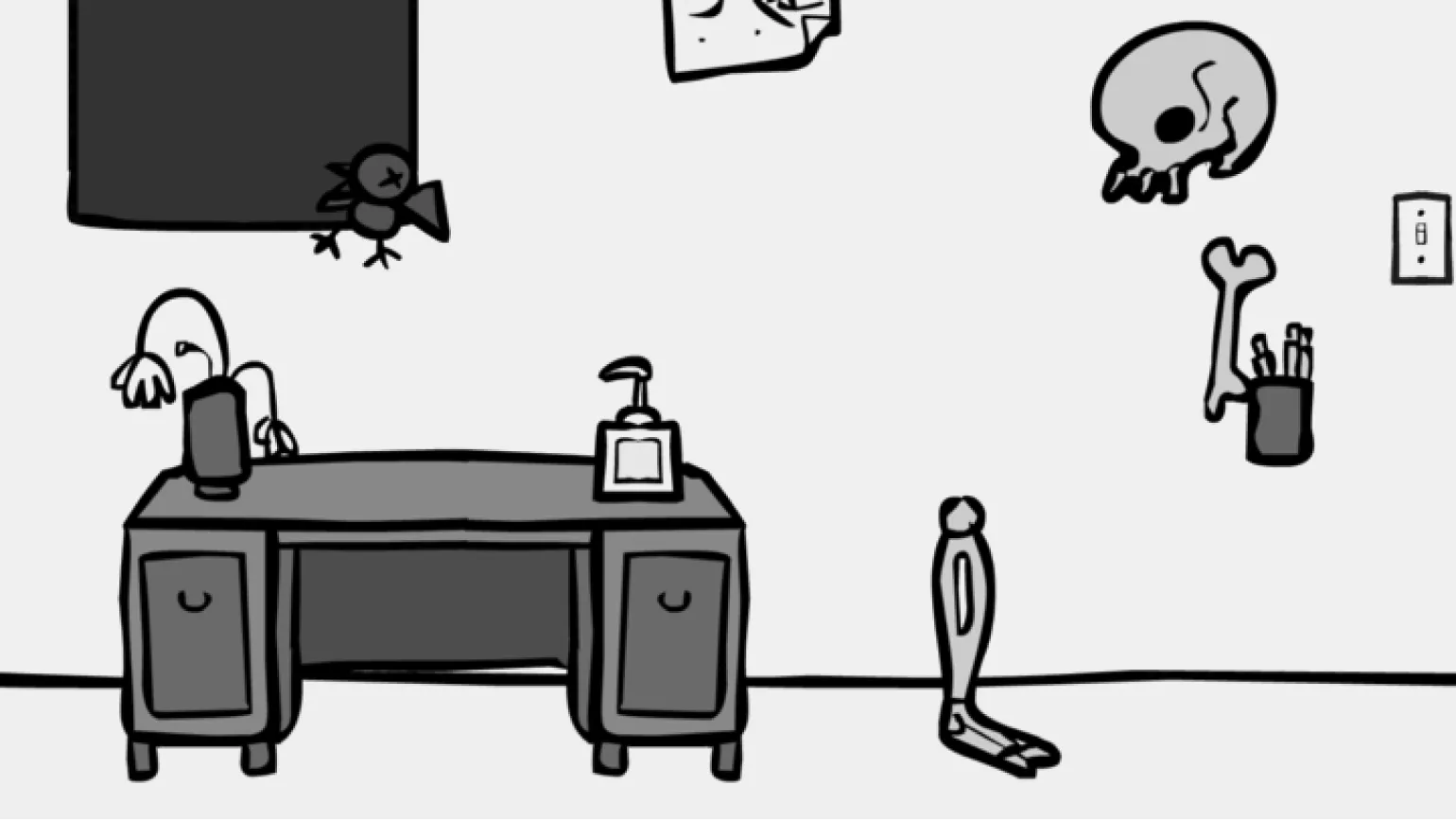
AVGM is the first traditional clicker, which differs from modern games of this genre by having an ending that ridicules the player. After unlocking the last item, it becomes clear that the acronym AVGM stands for "Abusive Video Game Manipulation." This element of irony creates a unique experience for players, forcing them to reflect on their actions and motives in the gameplay.
Idle games and clickers are similar, but different genres. Idle games, also known as incremental games, are projects in which the user practically does not require active participation - the game develops on its own. In contrast, clickers allow the player to independently generate resources by pressing a button. Over time, the importance of this action may diminish, and the clicker may evolve into an idle game. Thus, it can be said that most clickers are idle games, but not all idles can be classified as clickers. These genres attract players with a variety of mechanics and gameplay approaches, allowing everyone to find a suitable playstyle.
McMillen admitted that the creation of AVGM was inspired by MMORPG practices. The gameplay of such games is often based on repetition of actions, which makes those players with more free time successful. He was particularly impressed by the high engagement of gamers: more than five percent of players completed AVGM, which requires over 10,000 clicks of the switch. This aspect emphasizes the importance of dedication and patience in gameplay.
Digital rewards, although seemingly insignificant, can keep players engaged for a long time. This confirms users' interest in the gameplay and motivation to continue playing. When Diablo 3 comes out, I will definitely buy it, so my comments about awards can be considered subjective.
Edmund McMillen is a prominent indie developer known for his unique and innovative games. He rose to popularity thanks to projects like Super Meat Boy and The Binding of Isaac, which received critical acclaim and won the hearts of players around the world. McMillen stands out for his creative approach to development, combining an original art style with deep gameplay mechanics. His works often explore dark and complex themes, making them not only entertaining but also provocative. Edmund continues to influence the indie scene, inspiring new developers with his ideas and approach to game creation.
However, these were local jokes aimed at a small audience within the industry. However, even this limited context highlights an important fact: successful games don't require aesthetics or diverse mechanics to attract players. Games can be engaging without complex visual design or sophisticated gameplay systems if they resonate with their target audience.
The release of Cow Clicker in 2010 highlighted the pervasiveness of parodic elements in the gaming industry. The game's creator, philosopher and game designer Ian Bogost, had long observed social games on the Facebook platform. The simple gameplay loop of harvesting crops and waiting in real time struck him as so absurd that he dubbed such games "cow clickers." The project became a critique of growing trends in the gaming industry and forced players to question the essence and value of modern video games.
Ian Bogost wasn't the only one to feel dissatisfied with farming and idle games. In the early 2010s, a conflict arose between indie developers and social game creators. Facebook apps, which were beginning to gain popularity, also attracted the attention of designers, who actively participated in the GDC developer conference, where they gave lectures on the creation and success of such games. This caused discontent among independent developers, who believed that simple games were displacing indie projects not only online but also at conferences. As a result, amid the growing popularity of social games, indie developers began to seek new ways to establish themselves and rekindle interest in more complex and original games. This inspired Bogost to create an experimental game that would preserve the core gameplay of social games. There is an online belief that Cow Clicker was intended as a joke, but this is not entirely true. Bogost, as a practicing specialist and university professor, sought to create empirical evidence that could serve as a basis for discussion of the phenomenon of social games. Its goal was to analyze and understand how players interact with game mechanics and identify the key aspects that make social games engaging.
In Cow Clicker, players can click a cow every few hours to earn "clicks." They can also purchase additional cows with real money. It's worth noting that developer Bogost designed the game with the intention of making it as simple as possible, which is evident in the lack of attractive graphics and a deep storyline. The game has become a critique of the clicker genre and its mechanics, highlighting how simplicity can be used to create gameplay that raises questions about the value and meaning of video games.
Despite the obviousness of the joke, it gained unexpected popularity, attracting around 50,000 users daily who clicked on the cows and invited their friends to play. Interest in the game has generated a wide response in the media, including even major publications not related to the gaming topic.
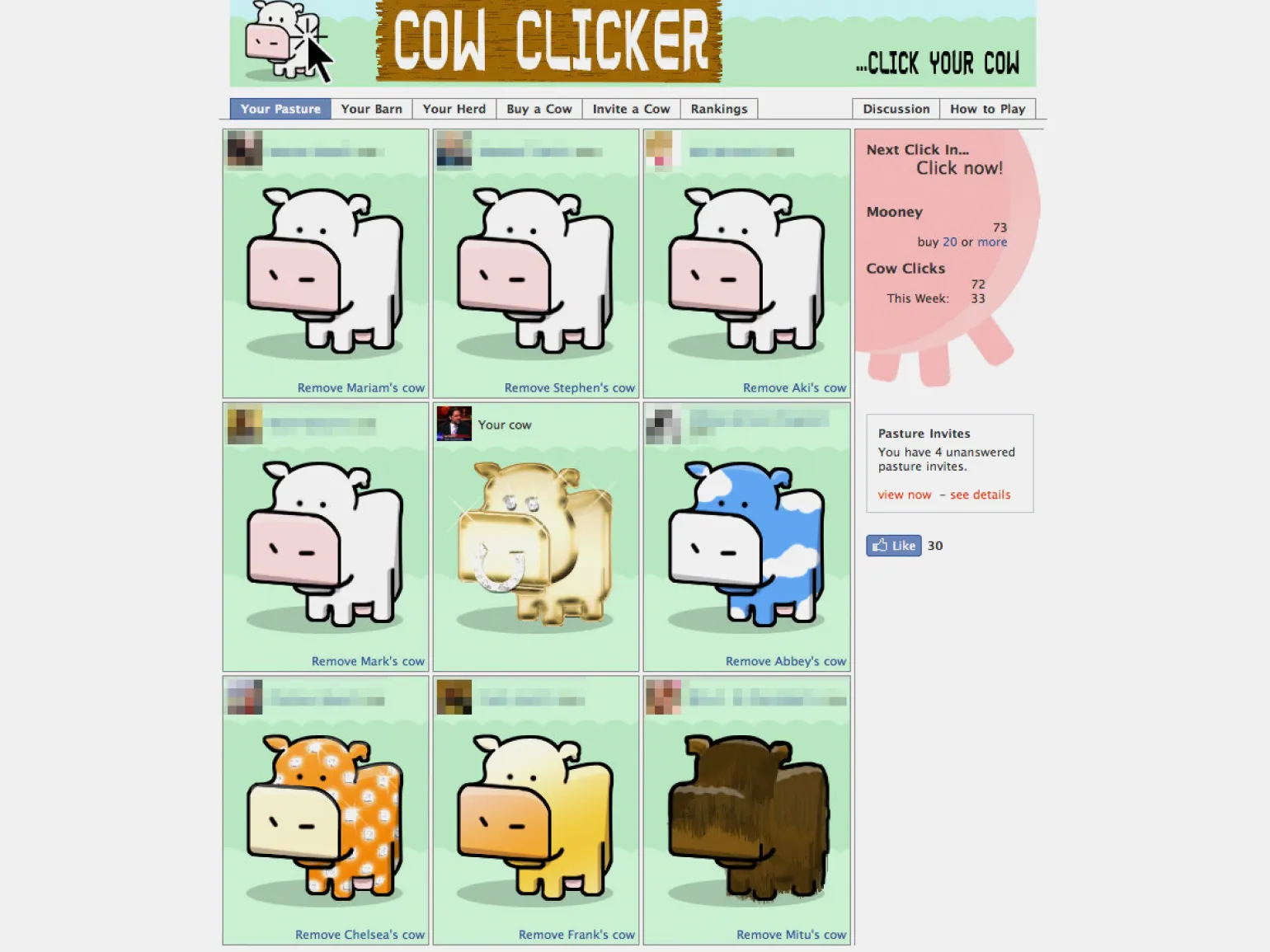
Many users genuinely enjoyed the relaxing gameplay that offers a gradual accumulation of "clicks" every day. Bogost notes that the reviews often contained irony, with players jokingly claiming that this is the best game ever. However, some users offered serious suggestions for improving Cow Clicker, emphasizing the possibility of modernizing the gameplay and adding new features to increase interest.
Cow Clicker is an example of a social gaming project that evokes mixed feelings. On the one hand, its comedy attracts attention, on the other, it highlights certain problems of modern gaming. This game, despite its simplicity, demonstrates current trends in the world of entertainment and user interaction. Ultimately, Cow Clicker provokes reflection on the meaning of social games and their impact on society.
Ian Bogost is a renowned game designer and researcher in the fields of interactive art and digital media. He is recognized as an expert in creating games that not only entertain but also provoke thought. In his work, Bogost focuses on how video games can serve as tools for conveying complex ideas and social commentary. His work includes both commercial projects and independent games that explore philosophical and cultural themes. Bogost actively shares his knowledge through lectures and publications, where he discusses the impact of games on society and their potential for education and communication.
The real breakthrough in the clicker genre occurred with the release of Cookie Clicker. The original version of the game, released in 2013, looked little better (and in some respects even worse) than parody projects of the time. However, this did not prevent the game from becoming a true phenomenon, attracting over 50,000 players in just a few hours. Within a month of its release, according to Cookie Clicker's developer, the number of concurrent users reached 1.5 million. This is comparable to the current figures for the popular game Fortnite. Cookie Clicker not only set new standards for the genre, but also inspired many other developers to create similar projects.
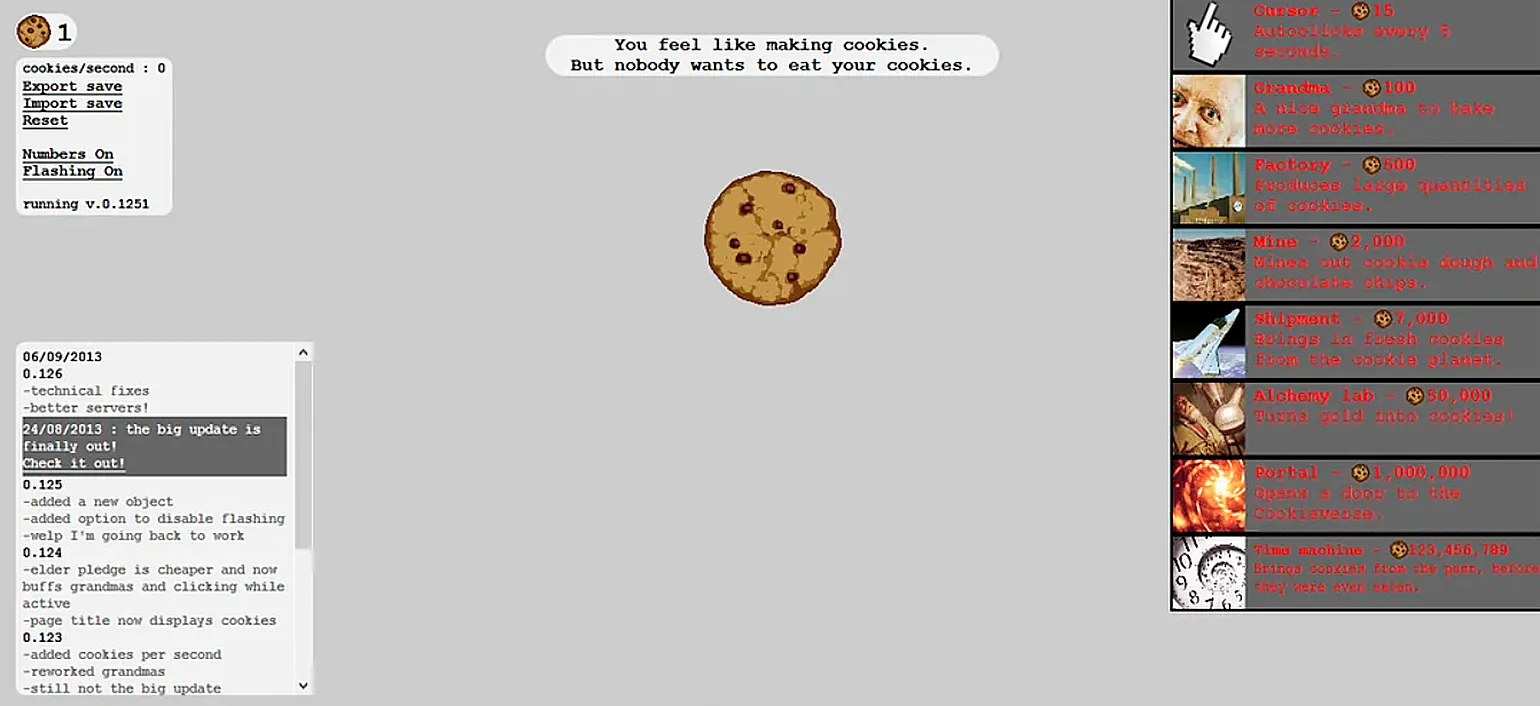
Cookie Clicker became the basis for many clicker games, offering players resource gathering mechanisms, a variety of generators, and upgrades whose value grows exponentially. This was just the beginning. The game was regularly updated, adding new mechanics almost weekly, such as achievements, additional generator upgrades, prestige levels, and other elements that make the gameplay more engaging and multifaceted. These innovations not only increased interest in the game, but also gave rise to an entire category of clickers inspired by its successful concepts.
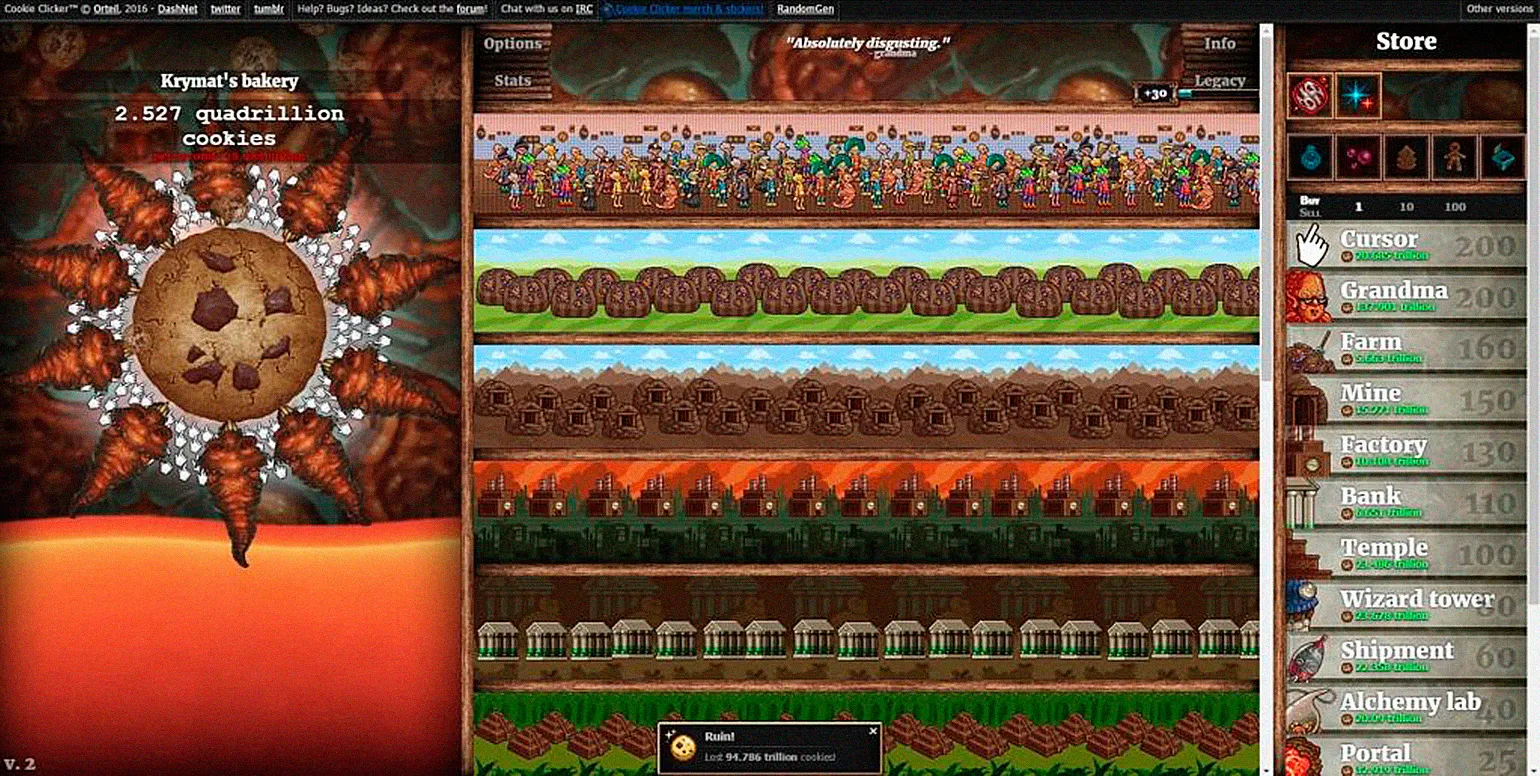
Cookie Clicker may seem like a game from the past to many, but its popularity remains strong today. A significant update was released in 2023, bringing new features and improvements. The paid version of the game on Steam consistently attracts around 10,000 players online. The game is over 11 years old, confirming its longevity and appeal to a wide audience.
Contagious Game Design
The success of Cookie Clicker sparked a revolution in the video game industry, with new clickers and idle games appearing on the market daily. Some developers shamelessly copied the original, while others sought innovative approaches to attract players. Clickers are easy to create, which has attracted the attention of many developers eager to experiment with gameplay. As a result, the clicker genre has rapidly transformed, taking on a variety of forms and mechanics. These games not only attract the attention of users, but also retain them for a long time, despite the apparent simplicity of the game design. This success of the genre is explained by its accessibility and fascination, which makes clickers popular among a wide audience.
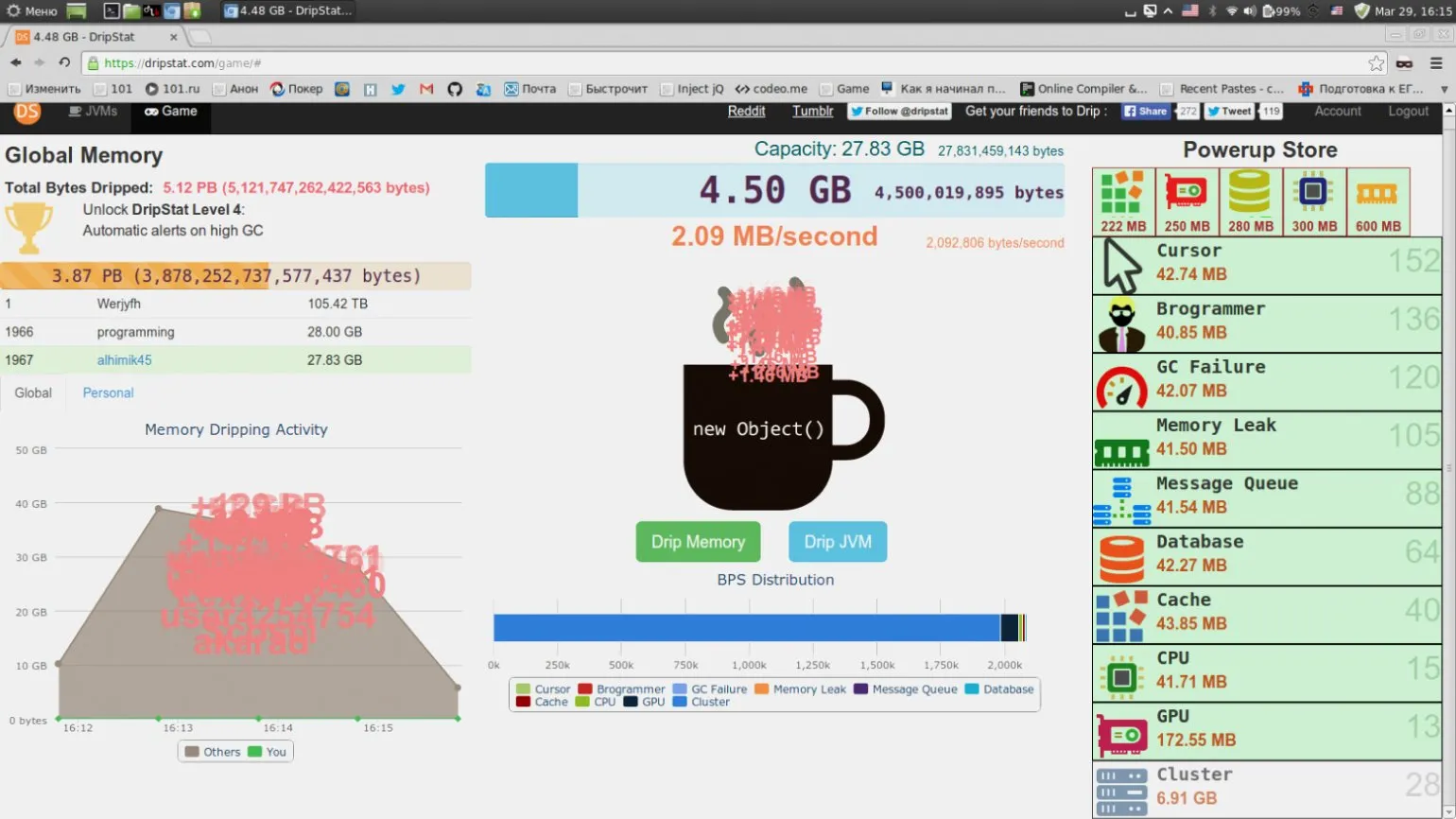
Anthony Pecorella, one of the leaders of Kongregate and producer of the successful clicker AdVenture Capitalist, emphasized that idle games quickly gained immense popularity. In 2014, three of the ten games with the best audience retention on Kongregate were idle projects. One in five players stayed in these games for at least a week, and one in 20 for three months. For other games on the platform, these figures were significantly lower. Idle games continue to attract attention due to their simplicity and engaging gameplay, which makes them ideal for a wide audience.
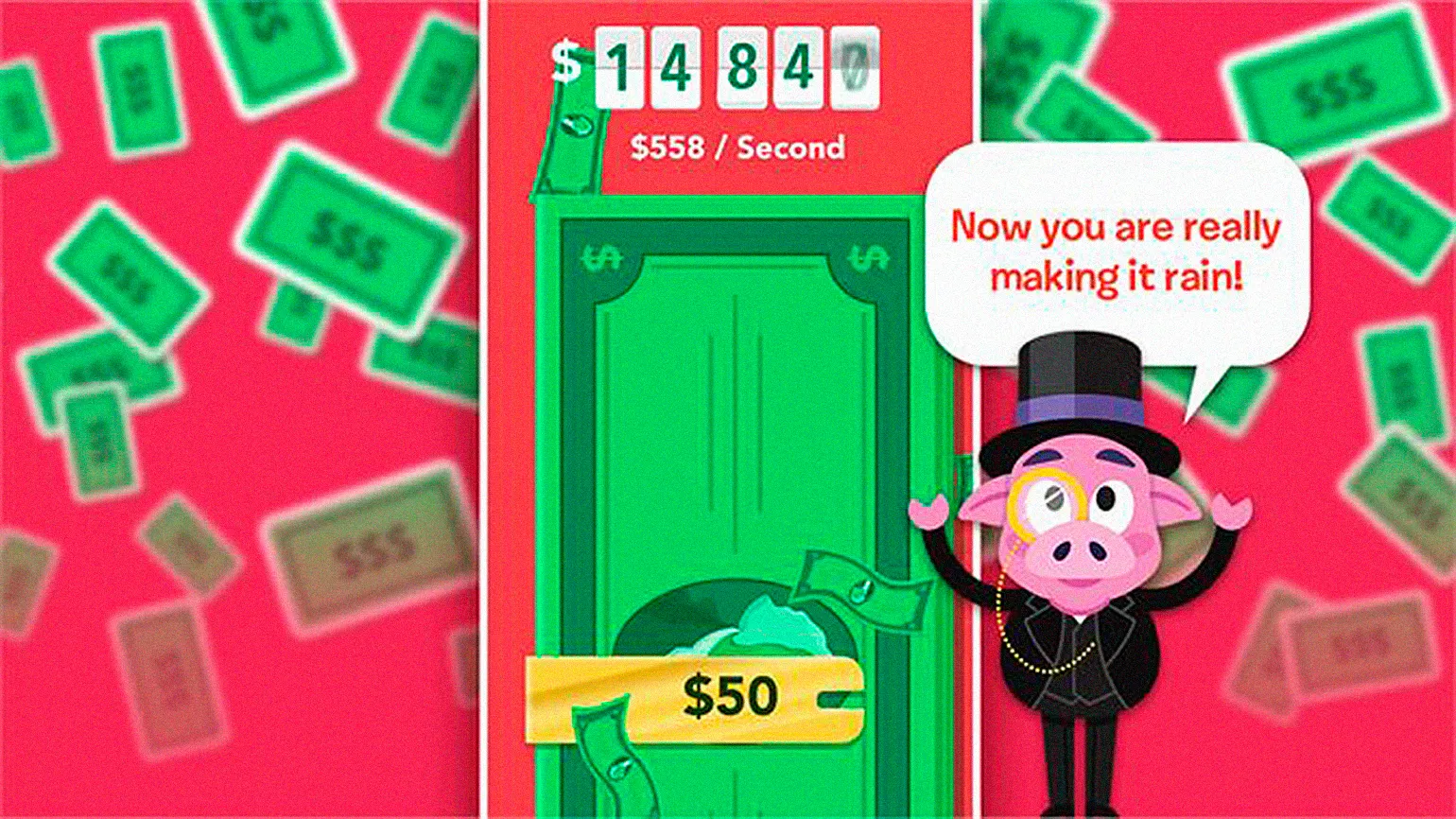
Many experts in the gaming industry, including Ian Bogost, attribute the success of idol games to basic psychological patterns of human behavior. Like other game genres, clickers create a sense of constant progress, but their simplicity allows this effect to be achieved almost every second. Each click increases the number of resources, which opens the opportunity to purchase upgrades that speed up the acquisition of new resources. Thus, in a matter of seconds, the user receives three different signals of a positive result. In this context, clickers can be compared to a Skinner box, where instant rewards help maintain player attention and engagement.
Of course, I am ready to help with text editing. Please provide the text itself that needs to be revised.
The Skinner box is a landmark experiment in the field of behavioral psychology. This experiment demonstrated how conditioned reflexes can be formed in animals through positive stimuli. Specifically, if you place a pigeon in a box and offer it food every time it presses a lever, over time the pigeon will begin to perform this action more often in anticipation of a reward. Thus, the Skinner box illustrates the principles of operant conditioning, showing how behavior can be modified and reinforced through a reward system. Slot machines can be compared to a Skinner box, as players repeatedly press a button in an attempt to obtain a positive incentive in the form of a win. This process creates a gambling addiction, where players continue to play in the hope of success. Slot machines use randomness and reward mechanisms, which makes them attractive to many. Understanding these mechanisms is important not only for players but also for those interested in the psychology of gambling and its impact on human behavior. Attributing the success of idle games solely to their simplicity is not entirely accurate. Although idle games have a simple structure, they have other important aspects. One of the key features of idle games is the gameplay loop, which naturally encourages players to return again and again. This is achieved through an imbalance between the rate of winning and the increasing cost of upgrades. Upgrades become increasingly expensive, while players' income increases less quickly. Over time, long gaming sessions become pointless, as saving up for a new upgrade takes a long time. It's much more convenient to put the game aside and return to it later, when you've accumulated the necessary amount for improvement.
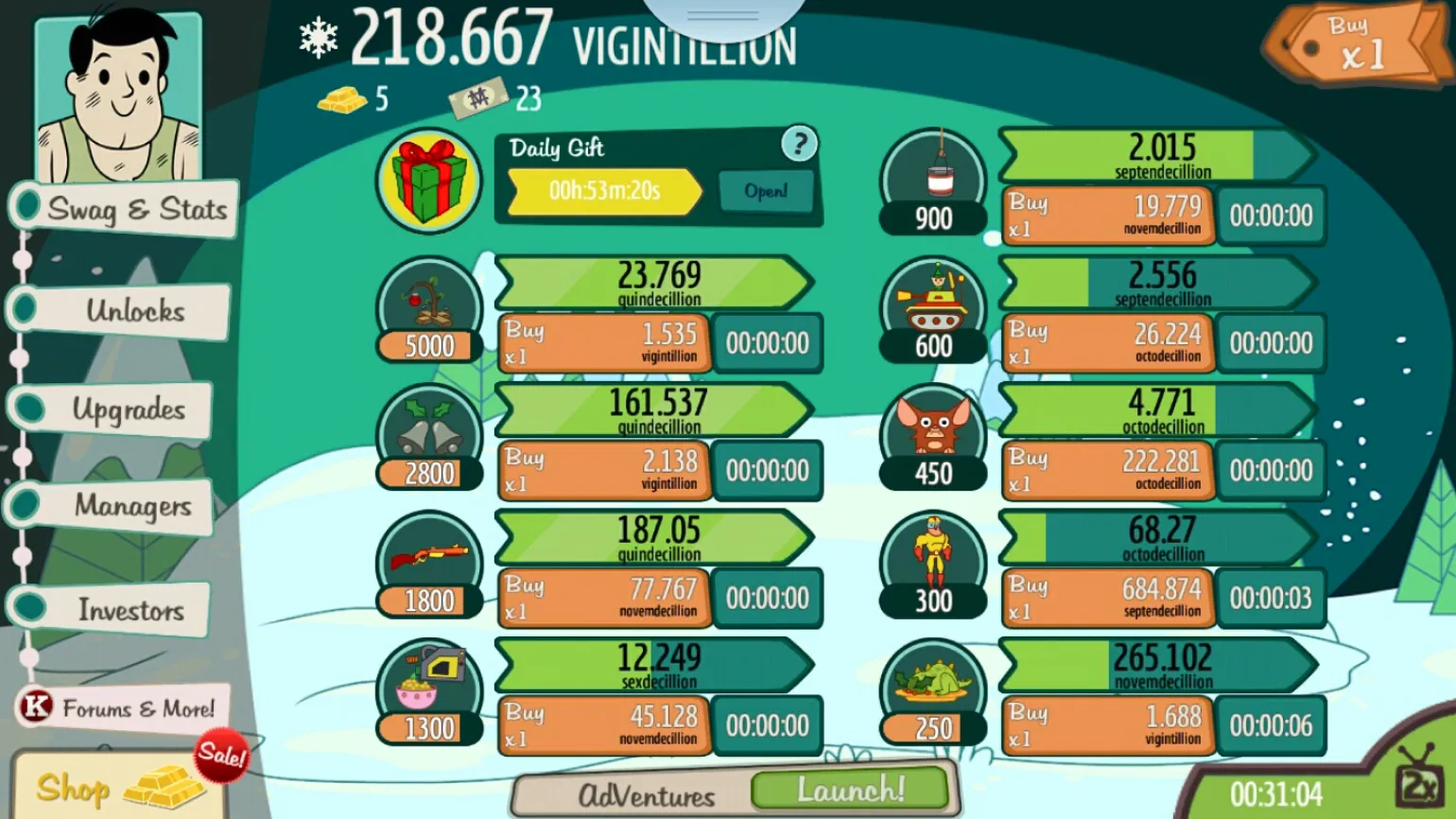
Clickers encourage players to return to the game several times a day for short periods of time, provided that this is technically feasible. This format fits perfectly into the daily schedule of many people who can only spare a few minutes to play on their way to and from work. The accessibility and simplicity of clickers make them attractive to those who prefer short gaming sessions.
The gap between income and the cost of upgrades is usually due to how these indicators are formed. Upgrades often use multipliers. In Clicker Heroes, each new upgrade costs 7% more than the previous one, while its value increases linearly. For example, each upgrade might increase a hero's damage by 5. This means that the player needs more and more time to level up each time. For a deeper understanding of the clicker economy, we recommend reading the detailed GitHub article covering this topic.
Hamster Kombat breaks with traditional clicker principles by introducing a unique gameplay mechanic. In this game, the price multiplier for passive upgrades often exceeds 2x, while their value increases by only a few percent. As a result, the benefit from the generator decreases with each upgrade, making the process less predictable. However, players can expect rare and profitable upgrades to appear, creating an element of surprise and maintaining interest. Hamster Kombat actively uses the FOMO (fear of missing out) effect to keep players playing for longer periods of time, thereby creating an engaging gameplay experience.

Reworked text:
Read also:
Hamster Kombat is a popular clicker game played by millions of users worldwide. In this exciting game, you control cute hamsters, engage in battles, and evolve your pets. Hamster Kombat offers simple and intuitive mechanics, making it accessible to players of all ages. Upgrade your hamsters, unlock new levels, and compete with friends. With every click, you'll climb the leaderboards, demonstrating your skill and strategic thinking. Join the Hamster Kombat community and discover why this game has gained such popularity among millions of players.
This is similar to the energy system used in social and mobile games. In these games, the player has a limited number of actions, after which they must wait for their energy to regenerate. Idle games operate on a similar principle, but offer a more fair approach. Players can spend a long time collecting resources for upgrades, but this process can become monotonous and tedious. It's much more enjoyable to put the game down and return a few hours later to see accumulated resources, which can be invested in several upgrades at once. This approach makes the gameplay more engaging and allows users to feel like they're making progress without having to be constantly in the game.
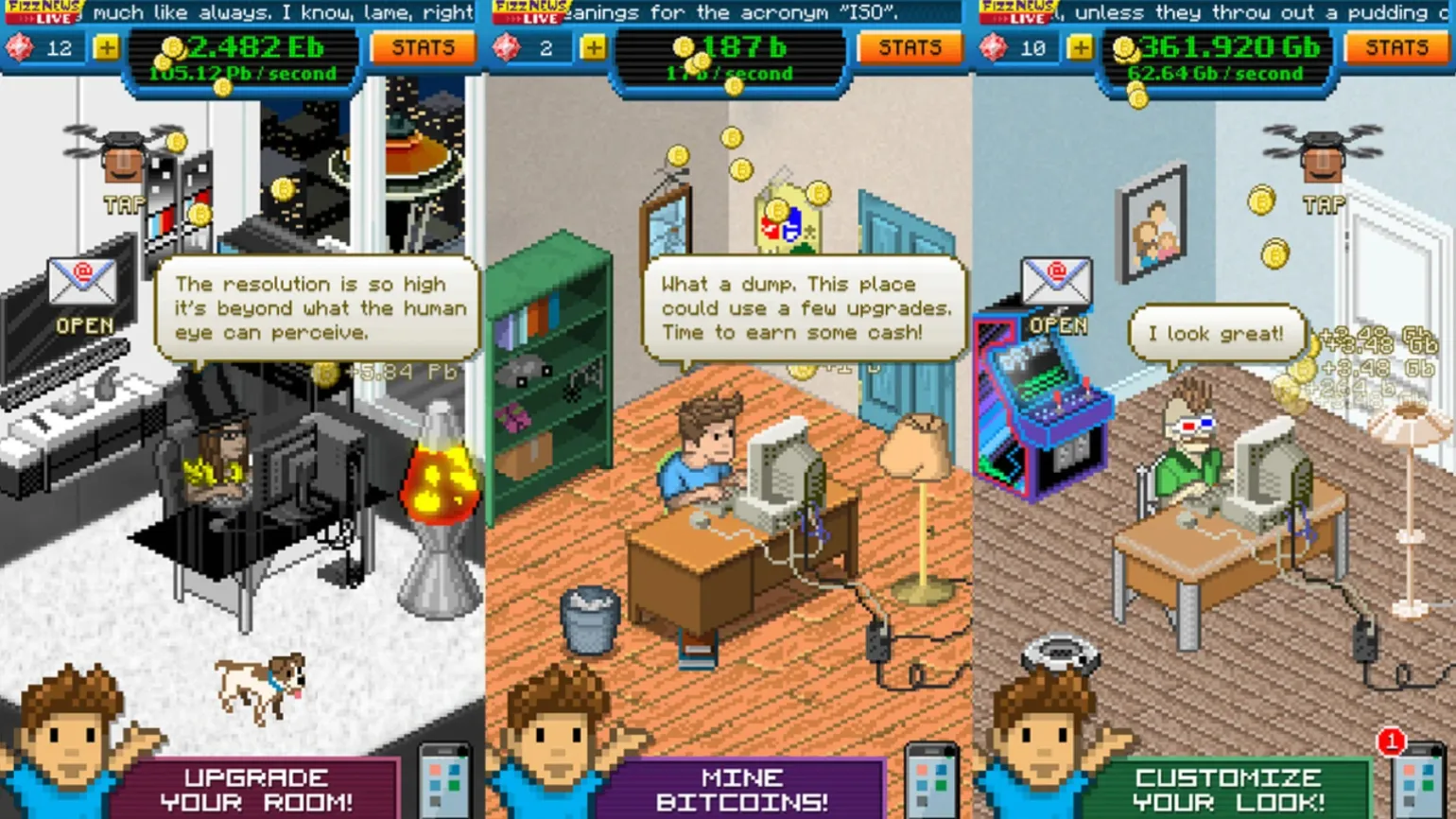
The result is a simple gameplay loop that resembles the mechanics of social games, but functions on several levels simultaneously. First, each login gives the player a sense of achieving a specific goal. Second, the game avoids the excessive sense of artificial limitation typical of energy systems. Finally, the passive progression system creates an engaging environment that players are eager to return to, as they accumulate more in-game resources with each hour they are away from the game. This creates an additional incentive for regular entry into the game, which increases user engagement and interest.
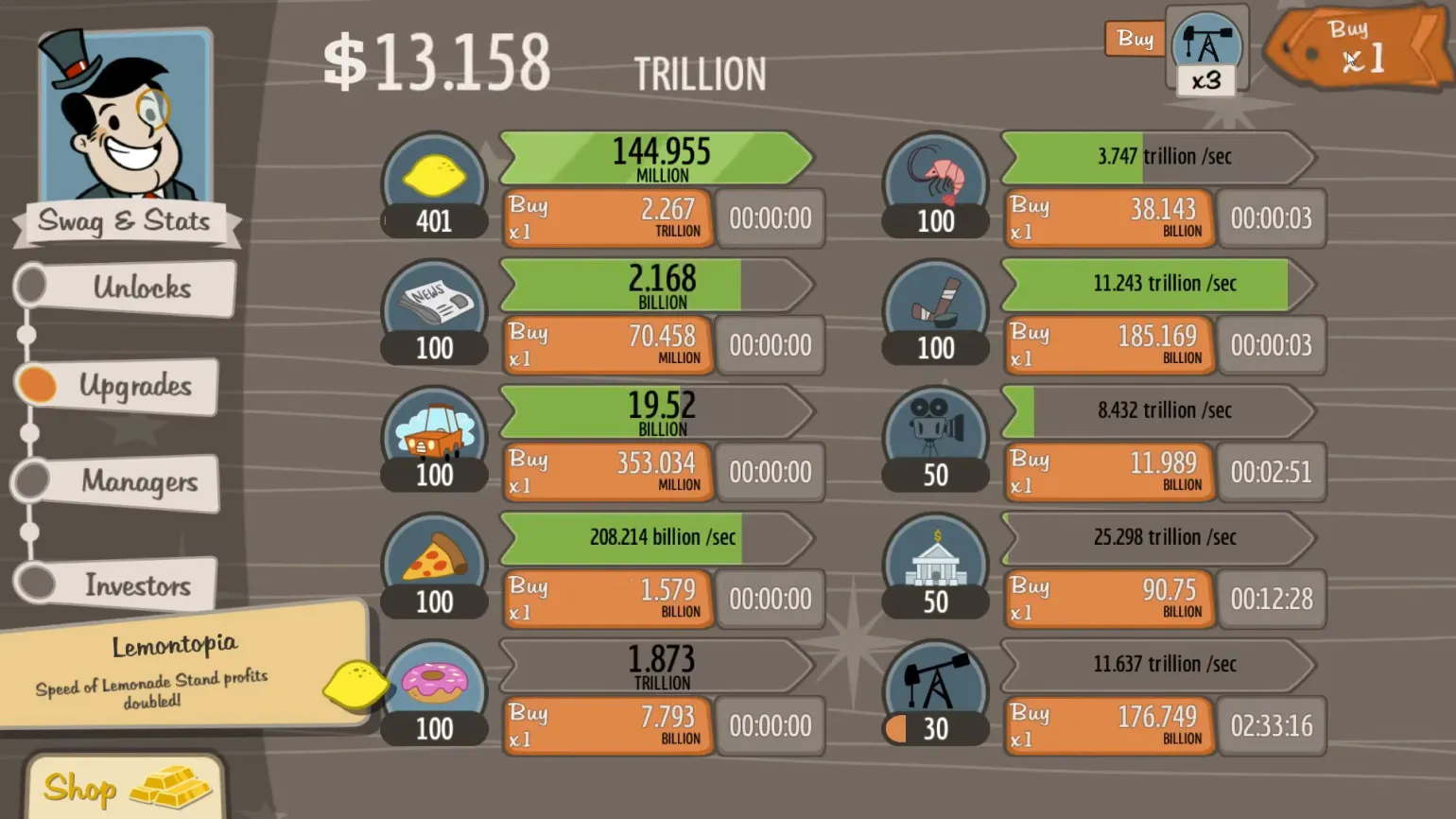
Not all clicker games work on the principle of constantly increasing revenue, Like in Cookie Clicker, in AdVenture Capitalist, resource generators activate at specific intervals, which influences gameplay strategy. For example, oil rigs provide significant income, but payouts are only made at fixed intervals. This means players can plan their gaming sessions in advance to maximize the use of available resources and progress in the game. This approach requires players to be attentive and manage their time, which adds a strategic element to the gameplay.
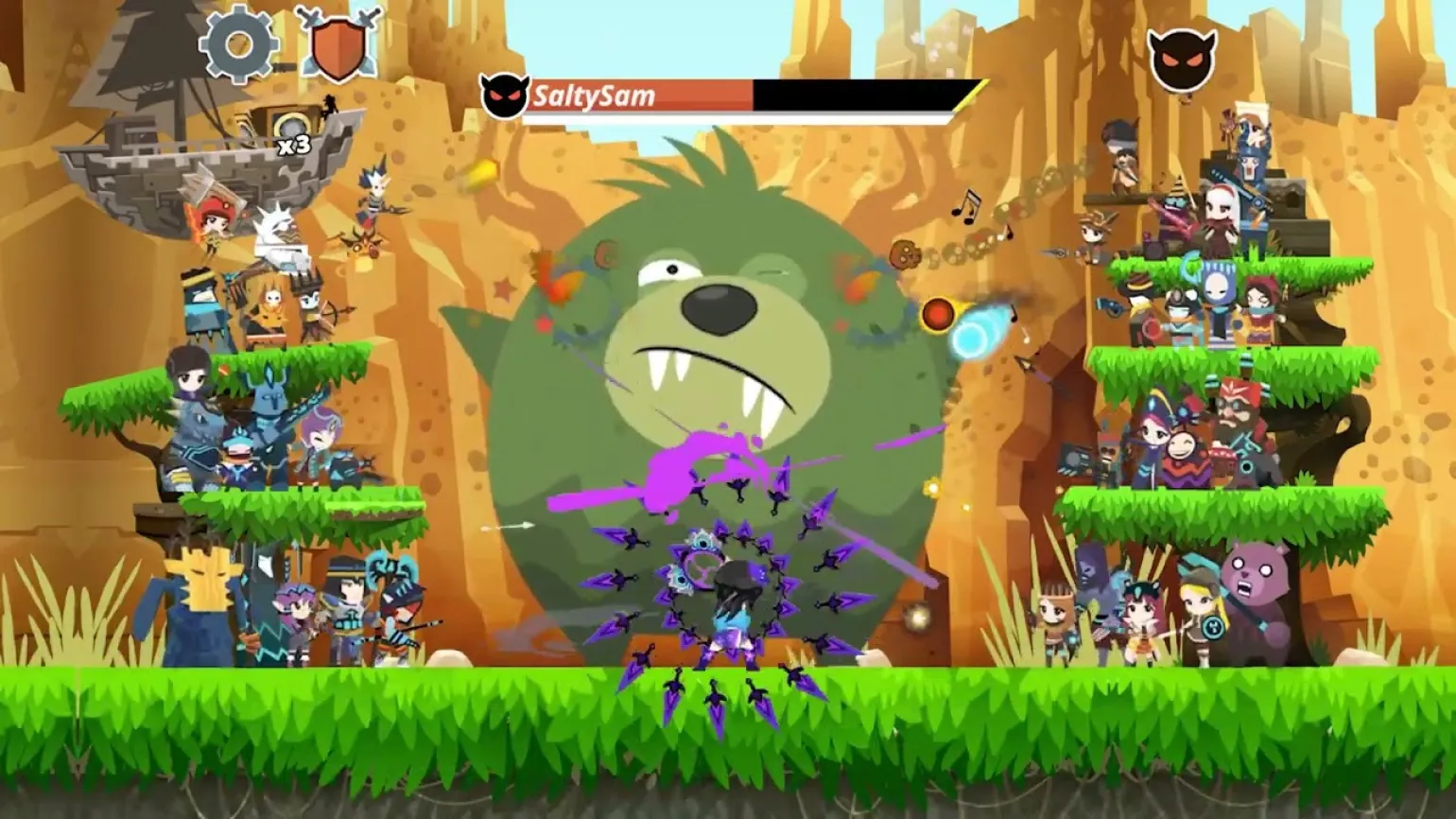
A comfortable and effective clicker game loop allows players to enjoy the gameplay without the need for aggressive incentives, such as daily rewards, often found in most free-to-play games. Idle games don't require such mechanics, as the engaging gameplay already creates sufficient motivation to return.
Goals
Motonous progression in games can quickly become boring, especially in the modern gaming landscape, where similar idle games appear on the market almost daily. An additional factor exacerbating this problem is the imbalance between the rate of resource acquisition and the cost of upgrades. As we noted earlier, players sometimes have to spend several days to obtain a single upgrade. This gameplay loop can quickly lead to fatigue and diminish interest.
To maintain interest in games, clear goals are essential. Early on in the development of clicker games, developers used simple approaches to this problem. Games like Clicker Heroes offered players similar achievements and rewards for accumulating a certain amount of resources. For example, the generator's efficiency doubles every 50 levels. Even such simple mechanics give the gameplay meaning: the player isn't simply increasing a number on the screen, but rather striving to complete specific tasks. Completing these tasks earns bonuses that accelerate progress and make the gameplay more engaging. An effective achievement and reward system is a key element in retaining players and increasing their engagement with the game.
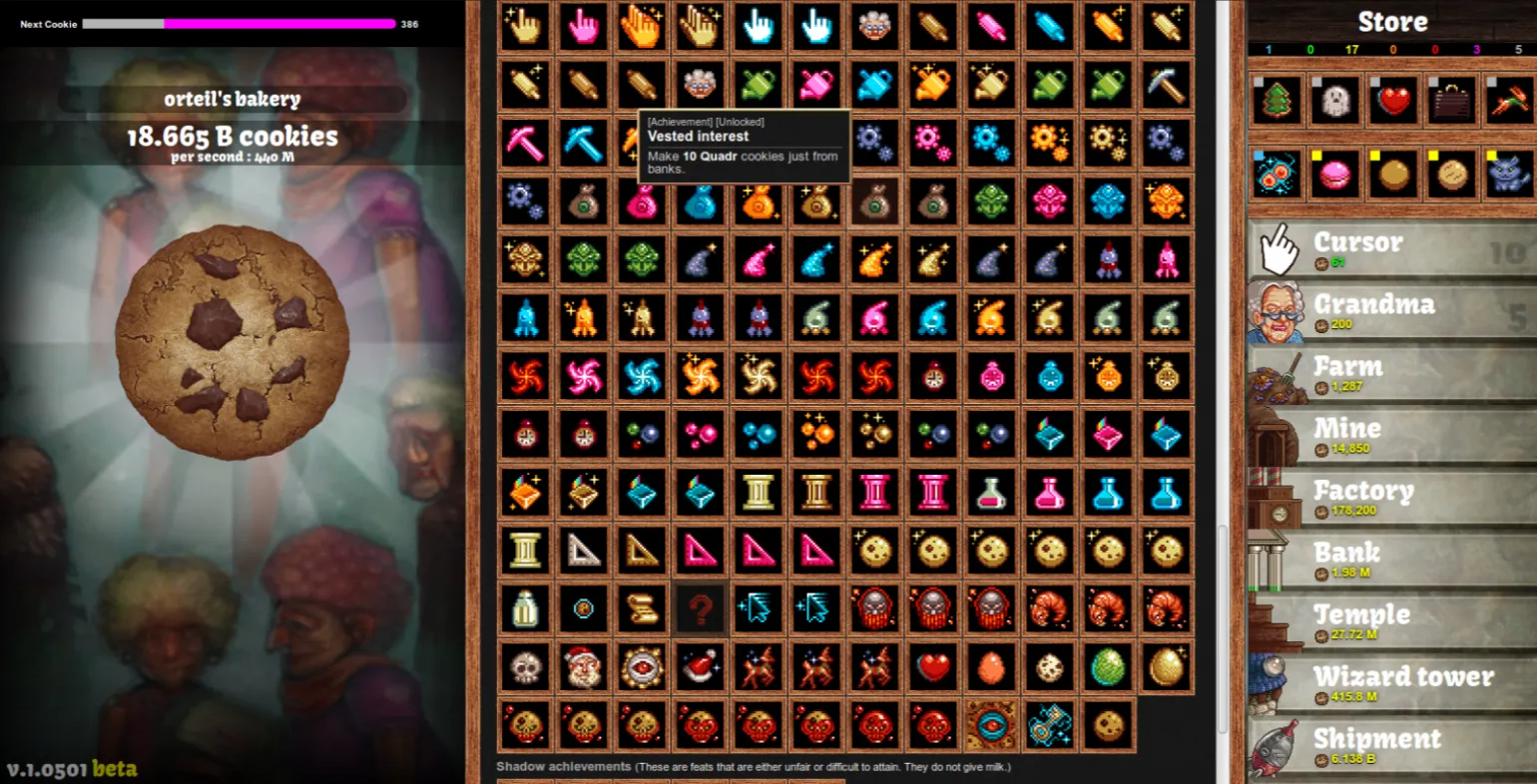
Over time, developers have created increasingly complex task systems that incentivize players to continue playing. For example, when the leveling process becomes too long and tedious, players are given the opportunity to activate the "prestige" system, which allows them to restart the game with a certain permanent bonus. This usually leads to the receipt of a passive upgrade that increases the growth of a primary resource. Such mechanics not only maintain interest but also provide players with additional strategies for achieving goals in the game.
Anthony Pecorella emphasizes the importance of a sensible approach to the prestige concept. People will not be willing to start over if they only receive a minor bonus in return. Typically, the required buff for successful completion is between 50 and 200 percent. This significant increase allows players to feel a real benefit from restarting the game, making the process more engaging and motivating.
Prestige in games is a mechanic that quickly gained popularity and became a classic of the genre. It may seem like a simple way to prolong gameplay, but it actually gives players the opportunity to reset their progress and earn special currency. These resources can be used to obtain significant bonuses, such as upgrading generators, adding an element of strategy and meaningful choice. Prestige not only creates new goals for players but also enhances the sense of progress, allowing them to achieve results in a short time that previously took hours. Thus, the prestige mechanic enriches the gaming experience and makes it more engaging.
One effective way to diversify gameplay is to implement a dynamic progression system, where lengthy stages of leveling up alternate with periods of significant income increases. The developers of AdVenture Capitalist noted that linear leveling quickly loses appeal, as it leads to a predictable and monotonous gameplay cycle. Experimenting with the pricing and value of upgrades can create a less predictable gaming experience. As a result, players will experience periods of slow progress and moments when resources flow at an incredible rate. This approach not only maintains interest in the game, but also contributes to a more engaging and rich gameplay.
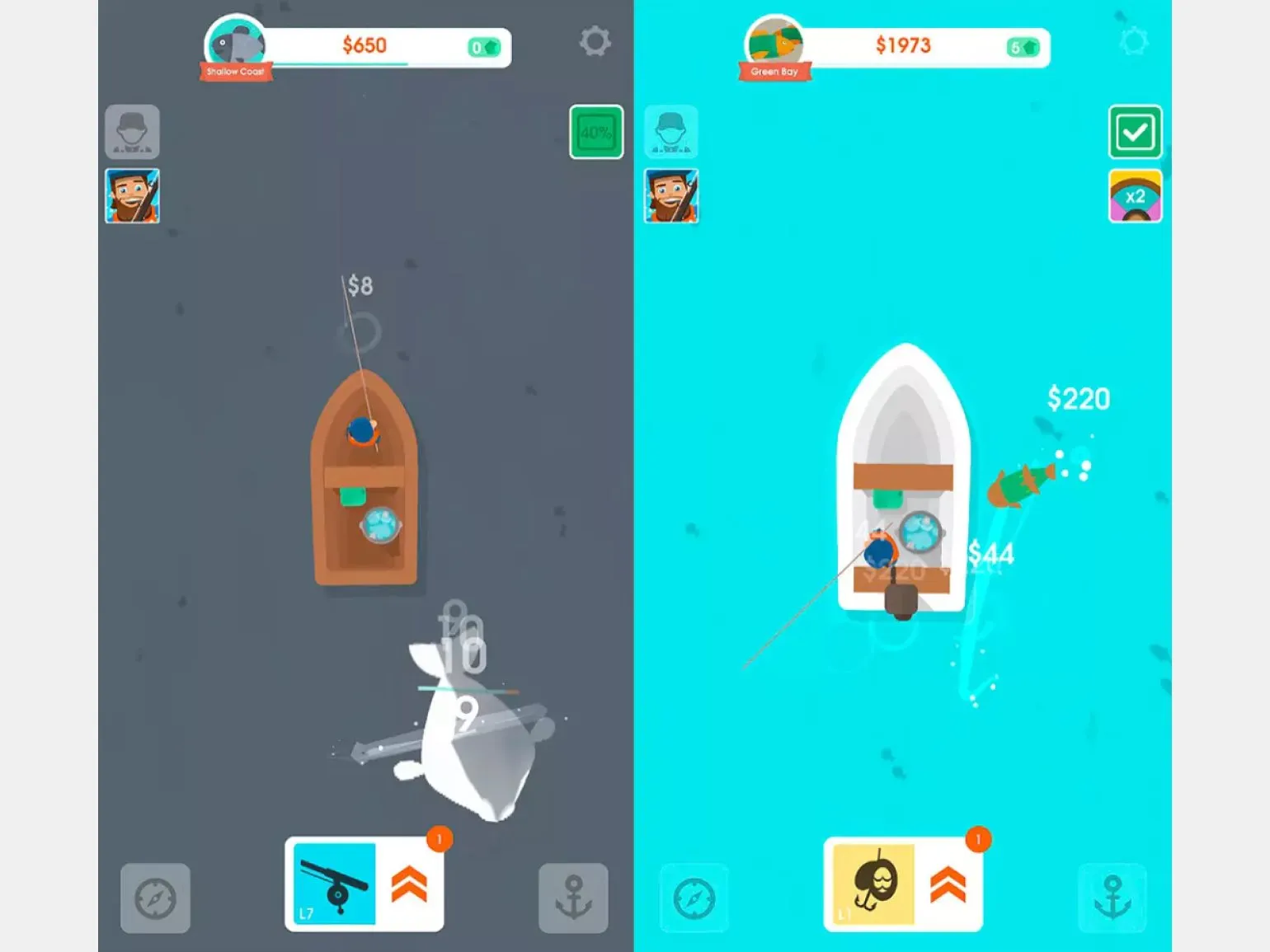
Creating intrigue is one of the most effective ways to engage players in a clicker. An effective technique is to hide the names and functions of unlocked upgrades and new mechanics that become available after prestige. This helps maintain player interest, encouraging them to strive for new opportunities. It is important to make the player feel the desire to continue playing and discover new horizons, which in turn increases engagement and time spent in the game.
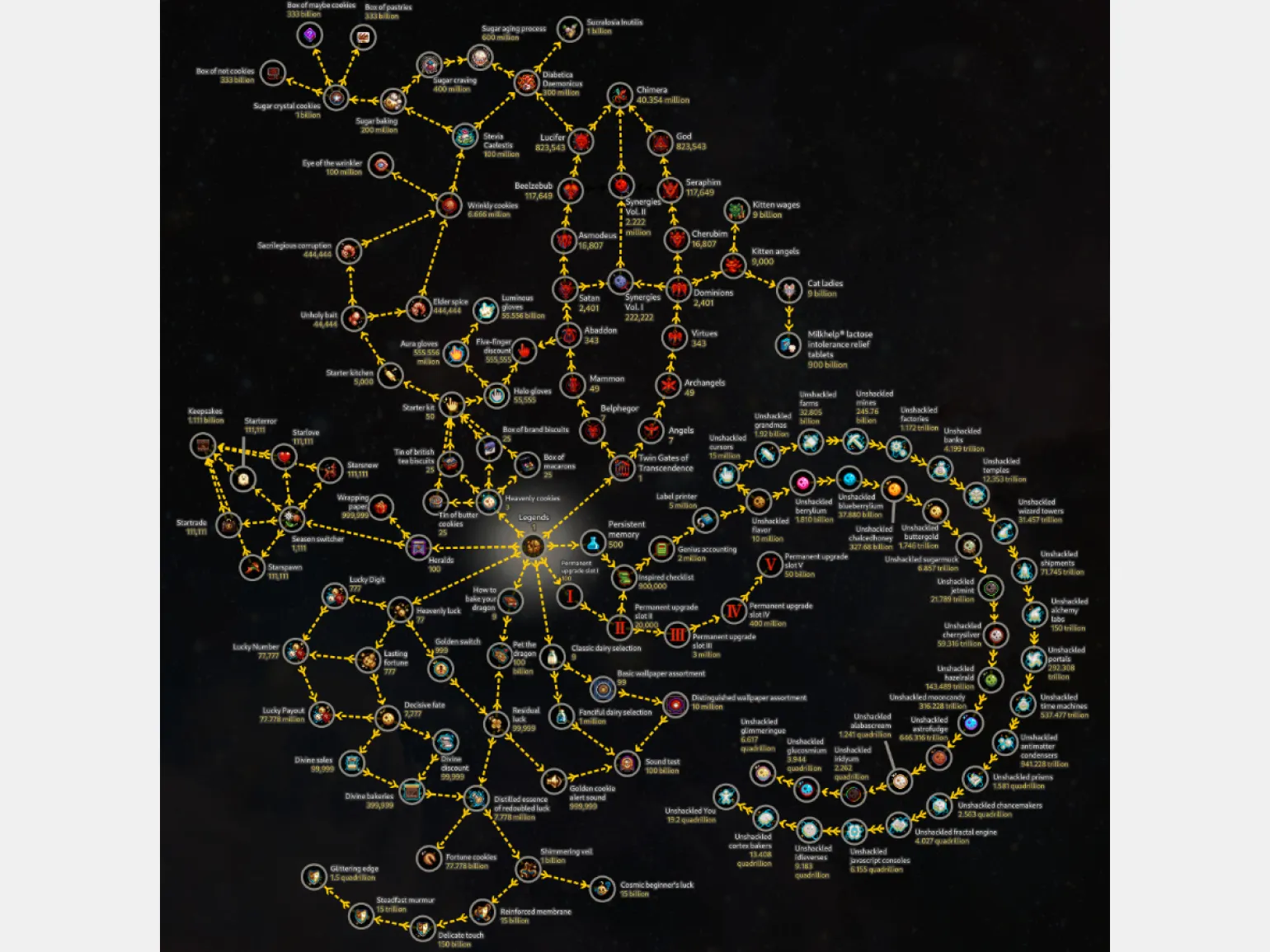
A well-thought-out intrigue integrated into the game's lore can significantly increase player interest. Developers can not only attract attention with a new location or upgrades, but also change game mechanics. A prime example of such a game is Cookie Clicker. Once players adapt to the gameplay, unexpected events begin to occur in the clicker. At some point, players may encounter a "Grannypocalypse," where previously friendly baker grannies turn evil. This fun cookie-baking game gradually evolves into something resembling a horror game. Interesting plot twists and unique mechanics make the game exciting and unpredictable.
With the change in gameplay, Cookie Clicker shifts the focus from farming generators to using various combinations and active bonuses. This creates new opportunities for players and makes the process more engaging. Innovations are introduced gradually, allowing players to anticipate unexpected and interesting moments in the future. This approach increases engagement and maintains interest in the game.
Choice: Reality or Illusion? In our modern world, we are often faced with a multitude of options that, at first glance, give us freedom of choice. However, how much of this choice is real? Sometimes we find ourselves in a dilemma when the number of options creates the illusion of freedom, but in fact, limits us. Research shows that an excess of choice can lead to stress and uncertainty. We must approach the choice process consciously, analyzing our true needs and preferences. Only then can we make an informed choice and avoid the trap of illusion.
When developing a clicker, the designer faces many important questions. One of them is whether to give the player the opportunity to make strategic decisions. Relaxing games like Bitcoin Billionaire can do without this. In this game, each new upgrade brings significantly more money than the previous one, so the player focuses exclusively on upgrading expensive generators. However, the opportunity to choose can become an engaging mechanic that will attract the attention of certain players. To achieve this, it is worth experimenting with multiplier values to increase the value of generators. For example, if the game has an expensive but unprofitable generator with a multiplier of 1.1, it will initially not be attractive to the player. However, if other generators have a multiplier of 1.3, over time, the expensive option will begin to demonstrate its benefit. Properly setting these mechanics can significantly increase player interest and engagement.
Anti-stress toy
Clickers are reminiscent of the anti-stress toys that became popular several years ago. The visual response when clicking creates a pleasant sensation, and the positive feedback in the form of increased resources enhances and emphasizes these emotions. These games are not only entertaining but also help relieve stress, allowing users to focus on the process and get satisfaction from achieving goals.
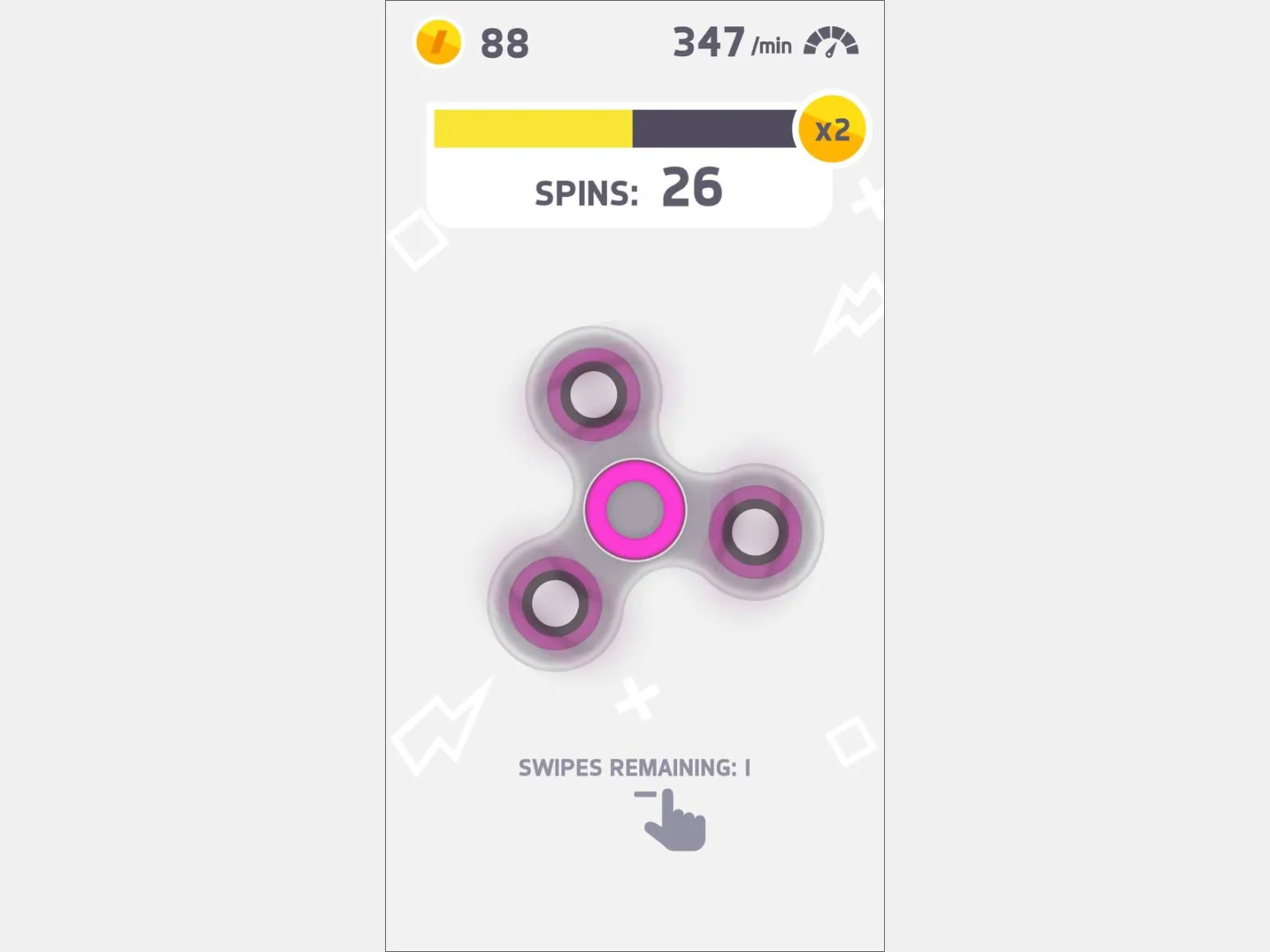
Some games, such as Fidget Spinner, create a sensation similar to interacting with a real toy. In these games, the player doesn't just press a button, but spins a spinner, which gets faster and louder with each level. Leveling up in the game not only increases the numerical values but also provides a more satisfying effect, making the gameplay more engaging.
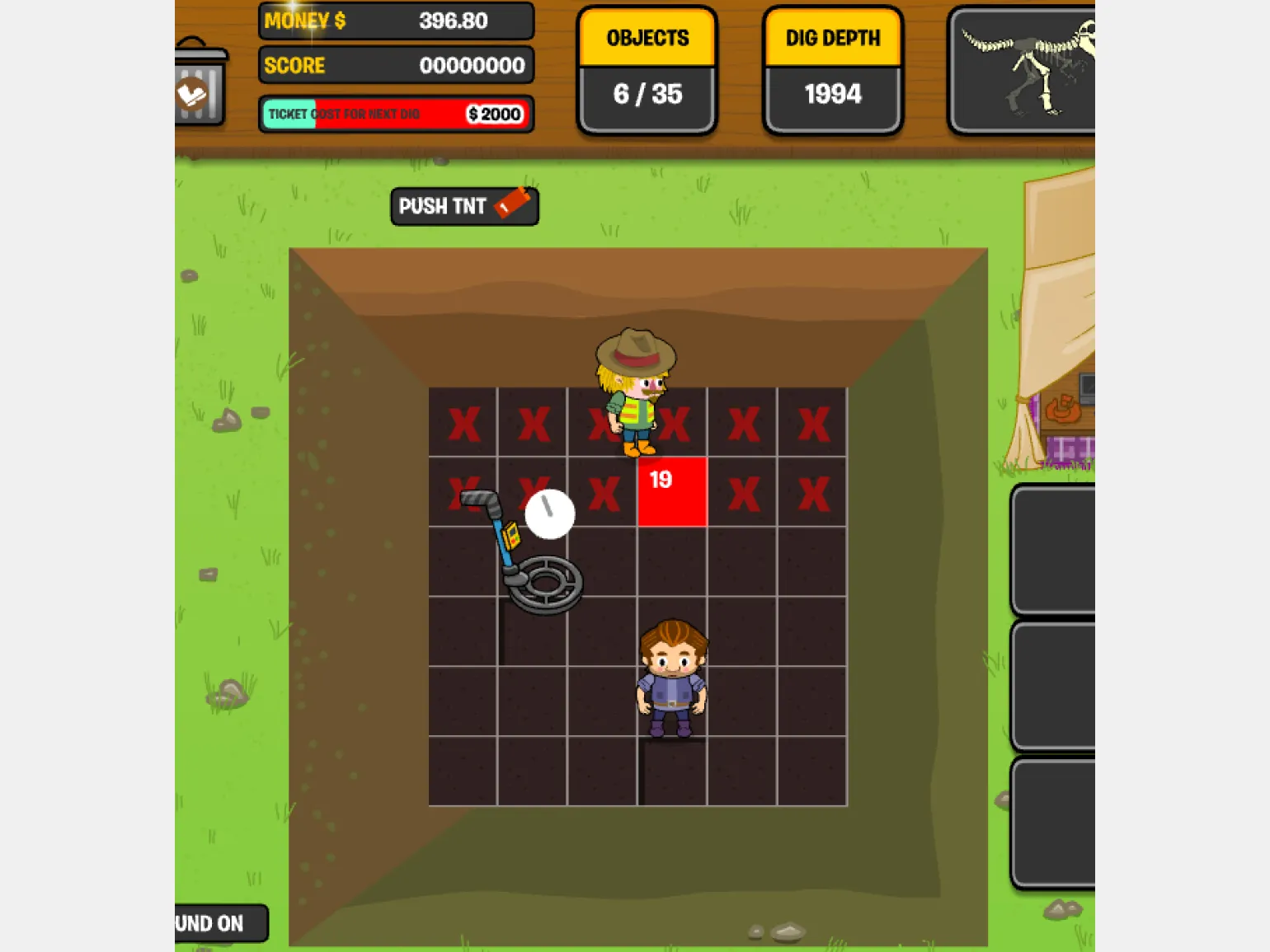
A creative approach to gameplay can significantly diversify similar actions. In Big Dig Treasure Clickers, players search for treasure underground. To achieve their goal, they must first scan each section, then excavate it, and ultimately collect the reward. While all these actions boil down to simple taps on the screen, the game's structure requires rhythm and consistency, making the process engaging even without a significant reward. This approach not only keeps players engaged but also helps create a unique gaming experience.
Idle mechanics aren't a requirement for all games. Parody games from the early 2010s highlight the primitive nature of the gameplay in such projects. Some idle games, such as Supermarket Tycoon, function successfully without the need for constant clicking—the player simply develops their supermarket and periodically collects bonuses or waits for them to appear. This confirms that a simple and unobtrusive approach can be no less engaging than active clicking gameplay.
More than just clicking
Idle gameplay has been a source of controversy among game designers for many years. These games have been criticized not only for their simplicity, but also for their high level of engagement. Unlike MMOs, idle games, despite their apparent simplicity, can consume significant amounts of players' time. Even with minimal user activity, the game continues to earn points, which helps maintain attention and interest. Clickers attract players with their mechanics and the ability to achieve results without the need for constant interaction, making them particularly popular among a wide audience. Simple clicking and waiting can prove to be powerful mechanics, creating a unique gaming experience. Interestingly, the first projects in this genre appeared back in the days of Cookie Clicker, but failed to achieve widespread popularity, leading to their oblivion. For example, A Dark Room, while seemingly a simple clicker, is actually a deep text adventure novel. Games like these demonstrate how simple mechanics can be combined with a rich narrative, captivating players and creating engaging content.
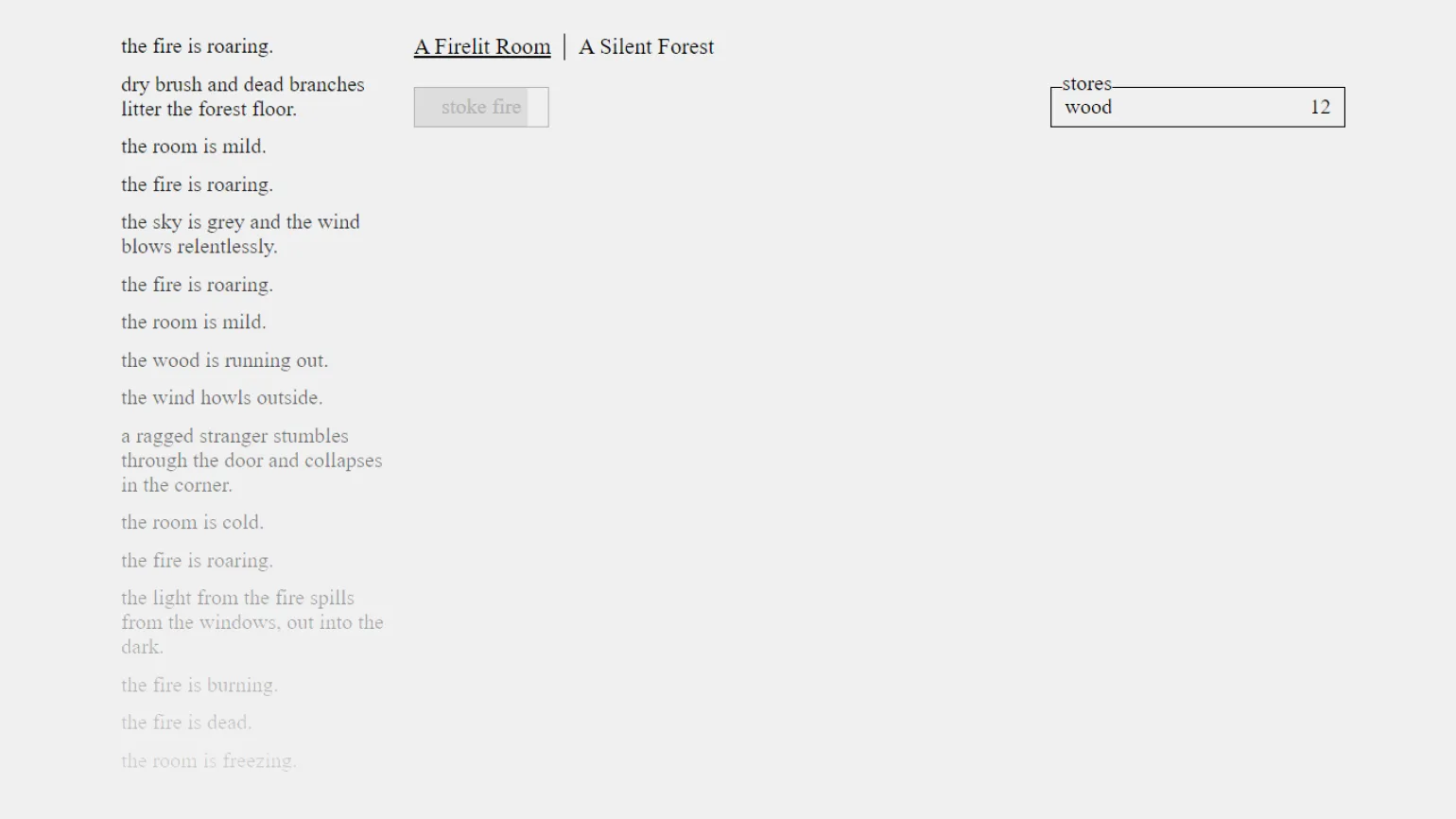
The player begins their game in an empty, A dark space where the only task is to light and maintain a fire using wood. When resources are depleted, the character can venture into the forest to gather more firewood. All player actions are accompanied by brief text descriptions. Once the player has mastered this basic cycle, A Dark Room begins to unfold its captivating story. Within the first few minutes, a stranger enters the cabin and immediately passes out in the corner. Who is she? Where is the protagonist? What secrets does the surrounding world hide? The player will gradually uncover these questions through text clues, creating an atmosphere of mystery and exploration. A Dark Room draws attention from the start with an engaging plot and creates atmospheric gameplay through simple mechanics. Initially, the player must chop wood, light a fire, and create traps to catch animals. Each action is accompanied by a waiting period, requiring the player to take their time. This creates a cozy and mysterious atmosphere that perfectly matches the mood of the game. In A Dark Room, waiting becomes more than just a design trick to hold attention; it becomes an important narrative element that immerses the player in a unique world.
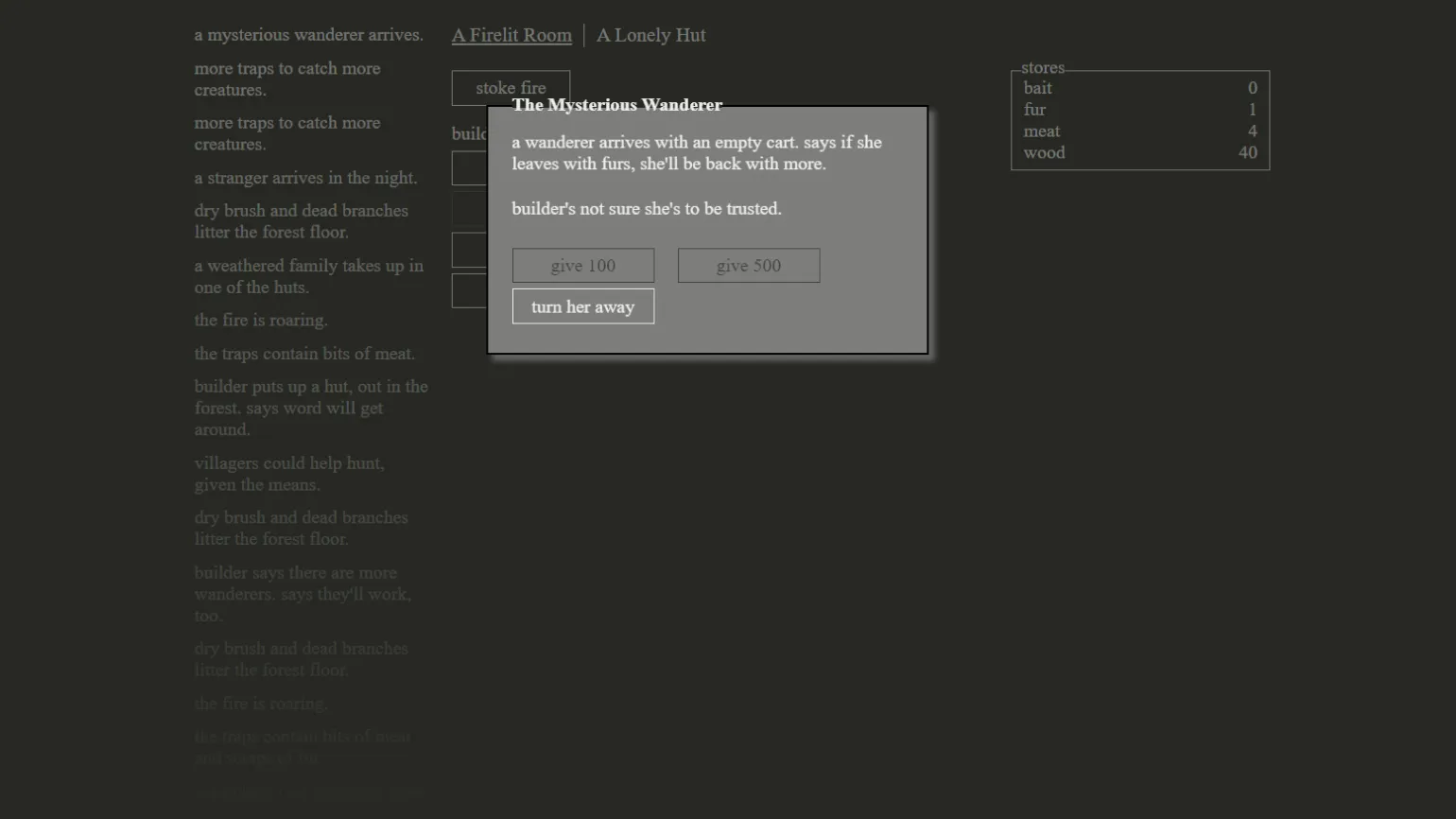
Over time, the game's dynamics will change. New strangers will arrive at the hut, some of whom will be willing to help the protagonist and take on some of the responsibilities. This will force the player to pay more attention to settlement management. Resource management, task distribution, and interaction with new characters will become key aspects of the gameplay.
A minimalist interface and concise text create opportunities for deep interpretation. A Dark Room is a unique blend of gameplay and literary narrative. Users can try their hand for free on the official website, immersing themselves in an atmosphere of mystery and adventure. Try A Dark Room and discover a new world of interactive storytelling.
This is one of many examples of the engaging application of simple game mechanics. Since 2014, alongside simple clickers, more complex games using similar mechanics have begun to appear online. One notable example is Kittens Game, a business simulator that encourages players to carefully plan their actions from the very start. These games are not only entertaining but also stimulate strategic thinking, which makes them attractive to a wide audience.
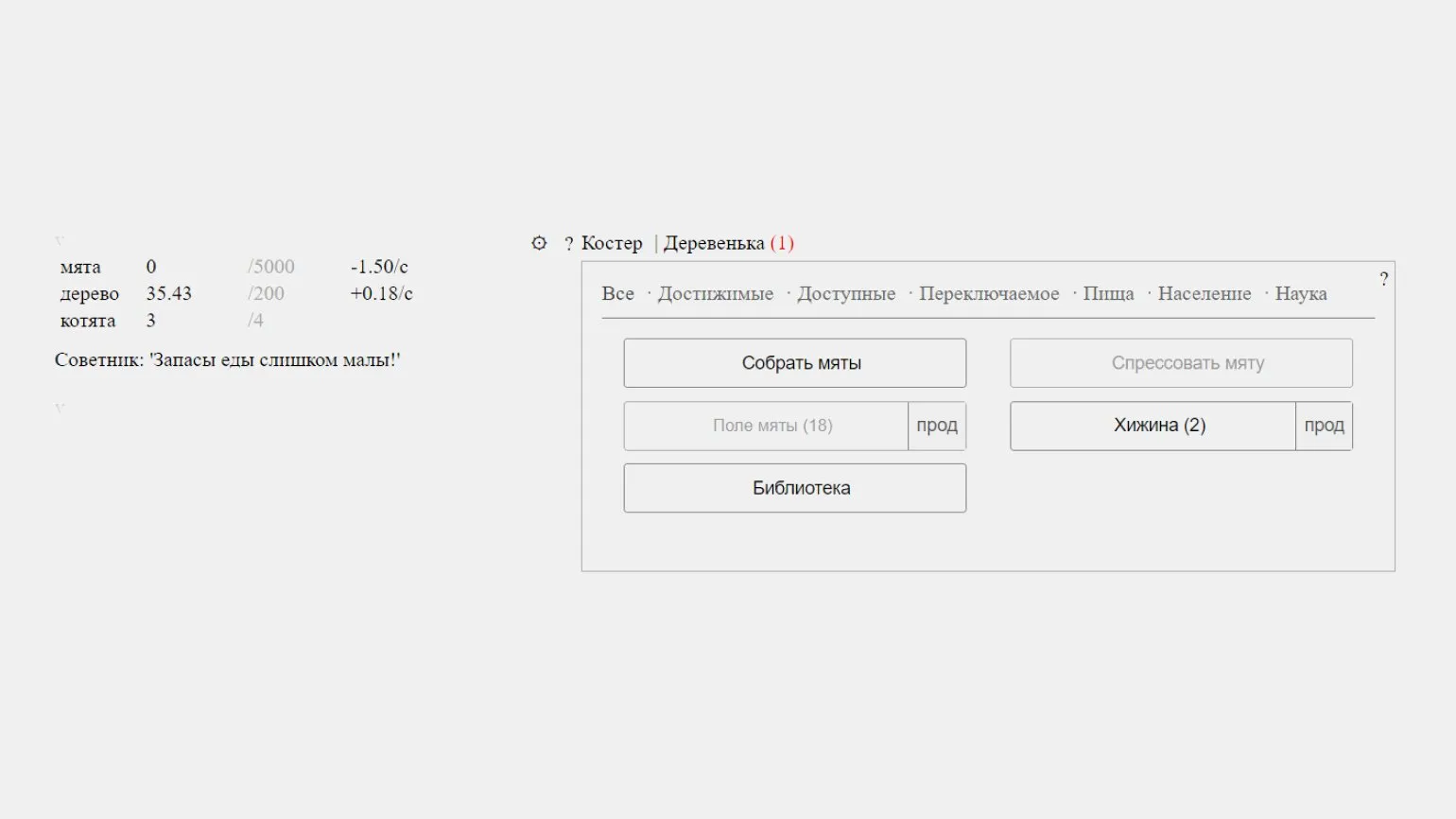
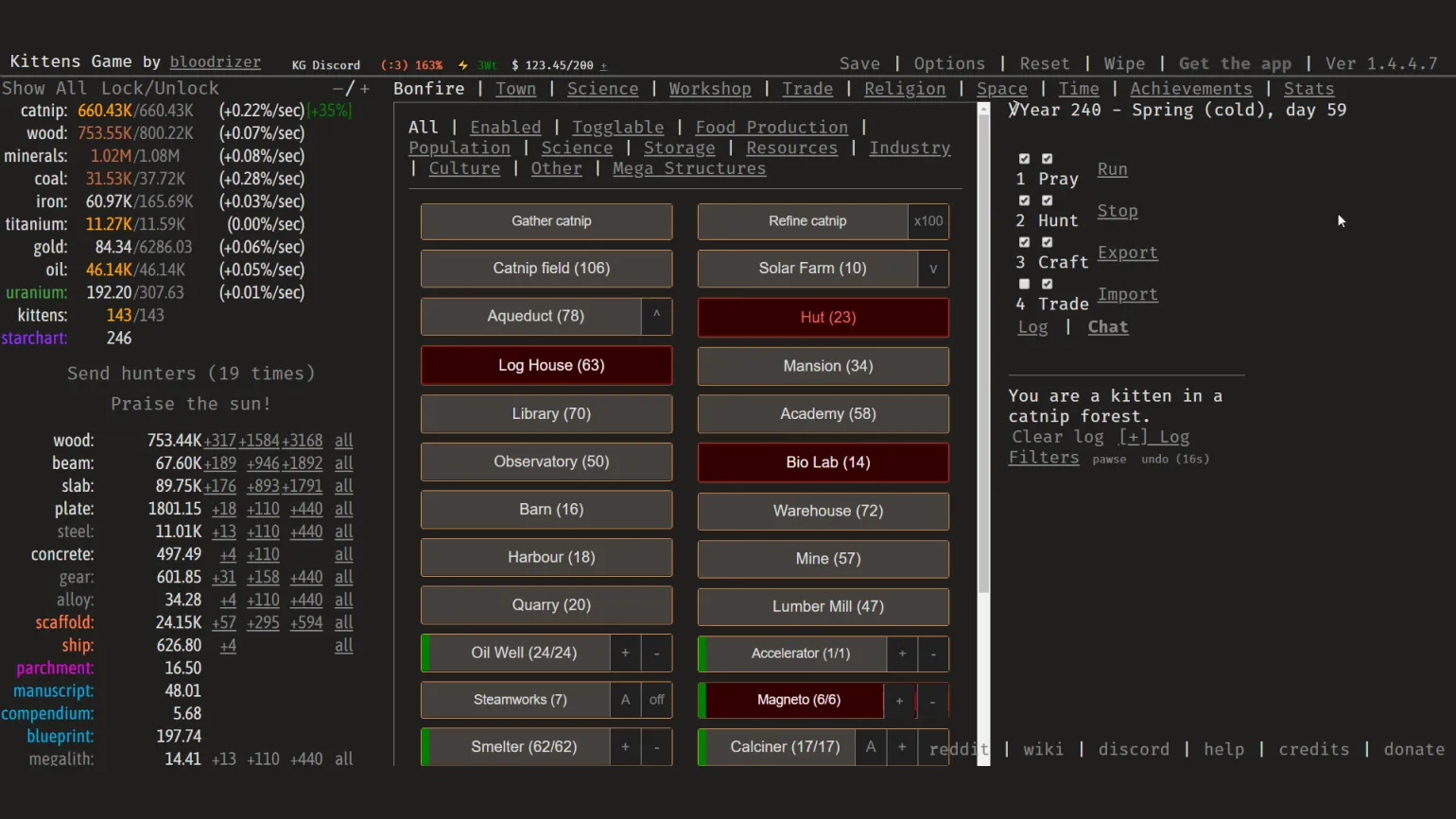
In the beginning of the game, players collect mint to feed kittens, who are engaged in the extraction of other resources. Over time, the system becomes more complex: the number of resources increases, many of which have interdependencies, and the production process is affected by various conditions, including the time of year. For example, in winter, when mint is rarely generated automatically, the player must actively collect it manually, repeatedly pressing the appropriate button. This adds an element of strategy and requires players to plan their actions based on seasonal changes.
As the settlement develops, gameplay changes. With the emergence of new buildings and resources, players increasingly have to make important decisions. For example, should they save mint for the winter or sacrifice kittens, who could die of starvation, to construct a new building? Like many other idle games, Kittens Game is available for free on the official website.
Complex, system-based idle games have long earned a devoted community of fans who actively seek out new projects and balk at comparisons to games like Cookie Clicker and other simple clickers. It's important to note that the dissatisfaction game designers have with idle games does not apply to these deep and often complex games. Unfortunately, the gaming community hasn't had time to clearly classify different games, so many gamers associate the term "idle game" with yet another primitive clicker. This misunderstanding hinders the development of more complex and engaging projects in a genre that deserves special attention and recognition.
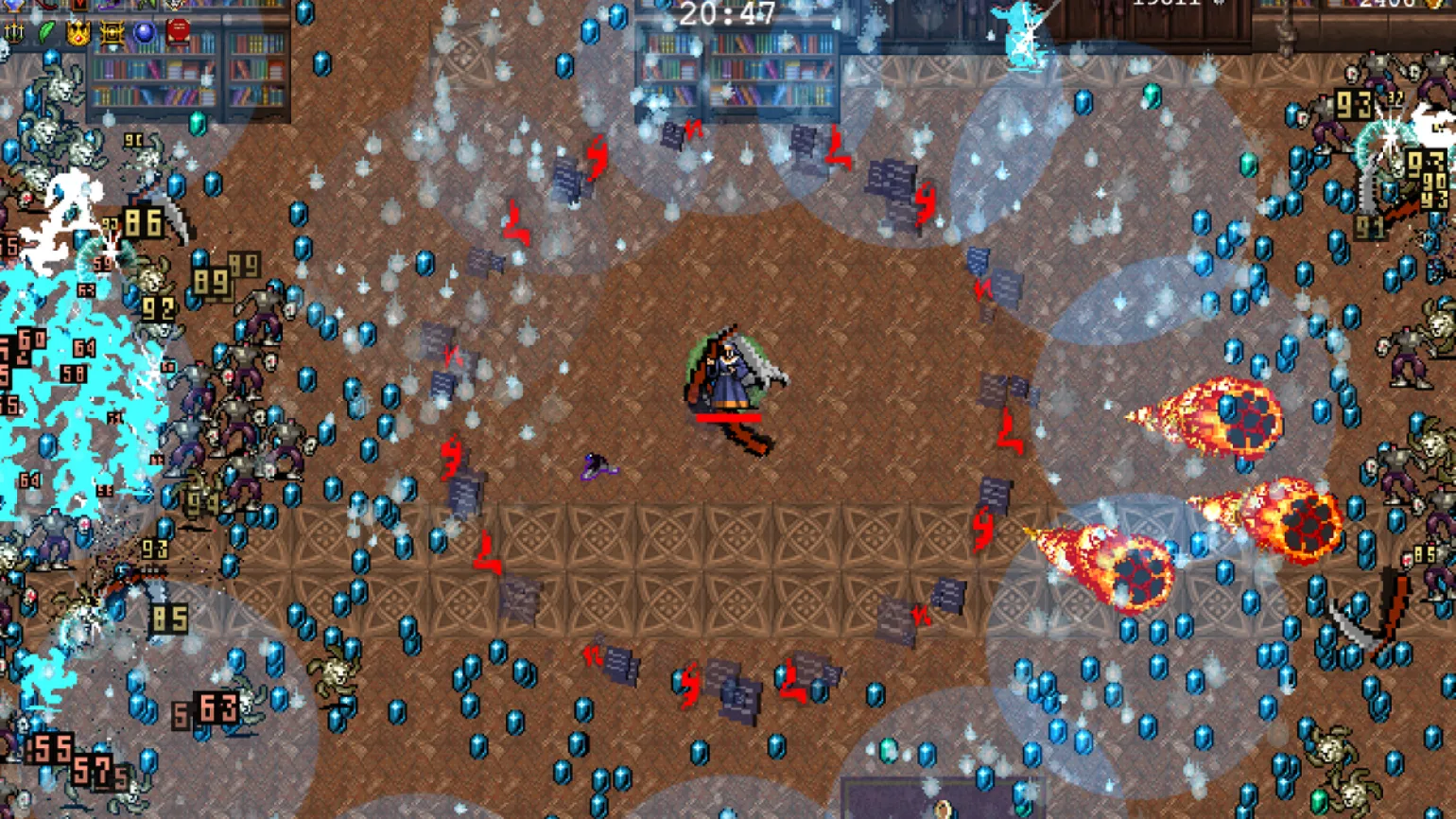
Fans of complex idle games strive to solve the problems that arise on their own. Many of them flatly refuse to use the terms "clicker" or "idle." Instead, they suggest calling such projects incremental games, emphasizing their unique mechanics and strategic depth. Incremental games attract players with their gameplay, which allows for developing strategies and managing resources, making them more engaging and interesting.
Over the course of their existence, clickers, or idle games, have evolved from a simple joke into a popular, independent genre that continues to attract millions of players. Their exceptional simplicity reveals two interesting aspects. First, these games effectively hold players' attention, which can be both positive and negative, as some developers exploit players' psychological weaknesses. Second, even basic game mechanics can create a unique and engaging experience, making clickers appealing to a wide audience. These games continue to evolve, introducing new elements and mechanics, which contributes to their popularity and growing fan base.
If you're a game designer, be sure to pay attention to these simple mechanics. Players should remember that behind the apparent simplicity of incremental games lie not only superficial projects but also deeply developed games with many original ideas. The potential of incremental games should not be underestimated, as they can offer engaging gameplay and unique opportunities for interaction.
A court has issued a ruling prohibiting Meta Platforms Inc. from selling its social networks, such as Facebook and Instagram, in the Russian Federation. This decision is based on accusations of the company's extremist activity.
Game designer profession from scratch to PRO
A game designer creates the structure of a game. They think through the idea, rules, gameplay, and decide what emotions the plot will evoke in players. You'll master game design principles from scratch and learn how to work with popular engines like Unity and Unreal Engine. You'll learn how to retain player interest and monetize your games. And we will help you start a career in the gaming industry.
Find out more