
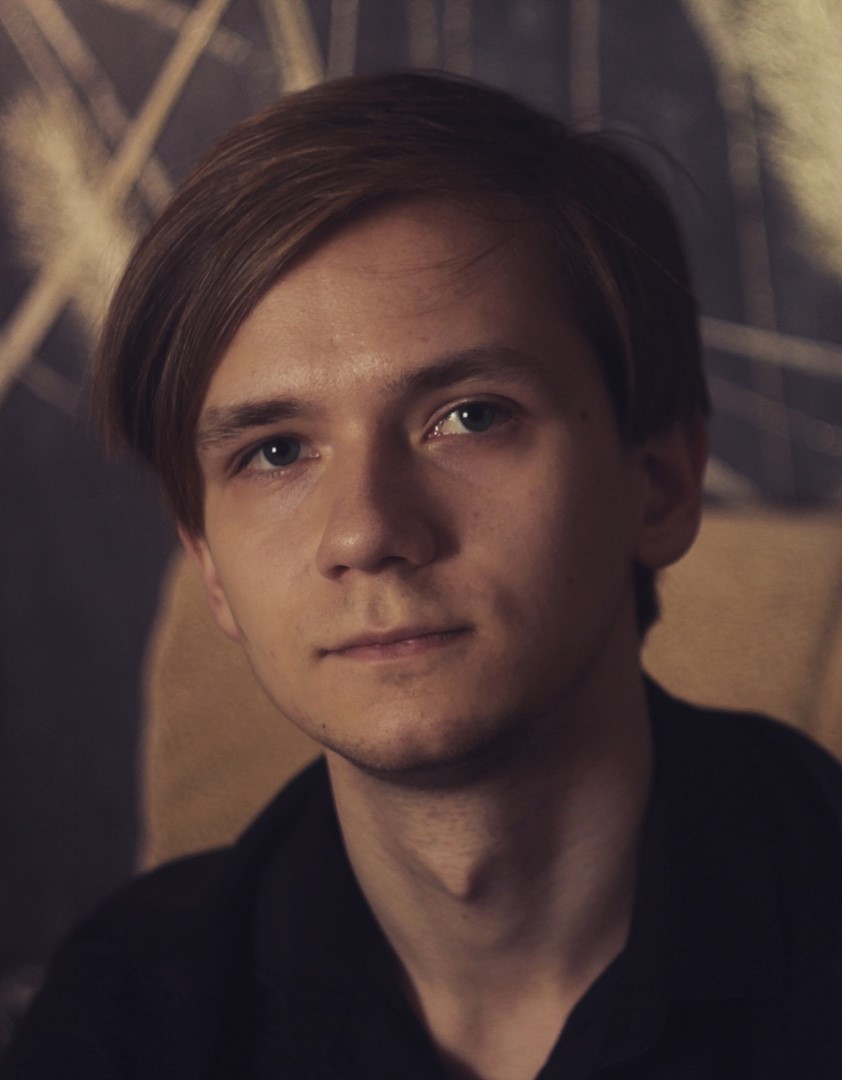
Alexey Soroka, narrative designer
Psychologist by education. Narrative designer by vocation with three years of experience.
He started with Skillbox online courses and is now developing his project at the High-Tech Park.
Psychologist by education. A narrative designer by vocation with three years of experience.
He started with Skillbox online courses and is now developing his own project at the High-Tech Park.
Alexey shared:
A narrative designer is a specialist who is responsible for the storytelling in games, the presentation through gameplay. Narrative designers have different tasks: they make sketches for games or write a story. But the main task is to implement the idea using game mechanics.
"I realized that with a flexible schedule I could afford to take on additional work": about the beginning of the journey
— Tell us your story: how did you start, where did you study, why narrative design?
I studied to be a psychology teacher at BSU. In the first years of work, in parallel with my master's degree, I realized that with a flexible schedule I could afford to take on additional work.
As far as I can remember, I have always been a creative person. I loved to write, draw, fantasize. I was looking for something interesting to do.
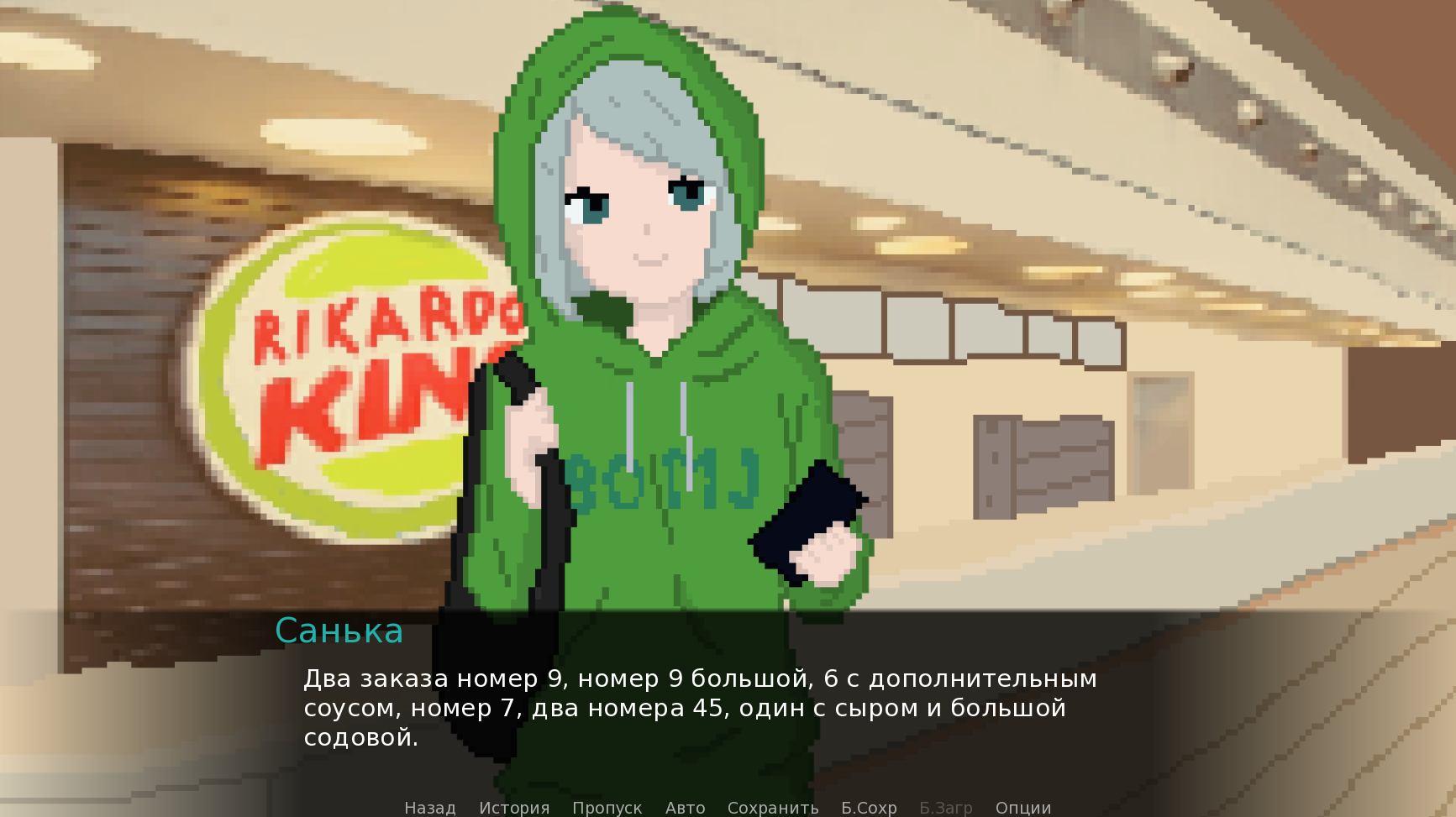
Narrative design was initially just a hobby. It all started with ideas in my head. I wrote them down in notes. Then I formatted them as a visual novel Slav Story — my own game.
I created the project alone. Therefore, I touched on different tasks:
- Wrote code in Python;
- Drew illustrations;
- Worked with sounds;
- Created the lore and plot.
Lore is background information about the game universe.
For example, the main character is a Fixie. DimDimych hides the Fixies from their parents. This means the Fixies should hide and not catch their eye. This information is the lore. The player learns it through dialogue, quests, the musical theme, and the pre-game backstory.
The term "lore" comes from the English word "lore." In this context, it means "knowledge" or "tradition."
Since I'd experienced everything from concept to implementation, I had the opportunity to choose a direction. For example, I could have gone into programming and become a Python developer. But creativity was closer to me, so I chose narrative design.

— Coming up with ideas, writing code, and drawing illustrations—it's a lot of work. How did you learn so quickly if you were also working?
I wouldn't say I was a sweaty student. Learning at Skillbox was a moderate pace. Alongside my studies and work, I completed several assignments a week. Probably, if it weren't for work and university, I would have learned even faster.

Learn to promote your business online and add 14 projects to your portfolio on the course "Game designer from scratch to PRO"
Learn more"All the skills from the course came in handy at work": about the training
— Why did you start training in Skillbox?
I chose Skillbox after seeing an ad for a free intensive course. I was intrigued by the program and decided to continue learning.
I chose Skillbox because the free intensive course proved itself to be excellent. During the test drive, we created a basic design document for the game and prepared a short project presentation.
I didn't consider self-study. Feedback is always important to understand the direction you're moving in. You can find information yourself, but you can only acquire skills in courses.
— Did the course help you in practice?
Almost all the skills from the course were useful in my work. The additional assignments from the teachers were most helpful. These are optional tasks. But if you complete them, you delve deeper into the topic and develop your narrative skills.
I can say that the basics are already enough to apply for a job. The project lead will teach you the rest.
— So the basics are already enough to get a job. How did you find the job?
I found a job quickly. I was finishing my course at the time. I have an unconventional background. The VKontakte group helped me with my search.
I passed the interview with confidence. I had a good grasp of theory and this was evident in my interactions with colleagues. I quickly fit into the team.
I often consider other vacancies, but there are still few offers for narrative designers. Competition is high, as everywhere else. But great specialists are always in demand. The courses I had completed in my specialty, my experience in game creation, and my master's degree in social psychology helped me.
— You have a cool background. Is it difficult for a beginner to find a job? For example, a person without education and experience?
Finding a job in the gaming industry is possible. But it has always been difficult to find vacancies for a narrative designer. There are few of them, and not all games need a narrator.
Narrative design is a good way to enter the industry. You can gain experience on a low-paying project. And then grow to a high position or create your own studio. This advice applies to many professions in IT.
“Developing my project in the Belarusian HTP”: about work, tasks and prospects
— Tell us about your work: what do you do every day and what are the tasks of a narrative designer.
My responsibilities include:
- Describing the overall vision of the project;
- Filling the lore;
- Writing the plot and possible factions;
- Metaphysics of Magic;
- Global Map of the Game World;
- Flora and Fauna Content;
- Dialogues between Story Characters and NPCs;
- Creating tasks for artists and game designers.
NPCis a non-player secondary character.
And that's not all. We have a sprint every three weeks. Tasks appear for each sprint.
During a sprint, you can select as many tasks as you wish. Urgent and complex tasks are given priority. If there are none, you can take on more easy and low-priority ones. Our team is working on an Action RPG in a Celtic setting with elements of body horror. This is a genre where a narrative designer can really let loose.
1. Taska is a task. The literal translation from English is "task".
2. Sprint is a period of time during which the team must complete a given volume of tasks.
3. Action RPG — role-playing games in the action genre.
4. Celtic Setting — a game with the atmosphere of medieval Ireland.
5. Bestiary— these are all the monsters that are in the lore.
In graduate school, I wrote a dissertation on fear. Therefore, it was obvious to everyone who would be the chief bestiary specialist.
On large projects, most departments cannot begin work until the narrative designer has written the documentation. Therefore, the work of a narrative designer, although interesting, requires responsibility.


— Is it possible to develop outside the studio? Work on your own project?
Yes, you can. I am developing a project in the Belarusian Hi-Tech Park. We make psychologically focused games to support people who are still afraid to go to psychologists.
The first game is about burnout. I'm developing the project with my team, but I'm in no hurry to abandon other projects.
— I would advise aspiring narrative designers to have experience in creating games and completed courses. But it is also important that something sets you apart from other candidates. For example, a master's degree in psychology.
Find your niche and convince employers that no one can handle this job better than you. Then you will be beyond competition.
Narrative Design with Skillbox
You will learn from scratch how to create game scripts, invent characters, write dialogue, and convey ideas through gameplay. You will be able to earn money in game development and implement the game project you have always dreamed of.
Learn more