Table of Contents:
Learn: The Narrative Designer Job
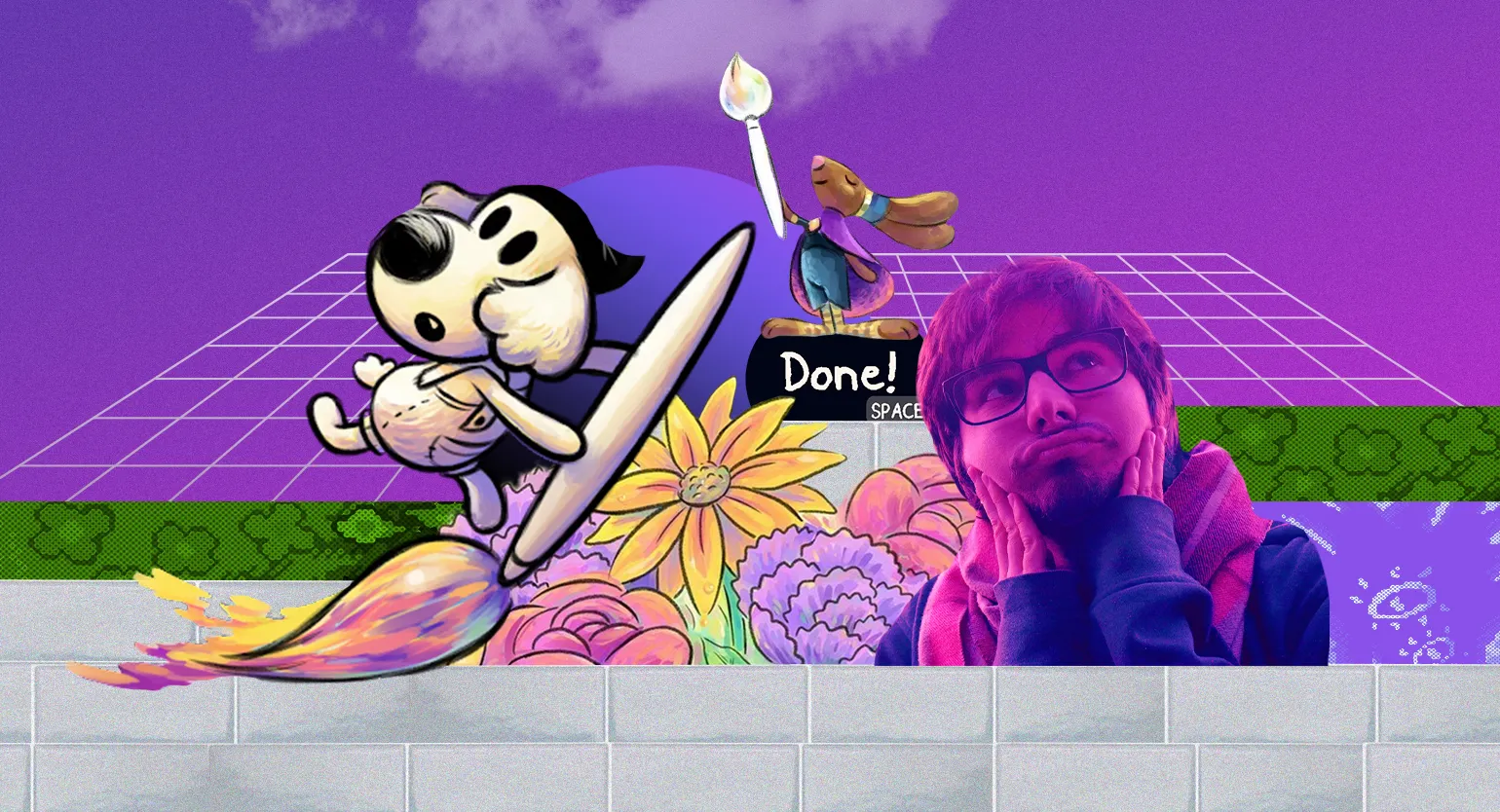
Learn MoreIn 2022, Greg Lobanov presented a presentation at GDC titled "Gamifying Creativity in Chicory: A Colorful Tale." During the talk, he delved into the development of games that focus on free creative expression. The focus was on the process of creation for the sake of creation, rather than solving specific problems. Lobanov discussed designing unique underwater buildings and tree houses in Minecraft-like sandboxes, as well as mixing tracks in Incredibox and creating outfits in Barbie Fashion Show. These approaches to game design emphasize creativity and freedom of choice, making the gameplay experience more engaging and personalized.
The coloring adventure Chicory: A Colorful Tale celebrates creativity and self-expression. There are many games in which players can express their artistic skills. For example, in It Takes Two, one level features a magnetic board and a paint canvas, allowing players to create unique images. In The Backrooms 1998, players can also use spray paint to add color to the environment. Additionally, in the hub areas of the Splatoon series, players can create graffiti that becomes part of the game environment. These elements emphasize the importance of art in video games and allow players to express themselves through creativity.
Unlike many other games, where drawing is a secondary activity and does not always include the idea of self-expression, in Chicory, free creativity takes center stage. During development, Greg formulated a number of principles that allowed him to naturally integrate art into game mechanics and create motivation for players.
Skillbox Media's Gamedev editorial team shares useful information based on insights from the presentation. We are confident that this knowledge will be useful for your development, creative processes and everything related to the gaming industry.

Independent developer — An independent developer is a self-employed professional who creates software or web applications without being tied to a specific company. These professionals possess a wide range of skills, including programming, design, testing, and project management. Independent developers often freelance or work on contracts, providing their services to various clients. This allows them to flexibly manage their time and choose interesting projects.
An independent developer must stay up-to-date with modern technologies and industry trends to remain competitive. Furthermore, such professionals often maintain their own blogs or portfolios to showcase their skills and attract new clients.
Working as an independent developer requires a high level of self-organization and responsibility, as success often depends on the ability to find clients and effectively manage projects. By becoming an independent developer, you can not only realize your ideas but also achieve financial independence.
Known for his projects Wandersong and Chicory: A Colorful Tale, the author has become a prominent figure in the world of indie games. These games attract players with their unique style and creative approaches to storytelling and gameplay. Wandersong offers a captivating musical adventure, while Chicory: A Colorful Tale immerses players in a vibrant world of coloring and self-expression. Both projects demonstrate the developer's mastery of creating atmospheric and emotionally charged games that leave a lasting impression on players.
The first game was developed by just three people, two of whom were solely responsible for the music and sound design. Wandersong is a captivating adventure about a bard who sets out to save the world using only his song and dance. Music permeates every aspect of the game, and a key gameplay mechanic is the intonation wheel, allowing the bard to interact with the world around him through singing. This makes the game unique and memorable, and also emphasizes the importance of music in the gameplay.
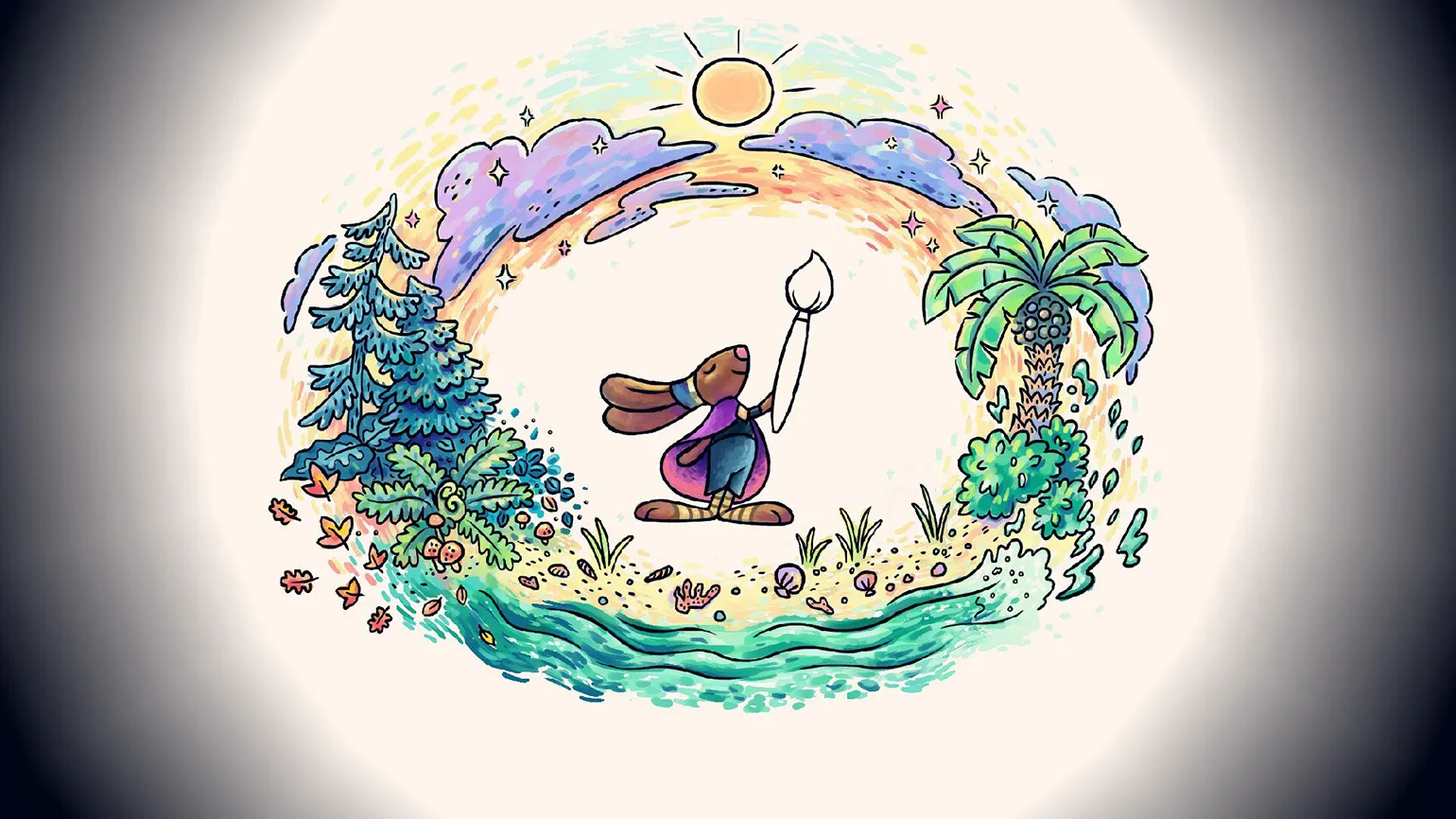
Chicory is a spiritual successor to Wandersong, in which the main character interacts with the world around her, transforming it through art. This time, she is armed with a brush and paints. One day, the world loses all its colors, and an ordinary tower guard accidentally comes into the hands of a brush that has belonged to great artists for several generations. This game not only immerses you in a world of creativity but also explores themes of self-expression and responsibility for changing the environment. Chicory offers a unique experience, allowing players to rediscover life through color and art.
Several talented specialists participated in the development of Chicory, including Lena Raine, the renowned composer of the game Celeste. Both projects were successfully funded through the Kickstarter platform, which highlights the community's interest in unique game concepts and high-quality content.
Greg Lobanov is a professional photographer whose work can be found on his LinkedIn page. His unique style and attention to detail make every image special. Greg creates visual stories that capture attention and evoke emotion. His portfolio features a variety of projects that showcase his mastery of photography. Visit Greg Lobanov's LinkedIn profile to see his work and learn more about his creative approach.
- Why game structure hinders creativity
- Creativity and progression from different angles
- Narrative as a source of motivation
- Why it is undesirable to evaluate creativity
- How to use limitations to your advantage

An independent developer is a specialist who works independently, without being tied to a specific company or employer. Such developers create custom software, web applications, and mobile apps, which allows them to flexibly manage their time and projects. Independent developers often have a wide range of skills, including programming, design, testing, and project management. Their work can range from creating simple websites to complex systems that meet specific client requirements. With the growing demand for digital solutions, independent developers are becoming increasingly sought after. They can work both freelance and on contract, which opens up numerous opportunities for professional growth and development.
The author is best known for his projects Wandersong and Chicory: A Colorful Tale. These games are distinguished by their unique style and original approach to storytelling, which made them popular among players and critics. Wandersong offers players an engaging musical adventure, while Chicory: A Colorful Tale immerses them in a world of vibrant colors and creative challenges. Both projects demonstrated the developer's mastery of unique game mechanics and deep stories.
The first game was created by just three people, two of whom were exclusively involved in the music and sound design. Wandersong is a captivating adventure about a bard who sets out to save the world, relying only on his song and dance. Music permeates every action in the game, and the key gameplay mechanic is the intonation wheel, allowing the bard to interact with the environment through singing. This unique mechanic makes the gameplay unique and memorable, immersing the player in an atmosphere of music and creativity.
Chicory is a spiritual sequel to Wandersong, where the protagonist once again explores the world around her and transforms it through creativity. This time, she finds herself wielding a brush and paints. One day, all color disappears, and an ordinary tower guardian receives the Brush, wielded by great artists for generations, filling the world with vibrant hues. In this captivating adventure, players will not only restore color but also interact with unique characters, immersing themselves in an atmosphere of art and self-expression.
The Chicory project was developed by numerous professionals, including Lena Raine, the renowned composer behind the music for Celeste. Both projects were successfully funded through Kickstarter, demonstrating the high interest and support of the community.
Photo: Greg Lobanov. Source: LinkedIn
Greg Lobanov is a professional in his field who actively shares his experience and knowledge on LinkedIn. His photos and posts attract attention and generate interest from professionals and beginners alike. Greg's profile is a valuable resource for those seeking to advance their careers by gaining relevant advice and insights. Through his active participation in discussions and posts, users can significantly expand their horizons and deepen their understanding of their profession. LinkedIn is a powerful platform for sharing experiences, and Greg Lobanov is one of those who does this most beneficially for the community.
Follow our Checkpoint Telegram channel, where we create a welcoming space for game lovers and gamedev. Here you'll find interesting stories about game development, helpful tips from professionals, and information about significant updates to popular software. We welcome your comments: share ideas for new publications or discuss all aspects of the gaming industry. Join us to stay up-to-date with the latest news and trends in the world of gaming.
Can Creative Freedom Be Reinforced Without Compromising It?
In 2019, Alex Jaffe, a game designer at Riot Games, gave an important talk at GDC on unsolvable problems in game design. One of the key topics was the issue of quantified creativity, which is particularly relevant in projects that emphasize creativity and self-expression. This problem touches on many aspects of game development, where it is necessary to find a balance between player freedom and gameplay structure.
Video game developers strive to provide players with maximum creative freedom, allowing them to choose how, when, and how much they create. Creativity often clashes with rigid frameworks and schedules, except for those who are deeply passionate about the process or who make it their profession. However, most games have an internal structure based on progression, which includes a story, skill development, new abilities, and a level of difficulty. It is important to find a way to integrate creative freedom into this structure, despite its restrictive nature. This allows for a balance between individual expression and gameplay dynamics, which ultimately enriches the gaming experience.
The conflict between these two components is due to the nature of the motivation that drives players. Every meaningful action brings its own rewards. Progression in the game offers external rewards: the character becomes stronger, new locations and plot branches are unlocked, and the means to acquire expensive and powerful items appear. As a result, players become interested in performing certain actions, as this contributes to the development and enrichment of the gaming experience.
Self-expression is a process based on intrinsic motivation and the desire to act for its own sake, as it brings pleasure and satisfies personal needs. Creativity, as a form of self-expression, brings joy and satisfaction. If it ceases to be a source of pleasure, people tend to stop engaging in it. Thus, it is important to understand that self-expression and creativity play a key role in life, promoting personal growth and emotional well-being.
In situations where players are offered choices between material rewards and intrinsic ones associated with self-expression, the former option is usually preferred. This often occurs at a subconscious level, which makes it important to separate creative activities from external stimuli such as progression, bonuses, and achievements. When a player sees a material reward at the end of a journey, there is a high probability that activities such as drawing or creating music will transform from a process of self-expression into the performance of a routine task: “do X, get Y.” This emphasizes the need to create space for true creativity, where intrinsic motivations become more significant than external rewards.
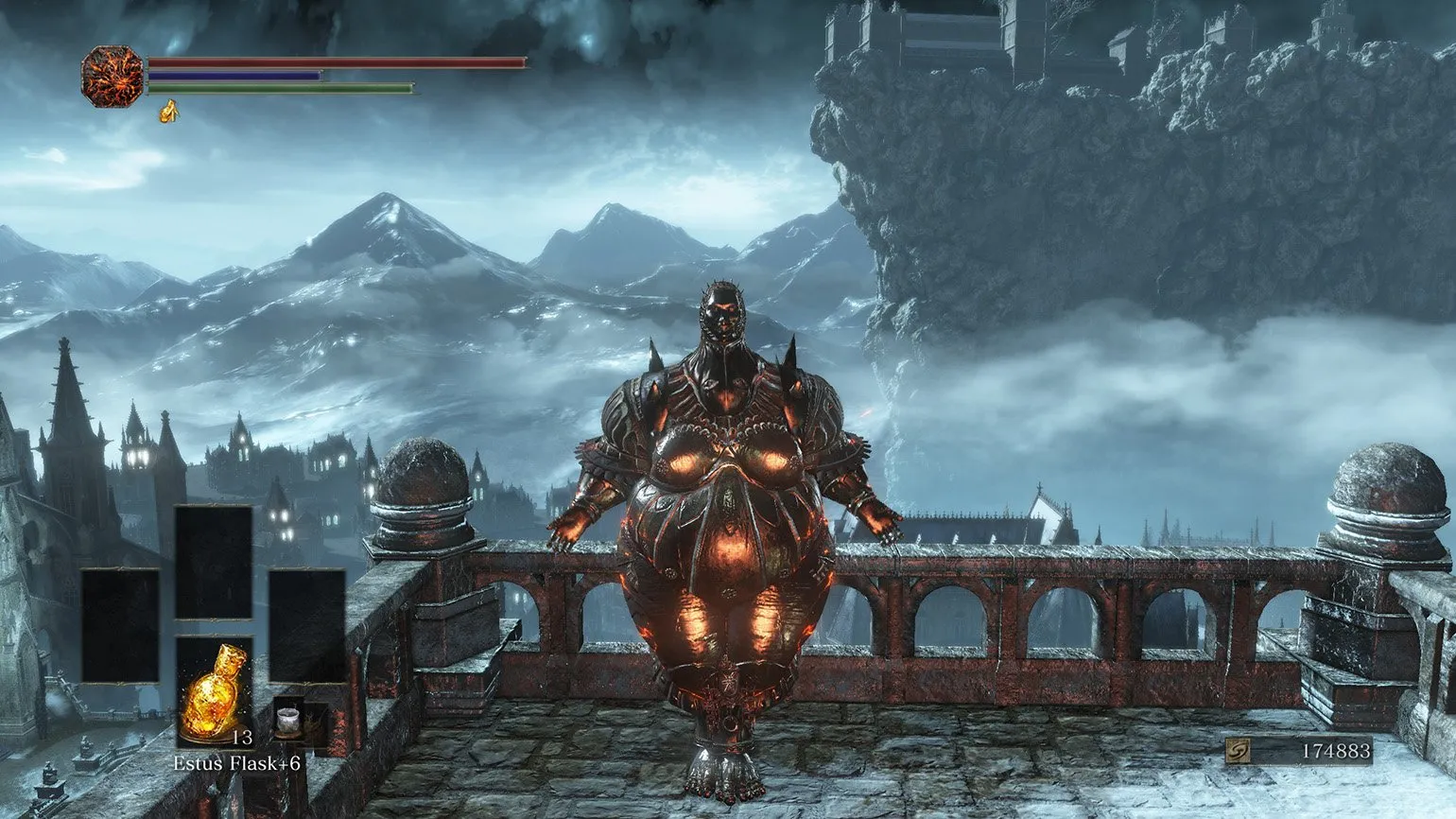
Equipment with various statistics in role-playing games clearly illustrates the influence of external rewards on gameplay. On one side of the scale is a rare skin that gives the character the appearance of a powerful deity, while on the other side is low magic resistance and significant weight, forcing the player to constantly manage their inventory to avoid becoming overburdened. As a result, many players opt for universal armor, which, while less attractive in design, significantly simplifies the game. The aesthetic pleasure of uniquely designed armor becomes secondary, as the equipment's stats play a key role in gameplay. Forgoing important bonuses can lead to increased difficulty, making gear selection an important strategic decision.
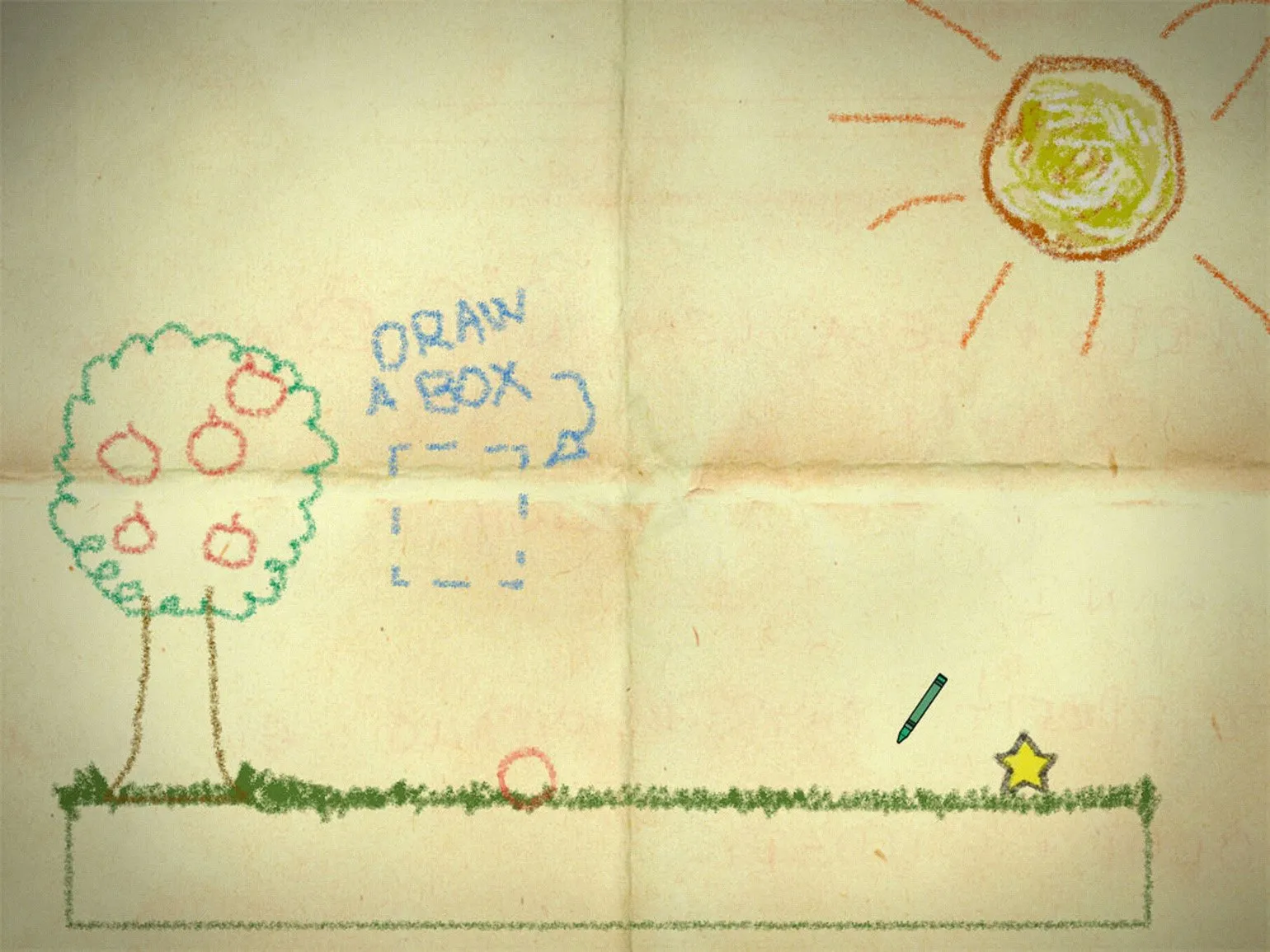
Greg gives an interesting example of Crayon Physics Deluxe, in which players control a ball by creating shapes with a colored pencil. Although players can draw any shape, in practice they are limited to 1-3 simple shapes, such as a rectangle or a line. This is not due to laziness, but rather to the efficiency and ease of using these basic shapes to achieve goals in the game.
Crayon Physics Deluxe is an engaging puzzle game that emphasizes problem solving. Over the course of the game, players strive to achieve a specific goal using the available tools to achieve it. When one method proves effective, there is no need to look for alternative solutions. For example, to move a ball from point A to point B, the easiest way is to use a rectangle and a line, choosing the right sizes and sequence of elements. Even if the player decides to approach the task creatively by drawing unusual shapes, this still doesn't constitute true creativity. The primary focus will be on the functionality of the drawings within the context of the puzzle. Thus, Crayon Physics Deluxe offers a unique combination of logic and creativity, allowing players to find effective solutions to interesting problems.
Greg looked for ways to resolve the conflict between intrinsic and extrinsic rewards, aiming to motivate players to express themselves creatively without a constant emphasis on progression. He also wanted to maintain a clear game structure. His efforts resulted in several rules that he successfully applied in Chicory. These rules help players focus on the process of creation and exploration, and not just on achieving external goals.
Separate Creativity and Game Progression
Greg believes that activities aimed at progression, especially tasks requiring problem-solving skills, are incompatible with free creativity. This does not mean that one of them should be completely eliminated, but it is important to separate them for their harmonious coexistence. It is recommended to separate creative play situations from progress-oriented tasks and avoid mixing them. This way, you can optimize your learning process and improve your results in both areas.
Chicory is a classic adventure game with a clear structure. It features a clear exposition and sequence of events, allowing the player to explore various locations. Throughout the game, the player encounters puzzles and non-player characters who need help. At each stage, the player receives tasks that lead to a logical conclusion to the plot. However, it's worth noting that these steps do not involve creativity, which may limit the player's experience.
Each section of the game features a number of side quests that provide a break from the main story. For example, you can visit the local art academy for drawing lessons or complete tasks such as painting a house or creating a unique donut design. These activities don't affect progression, but they enrich the gaming experience and allow players to unleash their creativity.
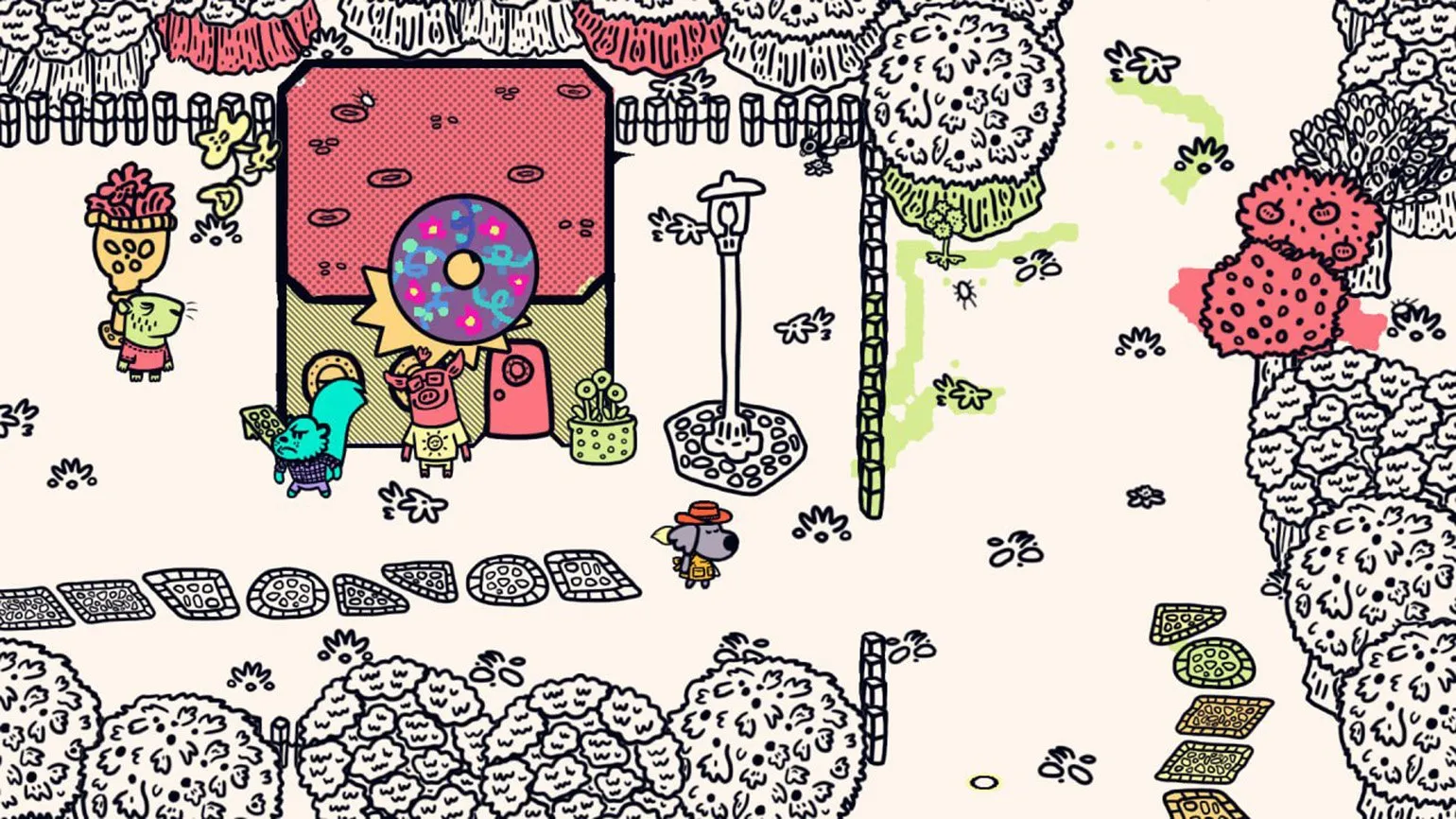
Games that combine rational activities that promote progress with creative side activities improve the overall gaming experience. This variety makes the game more engaging and allows players to develop their skills in various areas. Combining different types of activities not only increases interest in the game but also promotes deeper involvement in the gameplay.
Creative expression requires freedom, both in the process of creation and in choosing the time for creativity. It brings internal satisfaction, but can be emotionally draining and requires the appropriate mindset. Forcing creative tasks can lead to a loss of interest and pleasure. When a player realizes they can engage in creative work at any time and to any extent without hindering their progress, they will approach such tasks with desire, which ultimately increases their satisfaction with the process. Creative freedom not only promotes skill development but also strengthens the emotional state, making it an important aspect of gaming activity. Solving progression-based gameplay challenges is a unique activity. There is a clear direction, and the tools for achieving goals are limited and clear. For example, in puzzles, it is necessary to determine the correct sequence of actions to solve a problem. Liberating a camp requires eliminating the gang leader, and defeating a boss requires upgrading stats and upgrading weapons. The player is faced with a specific problem that must be solved. Such activities are enjoyable due to the sense of progress and tangible rewards. However, it should be noted that they can cause mental fatigue. Solving progression-based game problems not only develops logical thinking but also helps improve planning and strategic thinking skills. A variety of activities helps prevent emotional and mental strain. You can switch between different activities, which promotes proper relaxation. For example, while drawing, you take a break from this activity and switch to solving puzzles, and vice versa. This approach helps maintain balance and increases overall productivity.
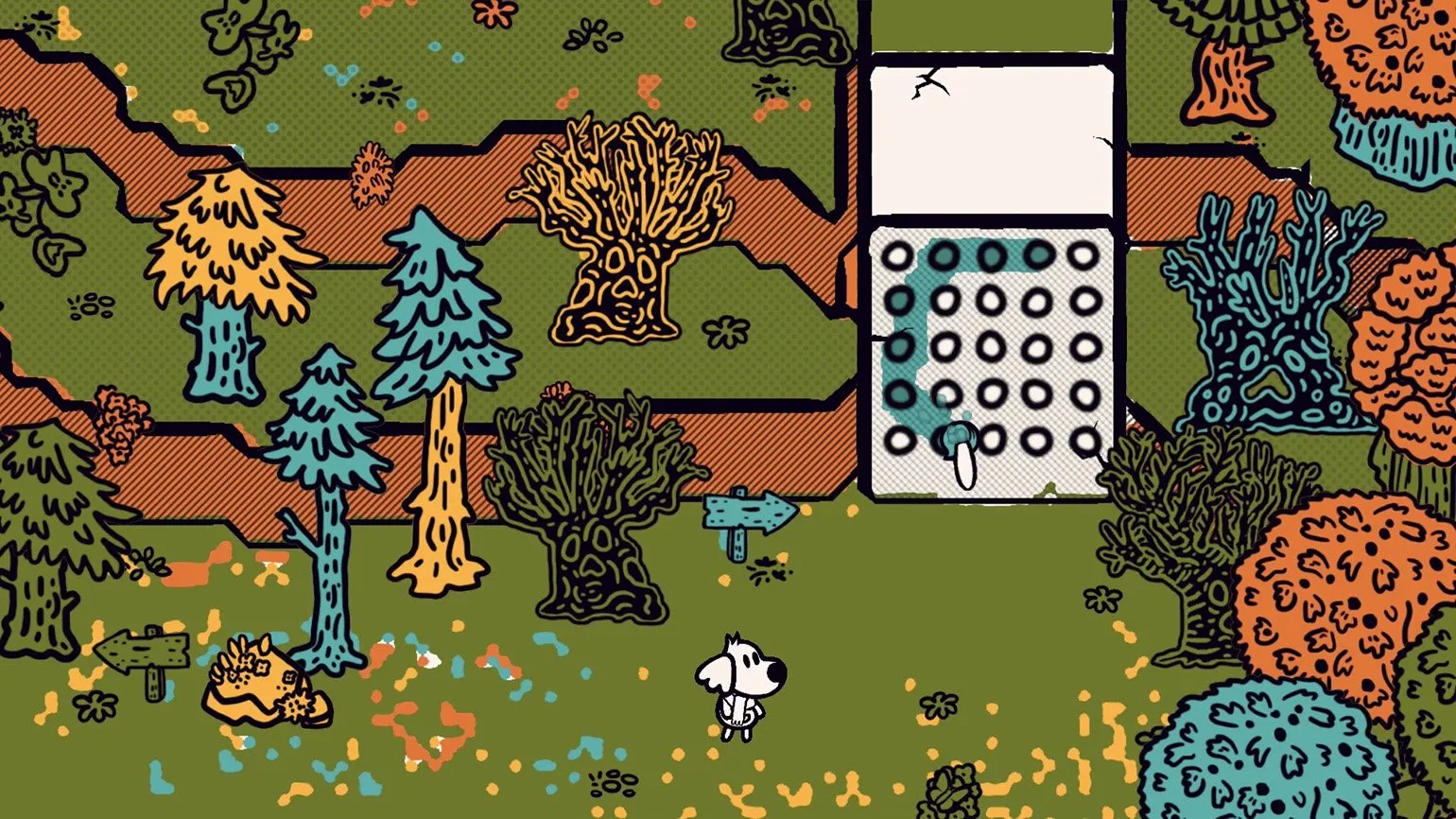
Chicory has a unique feature that effectively supports the division of tasks and maintains the emphasis on creativity, even when it takes a back seat. The game's design initially focuses on the drawing mechanic, which is the primary creative tool. This mechanic serves as the foundation for a cohesive adventure, encompassing various locations and puzzles. It permeates the plot and is always accessible to the player, even during free roaming through the game worlds.
Players are actively using this feature. During Chicory streams, Greg has repeatedly observed users exploring the world around them or completing key quests. Suddenly, they notice something interesting—a breathtaking landscape that can be painted, or new colors in the palette. These moments distract them, and they begin to draw, immersing themselves in the creative process.
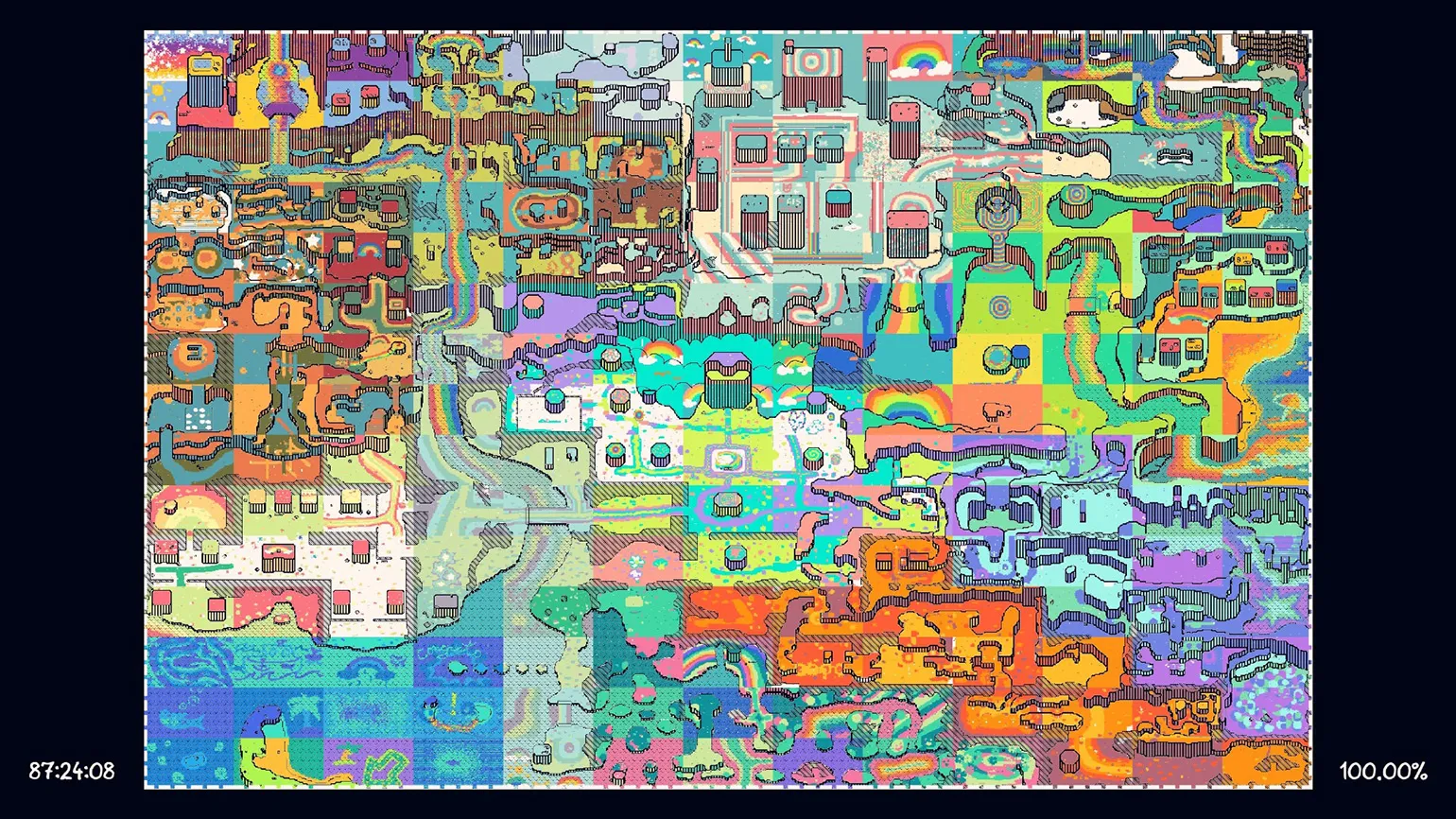
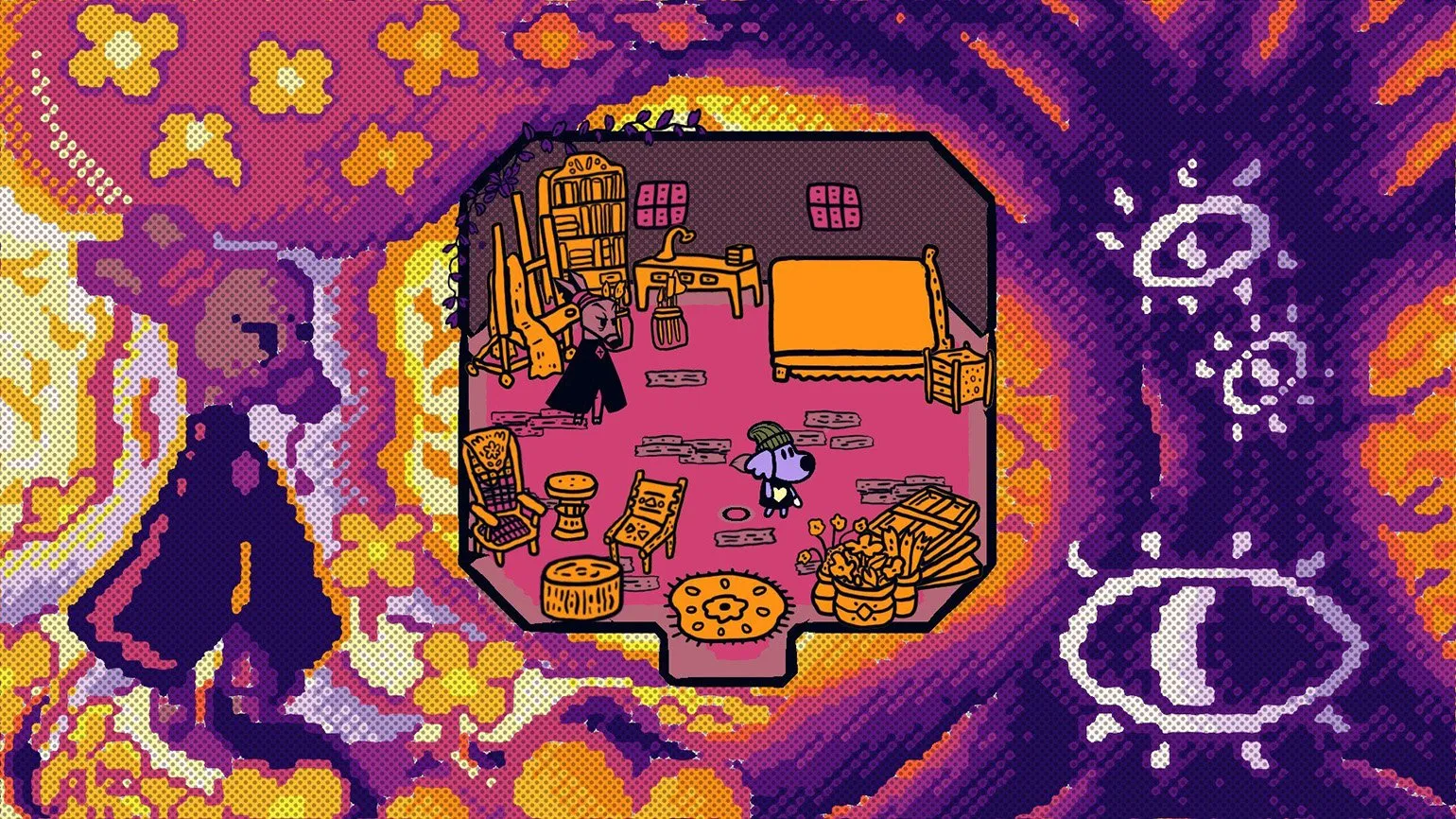
A note is an important element that allows you to highlight additional information or clarifications related to the main text. Using notes helps readers better understand the context and details. It is important to format notes correctly so that they are clearly visible and do not distract from the main content. Effective use of notes improves information comprehension and promotes in-depth study of the topic. Including notes in the text can also positively impact SEO, as they help retain user attention and increase the time spent on the page.
During the presentation, one of the audience members asked Greg if he considered players who strive for achievements and trophies, constantly search for secrets, and complete all tasks to 100%. It can be difficult to abandon this style of play, since it is not just a desire, but an individual characteristic. The pursuit of complete content can be rewarding, but it can also be frustrating. For example, in Chicory, this can manifest itself in obsessive coloring of locations down to the last pixel, which ultimately becomes a tedious task.
Greg noted that, unfortunately, there is no escape from this fact. Every player is unique, and regardless of the game's target audience, there is no universal playstyle. However, there will still be those who strive to complete all the developer's intended tasks, and sometimes even exceed them.
Discouraging people from certain actions can be quite difficult. If players are given complete freedom to choose how much they draw, some may draw more than they actually want due to intense engagement.
I encounter the problem of burnout in games, and I would like to find ways to minimize its impact. When you continue playing despite being tired, the joy of the gameplay disappears, and this negatively impacts the overall experience. Therefore, it's important to learn to recognize the signs of fatigue and take steps to restore energy to maintain enjoyment of the game.
Greg decided to eliminate external motivation to avoid pushing players to overdo it. Coloring locations doesn't activate secret scenes, and attending all drawing lessons doesn't reward medals. Some testers suggested introducing bonus rewards for drawing, but Greg rejected this idea. He recognized that introducing external motivation in the form of prizes could create an indirect pressure to draw, which contradicts his game design. Thus, Greg strives to create an environment where players can freely express themselves without external pressure.
At the beginning of each chapter, players are given the opportunity to choose whether to continue playing or save their progress and quit. This element was introduced as a subtle offer for a break, especially for those prone to overindulging in the gameplay. This allows players to control their time spent in-game and prevents burnout.
Inspire Player Creativity Through Narrative
To motivate players to engage in creativity in a game, even if it doesn't offer direct progression, it's important to engage them in a compelling story and provide role-playing opportunities. A compelling plot and well-developed characters can be a powerful incentive to create unique content. Giving players the opportunity to influence the course of events and develop their own story deepens their engagement. Interactive elements such as decision-based quests or the ability to create their own narratives can significantly increase interest in the creative process. Thus, story development and role-playing opportunities become key factors in facilitating player creative expression.
There are several points in Chicory where completing a creative task is mandatory for further progress. While this may seem like a violation of a core rule, Greg believes that such moments are effectively integrated into the plot. They not only enrich the gameplay but also significantly enhance the story, immersing the player in the game's unique world. The plot centers on the protagonist, Pizza, and the talented artist Cicoria, who becomes her unexpected mentor. At a pivotal moment in the story, Pizza asks Cicoria to draw her portrait. This leads to a frank conversation between them, where they share their thoughts and feelings. When the moment comes to reveal the drawing, Cicoria, with a sly smile, invites Pizza to perform the same task so they can exchange portraits. This moment symbolizes not only the trust between the heroines, but also their desire to understand each other on a deeper level.
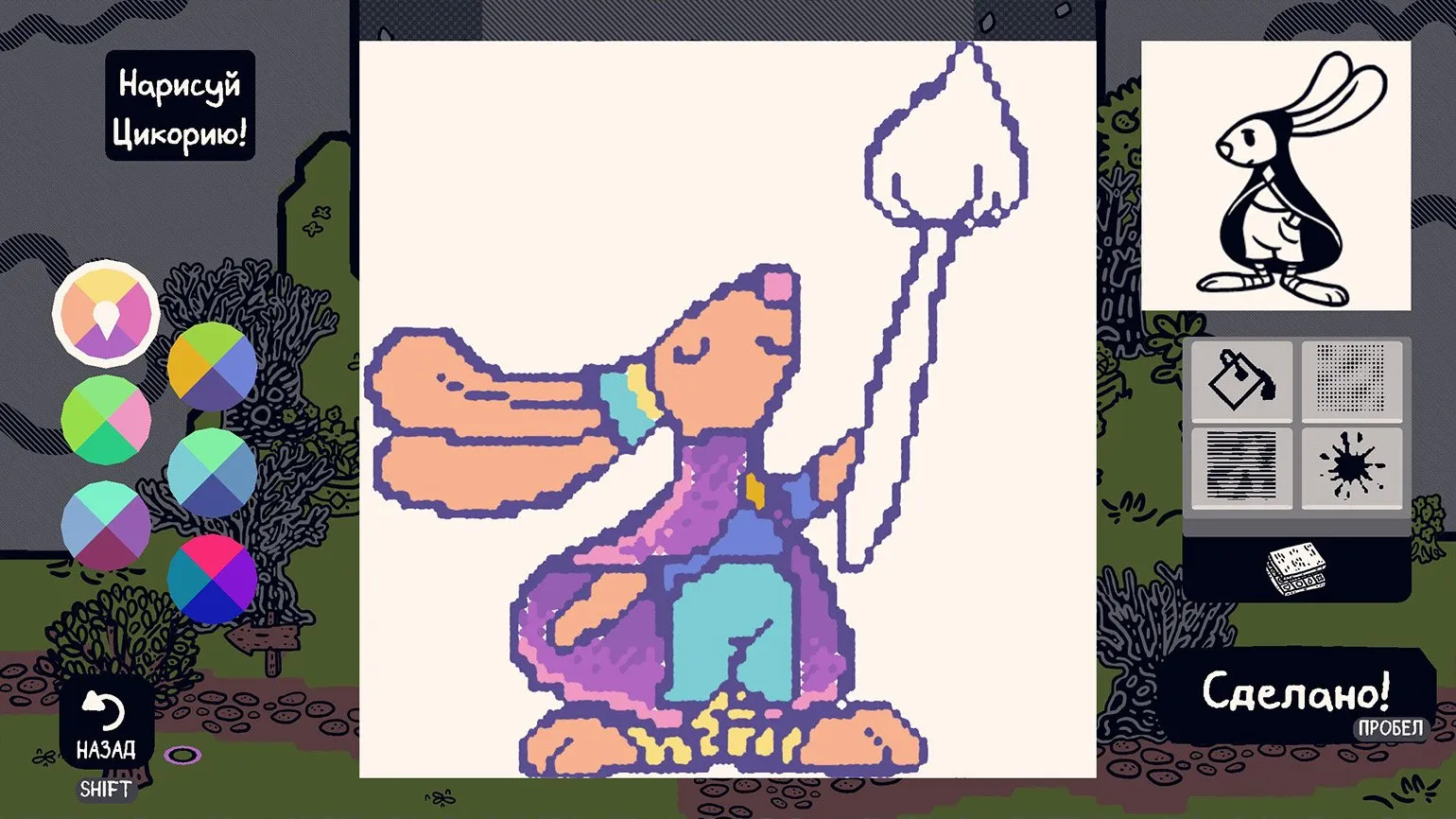
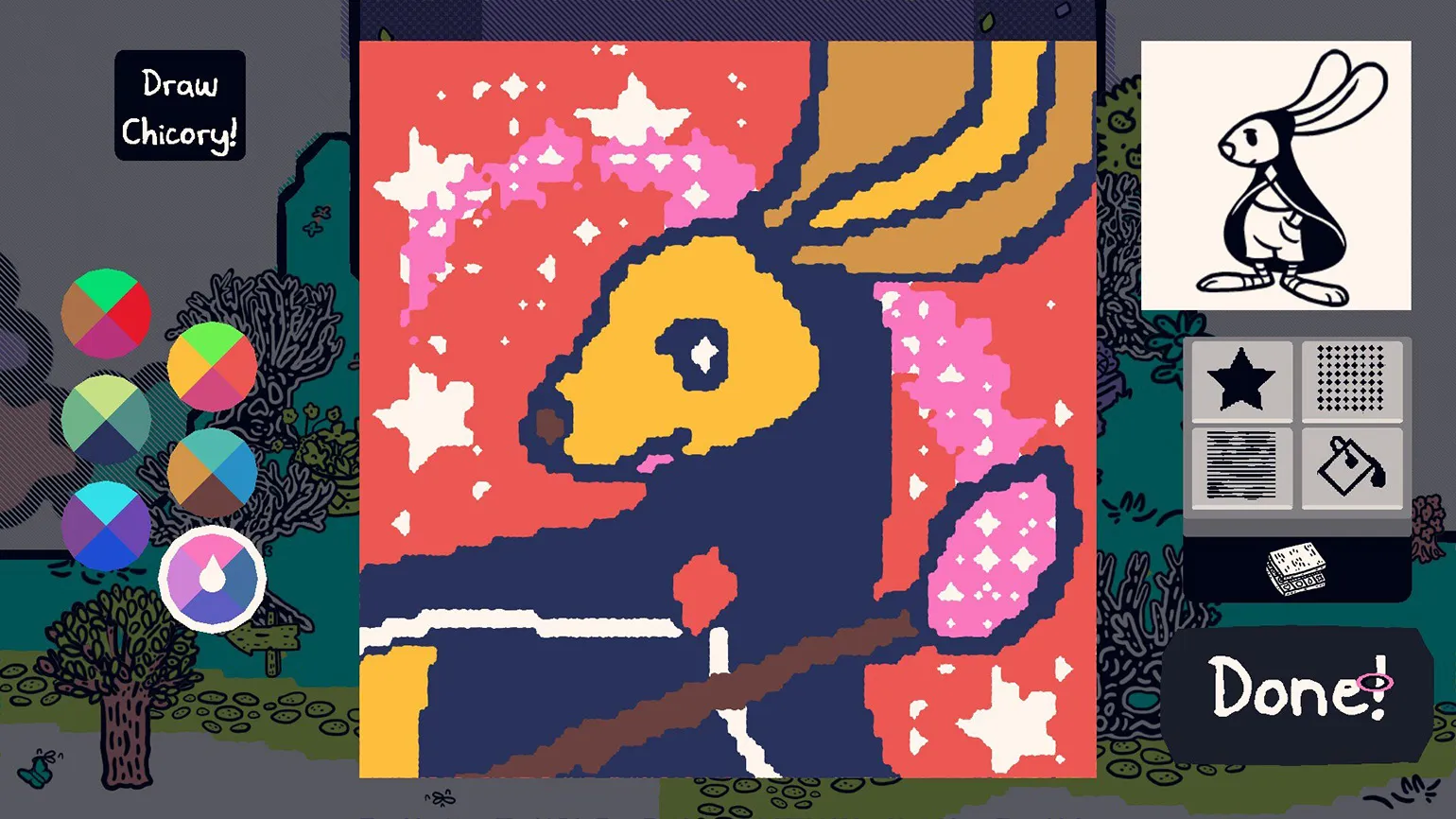
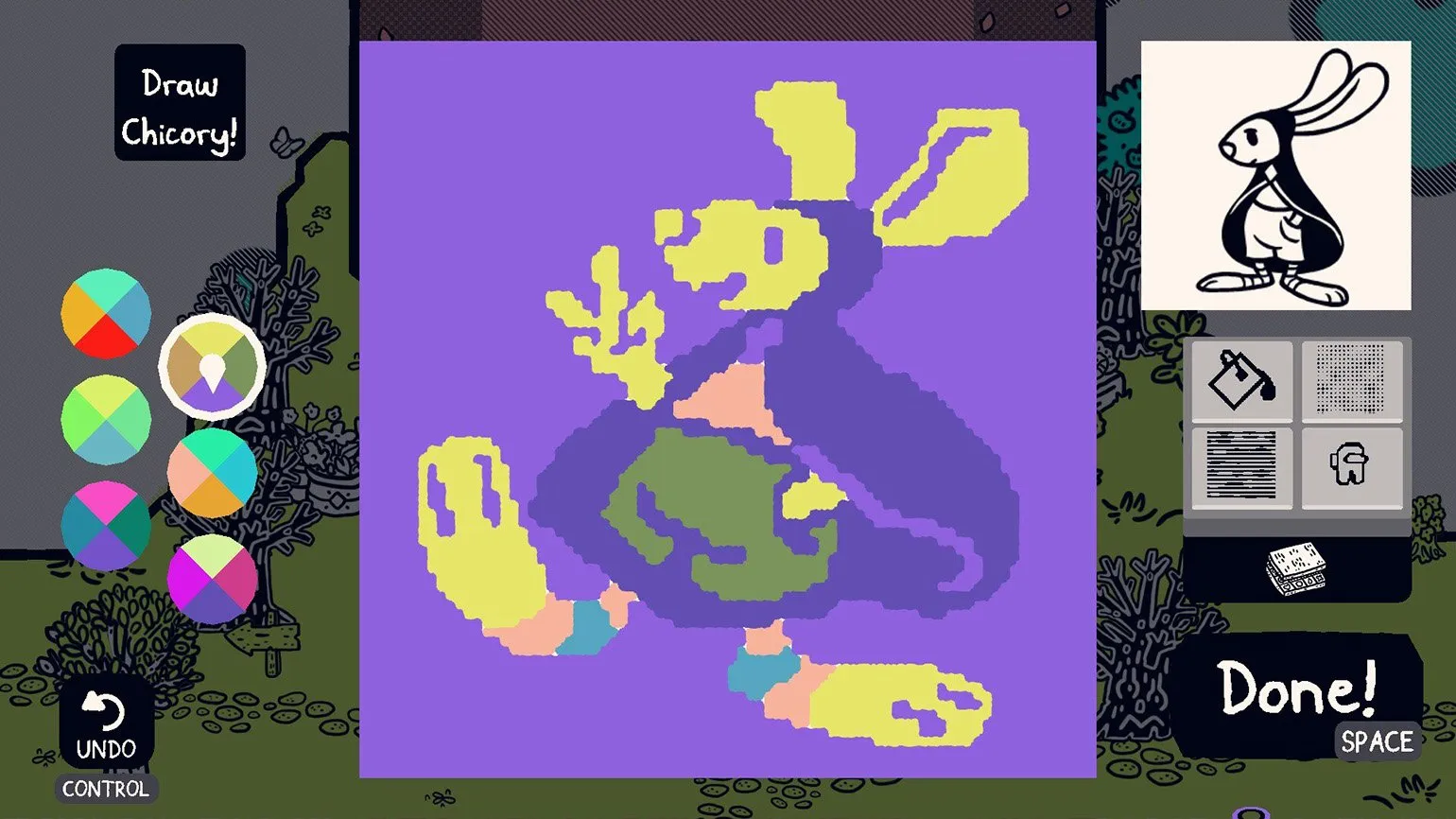
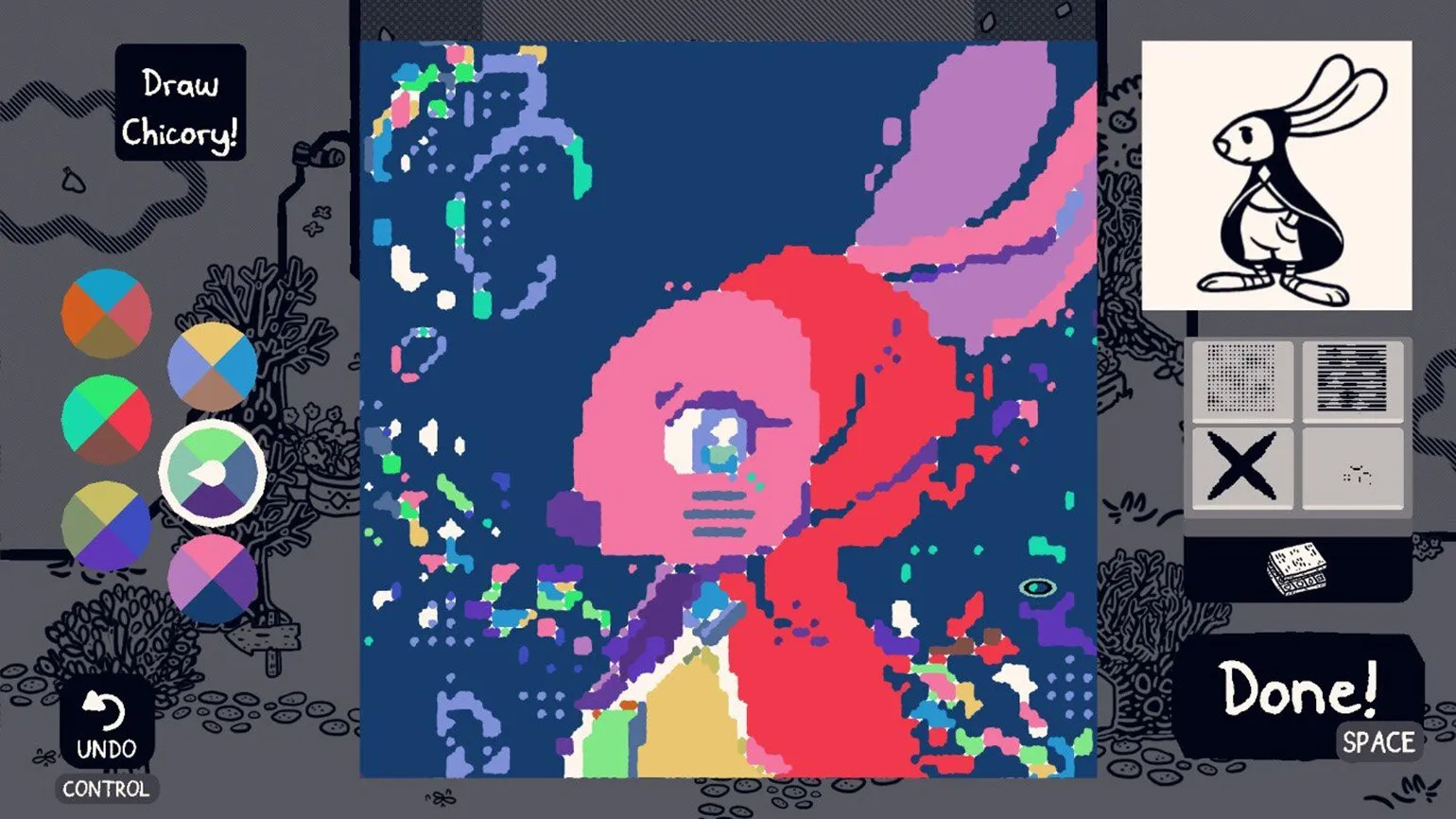
This moment deepens the connection between the two characters, giving the player a unique opportunity not only to observe the scene, but also to actively participate in The player can collaborate with the mentor on creative work, expressing their feelings through color and form. At the same time, a fair amount of freedom is maintained: there are no strict requirements for the drawing, and the canvas can even be left blank. While this may disrupt the narrative somewhat, in practice, blank canvases are rarely the case. This approach allows the player to immerse themselves in the process and feel part of the story.
In Chicory, players are often asked to draw specific objects, and all drawing tasks are given by NPCs. According to Greg, this creates a comfortable atmosphere: you have freedom of choice in what to draw, but there is also a specific motivation—to please the character. The player decides how much they want to invest in their work, depending on the importance of the NPC's interests, rather than on strict rules imposed by the game. As a result, this allows for agency and deepens engagement with the plot and the game world, to which NPCs respond vividly and emotionally. This approach to interaction makes the gameplay more engaging and rich, creating a unique experience for each player.
You are immersed in an interactive world where your actions directly influence the development of the plot and the fates of the characters. Even if the game's changes are linear and predetermined, the skillfully crafted narrative creates a sense of total immersion, allowing you to feel like you're part of the story. This approach to storytelling makes the gameplay more engaging and memorable, strengthening the connection between the player and the game world.
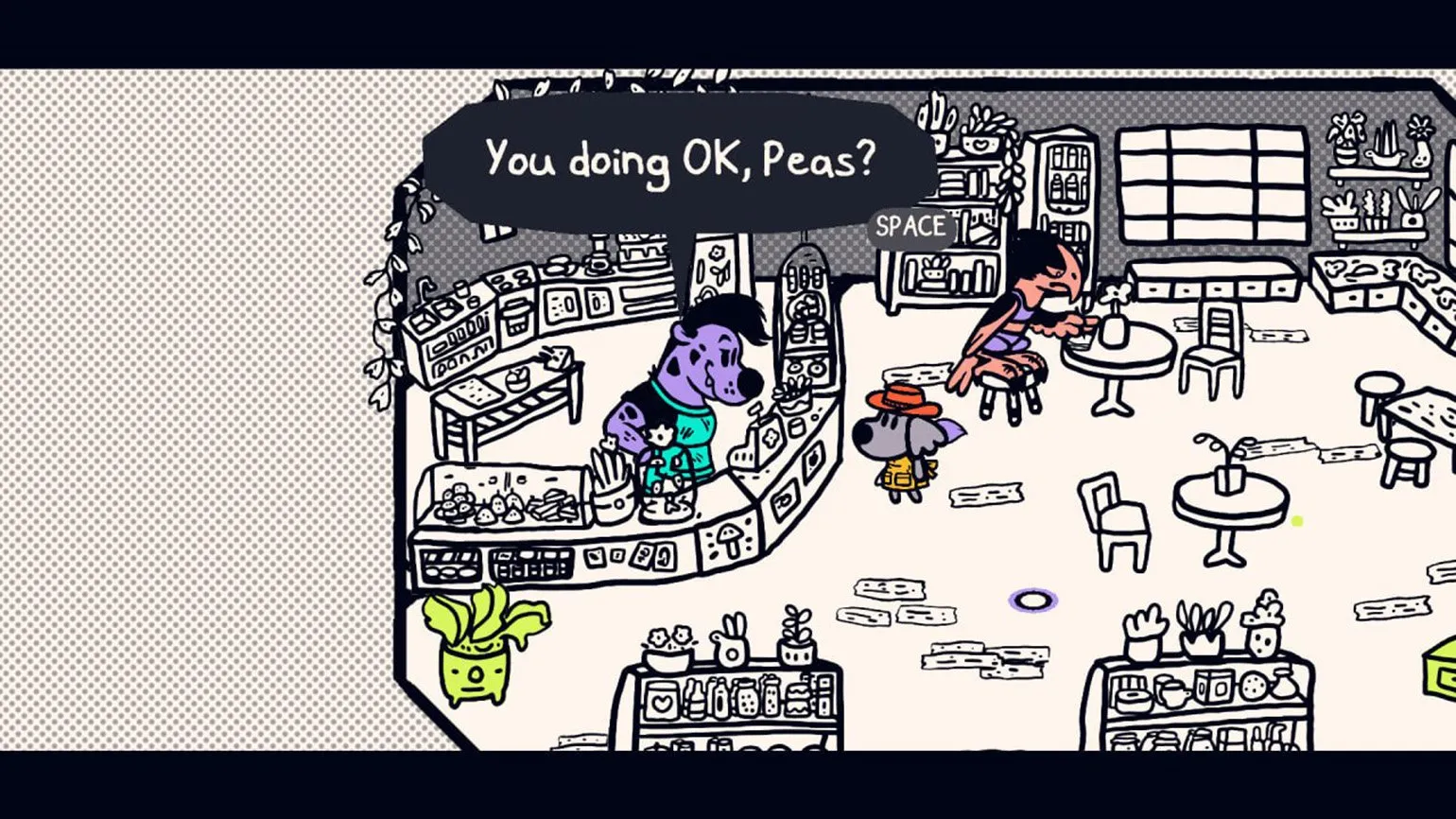
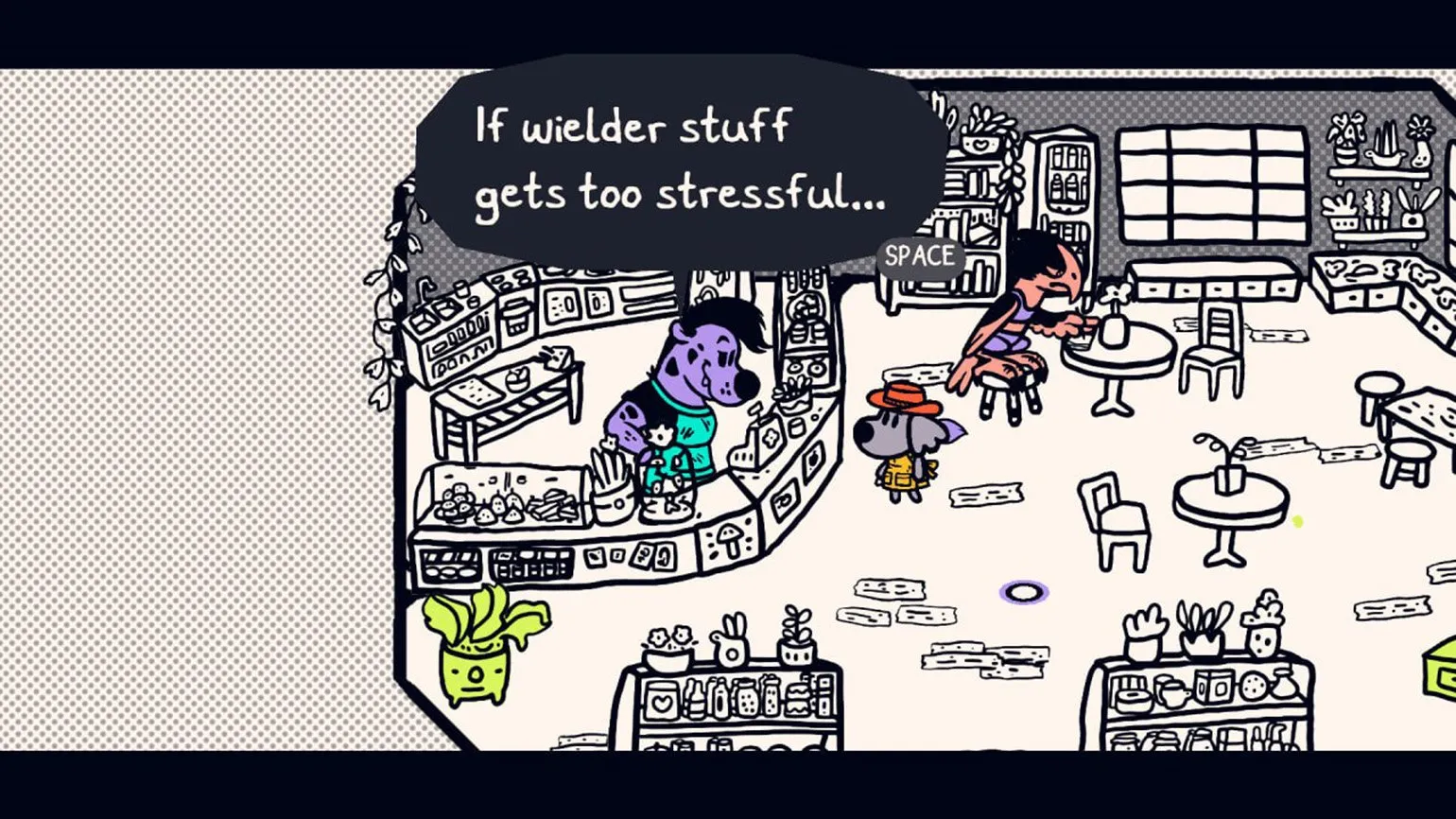
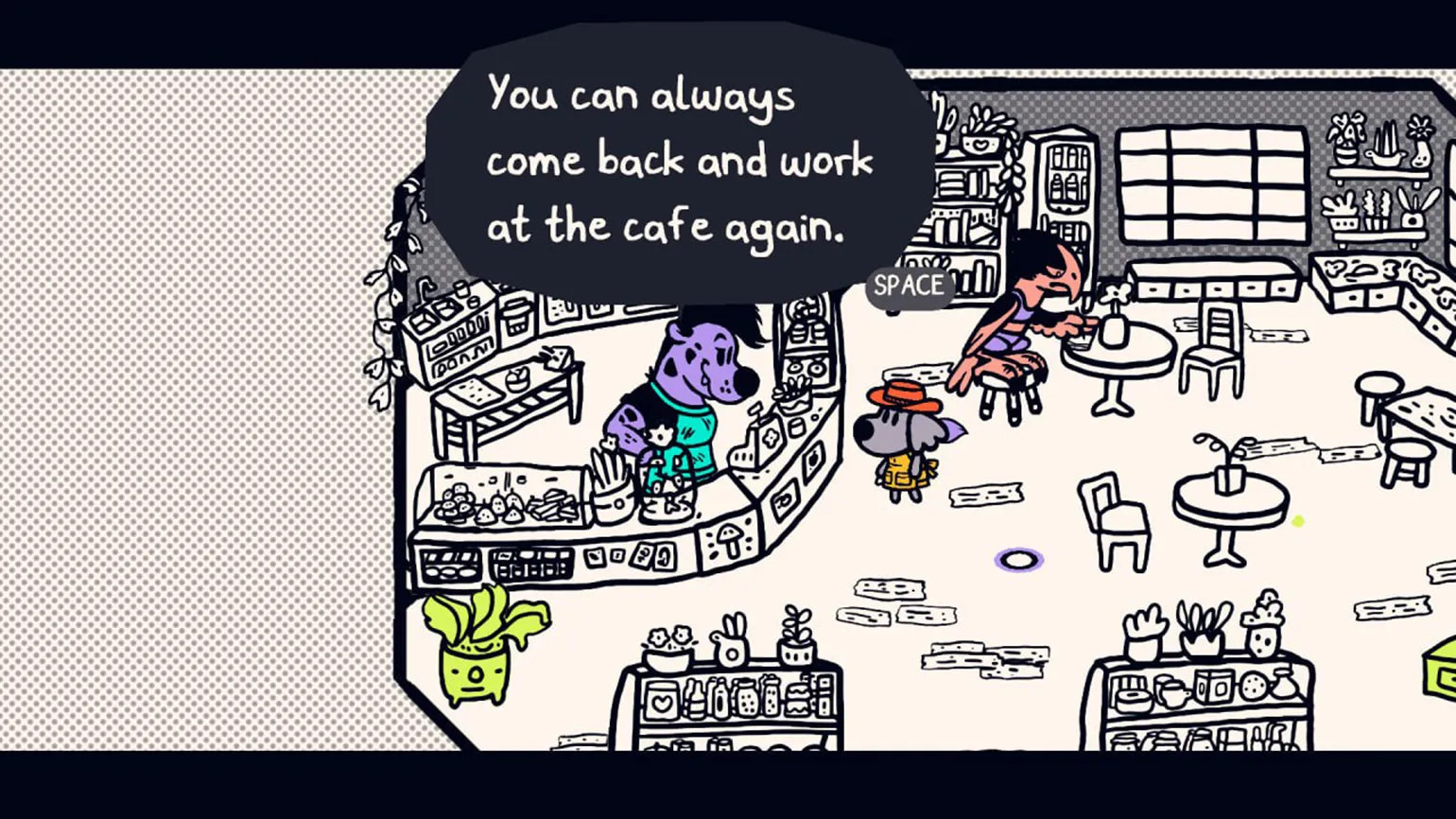
Greg emphasizes that storytelling is a powerful tool in game design that can significantly improve the gaming experience. A strong narrative can connect seemingly unrelated elements and add depth to already successful game mechanics. Games like Celeste and Inscryption are prime examples of this approach, demonstrating how strong storytelling can enrich gameplay and evoke powerful emotions in players.
Acknowledge Player Creativity, Don't Judge It
One common way to gamify creativity is to evaluate player performance through scoring based on various metrics, both implicit and explicit. While this technique can enhance engagement, Greg believes that in the context of creativity, it backfires by violating the concept of free expression. It's important to remember that true creativity requires freedom and the absence of judgmental pressure. Gamification in creativity should support, not restrict, individuality, allowing everyone to explore their ideas without fear of judgment.
Ratings and scores can subconsciously compel players to alter their drawings simply to gain praise from the game. They begin to analyze why their work received lower scores than expected and what they can change to achieve a better result. In an attempt to circumvent the algorithm, they lose sight of their true intentions and how they feel about drawing when no one is evaluating their work. Ultimately, the creative process turns into solving a standard problem with an unknown outcome. It's important to remember that true art is about self-expression, not seeking approval.
Rating a player's work can unintentionally reduce their motivation and desire to experiment. For example, if a person has put a lot of effort into creating a drawing, and the game rates their work only one out of ten, this can lead to disappointment and a feeling that their efforts were in vain. This approach can negatively impact creativity and the desire to improve. Furthermore, it's impossible to predict in advance how seriously a player will take a task, and there's a risk of hurting the feelings of those who truly put in the effort. Therefore, it is important to think about the consequences of evaluation and find more constructive ways to support player creativity.
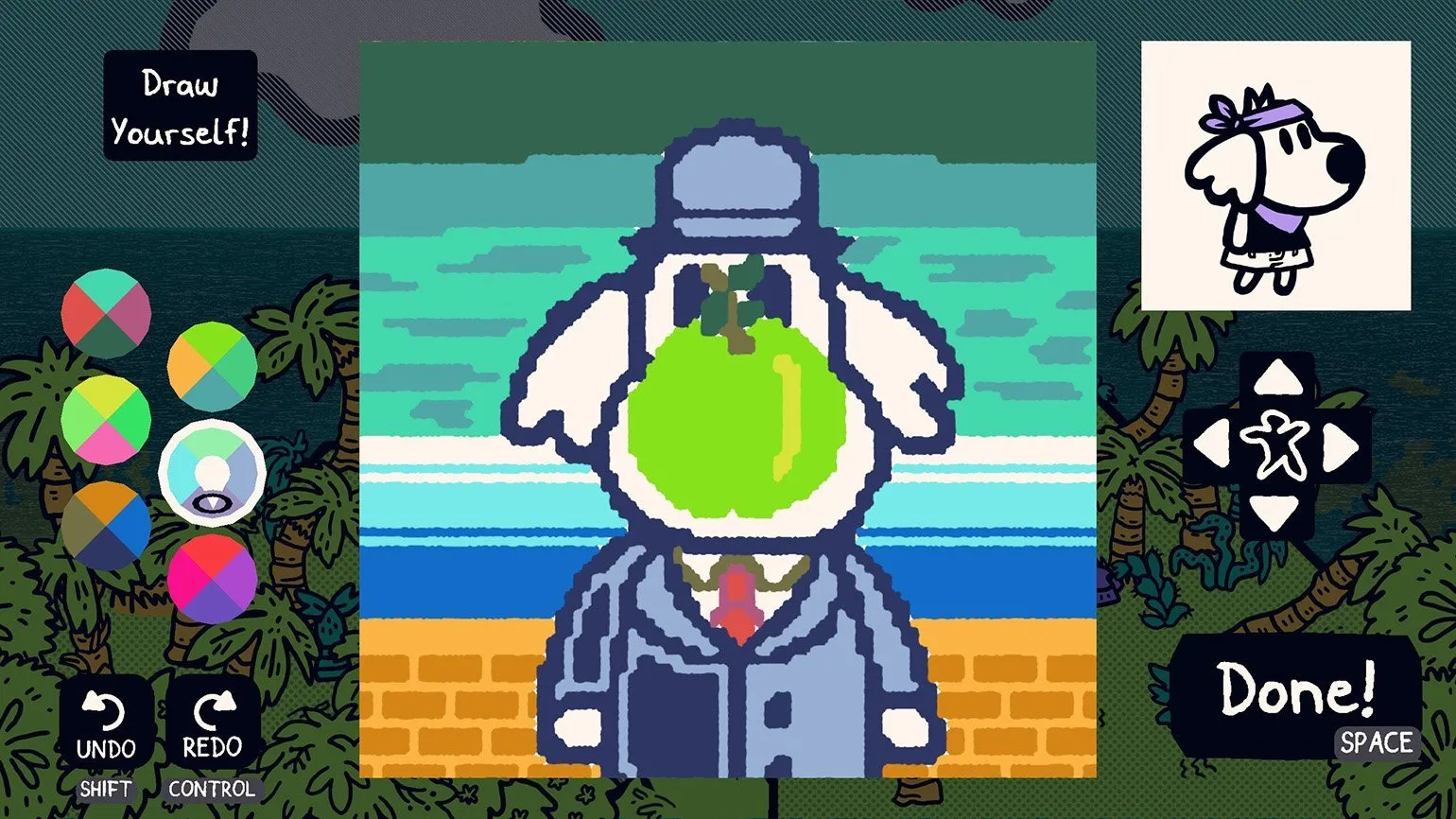
Players are always drawn to when a game responds to their actions, especially when it takes their efforts into account or offers a personalized approach to completing tasks. Such responses can evoke joy, surprise, and motivation to experiment.
In drawing classes at the art academy, the teacher and students evaluate players' work not on the traditional "good/bad" scale, but with an emphasis on standout elements. When a player submits their drawing for review, the game analyzes it, dividing it into sections and rating it based on specific parameters. The system then provides feedback. The teacher might point out that the player left the center of the drawing empty, creating a sense of spaciousness, or that the chosen shade of green is particularly appealing. This approach promotes a deeper understanding of art and the development of critical thinking in students.
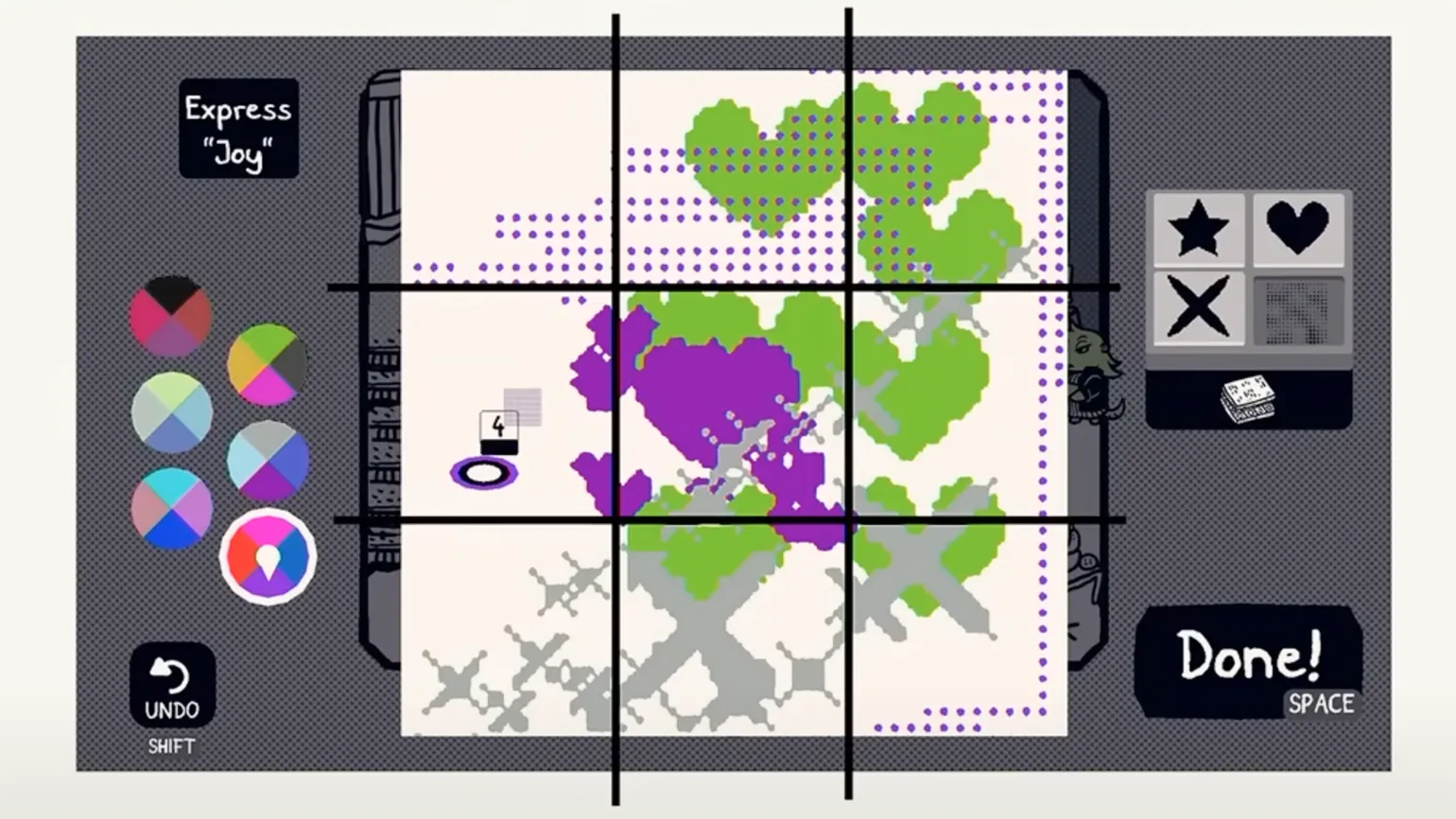
Although these comments are simplified and automatically generated, they still demonstrate that the game responds to the player's actions, rather than simply doling out and taking away tasks like an ATM. Greg added situational and more lively handwritten comments. For example, one student might exclaim, "I don't understand what's drawn here, but it's still beautiful!" This makes the game more realistic and engaging, creating a unique experience for players.
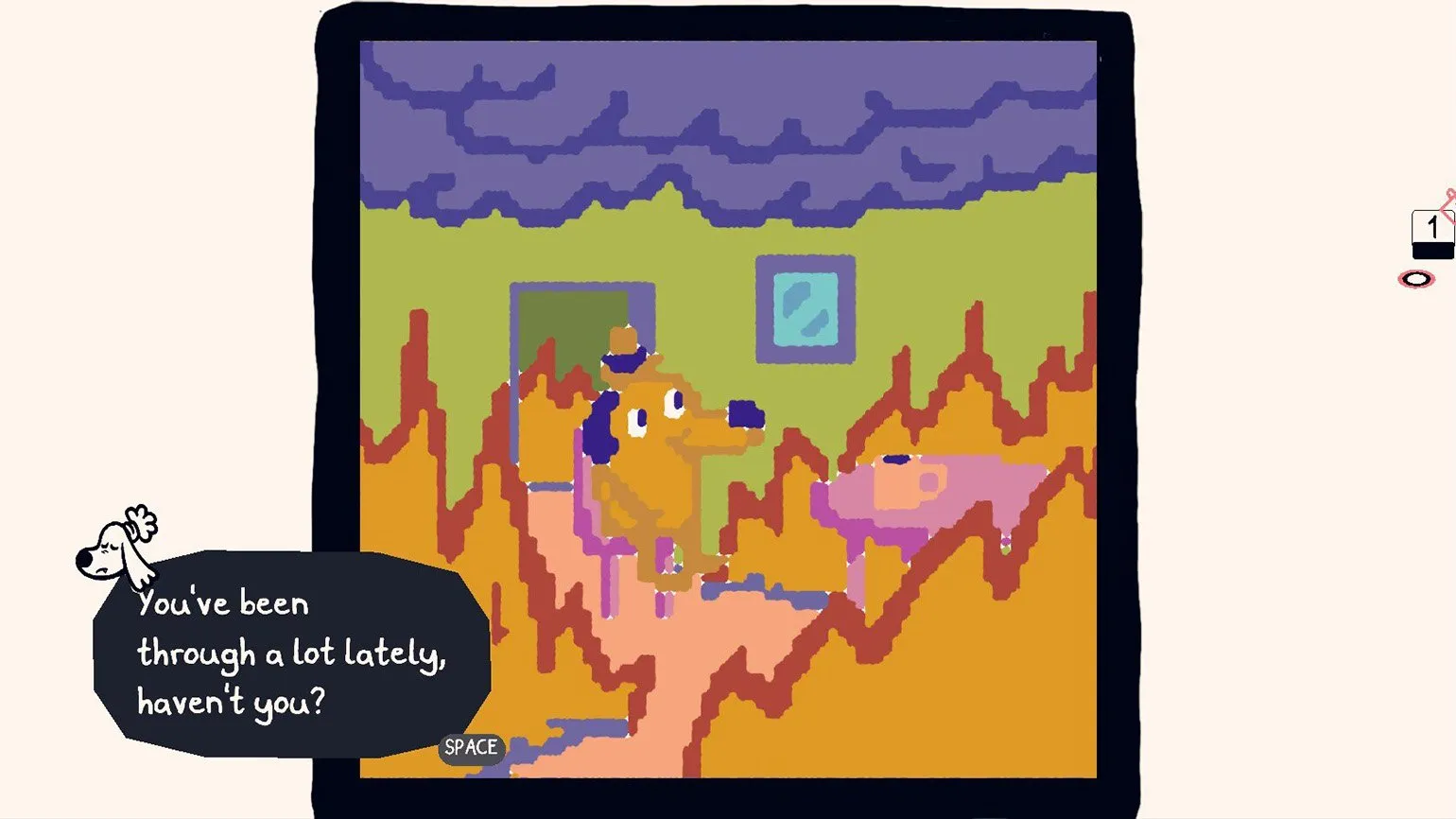
Sometimes your own drawings can appear in the most unexpected places. Some may exhibit them in a local gallery, others hang a painting in their home, and your portrait of Chicory may resurface in your memory as a reminder of a meaningful moment. Such situations can inspire and motivate you to continue drawing when the desire and opportunity arise. The opportunity to see your work in different contexts encourages artists to develop and experiment.
Use Constraints as a Tool
Constraints in creative assignments can be useful, restoring interest to the process when previous activities begin to tire. It is important to avoid turning these constraints into logical problems, such as "How to draw a cat using one circle and four triangles." Instead, you should view them as an incentive to develop creativity and search for unconventional solutions. These approaches can inspire new ideas and help you think outside the box.
Greg suggests viewing constraints as an engaging challenge and a framework that preserves the opportunity for self-expression using unusual tools. For example, you could replace the brush with a dish sponge, stick to only blue paint shades, or add an element to the canvas that needs to fit harmoniously into the composition. Such constraints encourage the development of original ideas without forcing you to conform to rigid canons and traditions. This allows artists to develop creativity and find new ways of expressing themselves, which ultimately makes the creative process more exciting and innovative.
Constraints in narrative design open up new horizons for creativity, allowing you to create original and unusual stories. Unusual assignments inspire the development of creative plots. For example, what caused the sponge to appear in the artist's hands, and where did the brush go? Or who is this mysterious character who commissions a portrait, limiting the color choice to only blue? Such unusual conditions can lead to interesting and memorable narratives, enriching the overall experience of interacting with art.
Requests with specific, yet vague, themes can lead to unpredictable results, sometimes touching on the personal experiences of participants. For example, in art academy classes, students are asked to depict various emotions, such as joy, fear, sadness, and anger. When examining screenshots in the Steam community, one can see how players' interpretations of these feelings vary greatly. This highlights the uniqueness of perception and creativity in each individual case, and also demonstrates how each person can perceive and express emotions through art in their own way.
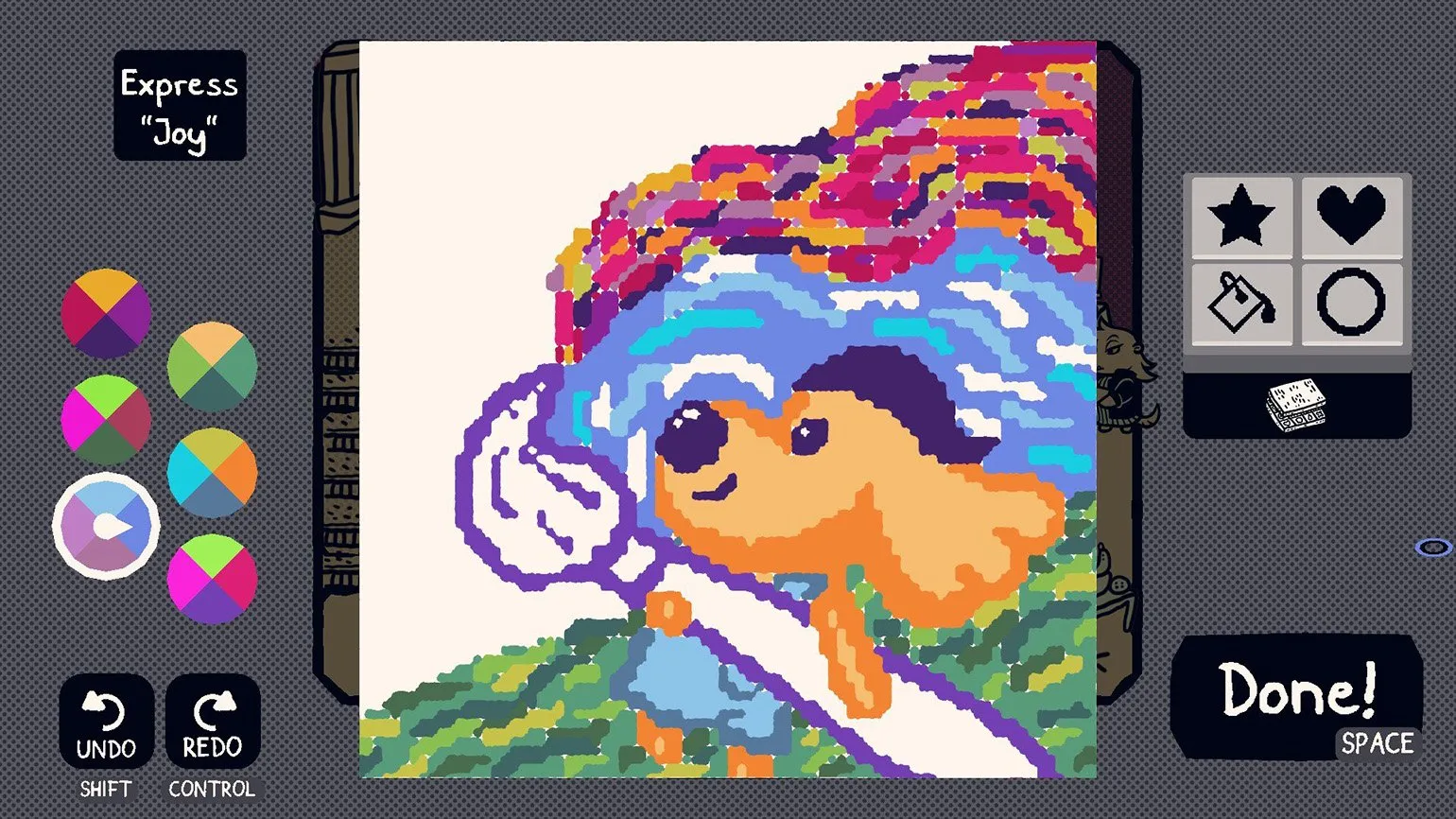

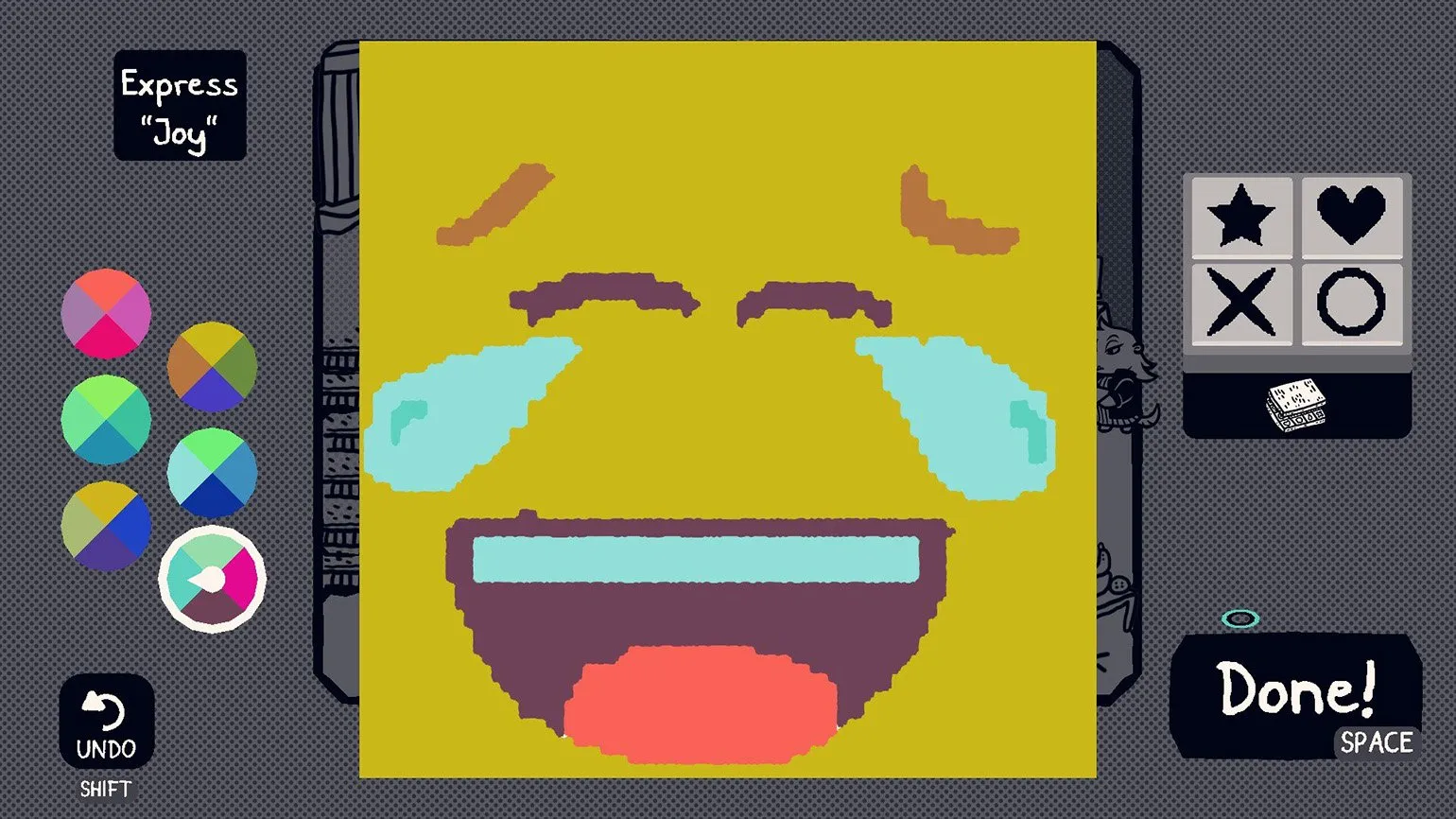
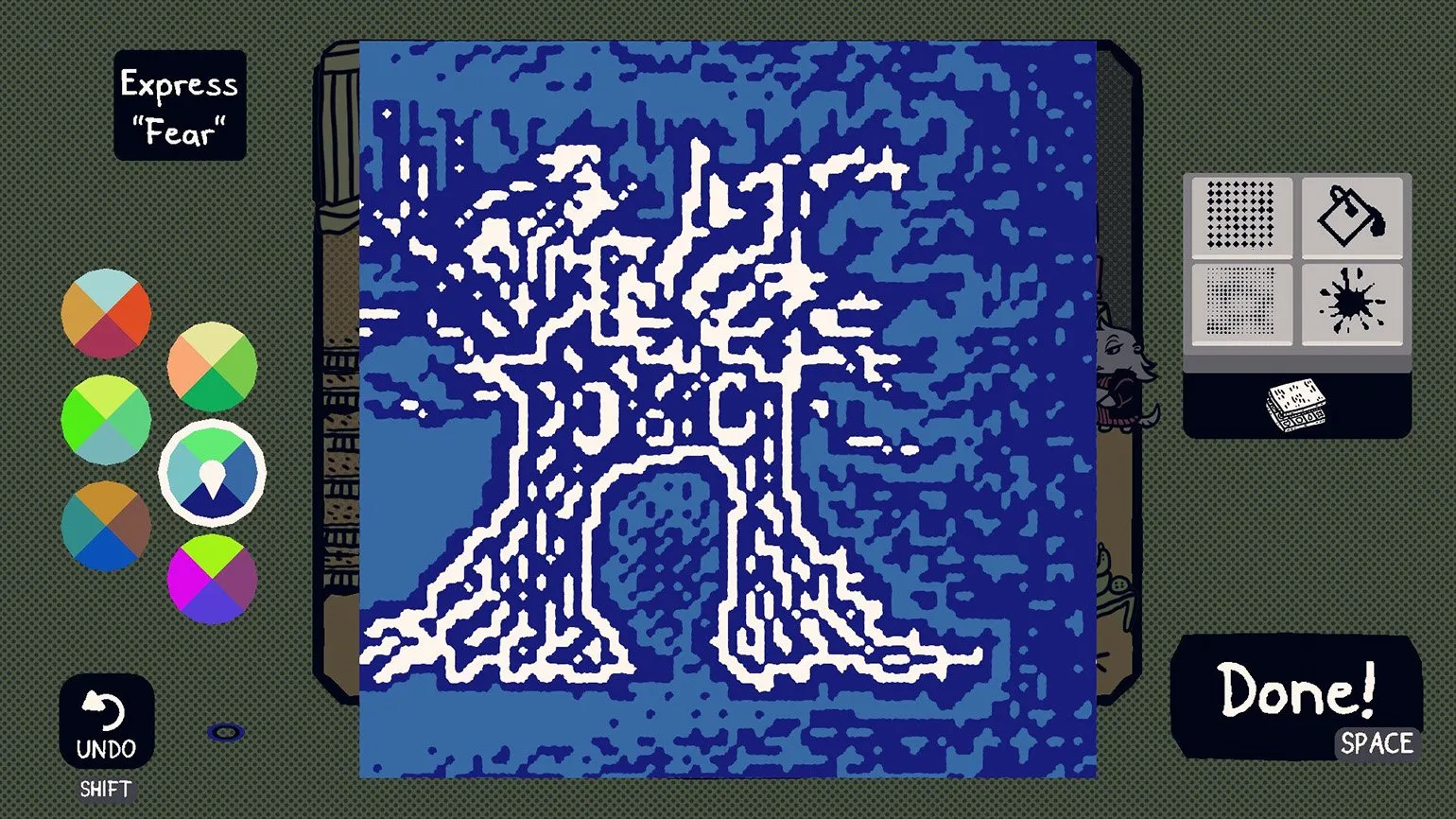
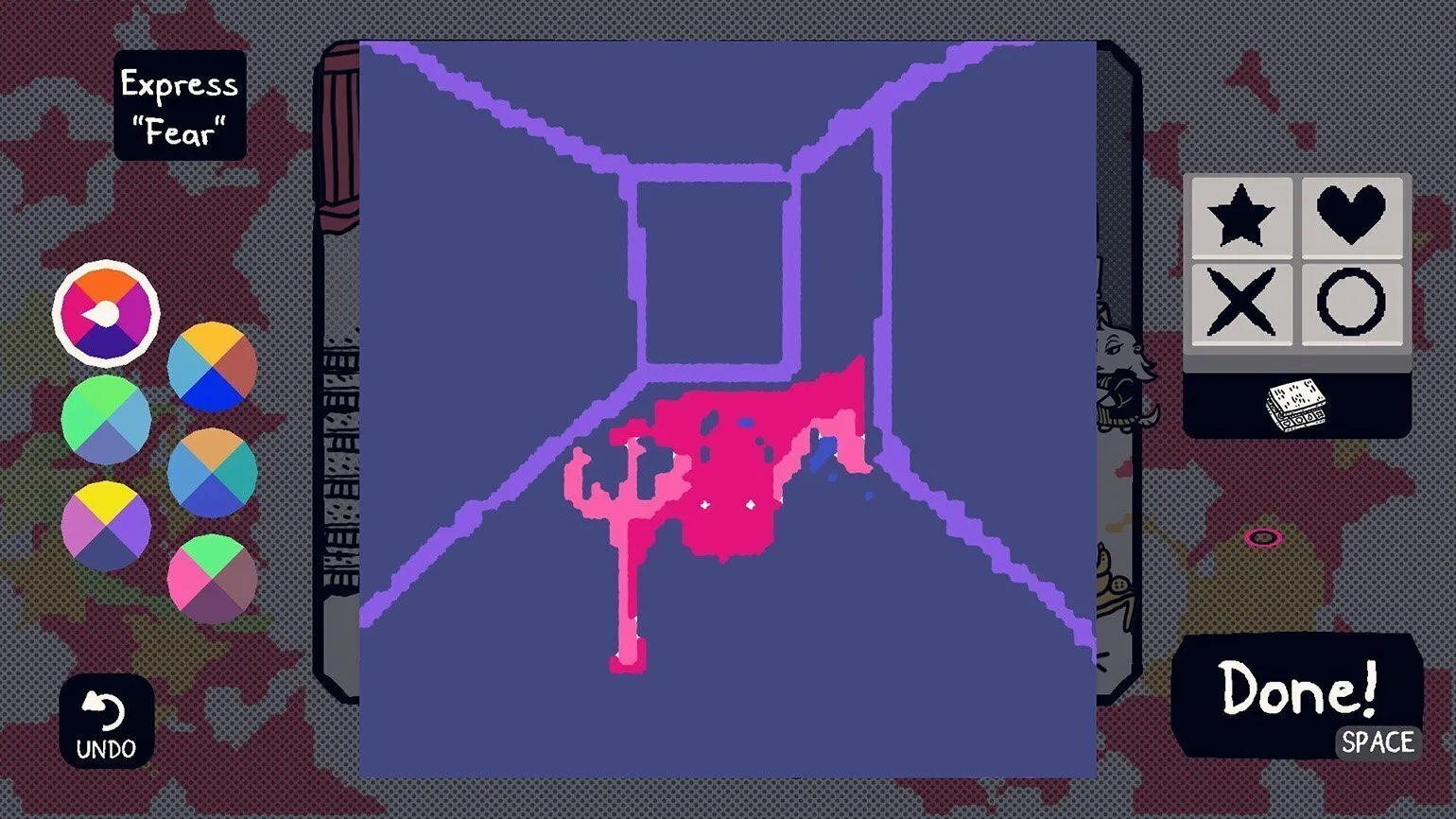
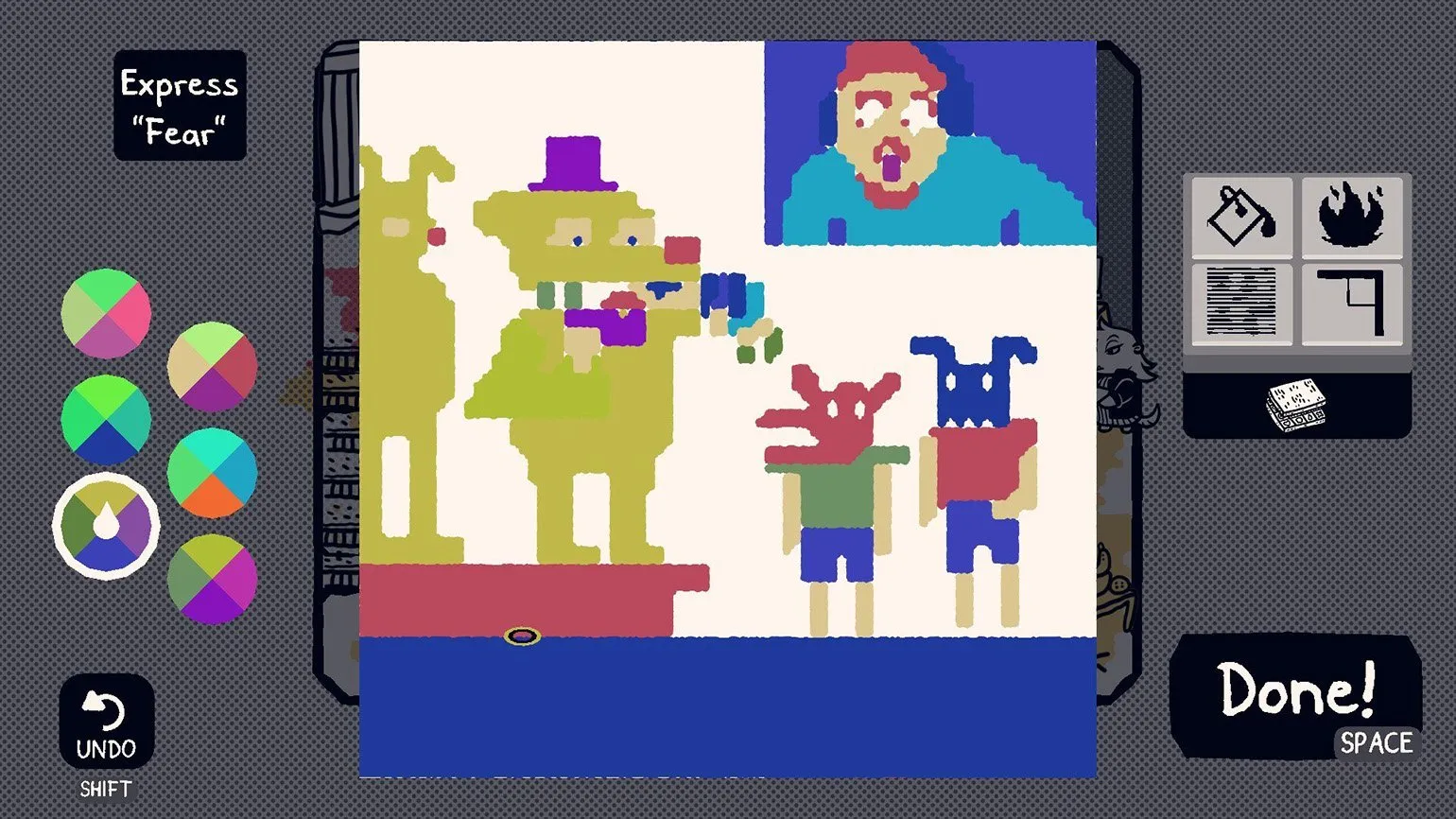
The idea of the game Chicory: A Colorful Tale presented Greg Lobanov with a unique challenge: how to make creativity optional, but at the same time inspire the player to engage in It was important to find a way to combine a secondary activity, lacking clear goals and rewards, with progression elements that serve as a powerful external motivator. At the same time, drawing had to remain not only an important part of the gameplay but also occupy a central place in the story. The very essence of Chicory is artistic expression, and this makes the game unique among other projects.
The problem required unobtrusive and effective solutions, complicated by the lack of experience to rely on. Nevertheless, solutions were found and successfully applied in practice. Players explore the world, become distracted by creativity, return to progression, and engage in drawing again. These methods not only contribute to skill development but also help maintain interest in the game, making the process more engaging and multifaceted.
Self-expression is a natural process that does not require external motivation. The internal energy inherent in each of us from an early age is the main driver of creativity. To unlock this potential, you need to provide space for self-expression - a canvas, paints, and a little push in the right direction. Creating an environment for creativity promotes the development of personal qualities and helps you find your unique style.
Narrative Designer Profession
You will learn from scratch how to create game scripts, invent characters, write dialogue, and convey ideas through gameplay. You can earn money in game development and implement the game project you've always dreamed of.
Find out more