Table of Contents:

Learn: Game Designer Profession from Scratch to PRO
Learn MoreTutorials are a key element in video games. Game tutorials should not only be natural but also engaging. Ideally, the learning process should be as interesting as other aspects of the gaming experience. Properly organized tutorials help players better understand the game mechanics, which promotes their engagement and improves the overall gameplay. Effective tutorials can significantly increase player satisfaction and increase the chances of them returning to the game.
Creating a high-quality tutorial in some genres is a challenging task due to the complexity of the mechanics or the simplicity of the plot. In such situations, developers often resort to creating separate training modes. However, in practice, they often prove boring and fail to engage the player. One genre where successful tutorials are rare is fighting games.
At GDC 2020, Brian Kesinger, gameplay programmer for Mortal Kombat 11, presented NetherRealm Studios' approach to creating engaging and informative in-game tutorials. Skillbox Media's Gamedev editorial team shares the developer's key ideas, which will help better understand how video game tutorials can be effective and engaging for players.

A technical game designer is a key figure in video game development, possessing a unique combination of technical and creative skills. Their responsibilities include creating and optimizing game mechanics, as well as solving complex programming and design problems. A technical game designer works closely with programmers, artists, and designers to ensure a smooth and engaging gameplay experience. They are also responsible for documenting game systems and mechanics, allowing the team to work effectively on a project. Understanding game engines and programming languages such as C# or C++, as well as the ability to analyze and troubleshoot problems, are important aspects of a technical game designer's job. This professional helps turn ideas into reality, creating unique game worlds and ensuring their technical implementation. From 2016 to 2020, I worked at NetherRealm Studios, where I developed software for video games. Specifically, I was the sole programmer for the Injustice 2 Legendary Edition tutorial mode. As part of my work, I was also responsible for the implementation of numerous gameplay systems in Mortal Kombat 11, including the tutorial and fatality mechanics. My experience in this field allows me to better understand the dynamics of gameplay and create high-quality content for players.
Since 2020, he has held the position of Senior Technical Game Designer at Respawn Entertainment, where he participated in the development of the game Star Wars Jedi: Survivor.
Fighting Games Are Hard
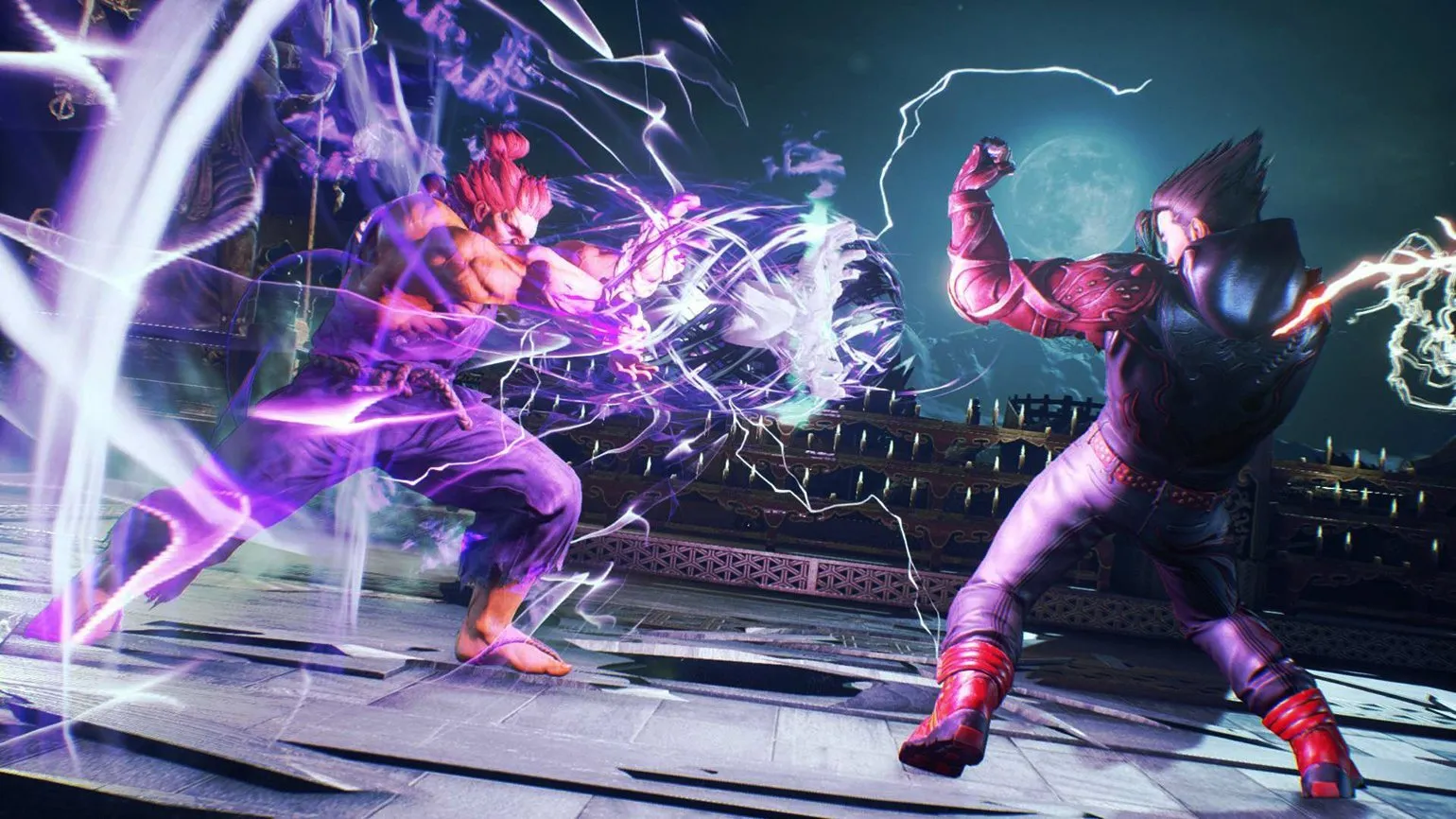
Fighting games stand out among other video game genres due to their high entry barrier. To successfully play in multiplayer modes or at high difficulty levels, you need to master many nuances. This includes understanding zoning, learning the features of each character, knowing combos, framedata of various attacks, and many other aspects. A deeper understanding of these elements allows players not only to improve their skills but also to achieve high results in competitions.
A framedata is a data format used to represent information in a structured form. It allows you to organize and store data to facilitate its processing and analysis. Frame data is often used in various fields, such as web development, databases, and analytics. The main advantage of frame data is its ability to simplify interactions between different systems, ensuring compatibility and data unification. Using frame data, developers can effectively manage data, which contributes to improved performance and process optimization.
This information concerns the distribution of frames for character actions in video games. Each attack is divided into three phases: preparation, active phase, and recovery, each of which has its own frame data. Understanding these principles significantly improves game strategy. For example, powerful attacks usually have a long recovery phase, during which the character becomes vulnerable. If the player misses such a blow, the opponent has an opportunity to counterattack. Understanding these aspects will help players more effectively manage their actions and anticipate the actions of their opponents.
Some players may enjoy fighting games simply by pressing buttons, but this often leads to them quickly losing interest in the game and not exploring all the available modes. Full immersion in a fighting game involves more than just pressing buttons; it also involves learning the mechanics, tactics, and quirks of different characters. This not only improves player skill but also deepens the enjoyment of the gameplay.
Game developers strive to increase the time players spend playing their games. At first glance, the solution to this problem might lie in creating a high-quality training level or tutorial. However, not all developers are capable of successfully implementing this idea. An effective tutorial must be intuitive, engaging, and simultaneously immersive. The right balance between learning and entertainment is key to retaining players and keeping them engaged in the game.
Traditional Training in Fighting Games
Few studios prioritize quality training, largely due to production challenges. For example, when Kesinger worked at NetherRealm Studios, there was a strict development pipeline that lasted two years for each project. The game development process is also significantly impacted by changes, which makes developing training materials difficult. Furthermore, at many studios, creating tutorials is still considered a low priority. This leads to a lack of effective training programs, which, in turn, affects the overall skill level of employees and the quality of the final product.
Development of the training for Injustice 2 began just three months before release, and this aspect was worked on by a small team. As a result, the training turned out to be cumbersome and unintuitive. Internal tests showed disappointing results: many testers quickly became tired of the gameplay. Brian Kesinger emphasizes that this is partly due to the introduction of RPG mechanics into the game, which do not quite fit the genre.
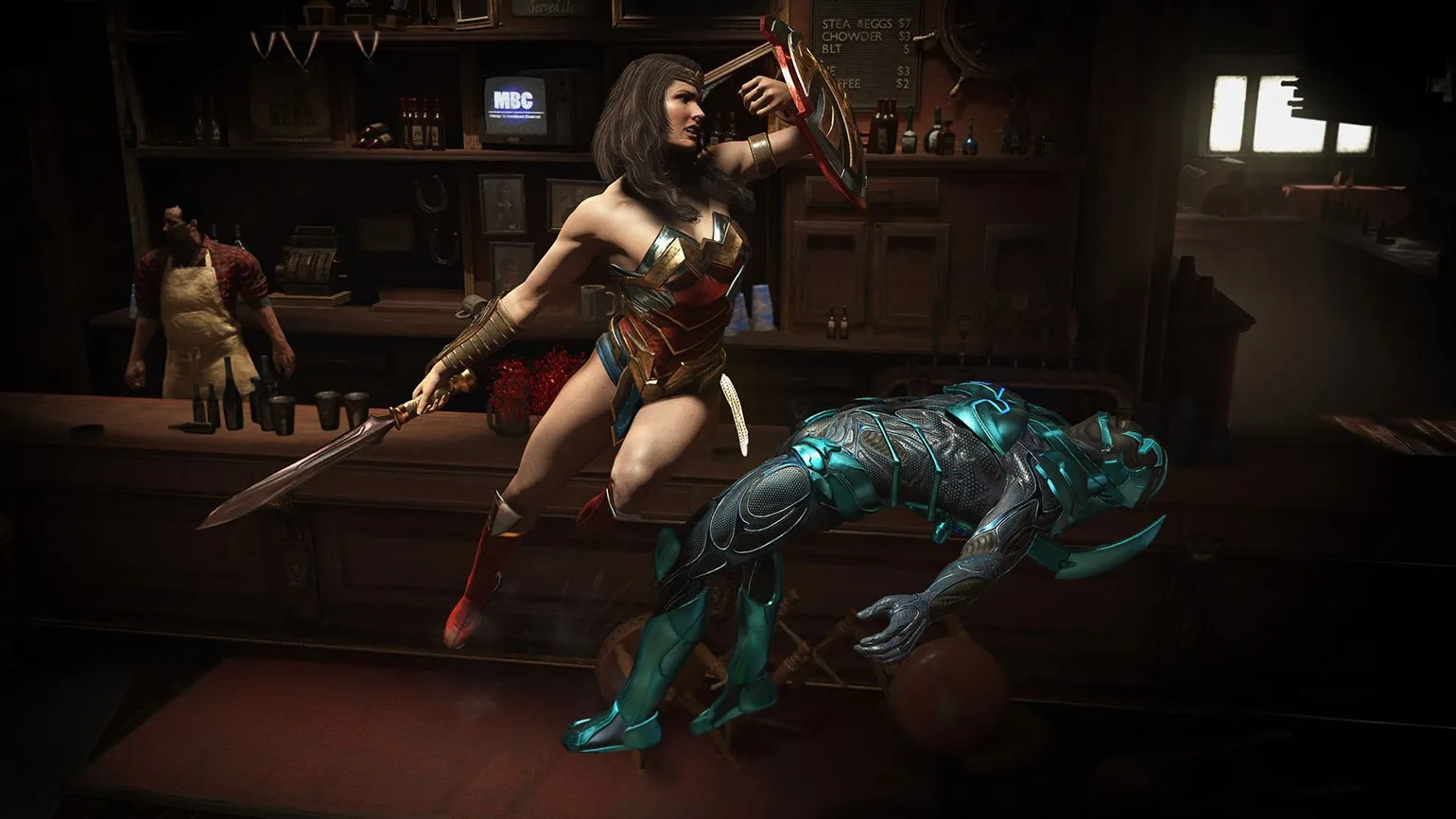
One of the main problems with the tutorial in Injustice 2 was that it focused only on the game's unique mechanics, ignoring the fundamental aspects of fighting games. The tutorial was linear, forcing players to unlock new lessons sequentially and not having the opportunity to hone a particular skill at any time. This created a significant problem with the mode's difficulty curve, which was uneven. As a result, some players encountered difficulties in completing individual episodes, which hindered their further learning. For example, the Special Move Cancel tutorial was abandoned ten times more often than other tutorials, indicating a need for an overhaul of the tutorial structure to improve the player experience.
The tutorial menu had a cluttered interface that lacked information about progress, challenge duration, and other important aspects. This caused players to experience learning fatigue, as it was difficult to understand how far they had progressed and whether the knowledge they had acquired was sufficient to successfully complete the story campaign. Improving the interface and adding necessary progress data could significantly improve the learning process and make gameplay more engaging.
The problem was exacerbated by the tutorial pop-up that appeared when players first launched the game. This created a negative experience by forcing players to start over from the least interesting part of the game, which reduced overall engagement and interest in the gameplay. Improving this situation can significantly increase user satisfaction and their desire to continue playing.
The Foundation of a Strong Tutorial
To improve gameplay, the tutorial in the Legendary Edition of Injustice 2 was reworked. NetherRealm Studios is once again using full editions of its games to introduce quality-of-life improvements. An example of this approach is Mortal Kombat XL, in which the developers significantly improved the network code for multiplayer. These updates not only improve the quality of the game, but also make the tutorial more accessible and understandable for new players.
Complete Editions represent a unique opportunity for NetherRealm Studios to go beyond traditional approaches to player training. With Injustice 2's combat system already polished, the developers were able to focus on the details and create a high-quality tutorial. This not only improved the gameplay experience but also laid a solid foundation for the studio's future projects. Developing effective tutorial content is critical to attracting new players and increasing their engagement with the game.
The updated tutorial was developed by a new team consisting of a designer, a programmer, and specialists from the UI/UX department. They were given six months to complete the project, significantly longer than the typical timeframe for developing training materials.
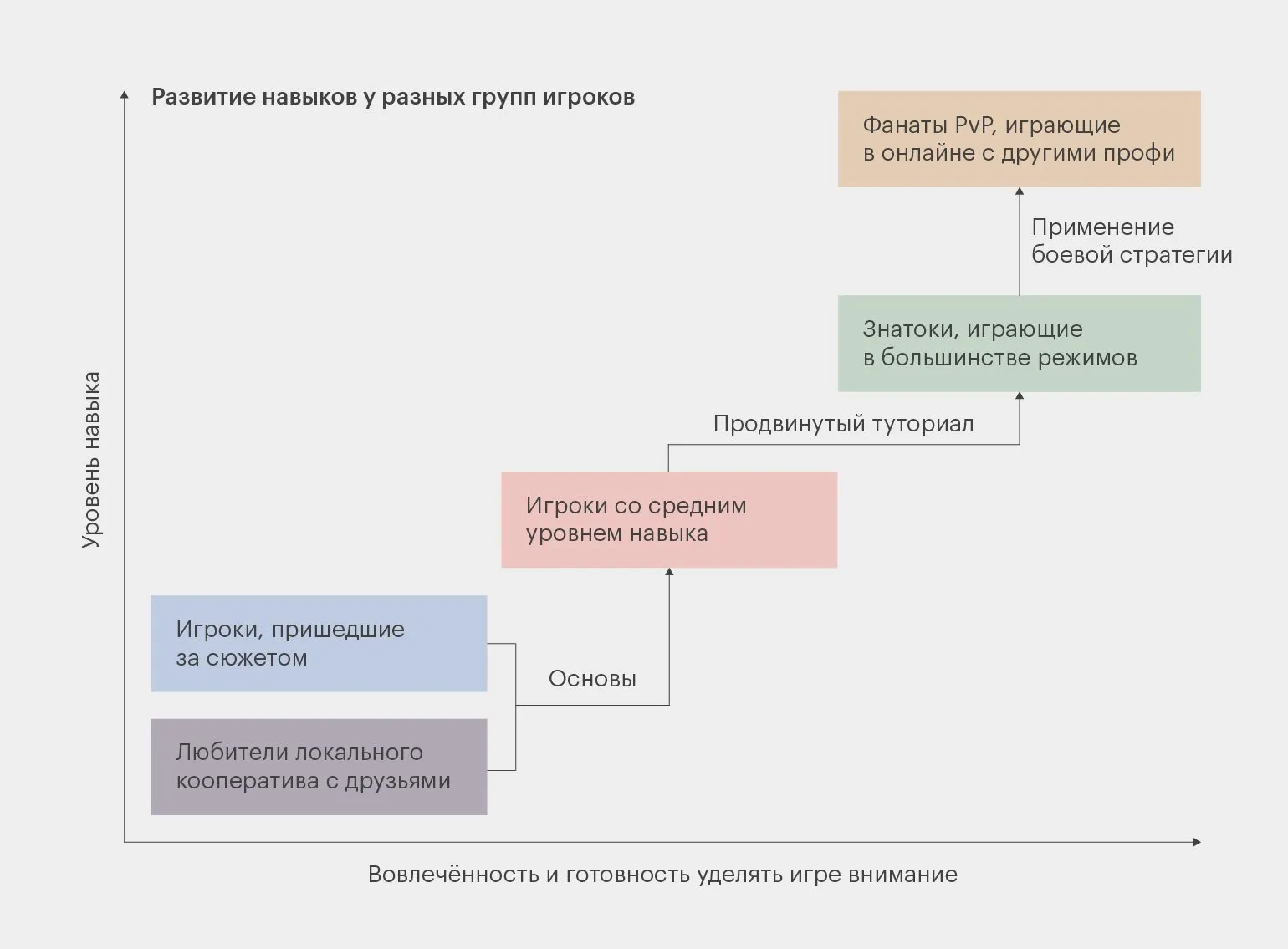
The Injustice 2 team categorized all players into several key categories, drawing on extensive target audience data. This allowed them to more accurately identify user preferences and interests, which, in turn, helped create a gaming experience that aligns with player expectations. Analyzing the target audience was an important step in development, allowing us to account for a variety of playstyles and preferences, which improved interaction with the game and increased user satisfaction.
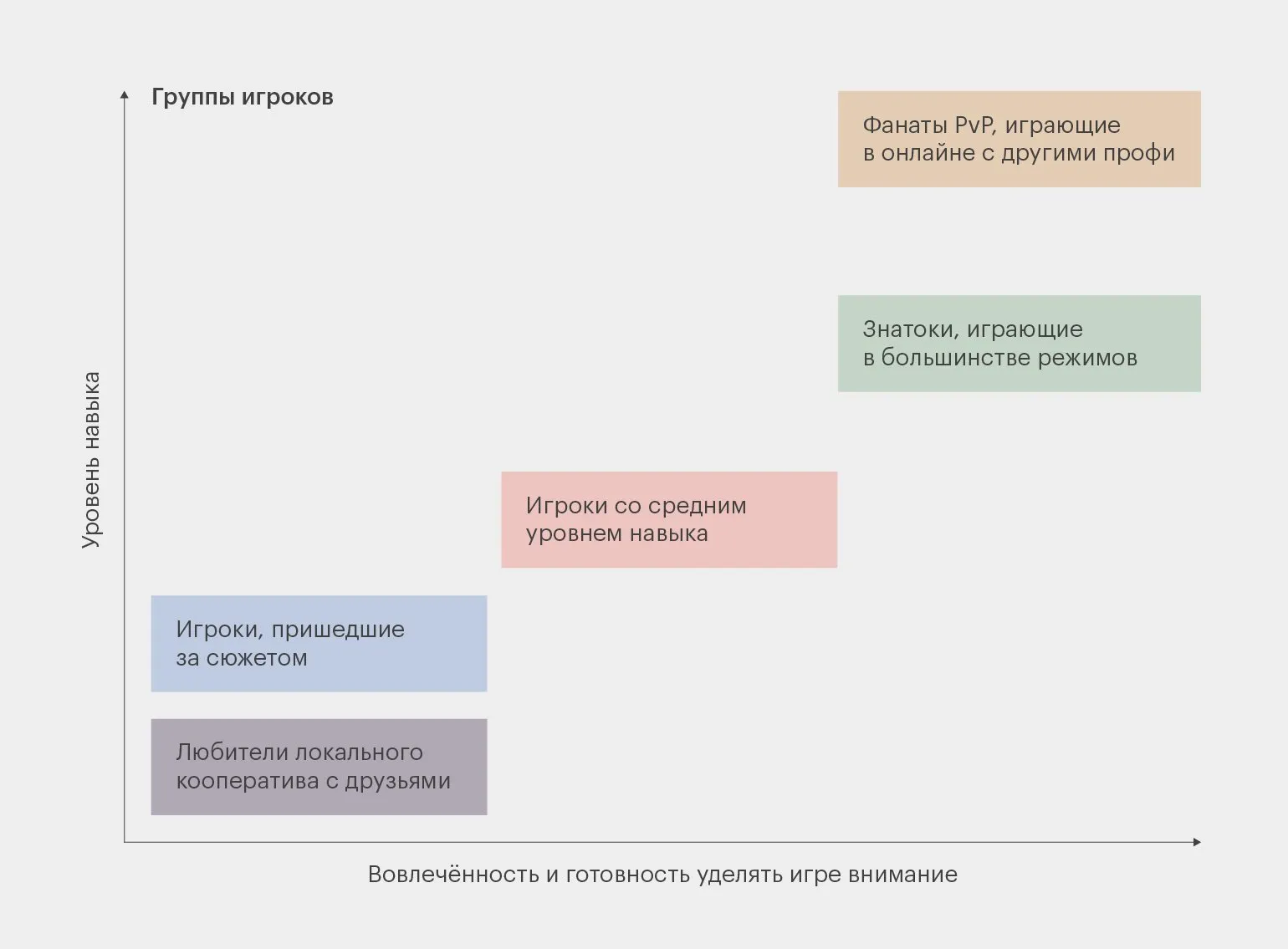
NetherRealm Studios has identified five key groups, each playing a vital role in the development and support of its games. These groups are responsible for various aspects of development, including content creation, game mechanics, testing, marketing, and community support. Each team works closely together to ensure the high quality of the final product and the satisfaction of player needs. Thanks to this structured organization, NetherRealm Studios continues to create successful and innovative games that capture the attention of video game enthusiasts around the world.
While this classification is not exhaustive, it helps to identify the main groups of players, making it easier to understand their needs. For example, to successfully complete a storyline or play cooperatively with a friend, in-depth knowledge of all the nuances of a fighting game is not required – mastering the basic skills is enough. This allows you to focus on enjoying the game, without being distracted by complex mechanics.
This tool has the potential to increase player engagement. As the classification presented shows, skill level is directly related to the attention players are willing to devote to the tutorial. The developers assume that a high-quality tutorial will be able to move the player to a category with a higher level of engagement, which in turn will positively impact the gaming experience and user retention.
The Tutorial Structure in Injustice 2
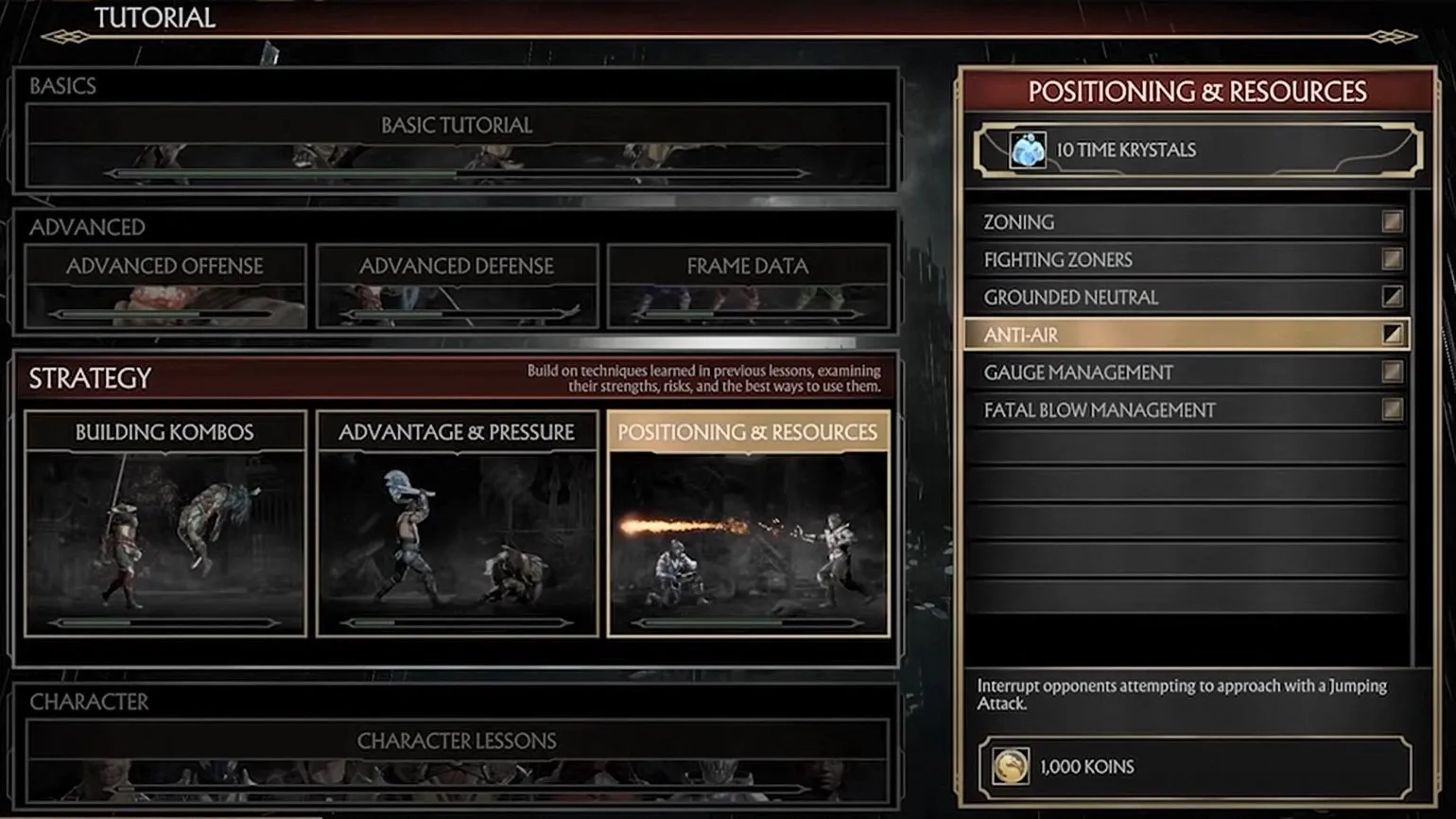
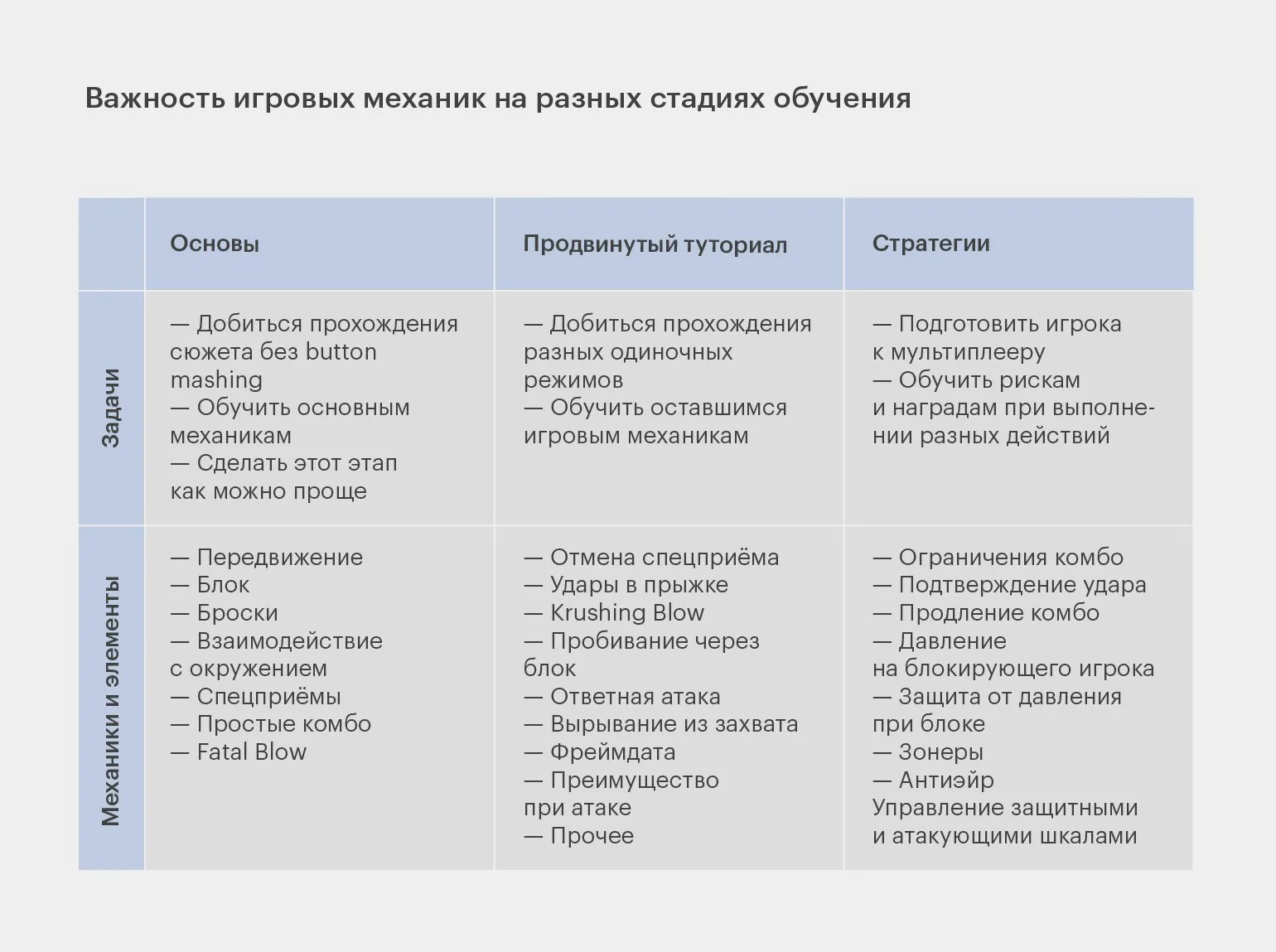
The team redesigned the tutorial structure in Injustice 2 based on their classification. Now, the tutorial is divided into three categories. Basics is designed for fans of the single-player campaign and covers the basic mechanics of the game. Interestingly, in the console version, this block of lessons is available to players even before the game has finished loading. Thus, impatient players can begin their adventure even before they have access to other modes.
The Advanced section is designed for players eager to explore all of the game's single-player modes. It offers training in more complex supporting mechanics, allowing for a deeper understanding of gameplay and improved skills.
The Strategy category prepares players for online competitions, focusing on the nuances of fighting games. To succeed in this area, it's important to understand key aspects of gameplay. It's worth noting that this section was developed by the studio from the ground up, as such details hadn't previously been covered in the tutorial. Now players have the opportunity to delve deeper into the mechanics of the fighting game, which contributes to their development and increased competitiveness in online games.
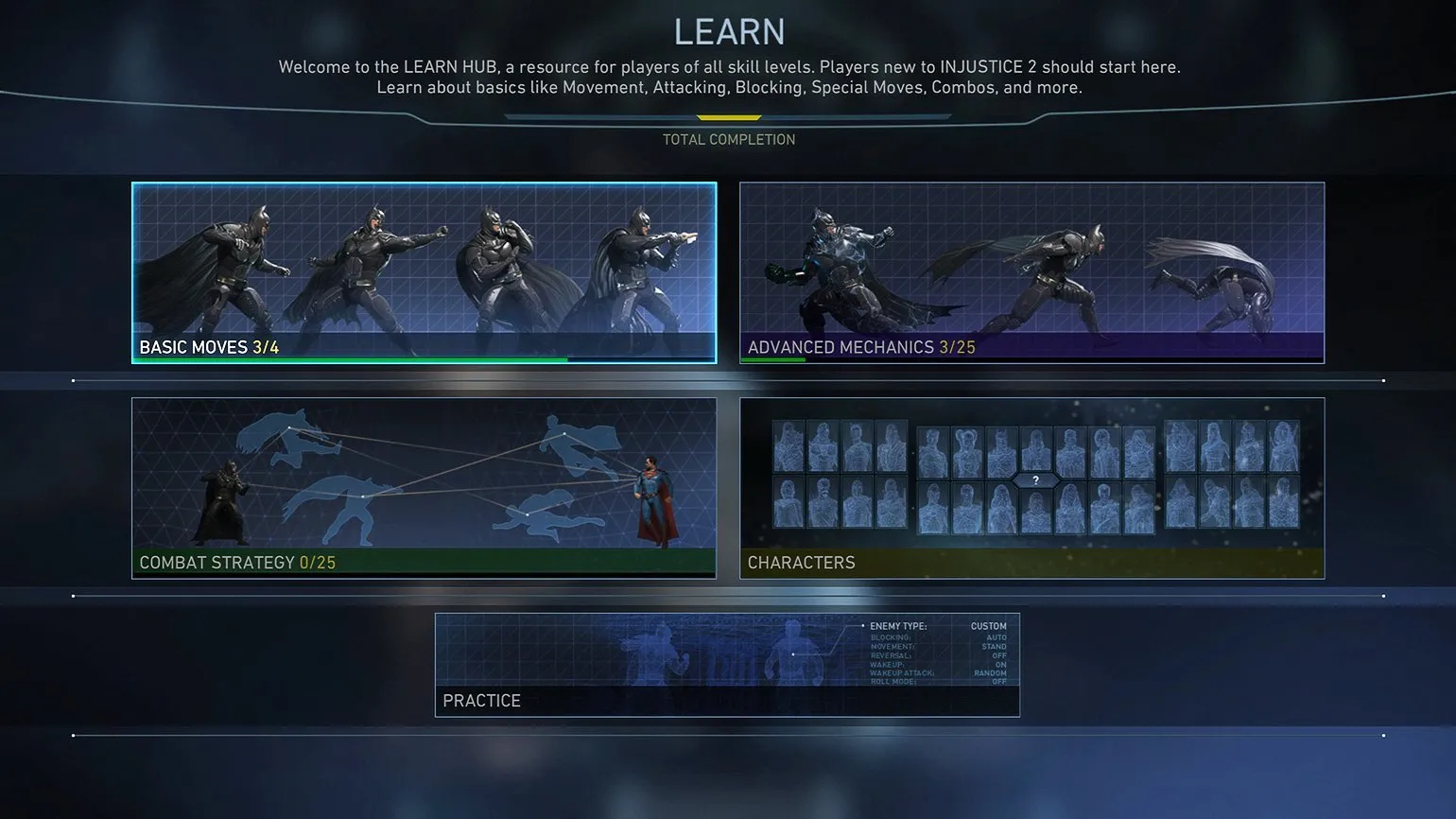
The tutorial in Injustice 2: Legendary Edition has become more structured and flexible. Players can start with any mission and move on to the next one at any time, which makes the learning process more comfortable. This helps prevent a situation where newcomers encounter difficulties in performing certain moves and, as a result, abandon the tutorial. However, as Kesinger notes, it is recommended to complete the tutorials sequentially, since new missions build on previously learned knowledge. This approach helps players better master the game's mechanics and increases their chances of success in battles.
The tutorial structure not only improves comprehension of the material but also provides players with the opportunity to earn rewards for achievements. The developers have implemented a variety of external incentives to encourage completion of various stages of the tutorial, fostering deeper engagement and motivation.
In the base version of Injustice 2, players received 500 crystals for completing the tutorial, but in the updated version, this number has increased to 4,350 crystals. New rewards have also been added: players now receive loot boxes for each lesson and unique Batman gear for completing tasks in each category. These changes significantly enrich the gameplay and provide users with more opportunities to develop their characters.
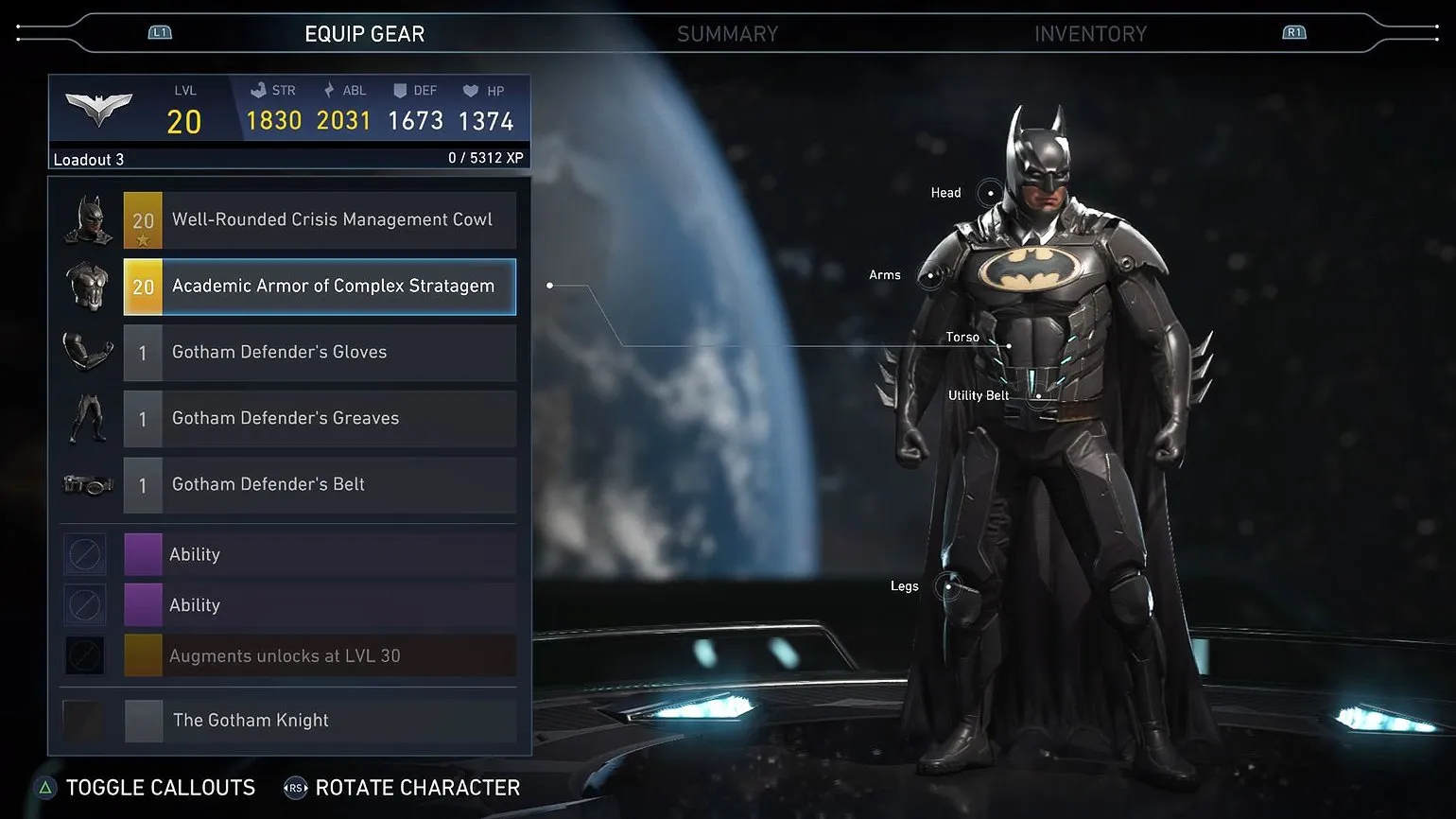
The developers also paid significant attention to the interface to improve the user experience. Player progress is displayed in the menu, allowing for a better understanding of the overall situation. All tabs contain progress bars and checklists, allowing the player to track their achievements and see how far they have progressed in the game.
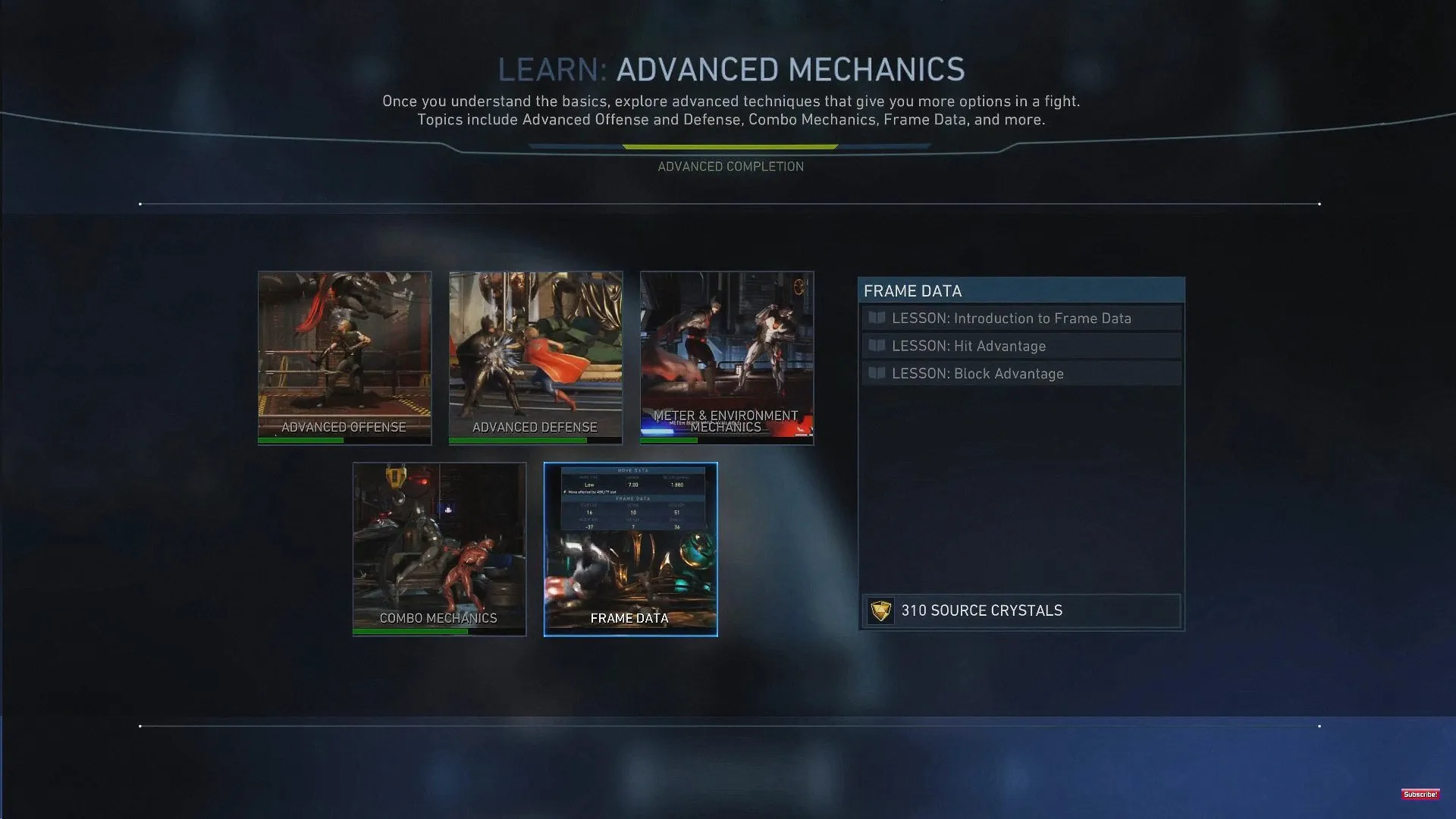
After completing each tutorial category, the player is automatically returned to the main menu. This is done so that the player can clearly understand that they have the ability to stop the process and return to the tutorial at any time. This approach promotes deeper absorption of information and helps avoid knowledge overload.
Injustice 2: Legendary Edition received positive reviews from both critics and players, confirming the developers were on the right track. Despite this, they were unable to fully evaluate the success of their decisions, as the game was not new. Nevertheless, this project served as an excellent foundation for creating a more in-depth tutorial in the studio's next release, Mortal Kombat 11. The developers incorporated the lessons learned and improved the mechanics, making Mortal Kombat 11 more appealing to players.
Mortal Kombat 11 Tutorial
Mortal Kombat 11's tutorial mode builds on the developments from Injustice 2. Divided into three main categories, it offers a flexible structure. The key innovation is an emphasis on unique visual and audio feedback, making the tutorials more accessible, understandable, and engaging. Players can easily master mechanics and techniques, which contributes to their progress and improvement of gaming skills.
For For effective player training, it's important to clearly define the objectives of each category. Understanding the basics of the game is essential for comfortable progression through the story mode, avoiding "button mashing" mechanics. It's important to focus on learning key mechanics such as movement, simple combos, and special moves. Considering the expectations of newcomers, it's important to make this section as accessible and understandable as possible. Newcomers are typically unwilling to spend a lot of time mastering complex mechanics, so the training should be simple and intuitive. This will allow them to quickly immerse themselves in the gameplay and enjoy it without unnecessary difficulties.
To improve the accessibility of lessons, it is necessary to identify shortcomings in their structure and content. A key task is to identify design issues. One common difficulty for beginners is determining the timing of combos. Ignoring this issue is unacceptable, as combos are the foundation of fighting games, providing players with a more meaningful approach and minimizing accidental button presses. Improving the accessibility and visibility of combos is possible through the use of effective visual feedback, which will help users better navigate the gameplay and master the mechanics faster.
In Mortal Kombat 11, combos do not depend on precise timing, making the gameplay more accessible to players. Sequential key presses are recorded in a buffer, and if the player manages to press a button before the previous hit is completed, the next hit automatically becomes part of a combo. This means that successfully executing combos requires simply quickly pressing buttons, which significantly simplifies mastering the mechanics of combat.
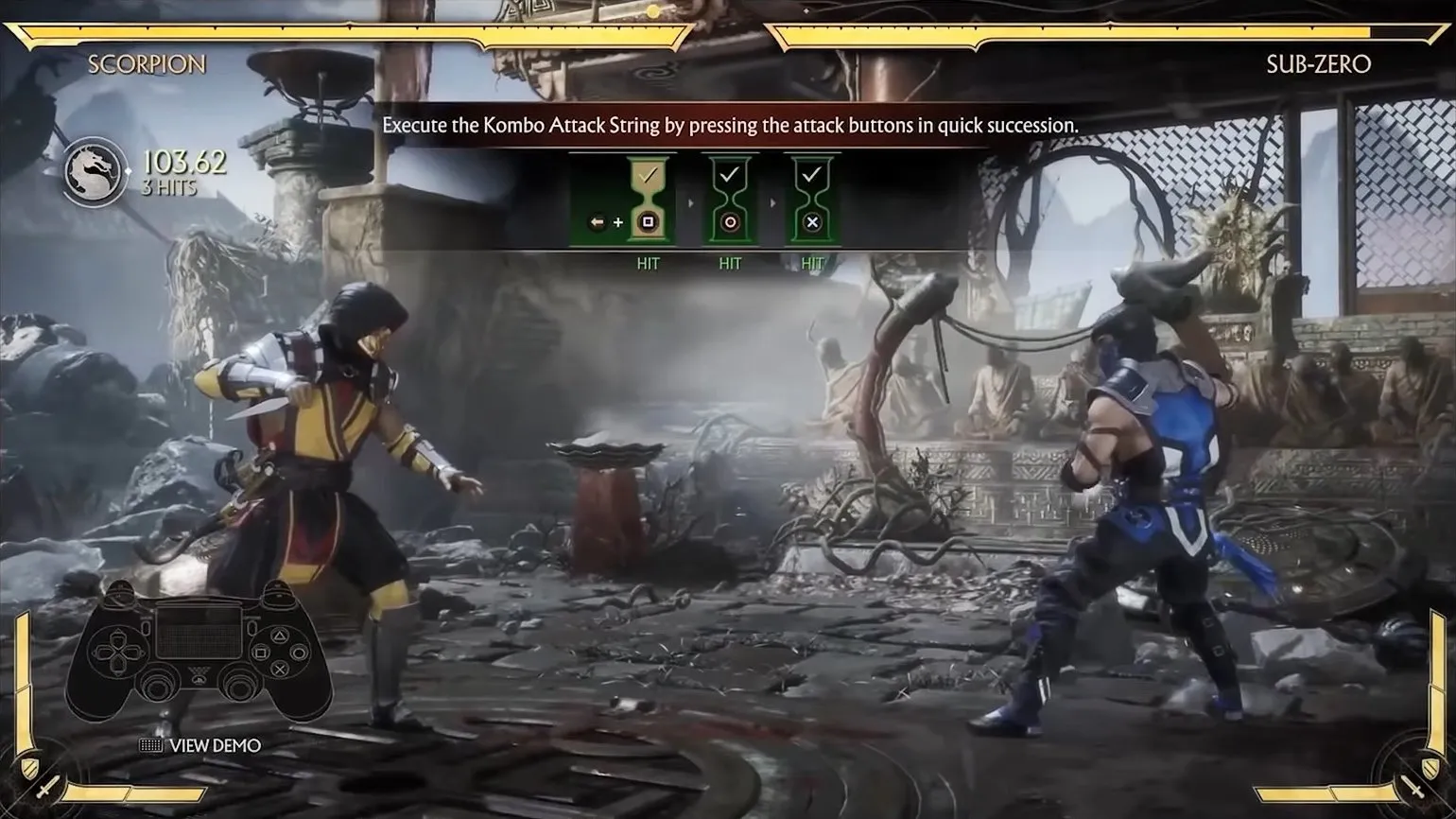
After numerous iterations, the developers arrived at a simple interface that displays all the buttons for various combinations. The key features of this visual cue lie in its details. The interface reacts adaptively to the player's actions: if an action is performed incorrectly, the system clarifies the error, whether it be timing or missing the target. This approach significantly improves user interaction with the game and promotes a deeper understanding of the mechanics.
This addition significantly improved tutorial completion rates, which was an unexpected success. The average percentage of successful test completions has increased significantly compared to the studio's previous projects. For example, 97% of players mastered the cancellation of a special move in Mortal Kombat 11, while only half of users managed to master this skill in Injustice 2. Kesinger emphasizes that this is due to the fact that the lesson on canceling a special move was moved to a more advanced section, but the importance of player feedback cannot be underestimated. This approach helps improve the tutorial and tailor it to the needs of users, which, in turn, contributes to an overall skill level among players and a better gaming experience.
Visual feedback helps developers effectively explain complex fighting game concepts, such as contextual actions and frame data, to newcomers. This improves understanding of the game's mechanics and speeds up the learning process for new players. The use of illustrative examples and visual elements makes the tutorial more accessible and understandable.
In Mortal Kombat, there are certain moves that can only be performed under specific conditions. Learning these techniques can be challenging, especially with limited time to create tutorials. However, NetherRealm's efforts in the teaching field have resulted in the creation of unique tools that help explain complex game mechanics. These tools make the process of mastering and understanding complex techniques more accessible to players.
In contextual actions, developers temporarily pause the game world to create the ideal conditions for performing a specific action. Once the player performs the required combination, time is restored, and the action is executed. This adds dynamism and tension, allowing players to focus on their actions and make strategic decisions at critical moments in the game.

A deep understanding of the nuances of frame data requires the use of appropriate tools. Understanding the intricacies of frame data is crucial to successful play, as it serves as the foundation for many aspects of gameplay. Mastering this topic will allow players to improve their skills and achieve high results in games.
Every attack in games consists of three key phases: preparation, execution, and recovery. Understanding how many frames are allocated to each of these phases helps players identify moments when they have an advantage and when they are vulnerable. Moreover, the effectiveness of an attack directly affects the frame data of various parts of the move. Successfully executing an attack reduces recovery time, while a miss or block increases it to varying degrees. This creates an important risk/reward mechanism that plays a critical role in competitive games, allowing players to strategically plan their actions for maximum effectiveness.
To simplify the perception of complex game mechanics, developers use color-coding of the player character in tutorials. This makes the information more visual and understandable, which contributes to a better understanding of the game processes. Color coding helps players quickly grasp key aspects of the game and navigate its mechanics.
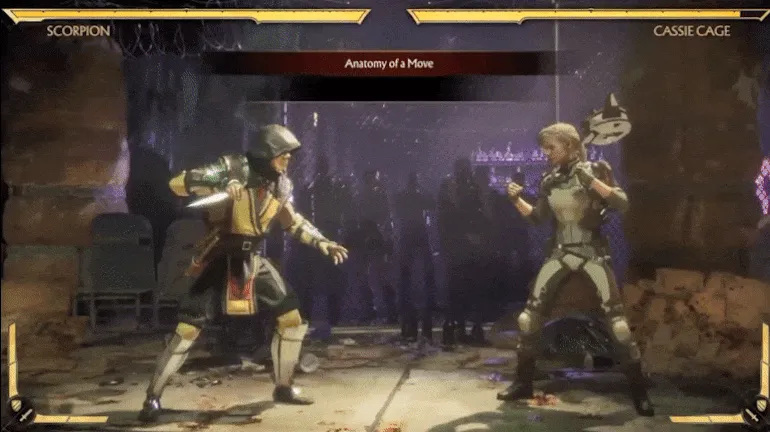
Universal Tutorial Elements in Mortal Kombat
While the developed mechanisms are designed for specific lessons, the developers also focused on universal elements that are common to all lessons in the tutorial mode. These elements ensure consistency and ease of use, which contributes to more effective learning.
In Mortal Kombat 11, as in other fighting games, there is no voiceover in the tutorial mode due to the high resource intensity of this process. Furthermore, since the tutorial mechanics are subject to change during the course of the game's development, there will be a need to re-record the lines. As a result, players are forced to rely on text instructions, which is not the most effective way to learn, especially in the context of complex games with many mechanics. To improve information comprehension, the developers have formulated several key principles that help players quickly grasp game mechanics and strategies.
Text and pop-ups on the website should be optimized to minimize their length, so that users spend more time playing rather than reading. It's important to highlight key information in the text so that even inattentive players can quickly understand what's required of them. This will improve the user experience and increase engagement with the game.
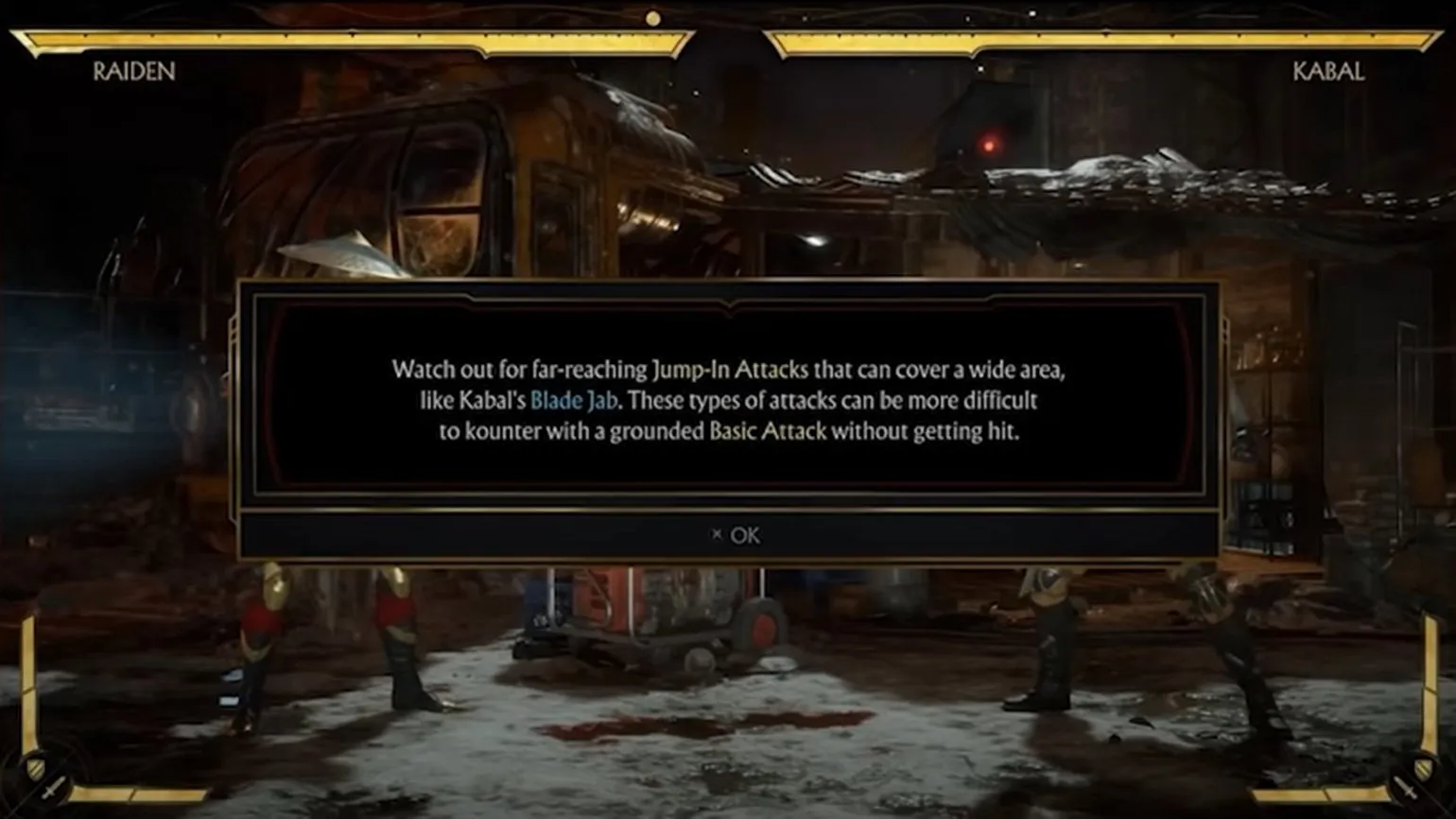
The text needs to be made accessible to beginners. The developers avoid using complex terminology. For example, the phrase "After a failed aerial move, the player will be vulnerable to attacks and will be unable to block or move" is replaced in the fighting game community with the simpler phrase "Trip Guard." This simplification helps new players quickly grasp the game mechanics and focus on strategy rather than complex terminology.
Every player is unique, and it's impossible to predict which specific aspects of the game will present challenges. Therefore, the game requires a universal mechanism to make learning accessible to a wide audience. In Mortal Kombat 11, such a mechanism is the demonstration mode. This mode is available in all tutorials and allows you to run a looped sequence in which the artificial intelligence demonstrates the perfect execution of the required combo. This helps players better understand and master complex elements of the gameplay.
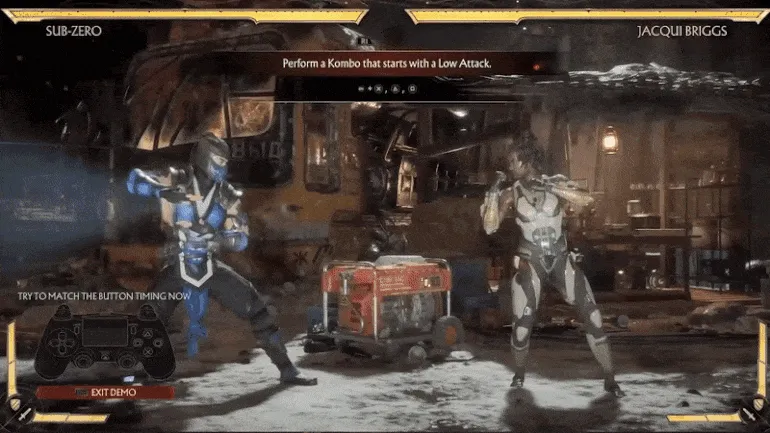
In the corner of the screen there is a miniature of the gamepad, on which All pressed buttons are displayed, both by the player and the demo AI. This allows the player to repeat combinations according to the movements, helping them master the rhythm of various combos. Using this feature helps improve skills and increase efficiency in the game.
One of the key features of the training is the hint function. If the player encounters difficulty while performing a task, a contextual pop-up appears in the corner of the screen, providing a unique hint relevant to the specific task. This feature helps users overcome obstacles and promotes more effective assimilation of the material.
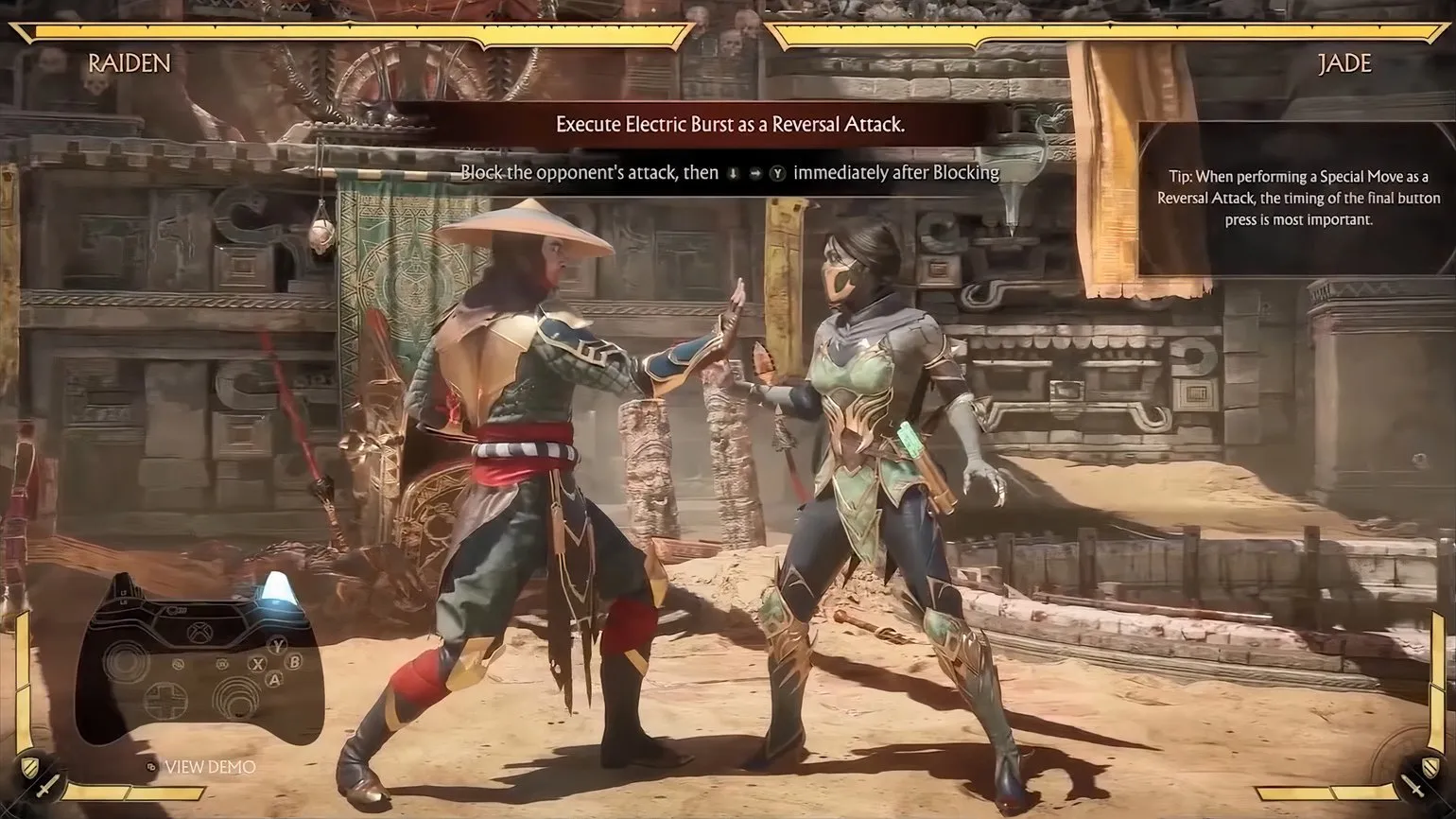
Not all lessons require detailed hints. In some cases, pop-ups reminded players of the opportunity to view a demo. However, in other situations, the text emphasized important nuances that could be useful for better understanding the material.
When designing hints, it is crucial to time their appearance correctly. The player should have enough time to master the skill on their own. This will allow them to better understand the game mechanics and improve the overall quality of the gaming experience. Correctly timing the appearance of hints not only contributes to learning but also maintains player interest.
To ensure an interesting and comfortable passage of the tutorial, the developers implemented external motivators and organized the content with user convenience in mind. This allows for effective assimilation of the material and maintains high engagement.
In the tutorial mode of Mortal Kombat 11, rewards function similarly to the system presented in Injustice 2. Players regularly receive currency for completing various tasks. The training process is accompanied by vivid sound effects that highlight achievements and successes, making the training more engaging and memorable.
These powerful motivators encourage users to actively complete the tutorial. To create an engaging and engaging mode, it's important to organize the content properly. After each lesson, the developers inform the player about what they've just learned and the upcoming challenge. This approach significantly facilitates sorting through acquired knowledge and helps the user better absorb the information. The correct structure of training contributes not only to increased interest, but also to improved results.
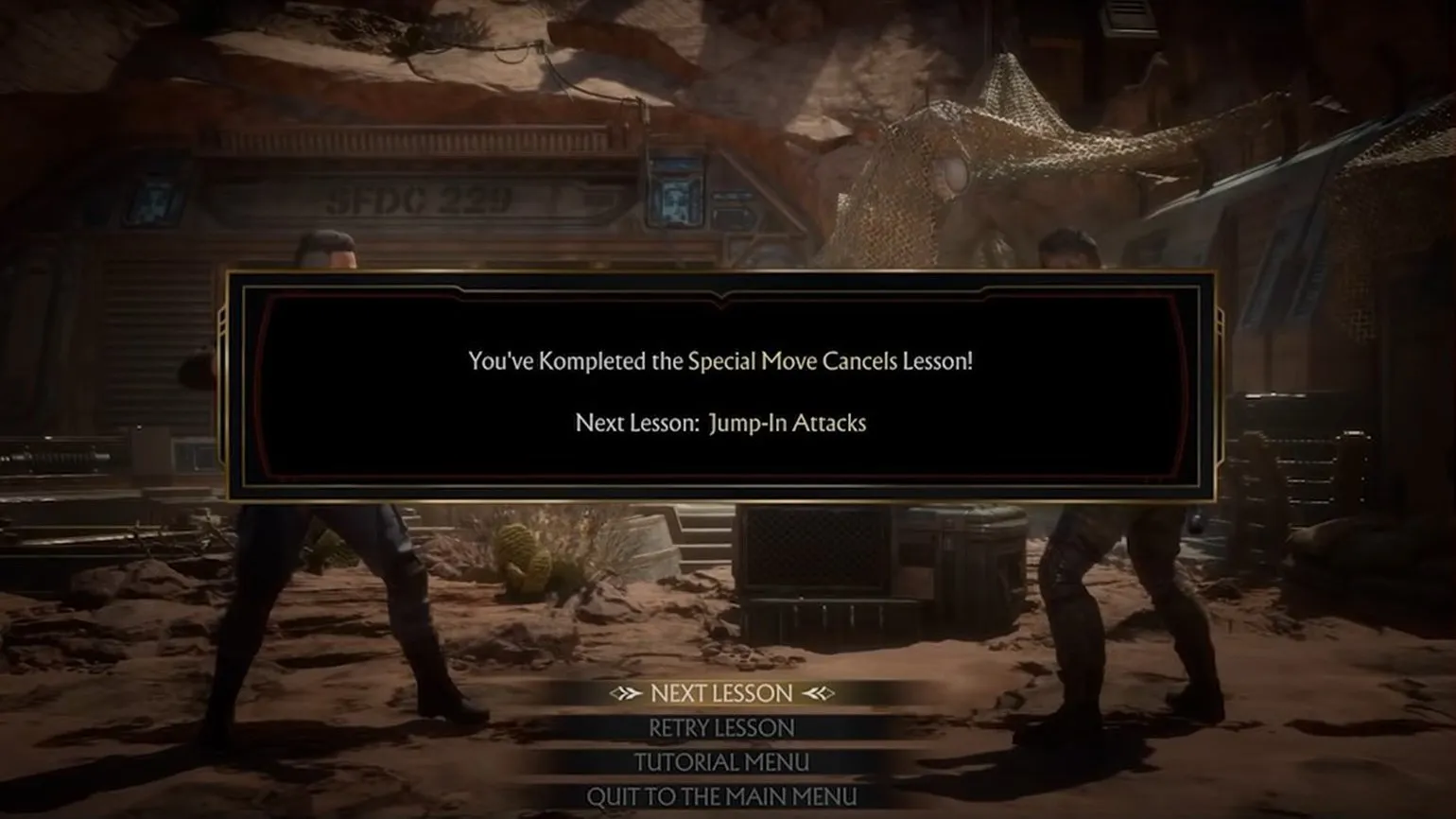
After completing the category, as in Injustice 2, the player return to the main menu. This solution allows the user to easily switch to another mode, which helps to avoid fatigue during the learning process. In addition, this mechanic provides the user with the ability to track their progress: they can see how many tasks have been completed and how many remain to be completed.
Future Plans
The developers paid significant attention to the training in Mortal Kombat 11, but Brian Kesinger emphasizes that the studio has room for further development.
In upcoming projects, NetherRealm Studios intend to more thoroughly inform players about the difficulty of various aspects of the training. For example, in Mortal Kombat 11, many users encountered difficulties mastering the perfect block mechanic. This complex technique requires time and practice, and it will be useful for players to know the difficulty level in advance so that they can more easily accept their failures.
The developers intend to implement a looping function for individual lessons. This will allow users to practice until they are confident they have mastered the necessary skills.
The developers are striving to improve the effectiveness of in-game learning. Currently, users often decide for themselves whether they want to complete a tutorial. Increasing engagement can be achieved through various methods, but the developers have not yet revealed their plans for this. Streamlining the learning process can significantly improve the gaming experience and increase interest in the game.
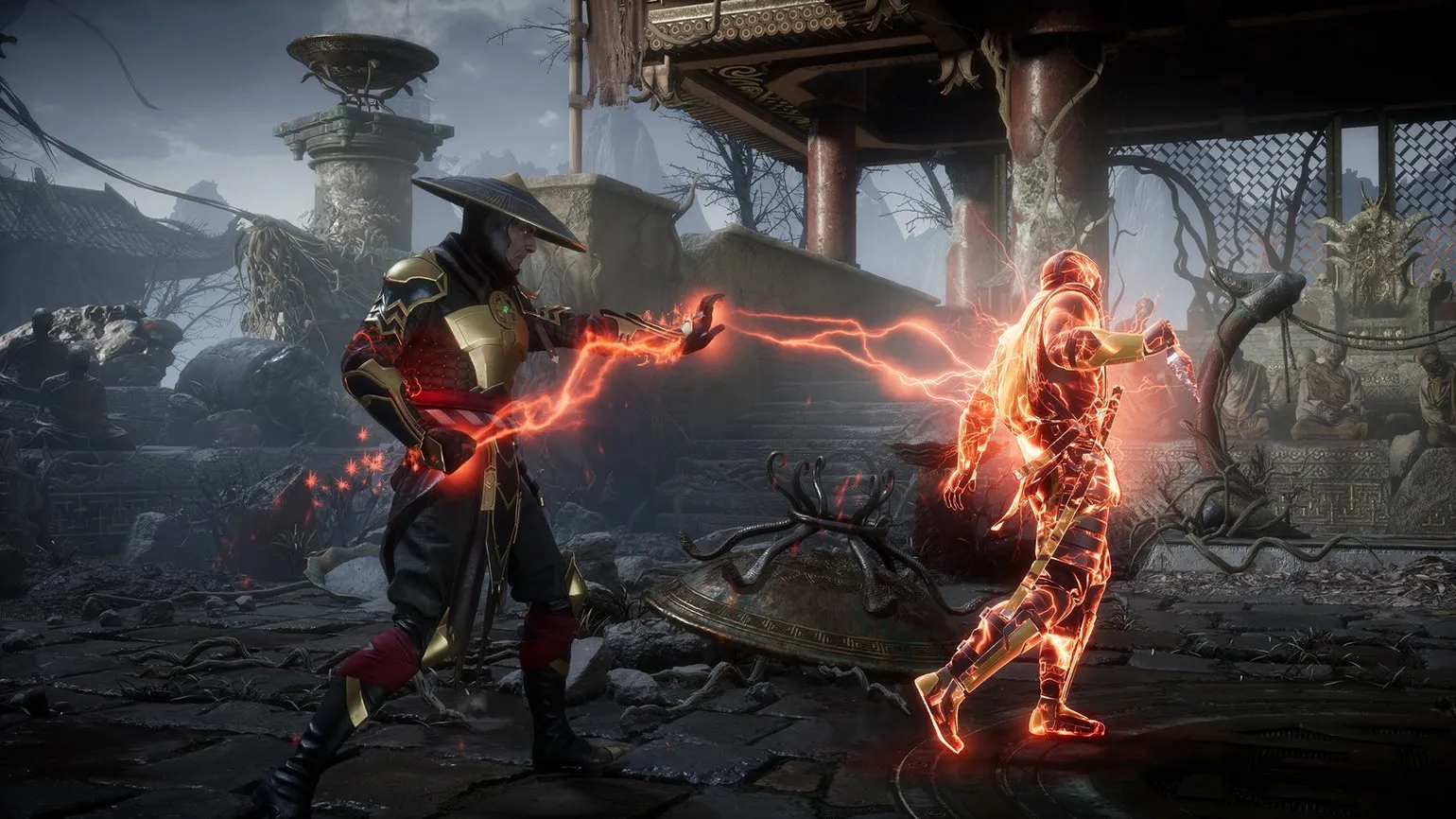
Based on his lecture, Kesinger developed a simple checklist that will be useful not only for fighting games, but also for other complex game genres. This checklist helps systematize your approach to games, improve gameplay, and increase your skill level. Using this tool, players will be able to better understand mechanics, strategies, and tactics, which will allow them to achieve better results in a variety of game genres.
- The tutorial should be prototyped in as finished a version of the game as possible.
- Players should be divided into different categories - this will help understand what exactly to teach.
- Based on the previous point, the tutorial should be designed to meet the needs of the players.
- It is important to create multiple types of hints and indicators that will help master the mechanics.
- It is also necessary to build the correct learning dynamics so that the player does not get tired.
The studio's approach cannot be called unique, as similar training elements are found in a number of games. For example, many aspects of Kesinger's checklist can be seen even in the early Gran Turismo games. However, NetherRealm Studios was one of the first companies to take a comprehensive approach to the fighting game genre. Lowering the entry barrier to the genre is expected to make fighting games more accessible and appealing to a wider audience. This can contribute to the growth of interest in fighting games and their introduction into popular culture.

Find out more:
You can play not only shooters on a gamepad, but also many other game genres. A gamepad provides a convenient and intuitive interface, making it ideal for a variety of gaming styles. In role-playing games, strategy games, sports simulators, and adventure games, a gamepad allows for easy character control and interaction with the game world.
For comfortable gaming, it's important to properly configure your gamepad and select the right games for maximum effectiveness. Try adapting the controls to your preferences to enhance your experience. Furthermore, many modern games support multiple control modes, allowing users to choose the most comfortable way to interact with the game.
Using a gamepad in various game genres can significantly enhance the gaming experience, adding new sensations and emotions. Whether you prefer action, strategy, or racing, a gamepad can make your gaming experience more engaging and dynamic.
Game Designer Profession from Scratch to PRO
A game designer creates the structure of a game. They think through the idea, rules, gameplay, and decide what emotions the plot will evoke in players. You'll master game design principles from scratch and learn how to work with popular engines like Unity and Unreal Engine. You'll learn how to retain player interest and monetize games. And we'll help you start a career in the gaming industry.
Learn more