Contents:
Who are you in the world of game development? Find out on a free course ➞ You will try out three professions in practice: game designer, 2D artist, and Unity developer. Create your first Mario-style game. Details are available by clicking here.
Learn MoreA young man, Cesar, lights a cigarette and dials a number he found in the classifieds. A stranger with a drawling voice and a quirky sense of humor answers the line. The stranger is looking for a business partner, and his proposal involves opium cultivation. This business, despite its dangers, attracts Cesar with the possibility of quick profit and exciting prospects. He understands that this could be the beginning of a new path full of risks and surprises.
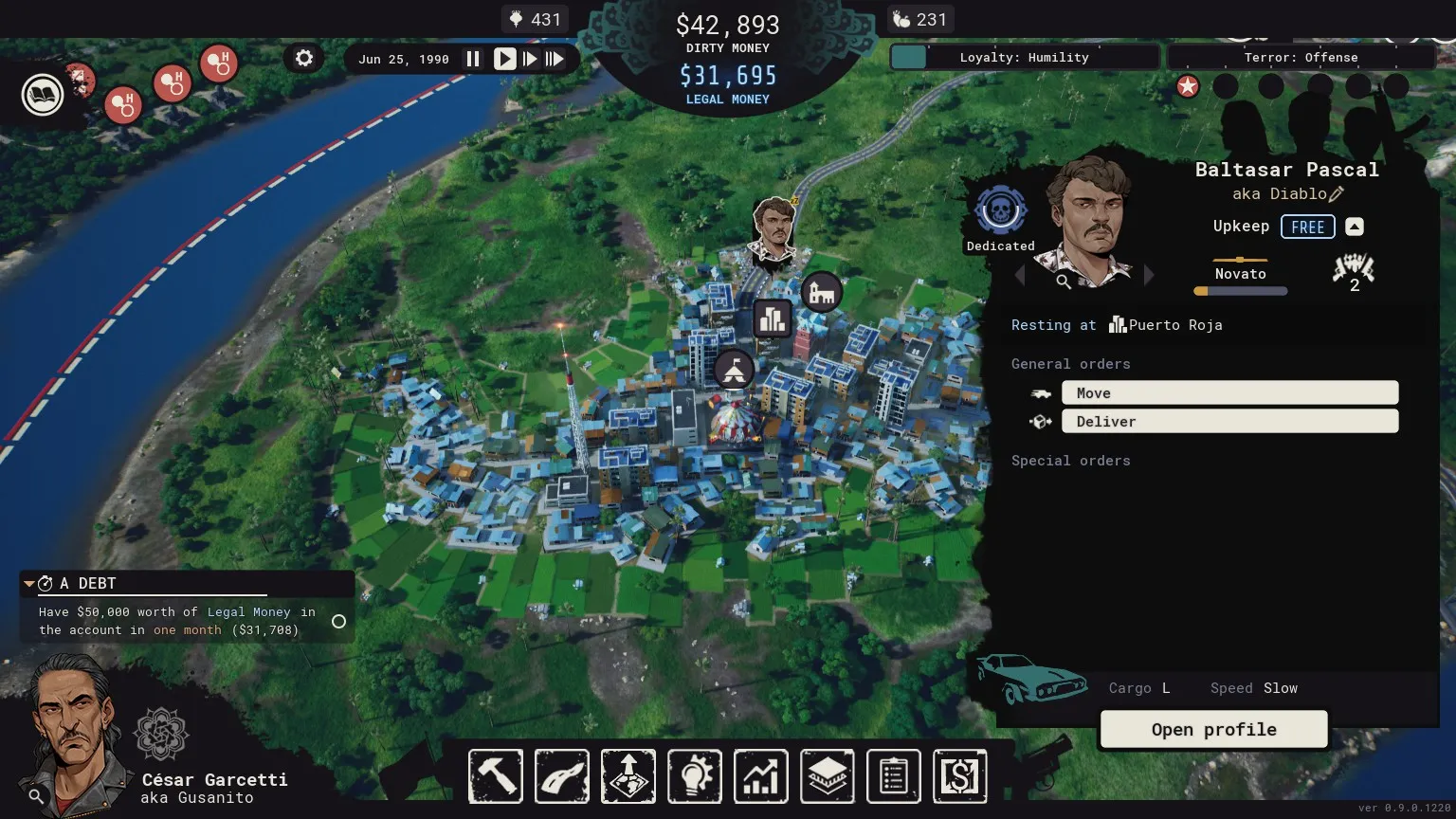
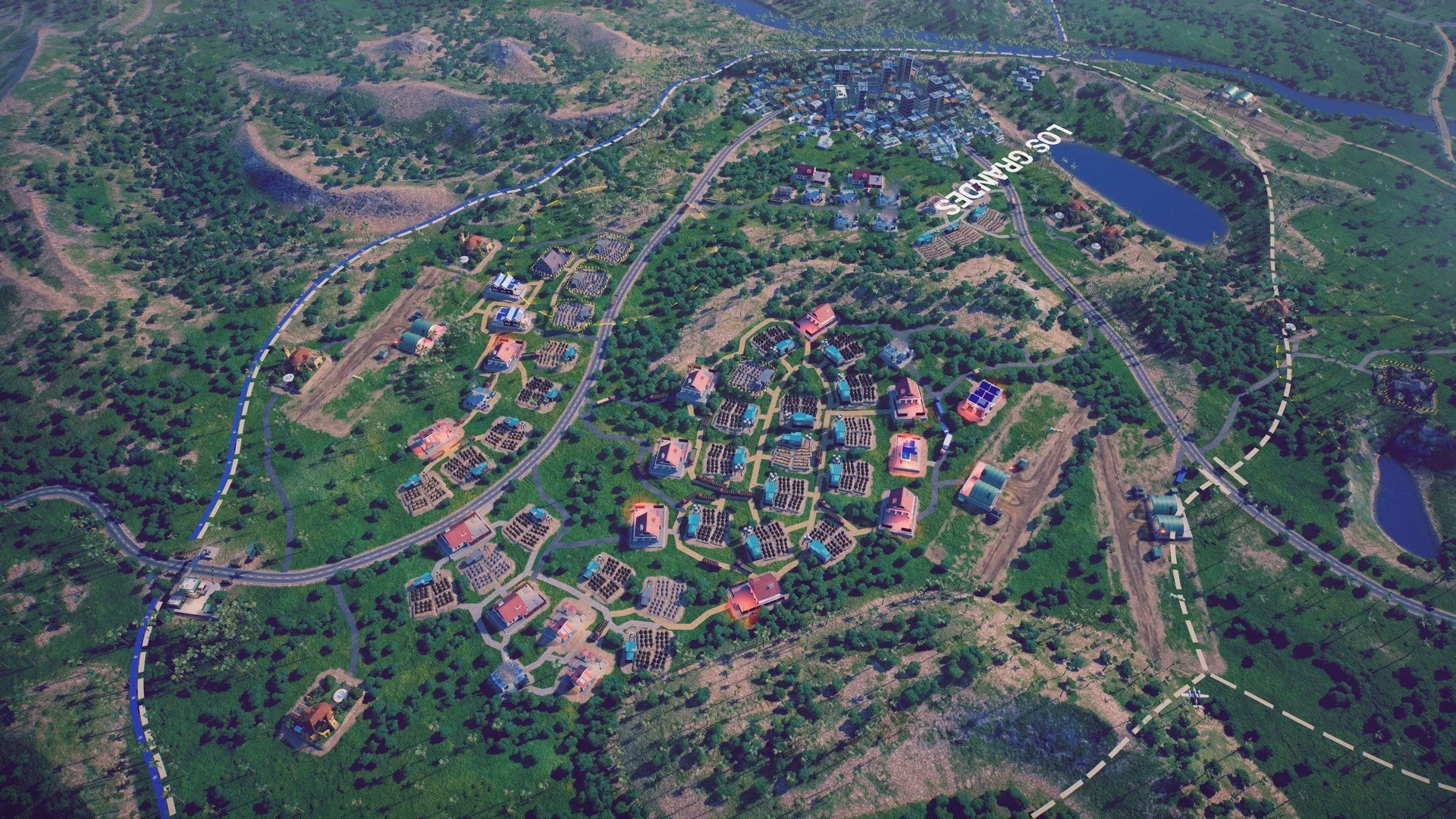
Cartel Tycoon is an exciting drug lord simulator that immerses players in the world of South America, where financial management and negotiation skills are more important than force. As a capo, you will organize the production of illegal substances and create a powerful underground empire, using both loyal and untrustworthy lieutenants. Your task is to develop your business and avoid the attention of law enforcement, which adds an element of strategy and tension to the gameplay.
The game launched in Early Access on Steam on March 18th. Leonid Gorbachev, head of the St. Petersburg studio Moon Moose, and lead game designer Margarita Shapovalova shared with Skillbox their sources of inspiration, plans for the future of the project, and the advantages of working in an indie studio. Indie development allows the team to realize creative ideas and experiment with innovative mechanics, which is especially important in the current gaming market.
"Where else could this happen?"
Cartel Tycoon attracts attention with its unique setting, which transports players to South America at the turn of the 1980s and 1990s, when drug cartels were active in the country. The idea arose from an interest in the complex and fascinating history of the drug trade in this region. We sought to create an atmosphere reflecting the realities of that time, where players would be able to immerse themselves in a world of strategic management and interaction with various characters associated with this business.
Leonid: Initially, we planned to create a game based on the TV series "Breaking Bad". However, later a friend of mine recommended the book "Narconomics" to me. It describes in detail the functioning of modern drug cartels. I learned that these organizations are essentially transnational corporations with all the characteristic features of such structures.
We continued studying references to determine the visual style. First, I looked at the film "Sicario," which is a cold thriller immersive in modern times. Then we watched the famous series "Narcos," which intrigued us with its uniqueness. Its plot stands out from the others, as such stories are rare. The series also has historical romanticism and an impressive visual aesthetic, which makes it particularly appealing to viewers.
We decided not to touch on the theme of Mexican drug cartels, as it is already a hackneyed topic. Instead, we will focus on South America, specifically Colombia and Peru, although the action takes place in a fictional country. These references inspired us to create a story set in South America in the 1980s, because this is where events full of dynamics and contradictions unfold.
Margarita: We definitely drew inspiration from all of this. Our story isn't real; it's more of a pseudo-realism.
The inspiration for games like Cartel Tycoon is varied and interesting. Elements of classic city-building simulators, which allow players to develop and manage their own territories, are also noticeable. The influence of the Tropico series is also worth noting, where the combination of politics and resource management creates a unique gameplay atmosphere. Equally important is the legacy of the criminal empires from GTA: Vice City, which add elements of the criminal underworld and strategy to business management. Cartel Tycoon successfully combines these genres, offering players a deep experience of building and managing a criminal enterprise.
Leonid: We thought deeply about these questions, drawing inspiration from a variety of sources. Among our unconventional references, we single out Tom Clancy's Ghost Recon Wildlands, which had a significant influence on our work.
Our game is the opposite of Wildlands. In Ghost Recon, players liberate territories and eliminate key members of drug cartels. In our game, the situation is different: your cartel members control districts and are under pressure from various intelligence agencies. Your task is to protect your people, as their well-being directly impacts the state of your empire. If you are expelled from a region, this significantly worsens your position in the game.
The game has an impressive A soundtrack that includes compositions by various artists. Why did you choose a compilation approach rather than hiring a single composer to create the musical accompaniment?
Leonid: I was striving for a diverse sound, so I found about sixty bands that performed music in our style and began commissioning their services. From there, I simply monitored the process. If one of the bands created exactly what we were looking for, we continued working with them. If the result didn't meet our expectations, we looked for other options and tried new approaches.
At the beginning of our musical project, we recorded fifteen tracks, each with a unique sound. To achieve this diversity, we continued recording five tracks from each author. This could be a band, a solo artist working in the studio, or an electronic musician creating tracks in Ableton. The diversity of styles and approaches is clearly audible in each piece, and we are completely satisfied with that.
Interacting with lesser-known artists can be challenging. Establishing contact with such artists requires extra effort, as they may not have a wide audience. However, this approach can help discover new talent and identify unique musical styles. It's important to understand that working with lesser-known artists can lead to interesting and original projects that stand out from the mainstream music scene.
Leonid: Depending on the artist, some releases are truly impressive. For example, the group Orkesta Mendoza stands out for their vibrant and memorable albums, which have gained popularity in certain musical circles.
Famous individuals often have difficulty establishing contacts, as they have numerous business connections and are constantly busy with concerts and other events. This limits their availability and makes communication difficult.
Some people simply ignore messages. Many have contacts, but they don’t read Facebook messages or don’t take them seriously. For some, games remain something from a parallel reality, associated with childhood. The last thing they remember is Super Nintendo. At the same time, young people are better aware of modern trends and are more willing to communicate.
Sergio from Mendoza is a wonderful person. He carefully reviewed the entire game and analyzed the visual elements to capture exactly what we needed. A huge thank you to him, the result exceeded our expectations.
The self-isolation pandemic has had a significant impact on the creative activity of musicians. Many of them were unemployed and looking for ways to express themselves, which facilitated active communication and collaboration. Under restrictions, musicians began creating new music, using the time in self-isolation to write and record compositions. This not only helped them stay busy but also became a source of income during difficult times.
"Does it make sense for a small studio to work with a corporation?"
Are you currently developing the game remotely during self-isolation, or have you already returned to the office?
Leonid: We worked in the studio until March 2020, after which we became concerned about the situation and decided to return home. However, thanks to the fact that all our work processes were established through Discord, the transition to remote work was seamless. As a result, we continue to work remotely and have no plans to return to the office at the moment.
We work more efficiently because we avoid time wasted on commutes and unimportant conversations. Our approach is focused on business interaction, which allows us to save time and direct it to the gameplay itself.
The project is truly large-scale. A small team can be perceived as a disadvantage, but in our case it is rather an advantage. Our small team size allows us to make decisions faster, adapt to changes, and collaborate effectively. We can focus on key tasks and maintain a high level of communication, which ultimately contributes to the successful implementation of the project.
Leonid: I have experience working in large pipelines, but we didn't have a practice of starting a project with a large team and then moving on to a smaller one. We always worked in small groups. At Nival, I didn't feel like we were moving faster than on previous projects.
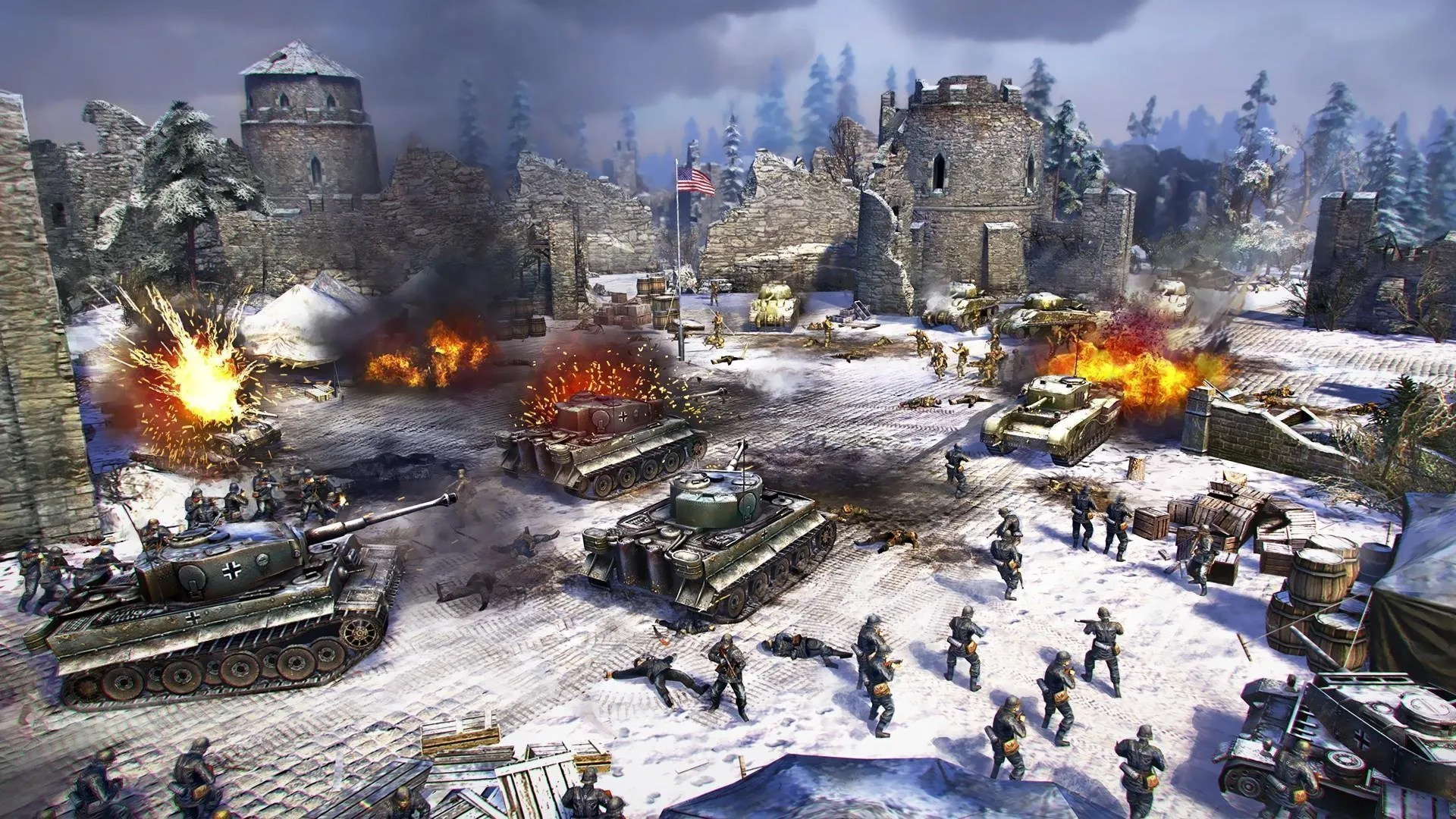
When developing the third part of "Blitzkrieg," forty people were involved. I feel the situation is similar. There's a lack of polish, although there was a lack of it on the previous parts as well. Rit, what is your opinion on this matter?
Margarita: Our team was formed from a larger group in order to focus on small projects. Working in a small team allows us to develop games faster and receive prompt feedback. This approach has become one of the key reasons for our choice.
Work becomes more productive and enjoyable when the team has a friendly atmosphere. Employees in a good mood are able to interact better with each other, which has a positive impact on their results. Creating a comfortable working environment contributes to increased motivation and efficiency, and improves the quality of tasks performed.
Your studio was recently acquired by a major publisher, tinyBuild. What is it like working in a small team under the leadership of such a significant company?
Leonid: Since the publisher acquired us, nothing has changed much. We have simply formalized our relationship more than before. We still have the same comfortable atmosphere as before.
The publisher actively supports us in finding new employees. For studios, especially small ones, the issue of staffing is always a pressing issue. Often, the CEO or producer is forced to handle this independently, which distracts them from other important tasks. However, partnering with tinyBuild allows us to delegate this work to a publisher who is willing to assist in finding qualified specialists. This significantly simplifies the process and allows us to focus on project development.
Partnering with a large corporation can significantly increase the expertise of your small studio. Working within a common framework allows you to ask questions of experienced specialists and receive high-quality answers. This interaction promotes knowledge sharing and a better understanding of the market, making collaboration beneficial for both parties.
Who are you in the world of game development? A mini-course for those who want to make games
On this free mini-course, you will try yourself as a game designer, 2D artist, Unity game developer and choose the profession that is right for you.
Find out more