Contents:
- What types of eating disorders are there?
- Why do eating disorders occur?
- Can eating disorders be fatal?
- How can parents understand that their child has an eating disorder?
- What should parents do? How to talk to a teenager about an eating disorder?
- How to find a specialist to help a teenager with an eating disorder?

Open Day at the Skillbox Digital College Find out about the areas of study, understand the admission issues and get answers to all your questions.
Find out moreWhat eating disorders are there?
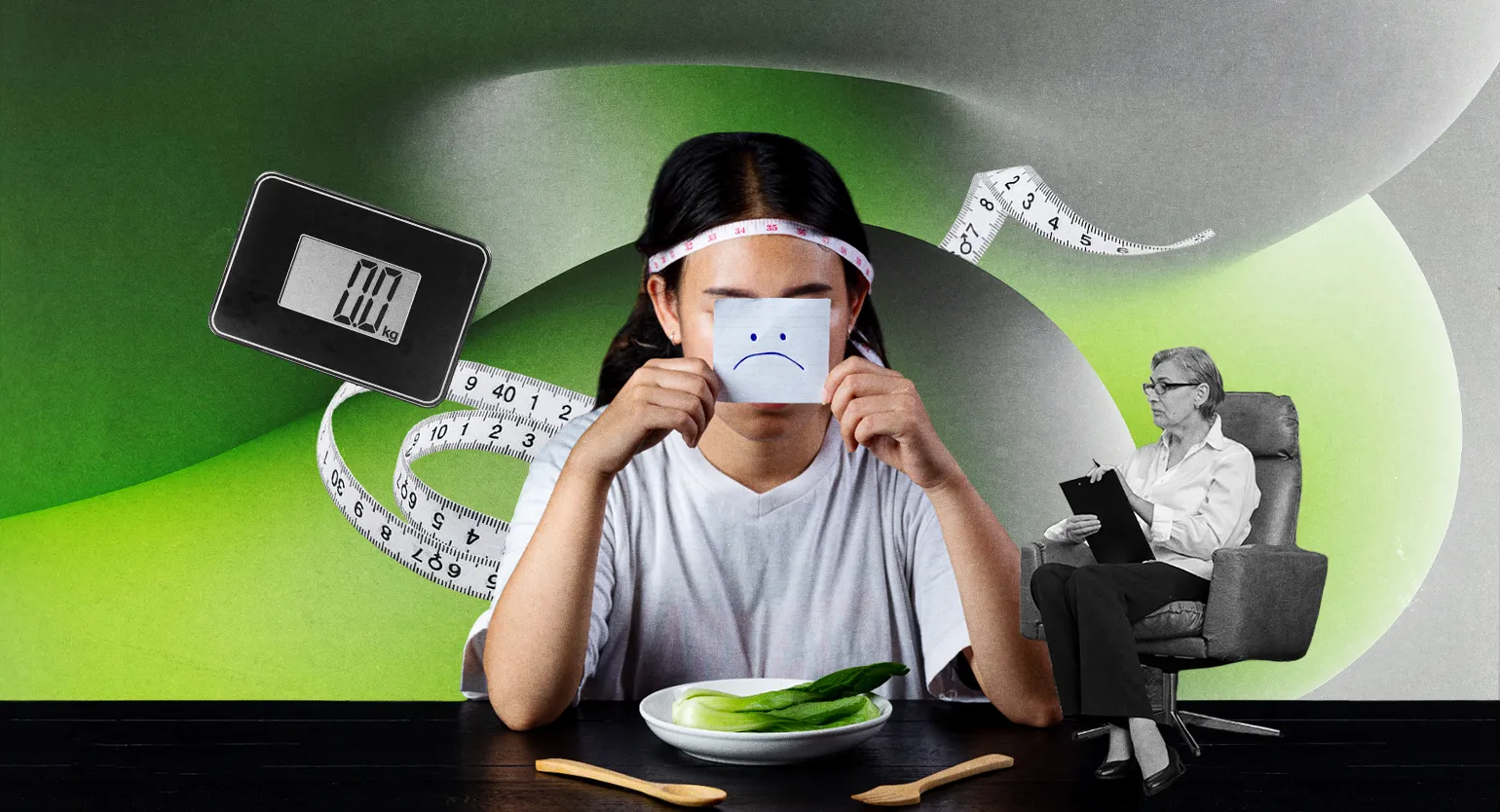
According to the International Classification of Diseases, 11th revision, eating disorders (EDs) are a group of diseases covering various disorders related to food intake and attitude towards one’s body weight. The main types of eating disorders include anorexia, bulimia, and binge eating disorder. These disorders can seriously affect physical and mental health, requiring a comprehensive approach to diagnosis and treatment. Understanding eating disorders and their signs is important for early detection and provision of necessary assistance.
- Anorexia nervosa is a disorder characterized by low body weight that is not explained by another health problem [3]. People often come to this condition because they are afraid of becoming fat and consciously refuse food.
- Bulimia nervosa - a person with this disorder loses control over their eating behavior, begins to eat significantly more than usual, and after eating, tries to get rid of what has eaten - inducing vomiting, using laxatives or enemas, doing intense physical exercise [4].
- Pathological overeating. A person experiences periods of binge eating, feeling unable to stop eating, or limiting the type or amount of food. Unlike people with bulimia, patients suffering from pathological binge eating do not try to purge what they have eaten [5].
- Pathological selective-restrictive food intake - a person eats extremely selectively, limiting themselves in a variety of foods, which can cause weight loss and nutritional deficiencies [6].
Why Eating Disorders Occur
Mental disorders are complex, and to understand them, doctors consider many factors. Key aspects are biological, psychological, and social elements that interact with each other. These factors can influence the onset and course of mental illnesses, which makes their diagnosis and treatment very difficult. A proper approach to understanding mental disorders requires a comprehensive analysis to provide effective care to patients.

Biological factors play a key role in shaping human health and behavior. These factors include genetic predisposition, hormonal changes, infections, and other physiological factors that can influence the development of various diseases and the body's overall health. Genetic factors can determine the risk of developing hereditary diseases, and hormonal changes occurring at different stages of life can have a significant impact on psychoemotional well-being. Infectious diseases are also an important biological factor that can impact overall health and quality of life. Understanding these factors helps develop effective disease prevention and treatment strategies.
- Genetics, family history. If people have a mental disorder, this does not mean that their offspring will also have it. This means that children are predisposed and have a higher risk of developing an eating disorder than those without a family history of the disease.
- Emotional dysregulation and increased emotional instability can lead to eating disorders: teenagers may begin to eat away their emotions or, conversely, eat little due to stress.
- Early puberty, when at 10–11 years old, teenage girls’ figures begin to change, they stand out from their peers and are embarrassed about it, and they may develop hatred of their bodies.
- High body weight in children is a biological risk factor for developing eating disorders in modern culture.
- Unintentional weight loss: as a result of a somatic illness, a child may lose appetite, which leads to weight loss, and then a fear of gaining weight develops.
Psychological factors play a key role in a person’s behavior and perception. They influence decision-making, emotional state, and overall satisfaction with life. Understanding these factors can help in various fields, such as psychology, marketing, and human resources. Emotions, motivation, and cognitive biases shape our perception of the world and how we interact with it. By considering these aspects, we can develop more effective strategies for working with people, improve communication, and increase satisfaction. Psychological factors also play a role in mental health, as they can contribute to the development of stressful conditions or, conversely, promote adaptation and resilience. Awareness and analysis of these factors are essential for achieving harmony and goals in personal and professional life. Perfectionism. Often, adolescents with anorexia nervosa are girls who achieve medals and excellent grades. Physical perfectionism, when a child wants to look perfect, is also worth noting. This is often seen in models, athletes, dancers—those teenagers whose activities are related to body image.
Social factor: visual media presenting extreme thinness as the standard. This aspect has a significant impact on the perception of beauty and health ideals in modern society. As a result of such media formats, stereotypes are formed and reinforced that can negatively impact the mental and physical well-being of people, especially young people. The need to critically think about the content we consume is becoming increasingly relevant in the modern information space.
Can eating disorders be fatal?
According to international databases, eating disorders (EDs) have the highest mortality rate among all mental illnesses. This underscores the seriousness of the problem and the need for careful attention to people suffering from eating disorders.
The main reasons to pay attention to this topic include several key aspects. Firstly, there is a significant impact on quality of life. Improving conditions can lead to increased comfort and safety. Secondly, it is important to consider economic factors. Optimizing processes can reduce costs and increase efficiency. In addition, one should not forget about the social impact. The right decision can strengthen social ties and increase trust. These reasons underscore the need for in-depth analysis and informed decision-making.
- If a person induces vomiting for a long time, the balance of sodium and potassium in the body is disrupted, and this can lead to heart failure.
- Inducing vomiting can lead to bleeding in the esophagus, rupture of the esophagus or stomach, and pieces of vomit can enter the lungs and cause lung infections and pneumonia.
- As a result of malnutrition, osteoporosis (brittle bones) develops.
- Taking large amounts of laxatives impairs kidney function, up to the need for hemodialysis.
- Due to dietary restrictions, people become more irritable, isolated, anxious, and constantly haunted by thoughts of food.
- People with an eating disorder sometimes resort to self-harm and can unintentionally cause fatal injuries to themselves.
- The risk of depression and suicide increases.
How can parents understand that their child has an eating disorder?
- A teenager talks a lot about their weight or figure, and is unhappy with their appearance. This is a signal that it is necessary to clarify the situation and understand what is happening. This is not necessarily a sign of a disorder, but it is certainly a reason for a confidential conversation.
- Changing usual portion sizes, eliminating certain foods: fats or carbohydrates, flour products, sweets. If parents offer food that the child considers harmful, he or she may start crying, getting angry, or even having a tantrum.
- Active and constant calorie counting: the teenager has installed an app and spends a lot of time looking at food packages.
- The child may isolate themselves from the common table and start eating in their room to hide changes in their eating behavior.
- They make themselves vomit.
- They start spending money on pharmaceuticals: laxatives, diuretics.
- The child exercises a lot every day, especially after eating.
- Girls have irregular menstrual cycles. This can be due to exhaustion—you need to pay attention.
- The child has a lot of subscriptions to public pages about weight loss—this can be tracked on social networks.
- The child has started wearing oversized clothes all the time to hide their figure from others. This point is especially worth paying attention to if the teenager has not worn such things before.
- Withdrawal: the child has stopped communicating with other children, with parents, and does not make contact.
- The child looks tired, lethargic, is constantly cold, wraps himself in a blanket, even when it is warm [8].
What should parents do? How to talk to a teenager about an eating disorder?
Psychologists from the Association of Eating Disorder Professionals recommend the following strategies for effectively overcoming problems related to eating habits. These recommendations will help improve the overall health and quality of life of those facing such disorders. It is important to seek professional advice and follow their advice to achieve the best results in treatment and recovery.
Parents need to discuss important topics with their children without avoiding them. An honest conversation about observations and feelings will help the child better understand what is happening. It's helpful to start the conversation with open-ended questions and share your thoughts, like this:
- Name what they observe. For example: "I see that you refuse to eat, constantly count calories, are very lethargic, and have stopped communicating with me and your friends."
- Name the emotions they are experiencing in this situation. For example: "This worries me, it bothers me, I don't understand what's happening."
- Ask: "Can you tell me why you do this?" and listen without judgment or criticism.
- Offer help, such as seeing a psychologist.
If you notice that your child has lost a lot of weight and is experiencing emotional problems, it is important to seek professional help, even if the teenager resists it. People with eating disorders often refuse help due to shame and an unwillingness to admit they have a problem. Consulting a qualified specialist can be an important step toward restoring your child's health and improving their emotional well-being. Don't ignore warning signs, as early intervention can significantly impact their future life.
Physiological changes that occur during adolescence can lead to personality changes. Teenagers with eating disorders often exhibit emotional instability: they may become rude or cry. It's important to understand that such reactions are not intentional attempts to anger parents and should not be dismissed as tantrums. The teenager is experiencing anxiety, suffering, and needs support. Many of them realize how negatively they behaved only after recovery, and may feel regret for their actions.

Schoolgirls from the online school of the European Gymnasium have developed a unique project that allows parents to understand problematic situations through the eyes of teenagers. In this community, parents can learn about teenagers' opinions on various issues and find out what kind of support they expect. The project aims to create a dialogue between generations and improve mutual understanding, which is an important step in solving the current problems of young people.
Don't blame yourself for your child's disorder, as there can be many reasons. It is important to recognize the situation and seek support. One effective way is to reach out to other parents who are facing similar problems. There are support groups where parents can share experiences and get the help they need.
How to Find a Specialist to Help a Teenager with an Eating Disorder
- You need a psychiatrist or a clinical psychologist. A clinical psychologist is the preferred choice because they specialize in disorders, not general psychological problems.
- It is important that the doctor has education, experience, and specialization in eating disorders. This information is typically found on clinic websites or on the personal professional pages of specialists.
Cognitive behavioral therapy (CBT) is the most effective psychological method for treating eating disorders. This approach focuses on changing negative thoughts and behaviors, which helps improve the psycho-emotional state of patients. For qualified help, it is recommended to contact specialists who have experience working with eating disorders, for example, through the Association of Specialists in this field. The use of CBT allows for sustainable results and improves the quality of life for people suffering from such disorders.
The Association has developed a detailed guide dedicated to eating disorders (EDs) in adolescents. This guide contains key answers to the most important questions about EDs, aimed at children, their parents, teachers, and medical professionals. The guide provides valuable information needed to understand and support adolescents facing eating disorders.
Is it worth studying to be a programmer or designer at an online college?
Come to Skillbox for the open day and find out! You will understand which specialties are in demand and how to choose a direction, meet with college representatives and learn how to start working while still studying.
Find out more