Contents:

Want to get into IT? ➞ Join Telegram and take 4 free courses in top IT areas. Find out which field is best for you and take the first step toward a new profession.
Learn moreThis article will provide information on key aspects of the topic. We'll cover the main points that will help you better understand the subject. Read on to learn important details and helpful tips that may be helpful in your practice.
- What are hyperextensions;
- Why are hyperextensions beneficial;
- How to perform hyperextensions on a machine;
- What's special about reverse hyperextensions;
- How to do lateral hyperextensions;
- When can you move on to weighted hyperextensions;
- How to perform hyperextensions at home without a bench;
- What is the difference between hyperextensions and deadlifts;
- What mistakes are important to avoid when performing hyperextensions.
We launched the "How Are You?" Telegram channel, where we share knowledge about self-development, psychology, as well as effective methods of training and career growth at any age in an accessible format. Join us and grow with us!
What is hyperextension?
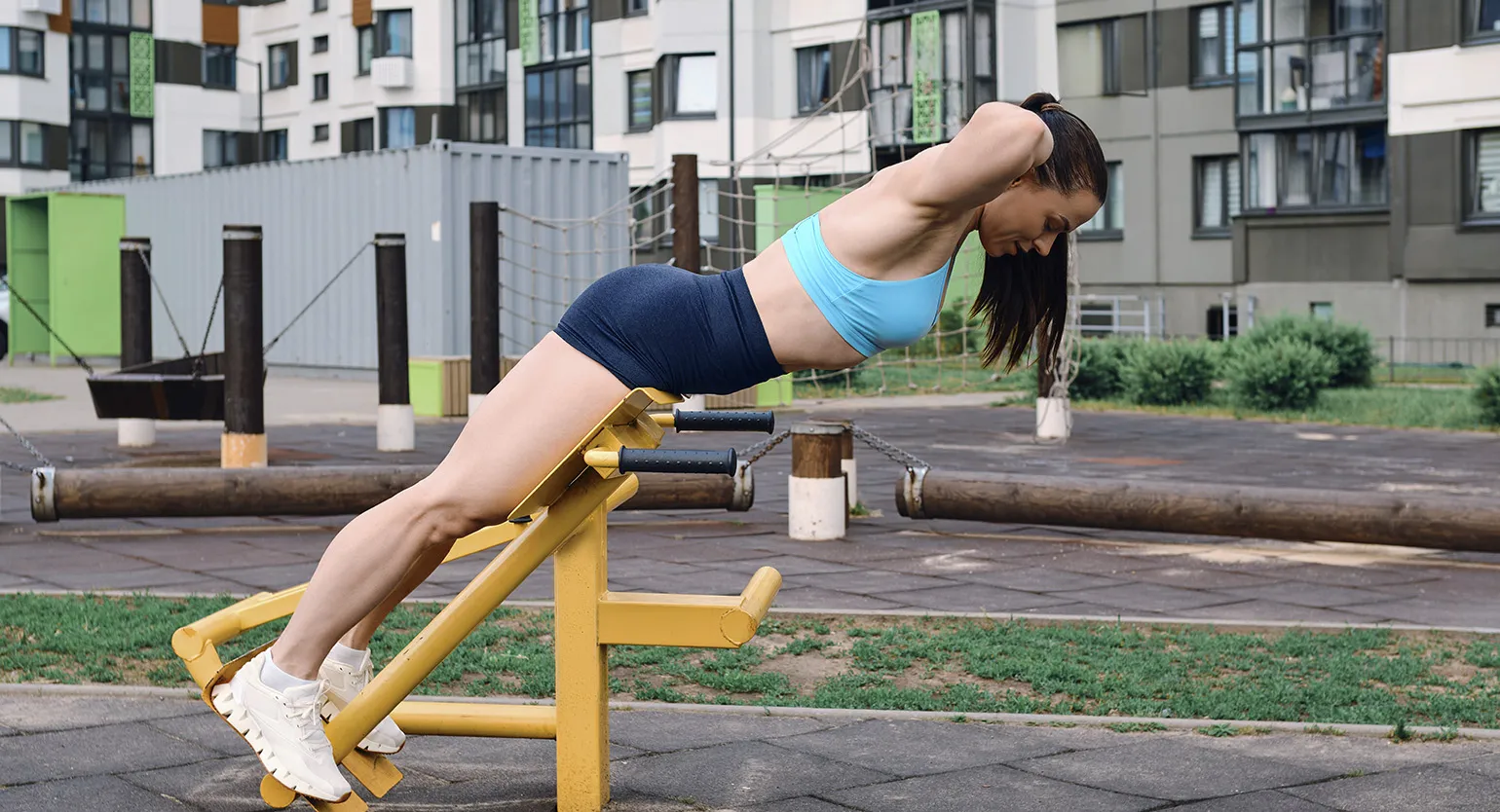
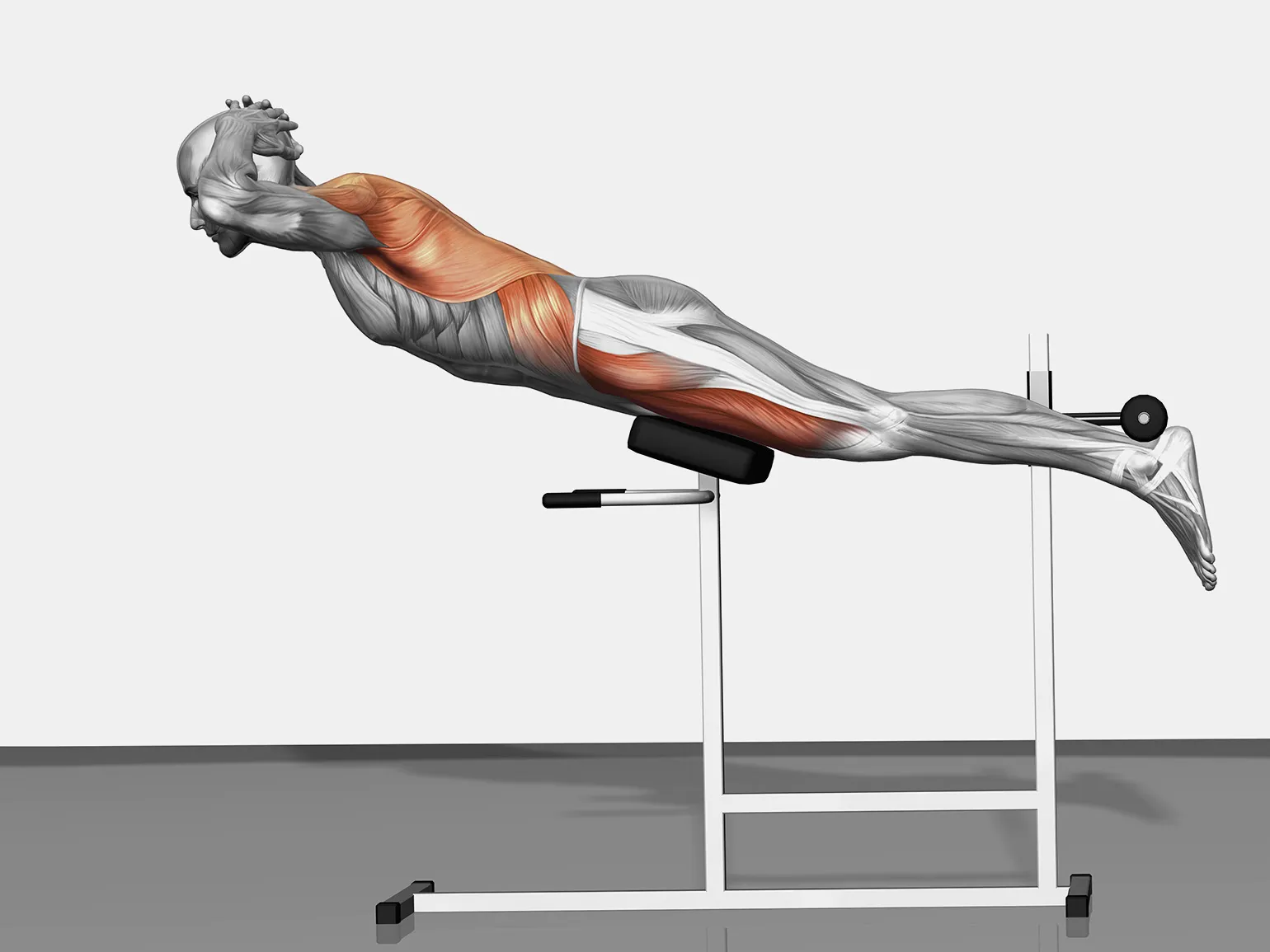
Hyperextension is a bodyweight strength exercise that involves raising the torso from a lying position by extending the back. Although this movement is isolated and primarily involves the hip joint, hyperextensions activate multiple muscle groups. This exercise effectively strengthens the back, glutes, and hamstrings, making it useful for improving posture and preventing injury. Regular hyperextension practice helps develop strength and endurance, and also aids in rehabilitation after back injuries.
Various exercises activate specific muscle groups. For example, squats primarily target the leg muscles, including the quadriceps, glutes, and hamstrings. Push-ups actively engage the pectoral muscles, triceps, and shoulders. Back exercises, such as pull-ups, engage the lats and trapezius muscles. It's also important to focus on the core muscles, which stabilize the body during most exercises, including planks and crunches. Correct exercise performance not only helps build strength, but also improves overall fitness and endurance.
- The erector spinae muscle plays a key role in extending the back and maintaining proper posture.
- The gluteus maximus is the largest muscle in the buttocks, responsible for hip extension and overall lower body strength.
- The hamstrings and calves work in conjunction with the glutes during movement.
- The core muscles stabilize the spine and core during exercise.
- The quadratus lumborum provides stability and extension of the spine.
Benefits of Hyperextension
- Increases range of motion in the spine [5].
- Strengthens the muscular corset [3].
- Improves posture [6].
- Promotes an increase in the volume of the gluteal muscles [7].
- Helps to gain muscle mass in the lower body [4].
- Stabilizes the knee joints [8].
- Reduces lower back pain [9].
This exercise can really help in reducing lower back pain, so it is often included in physical therapy programs. Research conducted by scientists from Saudi Arabia assessed the effects of different types of exercise on pain in this area. The study involved 50 people who were divided into two groups. One group performed back extensions, and the other hyperextensions. Both groups received pain medication and underwent physical therapy. The results showed that participants who performed back extension exercises (hyperextensions) reported more significant pain relief. Thus, hyperextensions may be particularly effective for patients with lower back pain.
How to Perform Hyperextensions on a Machine
The back extension bench, also known as a hyperextension machine, comes in two main variations. This machine is designed to strengthen the muscles of the lower back, buttocks, and hamstrings. Using a back extension bench improves posture, increases flexibility, and reduces the risk of injury during physical activity. Correct execution of exercises on this machine helps develop endurance and strength in the spinal muscles, which is especially important for people leading an active lifestyle or playing sports. Choosing between the two bench options depends on personal preference and training goals.
- A 90-degree bench is also known as a Roman bench. On it, the body is parallel to the floor, which provides maximum load on the lower back. However, exercising on such a horizontal plane is more difficult and requires good motor control.
- A 45-degree bench is designed so that during hyperextension, the body is at an angle. This makes it easier to step onto it. Since the range of motion on the bench is limited, the spine is stretched less, and extensions are easy to perform even for a beginner.
When choosing a hyperextension bench, it is important to consider your level of fitness. Beginners should consider incline benches, which provide comfort and safety, eliminating the risk of injury when performing extensions. Experienced athletes can use flat Roman benches, which allow for a greater range of motion and intensity. Choosing the right bench will help improve results and make your workouts more effective.
Classic hyperextensions can be performed on either a flat or incline bench, with the same technique. Before starting the exercise, it's important to properly adjust the machine to your height: the front pads should be positioned at the hip flexor, and the lower pads should rest just above the Achilles tendon, supporting your feet. Proper equipment adjustments promote optimal exercise performance and reduce the risk of injury.
To effectively complete the exercises, it's important to follow certain steps. First, clearly define the goal and objectives you want to achieve. This will help you focus and avoid unnecessary actions. Then, create a plan that includes all the steps. It's also important to regularly review your progress and adjust as needed to stay on track. Don't forget the importance of analyzing your results after completing your work, so you can identify the strengths and weaknesses of your approach and improve it in the future.
- Lie on the bench facing the floor with your hips on the machine pad.
- Bend your knees slightly and keep your feet in line with your knees.
- Keep your arms in front of you (down and straight) or place them behind your head.
- Inhale and lower your torso to the bottom position. Make sure to keep your head and neck in a neutral position.
- Exhale and lift your torso until your spine is fully straight. Your body should form a straight line as you rise.
- Complete 2 sets of 10 reps.
Hold at the top and bottom of the exercise for 2–3 seconds. This will help increase the effectiveness of your workout, improve control over the movement, and increase muscle strength. Correctly performing holds in these positions promotes the activation of more muscle fibers and improves overall coordination. Regular practice of this technique can lead to significant results in your workouts.
Hyperextensions are an effective exercise that helps develop both the gluteal muscles and the lower back muscles, depending on the body position. To emphasize the glutes, lie on the bench of the machine so that it is located at the lower part of the quadriceps. In this position, the emphasis shifts to the gluteal muscles. If the goal is to strengthen the lower back, you should position yourself so that the bench is at the level of the abdominal muscles. This will engage and strengthen the lower back muscles. Proper hyperextension technique promotes an effective workout and minimizes the risk of injury.
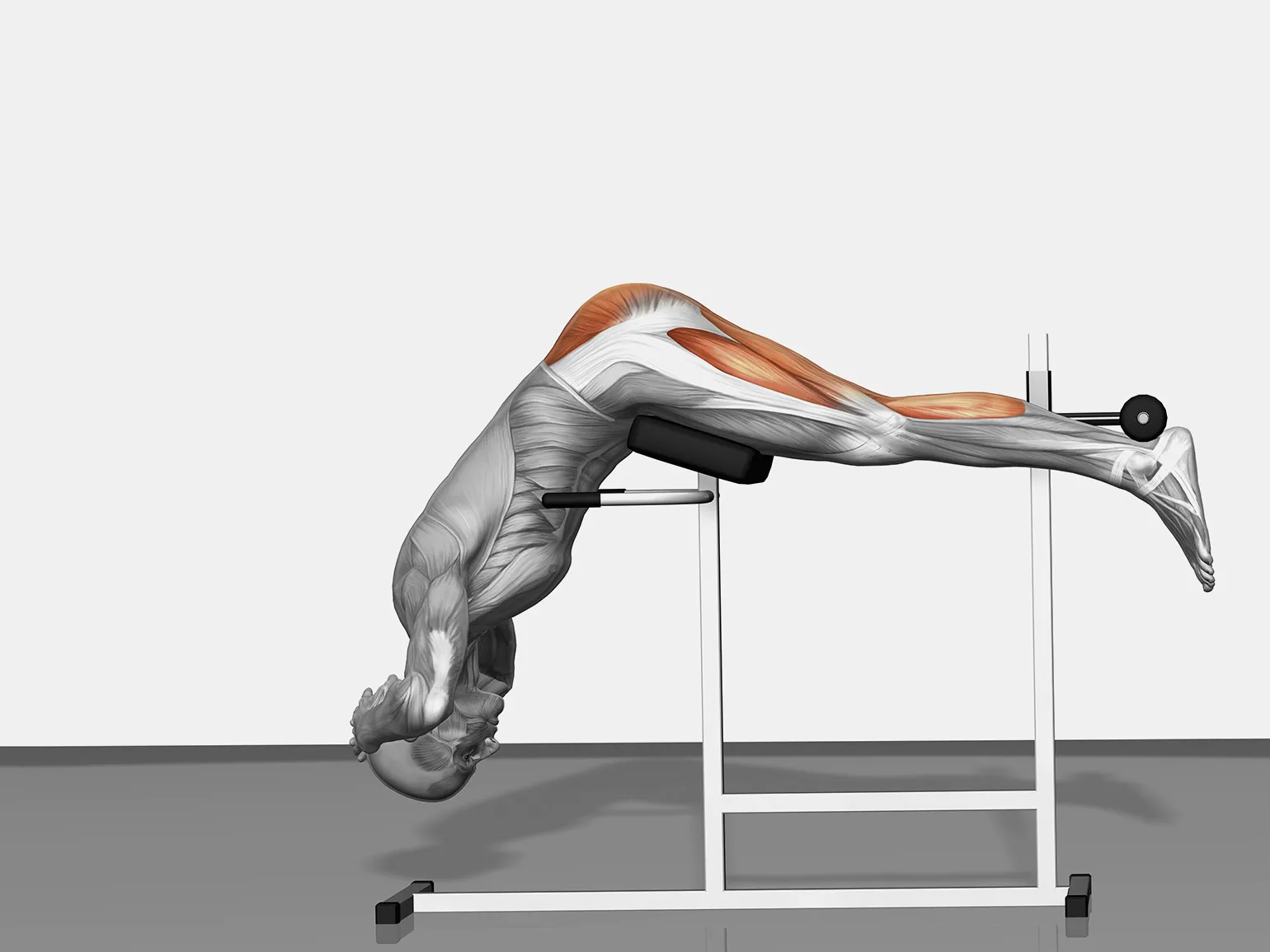
In regular hyperextensions, the legs are fixed, and the torso performs the movement. In reverse hyperextensions, the opposite is true: the machine holds the torso in a stable position, allowing you to bend and straighten your legs. This approach effectively targets the hamstrings and glutes, while also improving lower body flexibility and strength. Reverse hyperextensions are a great addition to workouts that focus on developing the core and strengthening the back.
To complete tasks effectively, it's important to follow a few key principles. First, clearly define the purpose of your work. This will help you focus on the core tasks and avoid distractions.
The next step is to create an action plan. This will help you organize the process and allocate time for each task. It's important to set realistic deadlines and stick to them to avoid procrastination.
It's also worth paying attention to analyzing the work you're doing. Regularly evaluate your results to understand what you can improve in the future. Don't be afraid to adjust your approach and adapt to new conditions.
Also, it's important to stay motivated. Find sources of inspiration that will help you stay focused and productive.
Finally, don't forget about the importance of rest. Quality rest will help you recharge and improve your overall work efficiency. By following these recommendations, you can significantly improve your productivity and the quality of your task performance.
- Lie face down on the bench.
- Grab the handrails of the machine.
- Keep your back straight and raise your legs up, then smoothly lower them to the starting position - your body forms a straight line.
This exercise is effective for strengthening the lateral abdominal muscles. Regular practice of this exercise helps improve tone and strengthen the muscular corset. By strengthening the lateral muscles, you will not only improve your physical fitness but also increase stability and balance, which is important for performing various physical activities. Integrating this exercise into your training program will help achieve noticeable results in developing the abdominal muscles.
To effectively complete this task, you need to follow several key principles. First, it is important to clearly understand the goals and objectives to be achieved. This will help you focus on the necessary actions and avoid unnecessary distractions. Secondly, you should develop an action plan that will include all stages of the task. This approach will help organize the work process and increase its efficiency.
It is also worth paying attention to the resources that may be needed for successful completion. This can include both material support and access to information or the necessary tools. It's important to determine exactly what you need in advance to minimize time spent searching and preparing.
Regular monitoring of the process is equally important. This will allow you to quickly identify potential problems and make adjustments if necessary. It's also worth paying attention to analyzing the results. This will help you assess how successfully the task was completed and identify areas for improvement in the future.
By following these recommendations, you can significantly improve your task efficiency and achieve your desired results.
- Lie sideways on a Roman bench, placing your legs under the support bolster. The pelvis should lie firmly on the pillow, arms crossed on the chest.
- Slowly lower the body to the side until it becomes parallel to the floor.
- Smoothly rise to the starting position.
- Repeat 10-20 times, then change sides.
Maintain core stability while performing the exercises. All movements should be performed exclusively in the lateral plane, avoiding arching in the lower back. This will help prevent injury and ensure an effective workout. Proper exercise technique is key to achieving your fitness goals.
The exercise quickly loses its difficulty, which reduces its effectiveness. To increase the load, it is recommended to use a barbell or a weighted plate placed on your back, or to hold a plate on your chest. This will increase the intensity of your workout and achieve better results.
Tip: The position of your body when performing hyperextensions affects which muscles will be actively worked. If your goal is to develop your glutes, lie on the bench of the machine so that it is at the lower part of your quadriceps. To focus on strengthening your lower back, place the bench at the level of your abdominal muscles. Proper posture will ensure the most effective workout and help avoid injury.
Pay attention to core stability while performing the exercises. All movements should be performed exclusively in the lateral plane, avoiding arching in the lower back. Proper technique will help reduce the risk of injury and increase the effectiveness of the workout.
How to do hyperextensions at home without a bench
Hyperextensions are an effective exercise for training the muscles of the back, buttocks, and hamstrings. However, these muscles can be actively engaged without the use of a machine. There are many alternative exercises that will help develop the strength and endurance of these muscles using only your own body weight or a minimal set of equipment. This can include movements such as bends, pelvic lifts, and various plank variations that emphasize the work of the muscles involved in hyperextensions. This way, you can effectively train these muscle groups anywhere and anytime.
Important! Regardless of the exercise option you choose, pay attention to your posture and balance. Correct posture helps prevent injury and improves the effectiveness of your workouts, while balance promotes coordination and overall fitness. Remember to pay attention to these aspects during your workouts to achieve better results and maintain your health.
- Don't bend your knees — your leg muscles should be tense;
- Don't raise your shoulders — they should be relaxed and straight;
- Keep your back straight — to do this, tighten your abdominal muscles and move only your lower back.
To perform the exercises, you will need a mat and enough free space.
To successfully complete the task, you must follow a certain sequence of actions. First, it is important to clearly understand the goal and objectives that need to be solved. Then, you should collect the necessary materials and information to have a complete understanding of the topic.
Next, it is worth developing a work plan that will help structure the process and not miss important details. At each stage of implementation, it is important to monitor the quality and compliance of the result with the set requirements.
It is also necessary to take into account the time allotted for the task to avoid rushing and preventing mistakes. Upon completion of the work, you should analyze the result and, if necessary, make adjustments.
Following these recommendations, you will be able to effectively and efficiently complete your tasks.
- Lie face down on the mat with your legs straight.
- Keep your arms extended in front of you.
- Raise your torso, pressing your hips to the mat. Keep your head and neck in a neutral position. Hold for 30 seconds.
- Lower yourself to the starting position. Perform 3 sets.
- For a deeper stretch, place your hands on the floor under your shoulders. You can also make the exercise more challenging by bringing your palms close to your body.
After mastering the basic back extension, move on to a more challenging version of hyperextensions on the floor. The Superman exercise involves raising your arms and legs simultaneously, which significantly increases the load on the back and gluteal muscles. This exercise effectively strengthens the core, improves posture, and promotes back strength. Regularly performing the Superman will help you achieve better training results and prevent injury.
How to Perform the Task Correctly
To successfully complete the task, you must adhere to certain steps. First, it is important to clearly define the goal and objectives that need to be achieved. This will help avoid uncertainty and focus on the main thing. Secondly, it is recommended to create an action plan that outlines all the key steps. This will ensure consistency and organization in the work.
Next, you need to gather all the necessary resources and information that may be needed during the task. This may include using specialized tools, studying additional materials, or engaging experts in the required field.
Once all the preparatory steps are completed, you should begin performing the task. It is important to monitor the process and, if necessary, make adjustments to the plan if unforeseen circumstances arise.
After completing a task, it is recommended to analyze the results to identify strengths and weaknesses. This will allow you to improve your approach to future tasks and improve your overall work efficiency.
By following these guidelines, you will be able to complete tasks more effectively and achieve your goals.
- Lie on the mat on your stomach with your legs straight. Stretch your arms straight in front of you. Keep your neck relaxed and in line with your spine.
- Tighten your back muscles and gluteal muscles. Keep your arms extended in front of you.
- As you exhale, lift your hands off the floor, lifting your chest. Simultaneously, lift your legs.
- Hold this position for a few seconds.
- Inhale and return to the starting position. Repeat.
A fitball is an accessible and inexpensive piece of sports equipment that can be easily found in sports stores or ordered online. This budget-friendly alternative to a specialized hyperextension bench allows you to perform both regular and reverse hyperextensions. Using a fitball not only saves money but also adds variety to your workouts, strengthening your back, glutes, and legs. By choosing a fitball, you gain the opportunity to effectively exercise at home or at the gym, improving your fitness. To effectively complete a task, consider several key aspects. First, it's important to clearly define your goal and plan of action. This will help you focus on the core tasks and avoid unnecessary distractions. Second, break the task down into smaller steps, which will simplify the process and allow you to track your progress. It's also recommended to use tools and technology that can facilitate task completion and increase productivity. Remember to regularly evaluate and adjust your approach to adapt to new conditions or emerging challenges. Thus, a systematic and purposeful approach will allow you to achieve successful results in completing any task.
- Kneel with your feet against the wall and place the ball in front of you.
- Lie your stomach down on the ball so that it is near your pelvis or upper thighs. Tighten your core muscles to maintain balance. Place your feet on the floor; you can press them against the wall for stability.
- Spread your feet shoulder-width apart: a wider stance makes it easier, while a narrower stance increases the challenge.
- Place your hands behind your head, touching your ears.
- As you exhale, lift your upper body, straightening your spine. This works the lower back muscles. Rise until the line of your hips, back, and neck is straight.
- As you inhale, slowly lower your body down, relaxing your back. Move in a controlled manner, without jerking.
The further the ball is from the chest, the more difficult it is to perform the exercises. Beginners are recommended to start with the ball under the chest. This will help you better control your movements and reduce the risk of injury.
What is the difference between hyperextensions and deadlifts?
Hyperextensions are a safer exercise for the lower back than deadlifts, as the intervertebral discs are not subjected to strong compression during hyperextensions. However, hyperextensions are less effective for strengthening muscles. If your lower back is sensitive to high loads, it is recommended to choose hyperextensions over deadlifts. In addition, hyperextensions actively engage the hamstrings, while deadlifts are more focused on developing the gluteal muscles. The choice between these exercises should be based on your physical capabilities and training goals.
How to do hyperextensions without mistakes
Hyperextension is translated from English as "overextension". However, it would be more correct to exclude the prefix "hyper", meaning "excessive", since hyperextension in the lumbar region is one of the most common mistakes. The American Sports and Fitness Association (ASFA) warns about this. In this regard, many fitness reference books refer to hyperextensions as "Torso Raises", "Back Extensions" or Back Extensions. Correct execution of these exercises is important for preventing injuries and achieving maximum results in training.
ASFA also recommends the following:
- Begin hyperextensions with a warm-up. Perform a short warm-up - stretching the muscles of the back, hamstrings, neck and chest muscles. This will increase blood flow to the muscles and allow them to more easily withstand the load.
- Breathe correctly. Inhale when bending over, exhale when rising. This breathing helps stabilize the core.
- Consult a professional. If you're new to hyperextensions, it's best to do the exercises with a trainer. If you have low back pain, a physical therapist should supervise your workouts.
Sources of information play a key role in your research and analysis. Proper selection and use of sources will help ensure the accuracy and relevance of the data presented. When working with sources, it's important to consider their type, authority, and degree of reliability. Common categories of sources include primary and secondary materials, as well as peer-reviewed articles and specialized studies. Using a variety of sources allows you to create a more complete understanding of the topic and avoid misrepresentation. Be sure to fact-check and cite your sources, which will enhance the credibility of your content and improve its visibility in search engines.
Delavier F. and Gundill M. present the book "Anatomy of Strength Training for Women", published by Human Kinetics in 2014. This manual covers in detail the anatomical aspects of strength training aimed at women. The book contains illustrations and practical tips that will help improve physical fitness and achieve results in training. "Anatomy of Strength Training for Women" has become an important resource for trainers and fitness enthusiasts seeking to understand how to properly perform strength exercises, taking into account the anatomical features of the female body.
Yagodina V. V., Borodulina M. S., Musina O. I., Ulitin N. V. present a teaching aid on strength training of students to meet the standards of the GTO complex. The publication was published in Yekaterinburg in 2021, prepared by the Ural University, and contains 160 pages of useful information. This manual is a valuable resource for students seeking to improve their physical performance and successfully pass the GTO certification standards. It covers the main aspects of strength training, including methodological recommendations, workouts, and programs, making it indispensable for students and physical education teachers.
Dalnichenko Yu. V. and Prudnik A. A. present the book "Anatomy of Strength Exercises with Augmented Reality", published in Moscow in 2021. The publication covers 160 pages, which thoroughly examine the anatomical aspects of strength training using augmented reality technologies. The book will be useful for both beginners and experienced athletes, as well as coaches seeking to deepen their knowledge of exercise mechanics and improve the results of their students.
In his book "Anatomy of Physical Exercises", M. B. Ingerleib presents a detailed analysis of the anatomy associated with the performance of various physical exercises. The 192-page edition, published in Rostov-on-Don in 2009, covers key aspects of anatomy and physiology necessary for understanding the mechanics of movement. The book is intended for a wide range of readers, including students, coaches, and anyone interested in fitness and a healthy lifestyle. Studying the anatomy of exercises helps improve technique, minimize the risk of injury, and increase training effectiveness. Yaprak Y. conducted a study on the effect of back extension training on back muscle strength and spinal range of motion in young women. The results of the study were published in the journal "Biology of Sport" in 2013, Volume 30, Issue 3. DOI: 10.5604/20831862.1047500. The study highlights the importance of exercise for improving fitness and maintaining spinal health in women. Michaud F., Soto M. P., Lugrís U., and Cuadrado J., in their article "Prevention of Low Back Injuries and Sensitization of Neutral Hip Motion Using Wearable Sensors During Lifting Exercises," explore methods for preventing low back injuries. The paper discusses the benefits of using wearable technologies to monitor and optimize exercise technique. The authors emphasize the importance of maintaining a neutral spine and proper hip motion during lifting. The study was published in the journal Sensors in 2021, Volume 21, Issue 16, Article 5487. DOI: 10.3390/s21165487.
Vetter S., Schleichardt A., Köhler H., and Witt M. conducted a systematic review of the effects of eccentric training on flexibility and strength in healthy samples and laboratory settings. The study was published in the journal Frontiers in Physiology in 2022 and is available at DOI: 10.3389/fphys.2022.873370. This paper examines the results of various experiments that show how eccentric exercise can improve physical fitness and functional performance. This study highlights the importance of eccentric training in sports practice and rehabilitation, as well as its potential use in improving flexibility and strength in individuals without serious medical conditions.
Expand a list is a feature that allows users to see additional items or details hidden in the initial view. This feature is often used on websites and apps to simplify navigation and improve the user experience. By expanding a list, you can access more detailed information, making it a useful tool for organizing content. It also helps avoid page clutter, keeping it clean and user-friendly. It is important to provide an intuitive interface so that users can easily find and expand the elements they need.
Ferber R., Bolgla L., Earl-Boehm J. E., Emery C., and Hamstra-Wright K. conducted a multidisciplinary randomized controlled trial comparing hip and core strengthening with knee muscle training for the treatment of patellofemoral pain. The study was published in the Journal of Athletic Training in 2014, Volume 50, Issue 4, pages 366–377. DOI: 10.4085/1062-6050-49.3.70. This analysis highlights the importance of an integrated approach to rehabilitation and strengthening muscle balance to reduce pain and improve knee joint function.
Maliki N. a. M. a. A. conducted a study on the effectiveness of flexion and extension exercises in the treatment of low back pain. The work was published in the Deleted Journal in 2024, including Volume 3, Issue 1, pages 30–43. DOI: 10.18231/j.ijrimcr.2021.004. This study highlights the importance of physical activity in the treatment of back pain and offers practical recommendations for professionals in the fields of rehabilitation and physical therapy. Flexion and extension exercises can significantly reduce discomfort and improve functional capabilities in patients, making them an important element of a comprehensive approach to treating this problem.
Hyperextensions are an effective exercise for strengthening the back and gluteal muscles that can be performed at home. In this article, we'll cover 13 steps to help you perform hyperextensions correctly without the need for special equipment.
The first thing you need to do is find a comfortable place to practice. This can be the floor or a mat, where you can perform the exercise safely and effectively. Then, to begin, lie on your stomach with your feet together and your arms at your sides. Pay attention to proper body position: your head should be in a neutral position and your neck relaxed.
Lift your upper body using the strength of your back and gluteal muscles. It's important not to arch your back or make any sudden movements. Raise yourself until your body forms a straight line from your head to your feet. Hold the position for a few seconds, then slowly lower yourself back down.
Perform this exercise regularly, increasing the number of repetitions as your muscles strengthen. You can vary your workout by adding weights or changing the incline to target different muscle groups.
Hyperextensions can be included in your training program to improve overall fitness and increase endurance. It is important to pay attention to technique and remember to warm up before starting your workout.
By following these simple steps, you can effectively perform hyperextensions at home and achieve the results you want.
Proper hyperextension technique. American Sports and Fitness Association - ASFA.
Hyperextensions are an effective exercise for strengthening the back and gluteal muscles. To avoid injury and achieve maximum results, it is important to follow proper technique. Make sure your back is straight throughout the movement and your legs remain still. Begin the movement by bending at the hips, lowering your upper body down, then slowly raise it up using your back muscles. Regularly performing hyperextensions will help improve your posture, increase strength and flexibility.
How to make money in IT
Take a simple test to understand which direction in IT suits you best. Master Python and Java, mobile and web development, data analysis, neural networks, testing, and cybersecurity. Write your first programs and create a personal career plan to start in IT.
Learn more