Contents:

Free test: which digital profession is right for you? Find out the answer in 15 minutes and try your hand at a new specialty.
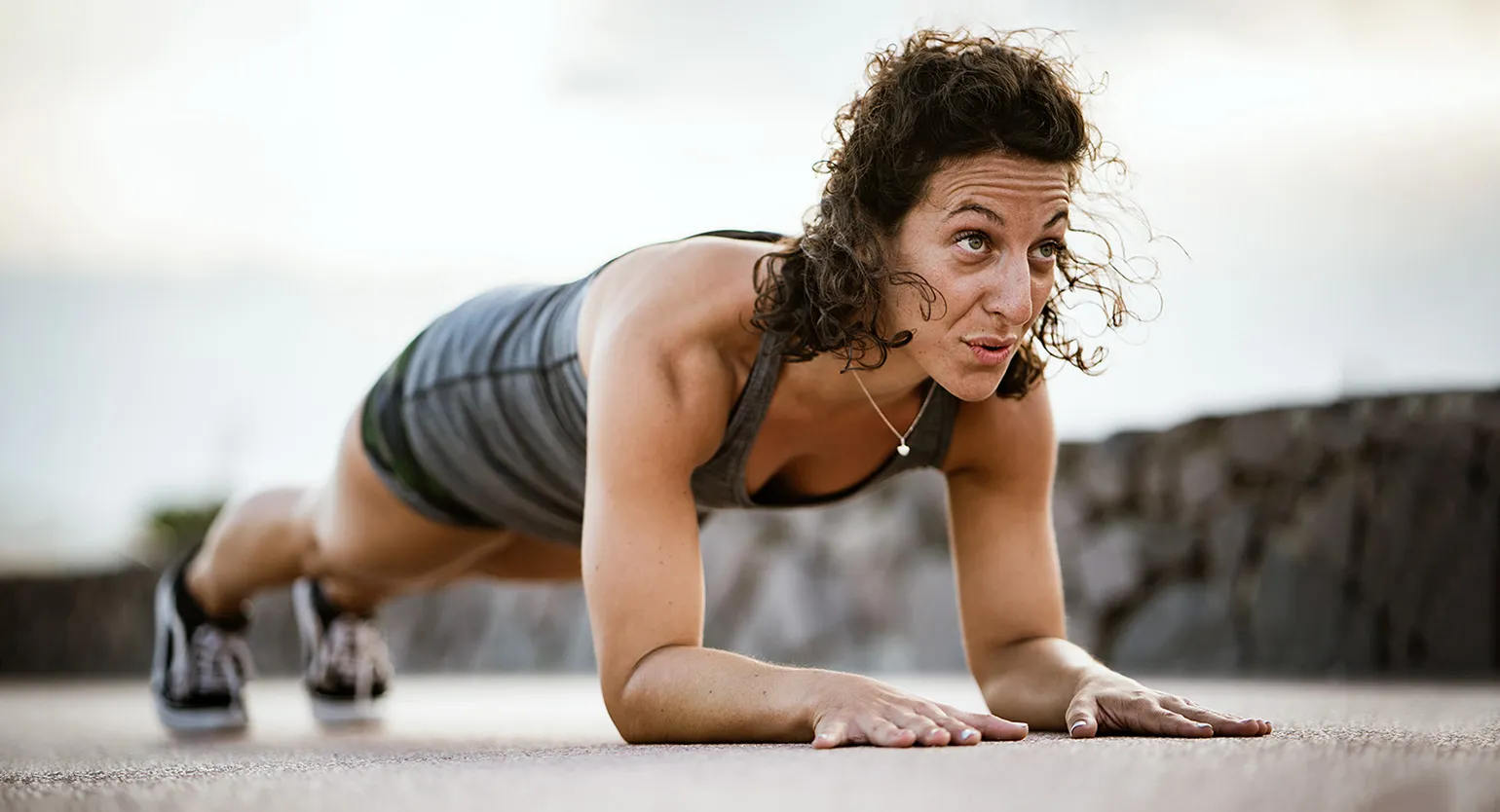
Find out moreWhat is a plank?The plank is an effective exercise that resembles the initial phase of a push-up. In this exercise, the body is held in a horizontal position, resting on the forearms or palms and toes. The main goal of the plank is to maintain an upright body position, preventing arching in the lower back and lifting the pelvis. Regularly performing the plank helps strengthen the core muscles, improve posture, and increase endurance. This exercise is suitable for people of various fitness levels and can be easily incorporated into any training program.
This exercise does not involve dynamic movement, but muscle tension is required to maintain a given body position. The process of stretching muscle fibers that occurs during the plank is known as isometric muscle contraction. This is an effective method for strengthening the muscular corset and improving overall physical fitness. Regularly performing planks helps develop strength, endurance, and stability, which positively impacts posture and reduces the risk of injury. Proper plank technique is important for achieving maximum benefits and preventing strain.
The Benefits of Planks
Dr. Glenn Wright, a professor of exercise science at the University of Wisconsin, emphasizes the importance of the plank exercise for training the abdominal muscles. He claims that the plank develops essential muscles by helping to resist spinal movement, which is especially important in situations like wrestling. This exercise also helps strengthen the lumbar region, which is important for maintaining proper posture and preventing injury. Incorporating the plank into your workout routine helps improve fitness and endurance, making it an essential part of an effective fitness program.
Dr. Ginger Gottschell of the University of Pennsylvania claims that performing the plank is more effective than crunches because it activates the body's muscles in three dimensions, from the hips to the shoulders. While crunches primarily focus on the abdominal area, the plank provides a comprehensive workout that engages multiple muscle groups, which helps improve overall fitness and core stability. Choosing the plank as your primary exercise can significantly enhance the effectiveness of your workout and help you achieve your fitness goals.
The plank is an effective exercise that helps strengthen your core muscles, improve your posture, and increase overall physical endurance. This static exercise activates multiple muscle groups, including the abs, back, shoulders, and glutes, making it a useful part of a comprehensive workout. Regularly performing the plank can lead to improved core stability, a reduced risk of injury, and enhanced athletic performance. In addition, the plank helps develop strength and flexibility, which is important for performing other physical exercises. Incorporating the plank into your workout routine will be a great step towards achieving your fitness goals.
- Strengthen your core muscles [2];
- Prevent and reduce lower back pain [3];
- Reduce stress on joints [4];
- Prepare your body for sports activities [4];
- Increase the effectiveness of your workouts [5];
- Minimize the risk of injury [6];
- Improve your posture [4].
Read also:
Strength training is a physical activity aimed at developing muscle mass and strength. It includes exercises using your own body weight, free weights, and machines. The benefits of strength training include improved physical fitness, increased metabolism, stronger bones and joints, and improved overall well-being. Regular exercise helps reduce the risk of cardiovascular disease, diabetes, and other chronic diseases.
However, if performed incorrectly or if overexerted, strength training can lead to injury. It is important to follow proper exercise technique and focus on your physical capabilities. For best results, it is recommended to start with basic exercises, gradually increasing the intensity and volume of training.
To exercise correctly, it is worth paying attention to the following aspects: creating an individual training program, regularity of training, proper nutrition and recovery. Equally important is consulting a trainer or fitness professional for advice on exercise technique and creating a training plan. Strength training can be beneficial for people of all ages and fitness levels if performed wisely and with the necessary precautions.
What muscles does the plank work?
The plank activates not only the abdominal muscles, but also the stabilizing muscles of the entire body. This exercise helps strengthen the corset, improving overall stability and coordination. Regularly performing the plank helps develop strength, endurance and maintain proper posture. The plank also effectively engages the muscles of the back, shoulders and legs, making it a universal element of training for the whole body. Incorporating the plank into your training regimen promotes more harmonious muscular development and improves overall fitness.
- The rectus abdominis is responsible for stabilizing the core, maintaining an upright body position, and creating a six-pack. This is the main muscle that is trained in the plank.
- Internal oblique abdominal muscle - stabilizes the core, helps and participates in torso rotation.
- External oblique abdominal muscle - works together with the internal oblique muscle, protecting the spine from excessive strain.
- Transverse abdominis muscle - lies in the deep layer of abdominal muscles, acts as a corset, tightening the abdominal wall and stabilizing the lumbar spine.
- Gluteus maximus muscle - maintains the alignment of the pelvis and legs, prevents sagging of the hips, enhancing overall stability.
- Quadriceps - the quadriceps muscle of the thigh, in the plank keeps the legs straight and stable, helps stabilize the pelvis so that it does not drop down, and the lower back does not experience overload due to excessive deflection.
- Low back muscles - keep the spine in a neutral position, preventing Rounding or arching of the lower back.
- The anterior deltoid is the shoulder muscle that helps support body weight in the plank position by stabilizing the shoulder joints.
- The serratus anterior is located along the ribs and stabilizes the shoulder blades, preventing them from "sticking out" (winging).
- The pectoralis major is involved in stabilizing the shoulder girdle and keeping the upper body in the correct position.
- The trapezius is responsible for controlling the position of the shoulder blades and neck, preventing strain in the upper back.

9 Types of Planks You Can Do at Home
The plank isn't just a static position, but a universal exercise that allows you to effectively train various muscle groups. There are many variations of the plank, each designed to work out specific muscles and is suitable for athletes with different levels of training. Beginners can start with the basic version, while experienced athletes will find more challenging variations that will improve strength and overall fitness. The plank helps develop stability, strength, and endurance, making it an essential training tool for anyone looking to maintain an active lifestyle.
The classic plank is one of the simplest and most effective exercises for strengthening the core muscles. At first glance, it may seem like just getting into this position and holding it there is enough, but to achieve maximum results, it is important to consider several key points. Proper technique, breathing control, and holding time all significantly affect the effectiveness of the exercise. By mastering the plank, you will not only strengthen the abdominal, back, and shoulder muscles but also improve overall fitness and body stability.
Technique implies a sequence of actions aimed at achieving a specific goal. Precision and accuracy in each step are essential. Start by preparing the necessary tools and materials. Provide a comfortable working environment to avoid distractions. Then, follow clear instructions, paying attention to detail. Regular practice will help improve your skills and increase your confidence in performing the task. Pay attention to safety, using protective equipment if necessary. A meticulous approach to technique will help you achieve excellent results and avoid mistakes.
- Lie face down. Extend your legs back, placing your feet hip-width apart and pressing your feet firmly into the floor. Place your elbows directly under your shoulders, and your forearms parallel to each other.
- Raise your torso, supporting yourself on your forearms and toes. Straighten your body in a line from the top of your head to your heels. Do not lift your head up or down. Look slightly forward. Keep your shoulders relaxed, not pressing them toward your ears. Straighten your legs, and pull your heels back slightly.
- Tighten your abs and draw in your stomach to avoid sagging in the lower back. Keep your knees straight and your hips level with your body. Tighten your buttocks slightly to avoid the "triangle" where your pelvis rises or sags [7].
Tips for Improving Content Quality
To create quality content, you need to consider several key aspects. First, it is important to identify your target audience and understand their needs. This will help you create material that will be interesting and useful to readers.
Secondly, the structure of the text plays a vital role. Ease of perception depends on logical structure and clear formatting. Use headings and subheadings to highlight key points, which will make it easier to navigate the text.
Also, pay attention to keywords. The correct selection and use of SEO-optimized phrases will help increase the visibility of your content in search engines. Don't forget about meta tags and descriptions, which also affect ranking.
Finally, don't forget to check grammar and style. Clear language and the absence of errors create a positive impression and trust in your content. Regularly updating information and analyzing reader feedback will help maintain the relevance and high quality of your material.
- Don't hold your breath. It may seem that holding your breath makes the plank easier. But breathing is essential! Simply try exhaling in small bursts [4].
- If your palms hurt when in contact with the floor, clench them into fists and place them so that only your little fingers touch the floor. This will reduce the pressure on your wrists [4].
- If it is difficult to hold up your head, bend your neck slightly and rest your head on your hands. This will reduce the load on the cervical spine [4].
The straight-arm plank is a modification of the classic version of this exercise. In this variation, the support is not the forearms, but straight arms, which allows you to significantly increase the load on the upper body. This exercise effectively develops strength and endurance of the shoulders, chest and triceps. Regularly performing the straight-arm plank helps to improve overall fitness, increase core stability and strengthen the muscular corset.
Technique is a key aspect that determines the effectiveness and safety of exercises or processes. Correct technique ensures maximum performance and minimizes the risk of injury. It is important to pay attention to each stage of the exercise, from preparation to completion. It is important to take into account anatomical features, as well as individual physical capabilities. It is recommended to start with basic exercises, gradually increasing the difficulty and intensity. Constantly monitoring your technique will help achieve better results and maintain health.
- Get on all fours on a soft mat or floor. Place your hands shoulder-width apart, palms firmly pressed to the floor. Straighten your legs and rest your toes on the floor.
- Raise your body so that it forms a straight line from head to heels. Tighten your abdominal muscles to avoid arching your lower back.
- Keep your arms straight, do not bend your elbows. Distribute your weight evenly between your arms and legs. Breathe evenly and deeply, do not hold your breath.
Tips for improving work efficiency and time management will help you achieve your goals and increase productivity. Start by clearly planning your daily tasks using to-do lists or calendars. Set priorities to focus on the most important things. Break large tasks into smaller steps to make them more manageable.
Create a comfortable workspace by minimizing distractions. Use time management techniques, such as the Pomodoro Technique, to help you focus on work during specific intervals. Take regular breaks to maintain your energy and concentration.
Don't forget about learning and self-development. Read books, take courses, and participate in webinars to expand your knowledge and skills. Implement this knowledge into your practice to improve results.
Communication with colleagues and your team also plays a key role in increasing productivity. Discuss ideas, share experiences, and support each other in achieving common goals. Follow these tips, and you will notice positive changes in your work and time management.
Use an exercise mat or towel for a comfortable workout and to prevent elbow discomfort. These accessories create a soft cushion, reducing pressure on joints and ensuring safer and more effective workouts. Proper use of a gymnastics mat or towel will help you avoid discomfort and focus on performing your exercises.
This is an effective exercise for strengthening the lateral back muscles and oblique abdominal muscles. It not only increases strength but also improves balance, making it beneficial for overall fitness. Regularly performing this exercise will help develop muscular endurance and improve posture, which in turn will positively impact your health and athletic performance.
Technique is a key aspect that determines the effectiveness and safety of performing certain actions or exercises. Proper technique helps avoid injury and achieves maximum results. To successfully complete any task, it is important to pay attention to details such as body position, arm and leg movements, breathing, and tempo. In any activity, be it sports, dance, or even everyday tasks, maintaining proper technique is fundamental. This not only improves the quality of your execution but also promotes faster learning and skill development. It's always worth remembering that perfect technique is the key to success and progress.
- Lie on your side, keeping your body in a straight line.
- Bend your lower arm at the elbow, placing it directly under your shoulder for secure support. You can clench your palm into a fist or leave it flat. For stability, place your feet one in front of the other.
- Raise your torso, supporting yourself on the elbow of your lower arm and the edge of your lower foot. The top hand can be kept on the hip, extended upward, or bent behind the head for added control [4].
Tip:
To achieve optimal results in any endeavor, it is important to plan your actions carefully. Take the time to research and analyze information to make informed decisions. Use the tools and resources available in your field to increase your effectiveness. Don't forget the importance of feedback, which will help you course-correct and improve your skills. Regularly update your knowledge, monitor trends, and adapt to changes. This will allow you to remain competitive and achieve your goals. Keep your hips square and avoid sagging. Proper posture is important for health and prevents injury. Make sure your hips are level, which helps distribute the load better on your joints and spine. Regular strengthening exercises will help maintain proper hip alignment and improve overall fitness. The reverse plank is an effective exercise for training the back, glutes, hamstrings, and shoulders. This exercise strengthens the core muscle groups, improves posture, and increases overall physical endurance. Incorporating the reverse plank into your workout routine helps develop strength and flexibility, and also engages the core, which is important for maintaining stability and preventing injury. Regular practice with the reverse plank will help you achieve noticeable results in shaping a beautiful figure and improving athletic performance.
Technique is key to achieving high results in any activity. Correctly performing tasks and exercises helps improve skills and increase efficiency. It is important to pay attention to detail, master the sequence of actions, and take into account individual characteristics. Using the correct methods helps avoid mistakes and minimize the risk of injury. A conscious approach to technique helps not only improve skills but also develop self-confidence. Effective technique requires regular practice and self-control to achieve maximum results.
- Sit on the mat with your legs extended in front of you, keeping your feet together. Place your hands behind your back, shoulder-width apart.
- Place your palms so that your fingers point toward your heels.
- Squeeze your gluteal muscles and lift your pelvis, raising your torso. Keep your body straight - from head to toe.
Tips for improving your life can significantly improve the quality of your daily existence. Start by setting clear goals that will help you focus on what really matters. Regular physical activity not only improves your physical condition but also boosts your mood. It's also important to pay attention to proper nutrition, as it directly impacts your energy levels and overall well-being. Don't forget about getting enough sleep, as it plays a key role in the body's recovery.
Social connections are also crucial for mental health. Connecting with loved ones, friends, and colleagues helps reduce stress and improve overall well-being. Make time for hobbies and interests to take a break from the daily routine and recharge with positive emotions.
Time management is an essential aspect of a successful life. Use planners and task management apps to manage your time effectively. Continuous self-education and skill development will allow you to grow as a person and a professional.
By following these simple tips, you can create a more harmonious and satisfying existence.
- Keep your head in a neutral position - do not throw it back or press it to your chest.
- Straighten your shoulders, not allowing them to reach towards your ears. Point your heels slightly forward to feel the work of the back of your thighs.
This exercise combines elements of the classic plank and yoga practice. It helps strengthen the core muscles, improve flexibility and concentration. Regularly performing this exercise helps to improve posture and overall physical fitness.
The technique involves consistently following certain steps that ensure high-quality results. First of all, you need to prepare all the necessary tools and materials. It is important to pay attention to correct posture and hand position to avoid injury and ensure the effectiveness of the process.
The next stage is performing the basic movements. They should be smooth and controlled. Regular practice will help you improve your skills and achieve the required level of mastery. Pay attention to details, as they can significantly impact the final result.
After completing a task, analyze the completed task. This will help you identify mistakes and identify areas for future improvement. Careful study of the technique will not only improve the quality of your work but also significantly speed up the process.
- Start in a forearm plank position.
- Raise your hips so that your body forms an inverted V or triangle. Tighten your muscles.
- Press your forearms into the mat and squeeze your shoulders, then clasp your hands behind your head.
- Once your hips are at their highest point, lower your back to a standard plank position.
- Repeat [8], [9].
Tips for Improving Your Content's SEO
Optimizing your content for search engines is a key aspect of successful online promotion. To achieve high rankings in search results, you need to consider several important factors. First, choose relevant keywords that match the topic of your text and the interests of your audience. Integrate them naturally into headings and body text so as not to interfere with readability.
Second, create unique and high-quality content. Search engines value original materials that offer useful information. Write for your target audience, answering their questions and solving their problems. Structure the text with subheadings, lists, and highlights, which will make it easier to read.
Don't forget to optimize meta tags, such as the page title and description, which should contain keywords and attract users' attention. It is also important to ensure fast page loading and responsive design for mobile devices, as this affects user behavior and, consequently, search engine rankings.
Regularly update your content, adding fresh information and removing outdated data. This will not only improve your SEO but also help retain audience interest. By following these tips, you can significantly increase the visibility of your site and attract more targeted visitors.
- Try not to put too much weight on your hands. To balance the load between your head and feet, direct your hips up and slightly back.
- If desired, rest the crown of your head on the mat between your elbows.
This is an active plank variation that helps increase endurance and improve coordination.
Technique is a key aspect in achieving high results in any activity. Correct technique allows you to minimize the risk of injury and increase the effectiveness of your actions. Whether it's athletic exercise, artistic crafts, or professional activity, understanding and following proper technique is crucial.
The basic principles of technique include the sequence of actions, proper load distribution, and attention to detail. For example, in sports, it's important to pay attention to posture, breathing, and rhythm of movements. In crafts, precision and accuracy are essential to achieve the desired result.
To improve technique, it's recommended to conduct regular training, analyze your actions, and adjust them based on the results. Feedback from experienced professionals can significantly accelerate the learning process and skill improvement.
Maintaining proper technique not only contributes to improved results, but also helps develop self-confidence, which is an important aspect in any field of activity.
- Assume a classic plank position.
- From the plank position, jump, spreading your legs apart.
- Land on your toes without changing your body position.
- Immediately jump, bringing your legs together and returning to the starting plank.
Tips for effectively using resources and improving productivity can significantly help you achieve your goals. To optimize your efforts, it's important to adhere to several key principles. First, set clear and measurable goals, which will allow you to track progress and adjust your actions. Second, use planning and organization to rationally allocate time and resources. This also includes prioritizing tasks, which helps you focus on the most important aspects.
Also, don't forget to regularly analyze your results. This will allow you to identify successful strategies and adjust ineffective approaches. Maintaining a balance between work and rest is important, as it positively impacts productivity and overall well-being. Using these tips will help you achieve success more effectively and purposefully.
- Exhale when jumping with leg extensions, inhale when returning to the starting position.
- If jumping is difficult, replace them with alternate leg extensions without jumping.
This position is also known as a hip plank. It is an effective exercise for training the core muscles, hips, and shoulder girdle. Correct execution of the hip plank helps improve core stability and strength, and also promotes the development of motor coordination. This exercise is suitable for various fitness levels and can be included in any training plan.
Technique is an important aspect of achieving quality results in any activity. Correct technique helps avoid mistakes and increases work efficiency. When learning new skills, it is necessary to pay attention to every step of the process to achieve maximum results.
Particular attention should be paid to details, as they can significantly impact the final result. It is essential to study the basic principles and recommendations regarding the technique. This will not only improve the quality of your work but also reduce the time it takes to complete tasks.
Regular practice and self-monitoring will allow you to master the technique more quickly and make it part of your professional work. It is important to remember that constant improvement and striving for better results are key factors in achieving success. The key to success.
- Take the classic plank position on straight arms or forearms.
- Smoothly rotate your hips to the right, lowering them as close to the floor as possible.
- Return to the starting plank.
- Repeat the movement to the left [8].
If you experience discomfort, avoid touching your hips to the floor. Gradually increase the angle to achieve a comfortable position.
This dynamic exercise, starting from a standing position and including moving into a plank with alternating knee pulls, is excellent for strengthening your core muscles and improving coordination. This exercise not only develops strength but also helps improve endurance and flexibility. It effectively activates major muscle groups, making it an ideal element of a comprehensive workout.
Execution technique requires consistent and correct execution of each stage of the process. To achieve optimal results, it is important to pay attention to detail at each step. Start by preparing the necessary equipment and materials. Then proceed to the main actions, following the established instructions. Do not forget to monitor the quality of execution at each stage to avoid errors and shortcomings. After completing the process, conduct a final check and evaluate the achieved results. Correct execution technique not only increases work efficiency but also helps improve skills.
- Stand straight, feet slightly narrower than hip-width apart.
- Bend forward at the waist and place your palms on the floor.
- Slowly move your arms forward until you assume a classic plank position.
- Keeping your hips in line with your shoulders, pull your right knee to your chest. Hold for 1–2 seconds.
- Return your leg to the plank.
- Repeat the movement with your left knee.
- Slowly walk your arms back, bringing them closer to your feet.
- Smoothly rise through the rounding of your back to the starting standing position.
Tip: Start with a slow tempo to perfect your technique. This will help you better understand the movements and avoid injury. Gradually increase the speed, maintaining proper form. Proper technique is the key to achieving success and improving results. Regular training with an emphasis on a slow tempo will help you consolidate your skills and prepare your body for more intense loads.
How long should you hold a plank?
The duration of holding the plank position varies depending on your goals and fitness level. If your goal is to develop strength and endurance, it is recommended to hold the plank for 30 seconds to 1 minute. For more experienced athletes looking to improve their results, the hold time can be 1-2 minutes or more.
It's important to remember that when performing a plank, the quality of your execution is paramount. Proper technique will help prevent injury and maximize core muscle development. Beginners should start with 20-30 seconds, gradually increasing the time as their muscles strengthen and their fitness improves.
Regular plank practice not only strengthens the abdominal, back, and shoulder muscles, but also helps improve overall physical endurance and stability. The exercise can be modified with various variations to maintain interest and increase the difficulty.
- Beginners should avoid setting records until they have mastered proper plank technique. Start with 20-30 seconds, and do several approaches.
- For experienced planks, it's recommended to hold for 1-2 minutes.
- For advanced planks, you can test your strength, add weights, or try more challenging plank variations.
Perform the plank as you exhale and hold the position until you feel moderate tension in your muscles. It's not the timing that's important, but proper technique. Even 15 seconds in the correct position will be more beneficial than two minutes with poor posture, where your lower back sags. Performing the plank correctly strengthens your core muscles, improves your posture, and reduces the risk of injury. Focus on the quality of the exercise to achieve maximum results.

In 2023, Josef Schalek, a therapist and personal development coach, set a world record in handstand holding for 9 hours, 38 minutes, 47 seconds. However, his story is inspiring for more than just this achievement. Several years ago, Josef led an unhealthy lifestyle, suffered from excess weight, and indulged in unhealthy habits. Everything changed after a significant event forced him to reassess his priorities and embark on a journey toward health and well-being. Josef has become an example of how to transform your life, overcome challenges, and achieve your goals. His experience underscores the importance of personal responsibility and self-improvement, making his story particularly relevant in today's world.
While traveling to Sri Lanka, Josef was accidentally detained in the United Arab Emirates and spent several months in prison. It was during this challenging time that he began actively engaging in sports, which helped him develop not only physical strength but also mental resilience. Josef states, "I want to inspire people to change their lives by showing that at any age, you can become happier, stronger, and healthier." His amazing transformation is a shining example of how anything is possible when you take a step beyond your usual limits.
Benefits of the Plank
This exercise is suitable for both beginners and experienced athletes. Beginners can master simplified plank variations, which will help them develop the necessary strength and endurance. At the same time, professionals can complicate the exercise by adding additional weights or dynamic elements while holding the pose. This approach not only increases the intensity of the workout but also promotes more effective core development.
The plank has many benefits that make it one of the most effective exercises for a full-body workout. Firstly, this exercise strengthens the core muscles, which helps improve posture and reduce the risk of injury. Secondly, the plank helps develop strength and endurance, as it activates multiple muscle groups simultaneously. In addition, the plank improves flexibility, especially in the shoulders and back. Regularly performing this exercise improves metabolism and actively burns calories, making the plank an excellent addition to a weight loss program. Another important aspect is that the plank can be performed anywhere and does not require special equipment, making it accessible to everyone.
- The load is provided by your own body weight, meaning you do not need to purchase any exercise machine or equipment.
- Can be performed anywhere.
- Does not require a lot of time [4].
The plank is a universal exercise that can easily be integrated into any training program and fits any schedule. You just need a little motivation and a desire to strengthen your core muscles and improve your overall physical strength.
Have a plank challenge. Set a goal to increase the time you hold the exercise every day. This will not only improve your physical fitness, but also add an element of competition if you involve your friends. Regular exercise will help strengthen your core muscles and improve your endurance. Start with short intervals and gradually increase the time for better results.
Are there any downsides to the plank?
The plank is an effective exercise, but it is not a one-size-fits-all solution for achieving all training goals. Wayne Westcott, a strength training expert, emphasizes that the plank does not provide the full range of motion necessary for optimal muscle growth. As a result, many athletes may experience periods of plateaus in their training and a lack of progress. To achieve the best results, it is important to combine the plank with other exercises that activate different muscle groups and promote the comprehensive development of strength and endurance.
The exercise can not only be beneficial, but also harmful. It is not recommended to perform the plank if you have the following contraindications:
- injuries to the joints of the wrists, elbows and shoulder girdle;
- eye diseases with increased intraocular pressure;
- pregnancy, especially late stages;
- heart problems, when strength training is undesirable;
- spinal problems, such as hernias and protrusions.
Mike Braco, a sports physiologist, claims that the plank does not put stress on the lower back when performed correctly. To understand if you are performing the plank incorrectly, pay attention to the place where you feel the maximum tension. If it is concentrated in the lower back and arms, and not in the abs and buttocks, then your plank technique requires correction. Performing this exercise correctly strengthens your core muscles and improves overall fitness, making it an essential part of your workout routine.
To perform the plank comfortably, it's important to choose a flat, non-slip surface. A yoga or fitness mat is recommended, as they provide the necessary support and prevent elbow discomfort. Avoid performing the exercise in socks or tights. It is better to wear comfortable sneakers to ensure reliable grip of your feet on the floor and increase the effectiveness of your workout.
Free test: which digital profession is right for you?
IT, design, marketing or management? Find out the answer in 15 minutes. And then try your hand at a new specialty for free.
Find out more