Contents:

Making Money with Presentations: 5 Practical Steps to Success
Find out moreEthos, Pathos, and Logos: Key Concepts of Rhetoric
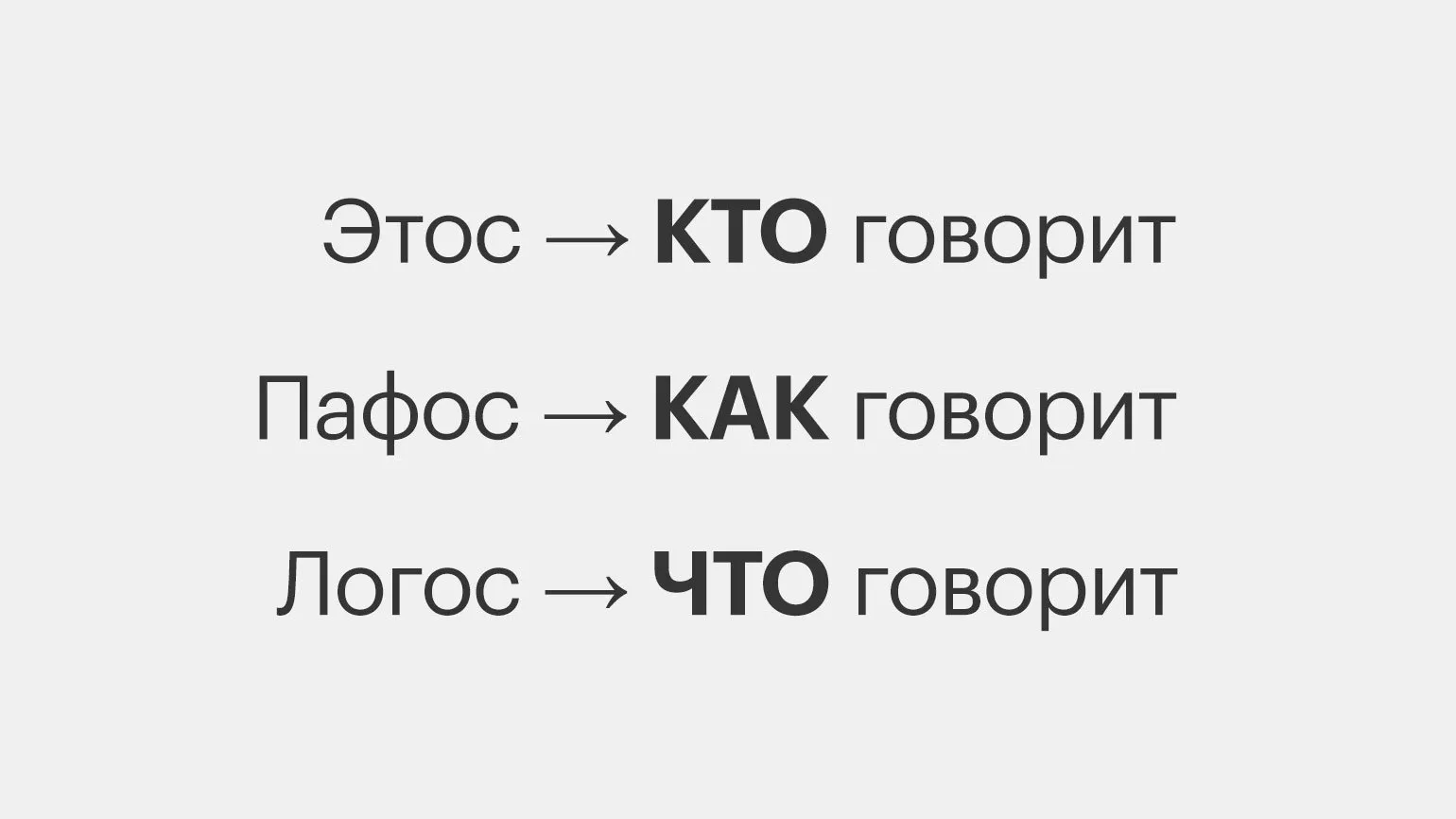
Ethos, pathos, and logos are three key principles of persuasion, laid down in the classical rhetoric of Aristotle in the 4th century BC. In his work "Rhetoric," the philosopher describes strategies that enable orators to effectively influence their audiences. Ethos refers to the speaker's authority and character, pathos to the emotional impact on listeners, and logos to logical arguments and facts. Understanding and applying these principles significantly strengthens argumentation and enhances the persuasiveness of speeches, which is essential in both public speaking and written communication.
Aristotle classifies persuasive techniques into three categories: ethos, pathos, and logos. It is important to examine each of these groups in more detail to understand the tools and techniques they encompass. Ethos is associated with the speaker's authority and credibility, pathos appeals to the audience's emotions, and logos focuses on rational arguments and logical conclusions. Understanding these categories allows you to use them more effectively in the persuasion process, whether in public speaking, writing, or negotiating.
Ethos (ἦθος) is Greek for "disposition" or "character." This element of rhetoric is based on the audience's perception of the speaker. A key tool of ethos is the speaker's status, which includes their reputation, professional experience, and personal achievements. Ethos plays a significant role in persuasion, as audiences tend to trust speakers who possess high moral character and authority in their field. Understanding and using ethos allows speakers to effectively engage with their audience and enhance their persuasiveness.
A speaker's status directly influences the level of trust they inspire in their audience. The higher their status, the more respect and trust they receive, which in turn affects the perception of their opinions and arguments. It's important to note that a speaker's authority can significantly change the audience's attitude toward their point of view, promoting a deeper understanding and acceptance of their ideas.
Pathos (πάθος) means "passion" or "inspiration" and is a key principle of rhetoric aimed at creating an emotional impact on the audience. Speakers use powerful metaphors and personal stories to create vivid emotional images and actively engage listeners in their speech. The use of pathos creates a deeper connection between the speaker and the audience, which significantly enhances the perception of information and increases the persuasive effect. Effective use of pathos in rhetoric helps not only convey information but also inspire and motivate listeners.
Pathos serves to evoke deep emotions in the audience, such as empathy, joy, or anger. This can significantly strengthen the speaker's argument, making their speech more persuasive and memorable. Emotional engagement of listeners facilitates better perception of information and can influence their opinions and actions. Using pathos in speeches and texts helps establish an emotional connection with the audience, which is an important aspect of effective communication.
Logos (λόγος) is translated as "word" or "speech." This term emphasizes the use of logical arguments to persuade the audience. A speaker, using logos, seeks to persuade listeners through well-founded reasoning, supported by research data, statistics, and legal references. The importance of logos in rhetoric is that it helps create a persuasive and rational argument that can influence the opinions and decisions of the audience.
Thus, ethos emphasizes the speaker's importance and authority, pathos focuses on the audience's emotional reactions, and logos emphasizes the content and logical soundness of the speech. These three elements are key components of effective rhetoric, allowing you to create a persuasive and memorable speech. Ethos, pathos, and logos work synergistically to enhance audience impact and improve retention.
In the next section, we'll examine the application of these three key aspects in contemporary public speaking practice. We'll also analyze which of these aspects are most effective in different contexts.
Modern Approaches to Ethos, Pathos, and Logos in Public Speaking
Aristotle's ideas remain relevant in the modern world, but they have undergone significant changes to reflect new realities and technologies. The philosophical concepts he developed continue to influence various fields of knowledge, including ethics, politics, and science. In a rapidly changing society, the importance of critical thinking and the rational approach advocated by Aristotle becomes especially obvious. Modern researchers adapt his ideas, considering them in the context of modern challenges such as digitalization and globalization. Thus, Aristotle's legacy continues to serve as the basis for the formation of new views and solutions adapted to modern conditions.
Ethos in the modern context implies the formation of a speaker's personal brand. The speaker's reputation and achievements play a key role in creating trust in their statements. At corporate meetings, for example, employees are more likely to pay attention to the CEO's words than to the opinions of a newcomer. The higher the speaker's status, the more respected their opinion is and the greater their influence on the audience. Ethos becomes an important communication tool, allowing one to effectively convey ideas and build authority.
Pathos plays a key role in the emotional perception of a speech, determining how the speaker interacts with the audience. Key aspects of pathos include charisma, intonation, gestures, and visual elements, which can significantly influence how information is perceived by listeners. Effective use of these elements helps create a deep connection between the speaker and the audience, which, in turn, enhances the impact of the message.
Logos, in the modern context, is a combination of the content and structure of a presentation. It includes the quality of the information presented, the logical sequence of presentation, and the clarity of the main ideas. A carefully crafted logos is a key element of a successful presentation. Effective use of logos helps convey key ideas and arguments to the audience, creating a compelling and memorable impression.
Ethos, pathos, and logos are three key elements of rhetoric that are interrelated and achieve maximum effectiveness when used together. Each of these elements reinforces and supports the others, creating a harmonious and persuasive speech. Ethos builds the speaker's credibility, pathos evokes an emotional response in the audience, and logos provides a rational basis for argumentation. The integrated use of these elements allows for more persuasive and memorable messages, which is an essential aspect of successful communication.
If the audience is unfamiliar with the speaker, the lack of ethos can be compensated for by using expressive pathos and logos. However, even if the speaker has a high reputation, they should still pay attention to the content and structure of their speech. A high-quality presentation requires not only charisma but also clear organization of the material, which facilitates better comprehension of the information and builds trust with the audience.
Public speaking training traditionally begins with an emphasis on pathos—developing the voice and confidence. This method is considered classic. However, in recent years, a logos-based approach, which focuses on content, has gained popularity. It is important for the speaker to first understand what exactly they want to convey to the audience and only then focus on the form of delivery. This shift in methodology allows for more structured and persuasive speeches that are better received by the audience.
At a conference, you may encounter two types of speakers. One exudes confidence and jokes, but their words offer nothing new. The other, although less charismatic, provides concrete solutions. It is this approach that makes their presentation more memorable. This underscores the importance of logos, which emphasizes facts and arguments rather than superficial entertainment. It's important to understand that a meaningful presentation with clear solutions has a greater impact on the audience and leaves a lasting impression.
Hiding a lack of substance behind a veneer of charisma is unethical in dealing with the audience. For successful communication with colleagues, it's important to focus on the logo, which allows you to clearly convey the project's main ideas. Effective communication requires honesty and transparency in the transfer of information, which ultimately promotes better understanding and collaboration within the team.
An effective presentation begins with careful consideration of the content. If you have limited time, it's more effective to focus on articulating your key idea than on polishing your style. A clear and compelling message is the foundation of a successful presentation. Make sure your main idea is clearly stated and easily understood by your audience.

After developing the logo, you should focus on pathos. It's important to rehearse your speech or give a trial run in front of friends. This will help you identify potential weaknesses and boost your confidence before the main presentation. Professional preparation for your speech significantly increases the chances of your idea being successfully received by the audience. Changing your ethos in a short period of time is not easy, but you can significantly enhance its impact during your presentation. One effective way is to ask the presenter to mention your achievements or include a slide with key information about you. This will help create a positive perception and increase the audience's trust.
The best way to gain your audience's trust is to demonstrate your expertise by solving their problems. It's important to understand your audience's needs and convey your information effectively. Particular attention should be paid to logos, which plays a key role in the persuasiveness of a presentation. In the next section, we'll provide step-by-step instructions for preparing informative and persuasive presentations.
Effective Presentation: A Step-by-Step Method for Working with Logos
The Verb Bureau offers an effective framework for preparing for public speaking, which includes nine steps. These steps can be grouped into three main stages: articulating the benefit, developing the structure, and working on the delivery. Let's take a closer look at each of these stages.
In the first stage, articulating the benefit, it is important to determine what value your presentation will bring to the audience. A clearly formulated goal will help establish a connection with your audience and increase interest in your message.
The second stage involves developing a structure for your speech. A well-organized structure helps present information logically and hold your audience's attention. Consider how you can break your speech into key points to make it more understandable and memorable.
In the final stage, focus on delivery. It's not just what you say, but how you say it. A compelling delivery, the use of visual aids, and audience interaction all play a significant role in the success of your speech.
By following this framework, you will be able to prepare a high-quality and memorable speech that will engage your audience.
First of all, you need to determine what value your speech will provide to your audience. This stage consists of four key steps: analyzing the target audience, formulating clear goals, generating ideas, and defining the main idea. Understanding the needs of your audience will help you create a meaningful and relevant speech that will resonate with their interests and expectations. Clear objectives will help you focus on the main points, and a well-developed central idea will make your message more memorable and effective.
Understanding your audience is a key element of a successful presentation. It is important to assess who exactly will be in the room and determine their interests and needs. To effectively analyze your target audience, you should consider several aspects. Research the demographic characteristics of your audience, such as age, gender, and education level. Pay attention to their professional experience and industry affiliation. This will help you tailor the content of your presentation to their expectations and interests. In addition, use surveys or preliminary interviews to obtain more accurate information about the audience's preferences. The better you understand your target audience, the more engaging and relevant your presentation will be.
- Segment your audience into groups of no more than three to adapt the content and delivery style.
- Find out what issues concern each group in order to better prepare content and choose the appropriate language for communication.
- Determine how exactly you can be useful to your audience. Think about what unique thing you can offer—it might be personal experience that other speakers can't match.
Define clear and specific goals that the audience can achieve after your presentation. These can be simple steps, such as scheduling exercise at least once a week. Setting clear goals helps listeners better absorb information and apply what they've learned in practice.
Don't forget about your personal goals. Clearly define what you want to achieve, whether it's finding partners, employees, or new projects. Setting clear goals will help you focus on what's important and effectively use your resources to achieve success.
Now it's time to gather ideas for your presentation. They should be original and varied. To generate ideas, use the following technique. First, define the main topic of your presentation to focus on the key aspects. Then brainstorm, writing down all the thoughts that come to mind without judging them. This will help ensure a flow of ideas. After that, analyze the collected suggestions and highlight the most interesting and relevant ones. Also consider using visual and interactive elements to make your presentation more memorable. Finally, test your ideas on a small audience to get feedback and make any necessary adjustments.
- Write down all your ideas on sticky notes or special online boards, highlighting each thought individually.
- Divide your ideas into two categories: those that will work to achieve your presentation goals, and those that won't, which can be put aside for later.
The key idea of your presentation should be clearly stated and easy to understand. If you present too many ideas, your audience may get lost and not remember the main points. Formulate all your ideas into one concise phrase, answering the question: "What do you want your audience to remember after your presentation?" This will help make your message more memorable and effective.
Now that you have clear ideas and an understanding of the topic, it's time to develop an outline and main points of your presentation. Creating a structured outline will help you convey information to your audience more effectively and make your presentation logical and memorable. Identify the key points you need to cover and try to connect them to create a smooth transition between topics. This will not only improve the audience's understanding of your presentation but also increase its value to your audience.
Optimizing your workflow is a key aspect of any team's success. To achieve high productivity, it's important to organize ideas and tasks in a logical sequence. Start by defining the main goal to be achieved. Then, analyze your current ideas and prioritize them, considering their impact on the end result.
The next step is structuring your tasks. Develop a clear action plan that will help your team focus on the most important aspects of the project. Use visual tools such as diagrams or tables to facilitate information perception and increase participant engagement.
Remember to regularly review and adjust your workflow. This will allow you to adapt to changes and improve overall efficiency. It is important to create open communication within the team so that everyone can contribute their ideas and suggestions.
Thus, organizing work information and actively interacting with the team contribute to achieving goals and increasing overall productivity.
We recommend avoiding a full presentation. Focusing on the main points will help reduce anxiety and prevent missing important points. Using key ideas will allow you to present your material confidently and make your speech more memorable.
If you have free time and energy, devote attention to preparing visual materials and improving their presentation. Effective visualizations, such as slides, can significantly enhance the perception of information if used effectively.
To make your presentation more engaging, you can use a variety of techniques to help hold the audience's attention and make the information more understandable. Effective tools include case studies, interesting stories, or discussions of current events in your field. These elements not only make the presentation more lively but also facilitate better perception of the information.
Rehearsal is a key stage of preparation for any speaker, regardless of their experience. It is recommended to conduct a short run-through, stating the main points of the speech. This will not only help reinforce the material but also improve your confidence in front of an audience. Proper rehearsal allows you to identify weaknesses in the presentation and optimize the delivery of information, which ultimately leads to a more successful presentation.
Record your presentation and listen to it to identify weaknesses and improve its quality. Continue this process until you achieve your desired result. Regular practice and self-monitoring will help you become a more confident and effective speaker.
A presentation may not always be required, but when it is, it's important to consider a few key guidelines. First, clearly define the purpose of your presentation and your audience so you can tailor the content to their interests and needs. Second, use a structured approach: begin with an introduction, present the main information, and conclude with a conclusion. Visuals play an important role, so try to use high-quality images and graphics that support your text. Also, be mindful of timing: stick to the time limit to keep your audience engaged. Finally, don't forget to practice: rehearse your presentation to confidently convey your information to your audience. These tips will help make your presentation more effective and memorable.
- Slides should be functional, not just pretty.
- Don't duplicate your speech text on a slide—it should complement, not replace, your speech.
- Focus on creating clear headings to highlight your main points.
Record your presentation on video and analyze it based on three key criteria: content, delivery, and audience interaction. This approach will allow you to identify the strengths and weaknesses of your presentation and improve your public speaking skills. Evaluating content will help you determine how relevant and understandable the information is. Analyzing your delivery will reveal your level of confidence and expressiveness, and audience interaction will help you understand how well you connected with and held their attention. Regular practice and self-analysis will help you become a more confident and effective speaker.
- Content - Is the main idea and logic of your speech clear?
- Delivery - How do you deliver your message, are there any pauses, or are there any useful or annoying gestures?
- Audience Interaction - Did the audience react, or were they immersed in their phones?
After analyzing, identify three key strengths of your presentation, as well as areas for improvement. This will help you objectively evaluate your skills and preparation, as well as identify opportunities for further growth and development in public speaking. Focus on what worked best and those areas that require additional work to become a more confident and effective speaker.
Making Money with Presentations: 5 Secrets to Success
Want to make money with your presentations? Learn 5 secrets to creating effective projects! Read the article!
Learn more