
Contents:

Financial Manager: Course with Job Placement in 3 Months
Learn MoreDefining Return on Equity
Return on equity (ROE) is an important financial indicator that demonstrates the efficiency of using funds invested by business owners. This indicator is calculated as the ratio of a company's net profit to the capital that was invested in its development. A high ROE indicates that the company is successfully generating profit for every dollar invested, which attracts investors and contributes to business growth. Determining and analyzing return on equity helps owners and managers make informed decisions about financial investments and development strategy.
This indicator, known as ROE (return on capital), allows investors and entrepreneurs to estimate how many rubles of income each invested ruble generates. For example, if an owner invested 1 million rubles, ROE reflects the percentage of profit they receive on their investment. This ratio is an important tool for analyzing business performance and making investment decisions. A high ROE indicates that the company is effectively using capital to generate profit, which can attract the attention of investors and increase the attractiveness of the business.
Comparing return on equity with the return on bank deposits or shares helps to better understand the importance of these metrics. For example, if you invest 1 million rubles in a deposit account with an interest rate of 5.5% per annum, in a year you can receive an income of 55,000 rubles. This allows you to evaluate the profitability of investing funds in various financial instruments and determine the optimal investment strategy for maximizing profit.
Suppose an entrepreneur decides to invest his million rubles not in a deposit, but in business development. If at the end of the year he received a net profit of 90,000 rubles, then the return on equity will be 9%. This indicates that investing in a business proved more profitable than placing funds on a bank deposit. This approach demonstrates the benefits of investing in one's own business, which can generate higher returns compared to traditional financial instruments.
Analyzing return on equity allows owners to make informed decisions about their investments and determine which ones generate the greatest return. This process is especially important for entrepreneurs who manage multiple businesses or are choosing between developing their own business and investing in stocks. Effective analysis helps identify the most profitable areas and optimize investment strategies, which ultimately contributes to improved financial performance and increased competitiveness.
For a more in-depth analysis of return on equity, it is useful to use related metrics such as ROA (return on assets) and ROI (return on investment). It is important to note that a high ROE (return on equity) may indicate not only effective management but also a company's significant debt burden. Thus, to fully assess the financial condition of a business, it is necessary to take into account all these factors, which will allow a more accurate determination of its stability and growth prospects.
Methods for calculating return on equity (ROE)
Return on equity (ROE) is an important indicator of business performance. This indicator helps evaluate how effectively a company uses its own funds to generate profit. The formula for calculating ROE is as follows:
ROE, or return on equity, is calculated using the formula: (Net Profit / Equity) × 100%. This indicator allows you to evaluate the efficiency of using the company's capital. The higher the ROE value, the better the company is at generating profit for every dollar of invested equity. It is important to keep in mind that ROE can vary depending on the industry, so for an accurate analysis, it should be compared with similar companies in the same field. A high ROE may indicate a strong management team and a successful business strategy, while a low figure may indicate the need to improve financial stability and optimize processes.
Net profit is a financial indicator that reflects a company's revenue after subtracting all operating expenses, tax liabilities, and interest on loans. Net profit is calculated using the following formula:
Net profit is calculated using the formula: Revenue minus Expenses. This is a key indicator of a company's financial health, reflecting its efficiency. Net profit shows how much money a company has left after deducting all expenses, including taxes and operating costs. Optimizing expenses and increasing revenue contribute to net profit growth, which is an important aspect for sustainable business development. Managing these indicators allows companies to make informed financial decisions and plan further investments.
Revenue represents all financial resources that a company receives in the course of its activities. Expenses, in turn, include all costs associated with generating this revenue. Understanding these two concepts is important for analyzing a company's financial condition and assessing its profitability. Revenue and expenses play a key role in generating net profit and managing a business.
Equity is the investment made by the business owner minus its current liabilities. The formula for calculating equity is as follows:
Equity can be defined as the difference between assets and liabilities. The formula for calculating equity is as follows: Equity = Assets - Liabilities. This indicator plays a key role in financial analysis, as it shows how much money belongs to the business owners after deducting all debts. A high level of equity indicates the financial stability of a company and its ability to cope with obligations.
Assets are all types of a company's property, expressed in monetary terms. These include real estate, equipment, raw materials, and cash. Asset accounting is an important part of financial analysis, as they play a key role in assessing the value of a business and its financial stability. Proper asset management allows a company to effectively use resources to achieve its goals and increase profitability.
Business liabilities include various types of debt, such as loans, borrowings, and accounts payable. These financial liabilities play a key role in the management of a company's capital and can have a significant impact on its financial position. Proper liability management helps minimize risks and improve business solvency.
For a deeper understanding of the ROE calculation, let's consider the example of a farm store. Suppose the store earned 7 million rubles in revenue during the year and its expenses amounted to 3.6 million rubles. As a result, the net profit will be equal to:
Net profit is 3.4 million rubles, which is obtained by calculating: 7 million rubles minus 3.6 million rubles.
If the store's assets are 30 million rubles and liabilities are 10 million rubles, then the shareholders' equity can be calculated as follows: subtract liabilities from assets. In this case, the shareholders' equity will be equal to 30 million rubles minus 10 million rubles, which is 20 million rubles. Thus, the store's shareholders' equity is 20 million rubles. This indicator is important for assessing the financial stability of a business and its investment attractiveness.
The shareholders' equity is 30 million rubles minus 10 million rubles, which equals 20 million rubles.
Now we can calculate the return on equity (ROE). ROE is an important indicator that allows us to evaluate the efficiency of using shareholders' capital. To calculate it, we divide the company's net profit by the average value of shareholders' equity for a certain period. This ratio helps investors understand how effectively the company generates profit on the funds invested by shareholders. A high ROE may indicate a strong financial position of the company, while a low figure may signal problems with management effectiveness. When calculating ROE, it is important to consider not only absolute values, but also trends in this indicator over time, which allows for a more in-depth analysis of the financial stability and prospects of the company.
Return on equity (ROE) is calculated using the formula: ROE = (net profit / shareholders' equity) × 100%. In this case, if net profit is 3.4 million rubles and shareholders' equity is 20 million rubles, then ROE would be 17%. This value shows how effectively a company uses its capital to generate profit. A high ROE can indicate good financial stability and business efficiency.
Every ruble invested in equity brings the farmer 17 kopecks in net profit.
Understanding and calculating ROE (return on equity) is key for entrepreneurs, as it helps evaluate investment performance and make informed financial decisions. ROE serves as an important indicator of business profitability, allowing company owners to analyze how effectively equity is used to generate profit. This knowledge helps not only in managing current finances but also in planning future investments, which in turn contributes to business growth and sustainability.
Methods for calculating return on equity using the balance sheet
Return on equity, or ROE, is an important indicator for assessing business performance. To calculate ROE, it is recommended to use the company's financial statements. The primary documents for this are the balance sheet (Form 1) and the income statement (Form 2). A proper analysis of these documents will help determine how effectively a company uses its own funds to generate profit.
The formula for calculating the return on equity (ROE) ratio is as follows:
ROE, or return on equity, is calculated using the formula: (Line 2400 of Form 2 / Line 1300 of Form 1) × 100%. This metric is important for analyzing a company's capital efficiency. It allows investors and analysts to assess how effectively a company uses its own funds to generate profit. A high ROE value indicates good management and the company's ability to create added value for shareholders.
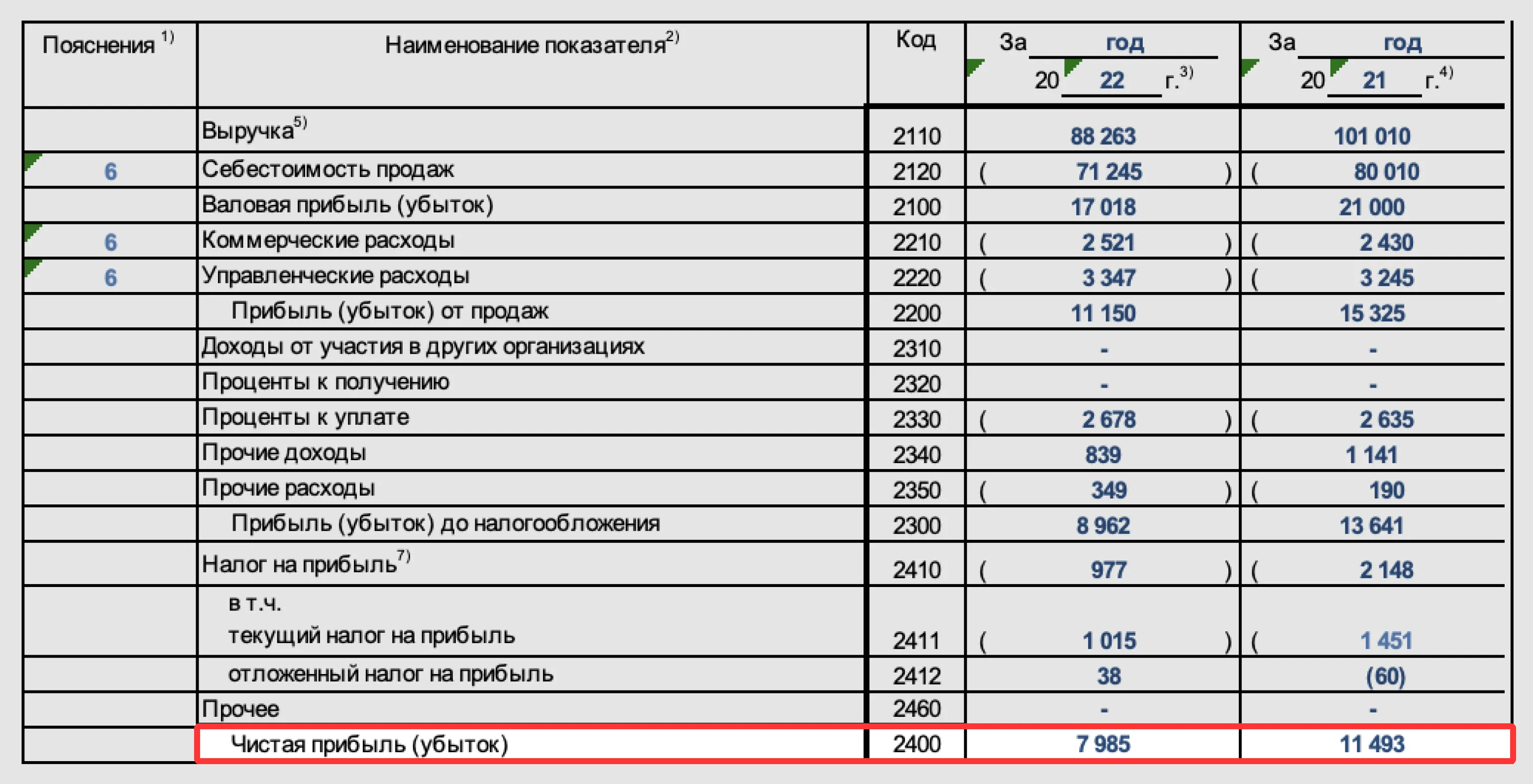
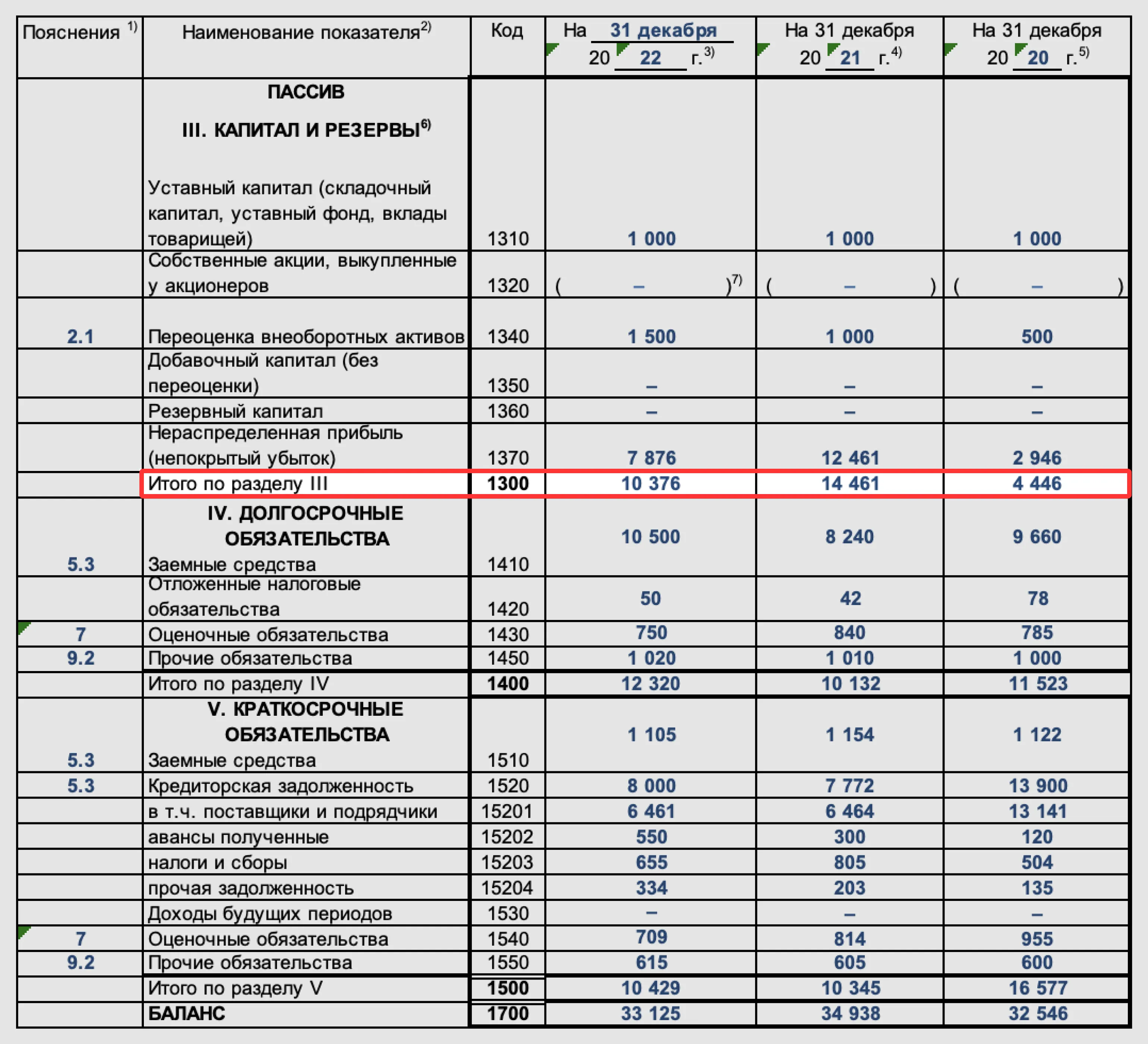
For an in-depth analysis, it's important to consider not only current data but also the dynamics of key indicators. For example, according to Rosstat, the average return on equity in Russia reached 12% in 2022, a 2% increase compared to 2021. Analyzing these changes allows for a more accurate assessment of the financial stability of enterprises and the identification of trends in the country's economy.
Frequently asked questions and answers are an essential resource for users. In this section, we have compiled the most frequently asked questions to help you find the information you need faster. If you have any additional questions, please do not hesitate to contact us for further clarification. We strive to ensure a complete understanding of our services and provide the support you need.
Calculating ROE (return on equity) is essential for assessing a company's capital efficiency. This metric allows investors to analyze how effectively an organization generates returns on its invested funds. A high ROE indicates that a company is effectively managing its capital, which can attract more investors and increase confidence in the business.
To improve ROE (return on equity), it is worth paying attention to several key aspects. First, it is necessary to consider opportunities to increase profits, which can be achieved by increasing sales volumes, raising product prices, or reducing costs. Second, it is important to optimize the capital structure, which may include refinancing debt, reducing the proportion of leverage, or increasing the proportion of equity. Effective management of these factors will help significantly improve ROE, which in turn will increase the company's attractiveness to investors.
The frequency of recalculating the ROE (return on equity) ratio is important for assessing the company's financial performance. It is recommended to perform calculations at least quarterly or annually. This approach allows for timely monitoring of changes in return on equity and making informed management decisions. Regular ROE analysis contributes to a deeper understanding of the company's financial condition and helps investors assess its attractiveness.
In-Depth Analysis of Return on Equity
Return on equity (ROE) is an important indicator that helps assess how effectively shareholders' capital is used. For a more accurate analysis, it is necessary to monitor the ROE dynamics on a regular basis: monthly, quarterly, or annually. An increase in this indicator indicates positive changes in the company's financial condition and its ability to generate profit for shareholders. Thus, ROE serves as an important tool for investors and analysts seeking to understand how effectively a company manages its resources.
Comparing return on equity (ROE) to the return on risk-free assets, such as federal government bonds or bank deposits, plays a key role in assessing a company's investment attractiveness. If ROE is lower than the return on these risk-free instruments, it may indicate poor business performance and an inability to generate sufficient returns for its shareholders. Analyzing ROE in the context of the return on risk-free assets helps investors make informed decisions and assess the risks associated with investing in a company.
Investors often use ROE (return on equity) to analyze and compare competitive companies. A high ROE indicates more efficient use of capital and makes a company more attractive to potential investors. This allows for a better assessment of the financial stability and profitability of a business, which is a key factor when making investment decisions.
For a more detailed analysis of return on equity (ROE) and to identify ways to improve it, the DuPont formula is used. This formula is based on the classical approach to calculating return on capital and allows ROE to be broken down into several key components, which helps to better understand the factors influencing a company's financial performance. The DuPont formula is a powerful tool for analyzing business performance and optimizing its financial performance.
ROE (return on equity) is calculated using the formula: ROE = (Net Profit / Revenue) × (Revenue / Assets) × (Assets / Equity). This indicator allows you to evaluate the efficiency of using a company's equity. A high ROE indicates that the company effectively generates profit relative to its invested funds. For investors and analysts, ROE is an important indicator of a business's financial strength and profitability, making it a key element in financial analysis and investment decisions.
The return on equity formula demonstrates this indicator's dependence on three main financial factors. Return on equity is an important indicator of business performance, reflecting how effectively a company uses its resources to generate profit. Understanding these three key indicators allows you to more accurately assess the company's financial condition and make informed management decisions.
- Net Profit / Revenue = Return on Sales.
- Revenue / Assets = Asset Turnover.
- Assets / Equity = Financial Leverage.
To increase ROE (return on equity), it is important to focus on improving each of its components. An effective strategy requires analyzing and optimizing all aspects affecting financial performance. By focusing on these elements, you can significantly increase profitability and achieve sustainable business growth. Return on sales measures how much profit is generated per ruble of revenue. Several effective strategies can be implemented to increase this key metric. Optimizing pricing, reducing costs, improving product quality, and enhancing customer service are key areas for increasing profitability. It's also important to regularly analyze competitors and adapt marketing strategies to attract more customers and increase sales. Investing in employee training and implementing modern technologies can significantly improve business efficiency and, consequently, profitability.
- Reducing business costs.
- Optimizing supplier prices and, if necessary, changing contractors.
- Increasing the cost of goods and services.
- Revising the marketing strategy to attract more customers.
Asset turnover demonstrates the speed at which assets begin to generate profit. A high asset turnover indicates the efficient use of a company's resources. For example, if a company quickly sells its products, such as clothing, this indicates a high asset turnover. To improve this indicator, a company should optimize its inventory, improve sales processes, and increase the speed of product turnover. It is also important to analyze the market in order to offer relevant and in-demand products, which will speed up sales processes and improve overall business efficiency.
It is necessary to carefully monitor products with a high sales rate and increase their production. It is also important to exclude less popular products from the assortment in order to optimize the offer and meet customer needs. Effective sales monitoring will help identify trends and adapt the product range in line with market changes.
Financial leverage is the ratio of assets to equity. It demonstrates how many assets are generated for each ruble of equity. A high level of financial leverage indicates the active use of borrowed funds to finance assets. The optimal financial leverage should not exceed a value of 2, which implies that the share of borrowed funds should not exceed 50% of total assets. This is important for minimizing financial risks and preventing possible bankruptcy. Proper financial leverage management is a key factor for stable growth and business sustainability.
Key aspects of return on equity
- Return on equity (ROE) is an important financial indicator that is calculated as the ratio of a company's net profit to its equity. This ratio demonstrates how much profit the owner receives for each ruble invested.
- By analyzing ROE dynamics, companies can compare their results with competitors and evaluate their effectiveness against the return on risk-free assets, such as bank deposits and federal loan bonds (OFZ).
- To increase return on equity, it is necessary to optimize such indicators as return on sales, asset turnover, and the use of financial leverage. The use of efficiency improvement strategies can significantly impact a business's finances.
How to Effectively Manage Finances in Business: Useful Resources
Financial management is a key element of successful business. A deep understanding of the basics of financial management will help you effectively allocate resources and make informed decisions. The right financial strategies ensure the stability and growth of the company, which in turn contributes to its competitiveness in the market. Effective financial management includes income and expense analysis, budget planning, and financial risk assessment, enabling entrepreneurs to make informed decisions and achieve their goals.
- If you're new to finance, we recommend reading our article on profitability. Here, we explain the different types of profitability, how to calculate and apply them, as well as what the breakeven point is and what profitability is considered optimal.
- To analyze the effectiveness of a company's expense management, it's important to examine profitability metrics. There are four key types of profit in business: marginal, gross, operating, and net. In our article on profitability, we examine each of these categories and their specific features in detail.
- Business expenses are divided into operating (OPEX) and capital (CAPEX). Proper tracking of these expenses helps improve financial control. Check out our guide on the differences between OPEX and CAPEX to learn how to use them effectively. Financial management is the foundation of any business. Understanding its principles helps optimize resources. We recommend reading our article on financial management to deepen your knowledge in this area. In large organizations, financial management is entrusted to a financial manager—a promising profession with an income of 100,000 rubles. The Skillbox course "Financial Manager Profession" offers training in budgeting, business valuation, and working capital analysis. Skillbox Media materials are valuable sources of information that can be useful for your education and professional growth. We invite you to explore a variety of resources that will help deepen your knowledge and skills in various fields. These materials are suitable for both beginners and experienced professionals looking to expand their horizons and improve their competitiveness in the labor market. Explore the opportunities that open up to you with quality content from Skillbox Media.
- Basics of financial planning: why it is necessary and how companies form budgets.
- Financial model: its purpose and stages of development.
- Accounting: key aspects, its importance, and process organization.
- Financial performance report: what it is and how to compile it correctly.
- Cash flow statement: its meaning and compilation rules.
Financial Manager: 5 Steps to a Salary of 60,000 Rubles
Want to become a financial manager with a high salary? Learn 5 steps to career success!
Learn more