Contents:
Project Manager: A Free Course for Your First Project
Learn MoreThe Project Triangle: The Key to Successful Project Management
The project triangle is a conceptual model that demonstrates three key parameters of any project: time, budget, and scope. These elements are interrelated, and a change in one requires an adjustment to the others to maintain the overall balance of the project. Understanding the project triangle allows you to manage expectations and resources, which is critical to the successful delivery of projects. A balanced approach to time, budget, and scope helps avoid cost overruns and delays, ensuring the achievement of goals.
The project triangle model, also known as the triple constraint theory, focuses on the key constraints that project managers face. This concept emphasizes the importance of three main parameters: time, cost, and quality. The interrelationship between these elements determines the success of a project. Project managers must balance these constraints to achieve goals and satisfy stakeholder requirements. Understanding the project triangle helps optimize management processes and minimize risks, which in turn contributes to the successful implementation of projects in various fields of activity.
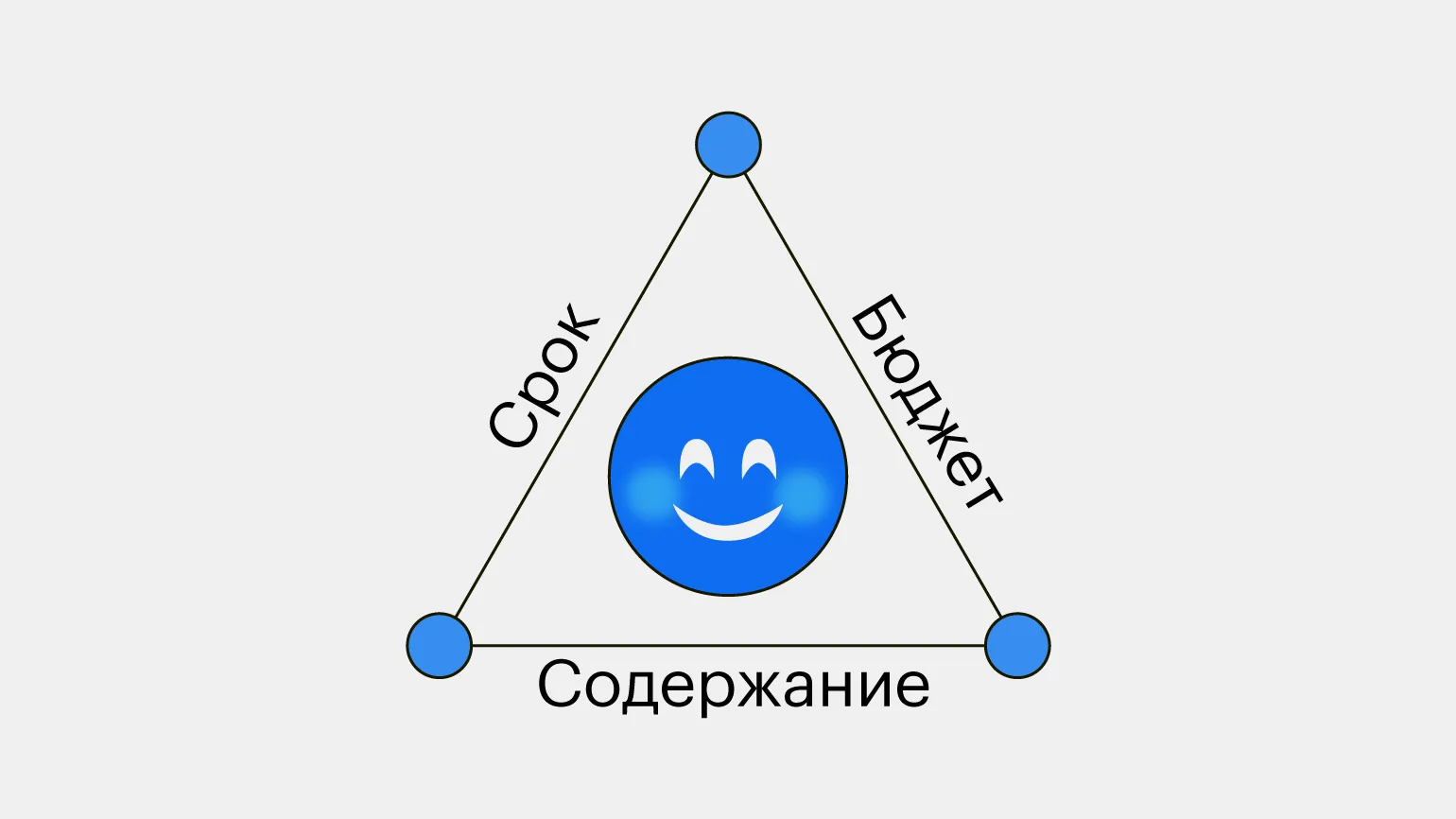
The project triangle, a concept first developed in the mid-20th century, remains an essential tool in project management. This model, which represents the relationship between three key aspects—time, cost, and quality—is used in both traditional and modern project management methodologies. The project triangle helps professionals make informed decisions and manage stakeholder expectations, ensuring the successful delivery of projects.
Working with the project triangle begins at the project initiation stage, which confirms the feasibility of its implementation. At this stage, the project charter is created—a key document that clearly articulates the goals, objectives, and constraints. This is an important step that lays the foundation for further project planning and management, allowing the team to determine the priorities and resources needed to achieve success. A properly written project charter facilitates effective communication between all stakeholders and minimizes the risks associated with changes within the project.
The primary project constraints represented in the project triangle include three key aspects: time, cost, and quality. These elements are interrelated and influence each other. A change in one of them may lead to the need to adjust the others. Effective management of these constraints is critical to the successful completion of a project, since an imbalance between them can lead to delays, budget overruns, or a decrease in the quality of the final product. Understanding and managing these constraints allows project managers to make informed decisions and achieve their goals.
- Time — the final deadline for project completion.
- Budget — all resource costs, including equipment and labor.
- Scope — a list of functional requirements and product characteristics.
The project manager is required to complete the project triangle during the initiation phase and present it to stakeholders. It is crucial that all project participants understand and accept the constraints, which will ensure more effective project management at all subsequent stages. Understanding these constraints will help avoid misunderstandings and reduce risks associated with project implementation.
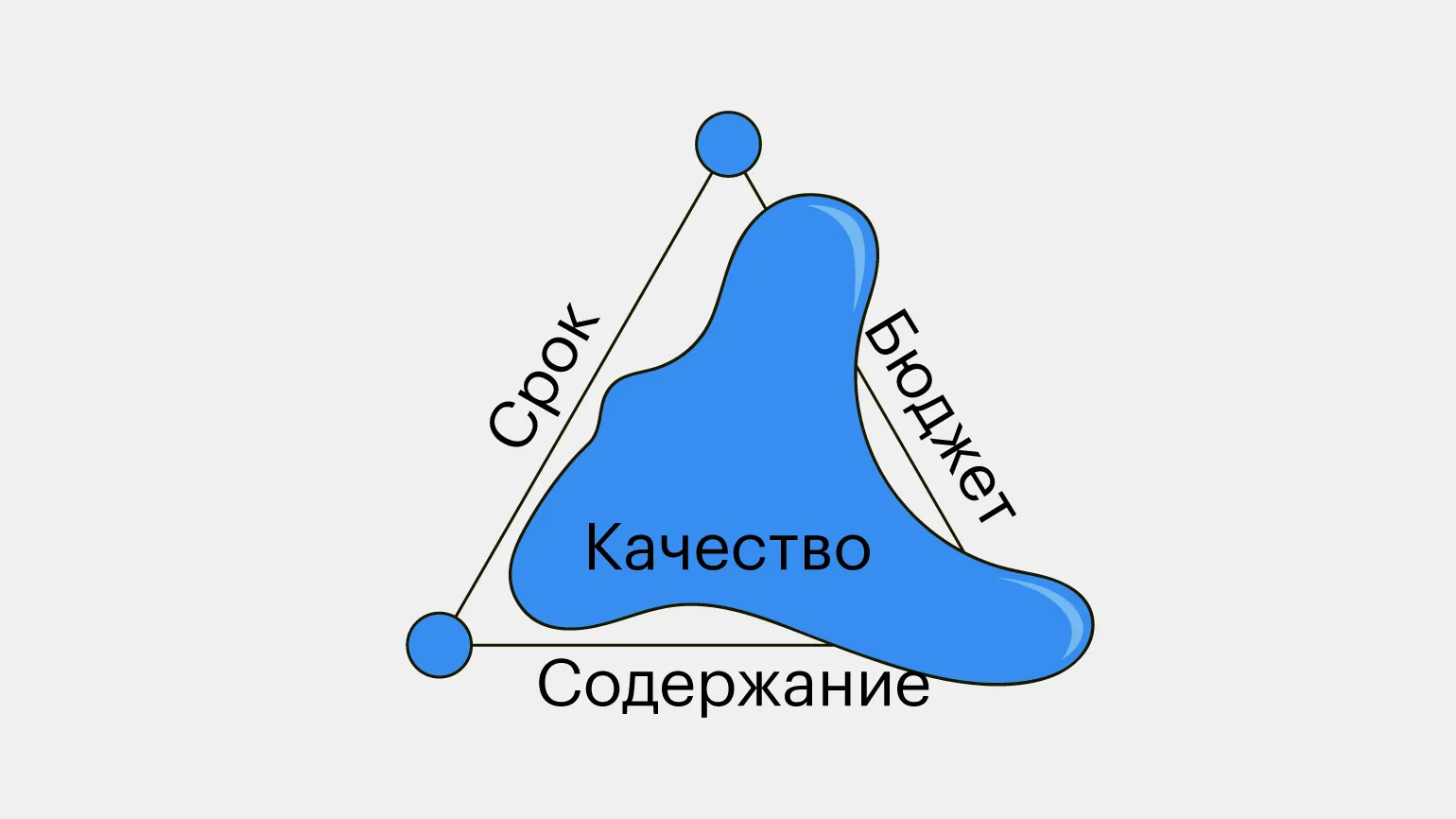
In the project triangle, in addition to the three main constraints of time, cost, and scope, there is another important constraint: quality. This less obvious constraint plays a key role in the success of a project. Quality can be expressed through a formula that takes into account all aspects affecting the final result. Given that quality is directly related to customer satisfaction and product longevity, it cannot be ignored when planning and managing a project. Therefore, to achieve an optimal result, it is necessary to balance all four constraints of the project triangle.
Quality is defined as a combination of three key factors: deadlines, budget, and project scope. Proper management of these elements allows for the achievement of an optimal result. Meeting deadlines ensures the timely completion of tasks, and wisely allocating the budget ensures the availability of resources. The importance of scope lies in its need to meet the expectations and requirements of the target audience. By balancing these three aspects, you can achieve high quality of the final product.
Compliance with all established constraints guarantees the high quality of the final product. This means that the team must successfully complete all planned tasks within the budget and timeframe defined in the project. Effective resource and time management is key to achieving goals and meeting client expectations.
The Value of the Project Triangle in Project Management
The project triangle, which includes scope, budget, and timeframe, is a crucial tool in project management. These three elements are closely interconnected, and any change in one of them inevitably entails the need to adjust at least one of the others. Ignoring this relationship can lead to a decrease in the quality of the final product. Effective project management requires continuous monitoring and balancing of these components to achieve goals and meet stakeholder requirements.
The project triangle is an important project management tool that clearly illustrates the relationship between three key parameters: project scope, budget, and deadline. Changing one of these parameters inevitably affects the others. For example, if you decide to increase the scope of work by expanding the team to achieve the set goals, this may lead to an increase in financial costs or an extension of the project deadline. Understanding these relationships helps managers make more informed decisions and effectively manage resources, which ultimately contributes to the successful implementation of projects.
Let's consider two real-life examples demonstrating the application of the project triangle in project management practice. The project triangle, consisting of three key elements: time, cost, and quality, is a fundamental tool for analyzing and evaluating projects. Each of these factors influences the others, which makes understanding their interrelationships critical to the successful implementation of projects. In our examples, we will see how changes in one element of the triangle affect the others, as well as the overall success of the project.
In the first case, we are talking about the creation of an online store, where an important task was integration with delivery systems. The project manager assumed that all services had ready-made APIs for integration. However, as the project progressed, it became clear that the documentation was outdated and contained numerous errors, complicating the integration process and requiring additional resources to resolve the issues.
As a result, the developers were faced with the need to spend additional time troubleshooting API issues, which increased the project's timeline and disrupted the balance of the quality, cost, and timeline triangle. To prevent similar situations in the future, it is important to conduct API assessments in advance and document protocol versions in the technical specifications. This will help minimize risks and ensure more effective project management.
The second example illustrates the development of a mobile application for a large holding company. At the initial stage, a project triangle was established, defining the main operating parameters. However, as development progressed, the client began introducing new ideas and features, which impacted the project's timeline and budget. It's important to note that a flexible development approach allows for adaptability to changing requirements, which can ultimately lead to a more functional and in-demand application.
An inexperienced manager failed to clearly define the project scope and took on additional tasks, believing they wouldn't impact the completion date. Ultimately, implementing all the features required significantly more time, which disrupted the original balance of the project triangle. Proper project management requires clearly defined tasks and deadlines to avoid unnecessary resource overruns and delays.
To prevent such situations, it's essential to maintain a change log, an essential tool for any project manager. Such a log helps track all changes, facilitates team communication, and promotes more effective project management. Maintaining a change log not only minimizes the risk of errors but also allows for transparency in the work process, which is especially important when interacting with clients and stakeholders.
Effective Project Triangle Management: Tips and Tools
Project management is an art that requires harmony between three main parameters: quality, deadlines, and budget. In this article, we will discuss practical recommendations that will help you effectively control these important aspects. Proper project management allows you to minimize risks, increase productivity, and achieve your goals. We will consider how streamlining the planning process, regularly monitoring progress, and active communication with the team can significantly improve the results of your project.
The first step in project development is a thorough requirements analysis. Creating a detailed statement of work (SOW) allows you to capture all the client's wishes and ensure clarity during the implementation process. It is important to consider even such nuances as API versions, which will help avoid misunderstandings in the subsequent stages. At this stage, it is also recommended to conduct a pre-project study to test key hypotheses and minimize the risk of future problems. This approach promotes more efficient and high-quality project execution, which ultimately leads to meeting client needs and successfully implementing the plan.
After defining the scope of work and project boundaries, it is important to document the constraints. This will ensure the project is completed on time and within budget. Transparency at this stage is key to successful project completion. A clear understanding of the constraints will help avoid unexpected costs and delays, which in turn will increase the likelihood of achieving the stated goals.
Effective communication with the client and stakeholders is a fundamental aspect of successful project management. A key aspect is the ability to convey the interrelationships between project constraints to project participants. Visualizing the project triangle, including timeline, budget, and scope, is an excellent tool for explaining that adding new features may require increasing all project parameters. Understanding these aspects helps avoid misunderstandings and promotes more productive collaboration among all participants.
If the client requires a change to one side of the project triangle, the project manager must clearly state the potential consequences. For example, a reduction in development time can be achieved either by reducing the scope of work or by expanding the team. However, expanding the team will lead to an increase in the budget. It is important for all parties to understand that any changes to the project impact its parameters, and the project manager must effectively manage these changes to achieve the project goals.
To effectively monitor the project progress, it is recommended to use a roadmap. This document includes goals, key milestones, and target dates. A roadmap serves as an important tool for tracking progress and forecasting task deadlines, which contributes to a more organized approach to project management. A well-designed roadmap helps the team stay on the same page, minimize risks, and achieve goals on time.
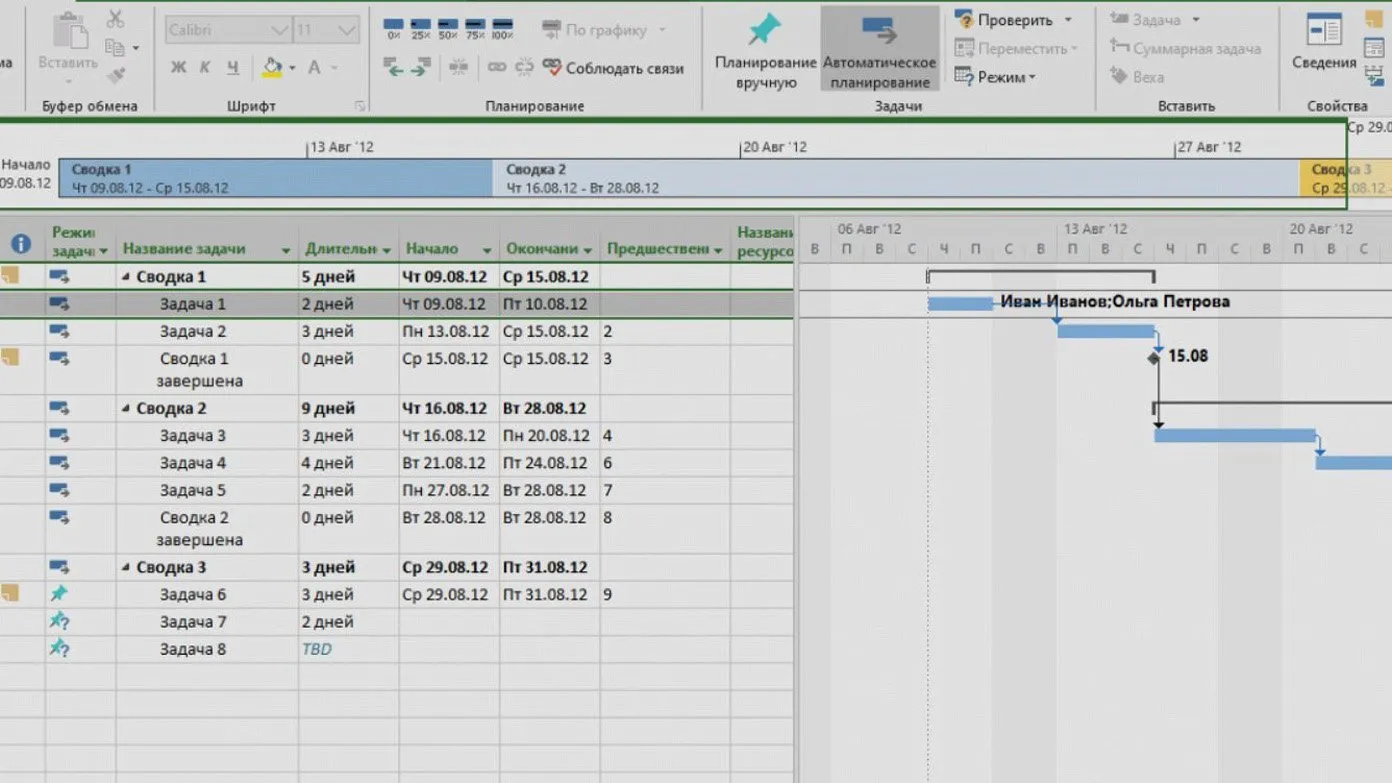
A burndown chart, or task burndown diagram, is a powerful monitoring tool, especially within agile project management methodologies. It clearly demonstrates the team's progress in completing tasks and allows for tracking the actual work completion against the planned schedule. Using a burndown chart helps identify whether the team is on track or falling behind, which facilitates timely corrective actions to achieve goals. This approach ensures more effective project management and increases the chances of successful completion within the established deadlines.
Modern project management methods require managers to be highly flexible and able to quickly adapt to changes. Using effective project management tools and strategies allows for successful control of the project triangle consisting of time, cost, and quality. This, in turn, contributes to the achievement of business goals and improves the overall effectiveness of projects. It is important to master key techniques and approaches to successfully cope with the challenges that arise at each stage of project implementation.
The Project Triangle in Agile and Scrum
The project triangle is a key tool in project management, especially in the context of the waterfall development model. In this model, the process begins with formulating product requirements, after which a detailed plan is developed. Only then is the development itself carried out. This approach allows you to identify all potential constraints at the project initiation stage, which contributes to more effective resource and time management. The project triangle includes three main components: quality, cost, and time, which are interconnected and influence each other. Changes in one of these aspects will inevitably affect the others, which emphasizes the importance of a balanced approach to project management.
In the Waterfall methodology, the project triangle is considered "hard" or "iron". The key element of this triangle is the "scope", which defines the final form of the product. Changes to this parameter occur extremely rarely. If changes are necessary, the project manager sets new constraints and documents them for the team, which ensures clarity and predictability during the development process.
In Agile and Scrum, which are flexible methodologies, the approach to the project triangle changes. These methodologies do not involve detailed planning at the start of a project. Instead, the team works on the product in short iterations, gradually adding functionality that brings value to the user. The concept of a fixed scope of work becomes less relevant, since the final result may remain uncertain. In this context, the classic project triangle loses its applicability. Agile and Scrum emphasize adaptability and rapid response to changes, which allows for a better meeting of market requirements and user expectations.
Agile and Scrum have adapted the concept of the project triangle. In these methodologies, deadlines and budgets can remain fixed, which is critical for customers. The project manager is able to forecast these parameters both at the project's inception and throughout its implementation. This allows the "Scope" aspect to be more flexible and change throughout the project, allowing for better alignment with the client's needs and wishes. This approach ensures higher client satisfaction and increases the chances of successful project completion.
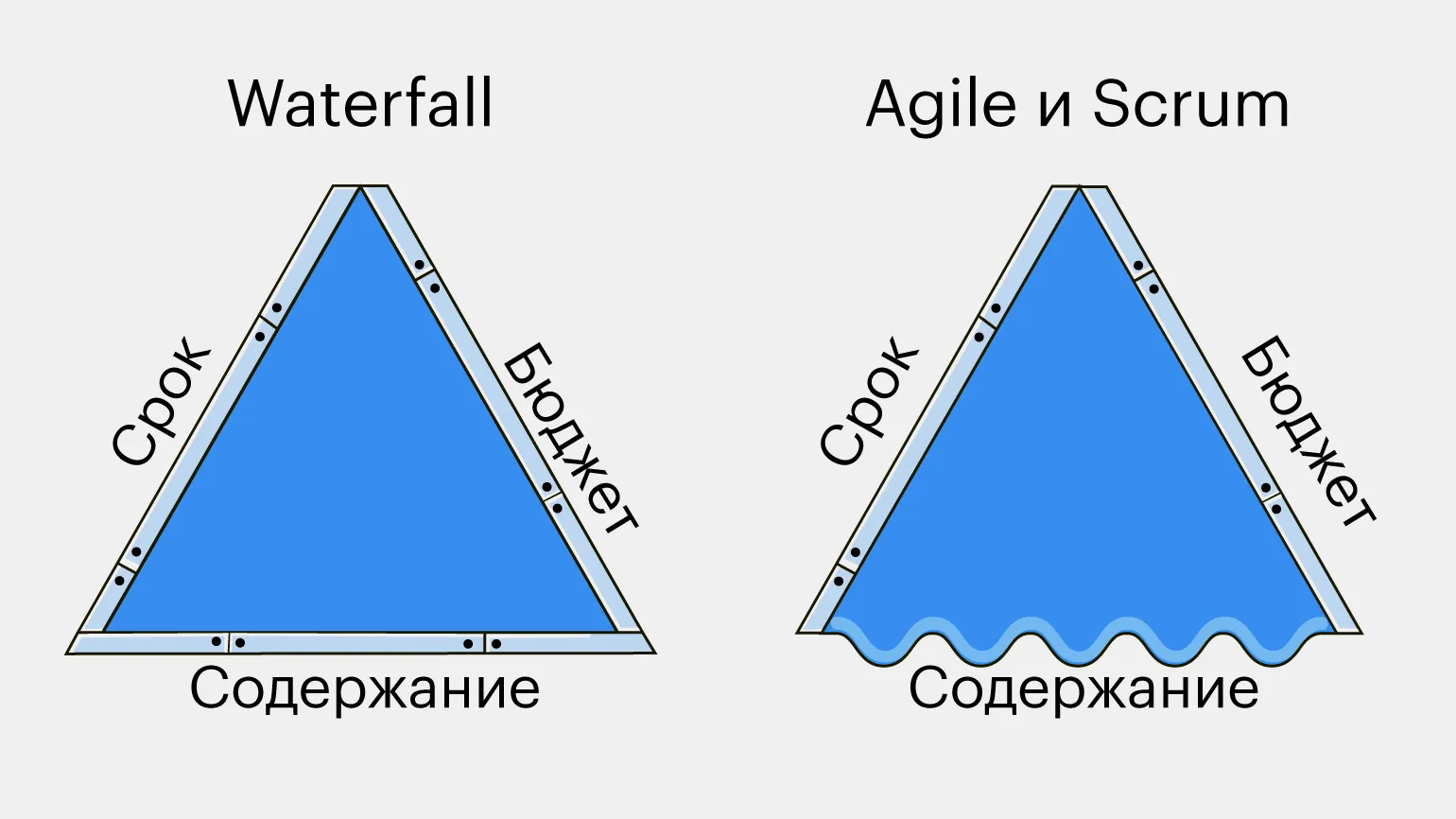
Agile and Scrum assume that the customer may not receive the agreed-upon content on time and within budget. However, the team makes every effort to deliver value and satisfy the end user. This is a fundamental principle of these methodologies, promoting flexibility and adaptability in the development process. It is important to understand that focusing on user needs and continuously improving processes help teams achieve better results, even under changing conditions.
What is the Project Triangle and Its Importance
- The project triangle is a key model in project management that illustrates three main elements: schedule, budget, and scope. These components are interconnected, and changing one may necessitate adjustments to the others.
- Effective project triangle management requires clearly defining constraints based on preliminary analysis, as well as regularly communicating project progress to customers and stakeholders.
- Different project management methodologies apply the project triangle concept in different ways. In the classic Waterfall model, the sides are fixed, while in flexible approaches such as Agile and Scrum, the content can change during implementation.
Deepening your knowledge of project management requires a systematic approach and the use of various resources. A good start is to study key methodologies such as Agile, Scrum, and Waterfall to gain an understanding of the different project management approaches. A training course or certification in project management, such as PMP (Project Management Professional), will significantly enhance your qualifications and credibility with employers.
Reading specialized literature and articles on project management is also an important step. It's recommended to stay up-to-date on new trends and practices in this field through professional blogs and journals. Participating in webinars and conferences will not only allow you to gain new knowledge but also share experiences with other professionals. Practical application of knowledge is an important aspect of learning. Participate in real projects or create your own to practice planning, monitoring, and control skills. Discussing complex situations with colleagues and participating in professional communities will help you broaden your horizons and learn how to solve non-standard problems. It's also worth focusing on developing soft skills, such as communication and team management, as they play a key role in successful project management. Deepen your knowledge and skills, and you will become a more effective project manager. Project management is a multifaceted discipline within management with a variety of methods, principles, and practical approaches. Get started with the materials on Skillbox Media.
Skillbox Media's additional project management resources offer useful materials and tools for professionals in this field. Here you'll find courses, articles, and webinars that help develop project management skills, master modern methodologies, and improve team effectiveness. Resources cover topics such as project planning, risk management, team communication, and much more. Skillbox Media strives to provide relevant information and practical recommendations to help you become a successful project manager.
- What is a project and what are its goals?
- Why do you need a project structure and how to create one in seven steps?
- How to use Agile and Scrum for effective project management?
- How to effectively manage a project budget: a step-by-step guide.
- Key points about the PMBoK — a project management body of knowledge.
Project Manager: 5 Key Skills for Success
Want to become a successful project manager? Learn about 5 skills that will make you indispensable! Read the article.
Find out more