
Contents:
- The Role of Category Managers in Various Industries
- The Role and Responsibilities of a Category Manager
- Education and Career Advancement in Category Management
- Key Skills for a Successful Category Manager
- Who is the Category Manager Profession Suitable for?
- How to Choose the Right Category Manager for Your Business
- Category Manager Salaries: Current Data 2023
- How to Become a Successful Category Manager
- What You need to know about the profession of a category manager

18 free courses on Marketing: Learn and Earn!
Learn MoreThe Role of Category Managers in Various Industries
Category managers play a key role in organizations that offer a wide range of products. This is especially important for retail, where effective category management can significantly increase profits. Optimizing product range and pricing strategies not only attracts more customers but also improves their satisfaction. Professional category managers help analyze the market, monitor trends, and adapt offerings to customer needs, which ultimately contributes to business growth.
Category management was first implemented by international companies such as Procter & Gamble, Unilever, and Mars. Over time, these effective practices have become relevant for Russian enterprises, covering both large retailers and small manufacturing and distribution firms. The implementation of category management improves assortment management, enhances competitiveness, and increases business profitability. The adaptation of these methods in Russia facilitates more effective interactions between manufacturers and retailers, which in turn improves consumer satisfaction and stimulates market growth.
Category management is widely applied in various fields. Initially popular in the fast-moving consumer goods (FMCG) sector, its use has now expanded significantly. Today, this approach is actively used in medicine, technology, the cosmetics industry, and many other sectors. Each of these industries has its own unique assortment management features, highlighting the versatility of category management as a tool for optimizing sales and improving business efficiency.
The transformation of category management in the fashion industry is an exciting process. Major brands such as Ostin, Melon Fashion Group, and Lime utilize category managers as versatile specialists who predict fashion trends and adapt their assortment to market changes. At the same time, for smaller local brands such as 2Mood, Lichi, and I am studio, category managers become key members of the team, ensuring commercial success and sustainable business development. Effective category management allows brands to better understand customer needs and respond promptly to changes in demand, which is critical for competitiveness in the fashion industry.
The Role and Responsibilities of a Category Manager
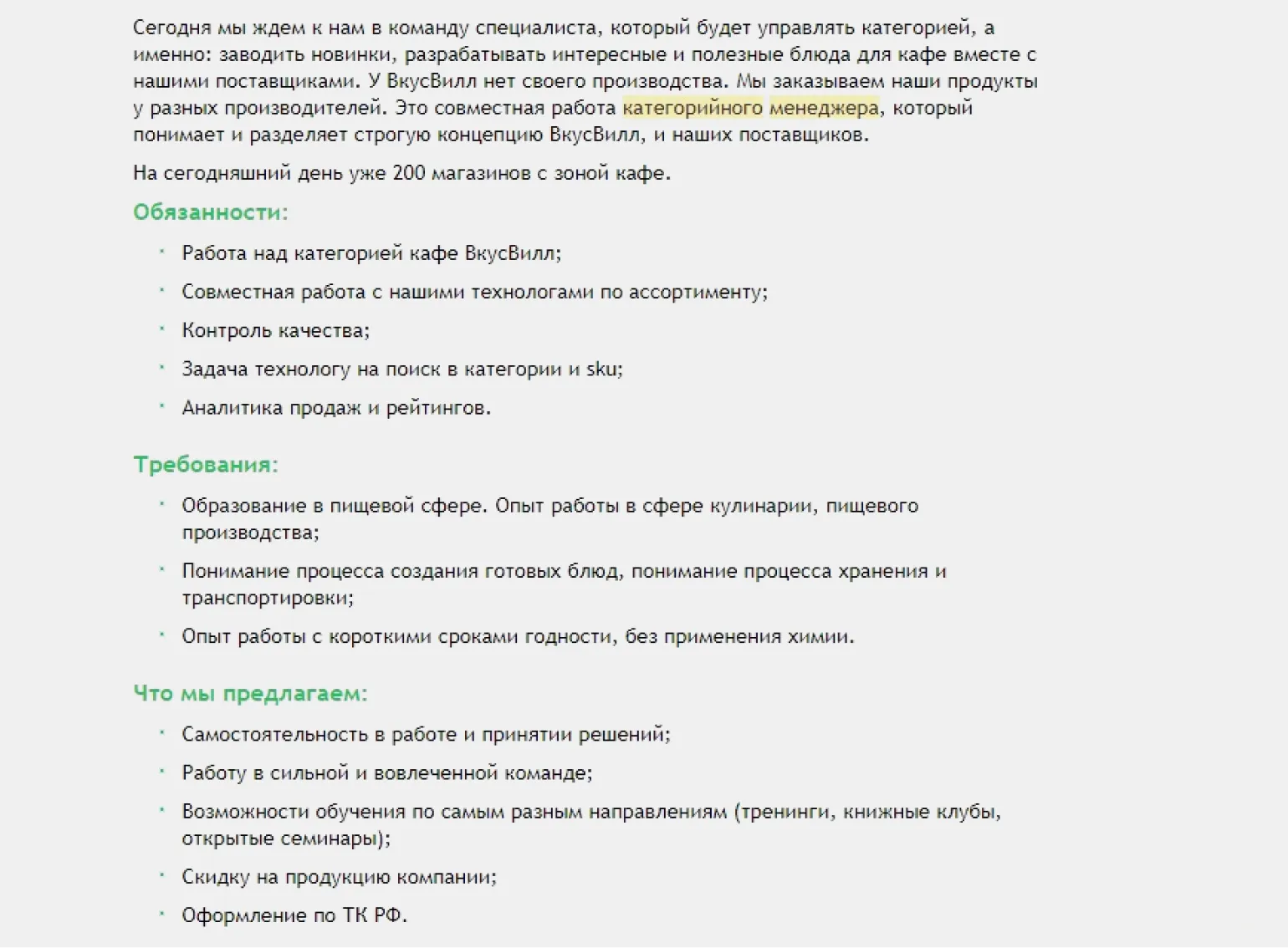
A category manager plays a vital role in product assortment management. Their primary responsibility is to regularly analyze the assortment matrix to identify weaknesses and opportunities for optimization. Effective assortment management not only increases company profits but also includes eliminating outdated products and introducing new items with high demand potential. A proper approach to assortment management allows companies to better adapt to market changes and meet customer needs, which ultimately contributes to business growth and sustainability. A category manager's responsibilities encompass a wide range of processes. These include product assortment management, consumer demand analysis, pricing policy optimization, procurement planning, and inventory control. Category managers are also responsible for supplier interactions, marketing strategy development, and competitive monitoring. English: The effective work of a category manager contributes to increased sales and strengthening the company's position in the market.
- analysis of the competitive environment;
- development and optimization of the assortment matrix;
- search for and evaluation of suppliers;
- negotiations with partners;
- concluding contracts and document management;
- approval of product samples;
- assortment rotation;
- procurement control;
- pricing;
- tracking trends and seasonality;
- analysis and data processing;
- monitoring visual merchandising;
- and much more.
The work of a category manager covers many responsibilities, but does not require his constant participation at all stages. This is a highly qualified specialist who is not required to understand all the processes in detail. Typically, a category manager works in tandem with a team of assistants who handle routine tasks, allowing them to focus on strategic issues and key decision-making. This approach allows for more efficient assortment management and streamlining of business processes.
At the company, the buyer is responsible for purchasing, marketing specialists handle marketing, and analysts prepare reports and process statistics. Financial indicators are monitored by the finance and accounting departments. In this organizational structure, the category manager acts as a coordinator, overseeing key processes and making strategic decisions that impact business performance.
Education and Career Advancement in Category Management
To succeed in a career as a category manager, you need to undergo specialized training. One of the best educational resources for this is Skillbox. It offers courses that cover key aspects of category management, including market analysis, assortment management, and strategic pricing. Training at Skillbox provides the opportunity not only to gain theoretical knowledge but also to master practical skills, which is essential for effective work in this field.
- "Category Management in Fashion" — for those who want to become a sought-after specialist or develop their business.
- "Buying in Fashion" — training in trend analysis, collection development, and budgeting.
- "Marketing for Fashion Brands" — for building a career in marketing or expanding the skills of future category managers.
Key Skills for a Successful Category Manager
A category manager is a key specialist responsible for managing product groups and assortment within a company. To successfully complete their tasks, they must possess both professional skills and personal qualities. Hard skills include market analysis, inventory management, and strategic planning, while soft skills, such as communication and teamwork, are also of great importance. An effective category manager is capable of not only optimizing product assortment but also enhancing a company's competitiveness in the market.
Hard skills are specific knowledge and abilities that are applied in practical professional work. It is important for a category manager to master a number of key hard skills that will help effectively manage the product and service assortment. These include analytical skills that enable processing and interpreting sales and market data, as well as skills in using data analysis and inventory management software. Knowledge of marketing and pricing fundamentals is also crucial for successful product promotion. Furthermore, negotiating and working with suppliers will help establish favorable terms of cooperation. Mastering these hard skills will improve the qualifications of a category manager and make him competitive in the labor market.
- Creating a detailed product classifier;
- Developing and optimizing models for working with assortment;
- Tracking key performance indicators (KPIs) of the product matrix;
- Creating and maintaining a pricing system;
- Formation of an assortment matrix of products;
- In-depth analysis of the assortment and identification of trends;
- Development of an effective purchasing plan.
Soft skills, or "soft" skills, are key in the modern world. These skills include the abilities that contribute to effective interaction with others and successful problem solving. The main soft skills include communication skills, emotional intelligence, teamwork, adaptability and creativity. Developing these skills not only improves personal and professional relationships but also increases the chances of career advancement in various fields. In a rapidly changing labor market, having strong soft skills is becoming a decisive factor for success.
- Multitasking and the ability to switch between tasks;
- Stress resistance under high pressure;
- Negotiation skills with partners;
- Ability to effectively communicate with various departments of the company.
Hard and soft skills can be developed. Training and practice are the main factors for success. Even highly qualified specialists do not possess all the skills from birth; they acquire and improve them throughout their careers. Using online platforms such as Coursera and LinkedIn Learning can significantly accelerate the process of acquiring the necessary knowledge and skills. These resources offer a variety of courses that will help you improve both technical and soft skills, which in turn will increase your competitiveness in the job market.
A successful career as a category manager requires a harmonious combination of technical knowledge and soft skills. These qualities allow you not only to achieve your goals but also to effectively interact with your team and partners. This approach promotes sustainable growth and business development, which is a key factor in achieving a competitive advantage in the market. Investing in developing these skills will ensure high results and successful product portfolio management.
Who is the category manager profession suitable for?
The category manager profession is open to a wide range of specialists. Despite the variety of tasks and responsibilities, you can begin a career in this field without significant experience. This makes this profession attractive to many who are looking for opportunities for professional growth and development. Category managers play a key role in optimizing product and service offerings, which directly impacts a company's success. Their work includes market analysis, supplier selection, inventory management, and strategic planning. Thus, even entry-level specialists can make a significant contribution to business development by learning and gaining experience in this dynamic and in-demand field.
- If you have worked in sales, you are familiar with the product range and unique selling propositions (USPs), and also know how to present them effectively.
- Experience in procurement gives you negotiation skills and a deep understanding of the supply process.
- If your career is related to accounting or finance, you know how to work with data, analyze reports, and identify important patterns.
- Working in marketing helps you develop a promotion strategy and effectively interact with contractors.
- Experience in logistics or administrative activities allows you to easily cope with multitasking and stress.
It is possible to start a career in category management even without prior experience. One suitable way is to get a job as an assistant and study at the same time. Within a year or two of internship, you can gain the necessary knowledge and skills to advance to a Category Manager position. This is an excellent path for those looking to develop in this field and build a successful career.
How to Choose the Right Category Manager for Your Business
Finding a qualified Category Manager is essential for successful business development. To simplify this process, consider the following guidelines. First, clearly define your candidate requirements, including the necessary skills and experience. This will help attract the right professionals. Second, use a variety of channels to post vacancies, including specialized websites and social media, to expand your reach. Third, conduct thorough interviews, focusing on practical situations and case studies. These steps will help you find a highly qualified Category Manager who will become a valuable asset to your company.
Define tasks and requirements. A clear understanding of the functions your manager will perform is key. Some organizations already have strong purchasing teams capable of fulfilling core responsibilities. However, creativity and analytical thinking may be lacking. In such situations, it's worth considering candidates with brand management or marketing experience who possess the skills to create assortment matrices. This will help improve strategic planning and increase your business's competitiveness.
Use networking to find category management specialists. This market is quite niche, which provides excellent opportunities for networking. Many managers actively participate in specialized events, conferences, and webinars, where they can share experiences and find like-minded people. Instead of posting vacancies on various platforms, consider connecting with attendees of industry events and posting requests on professional networks such as LinkedIn and TenChat. This approach will help you quickly find suitable candidates and expand your professional network.
Evaluate the candidate's personal qualities. A Category Manager's workday largely consists of routine tasks: data processing, interaction with partners, and other departments take up approximately 80% of the time. To successfully fulfill these responsibilities, it is crucial that the candidate exhibits discipline, attention to detail, and a willingness to work in a monotonous manner. These qualities will help them effectively manage tasks and achieve their goals within the Category Manager's role.
Also, it should be noted that the presence of a creative team may signal the need for a specialist who can effectively implement their ideas while focusing on operational tasks. This emphasizes the importance of an integrated approach to project management, combining creativity and practical execution. Ensuring collaboration between the creative team and operational specialists contributes to more successful project implementation and overall team efficiency.
Choosing the right Category Manager is key for your business. Not only does it optimize the procurement process, but it also contributes to the overall effectiveness of the team. An effective category manager is able to analyze the market, identify customer needs, and adapt purchasing strategies, which ultimately leads to increased profits and improved company competitiveness.
Category Manager Salaries: Current Data for 2023
Category manager salaries depend on their qualifications and experience. There are three levels in this profession: junior, middle, and senior. Each of these levels significantly affects the size of the income. Junior managers, as a rule, have less experience and earn less, while middle and senior specialists with higher qualifications and experience receive higher salaries. This makes the category manager profession attractive to specialists seeking to develop their careers and increase their income.
Juniors are entry-level specialists who may have no practical experience or have just completed training. Their monthly income ranges from 30,000 to 70,000 rubles, depending on the volume of tasks performed and the complexity of the projects. These professionals are at the formative stage of their careers, and their skills gradually develop as they gain experience. It is important to note that the level of earnings also depends on the region, company and specifics of the work, which makes this category of workers important for many industries.
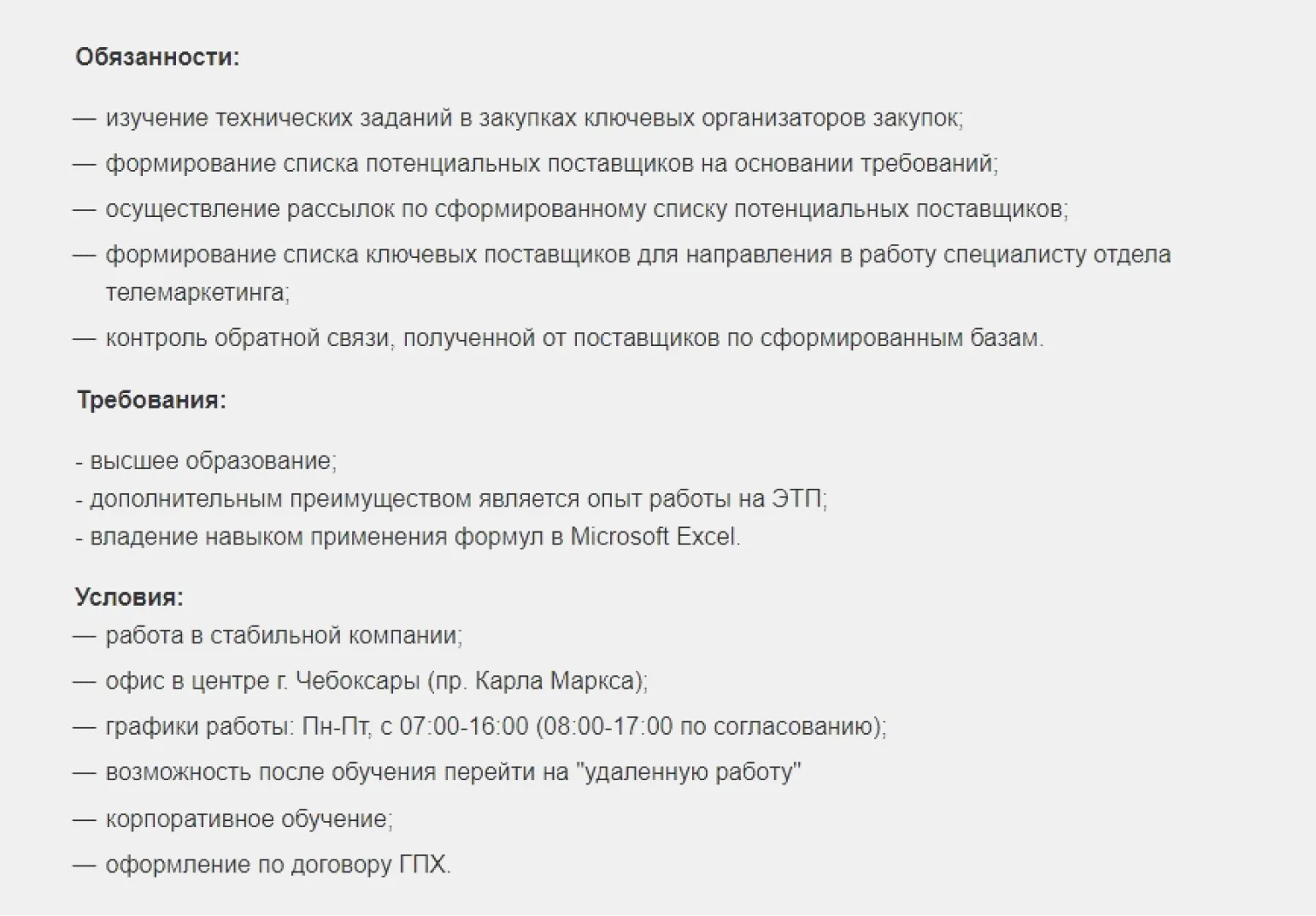
Middle specialists are professionals with at least one year of experience and strong category management skills. Their monthly income ranges from 80,000 to 120,000 rubles. The bulk of their earnings consists of a fixed salary and bonuses, which depend on achieving comprehensive key performance indicators (KPIs). These specialists play a vital role in successfully managing product and service categories, which in turn contributes to business growth and increases the company's competitiveness.
The salary accounts for 50-70% of total income, and the remaining portion includes bonuses, which depend on achieving certain metrics. These metrics may include sales achievements, customer service quality, plan fulfillment, and other key factors affecting performance. Bonuses play an important role in motivating employees and encouraging them to achieve superior results.
- Planned turnover by category;
- Planned profit or profitability;
- Planned indicators received from suppliers;
- Commercial success of a category or collection.
The latter metric is especially important for seasonal businesses such as fashion and home goods. Managers may also receive quarterly or annual bonuses, which are negotiated individually and depend on each employee's contribution to the company's financial results. This reward system motivates employees to achieve high performance and improve business results.
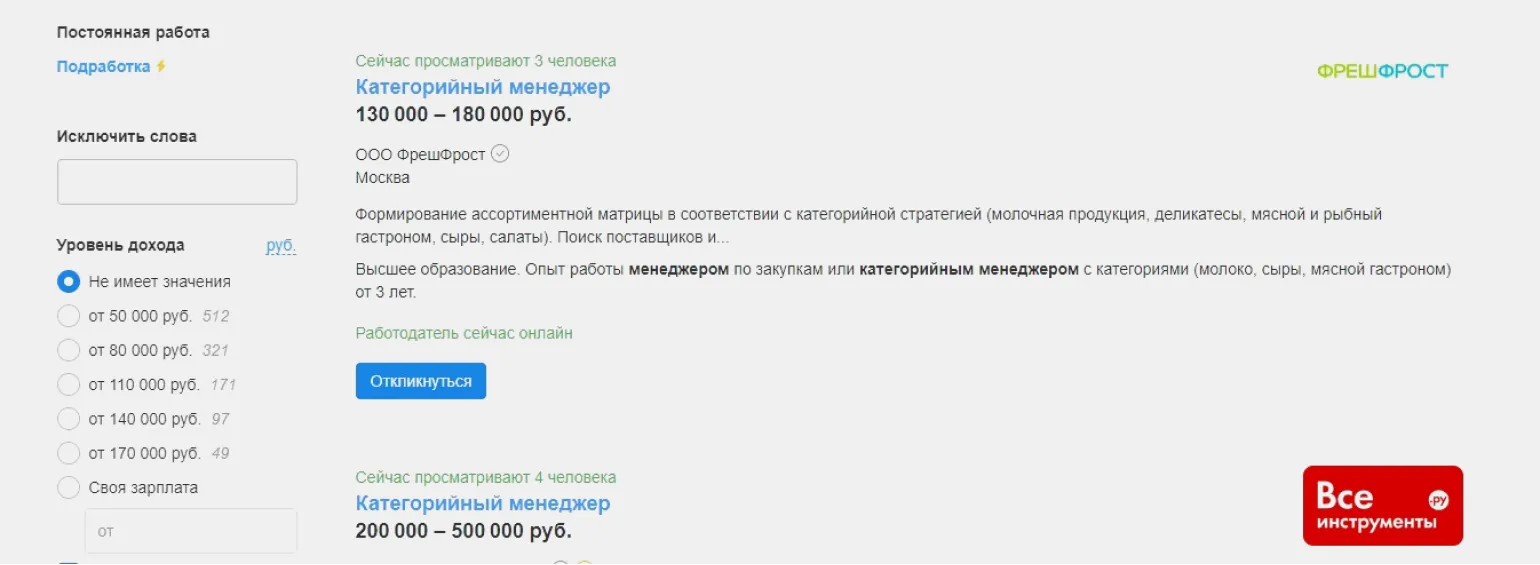
Senior positions are experienced specialists with more than three years of experience, whose income is comparable to high-level IT salaries. Their monthly income ranges from 150,000 to 300,000 rubles, and they can also receive bonuses for meeting and exceeding key performance indicators (KPIs).
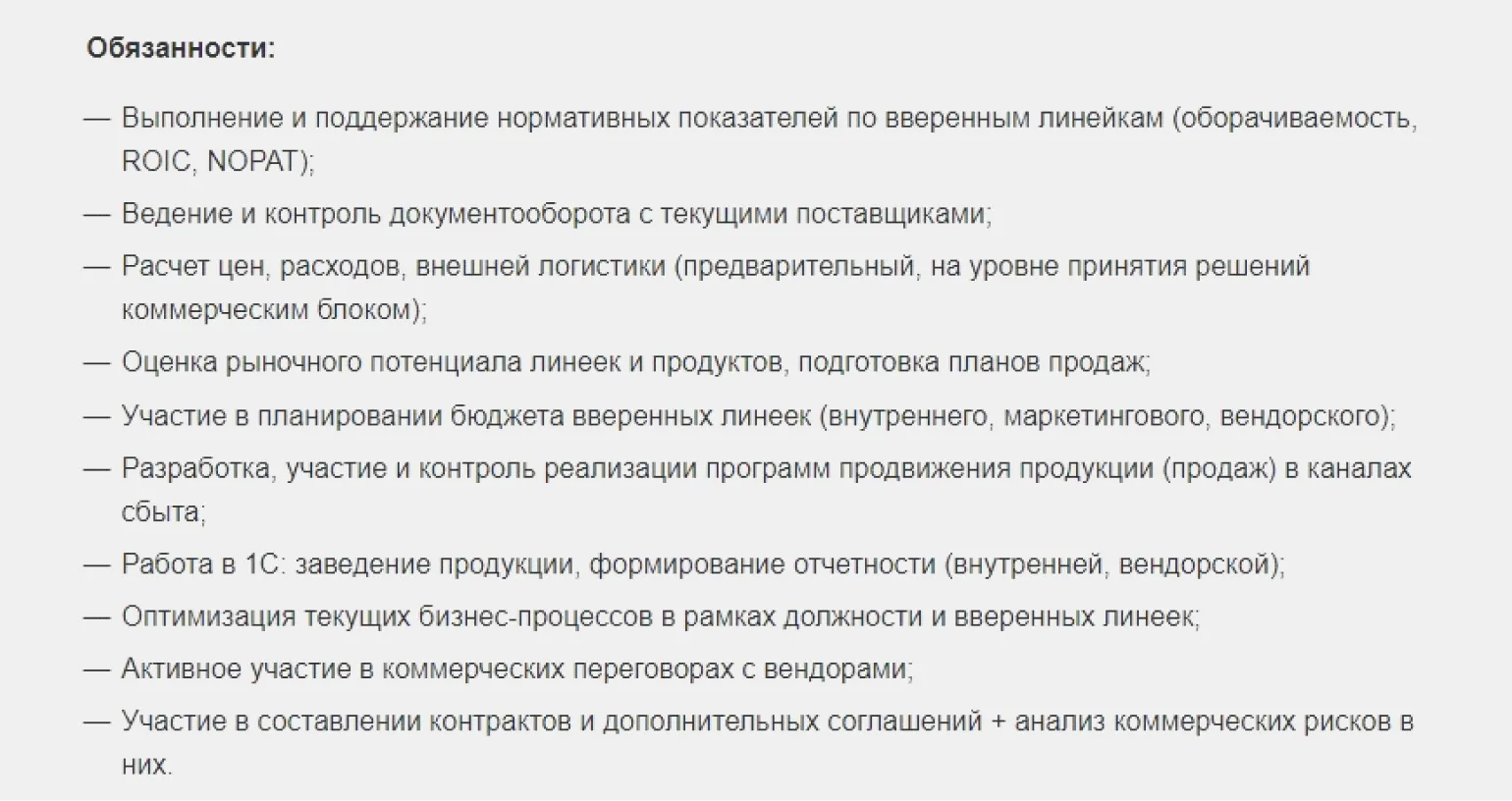
Salaries The number of category managers is showing steady growth each year, highlighting the growing importance of highly qualified professionals in this field. Companies recognize the importance of effective category management and are willing to offer competitive working conditions. According to Superjob and hh.ru, this trend will continue in the coming years, making the category manager profession attractive to professionals seeking career advancement and a stable income.
How to Become a Successful Category Manager
There are two main paths to becoming a category manager: developing from a related field or obtaining specialized education. The first path involves transitioning from professions related to product management, marketing, or sales, which allows you to leverage existing experience and skills. The second path involves completing courses or programs that offer in-depth knowledge in the field of category management. Both approaches have their advantages and can lead to a successful career in this field.
The most common path to a career in purchasing is a transition from a related field, purchasing. These disciplines share many similarities, making the transition easier. Marketing and sales professionals often move into this role because they are already familiar with key business processes and can effectively apply their skills to a new role.
If you do not have the necessary knowledge and skills in category management, it is worth considering training. Currently, there are a limited number of educational programs focused on category management. However, universities and colleges offer courses in commerce, marketing, and logistics, which can significantly help develop a career in this field. These disciplines will provide you with the foundations and tools necessary for successful work in category management.
Category management courses provide a compact learning curve and practical skills, which contributes to rapid employment. When choosing a program, it is important to consider several key criteria. First and foremost, the course should offer relevant and in-demand knowledge that meets current market demands. It's also worth paying attention to the instructors' experience and the availability of practical assignments to help reinforce theoretical knowledge. Additionally, the program should include case studies and data mining, which are integral parts of a category manager's work. It's important that the course provides the opportunity to establish contacts in the professional community, which can significantly simplify the job search process.
- The course is taught by experienced practitioners who keep up with the latest industry trends.
- Feedback from instructors and mentors is provided, helping students understand complex issues and avoid mistakes.
- The course includes practical assignments, upon completion of which students should have several successful cases to add to their portfolio.
The "Category Management in Fashion" program from Skillbox provides a unique opportunity to master an in-demand profession from scratch. Successful graduates have the chance to start a career in the fashion industry in just three months. The course covers key aspects of category management, enabling students to confidently enter the fashion world and effectively manage their product inventory.
This program is ideal for both beginners and experienced category managers from various industries, as well as business owners, including showrooms and brands. Students gain comprehensive knowledge covering all key aspects, from product classification to pricing and collection performance analysis. The program is aimed at developing the practical skills necessary for successful assortment management and optimization of business processes in the trade sector.
What you need to know about the profession of a category manager
- A category manager is a key specialist who is responsible for managing the assortment of goods and services in a company, striving to maximize profits.
- This profession is especially suitable for those who already have experience in related fields, such as sales or marketing, since the skills of interacting with clients and market analysis are very important.
- The salary of a category manager varies depending on the level of qualification: beginners can expect a salary of 30 thousand rubles, while experienced specialists are able to earn up to 300 thousand rubles per month.
- There are several ways to become a category manager: you can move from related professions or take specialized training, for example, online courses from Skillbox.
Learning Assortment Management: Additional Resources from Skillbox Media. Skillbox Media offers useful materials and tools for effectively mastering the principles of assortment management. These resources will help you deepen your knowledge in this area and develop the skills necessary to successfully manage and optimize your product offering. Explore training courses, webinars, and articles that will help you become an expert in assortment management and increase the competitiveness of your business.
- ABC/XYZ analysis: what it is and how to make informed assortment decisions
- The complete guide to business process management: key aspects every manager should know
- Product metrics: what they are and how they can improve business results
- Hypotheses in marketing: how to generate ideas and test them to improve efficiency
- End-to-end analytics: operating principles and ways to set it up for business optimization
Internet Marketer: 7 Steps to a Successful Career
Want to become an internet marketer? Learn 7 effective steps to launch advertising and achieve results!
Learn more