Contents:
Eight artists working with archival photography share their views on various aspects of this unique art form and talk about their projects. Archival photography opens new horizons for creativity, allowing us to explore history and rethink visual narratives. Each of the artists offers an original approach to working with archives, which makes their projects unique and significant. In this context, it is important to consider how archival images can influence contemporary art and the perception of history, as well as reveal new meanings through visual images.
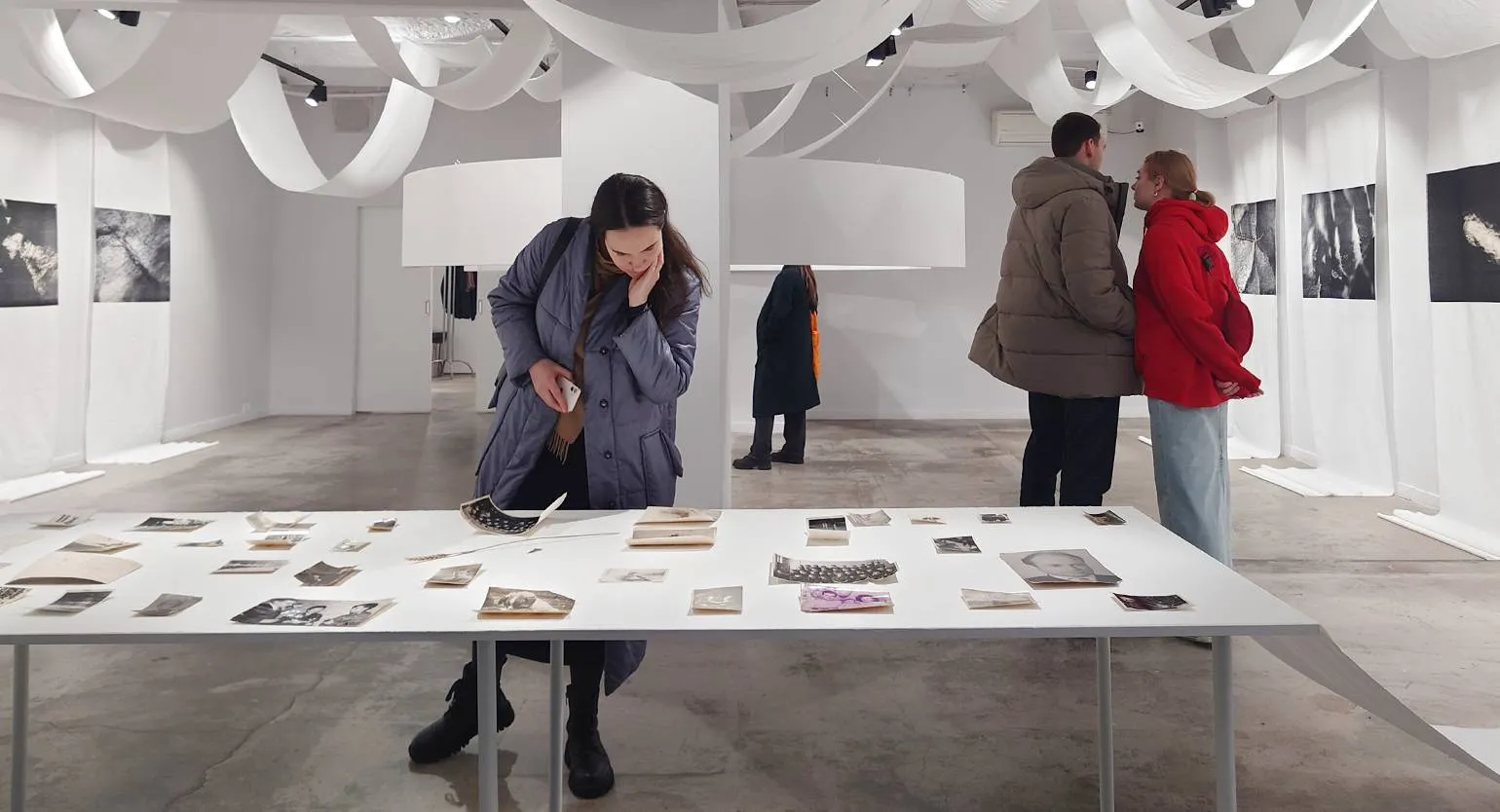
This text is based on a discussion held as part of the exhibition "Birthmarks" by artist Kristina Syrchikova. The discussion was moderated by photography historian Daria Panagiotti. The event took place in the Pennlab gallery of contemporary Russian photography, where participants were able to delve into the theme of the exhibition and discuss the significance of the presented works.
"Birthmarks"

Artist, curator and teacher, heading the "School of Project Photography". He specializes in exploring the everyday lives and personal narratives of people living in the post-Soviet space. His work immerses the viewer in unique stories that reflect the cultural realities and emotional experiences of modern people.
My project includes three key aspects. The first aspect is devoted to the material side of photography and those elements that are often ignored by ordinary viewers. Damage to photographs, such as cracks and stains, provides access to what usually remains out of sight. These visual defects become a connecting thread with the past, allowing us to deeper understand the history and emotions captured in the images.
The second part of the project is dedicated to the restoration of an old photograph of my grandmother, taken in 1969. I turned to more than twenty retouchers who performed the restoration work. Each of them presented their own interpretation, and the result is images of completely different people. These restored photographs create the illusion of a past that never actually existed.
We can compare the results. The portraits depict the same person, but upon closer examination, it becomes apparent that each image presents a unique face. Each image differs in age, clothing style, and even nationality. This emphasizes the diversity and multifaceted nature of the human essence, allowing us to see how different aspects of life can influence the perception of the same person.


Many retouchers don't ask any questions. I commissioned them to restore and colorize the photo, and that was enough. For me, this is an important point: the original image loses its meaning. The retoucher creates a new past. We leave images in the album for our great-grandchildren that don't resemble their grandmother, thereby changing the perception of history.
The third part of the project is called "The Table of Oblivion." It displays family photographs acquired at flea markets that have lost their connection with their subjects and viewers. Many family albums end up in the hands of people with no information about the people in these photographs and no way to ask questions. These unwanted albums are passed on and put up for sale. The project raises questions about memory, identity, and the significance of family stories that are in danger of being forgotten.

A Telegram channel for photography enthusiasts. Here you will find inspiration, tips on shooting and processing images, as well as discussions of current topics in the world of photography. Join our community to exchange experiences, receive useful recommendations, and share your work. This channel will become your source of useful information and creative ideas in photography.
If you want to learn about the diversity of literature, subscribe to our resource. We publish works by talented Russian authors, follow international literary competitions, and share helpful creative tips from experienced practitioners. Discover new facets of the literary world with us.
«From the USSR, 1926–1928»

An artist, curator, teacher, and urban researcher specializing in memory and photography. She explores the relationship between the cultural DNA of a place and personal history and identity. Her work focuses on the significance of memory in contemporary society and the role of photography as an object that facilitates understanding of cultural contexts.
The 1920s archive I was working with was acquired by a friend at a flea market. He had long intended to work on this material, but never got around to it. I couldn't take my eyes off it, like a cat circling a treat, saying, "Well, when are you going to start? Give it to me." Finally, he admitted, "I don't plan to work on this archive anymore; do with it what you want."
The archive of 72 glass plates with photographs filled me with profound admiration. It is a unique archive, dated 1926-1928. The dates on the box make it possible to precisely determine the time of creation of these photographs. Very little personal material evidence from that era survives, especially photographs, as people in those years were not interested in preserving memories.
The photographs made a profound impression on me: they challenged almost everything I knew about this historical period based on school textbooks, films, and official materials. These images opened up new dimensions of perception, forcing me to reconsider my ideas about the past.
In the 1920s, many studio photographs were taken in which people are presented in their best light, striving to capture themselves for posterity. However, the archive also contains other images: personal and informal, depicting ordinary moments in life. These photographs convey vivid emotions and show people happy and natural, reflecting their true essence and the atmosphere of that time.
Working with the archive immerses me in a world where I am both a researcher and an artist. On the one hand, I am interested in specific information, for example, who is depicted in old photographs. On the other hand, I recognize that even the absence of answers to these questions becomes an important part of the overall story. Each artifact in the archive carries a unique narrative, and even unsolved mysteries enrich our understanding of the past. Archives are not only data repositories but also sources of inspiration for future research and creative projects.
I was unable to identify the author, and this is part of the appeal. This is the peculiarity of photography: an old photograph, lacking context, simultaneously reveals and conceals something important. Each such frame sparks interest and prompts reflection on what stories might be connected to the image. Photography becomes a mystery, opening up space for interpretation and association.


While studying archival materials, I realized that the book is ideal for storytelling. It creates a space for history and invites the reader on a fascinating journey through time. Archives offer an opportunity to view the past through the experiences of ordinary people, not just through official historical facts. This creates a sense of connection, even if personal connections with these people are absent. The book becomes a link between the past and the present, allowing readers to gain a deeper understanding of human destinies and experiences.
As a result of my work on this project, I created a book-object that represents the history of an artistic investigation. I created it in Japan, at the Reminders Photography Stronghold workshop, led by independent curator Yumi Goto. I took out a loan for this trip, but I have never regretted my decision. I dedicated almost three weeks to intensive work in the workshop, which allowed me to delve deeper into the creative process and develop my skills.
I have unused materials from the archive, and I am considering creating a new book or organizing an exhibition.
Archives will always play a significant role in our society. However, the form of their storage and the ways in which they are used will evolve. With the development of technology, we see how traditional archiving methods give way to digital solutions. This opens up new possibilities for organizing, searching, and analyzing information. It is important to emphasize that regardless of the storage method, archives remain an important source of data for historians, researchers, and the general public. Preserving archives in modern conditions requires attention to issues of security and accessibility of information, which makes them more relevant than ever.
Lekma

An artist specializing in documentary and art photography, as well as archival and installation work. In her practice, she deeply explores issues of personal and collective trauma, memory, and postmemory. Her works focus on the search for identity, allowing viewers to rethink their own experiences and memories. The artist strives to create a visual dialogue that promotes understanding of complex emotional states and historical significance.
Six months ago, I discovered glass negatives in the attic of an abandoned house, which marked the beginning of my research into the history of the Tver village of Lekma. This village, known since the 15th century, has a rich cultural heritage. In 1939, as a result of the creation of the Rybinsk Reservoir, Lekma was flooded, and the local residents were resettled. Researching this history allows us to gain a deeper understanding of the fates of people and the peculiarities of life in the village, which played an important role in the region for centuries.
The house in whose attic I discovered the archive belonged to Nikolai Yegorovich Nikeshin. This archive contained his photographs. Nikolai Yegorovich was a staunch supporter of the Soviet state, served as a collective farm chairman, and had a passion for photography. His photographs capture not only personal moments but also important events of the time, emphasizing the significance of the collective farm movement and life during the Soviet era.
The archive contains approximately one hundred negatives, primarily portraits of village residents. One of the negatives is dated 1936, corresponding to the transitional period between two historical eras. This difference is clearly evident in the photographs: Soviet youth differs from the older generation who lived in the pre-revolutionary era. Their appearance, clothing style, and posing style highlight the cultural and social changes occurring during that period. These photographs serve as valuable historical evidence, reflecting the evolution of society and its perception of time.


I develop objects based on historical archives. For example, I create a board game in which participants can follow the path of an average peasant of their time. The game is structured according to historical stages, such as collectivization, resettlement, and the flooding of a village. Cards representing tasks for players are based on real events and stories told by local residents and also include elements of folklore. This game is not only entertaining but also helps to deeper understand history and culture.
The archive represents a physical connection with the people who once inhabited this place. My goal was not only to reconstruct their history, but also to breathe new life into it. Archives can be seen as time capsules that reveal not only people's lifestyles but also what they considered important to preserve. They offer a glimpse into their world and an understanding of their values and experiences.
I plan to continue my research and create a memory archive. This archive will collect stories and photographs from people who have a connection to a given place. This will help preserve memories and cultural heritage, and will also allow other people to share their experiences and impressions.
"Reconstruction of Memory: Embroidering a Family Archive"

Artist and graphic designer, childhood researcher and teacher, and author of creative programs for children and adults. She is the Head of Development at the Fabrika Center for Creative Industries. Using her experience and knowledge, she creates unique educational projects that foster creativity and artistic thinking in all participants.
It all started when I enrolled in a creative embroidery course. During the class, we were asked to bring old photographs for inspiration. When I started searching through my archives, I discovered that I had virtually no old photos. The other participants had extensive collections, but I had almost nothing. This made me feel a little insecure.
I started contacting relatives in search of photographs. However, all the images I found were retaken and of poor quality. Seeing this, I realized such photographs were inappropriate and decided to embroider them.
During the course, we created sketches using embroidery, and I really enjoyed the process: it's essentially like drawing, but with thread. I began embroidering portraits of my grandmothers and simultaneously delving into their biographies. My family has always had a lot of information about my grandfathers, but practically nothing is known about my grandmothers. I started researching their stories and discovered many interesting facts.


Embroidery attracts me because it requires time and a meticulous approach. Working on a project immerses you in history, which makes this art form not only fascinating but also profound. When I began teaching workshops, I noticed how embroidery helps others explore their family archives. Participants discover new facts about their ancestors and their family history. This process becomes very touching, allowing everyone to feel a connection with the past and understand family traditions. Embroidery is more than just a hobby; it is a way to preserve memories and create unique stories.
While embroidering photographs of my grandmothers, I realized that this is my way of preserving the memories of my family. It is not only a sign of respect but also an important step towards preserving my genealogy. I began studying the archives to gain a deeper understanding of my family history. Knowing your roots is of great importance to everyone—it helps you understand who you are and where you came from.
Archives are becoming increasingly personal. People strive to find ways to preserve their stories and experiences to pass them on to future generations. With rapidly changing technology and culture, the importance of documenting personal history is growing. Preserving memories and life's journey not only helps us understand ourselves but also creates connections with our descendants. Sharing personal experiences and passing on family traditions and stories helps create a unique heritage that will be valuable for future generations.
"Radiant City"

An artist and teacher working with archival materials seeks to capture the passage of time in her projects. She explores the modern human habitat, as well as the historical and cultural memory reflected in the architecture and structure of the city. In her works, the artist focuses on the interaction of people with urban space, emphasizing the importance of preserving historical memory in the face of rapid change.
I became interested in learning the history of my small homeland. Like many, I moved to Moscow from a small town, and after settling in the capital, I began to think back to the places of my childhood. This is Nelidovo, located in the Tver region, an industrial city founded in the post-war years. Exploring its past, I discover unique chapters of history that shaped the character and culture of this place.
Returning to Nelidovo, you sense a sad atmosphere: the city is gradually fading away. At first, I simply observed what was happening around me. Gradually, I developed a desire to share the local residents' dreams of what the city could be if their hopes for the future were realized.
In my work, I used archival photographs of my family, materials from the city archive, and architectural fantasies from the 1920s and 1930s. One example is Yakov Chernikhov's composition "Stadium," which served as the basis for one of my textile works. I combined the geographical location of Nelidovo, where the stadium is located, with the fictional architecture of Chernikhov. My father is depicted on a bicycle at the center of the composition, creating a sense of interplay between fiction and documentary. This combination of elements adds depth and meaning to my work, emphasizing the connection between the past and the present.


In my other work, I used an archival photo from 1905, which depicts the station that gave birth to the city. This image is a valuable historical artifact, reflecting the architectural style and atmosphere of that time. The station played a key role in the development of the city, and its image allows for a deeper understanding of its origins and evolution.
I chose textile as a material because this technique allows me to "stitch" history. It is a metaphor for the unification of past and present, where every stitch and every detail tells a story of tradition and modernity. Textile art opens doors to cultural origins and allows for the creation of unique works that reflect personal and collective narratives.
Archives are the key to restoring history that is in danger of being lost. They allow me to recreate images of my hometown and bring it back to life through art. Using archival materials, I can explore and convey cultural heritage, preserving the memory of the past for future generations. Interest in personal stories will undoubtedly increase in the future. In a world of rapid change and technological transformation, people will seek connections to the past. Personal stories are becoming an important way to understand ourselves and the world around us, helping us establish emotional connections and identify with the experiences of others. In an era of information abundance, individual narratives can play a key role in shaping public opinion and cultural identity.
"Freedom Butterfly Leopard"

A multidisciplinary artist specializing in installations, objects, ceramics, and textiles. In her work, she explores key themes such as childhood, trauma, and self-reflection. Her work immerses the viewer in deep reflection on internal experiences and emotional states, creating unique visual stories. Using a variety of materials and techniques, the artist strives to convey the complexity and multifacetedness of human experience.
I am busy curating my family photo albums. Since childhood, I have loved opening and looking through them. These albums contain photographs of relatives I never met. There are also pictures of strangers, signed on the back—friends of my grandparents. These memories allow me to deeper understand my family and history, creating a connection between the past and the present. Each photograph tells its own unique story, and I strive to preserve these moments for future generations.
I create objects in ceramics that represent memory boxes. These works of art can be called three-dimensional collages. I chose ceramics for its tactility. It allows viewers to interact with the objects, creating a personal connection and deepening the sense of connection to the past. It is like being able to physically touch memories and experiences, making each piece unique and meaningful.


In my works, I create unique collages by combining various elements, such as my own photographs, archival photos, drawings, and images from the internet. This allows me to form original compositions that reflect my vision and style. Each element in the collage plays an important role, creating a harmonious whole and emphasizing the individuality of each work.
I place the characters on a neutral background and create a unique environment, including images of leopards and butterflies. The leopard symbolizes strength and the desire for freedom, while the butterfly personifies lightness, carelessness, and the ephemeral desire for freedom. This approach allows me to emphasize the contrast between power and fragility, creating a harmonious composition that attracts attention and evokes emotions.
I do not strive to tell the story of my family. These are rather reflections that complement my recollections. It's important to emphasize that memory isn't always an accurate reflection of reality. For example, my sister and I discussed the same photographs, but our memories of them differ significantly. This highlights how individual each view of the past is and how perceptions can change over time.
The theme of memory is universal and relatable to everyone, so this is not just my family's story, but something deeper. Each viewer perceives the presented works in their own way, finding in them a reflection of their own memories and emotions.
Documentary animation about reality and fantasy

Documentary photographer, artist and illustrator, as well as a teacher specializing in photography, animation, collage and alternative printing methods. In his work, he actively uses text, creating unique visual images.
This is the story of my grandmother, with whom I spent a lot of time as a child. At a certain point, she stopped leaving the house. She reported feeling ill and did not leave her home for 12 years. This situation left a deep mark on my perception of life and health. I often think about how important it is to take care of loved ones and support them in difficult times.
I created the project in the format of documentary animation, known as animadoc, using archival materials that remained in my possession. These are voice recordings of conversations with my grandmother, where she shared her visions. She talked about her experience in paradise and described its structure. These recordings are very personal, and working with them evoked strong emotions. Nevertheless, I understood that their use was of great importance for the project.
I used a rotoscoping technique, which involves dividing the video into frames and then manually redrawing each one. I also integrated old family photographs and my own photos taken during this period. This created a unique visual atmosphere and allowed me to convey emotions and memories more deeply.
This is an exploration of memory and its distortions. I sought to convey to the viewer the blending of my memories of my grandmother with fantasies. I chose animation for this project because it allows me to visualize the fluidity of memory, blending reality with fantasy, past with present. Animation becomes a powerful tool for illustrating how our memories can change and how they affect our perception of time and space. Thus, the project not only immerses you in personal experiences, but also invites you to reflect on the nature of memory in general.


Working with the family archive, I often wondered whether I had the right to share this story. This is not only my story, but also the story of my grandmother. Sometimes it was difficult to determine where one life ends and another begins.
Working with the family archive allows me to deeper understand myself and my roots. By researching family stories, I gained new knowledge about my grandmother and our relationship. Currently, I continue to work on personal stories, both my own and found ones, finding a balance between a documentary approach and artistic expression. This process not only enriches my perception of the past, but also opens up new horizons for creativity.
Memory/oversaturated

Artist, independent curator and publisher of photo books. In her research, she studies photography as a means of analyzing and understanding various cultural practices. Her work focuses on the interaction between visual art and cultural context, providing a deeper understanding of photography's influence on public perception.
I research everyday mobile photography. For my project, I collected screenshots from the photo galleries of over 40 people, reflecting the digital archive that we are all constantly updating. I am drawn to the possibility of viewing this archive as a landscape of collective digital memory, exploring how we capture and preserve important moments of our lives through the lens of a smartphone.
Smartphones have become an integral part of our lives, changing the approach to documenting the reality around us. We create a huge number of photographs, often without considering the reasons and meaning of each shot. It is interesting to analyze what this incessant flow of images says about our society and how it will be perceived in the future. It is important to understand how visual culture shapes our perception of reality and how this affects the memory of our time.
In the initial stage of my work, I was attracted to the artifacts that remain in photographs, their redundancy and repetitiveness. The everyday practice of photographing serves an important legitimizing function: if you captured something, it's worthy of preservation. Photography not only captures a moment but also shapes a collective perception of what's "photogenic." We document our surroundings, but these surroundings are shaped by habits that arise from the practice of photography itself. It's important to realize that every image becomes part of our perception of the world and influences how we see and interpret reality.


The project has already taken on a serial nature and includes several subthemes. One of them is dedicated to landscapes, which became apparent during the analysis of screenshots. I noticed a predominance of blue and green colors in almost every respondent. As part of my project, I am creating an array that reflects landscape elements and consists of many frames capturing the surrounding environment. This approach allows for a deeper understanding of the perception of nature and its impact on humans.
The "Fragile" series explores the vulnerability of digital memory, focusing on how easily data can be lost or accessed by strangers. Interestingly, only two of the forty participants considered preserving their personal information presented in the screenshots. This fact underscores the importance of understanding the risks associated with digital data and the need to protect personal information in the modern world.
Another key component of the project is the object book. This is an archival folder containing several zines and photo books in various formats. In particular, it features a register book in which I saved each screenshot and analyzed it, conducting anthropological research. Using a book format significantly simplified my work process, allowing me to effectively systematize the collected material.
In the future, I plan to expand the project by collecting more digital archives and developing various forms of exhibition. Research into the contemporary archive of everyday mobile photography is an important and relevant topic. We have already accumulated significant volumes of visual data, and we need to learn how to preserve and make sense of it. This will not only preserve cultural heritage, but also identify new trends and approaches in visual art, which will make the project even more significant and in demand.

Reading is an important aspect in the life of every person. It develops thinking, broadens horizons and enriches vocabulary. Reading books, articles and other materials helps improve concentration and memory. Additionally, regular reading helps develop critical thinking and analytical skills. For best results, it's recommended to set aside time for reading every day, choosing a variety of genres and topics. This will not only increase your knowledge but also make the process more engaging and enriching.
Photo storage is an important aspect that helps preserve your memories for years to come. Proper management and organization of your photos can prevent loss and damage. First of all, it's important to choose the right storage method. You can use both physical media and cloud services.
Physical media, such as external hard drives or flash drives, offer reliable storage but require regular backups. Cloud services, such as Google Photos or Dropbox, allow you to access your images from anywhere but may be dependent on an internet connection.
Organizing your photos is another key consideration. Creating folders with clear names and dates will help you quickly find the images you need. You should also consider using photo management software that makes sorting and searching easier.
Don't forget about the security of your photos. Regular backups and using passwords to protect cloud storage will help prevent data loss. By following these recommendations, you can effectively store and protect your photos for a long time.
Photographer Profession
You will learn how to take professional photos from scratch. You will learn how to organize shoots, process shots, and manage models and a team. Find your style, build an impressive portfolio, and start making money doing what you love.
Learn more