
Contents:
Why does a photographer need planning?
Let's look at the word "intuition". This concept can be interpreted as intuition or sudden insights that play a significant role in the project process. Insights don't arise out of nowhere, but rather through deep reflection and analysis of collected information and facts. When logic and rational thinking encounter obstacles, an opportunity for intuitive insight arises. In moments of relaxation, when you are distracted from the task at hand, a solution often emerges. This is similar to a picture coming into sharp focus. Now it's time to move on to planning. Why is this important? Proper planning helps structure your thoughts, set priorities, and effectively organize your workflow, which ultimately contributes to the successful implementation of the project.
Planning is the foundation of a successful and long-lasting project. I am convinced that without a clear strategy and a predetermined plan, it is impossible to achieve significant results. Effective planning allows you not only to define goals but also to develop ways to achieve them, minimizing risks and optimizing resources. It's important to take the time to develop a detailed plan that will serve as a roadmap for project implementation. The Japanese tradition of daruma dolls symbolizes determination and goal achievement. When a new goal arises, a person draws one eye on the daruma and places the doll in a prominent place. This one-eyed doll becomes a reminder of the task at hand, filling the space with motivation and inspiration. Once the goal is achieved, a second eye is drawn, and the daruma is moved to another shelf. Thus, it becomes a tangible symbol of a person's ability to take action and achieve results. This process emphasizes the importance of determination and visualizing success, which can significantly improve the chances of achieving what you want.
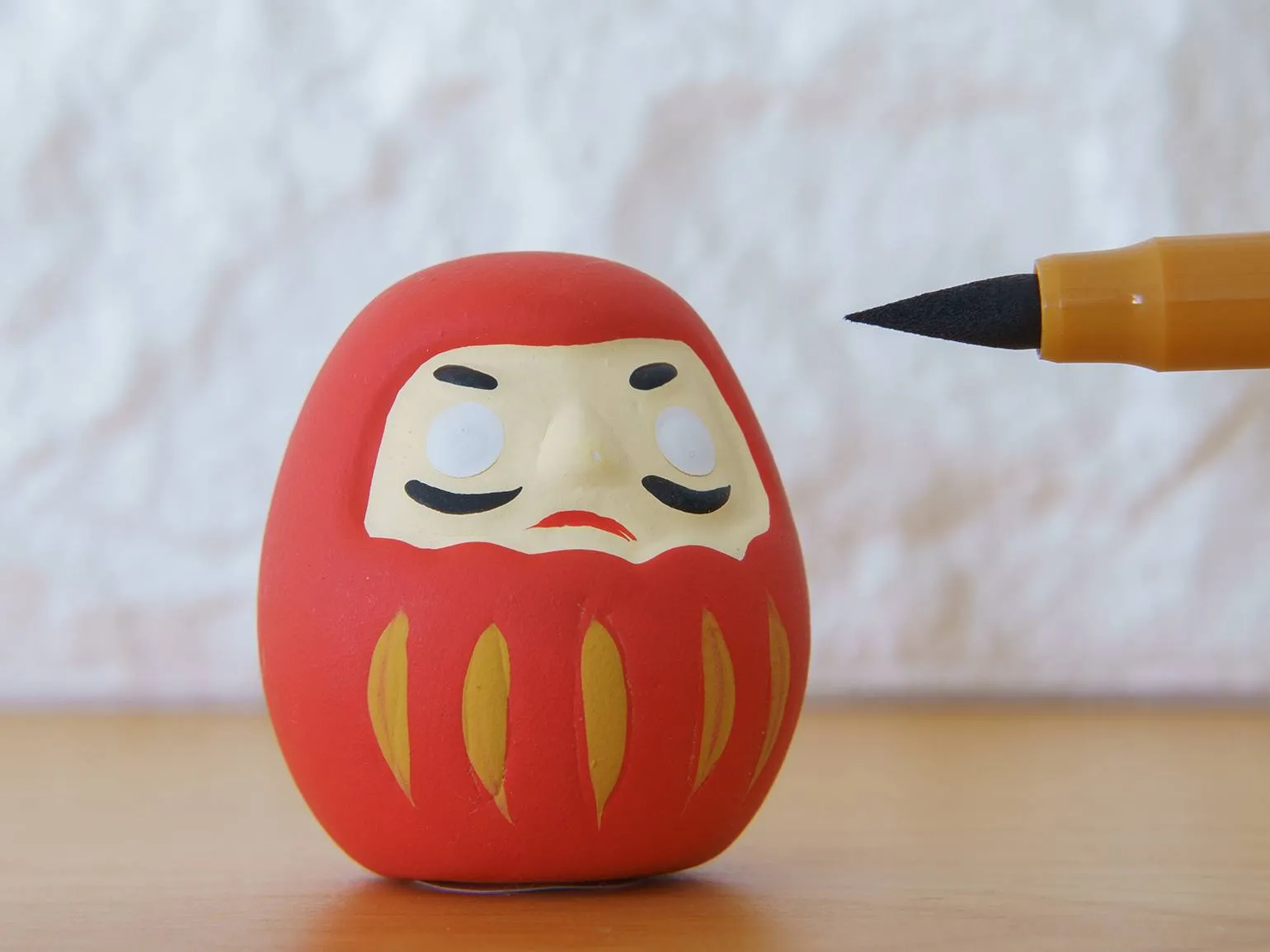
A plan is a structured set of actions aimed at achieving a specific result. It builds confidence and convinces the author of the reality of the goal. When you formulate clear steps leading to your desired outcome, you begin to believe in your ability to achieve it. A detailed plan with set deadlines and milestones helps organize your thoughts and focus on what's important. Regularly following the plan is key to ensuring the successful completion of your project. In my experience, at the beginning of a project, everything seems simple and inspiring. You're filled with enthusiasm for a new idea, and it feels like the task is almost complete. However, this initial excitement quickly fades, giving way to doubt. Difficulties arise along the way: something fails, someone doesn't live up to expectations, life circumstances change, and ideas are criticized. Eventually, a voice inside you begins to torment you with questions: "Is this really a worthwhile idea? Why do I need all this? I used to live a peaceful life..." This situation can be familiar to many. It's important to understand that such doubts are a natural part of the creative process. To overcome this period, you need to focus on your goals, seek support, and maintain faith in your ideas. A plan can help. Looking at it can help you realize that your initial expectations may not align with reality. But that's no reason to doubt. The only way to gain clarity is to take action and see what happens. The plan already specifies what needs to be done, and this is what will help you move forward.
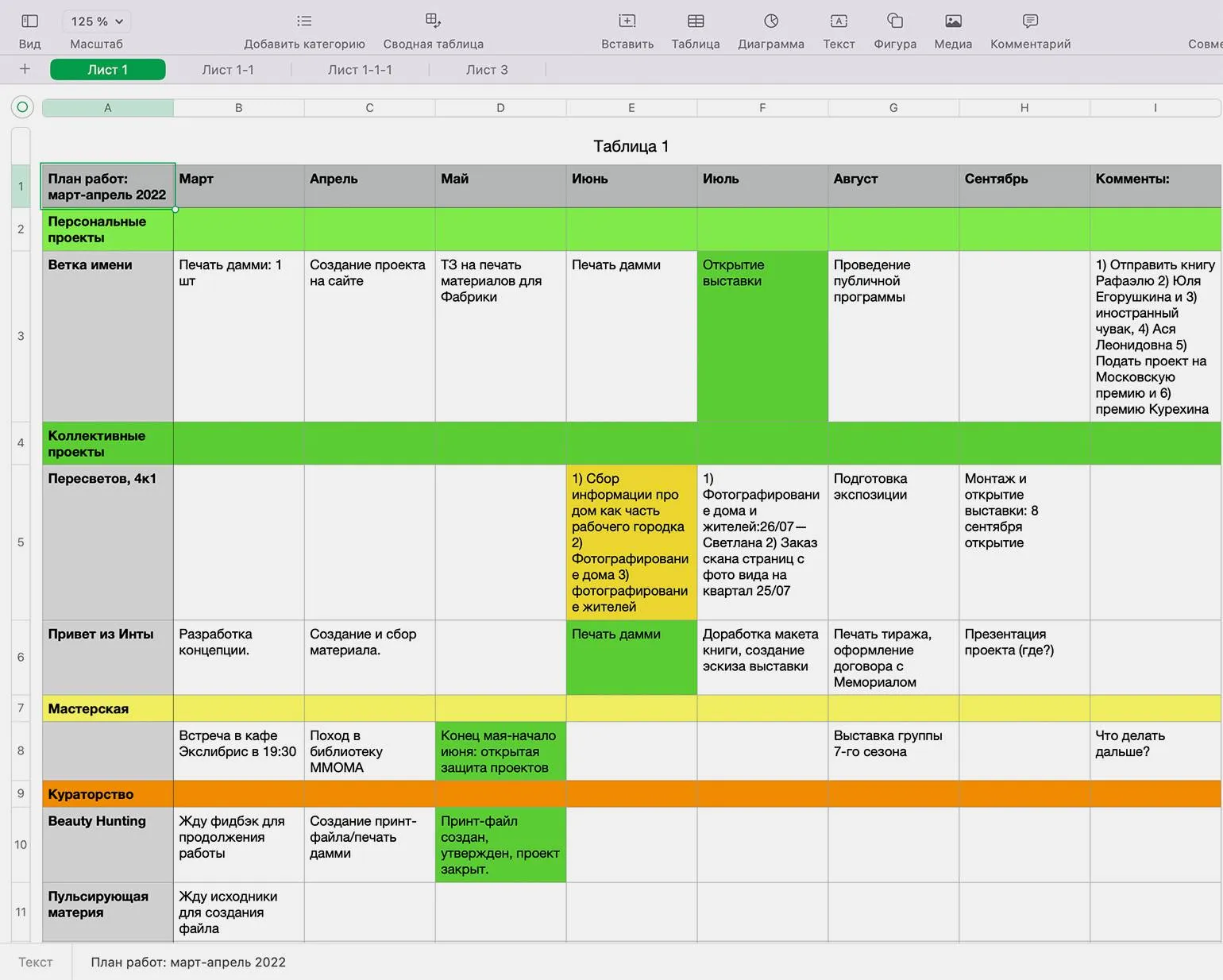
Planning is an effective tool for reducing stress. A well-written plan clearly structures tasks and sets priorities. Situations often arise where you need to juggle multiple tasks simultaneously: filming, conducting interviews, retrieving documents from an archive, and preparing a grant application. In such circumstances, it's important to have a plan in hand, marking tasks as "urgent," "important," and other categories. This allows you to organize your work and focus on the highest priorities, significantly facilitating time management and reducing stress.
My experience in business, where I worked as a brand manager for ten years, allows me to speak confidently about responsibility in my work. Our team had a strict system: any mistake could have serious consequences for the entire production chain. This practice taught me the importance of accountability. In the context of non-profit projects, the situation is different – responsibility often lies solely with you. If you fail to complete a task, no one will reprimand you, and you won't suffer financial losses. This creates a dangerous trap for aspiring creators with promising ideas. Initial enthusiasm can fade when there is no external control – work is put off, and each time it becomes increasingly difficult to return to it. This is a vicious cycle that a clear plan can help break. A well-structured plan not only increases confidence but also creates commitment. With it, you significantly increase the chances of bringing the project to a successful completion.
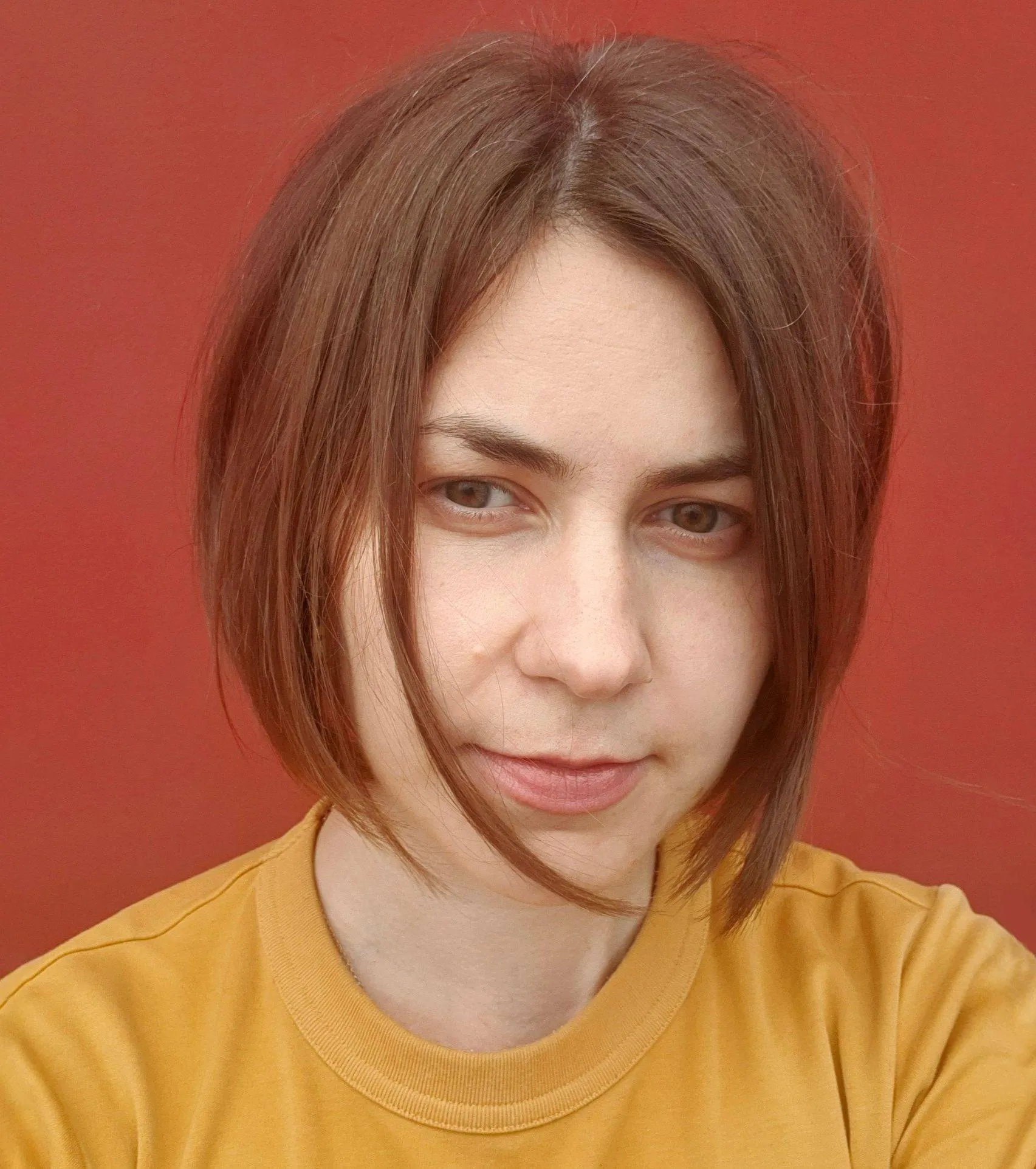
A photographer and teacher with experience and recognition in the field of visual arts. Prize-winner of the prestigious World Press Photo 2019 competition, which emphasizes the high level of professionalism and creative approach. Specializes in creating unique photographs that attract attention and convey deep emotions. She shares her experience and knowledge with her students, teaching them the fundamentals of photography and composition.
Before a shoot, it's crucial to create a plan outlining what exactly needs to be captured, what details are important, and what information should be included in the project. This approach helps you better understand what you want to convey to your audience. Planning also facilitates a deeper dive into the topic and identifies key aspects from which to develop a visual narrative. This is not only useful but also necessary practice for the successful implementation of a project.
Before starting a shoot, I always jot down my ideas and sometimes sketch out what I want to capture. Although I may not ultimately use these exact shots, this preliminary plan serves as a foundation for further creativity and helps define the direction of my search. At the same time, it's important to remain open to new possibilities and unexpected moments that may arise during the shoot. This allows you to create unique and original works that reflect not only the intended purpose, but also the atmosphere of the moment.
What to include in a plan?
Planning is a key aspect of the successful implementation of any project. It is important that the plan is clear, specific, and detailed. Specific goals and objectives will help avoid uncertainty and direct efforts to achieve the desired results. Using specific deadlines, resources, and methods for completing tasks contributes to more effective project management and helps avoid potential risks. The clearer and more understandable the plan, the higher the likelihood of successful completion of the project.
A good plan always provides a clear understanding of the goal and the actions required to achieve it. It includes key steps, resources, and timeframes, which allows for effective organization of the process. The principles of a structured approach help avoid mistakes and wasted time, ensuring clarity and consistency. It is important to remember that successful plan implementation requires regular analysis and adjustments depending on current circumstances. Thus, a well-written plan becomes the basis for achieving goals and improving overall work efficiency.
- what exactly will be done;
- by whom;
- when;
- how: by what methods and with what budget;
- what will all this bring you.
It is important to consider the possibility of failure in advance and develop alternative actions. In other words, a backup plan is necessary for the main plan.
For successful project planning, it is important to think strategically, anticipating possible scenarios. For example, if my subject refuses to participate in the filming, I need to consider alternative options in advance. Who else can I turn to for the necessary data or materials? In case of refusal to use the resources found, it is necessary to have backup sources. The financial side of the project should also be considered: if it is not possible to obtain support, it is important to consider in advance what alternative funding methods may be available. This approach minimizes risks and increases the chances of successful completion of the project.
We've all experienced situations where support from large institutions doesn't meet expectations. Recently, I encountered difficulty obtaining funding for the "Green Archaeology" project, which explores the relationship between the vegetation of the Kola Peninsula and the cultural and economic activities of the Pomor people. Furthermore, I was unable to obtain the necessary scans of herbarium sheets. In such cases, a plan B is essential, and fortunately, I had one. I was a bit frustrated, but then switched to an alternative approach. Instead of scans, I created my own drawings of the plants and used them for the book. This added an element of personalization and uniqueness. I also found indirect funding through barter agreements. As a result, I released a new artist's book, which, in my opinion, is just as good as the originally conceived version, and it was released on time.
Planning Tools
I'll list the ones I use most often in my work.
I truly value classic Excel spreadsheets, although I sometimes resort to other tools. The main advantage of Excel is its flexibility: spreadsheets are easy to edit, allow you to formulate goals and objectives in detail, add images, and visually record results. The ability to plan several months in advance and see the entire plan on the screen is extremely important. This allows you to correlate various actions, identify conflicts, and resolve inconsistencies as you work. Using Excel, you can effectively manage projects and increase productivity.
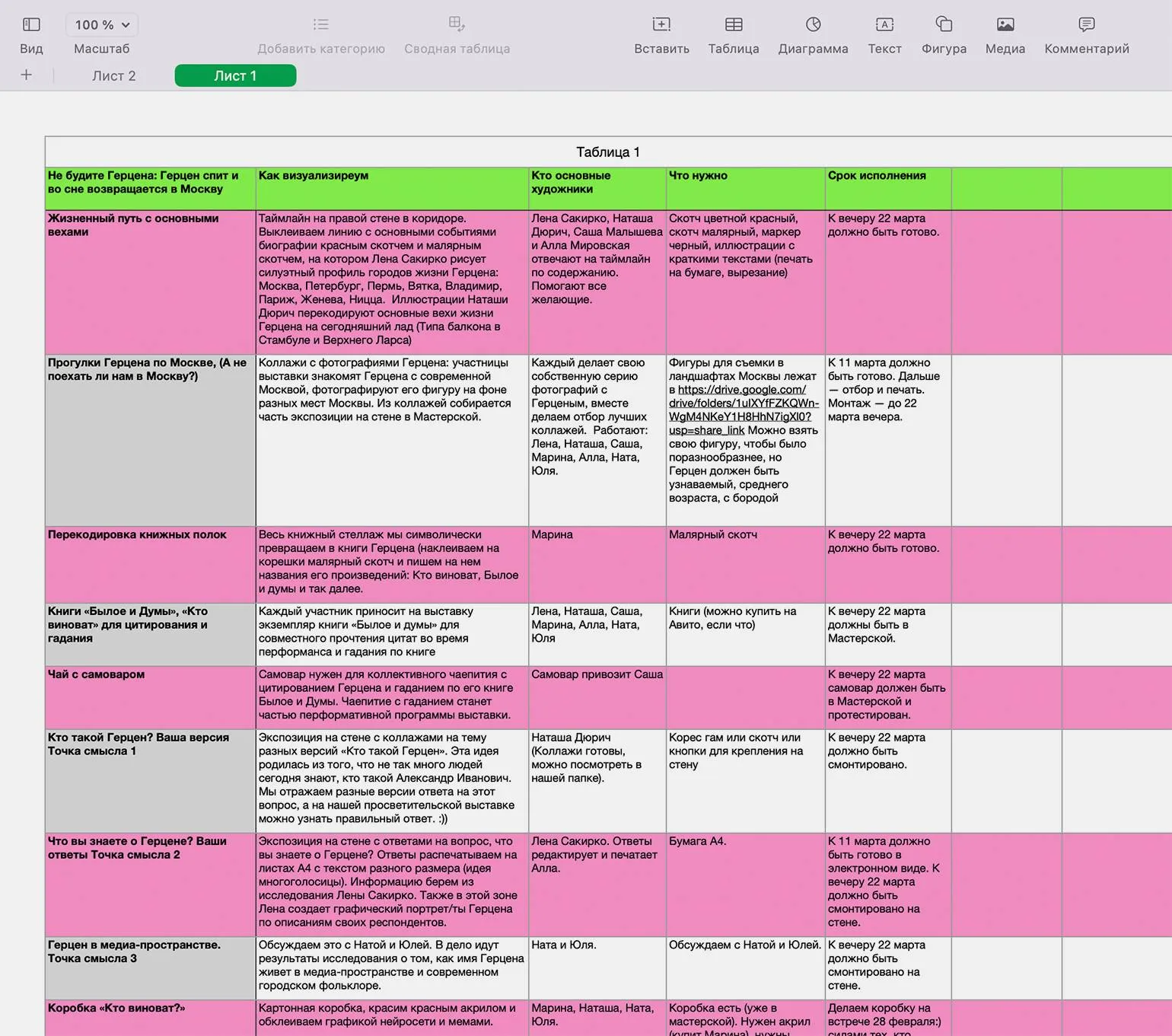
In curatorial and group projects involving various specialists, such as architects, graphic designers, printers and lighting designers, it is important to create A clear overall plan in Excel. A timeline is added to this plan, including separate rows for each area. The timeline records task deadlines for all project participants, allowing you or the project manager to effectively monitor the progress of the work. This approach ensures transparency and organization, allowing you to promptly identify and resolve potential delays, which ultimately contributes to the successful implementation of the project.
If you are participating in a shared project, it is important to develop a personal plan that aligns with the overall direction. This will allow you to effectively manage your portion of the work and monitor the progress of tasks. Having a clear plan increases productivity and improves communication with other project participants.
Paper can be used to create effective plans. For example, a large flipchart, also known as a magnetic whiteboard, is suitable. It is convenient to write on such a board with a marker or attach notes with magnets. Special paper pads with large sheets are also available. In my practice as a brand manager, I often used this method. Using tools like these helps visualize ideas and simplifies the planning process.
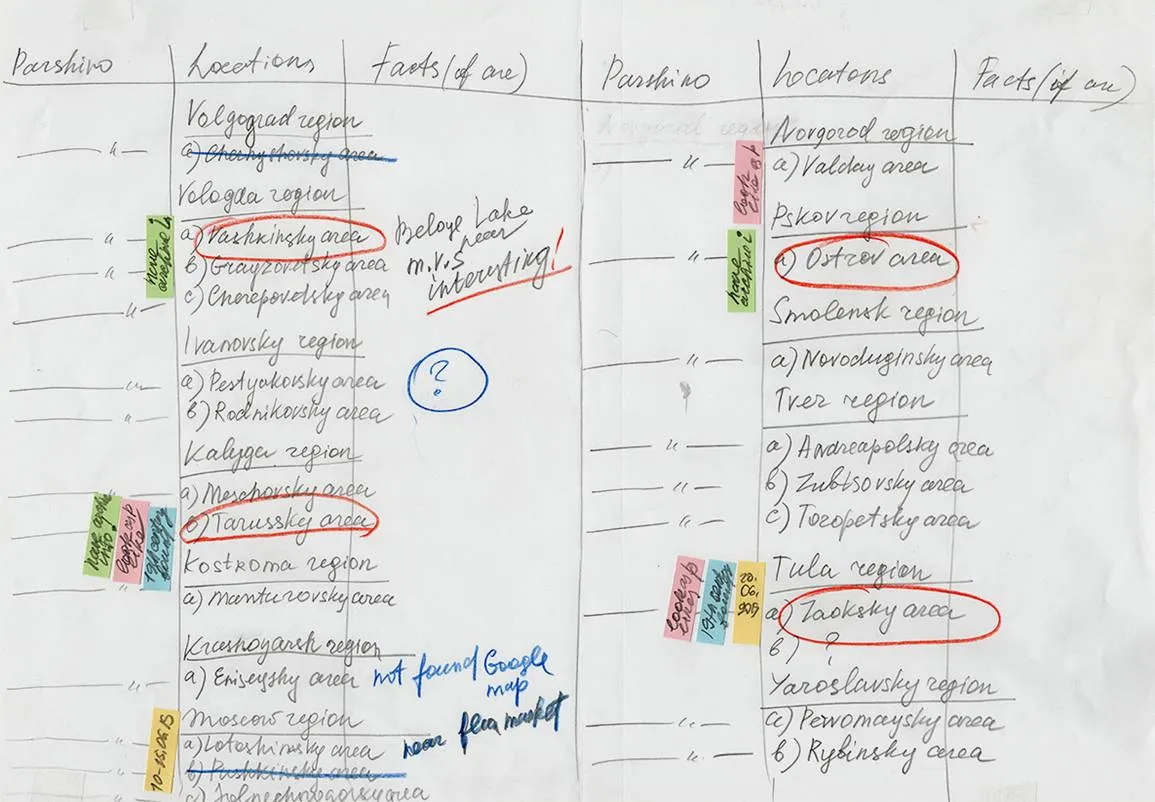
There's a certain magic to it: turning a plan into reality significantly increases its chances of successful implementation. This may seem naive, but in practice, this strategy really works. Effective implementation of the plan allows you to better focus on goals and create the necessary conditions for achieving them.

Photographer, participant of numerous exhibitions in Russia, Europe and Asia, specializing in art photography and documentary projects. Her works have been presented at various exhibitions, which confirms a high level of skill and originality. The photographer actively develops her creative work, exploring new themes and styles, which allows her to occupy a prominent place in contemporary art.
I usually set myself the goal of creating one image per week. If I'm working with particularly complex subjects, I focus on creating one object per week and then move on to the next image the following week. In cases where preparation takes longer, such as ordering materials, I try to complete one task per day. I order the necessary materials and study tutorials on working with them, as each material is unique—be it polymer clay or silicone. I also read at least 20 pages of information daily. For the "Fifth Quarter" project, I devoted a lot of attention to the philosophy and scientific background.
How to work with a plan?
The main difficulty with a plan is the need to constantly work with it. Simply creating a beautiful plan is not enough to achieve your goal. It is recommended to review it once or twice a week and make any necessary notes. This will help you stay on track and adjust your actions depending on current circumstances. Regular interaction with the plan promotes more effective time and resource management, which ultimately leads to the successful completion of tasks.
Plan your actions in advance. For example, you can plan a shoot in a certain area, scan found materials, or conduct an interview. After completing these tasks, it is important to record the results in the plan. Use color coding to visualize progress: mark completed tasks, for example, in green. Over time, the number of green tasks will increase, which will contribute to increasing your self-esteem and motivation to continue working.
Collective projects require special attention. It's like making borscht: not only high-quality ingredients are important, but also careful process control. Leaving a project unattended can lead to numerous errors and delayed decisions. Experience shows that under conditions of insufficient attention, all potential problems manifest themselves in the most negative ways. Proper project management will ensure its successful implementation and achievement of its goals.
During the course of a project, the plan may undergo changes. This is a natural process, as the author gains new knowledge and discovers shorter and more effective ways to achieve goals. Don't be afraid to make adjustments to the plan.
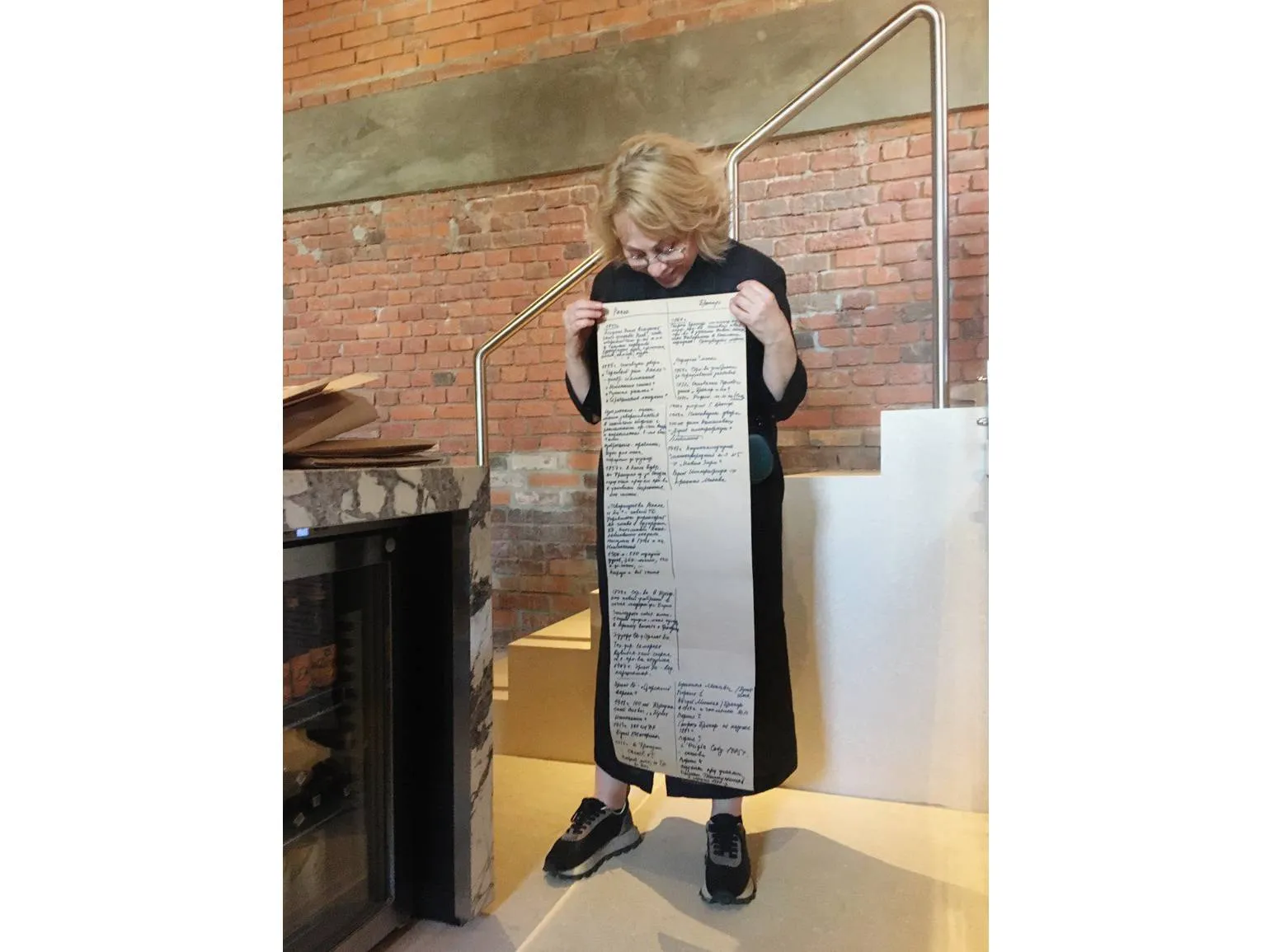
As an artist and curator working in a project format, I I've encountered periods of doubt and uncertainty in more than twenty completed projects. These moments were often justified and led to a transformation of the original plan and an improvement in the idea. While this sometimes requires radical changes in a short timeframe, such situations foster growth and development, allowing one to overcome one's own limitations.
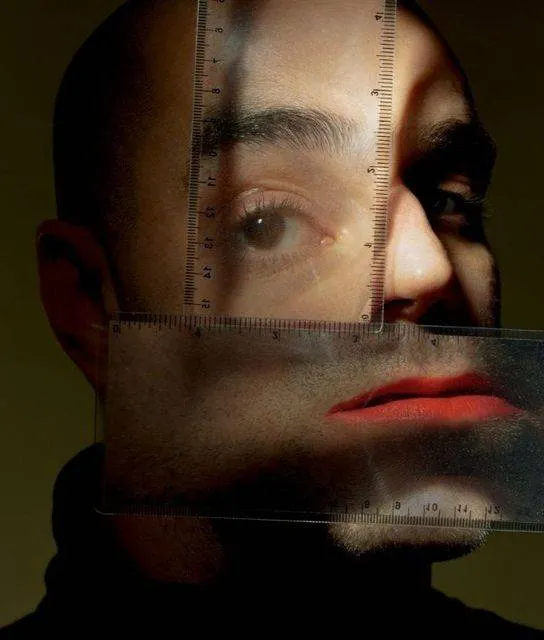
A conceptual photographer, awarded at Russian and international photo competitions, explores the theme of disappointment and alienation among the generation that grew up in the early 1980s. His works immerse the viewer in a world of emotions and experiences, reflecting the social and cultural changes of that time. The photographer strives to convey the depth of human experience through unique visual images and conceptual approaches.
Working on a project always has its own characteristics. Typically, the process begins with an idea or mood; sometimes it can be a random shot that inspires the creation of a series in a unified style. This approach is reminiscent of making shashlik, where every detail is important for the overall result. However, there are also projects, for example, Safety Cards, where the text (artist statement) is formulated first, then sketches are created, and only then does the shooting take place. Thus, the project can develop both from idea to implementation and vice versa.
What to do if everything doesn't go according to plan?
It often happens that our plans don't coincide with reality. We can build the wildest expectations, but life makes its own adjustments, and it is impossible to predict every twist.
If something doesn't go according to plan, don't panic. This is ineffective and doesn't solve the problem. Instead, focus on how you can improve the situation and gain value from it. Find opportunities for improvement and learn from what happened. This way, you will not only overcome difficulties, but also strengthen your skills and reputation.
Profession Photographer
You will learn how to take professional photos from scratch. You will learn how to organize shoots, process frames, manage models and a team. Find your style, build an impressive portfolio, and start making money doing what you love.
Find out more